
ROLE OF VETERINARY SERVICES IN FOOD SAFETY holistic
- Slides: 60
ROLE OF VETERINARY SERVICES IN FOOD SAFETY holistic approach continuum MEDITERRANEAN ZOONOSES CONTROL PROGRAMME Nikolas Charisis, WHO/MZCC, Head of PH & Food safety Department Stournari 24, 10 682, Athens, Greece. Telephone: +30 -210 -3814 703, Fax: +30 -210 -3814 340, e-mail: mzcc@ath. forthnet. gr 1
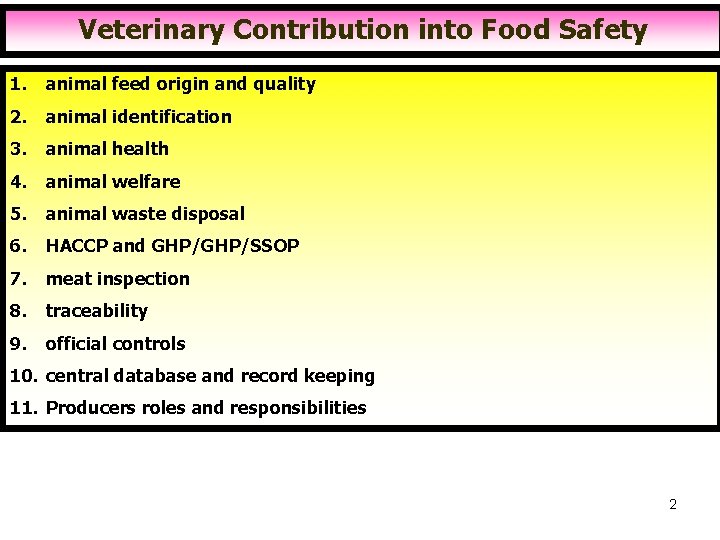
Veterinary Contribution into Food Safety 1. animal feed origin and quality 2. animal identification 3. animal health 4. animal welfare 5. animal waste disposal 6. HACCP and GHP/SSOP 7. meat inspection 8. traceability 9. official controls 10. central database and record keeping 11. Producers roles and responsibilities 2
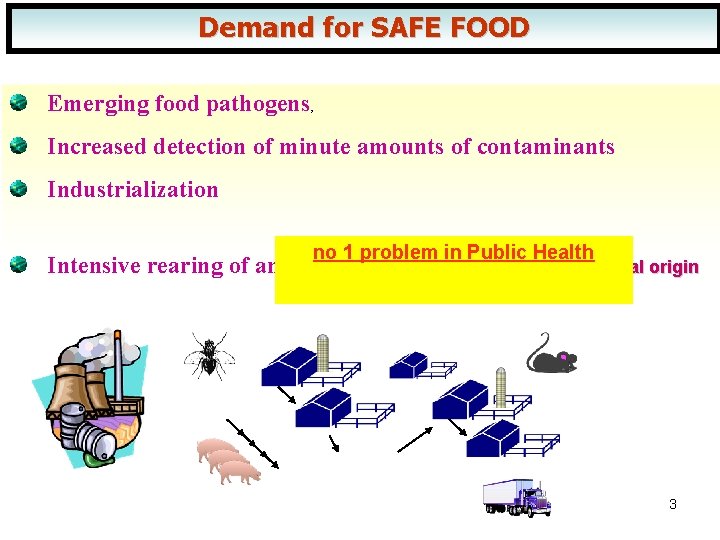
Demand for SAFE FOOD Emerging food pathogens, Increased detection of minute amounts of contaminants Industrialization no 1 problem in Public Health Intensive rearing of animals - Environmental pollution of animal origin 3
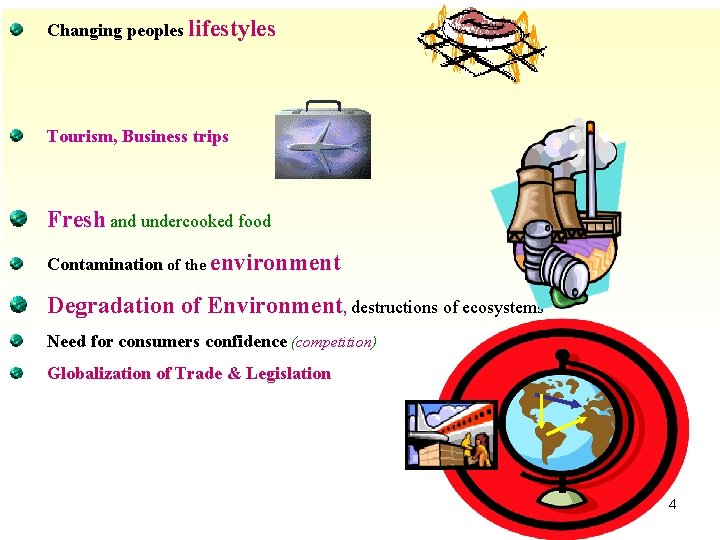
Changing peoples lifestyles Tourism, Business trips Fresh and undercooked food Contamination of the environment Degradation of Environment, destructions of ecosystems Need for consumers confidence (competition) Globalization of Trade & Legislation 4
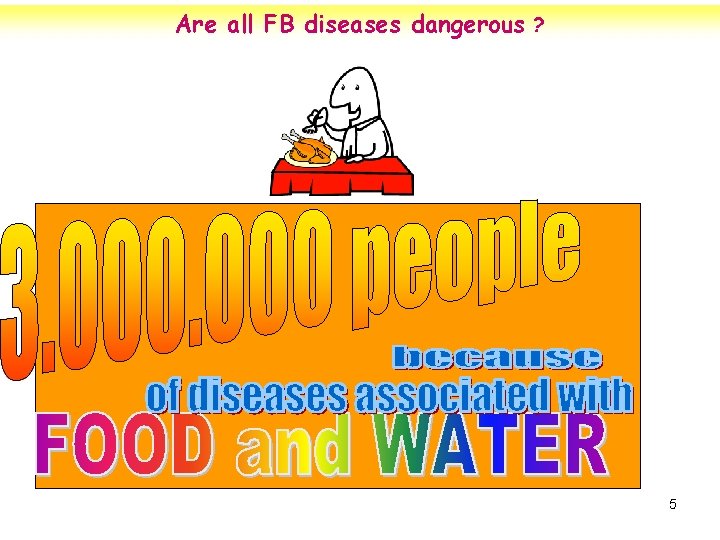
Are all FB diseases dangerous ? 5
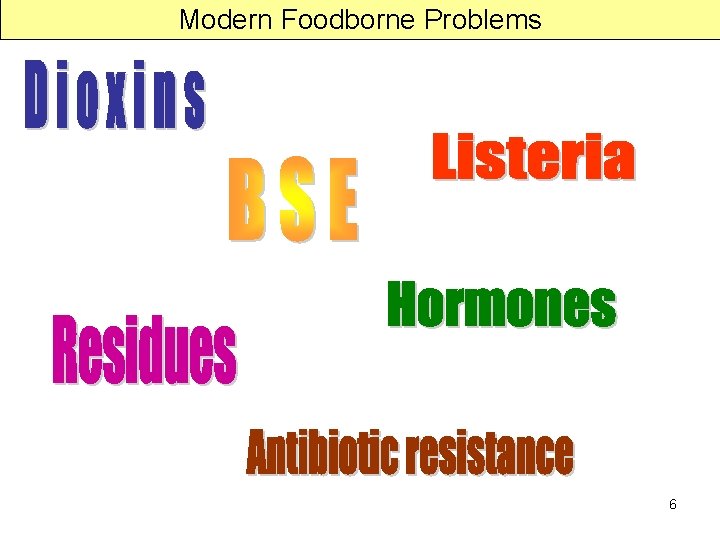
Modern Foodborne Problems 6
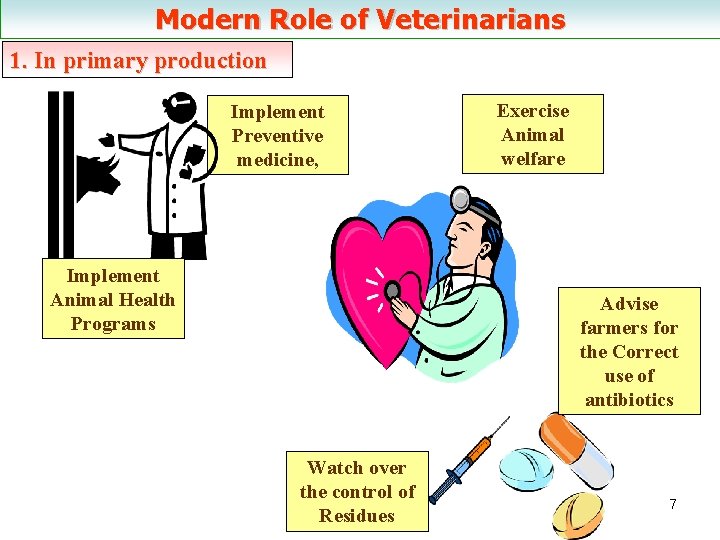
Modern Role of Veterinarians 1. In primary production Implement Preventive medicine, Implement Animal Health Programs Exercise Animal welfare Advise farmers for the Correct use of antibiotics Watch over the control of Residues 7
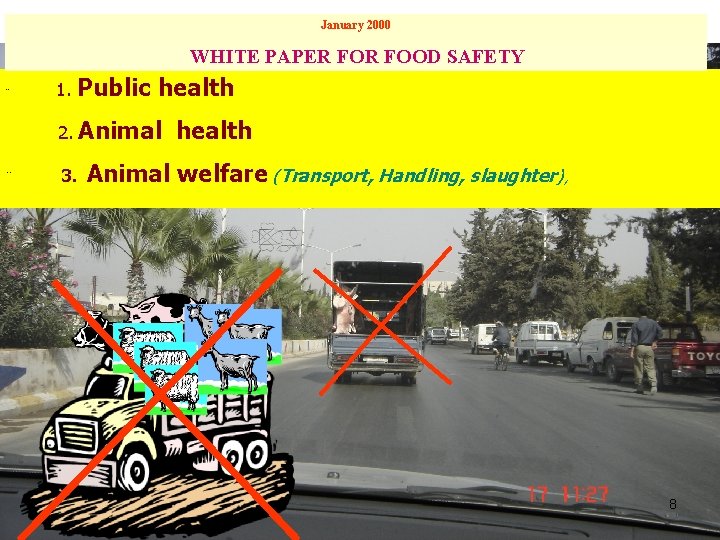
January 2000 WHITE PAPER FOOD SAFETY ¨ 1. Public health 2. Animal ¨ 3. health Animal welfare (Transport, Handling, slaughter), 8
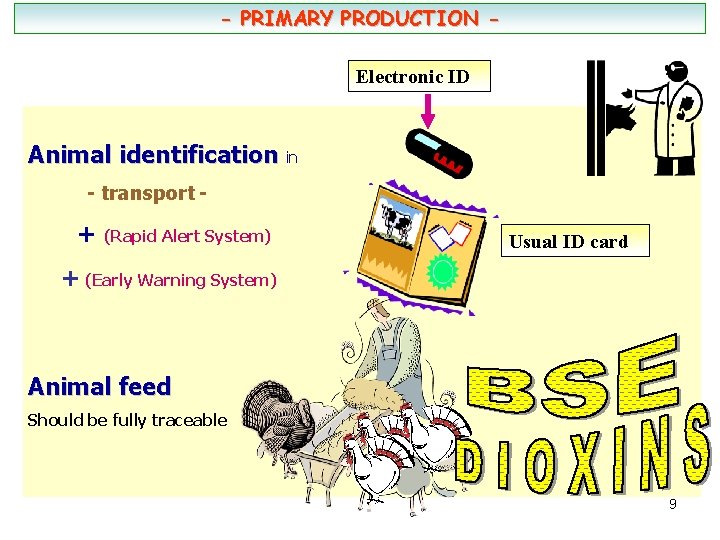
- PRIMARY PRODUCTION Electronic ID Animal identification in - transport - + (Rapid Alert System) Usual ID card + (Early Warning System) Animal feed Should be fully traceable 9
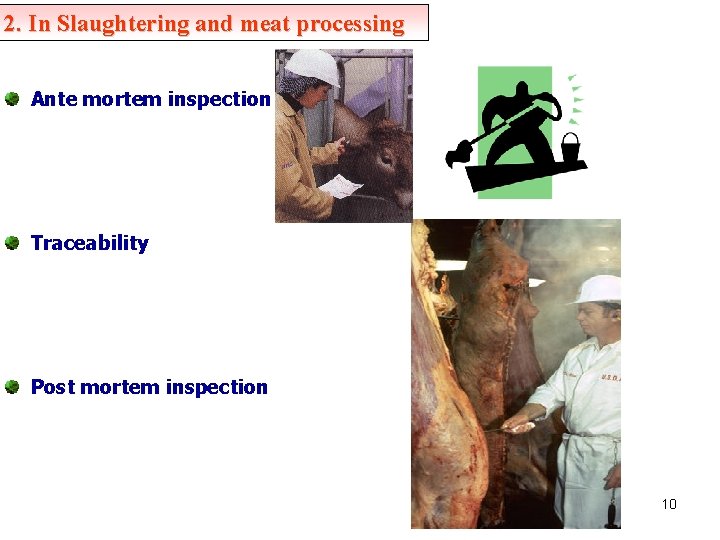
2. In Slaughtering and meat processing Ante mortem inspection Traceability Post mortem inspection 10
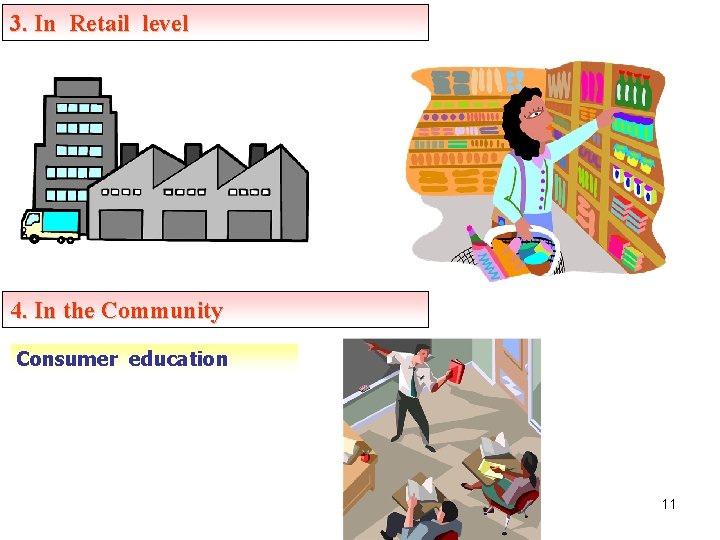
3. In Retail level 4. In the Community Consumer education 11
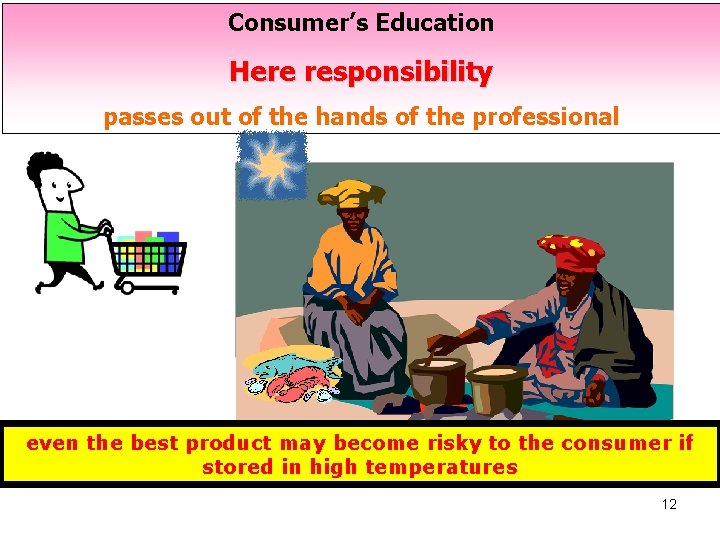
Consumer’s Education Here responsibility passes out of the hands of the professional even the best product may become risky to the consumer if stored in high temperatures 12
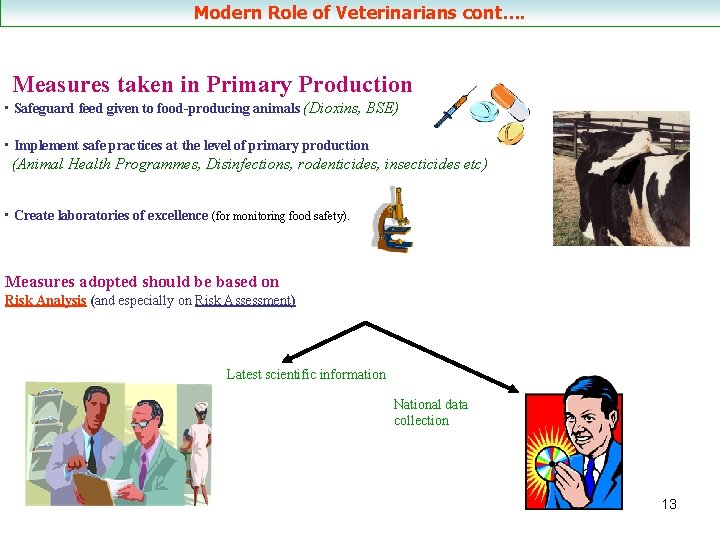
Modern Role of Veterinarians cont…. Measures taken in Primary Production • Safeguard feed given to food-producing animals (Dioxins, BSE) • Implement safe practices at the level of primary production (Animal Health Programmes, Disinfections, rodenticides, insecticides etc) • Create laboratories of excellence (for monitoring food safety). Measures adopted should be based on Risk Analysis (and especially on Risk Assessment) Latest scientific information National data collection 13
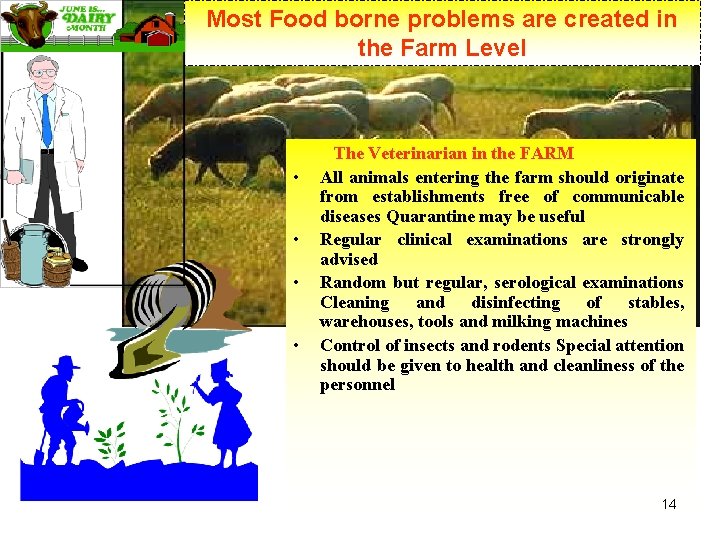
Page 4 CONTROL or CCPs Most Food borne. CRITICAL problems are POINTS created in the Farm Level (Are steps where control can be applied. CCPs are essential to prevent or eliminate a food safety hazard or reduce it to an acceptable level) • • The Veterinarian in the FARM All animals entering the farm should originate from establishments free of communicable diseases Quarantine may be useful Regular clinical examinations are strongly advised Random but regular, serological examinations Cleaning and disinfecting of stables, warehouses, tools and milking machines Control of insects and rodents Special attention should be given to health and cleanliness of the personnel 14
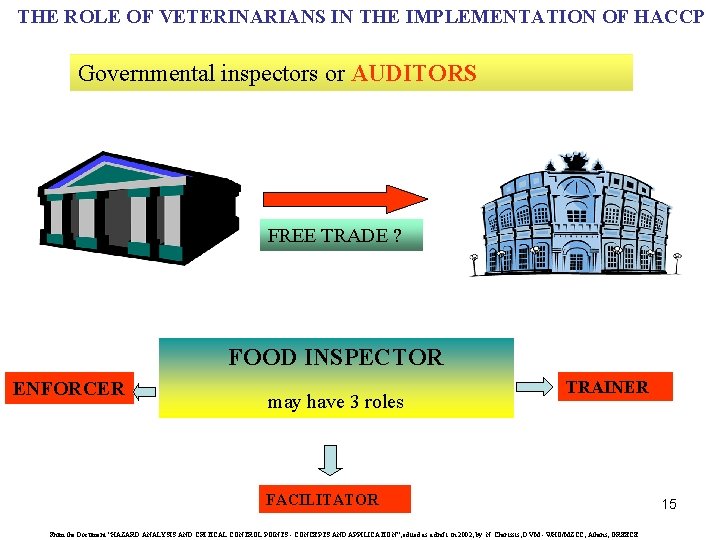
THE ROLE OF VETERINARIANS IN THE IMPLEMENTATION OF HACCP Governmental inspectors or AUDITORS FREE TRADE ? FOOD INSPECTOR ENFORCER may have 3 roles TRAINER FACILITATOR From the Document “HAZARD ANALYSIS AND CRITICAL CONTROL POINTS - CONCEPTS AND APPILICATION”, edited as a draft in 2002, by N. Charissis, DVM - WHO/MZCC, Athens, GREECE. 15
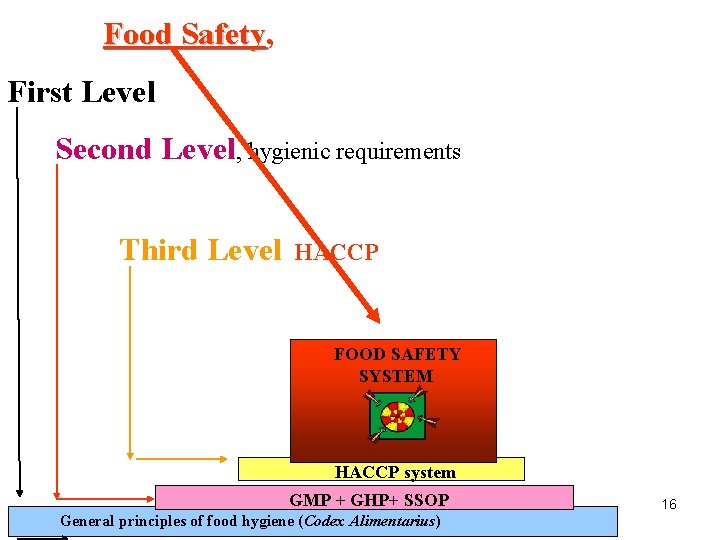
Food Safety, Safety First Level Second Level, hygienic requirements Third Level HACCP FOOD SAFETY SYSTEM HACCP system GMP + GHP+ SSOP General principles of food hygiene (Codex Alimentarius) 16
in the old and in Modern Times 17
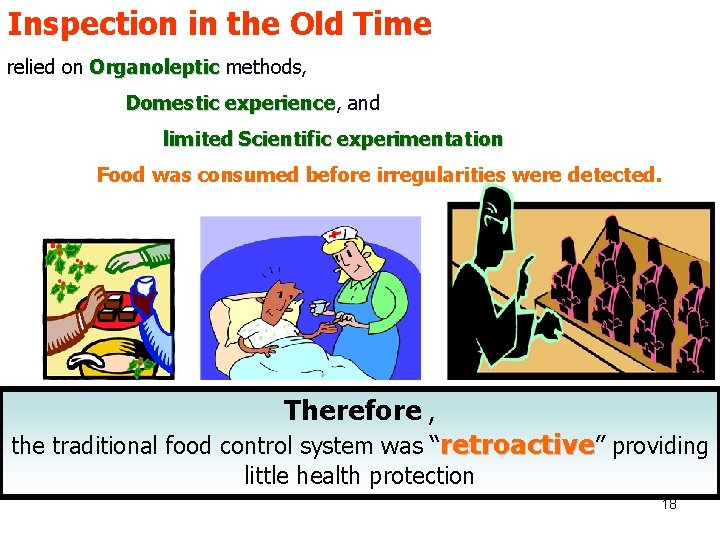
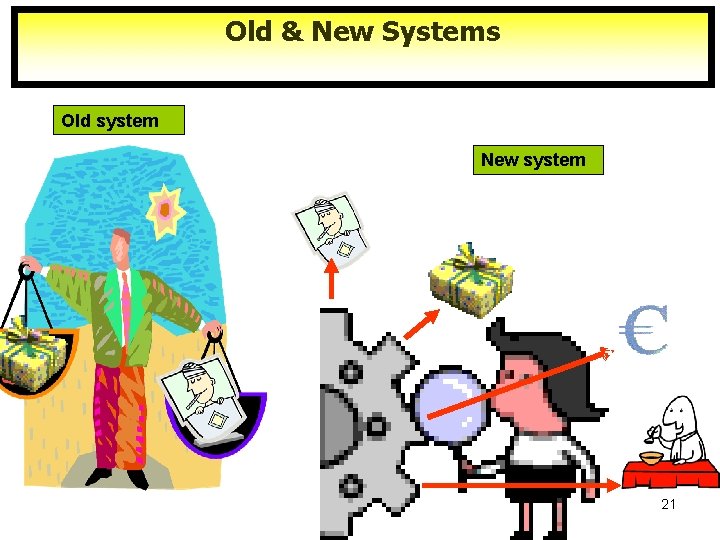
Inspection in the Old Time relied on Organoleptic methods, Domestic experience, experience and limited Scientific experimentation Food was consumed before irregularities were detected. Therefore , the traditional food control system was “retroactive” providing little health protection 18
Food Safety in the Old Time Was relied on end product testing + VISUAL INSPECTION But, End-product testing proved to be: time consuming in microbiological analysis, costly and not reliable So, knowing that testing foods offer little protection (even when large numbers of samples are examined), We prefer modern techniques and practices based on Prerequisites and HACCP systems 19
Disadvantages of Old Regulations regulations with GMP, GHP or SSOP are using very often, vague terms such as: “appropriate” “when or necessary” legislation leaves much to free translation with little distinction between trivial and important matters of safety. 20
Old & New Systems Old system New system 21
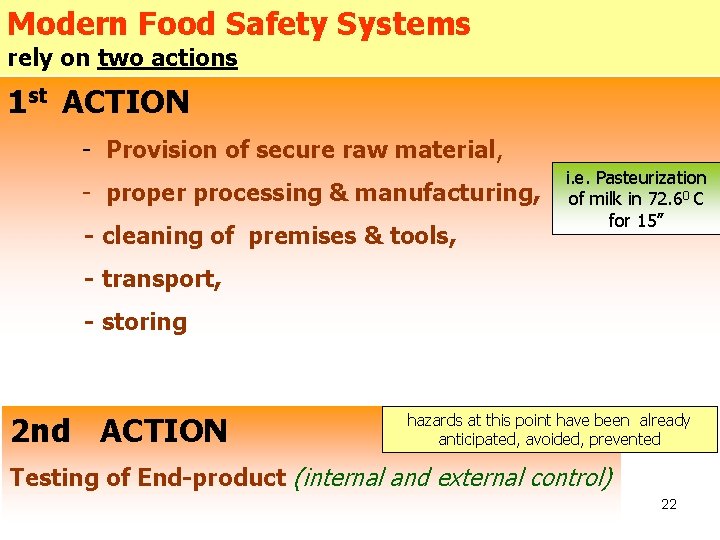
Modern Food Safety Systems rely on two actions 1 st ACTION - Provision of secure raw material, - proper processing & manufacturing, - cleaning of premises & tools, i. e. Pasteurization of milk in 72. 60 C for 15” - transport, - storing 2 nd ACTION hazards at this point have been already anticipated, avoided, prevented Testing of End-product (internal and external control) 22
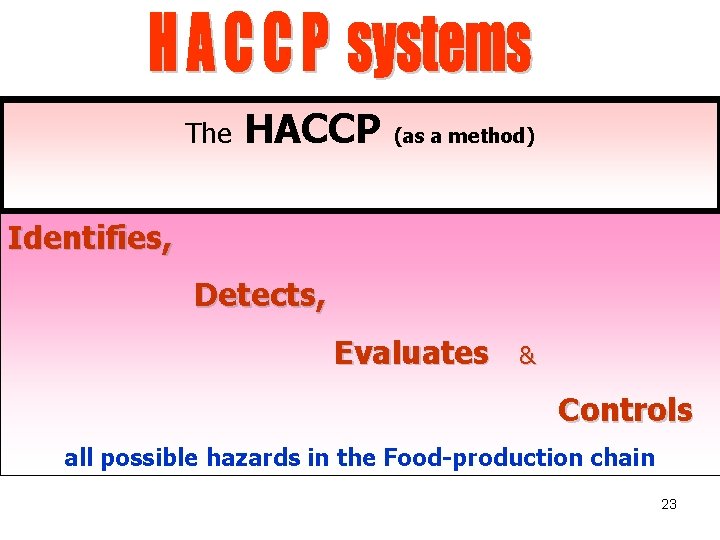
The HACCP (as a method) Identifies, Detects, Evaluates & Controls all possible hazards in the Food-production chain 23
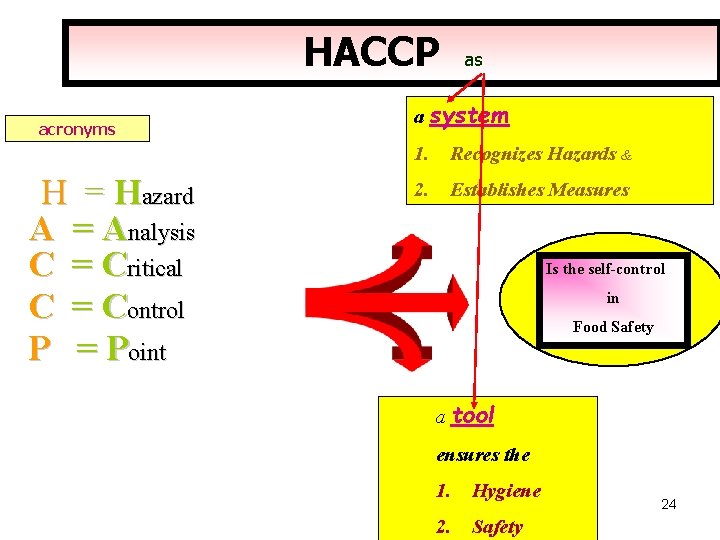
HACCP acronyms H = Hazard A = Analysis C = Critical C = Control P = Point as a system 1. Recognizes Hazards & 2. Establishes Measures Is the self-control in Food Safety a tool ensures the 1. Hygiene 2. Safety 24
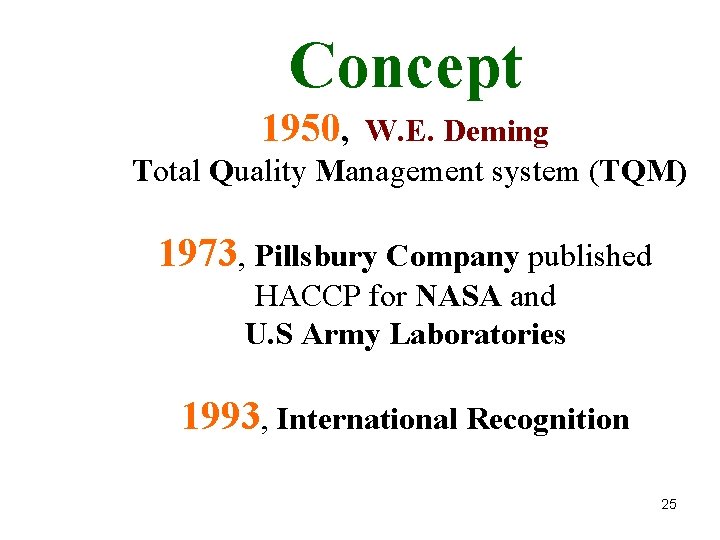
Concept 1950, W. E. Deming Total Quality Management system (TQM) 1973, Pillsbury Company published HACCP for NASA and U. S Army Laboratories 1993, International Recognition 25
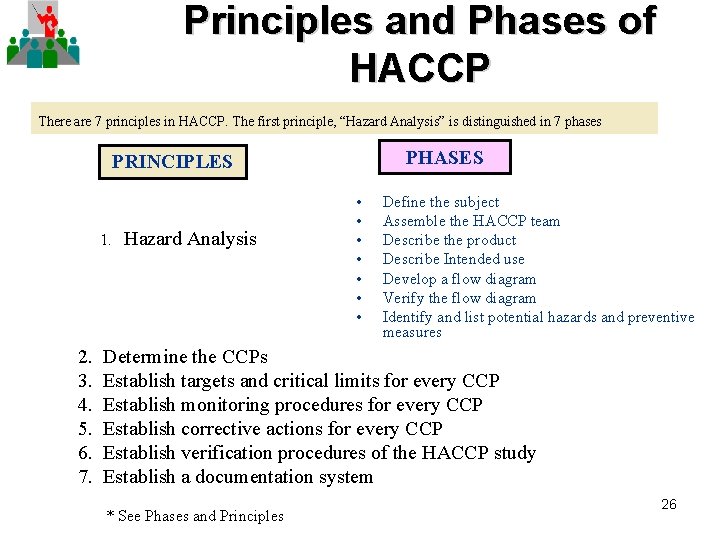
Principles and Phases of HACCP There are 7 principles in HACCP. The first principle, “Hazard Analysis” is distinguished in 7 phases PHASES PRINCIPLES 1. Hazard Analysis • • Define the subject Assemble the HACCP team Describe the product Describe Intended use Develop a flow diagram Verify the flow diagram Identify and list potential hazards and preventive measures 2. Determine the CCPs 3. Establish targets and critical limits for every CCP 4. Establish monitoring procedures for every CCP 5. Establish corrective actions for every CCP 6. Establish verification procedures of the HACCP study 7. Establish a documentation system 26 * See Phases and Principles
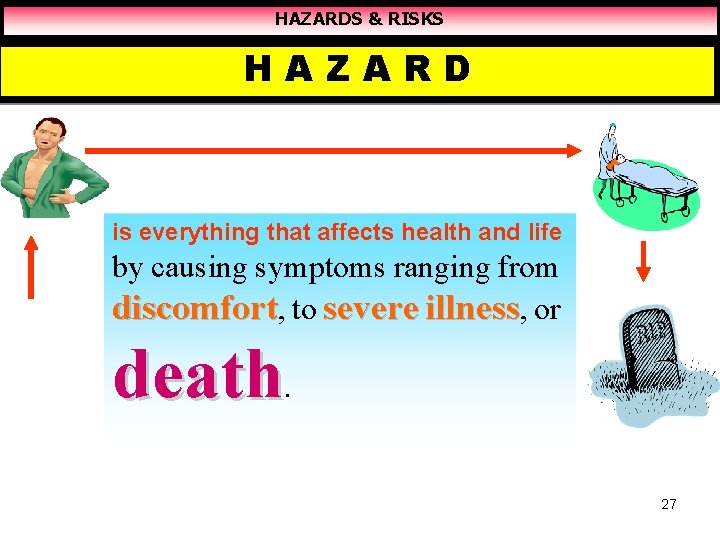
HAZARDS & RISKS HAZARD is everything that affects health and life by causing symptoms ranging from discomfort, to severe illness, or death. 27
“Foodborne Hazard” for the consumer means something inapprehensive, difficult to say or it is a matter of individual perception for the scientists is a serious possibility for Food- poisoning 28
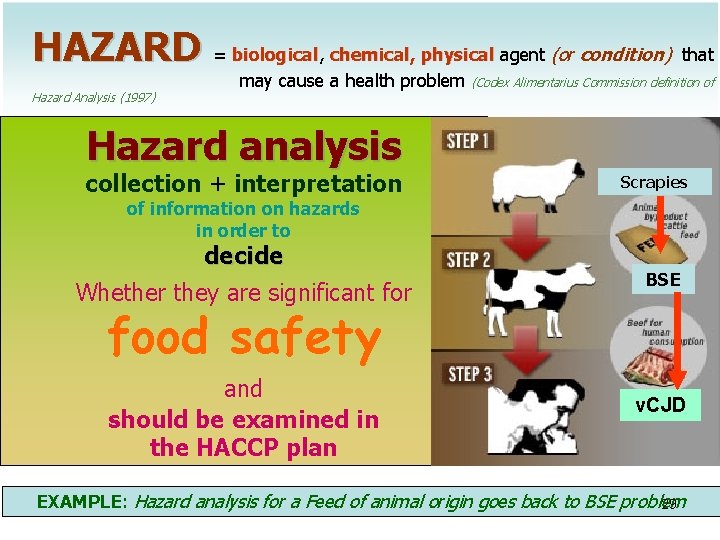
HAZARD = biological, biological chemical, physical agent (or condition) that Hazard Analysis (1997) may cause a health problem (Codex Alimentarius Commission definition of Hazard analysis collection + interpretation Scrapies of information on hazards in order to decide Whether they are significant for BSE food safety and should be examined in the HACCP plan v. CJD EXAMPLE: Hazard analysis for a Feed of animal origin goes back to BSE problem 29
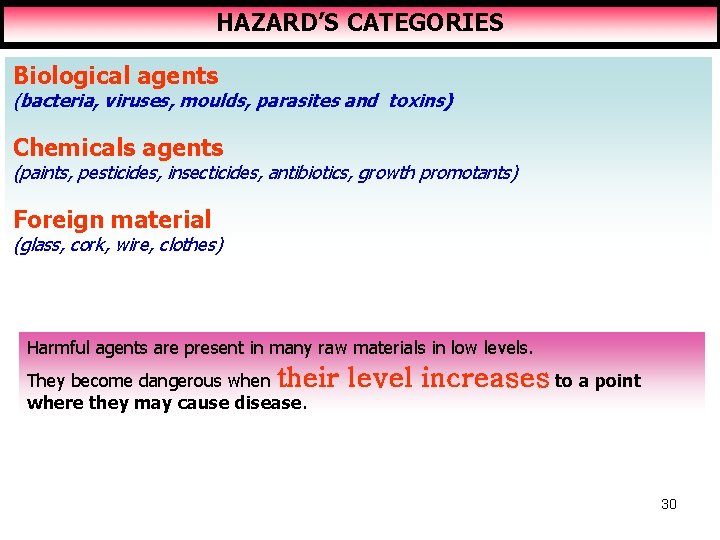
HAZARD’S CATEGORIES Biological agents (bacteria, viruses, moulds, parasites and toxins) Chemicals agents (paints, pesticides, insecticides, antibiotics, growth promotants) Foreign material (glass, cork, wire, clothes) Harmful agents are present in many raw materials in low levels. They become dangerous when their where they may cause disease. level increases to a point 30
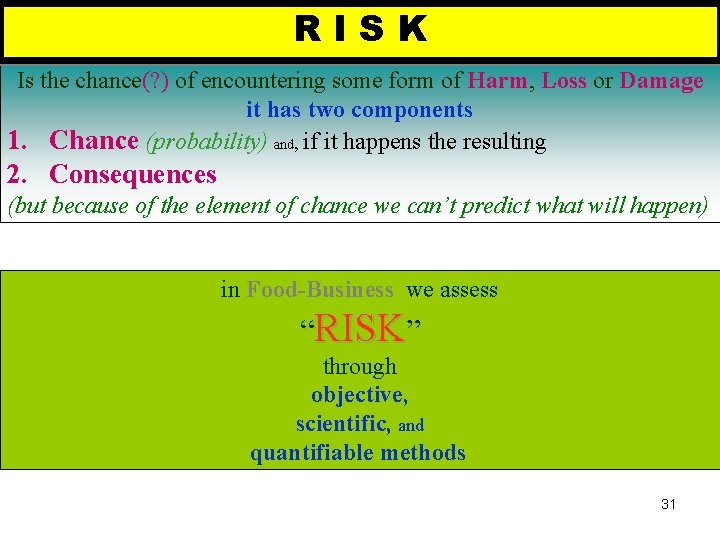
RISK Is the chance(? ) of encountering some form of Harm, Loss or Damage it has two components 1. Chance (probability) and, if it happens the resulting 2. Consequences (but because of the element of chance we can’t predict what will happen) in Food-Business we assess “RISK” through objective, scientific, and quantifiable methods 31
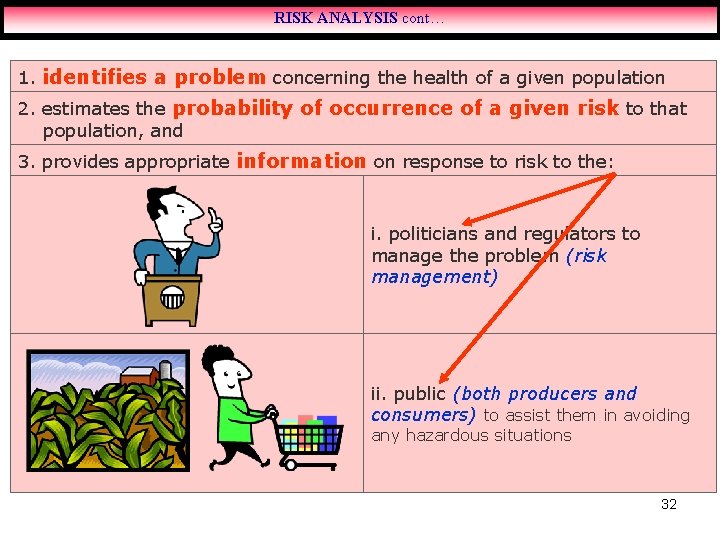
RISK ANALYSIS cont… 1. identifies a problem concerning the health of a given population 2. estimates the probability of occurrence of a given risk to that population, and 3. provides appropriate information on response to risk to the: Risk analysis: i. politicians and regulators to manage the problem (risk management) ii. public (both producers and consumers) to assist them in avoiding any hazardous situations 32
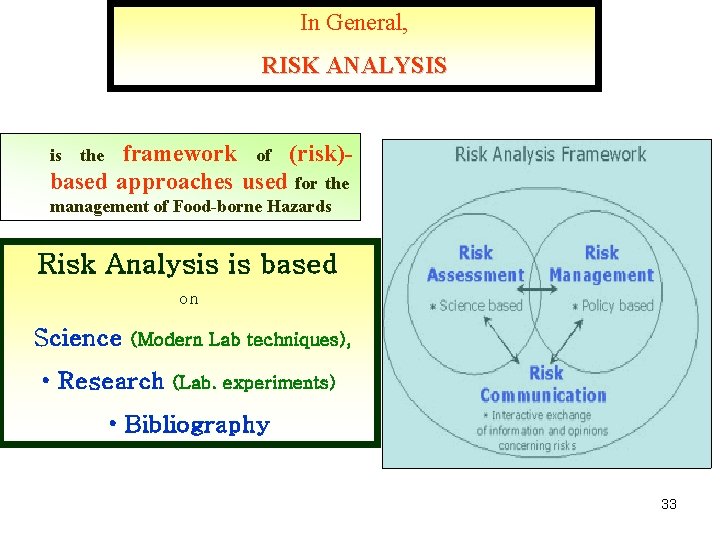
In General, RISK ANALYSIS framework of (risk)based approaches used for the is the management of Food-borne Hazards Risk Analysis is based on Science (Modern Lab techniques), • Research (Lab. experiments) • Bibliography 33
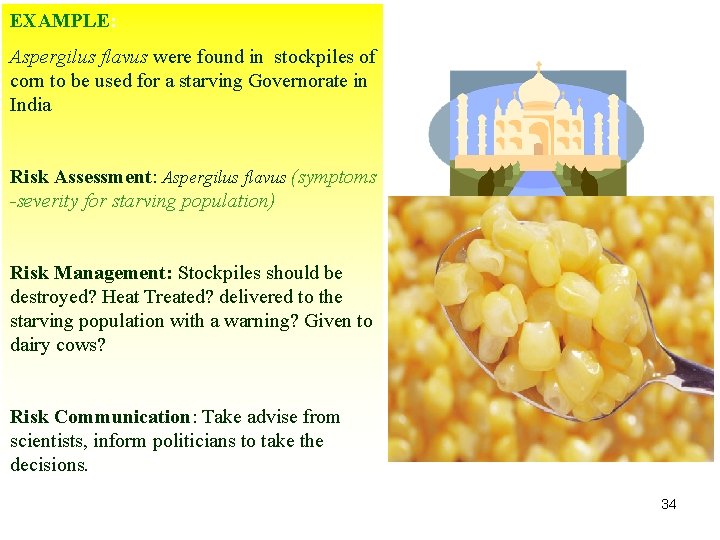
EXAMPLE: Aspergilus flavus were found in stockpiles of corn to be used for a starving Governorate in India Risk Assessment: Aspergilus flavus (symptoms -severity for starving population) Risk Management: Stockpiles should be destroyed? Heat Treated? delivered to the starving population with a warning? Given to dairy cows? Risk Communication: Take advise from scientists, inform politicians to take the decisions. 34
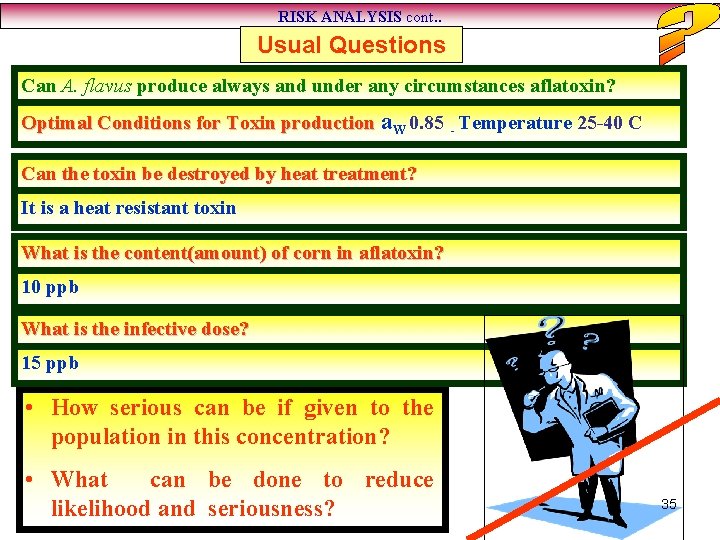
RISK ANALYSIS cont. . Usual Questions Can A. flavus produce always and under any circumstances aflatoxin? Optimal Conditions for Toxin production a. W 0. 85 - Temperature 25 -40 C Can the toxin be destroyed by heat treatment? It is a heat resistant toxin What is the content(amount) of corn in aflatoxin? 10 ppb What is the infective dose? 15 ppb • How serious can be if given to the population in this concentration? • What can be done to reduce likelihood and seriousness? 35
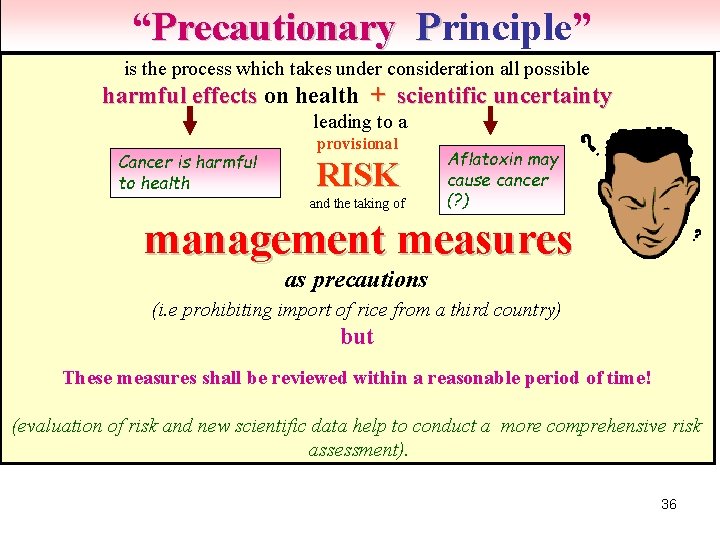
“Precautionary Principle” is the process which takes under consideration all possible harmful effects on health + scientific uncertainty leading to a Cancer is harmful to health provisional RISK and the taking of Aflatoxin may cause cancer (? ) management measures as precautions (i. e prohibiting import of rice from a third country) but These measures shall be reviewed within a reasonable period of time! (evaluation of risk and new scientific data help to conduct a more comprehensive risk assessment). 36
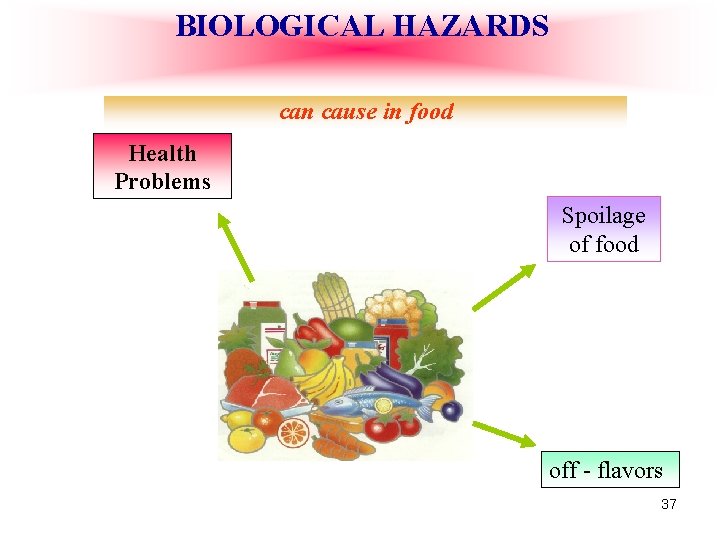
BIOLOGICAL HAZARDS can cause in food Health Problems Spoilage of food off - flavors 37
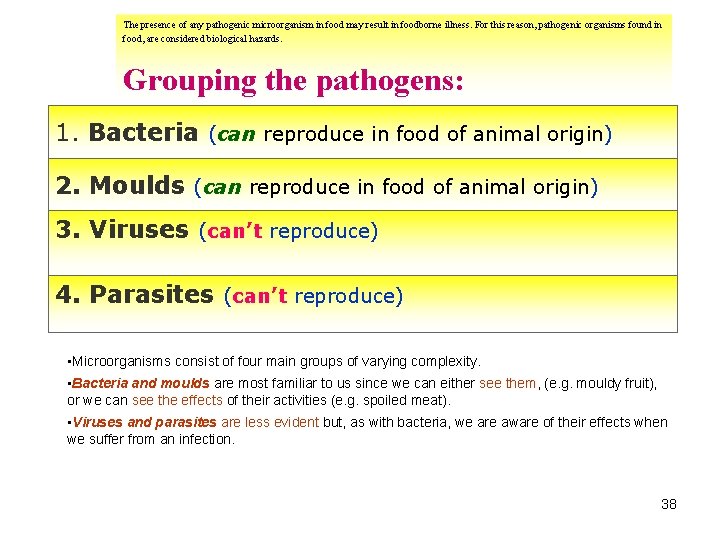
The presence of any pathogenic microorganism in food may result in foodborne illness. For this reason, pathogenic organisms found in food, are considered biological hazards. Grouping the pathogens: 1. Bacteria (can reproduce in food of animal origin) 2. Moulds (can reproduce in food of animal origin) 3. Viruses (can’t reproduce) 4. Parasites (can’t reproduce) • Microorganisms consist of four main groups of varying complexity. • Bacteria and moulds are most familiar to us since we can either see them, (e. g. mouldy fruit), or we can see the effects of their activities (e. g. spoiled meat). • Viruses and parasites are less evident but, as with bacteria, we are aware of their effects when we suffer from an infection. 38
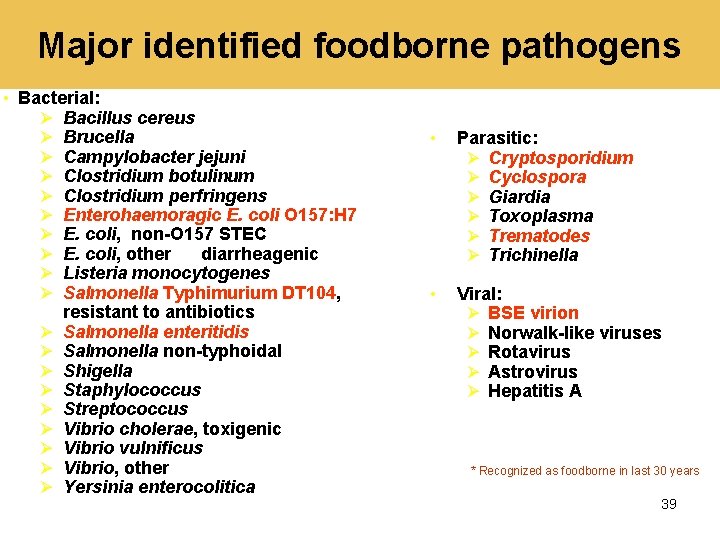
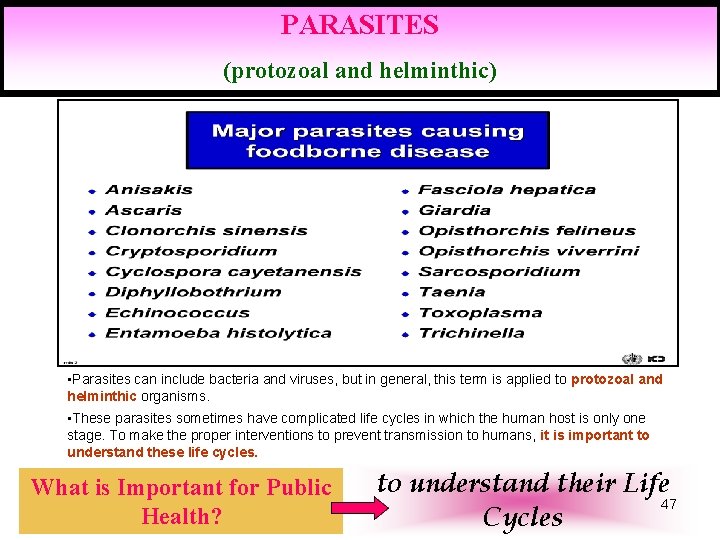
Major identified foodborne pathogens • Bacterial: Ø Bacillus cereus Ø Brucella Ø Campylobacter jejuni Ø Clostridium botulinum Ø Clostridium perfringens Ø Enterohaemoragic E. coli O 157: H 7 Ø E. coli, non-O 157 STEC Ø E. coli, other diarrheagenic Ø Listeria monocytogenes Ø Salmonella Typhimurium DT 104, Ø Ø Ø Ø Ø resistant to antibiotics Salmonella enteritidis Salmonella non-typhoidal Shigella Staphylococcus Streptococcus Vibrio cholerae, toxigenic Vibrio vulnificus Vibrio, other Yersinia enterocolitica • Parasitic: Ø Cryptosporidium Ø Cyclospora Ø Giardia Ø Toxoplasma Ø Trematodes Ø Trichinella • Viral: Ø BSE virion Ø Norwalk-like viruses Ø Rotavirus Ø Astrovirus Ø Hepatitis A * Recognized as foodborne in last 30 years 39
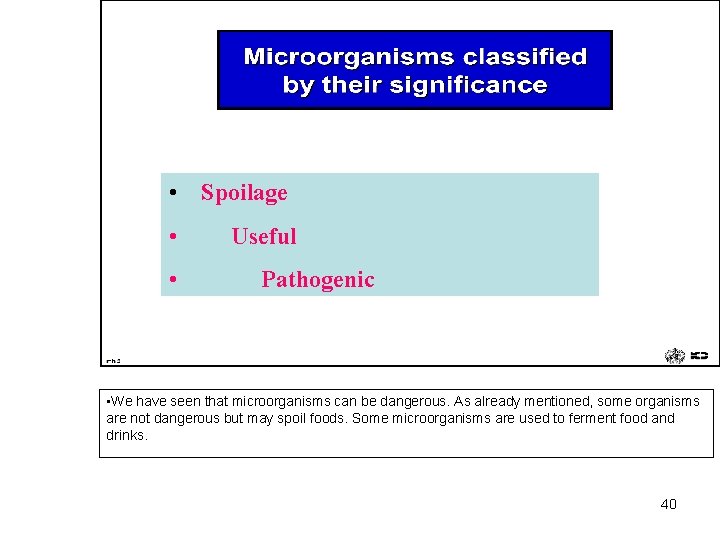
• Spoilage • • Useful Pathogenic • We have seen that microorganisms can be dangerous. As already mentioned, some organisms are not dangerous but may spoil foods. Some microorganisms are used to ferment food and drinks. 40
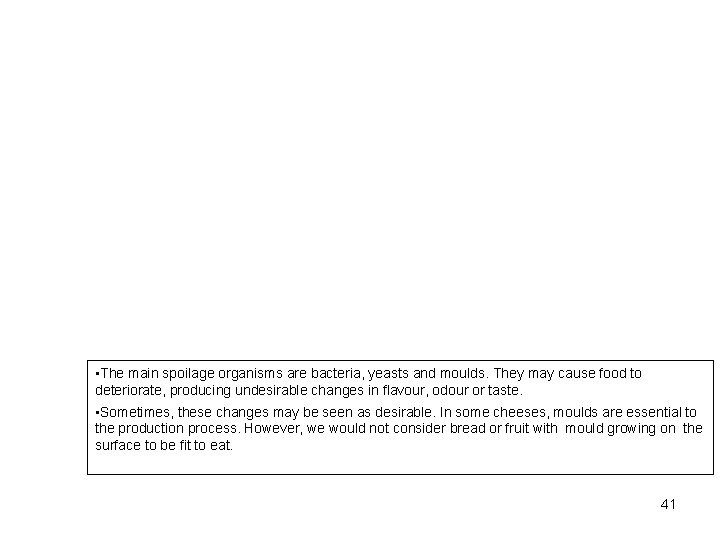
• The main spoilage organisms are bacteria, yeasts and moulds. They may cause food to deteriorate, producing undesirable changes in flavour, odour or taste. • Sometimes, these changes may be seen as desirable. In some cheeses, moulds are essential to the production process. However, we would not consider bread or fruit with mould growing on the surface to be fit to eat. 41
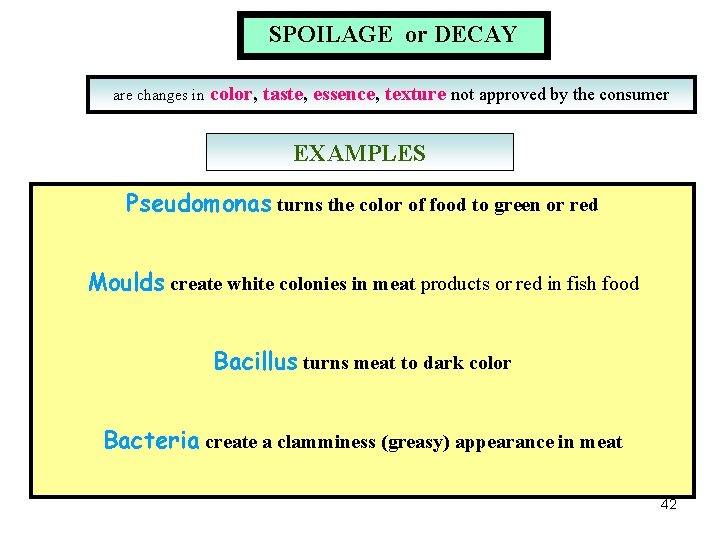
SPOILAGE or DECAY are changes in color, taste, essence, texture not approved by the consumer EXAMPLES Pseudomonas turns the color of food to green or red Moulds create white colonies in meat products or red in fish food Bacillus turns meat to dark color Bacteria create a clamminess (greasy) appearance in meat 42
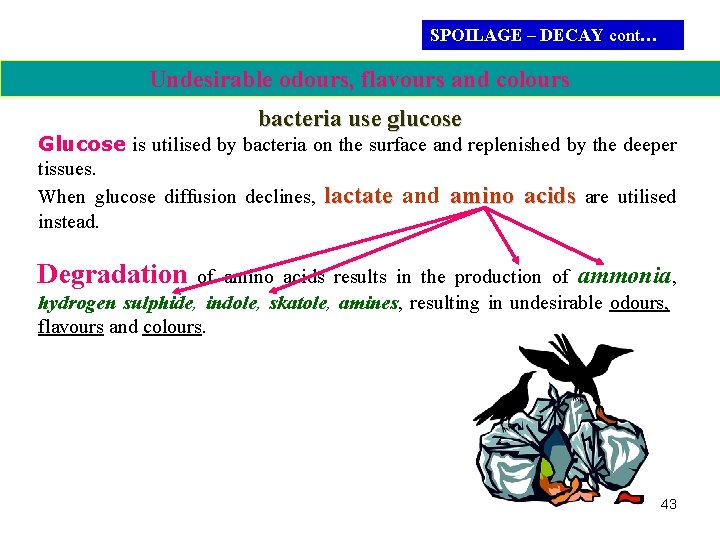
SPOILAGE – DECAY cont… Undesirable odours, flavours and colours bacteria use glucose Glucose is utilised by bacteria on the surface and replenished by the deeper tissues. When glucose diffusion declines, lactate and amino acids are utilised instead. Degradation of amino acids results in the production of ammonia, hydrogen sulphide, indole, skatole, amines, resulting in undesirable odours, flavours and colours. 43
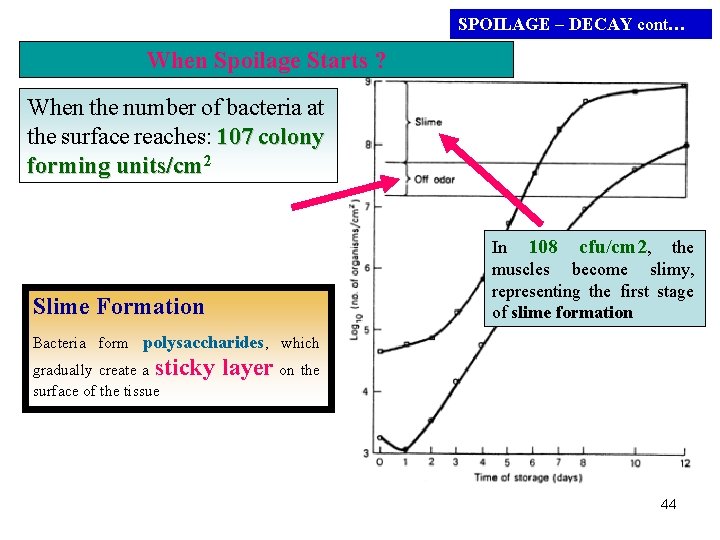
SPOILAGE – DECAY cont… When Spoilage Starts ? When the number of bacteria at the surface reaches: 107 colony forming units/cm 2 In 108 cfu/cm 2, the muscles become slimy, representing the first stage of slime formation Slime Formation Bacteria form polysaccharides, which gradually create a sticky surface of the tissue layer on the 44
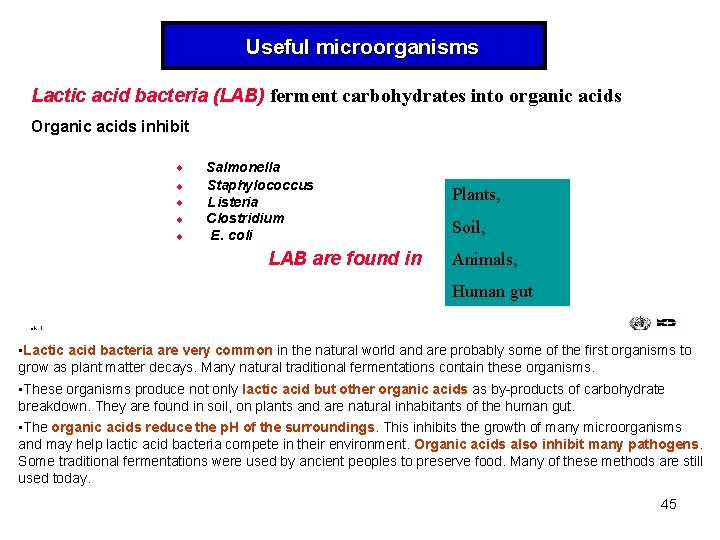
Useful microorganisms Lactic acid bacteria (LAB) ferment carbohydrates into organic acids Organic acids inhibit u u u Salmonella Staphylococcus Listeria Clostridium E. coli LAB are found in Plants, Soil, Animals, Human gut mh 1 • Lactic acid bacteria are very common in the natural world and are probably some of the first organisms to grow as plant matter decays. Many natural traditional fermentations contain these organisms. • These organisms produce not only lactic acid but other organic acids as by-products of carbohydrate breakdown. They are found in soil, on plants and are natural inhabitants of the human gut. • The organic acids reduce the p. H of the surroundings. This inhibits the growth of many microorganisms and may help lactic acid bacteria compete in their environment. Organic acids also inhibit many pathogens. Some traditional fermentations were used by ancient peoples to preserve food. Many of these methods are still used today. 45
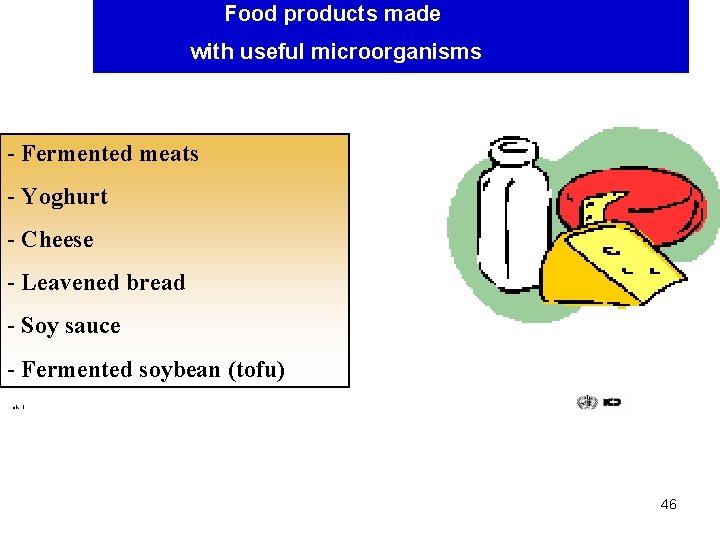
Food products made with useful microorganisms - Fermented meats - Yoghurt - Cheese - Leavened bread - Soy sauce - Fermented soybean (tofu) mh 1 46
PARASITES (protozoal and helminthic) • Parasites can include bacteria and viruses, but in general, this term is applied to protozoal and helminthic organisms. • These parasites sometimes have complicated life cycles in which the human host is only one stage. To make the proper interventions to prevent transmission to humans, it is important to understand these life cycles. What is Important for Public Health? to understand their Life 47 Cycles
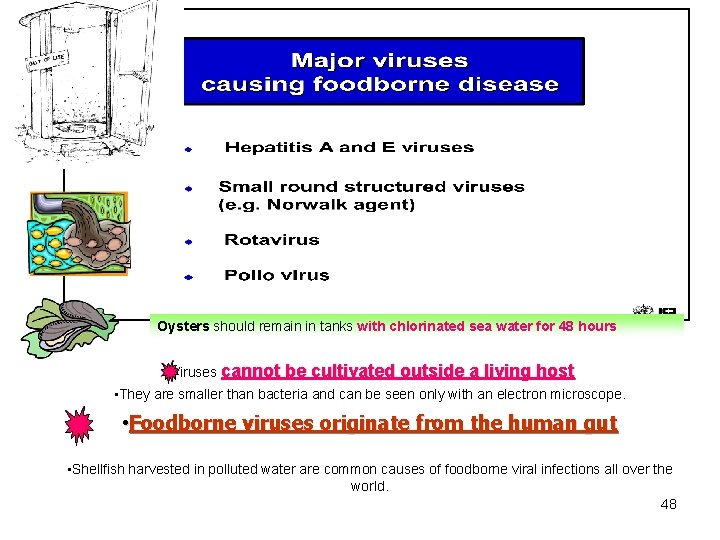
Oysters should remain in tanks with chlorinated sea water for 48 hours • Viruses cannot be cultivated outside a living host • They are smaller than bacteria and can be seen only with an electron microscope. • Foodborne viruses originate from the human gut • Shellfish harvested in polluted water are common causes of foodborne viral infections all over the world. 48
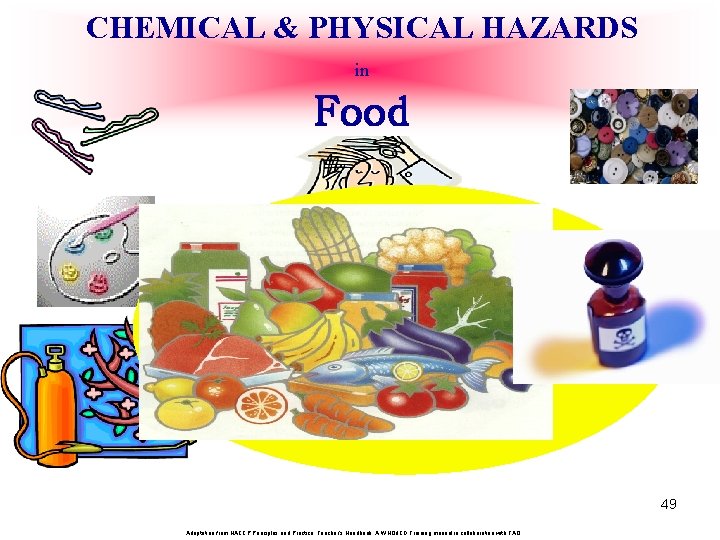
CHEMICAL & PHYSICAL HAZARDS in Food 49 Adaptation from HACCP Principles and Practice, Teacher’s Handbook, A WHO/ICD Training manual in collaboration with FAO
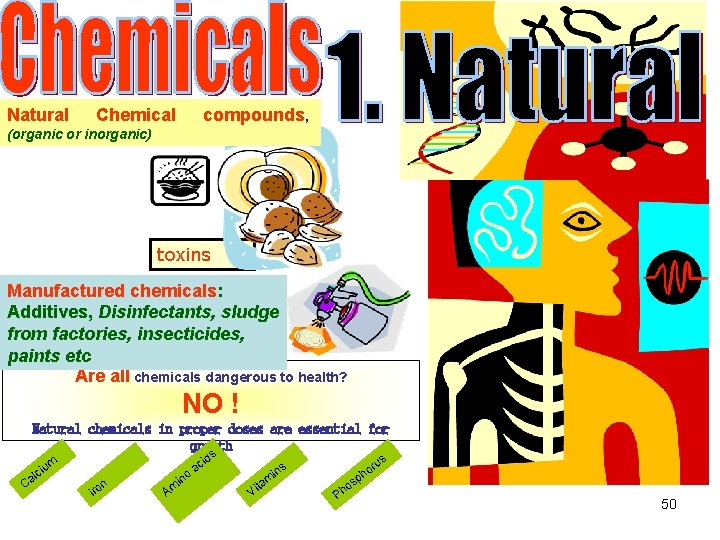
Natural Chemical compounds, (organic or inorganic) toxins Manufactured chemicals: Additives, Disinfectants, sludge from factories, insecticides, paints etc Are all chemicals dangerous to health? NO ! Natural chemicals in proper doses are essential for growth C ium alc s n iro ino Am id ac ta Vi m ins p os h P s ru o h 50
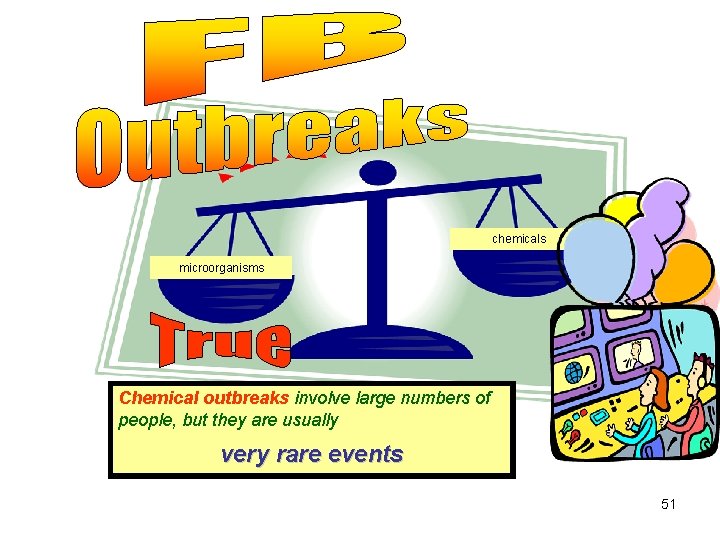
chemicals microorganisms Chemical outbreaks involve large numbers of people, but they are usually very rare events 51
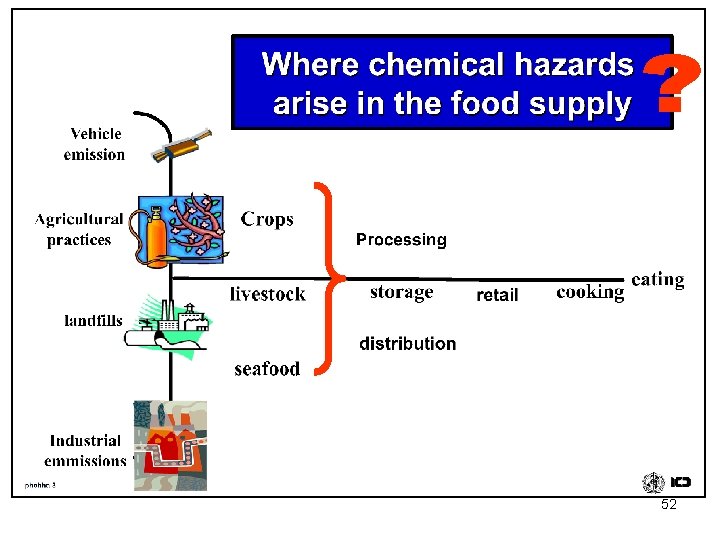
52
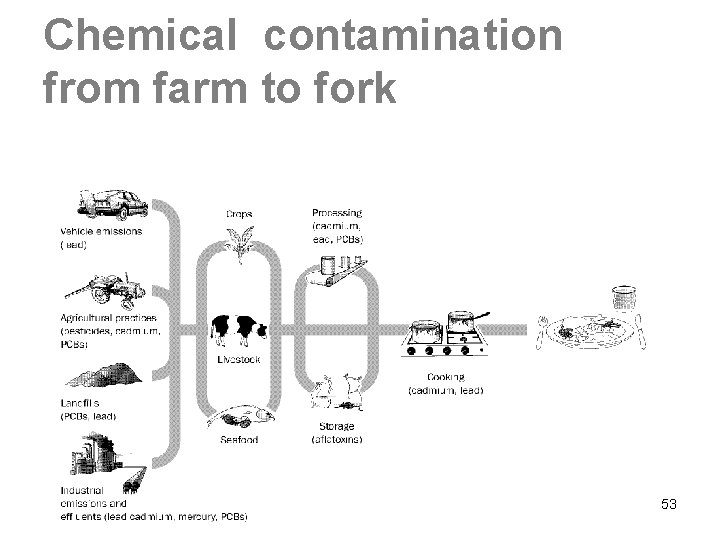
Chemical contamination from farm to fork 53
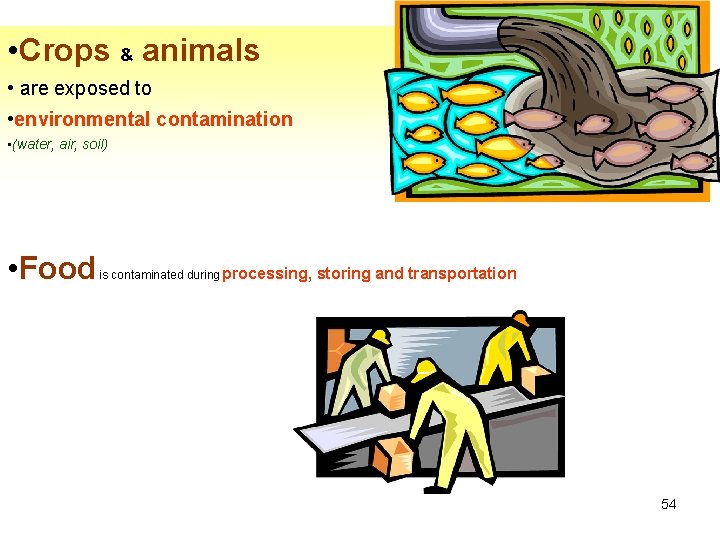
• Crops & animals • are exposed to • environmental contamination • (water, air, soil) • Food is contaminated during processing, storing and transportation 54
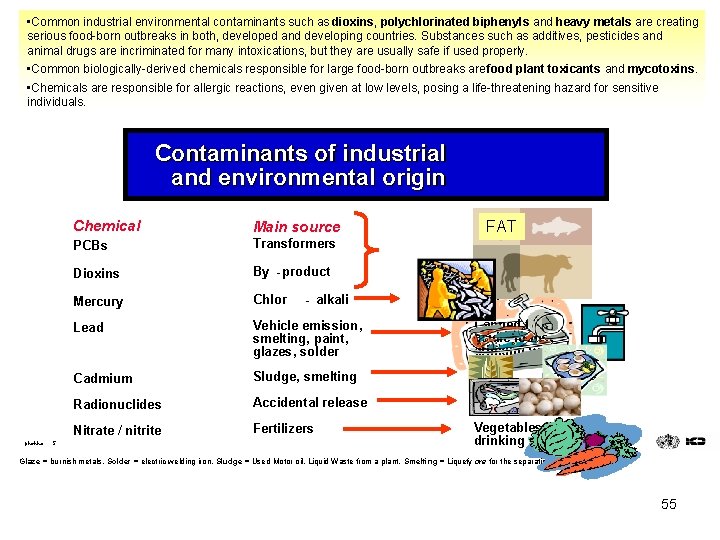
• Common industrial environmental contaminants such as dioxins, polychlorinated biphenyls and heavy metals are creating serious food-born outbreaks in both, developed and developing countries. Substances such as additives, pesticides and animal drugs are incriminated for many intoxications, but they are usually safe if used properly. • Common biologically-derived chemicals responsible for large food-born outbreaks are food plant toxicants and mycotoxins. • Chemicals are responsible for allergic reactions, even given at low levels, posing a life-threatening hazard for sensitive individuals. Contaminants of industrial and environmental origin phchha 5 Chemical Main source PCBs Transformers Fish, animal fat Dioxins By - product Fish, animal fat Mercury Chlor Fish Lead Vehicle emission, smelting, paint, glazes, solder Canned food, acidic foods, drinking water Cadmium Sludge, smelting Grains, Radionuclides Accidental release Fish, mushrooms Nitrate / nitrite Fertilizers Vegetables, drinking water - alkali Associated food FAT molluscs Glaze = burnish metals, Solder = electric welding iron, Sludge = Used Motor oil, Liquid Waste from a plant, Smelting = Liquefy ore for the separation of minerals, 55
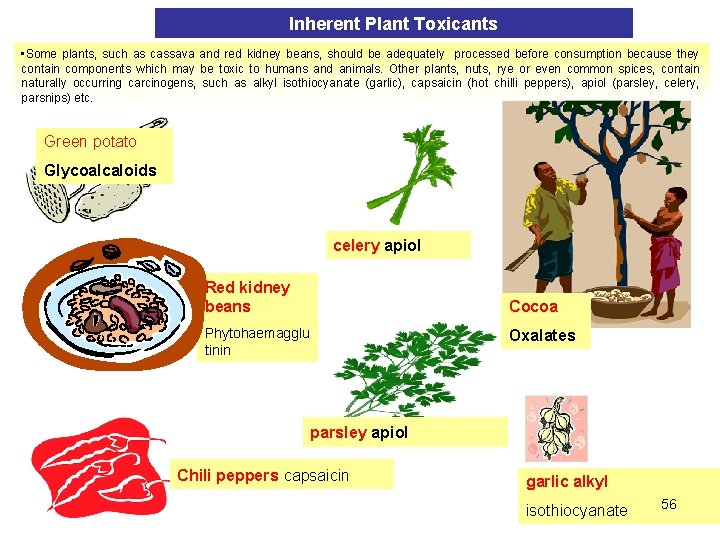
Inherent Plant Toxicants • Some plants, such as cassava and red kidney beans, should be adequately processed before consumption because they contain components which may be toxic to humans and animals. Other plants, nuts, rye or even common spices, contain naturally occurring carcinogens, such as alkyl isothiocyanate (garlic), capsaicin (hot chilli peppers), apiol (parsley, celery, parsnips) etc. Green potato Glycoalcaloids celery apiol Red kidney beans Cocoa Phytohaemagglu tinin Oxalates parsley apiol Chili peppers capsaicin garlic alkyl isothiocyanate 56
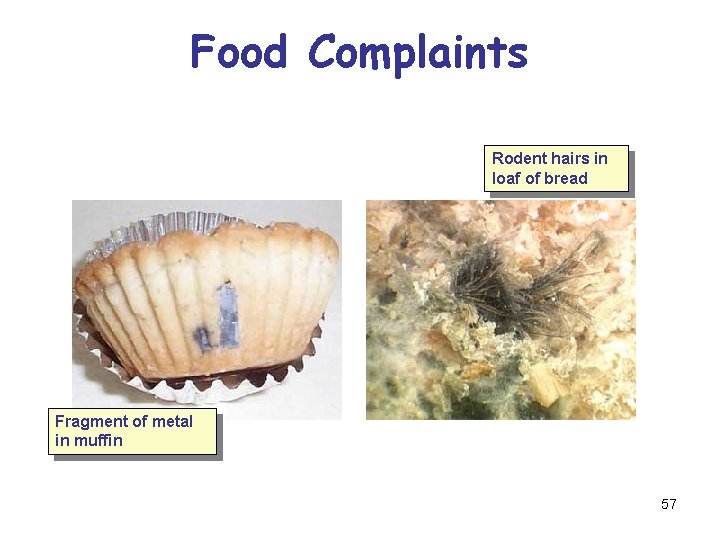
Food Complaints Rodent hairs in loaf of bread Fragment of metal in muffin 57
Although it is for the benefit of the Industry to implement HACCP still adulteration of the food is taking place today, even in developed countries (see dioxins). So it is necessary for the Government to develop Inspection mechanisms the Verification or Assessment tools The term “Verification” Verification is used for the self inspections of the Industry The term “Assessment” is used by the Government. 58
VERIFICATION or REGULATORY ASSESSMENT tools (FAO/WHO consultation of 1998) What is a regulatory assessment? All legal activities adopted by a Government to prove that: • the seven principles of HACCP have been effectively applied, • the HACCP plan and all prerequisites to HACCP implemented and • the system maintained. . 59
CONCLUSIONS When the food is safe? When it does not cause harm to the consumer (= prepared and consumed according to its intended use) What is the definition of Food Safety Assurance? All actions that ensure the safety of food What we mean by “Modern Food Control? Less “policing” and more “advising” and “discussing” Who has the responsibility of safe food in the field? Producer of raw material and the Food-handler Who has the overall responsibility of safe food? Governments (Legislation of food safety) 60