
Role of the Architect in Turbulent Times Sarah

Role of the Architect in Turbulent Times Sarah Mocke Senior Architect Microsoft South Africa ARC 202
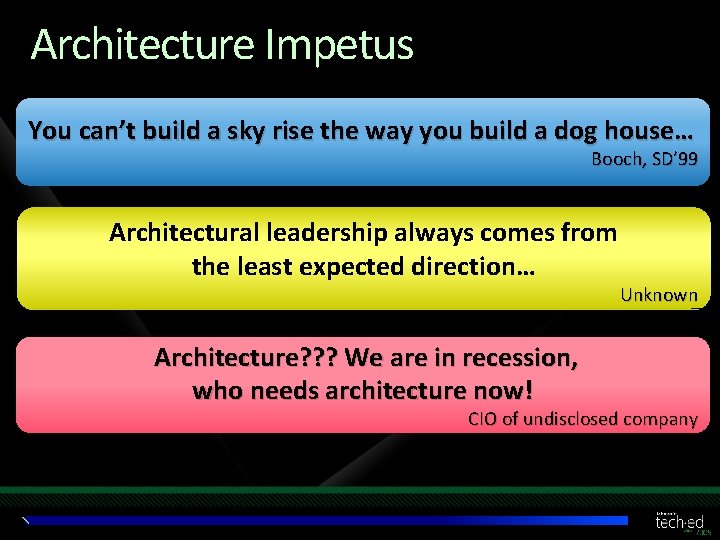
Architecture Impetus You can’t build a sky rise the way you build a dog house… Booch, SD’ 99 Architectural leadership always comes from the least expected direction… Architecture? ? ? We are in recession, who needs architecture now! Unknown CIO of undisclosed company
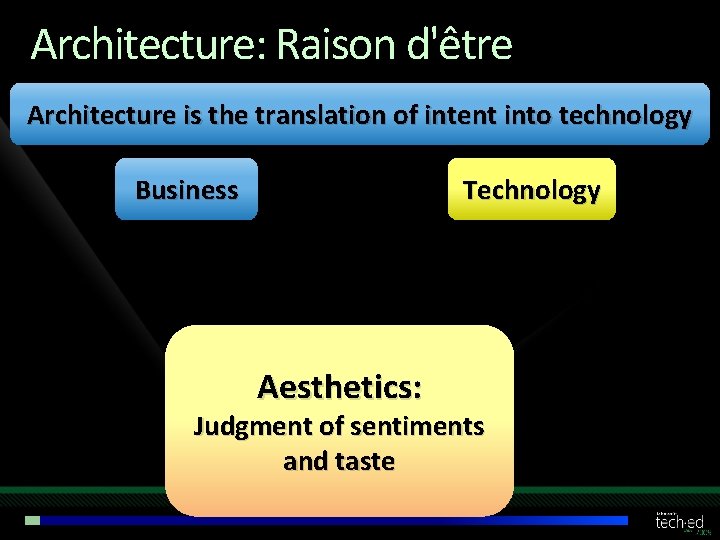
Architecture: Raison d'être Architecture is the translation of intent into technology Technology Business Aesthetics: Aesthetics Judgment of sentiments and taste
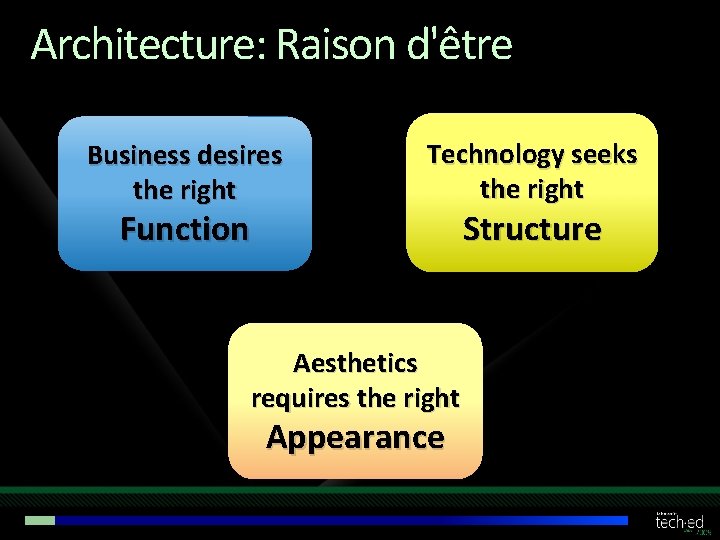
Architecture: Raison d'être Business desires Business the right Function Technology seeks the right Technology Aesthetics requires the right Aesthetics Appearance Structure
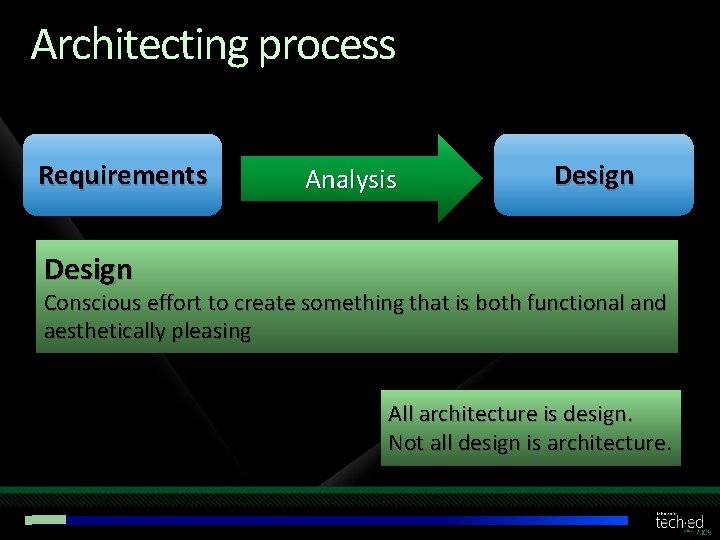
Architecting process Requirements Analysis Design Conscious effort to create something that is both functional and aesthetically pleasing All architecture is design. Not all design is architecture.
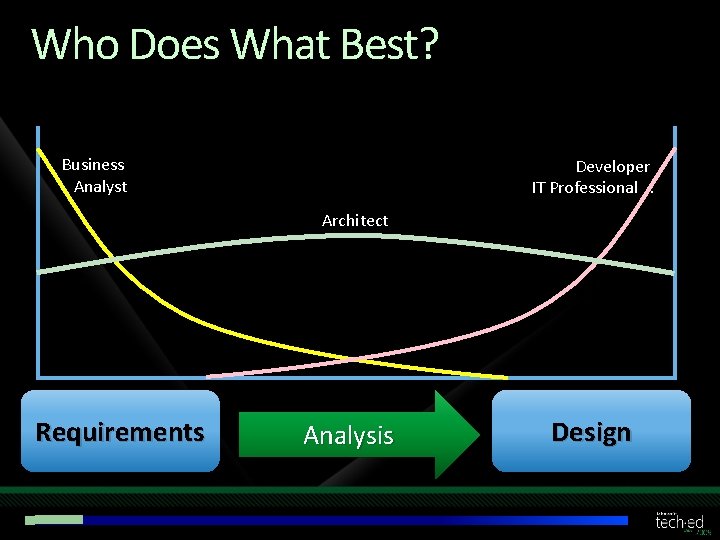
Who Does What Best? Business Analyst Developer IT Professional. Architect Requirements Analysis Design

Architectural Levels Design all things by considering them in their larger contexts An enterprise in an industry A system in an enterprise A component in a system An object in a component Put the large rocks in the place first
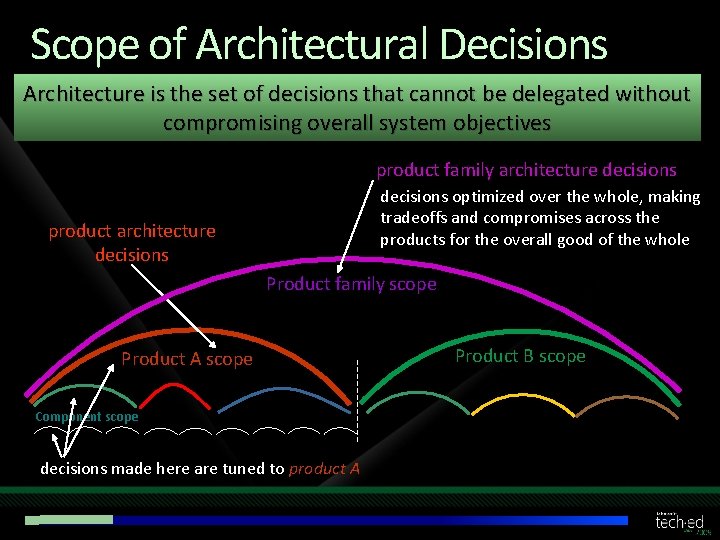
Scope of Architectural Decisions Architecture is the set of decisions that cannot be delegated without compromising overall system objectives product family architecture decisions optimized over the whole, making tradeoffs and compromises across the products for the overall good of the whole product architecture decisions Product family scope Product A scope Component scope decisions made here are tuned to product A Product B scope
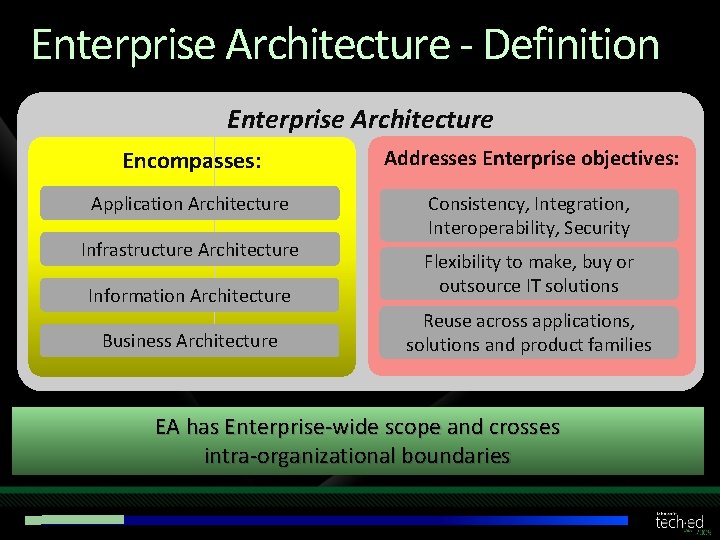
Enterprise Architecture - Definition Enterprise Architecture Encompasses: Addresses Enterprise objectives: Application Architecture Consistency, Integration, Interoperability, Security Infrastructure Architecture Information Architecture Flexibility to make, buy or outsource IT solutions Business Architecture Reuse across applications, solutions and product families EA has Enterprise-wide scope and crosses intra-organizational boundaries
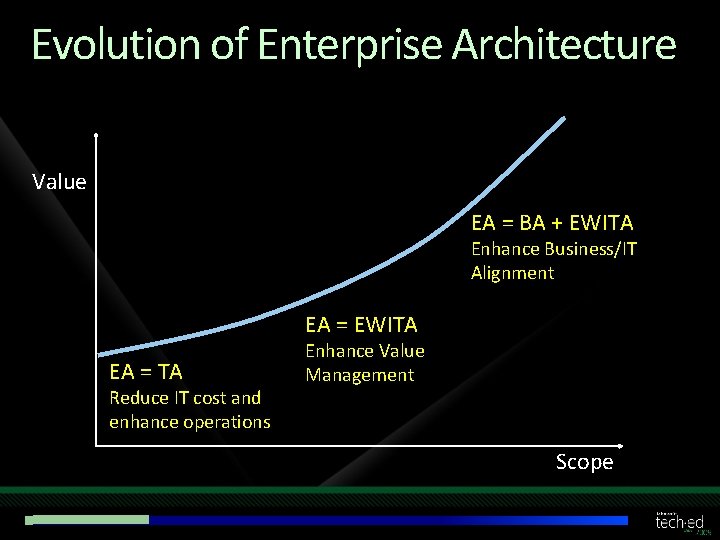
Evolution of Enterprise Architecture Value EA = BA + EWITA Enhance Business/IT Alignment EA = EWITA EA = TA Reduce IT cost and enhance operations Enhance Value Management Scope
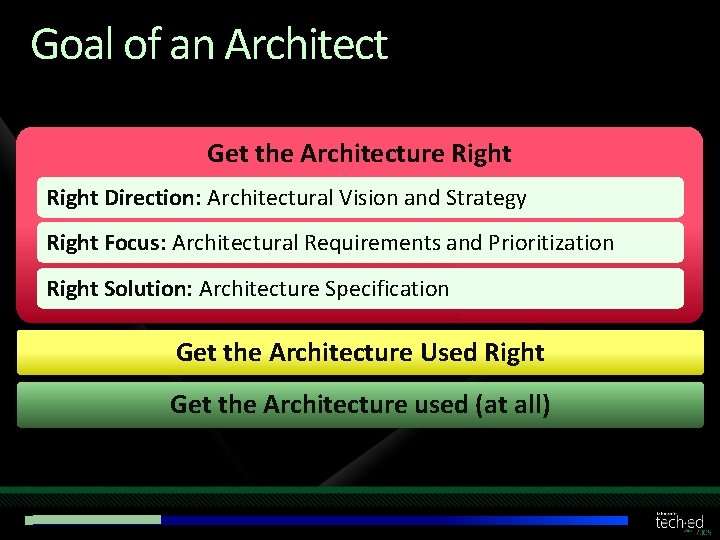
Goal of an Architect Get the Architecture Right Direction: Architectural Vision and Strategy Right Focus: Architectural Requirements and Prioritization Right Solution: Architecture Specification Get the Architecture Used Right Get the Architecture used (at all)
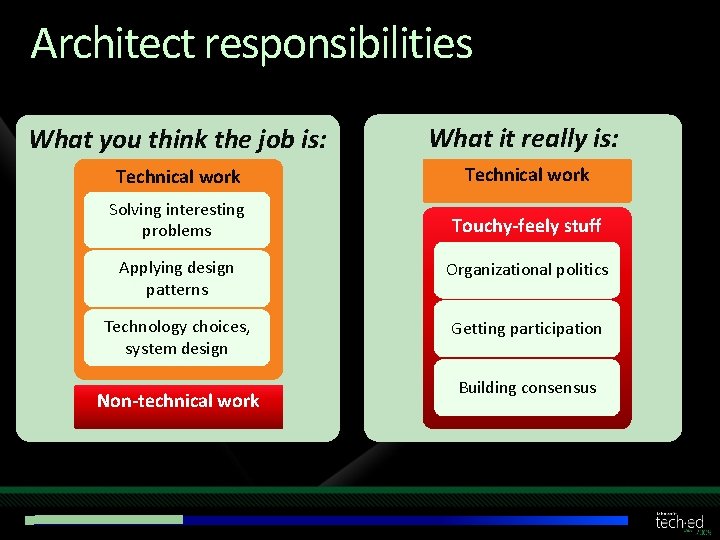
Architect responsibilities What you think the job is: What it really is: Technical work Solving interesting problems Touchy-feely stuff Applying design patterns Organizational politics Technology choices, system design Getting participation Non-technical work Building consensus
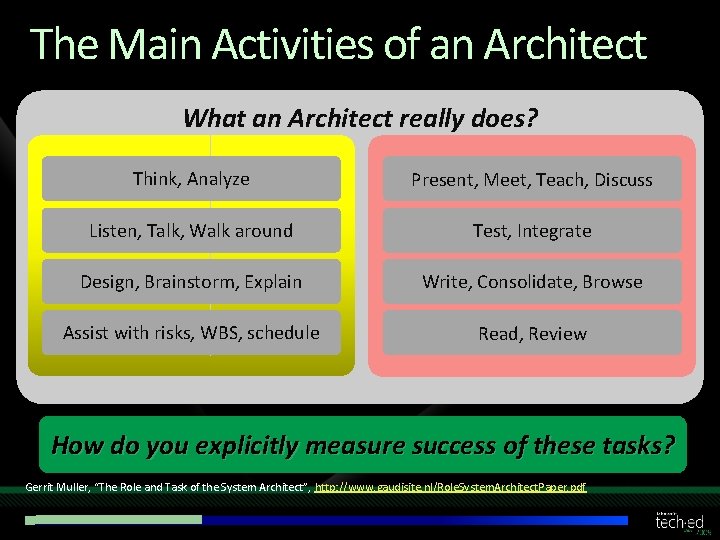
The Main Activities of an Architect What an Architect really does? Think, Analyze Present, Meet, Teach, Discuss Listen, Talk, Walk around Test, Integrate Design, Brainstorm, Explain Write, Consolidate, Browse Assist with risks, WBS, schedule Read, Review How do you explicitly measure success of these tasks? Gerrit Muller, “The Role and Task of the System Architect”, http: //www. gaudisite. nl/Role. System. Architect. Paper. pdf
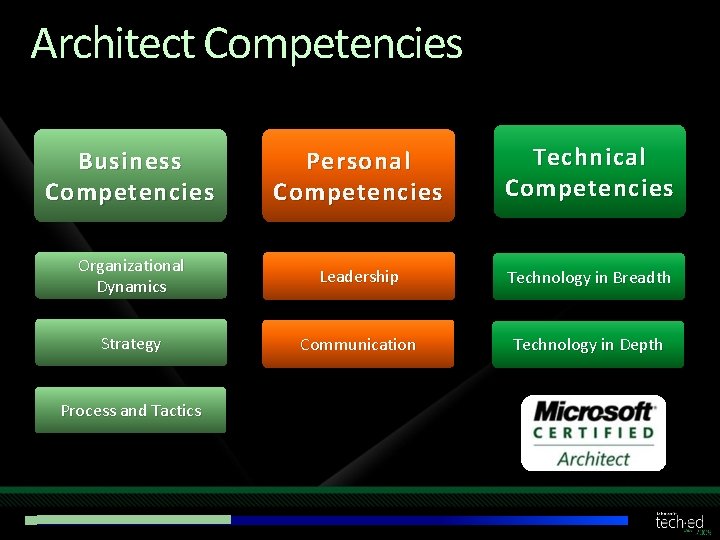
Architect Competencies Business Competencies Personal Competencies Technical Competencies Organizational Dynamics Leadership Technology in Breadth Strategy Communication Technology in Depth Process and Tactics
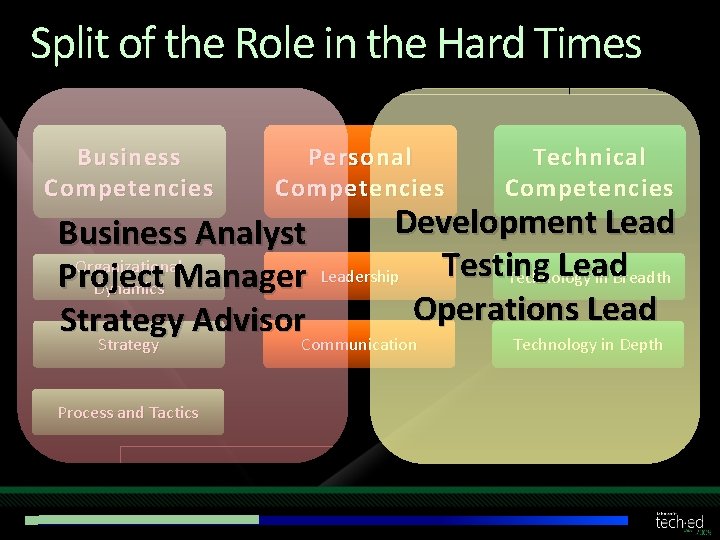
Split of the Role in the Hard Times Business Competencies Personal Competencies Technical Competencies Strategy Communication Technology in Depth Development Lead Business Analyst Organizational Testing Leadership Technology in Breadth Project Manager Dynamics Operations Lead Strategy Advisor Communication Process and Tactics
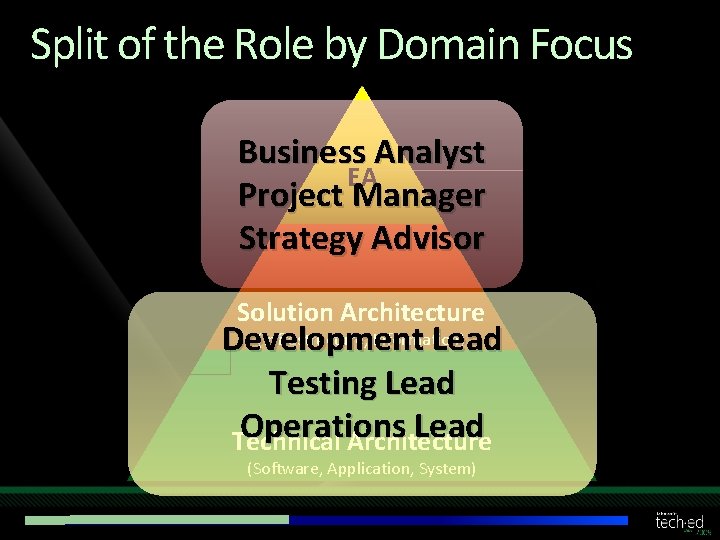
Split of the Role by Domain Focus Business Analyst EA Project Manager Strategy Advisor Solution Architecture (Infrastructure, Information) Development Lead Testing Lead Operations Lead Technical Architecture (Software, Application, System)
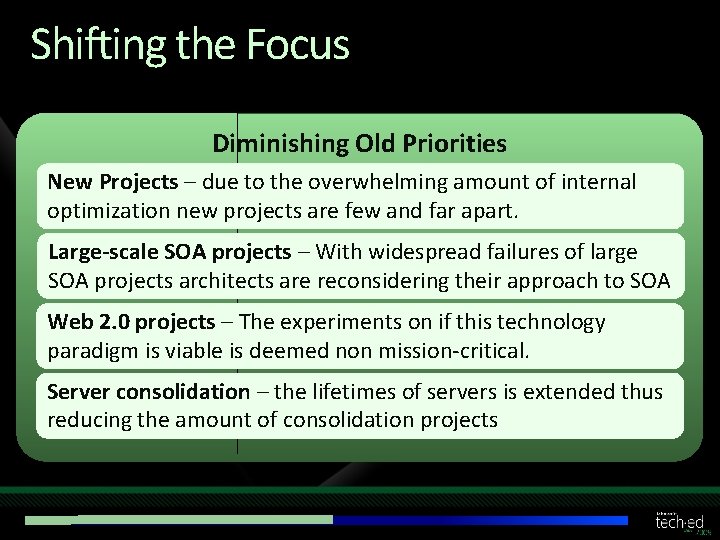
Shifting the Focus Diminishing Old Priorities New Projects – due to the overwhelming amount of internal optimization new projects are few and far apart. Large-scale SOA projects – With widespread failures of large SOA projects architects are reconsidering their approach to SOA Web 2. 0 projects – The experiments on if this technology paradigm is viable is deemed non mission-critical. Server consolidation – the lifetimes of servers is extended thus reducing the amount of consolidation projects
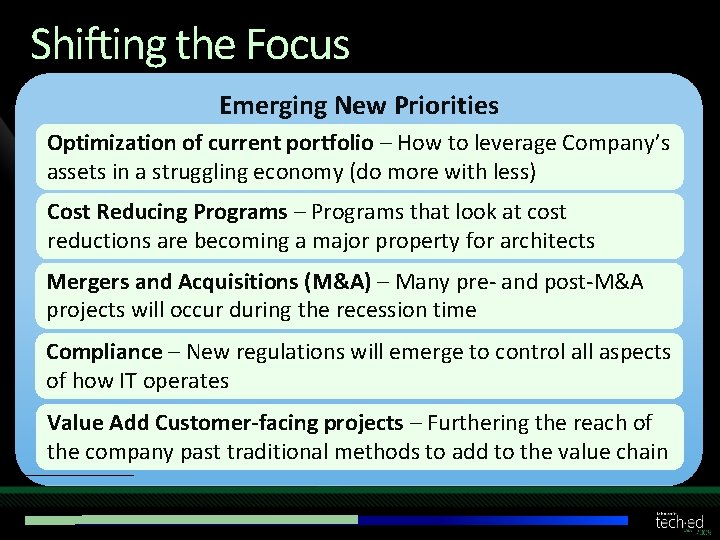
Shifting the Focus Emerging New Priorities Optimization of current portfolio – How to leverage Company’s assets in a struggling economy (do more with less) Cost Reducing Programs – Programs that look at cost reductions are becoming a major property for architects Mergers and Acquisitions (M&A) – Many pre- and post-M&A projects will occur during the recession time Compliance – New regulations will emerge to control all aspects of how IT operates Value Add Customer-facing projects – Furthering the reach of the company past traditional methods to add to the value chain
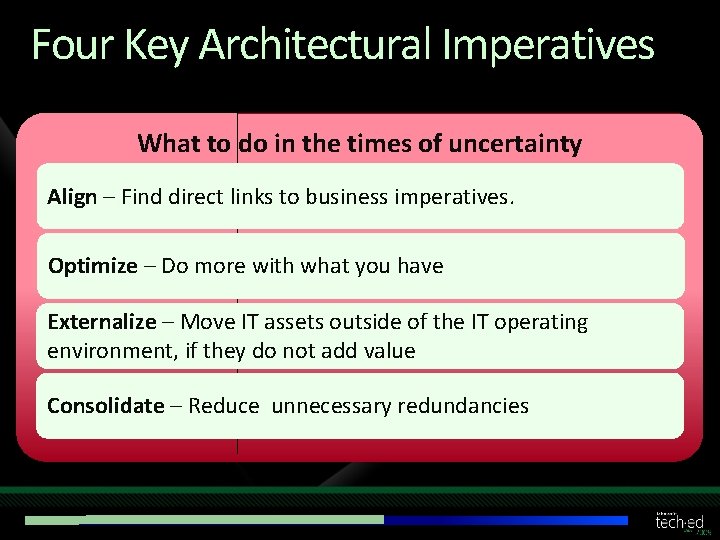
Four Key Architectural Imperatives What to do in the times of uncertainty Align – Find direct links to business imperatives. Optimize – Do more with what you have Externalize – Move IT assets outside of the IT operating environment, if they do not add value Consolidate – Reduce unnecessary redundancies
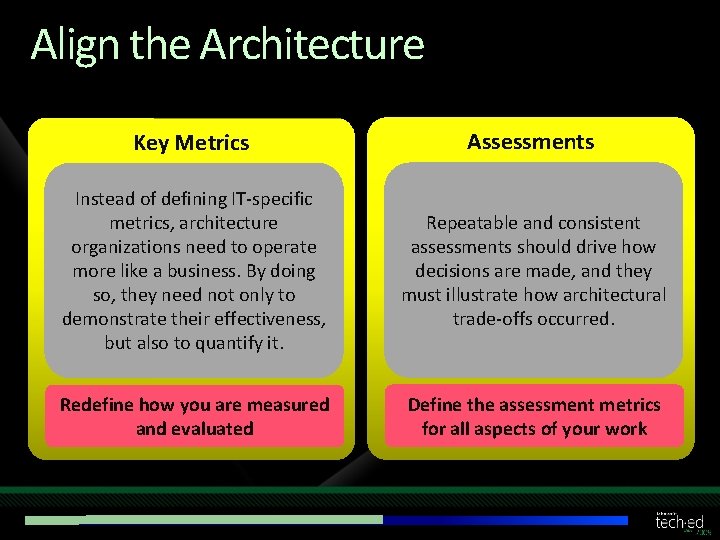
Align the Architecture Key Metrics Assessments Instead of defining IT-specific metrics, architecture organizations need to operate more like a business. By doing so, they need not only to demonstrate their effectiveness, but also to quantify it. Repeatable and consistent assessments should drive how decisions are made, and they must illustrate how architectural trade-offs occurred. Redefine how you are measured and evaluated Define the assessment metrics for all aspects of your work
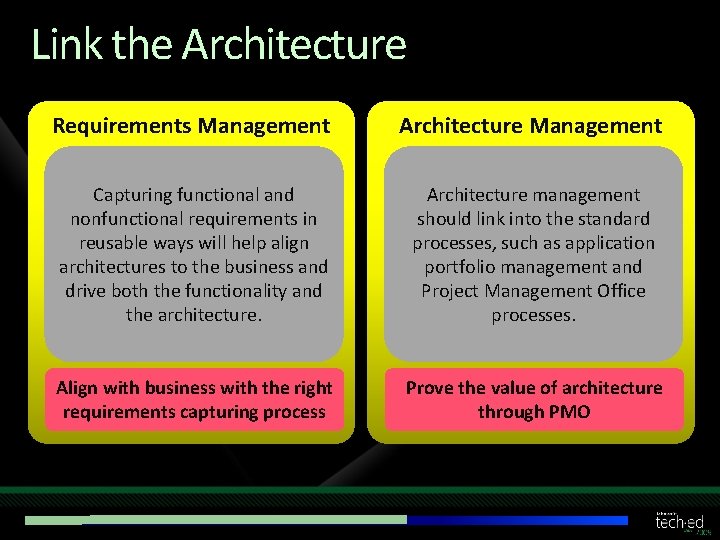
Link the Architecture Requirements Management Architecture Management Capturing functional and nonfunctional requirements in reusable ways will help align architectures to the business and drive both the functionality and the architecture. Architecture management should link into the standard processes, such as application portfolio management and Project Management Office processes. Align with business with the right requirements capturing process Prove the value of architecture through PMO
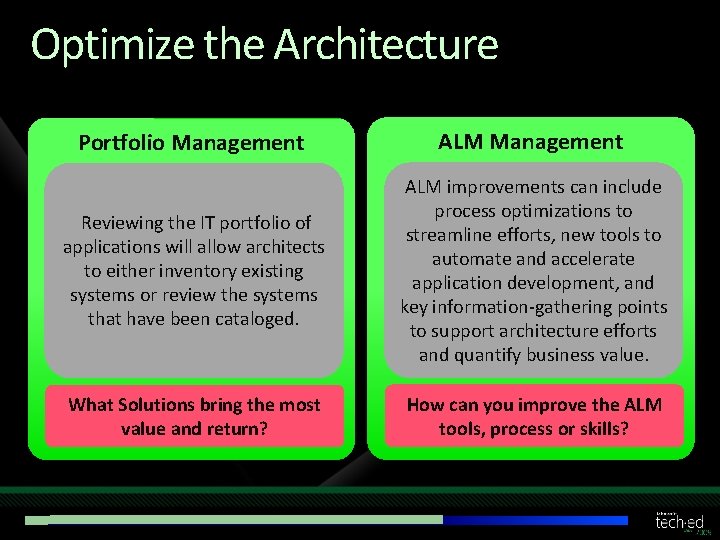
Optimize the Architecture Portfolio Management ALM Management Reviewing the IT portfolio of applications will allow architects to either inventory existing systems or review the systems that have been cataloged. ALM improvements can include process optimizations to streamline efforts, new tools to automate and accelerate application development, and key information-gathering points to support architecture efforts and quantify business value. What Solutions bring the most value and return? How can you improve the ALM tools, process or skills?
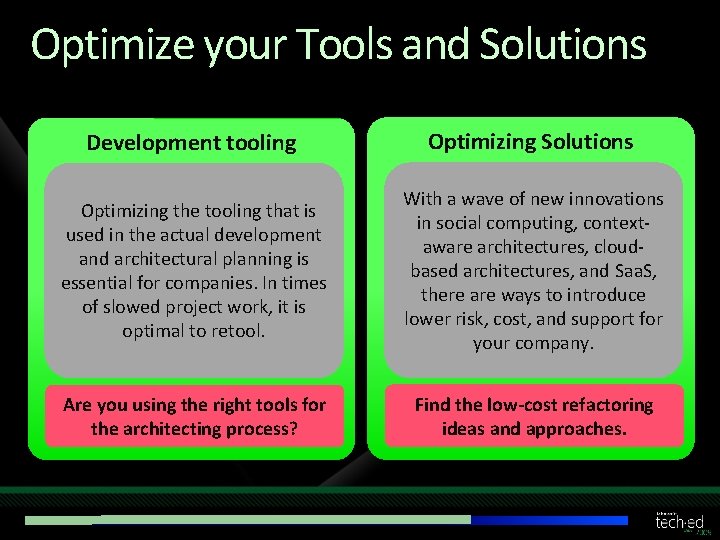
Optimize your Tools and Solutions Development tooling Optimizing Solutions Optimizing the tooling that is used in the actual development and architectural planning is essential for companies. In times of slowed project work, it is optimal to retool. With a wave of new innovations in social computing, contextaware architectures, cloudbased architectures, and Saa. S, there are ways to introduce lower risk, cost, and support for your company. Are you using the right tools for the architecting process? Find the low-cost refactoring ideas and approaches.
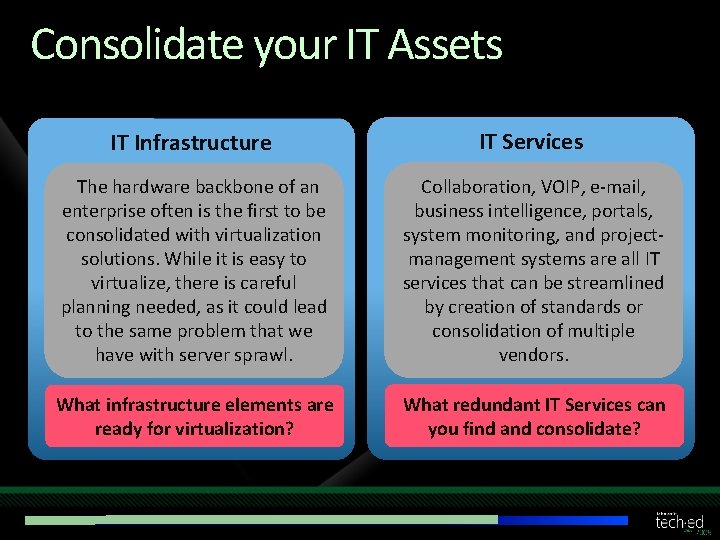
Consolidate your IT Assets IT Infrastructure IT Services The hardware backbone of an enterprise often is the first to be consolidated with virtualization solutions. While it is easy to virtualize, there is careful planning needed, as it could lead to the same problem that we have with server sprawl. Collaboration, VOIP, e-mail, business intelligence, portals, system monitoring, and projectmanagement systems are all IT services that can be streamlined by creation of standards or consolidation of multiple vendors. What infrastructure elements are ready for virtualization? What redundant IT Services can you find and consolidate?
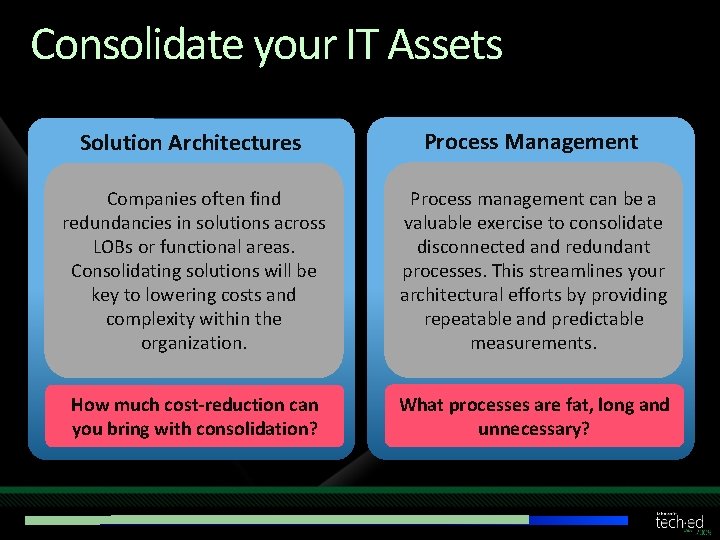
Consolidate your IT Assets Solution Architectures Process Management Companies often find redundancies in solutions across LOBs or functional areas. Consolidating solutions will be key to lowering costs and complexity within the organization. Process management can be a valuable exercise to consolidate disconnected and redundant processes. This streamlines your architectural efforts by providing repeatable and predictable measurements. How much cost-reduction can you bring with consolidation? What processes are fat, long and unnecessary?
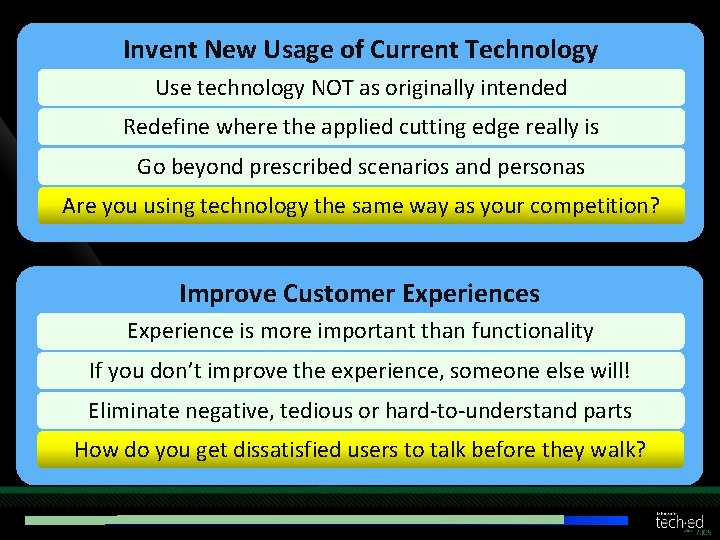
Invent New Usage of Current Technology Use technology NOT as originally intended Redefine where the applied cutting edge really is Go beyond prescribed scenarios and personas Are you using technology the same way as your competition? Improve Customer Experiences Experience is more important than functionality If you don’t improve the experience, someone else will! Eliminate negative, tedious or hard-to-understand parts How do you get dissatisfied users to talk before they walk?
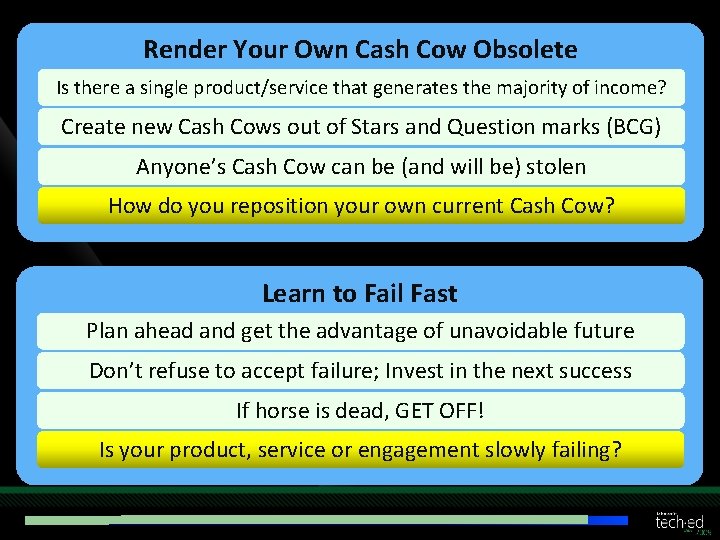
Render Your Own Cash Cow Obsolete Is there a single product/service that generates the majority of income? Create new Cash Cows out of Stars and Question marks (BCG) Anyone’s Cash Cow can be (and will be) stolen How do you reposition your own current Cash Cow? Learn to Fail Fast Plan ahead and get the advantage of unavoidable future Don’t refuse to accept failure; Invest in the next success If horse is dead, GET OFF! Is your product, service or engagement slowly failing?
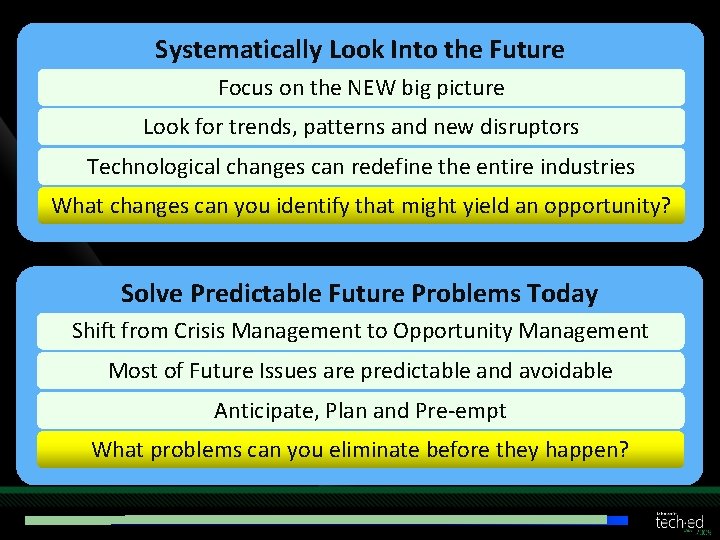
Systematically Look Into the Future Focus on the NEW big picture Look for trends, patterns and new disruptors Technological changes can redefine the entire industries What changes can you identify that might yield an opportunity? Solve Predictable Future Problems Today Shift from Crisis Management to Opportunity Management Most of Future Issues are predictable and avoidable Anticipate, Plan and Pre-empt What problems can you eliminate before they happen?
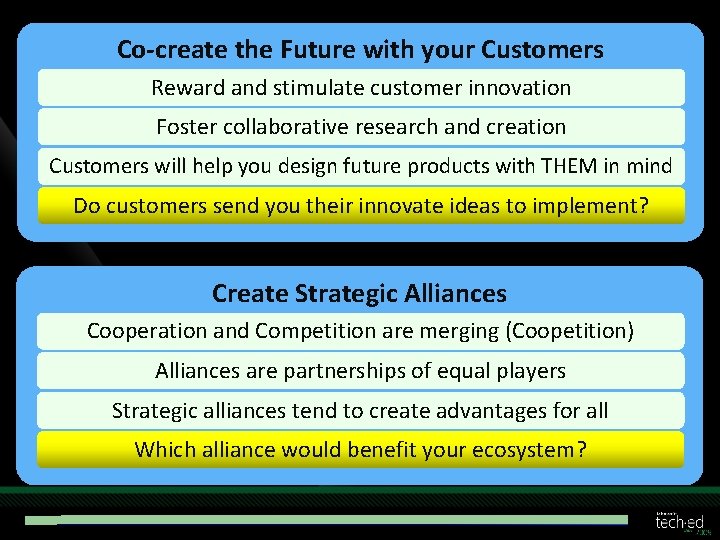
Co-create the Future with your Customers Reward and stimulate customer innovation Foster collaborative research and creation Customers will help you design future products with THEM in mind Do customers send you their innovate ideas to implement? Create Strategic Alliances Cooperation and Competition are merging (Coopetition) Alliances are partnerships of equal players Strategic alliances tend to create advantages for all Which alliance would benefit your ecosystem?
question & answer
Resources Tech·Ed Africa 2009 sessions will be made available for download the week after the event from: www. tech-ed. co. za www. microsoft. com/teched www. microsoft. com/learning International Content & Community Microsoft Certification & Training Resources http: //microsoft. com/technet http: //microsoft. com/msdn Resources for IT Professionals Resources for Developers
Related Content ARC 301: Practical Architecture: Aligning Business Strategy with IT Vision
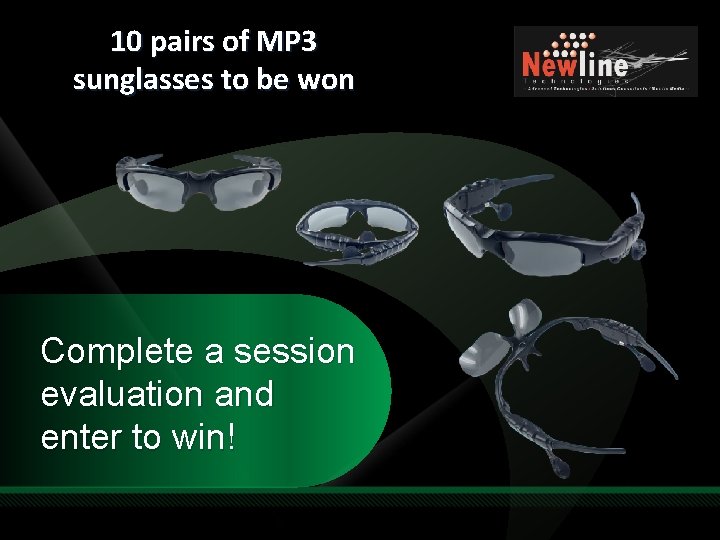
10 pairs of MP 3 sunglasses to be won Complete a session evaluation and enter to win!

© 2009 Microsoft Corporation. All rights reserved. Microsoft, Windows Vista and other product names are or may be registered trademarks and/or trademarks in the U. S. and/or other countries. The information herein is for informational purposes only and represents the current view of Microsoft Corporation as of the date of this presentation. Because Microsoft must respond to changing market conditions, it should not be interpreted to be a commitment on the part of Microsoft, and Microsoft cannot guarantee the accuracy of any information provided after the date of this presentation. MICROSOFT MAKES NO WARRANTIES, EXPRESS, IMPLIED OR STATUTORY, AS TO THE INFORMATION IN THIS PRESENTATION.
- Slides: 35