
Role of Technology in Promoting Financial Inclusion Lessons

- Slides: 66
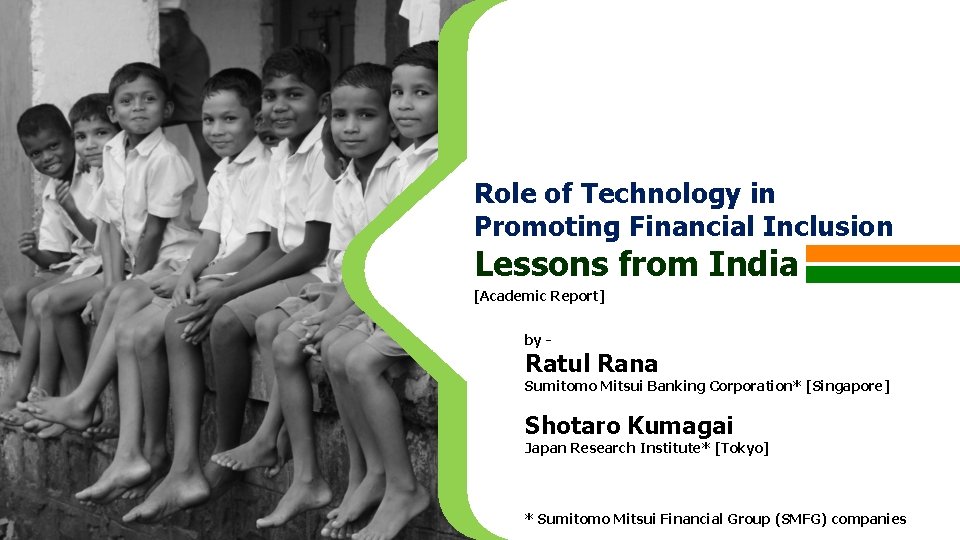
Role of Technology in Promoting Financial Inclusion Lessons from India [Academic Report] by - Ratul Rana Sumitomo Mitsui Banking Corporation* [Singapore] Shotaro Kumagai Japan Research Institute* [Tokyo] * Sumitomo Mitsui Financial Group (SMFG) companies
About the Authors SHOTARO KUMAGAI RATUL RANA Sumitomo Mitsui Financial Group (SMFG) companies
SECTIONS 01 02 03 Introduction India’s efforts towards Financial Inclusion Aadhaar : Game Changer Strategic Framework for India Financial Inclusion in Cambodia : Suggested Approach 04. 05 Conclusion
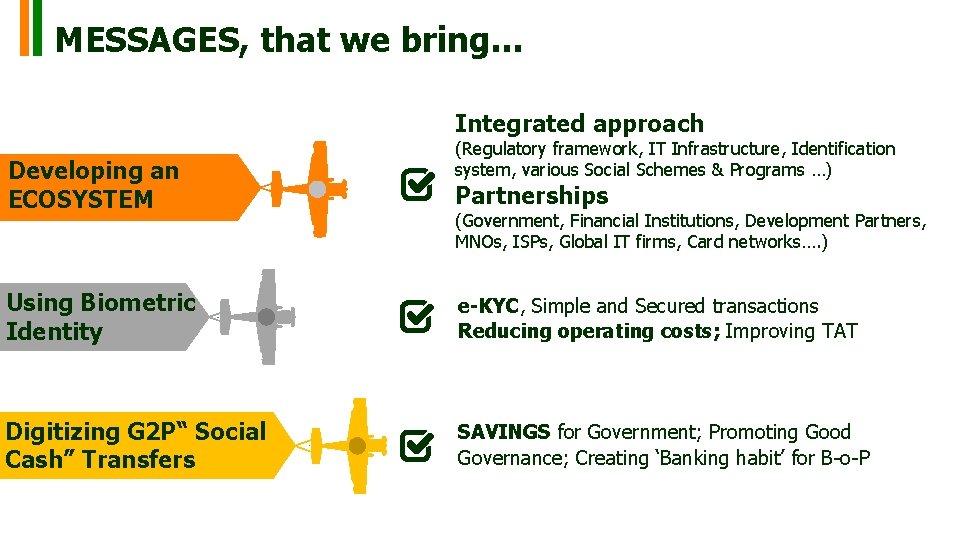
MESSAGES, that we bring… Integrated approach Developing an ECOSYSTEM (Regulatory framework, IT Infrastructure, Identification system, various Social Schemes & Programs …) Partnerships (Government, Financial Institutions, Development Partners, MNOs, ISPs, Global IT firms, Card networks…. ) Using Biometric Identity e-KYC, Simple and Secured transactions Reducing operating costs; Improving TAT Digitizing G 2 P“ Social Cash” Transfers SAVINGS for Government; Promoting Good Governance; Creating ‘Banking habit’ for B-o-P
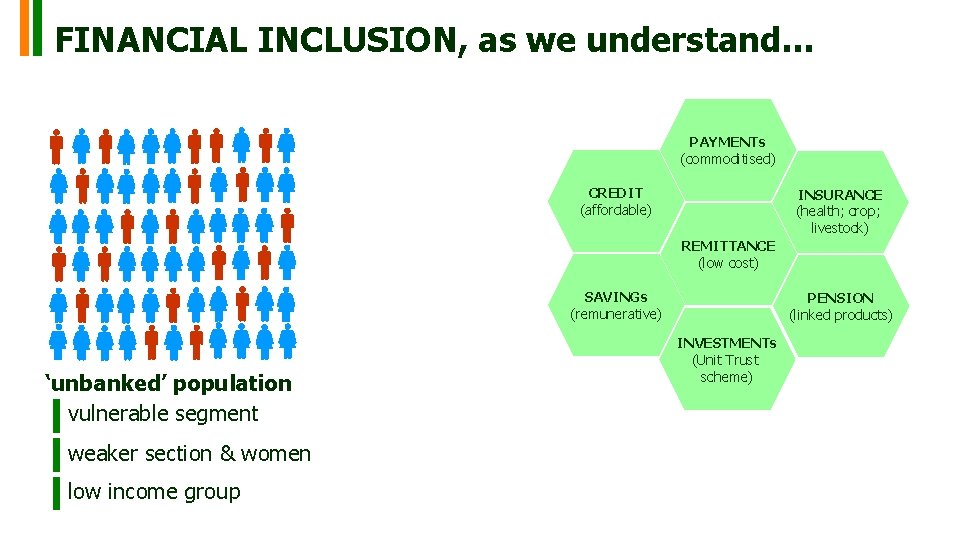
FINANCIAL INCLUSION, as we understand… PAYMENTs (commoditised) CREDIT (affordable) INSURANCE (health; crop; livestock) REMITTANCE (low cost) SAVINGs (remunerative) ‘unbanked’ population vulnerable segment weaker section & women low income group PENSION (linked products) INVESTMENTs (Unit Trust scheme)
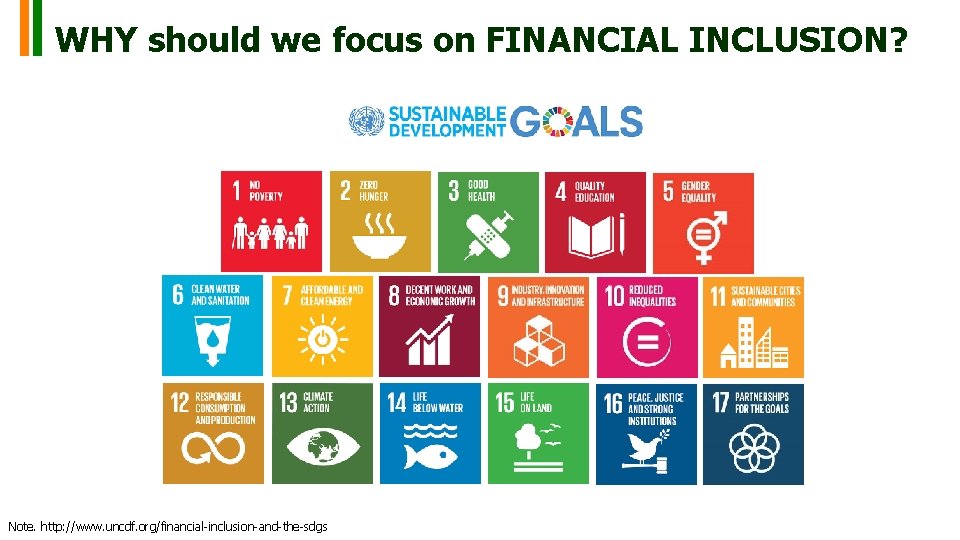
WHY should we focus on FINANCIAL INCLUSION? Note. http: //www. uncdf. org/financial-inclusion-and-the-sdgs
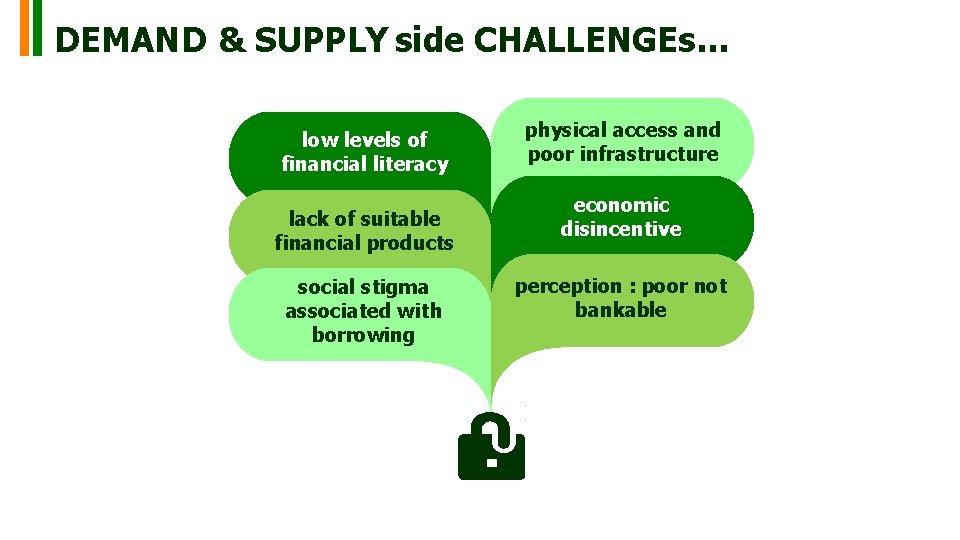
& SUPPLY DEMAND side CHALLENGEs… low levels of financial literacy lack of suitable financial products social stigma associated with borrowing physical access and poor infrastructure economic disincentive perception : poor not bankable
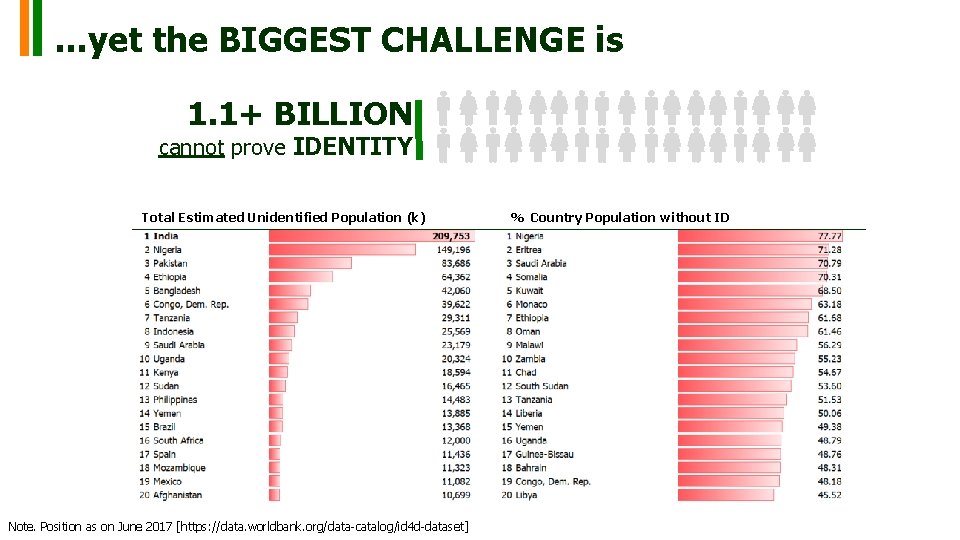
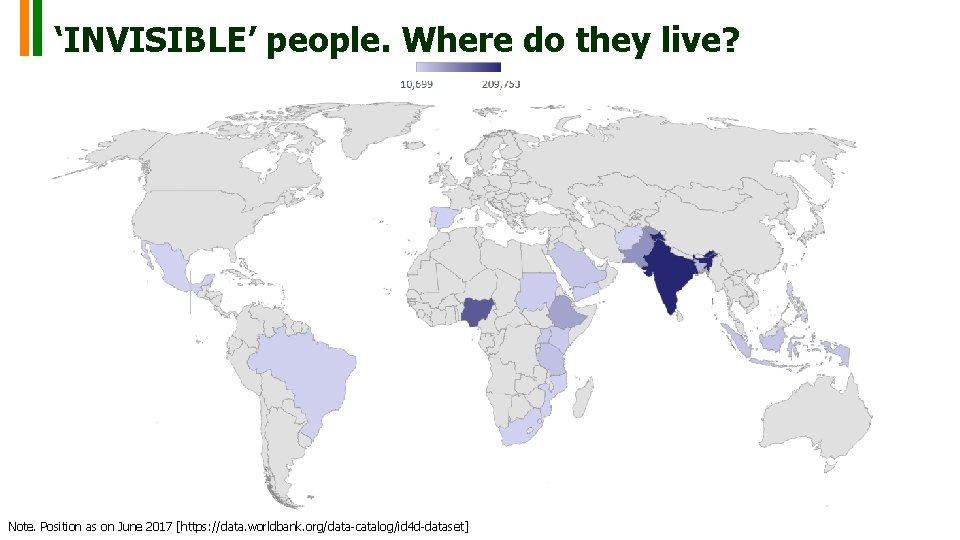
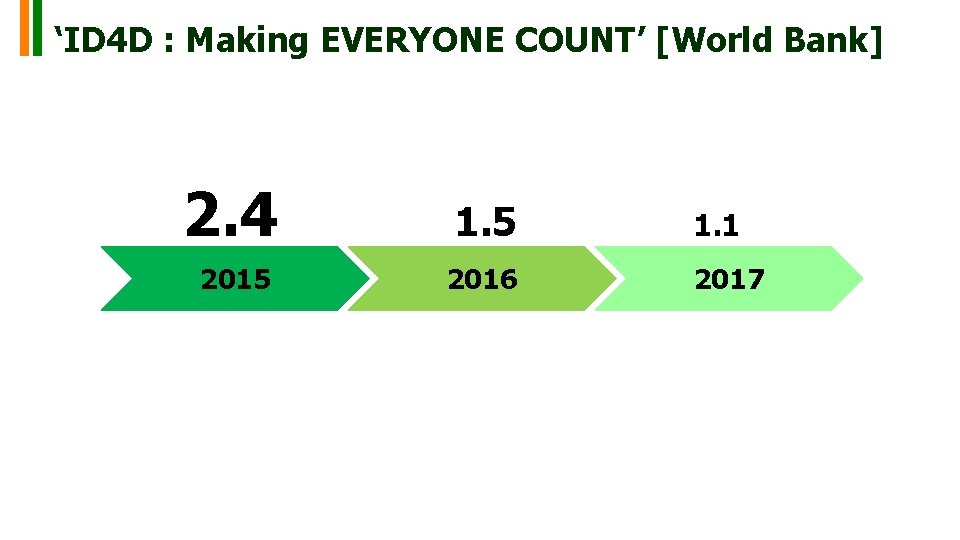
…yet the BIGGEST CHALLENGE is 1. 1+ BILLION cannot prove IDENTITY Total Estimated Unidentified Population (k) Note. Position as on June 2017 [https: //data. worldbank. org/data-catalog/id 4 d-dataset] % Country Population without ID
‘INVISIBLE’ people. Where do they live? Note. Position as on June 2017 [https: //data. worldbank. org/data-catalog/id 4 d-dataset]
‘ID 4 D : Making EVERYONE COUNT’ [World Bank] 2. 4 1. 5 1. 1 2015 2016 2017
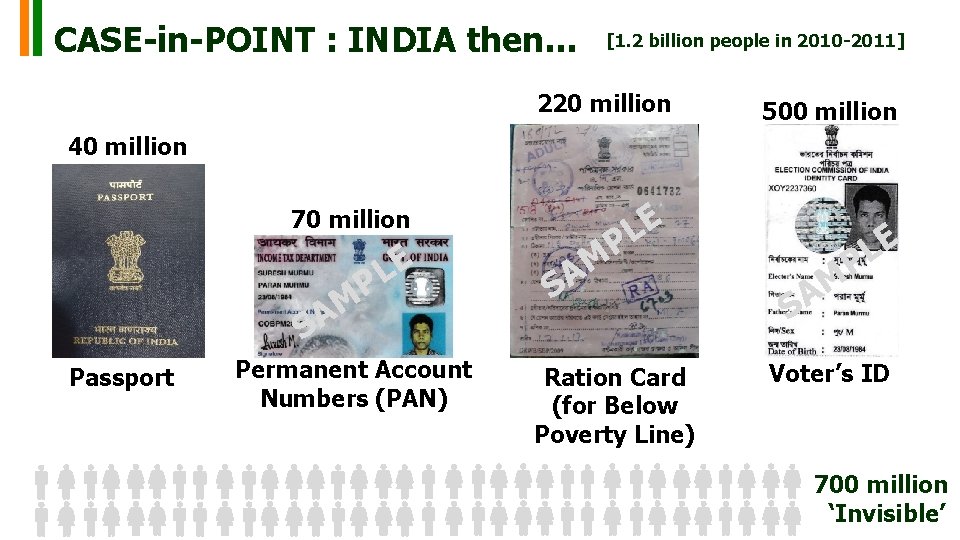
CASE-in-POINT : INDIA then… [1. 2 billion people in 2010 -2011] 220 million 500 million 40 million E L P 70 million E L P S Passport M A Permanent Account Numbers (PAN) M A S Ration Card (for Below Poverty Line) E L P M SA Voter’s ID 700 million ‘Invisible’
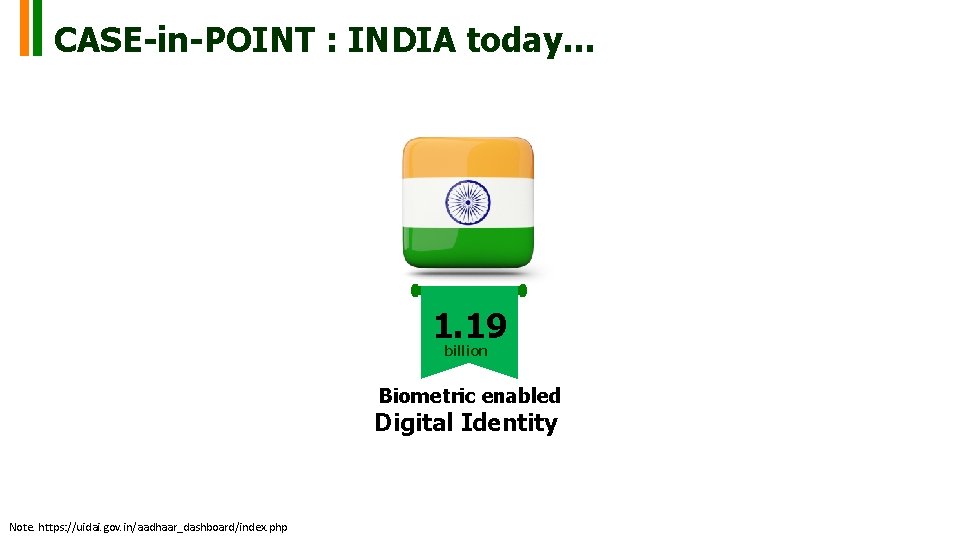
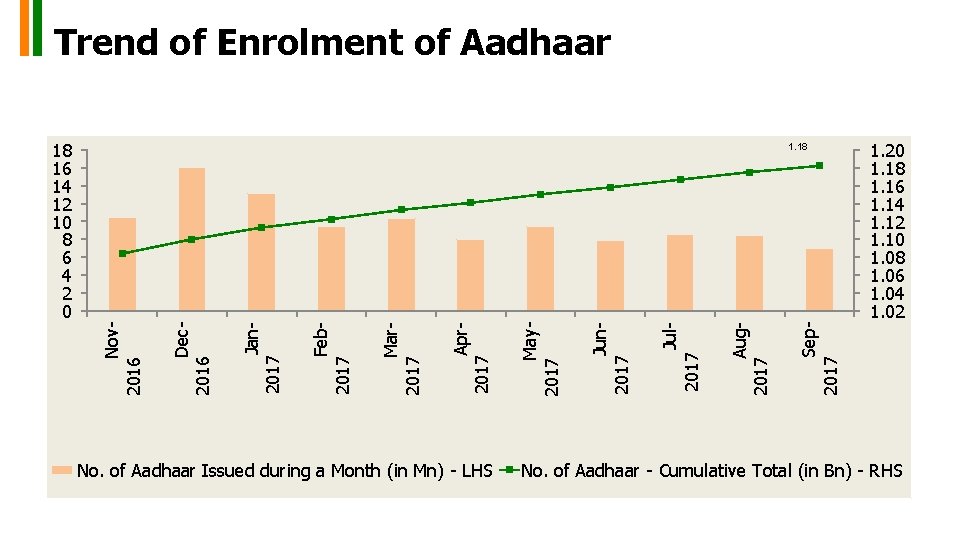
CASE-in-POINT : INDIA today… 1. 19 billion Biometric enabled Digital Identity Note. https: //uidai. gov. in/aadhaar_dashboard/index. php
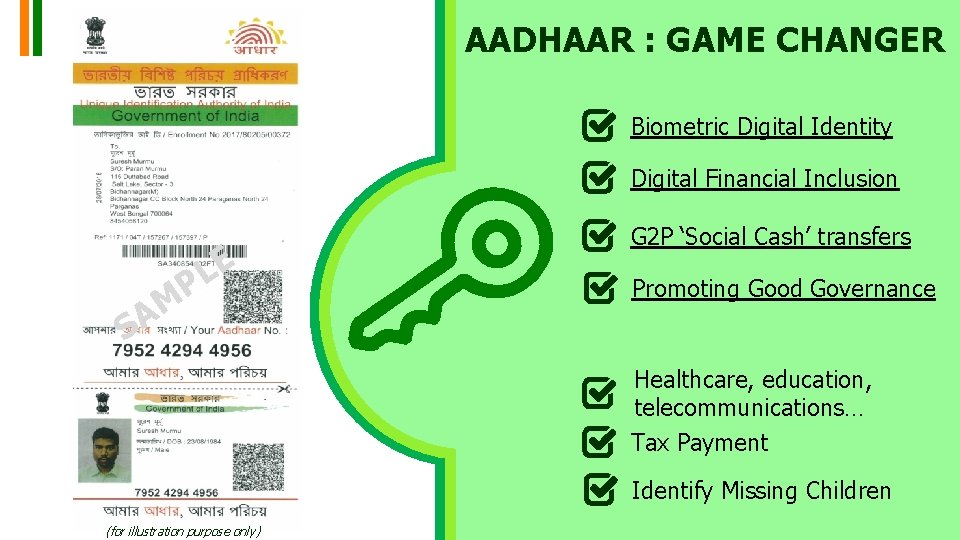
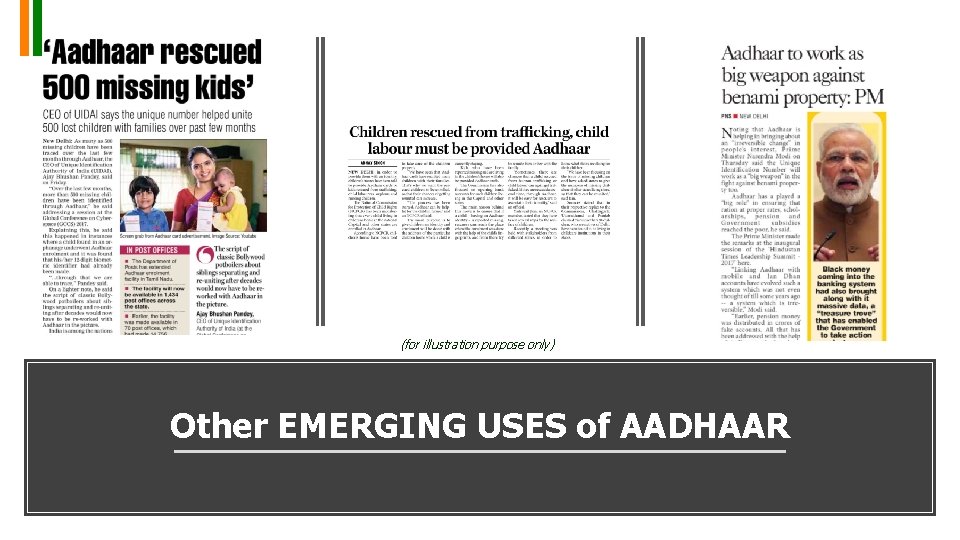
AADHAAR : GAME CHANGER Biometric Digital Identity Digital Financial Inclusion E L P M A S G 2 P ‘Social Cash’ transfers Promoting Good Governance Healthcare, education, telecommunications… Tax Payment Identify Missing Children (for illustration purpose only)
India and Cambodia : Are they comparable ? Poverty Majority Lives in Villages Informal Sector High Cash Usage Low Financial Literacy Financial Exclusion Private Money Lenders
SECTIONS 01 02 03 Introduction India’s efforts towards Financial Inclusion Aadhaar : Game Changer Strategic Framework for India Financial Inclusion in Cambodia : Suggested Approach 04. 05 Conclusion
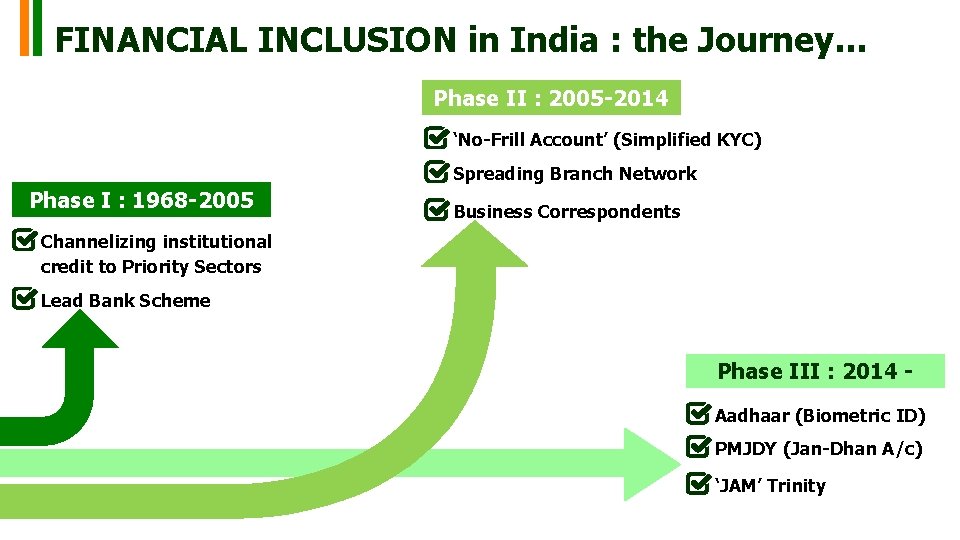
FINANCIAL INCLUSION in India : the Journey… Phase II : 2005 -2014 ‘No-Frill Account’ (Simplified KYC) Spreading Branch Network Phase I : 1968 -2005 Business Correspondents Channelizing institutional credit to Priority Sectors Lead Bank Scheme Phase III : 2014 - Aadhaar (Biometric ID) PMJDY (Jan-Dhan A/c) ‘JAM’ Trinity
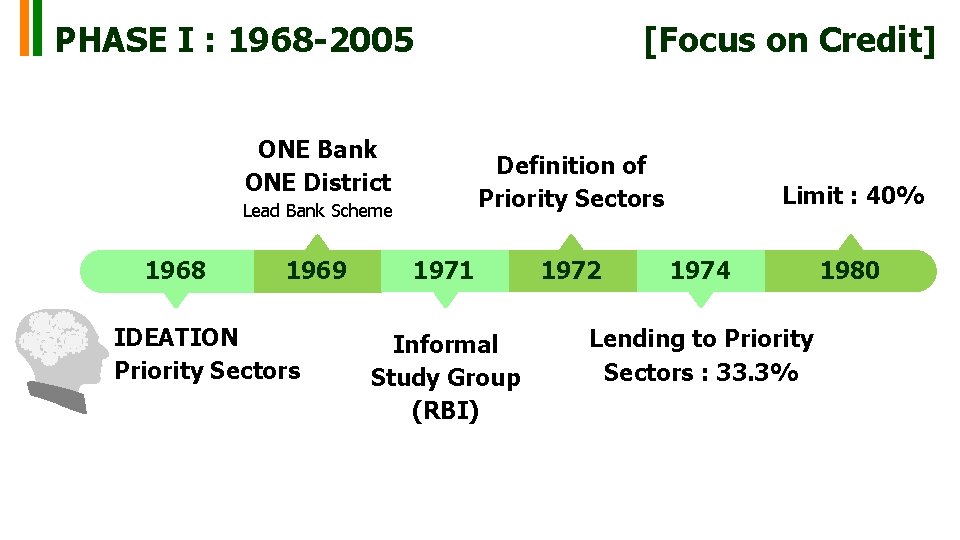
PHASE I : 1968 -2005 [Focus on Credit] ONE Bank ONE District Definition of Priority Sectors Lead Bank Scheme 1968 1969 IDEATION Priority Sectors 1971 Informal Study Group (RBI) 1972 Limit : 40% 1974 1980 Lending to Priority Sectors : 33. 3%
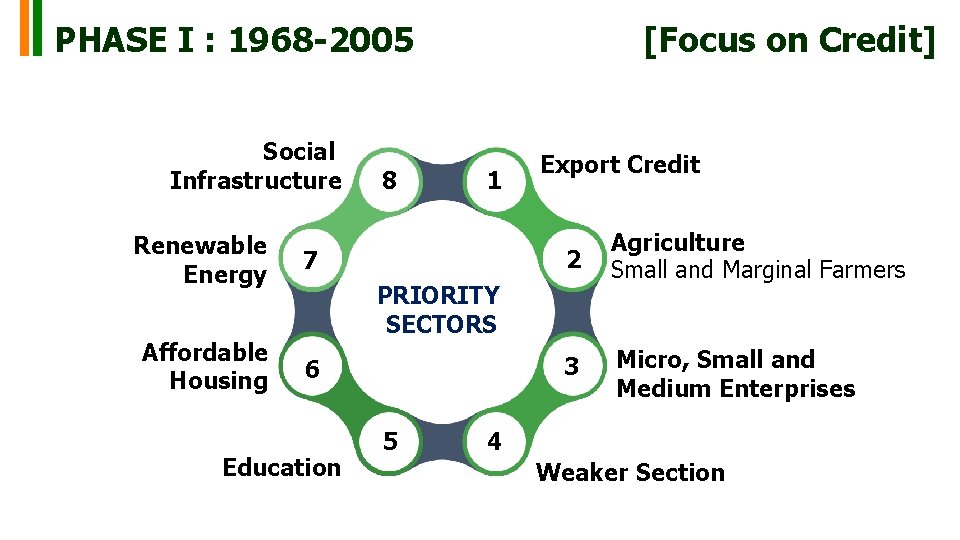
PHASE I : 1968 -2005 [Focus on Credit] Social Infrastructure Renewable Energy 7 Affordable Housing 6 8 1 Export Credit 2 Agriculture Small and Marginal Farmers 3 Micro, Small and Medium Enterprises PRIORITY SECTORS Education 5 4 Weaker Section
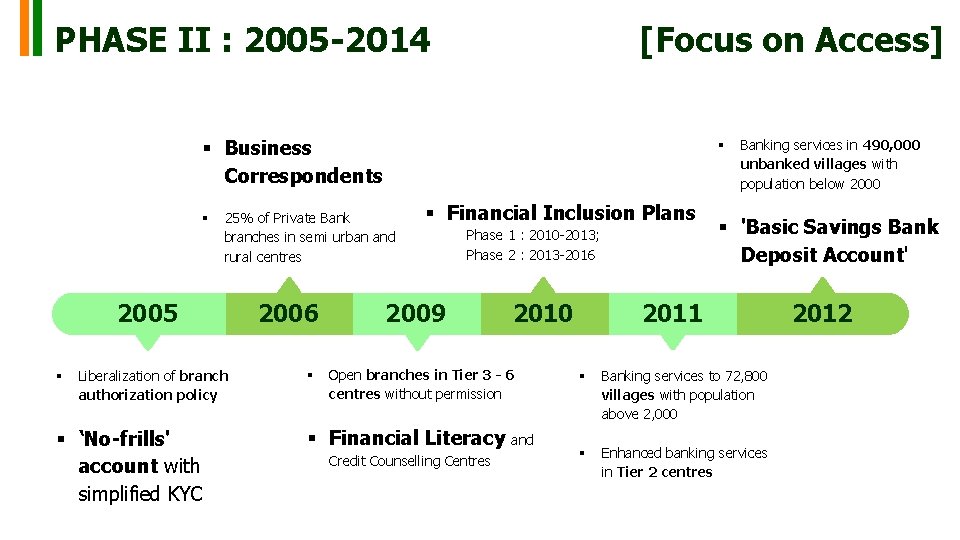
PHASE II : 2005 -2014 [Focus on Access] § Business Correspondents § 25% of Private Bank branches in semi urban and rural centres 2005 § Liberalization of branch authorization policy § ‘No-frills' account with simplified KYC § 2006 § § Financial Inclusion Plans Phase 1 : 2010 -2013; Phase 2 : 2013 -2016 2009 § Financial Literacy and Credit Counselling Centres § 'Basic Savings Bank Deposit Account' 2011 2010 Open branches in Tier 3 - 6 centres without permission Banking services in 490, 000 unbanked villages with population below 2000 § Banking services to 72, 800 villages with population above 2, 000 § Enhanced banking services in Tier 2 centres 2012
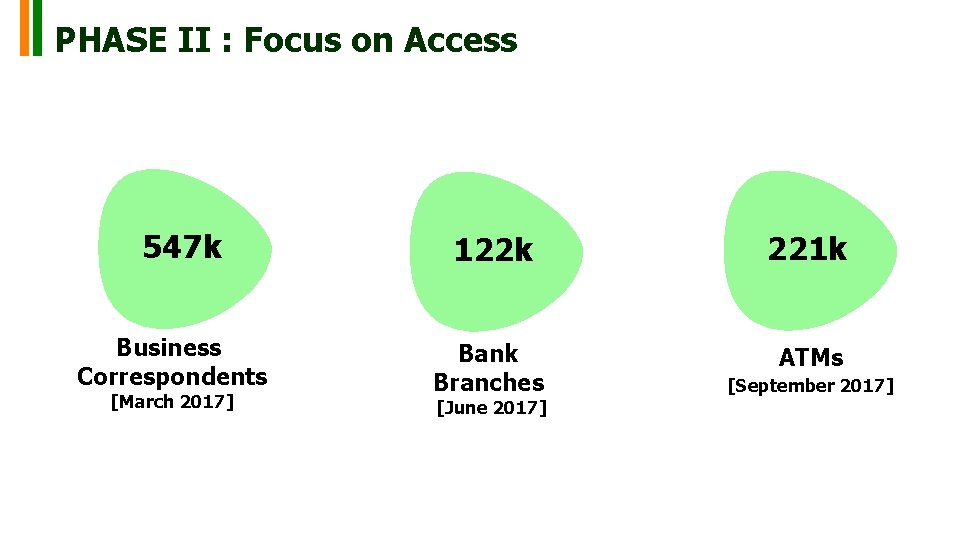
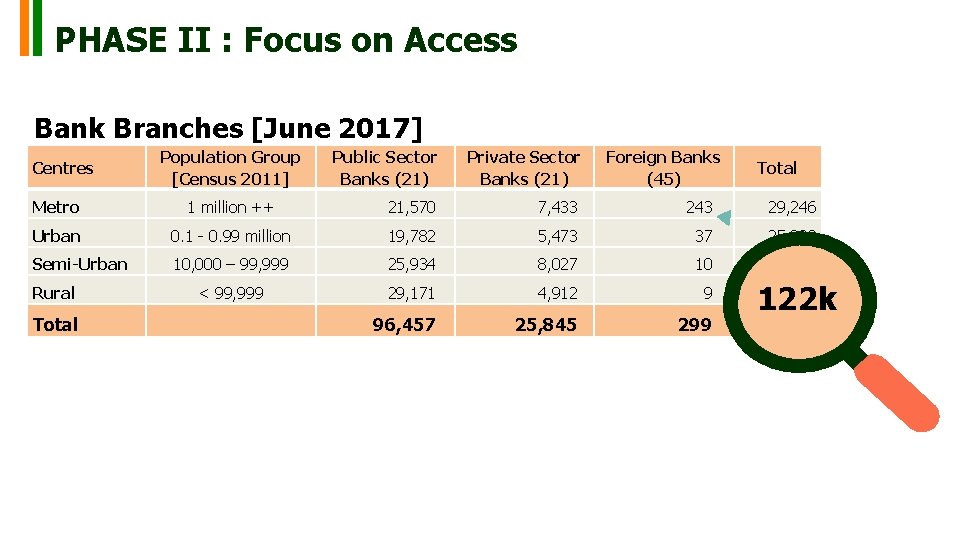
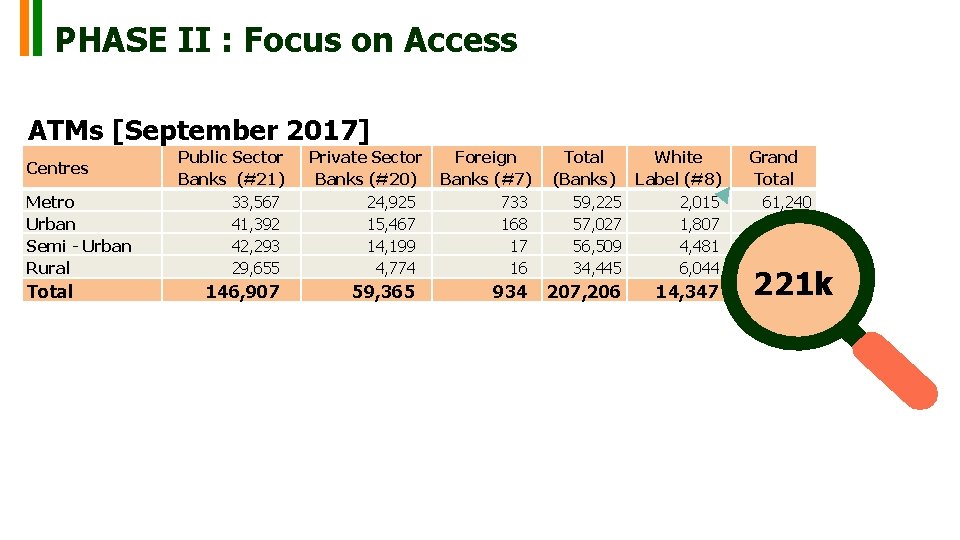
PHASE II : Focus on Access 547 k Business Correspondents [March 2017] 122 k 221 k Bank Branches ATMs [June 2017] [September 2017]
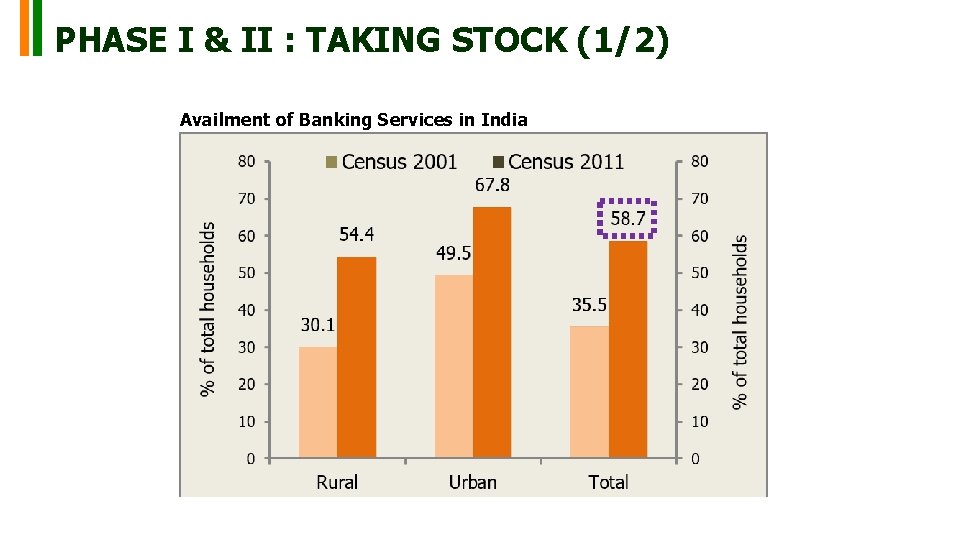
PHASE I & II : TAKING STOCK (1/2) Availment of Banking Services in India
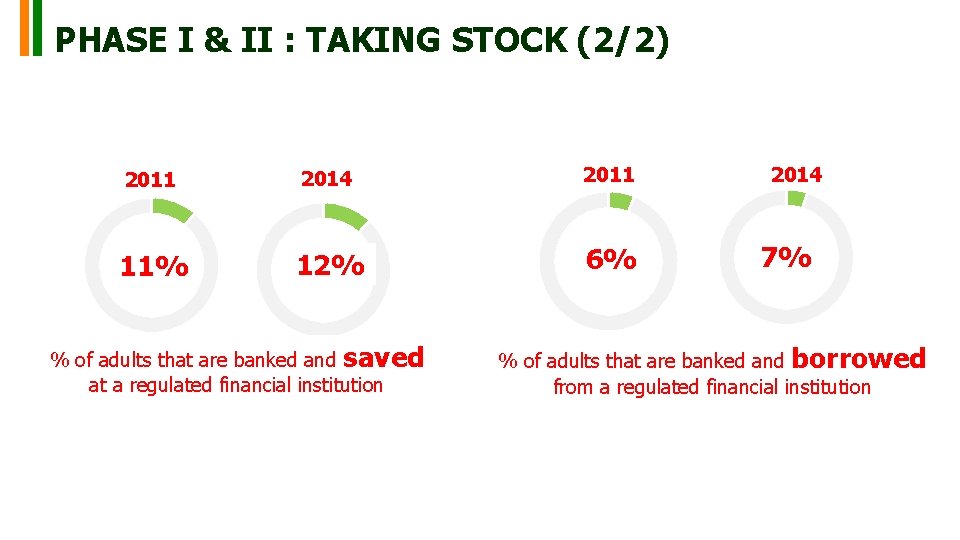
PHASE I & II : TAKING STOCK (2/2) 2011 2014 2011 11% 12% 6% % of adults that are banked and saved at a regulated financial institution 2014 7% % of adults that are banked and borrowed from a regulated financial institution
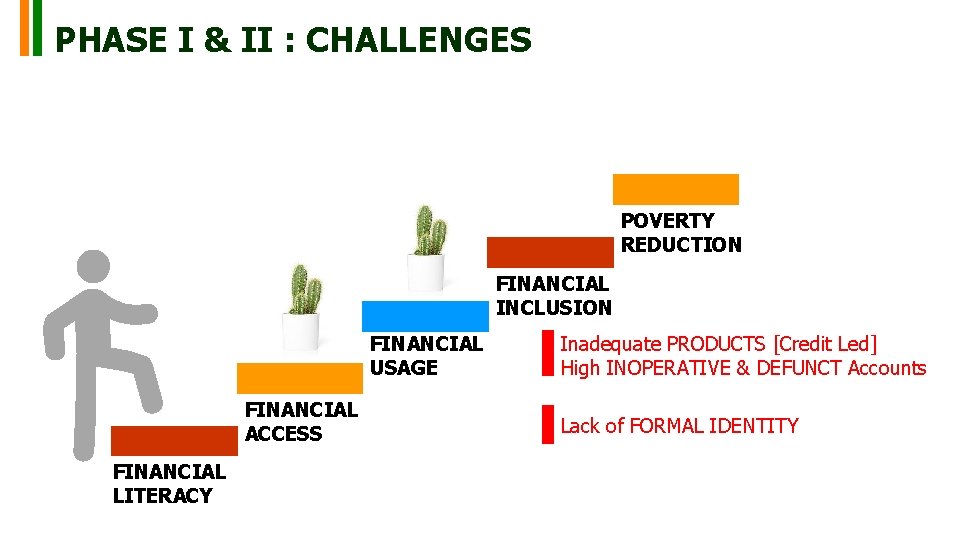
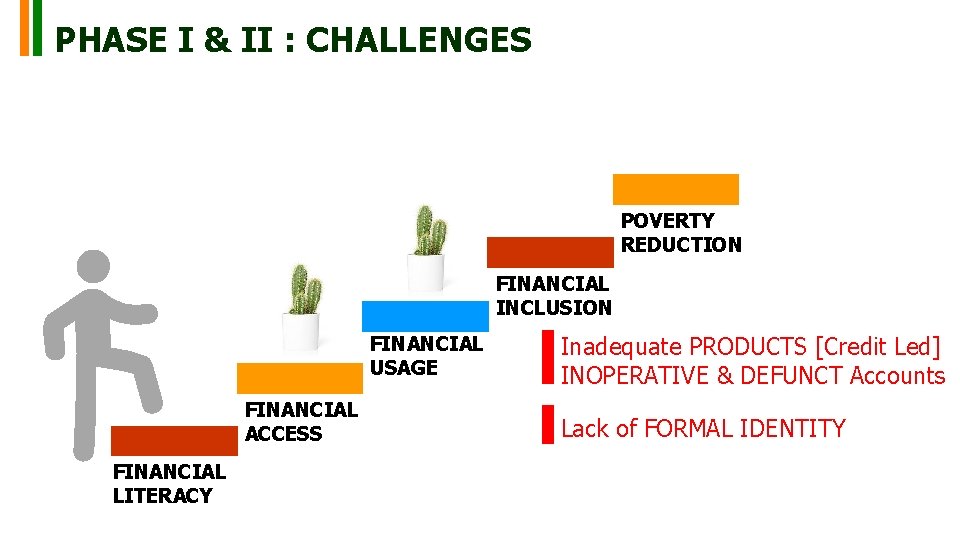
PHASE I & II : CHALLENGES POVERTY REDUCTION FINANCIAL INCLUSION FINANCIAL USAGE FINANCIAL ACCESS FINANCIAL LITERACY Inadequate PRODUCTS [Credit Led] High INOPERATIVE & DEFUNCT Accounts Lack of FORMAL IDENTITY
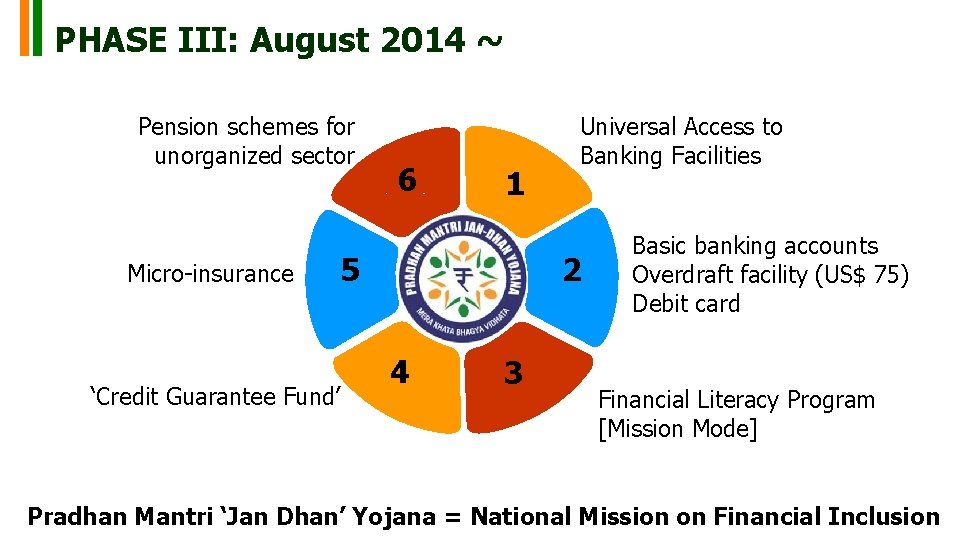
PHASE III: August 2014 ~ Pension schemes for unorganized sector Micro-insurance 6 1 5 ‘Credit Guarantee Fund’ Universal Access to Banking Facilities 2 4 3 Basic banking accounts Overdraft facility (US$ 75) Debit card Financial Literacy Program [Mission Mode] Pradhan Mantri ‘Jan Dhan’ Yojana = National Mission on Financial Inclusion
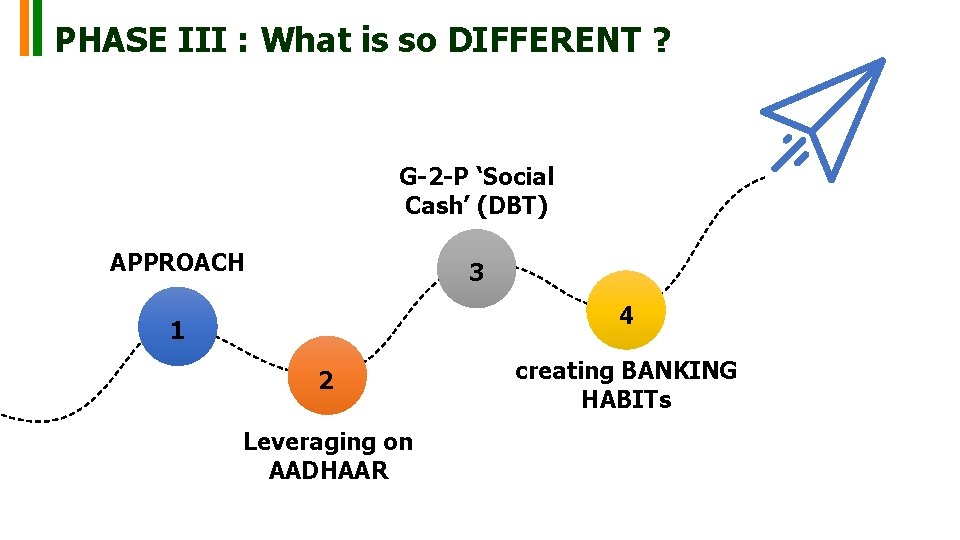
PHASE III : What is so DIFFERENT ? G-2 -P ‘Social Cash’ (DBT) APPROACH 3 4 1 2 Leveraging on AADHAAR creating BANKING HABITs
SECTIONS 01 02 03 Introduction India’s efforts towards Financial Inclusion Aadhaar : Game Changer Strategic Framework for India Financial Inclusion in Cambodia : Suggested Approach 04. 05 Conclusion
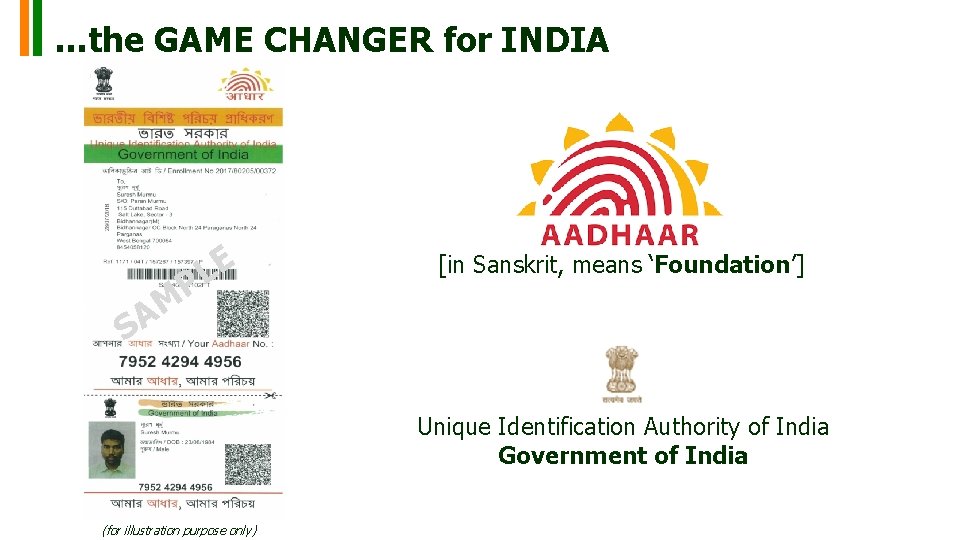
…the GAME CHANGER for INDIA E L P [in Sanskrit, means ‘Foundation’] M A S Unique Identification Authority of India Government of India (for illustration purpose only)
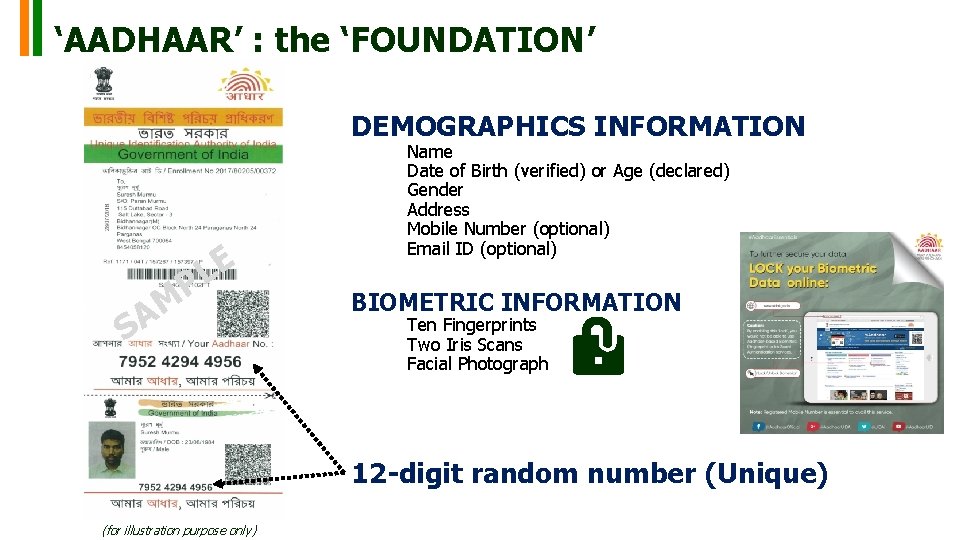
‘AADHAAR’ : the ‘FOUNDATION’ DEMOGRAPHICS INFORMATION E L P AM S Name Date of Birth (verified) or Age (declared) Gender Address Mobile Number (optional) Email ID (optional) BIOMETRIC INFORMATION Ten Fingerprints Two Iris Scans Facial Photograph 12 -digit random number (Unique) (for illustration purpose only)
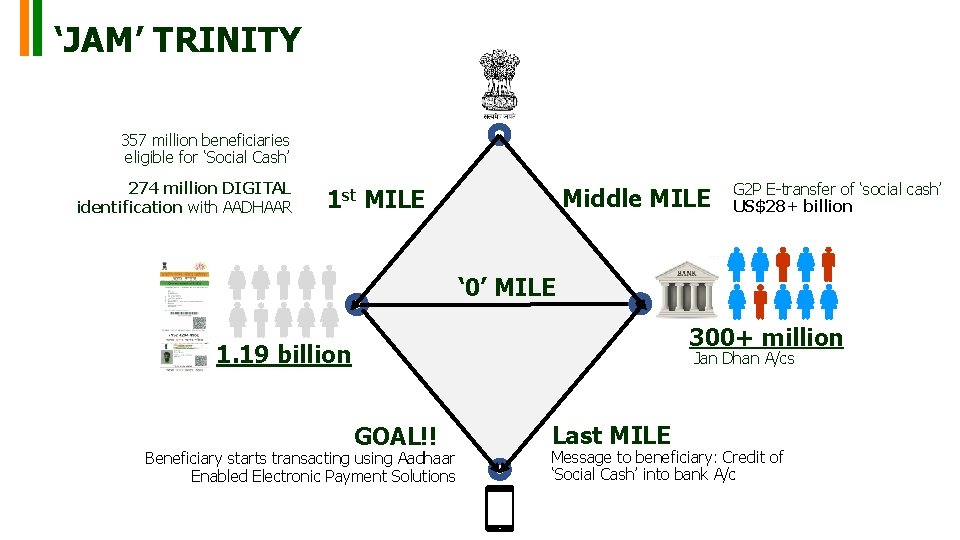
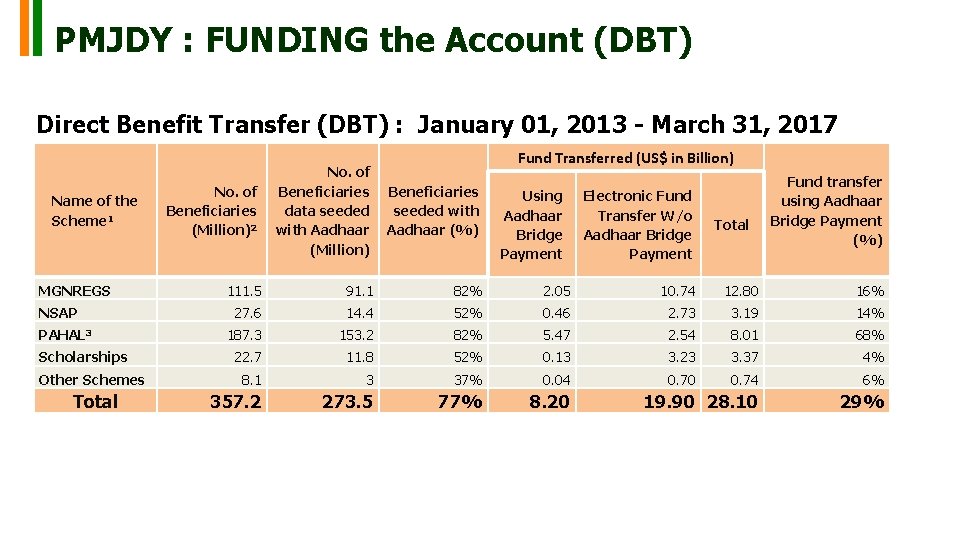
‘JAM’ TRINITY 357 million beneficiaries eligible for ‘Social Cash’ 274 million DIGITAL identification with AADHAAR Middle MILE 1 st MILE G 2 P E-transfer of ‘social cash’ US$28+ billion ‘ 0’ MILE 300+ million 1. 19 billion Jan Dhan A/cs GOAL!! Beneficiary starts transacting using Aadhaar Enabled Electronic Payment Solutions Last MILE Message to beneficiary: Credit of ‘Social Cash’ into bank A/c
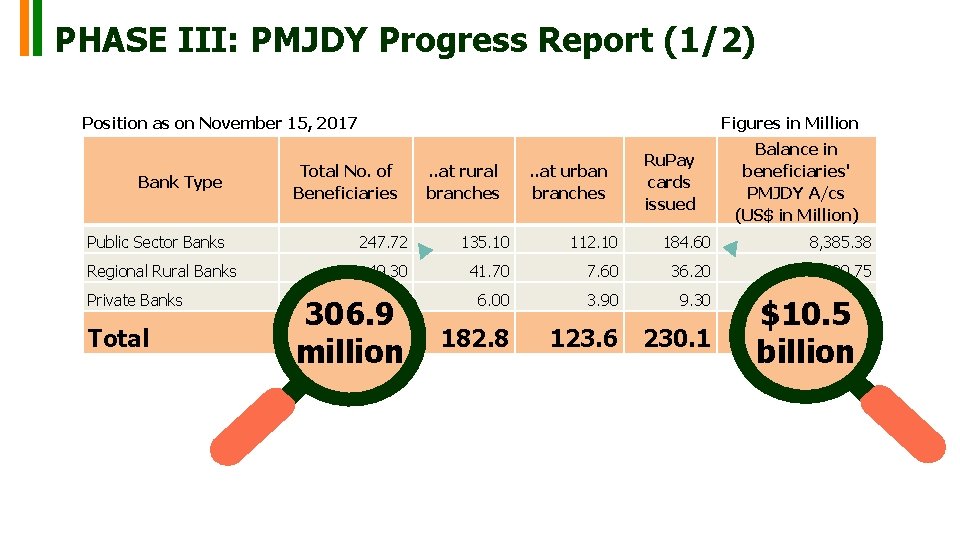
PHASE III: PMJDY Progress Report (1/2) Position as on November 15, 2017 Figures in Million Bank Type Public Sector Banks Regional Rural Banks Private Banks Total No. of Beneficiaries . . at rural branches . . at urban branches Ru. Pay cards issued Balance in beneficiaries' PMJDY A/cs (US$ in Million) 247. 72 135. 10 112. 10 184. 60 8, 385. 38 49. 30 41. 70 7. 60 36. 20 1, 830. 75 9. 90 6. 00 3. 90 9. 30 326. 76 182. 8 123. 6 230. 1 306. 92 million $10. 5 10, 542. 90 billion
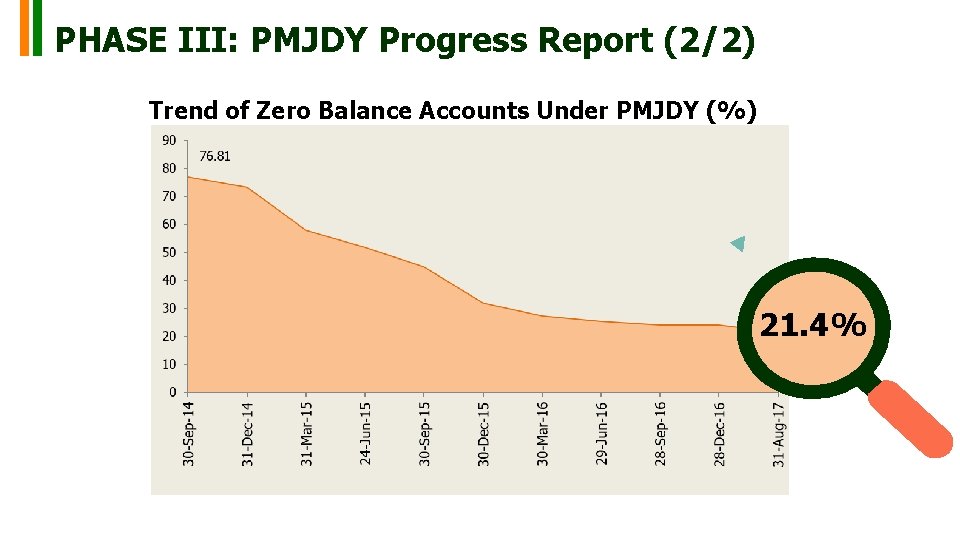
PHASE III: PMJDY Progress Report (2/2) Trend of Zero Balance Accounts Under PMJDY (%) 21. 4%
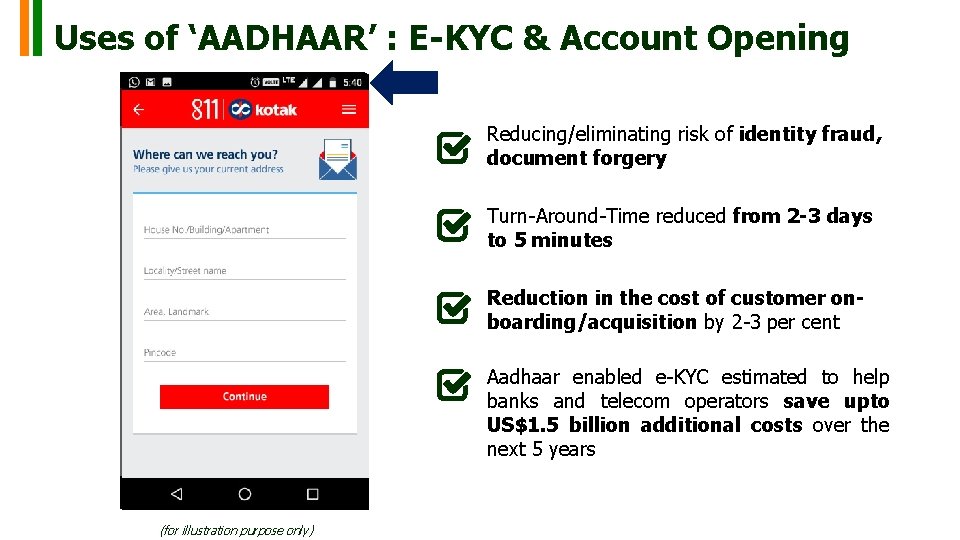
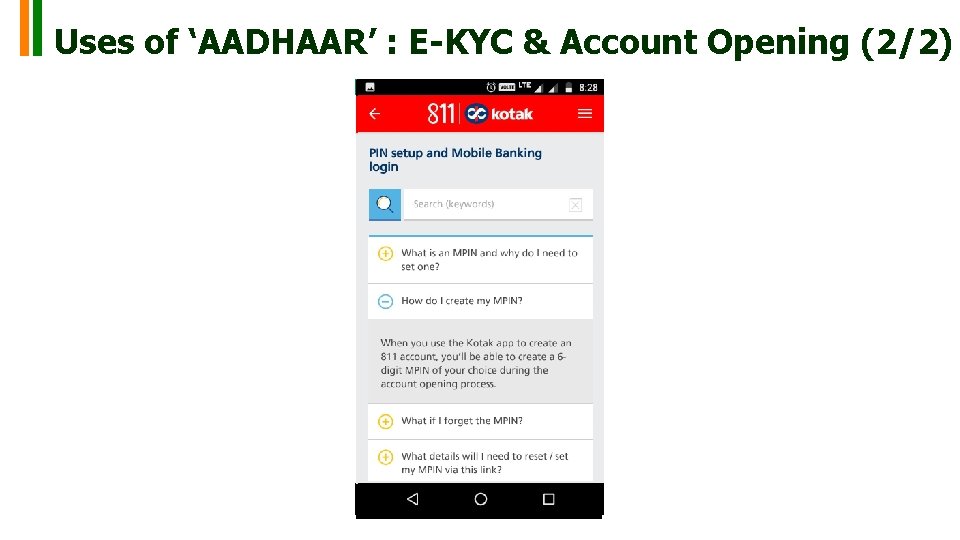
Uses of ‘AADHAAR’ : E-KYC & Account Opening Ratul Rana Reducing/eliminating risk of identity fraud, document forgery Turn-Around-Time reduced from 2 -3 days to 5 minutes Reduction in the cost of customer onboarding/acquisition by 2 -3 per cent Aadhaar enabled e-KYC estimated to help banks and telecom operators save upto US$1. 5 billion additional costs over the next 5 years (for illustration purpose only)
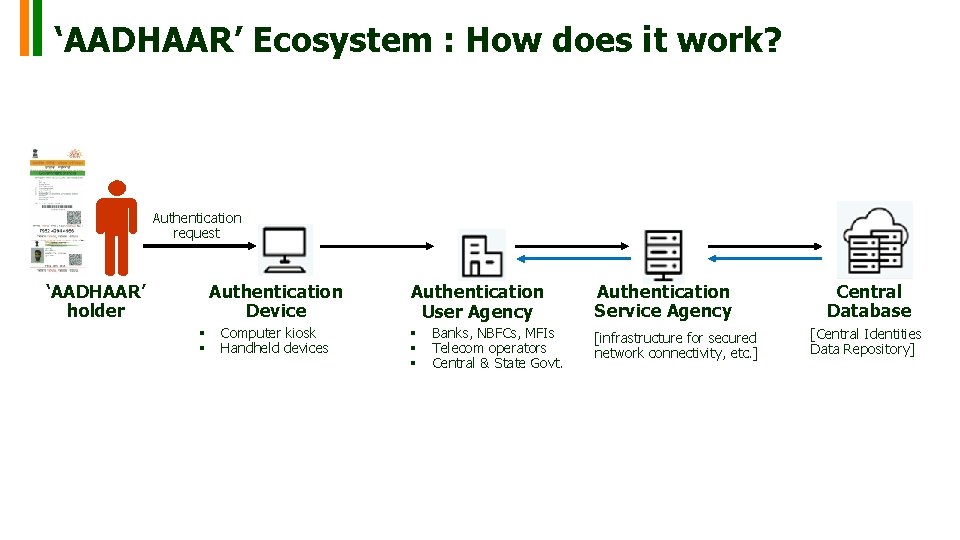
‘AADHAAR’ Ecosystem : How does it work? Authentication request ‘AADHAAR’ holder Authentication Device § § Computer kiosk Handheld devices Authentication User Agency § § § Banks, NBFCs, MFIs Telecom operators Central & State Govt. Authentication Service Agency [infrastructure for secured network connectivity, etc. ] Central Database [Central Identities Data Repository]
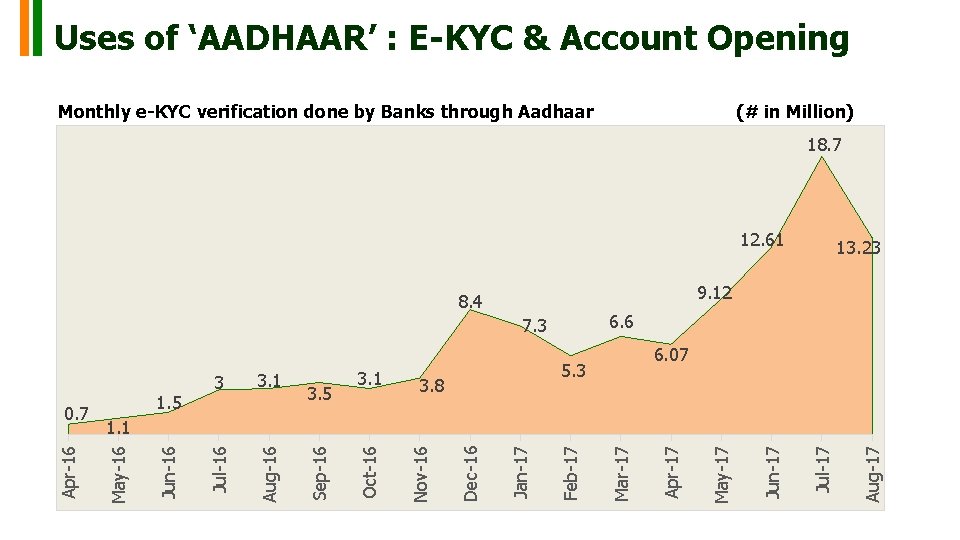
Uses of ‘AADHAAR’ : E-KYC & Account Opening Monthly e-KYC verification done by Banks through Aadhaar (# in Million) 18. 7 12. 61 9. 12 8. 4 6. 6 Aug-16 1. 5 3. 1 6. 07 5. 3 3. 8 Aug-17 Jul-17 Jun-17 May-17 Apr-17 Mar-17 Feb-17 Jan-17 Dec-16 Nov-16 Oct-16 Sep-16 Jun-16 1. 1 May-16 Apr-16 0. 7 3. 1 Jul-16 7. 3 3 13. 23
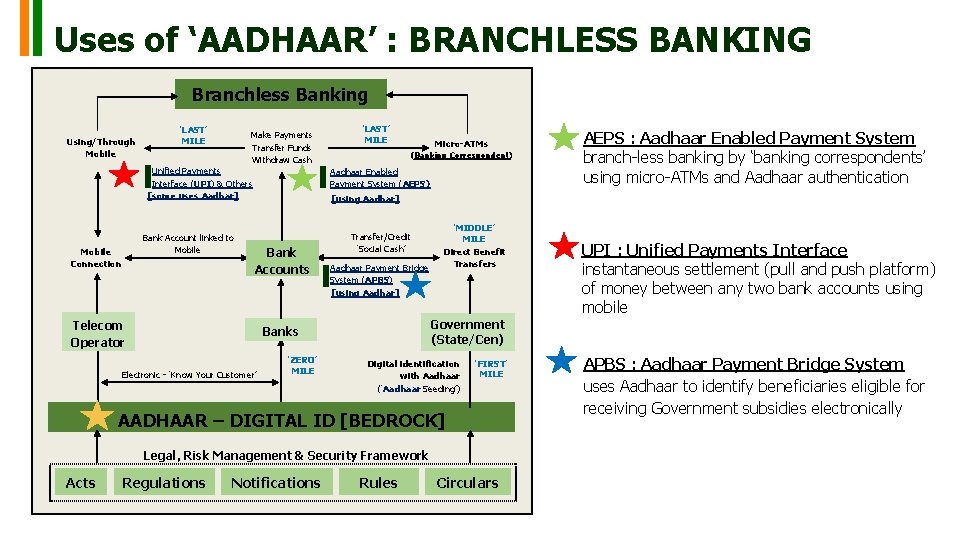
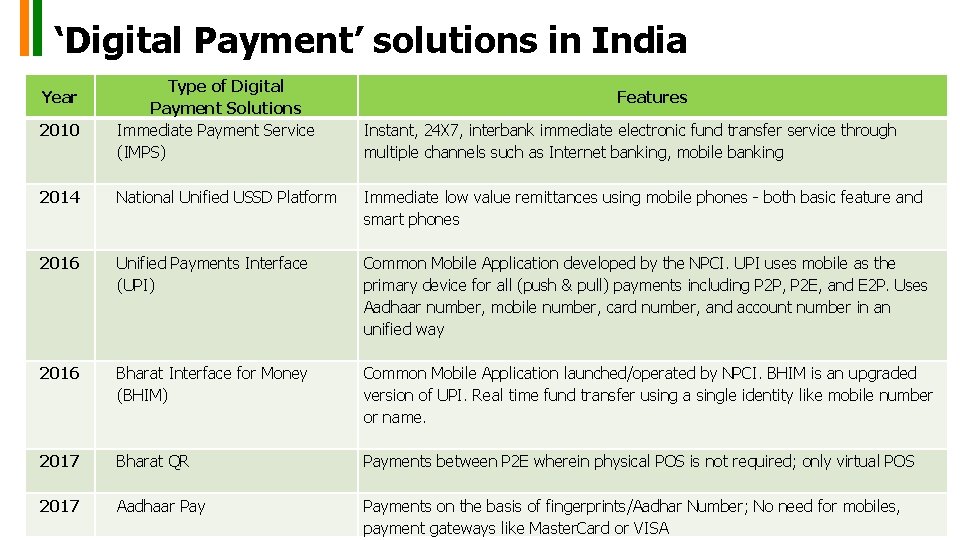
Uses of ‘AADHAAR’ : BRANCHLESS BANKING Branchless Banking Using/Through Mobile ‘LAST’ MILE Make Payments Transfer Funds Withdraw Cash Unified Payments Interface (UPI) & Others [some uses Aadhar] Bank Account linked to Mobile Connection Bank Accounts Telecom Operator ‘LAST’ MILE Micro-ATMs (Banking Correspondent) Aadhaar Enabled Payment System (AEPS) [using Aadhar] Transfer/Credit ‘Social Cash’ Aadhaar Payment Bridge System (APBS) [using Aadhar] Electronic - ‘Know Your Customer’ ‘MIDDLE’ MILE Direct Benefit Transfers Digital identification with Aadhaar (‘Aadhaar Seeding’) ‘FIRST’ MILE AADHAAR – DIGITAL ID [BEDROCK] Legal, Risk Management & Security Framework Acts Regulations Notifications UPI : Unified Payments Interface instantaneous settlement (pull and push platform) of money between any two bank accounts using mobile Government (State/Cen) Banks ‘ZERO’ MILE AEPS : Aadhaar Enabled Payment System branch-less banking by ‘banking correspondents’ using micro-ATMs and Aadhaar authentication Rules Circulars APBS : Aadhaar Payment Bridge System uses Aadhaar to identify beneficiaries eligible for receiving Government subsidies electronically
(for illustration purpose only) Other EMERGING USES of AADHAAR
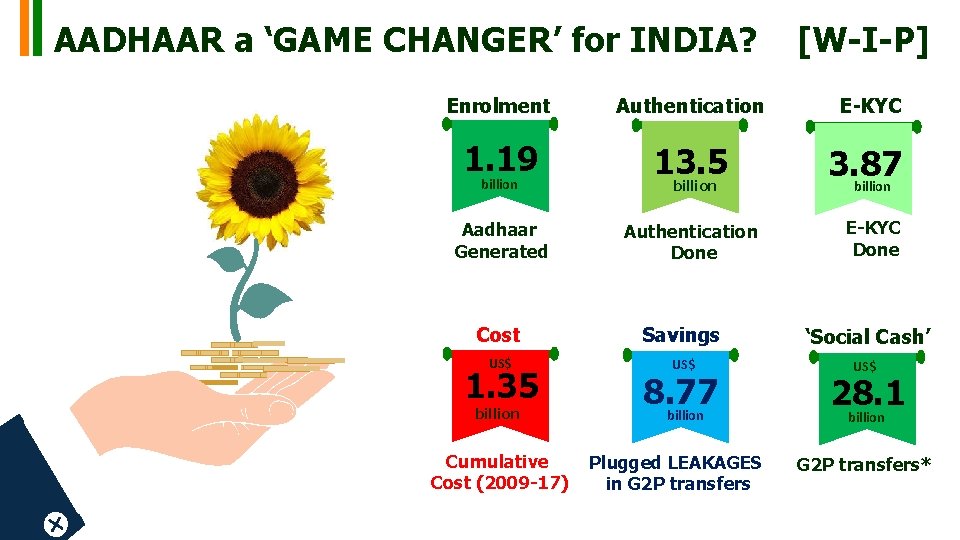
AADHAAR a ‘GAME CHANGER’ for INDIA? [W-I-P] Enrolment Authentication E-KYC 1. 19 13. 5 3. 87 billion Aadhaar Generated Authentication Done billion Cost Savings US$ 1. 35 E-KYC Done ‘Social Cash’ US$ billion 8. 77 billion 28. 1 Cumulative Cost (2009 -17) Plugged LEAKAGES in G 2 P transfers* billion
PHASE I & II : CHALLENGES POVERTY REDUCTION FINANCIAL INCLUSION FINANCIAL USAGE FINANCIAL ACCESS FINANCIAL LITERACY Inadequate PRODUCTS [Credit Led] INOPERATIVE & DEFUNCT Accounts Lack of FORMAL IDENTITY
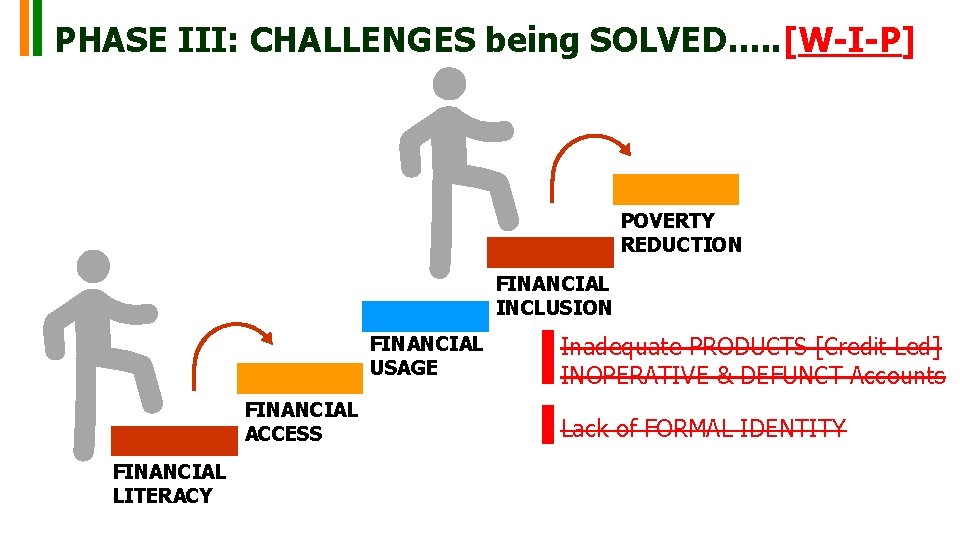
PHASE III: CHALLENGES being SOLVED…. . [W-I-P] POVERTY REDUCTION FINANCIAL INCLUSION FINANCIAL USAGE FINANCIAL ACCESS FINANCIAL LITERACY Inadequate PRODUCTS [Credit Led] INOPERATIVE & DEFUNCT Accounts Lack of FORMAL IDENTITY
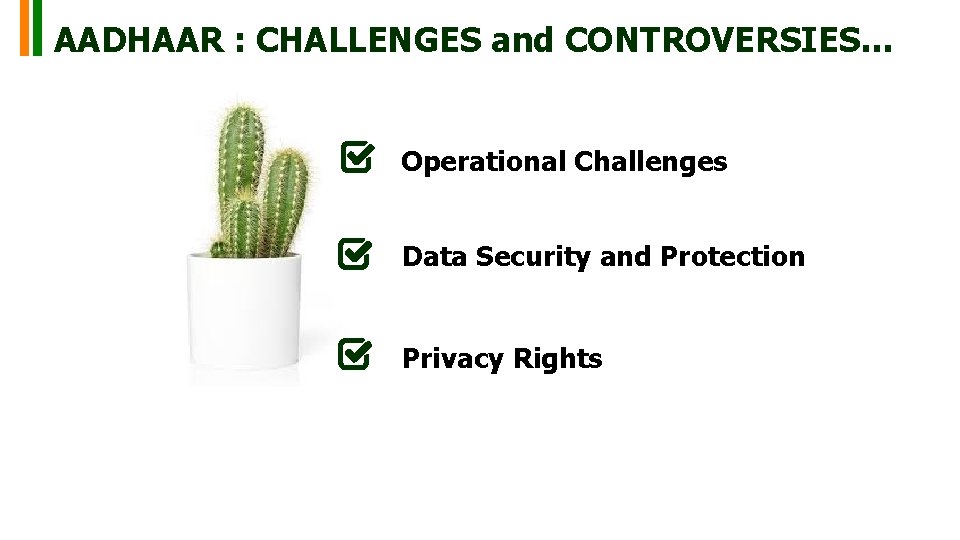
AADHAAR : CHALLENGES and CONTROVERSIES… Operational Challenges Data Security and Protection Privacy Rights
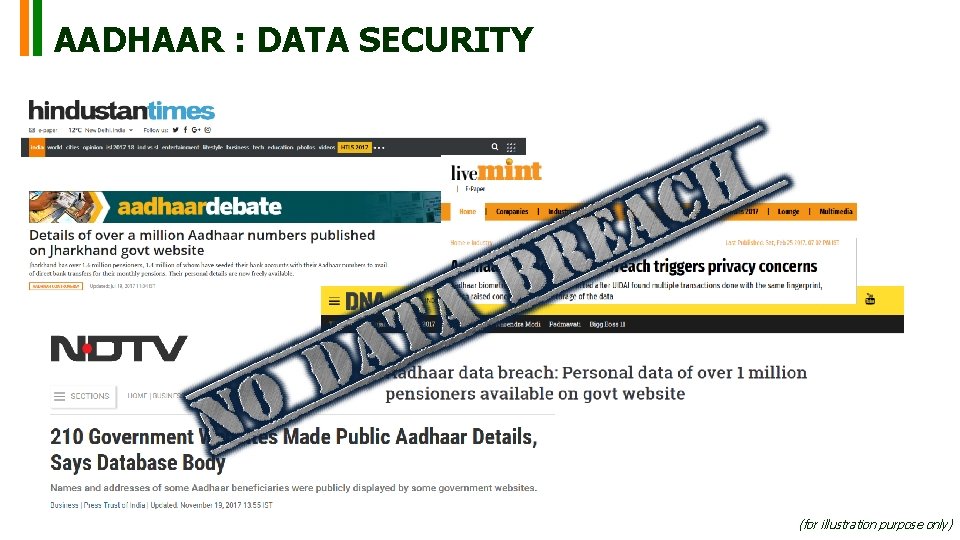
AADHAAR : DATA SECURITY (for illustration purpose only)
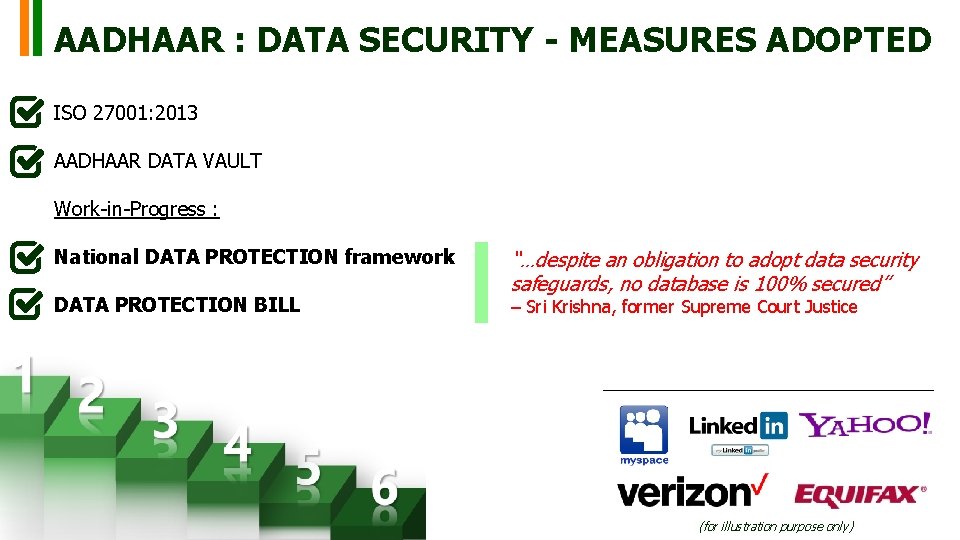
AADHAAR : DATA SECURITY - MEASURES ADOPTED ISO 27001: 2013 AADHAAR DATA VAULT Work-in-Progress : National DATA PROTECTION framework DATA PROTECTION BILL “…despite an obligation to adopt data security safeguards, no database is 100% secured” – Sri Krishna, former Supreme Court Justice (for illustration purpose only)
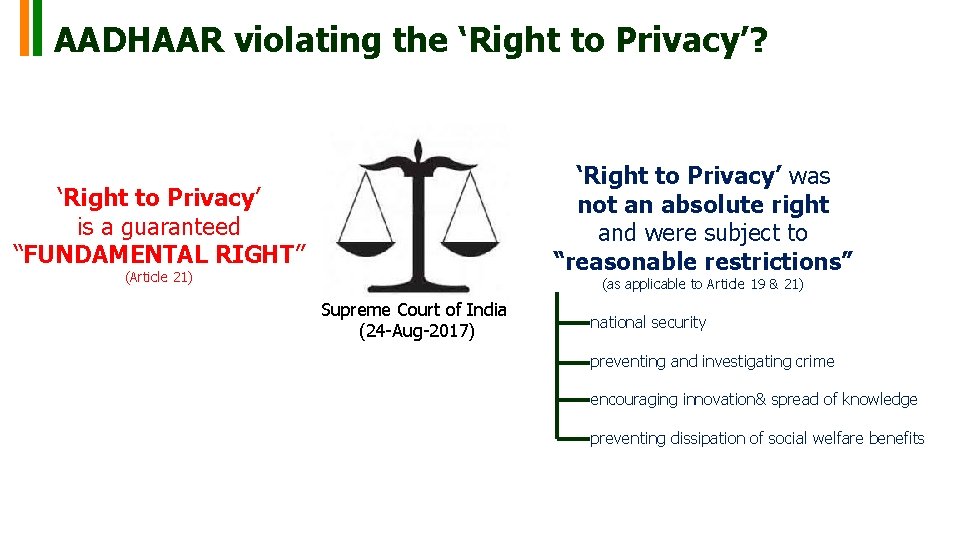
AADHAAR violating the ‘Right to Privacy’? ‘Right to Privacy’ was not an absolute right and were subject to “reasonable restrictions” ‘Right to Privacy’ is a guaranteed “FUNDAMENTAL RIGHT” (Article 21) (as applicable to Article 19 & 21) Supreme Court of India (24 -Aug-2017) national security preventing and investigating crime encouraging innovation& spread of knowledge preventing dissipation of social welfare benefits
SECTIONS 01 02 03 Introduction India’s efforts towards Financial Inclusion Aadhaar : Game Changer Strategic Framework for India Financial Inclusion in Cambodia : Suggested Approach 04. 05 Conclusion
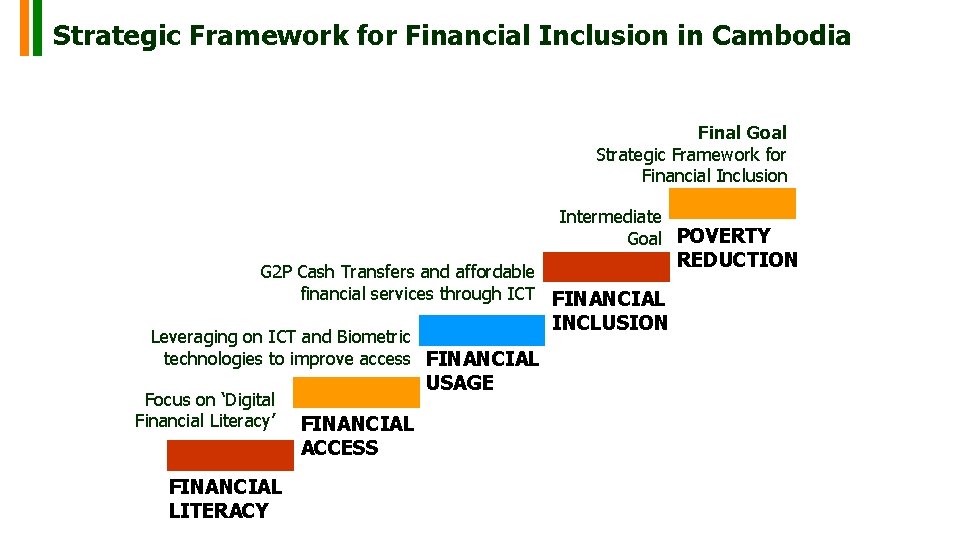
Strategic Framework for Financial Inclusion in Cambodia Final Goal Strategic Framework for Financial Inclusion Intermediate Goal POVERTY G 2 P Cash Transfers and affordable financial services through ICT FINANCIAL Leveraging on ICT and Biometric technologies to improve access FINANCIAL Focus on ‘Digital Financial Literacy’ FINANCIAL LITERACY USAGE FINANCIAL ACCESS INCLUSION REDUCTION
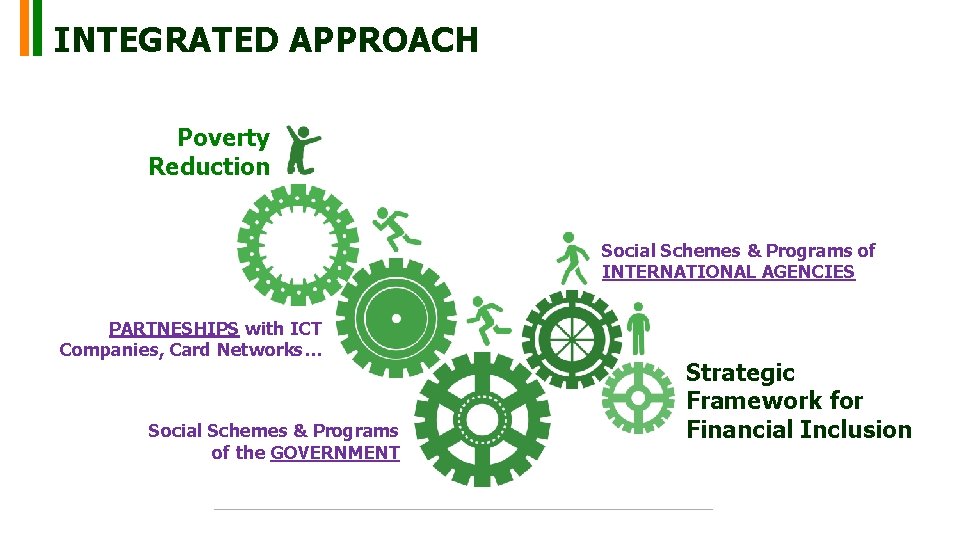
INTEGRATED APPROACH Poverty Reduction Social Schemes & Programs of INTERNATIONAL AGENCIES PARTNESHIPS with ICT Companies, Card Networks… Social Schemes & Programs of the GOVERNMENT Strategic Framework for Financial Inclusion
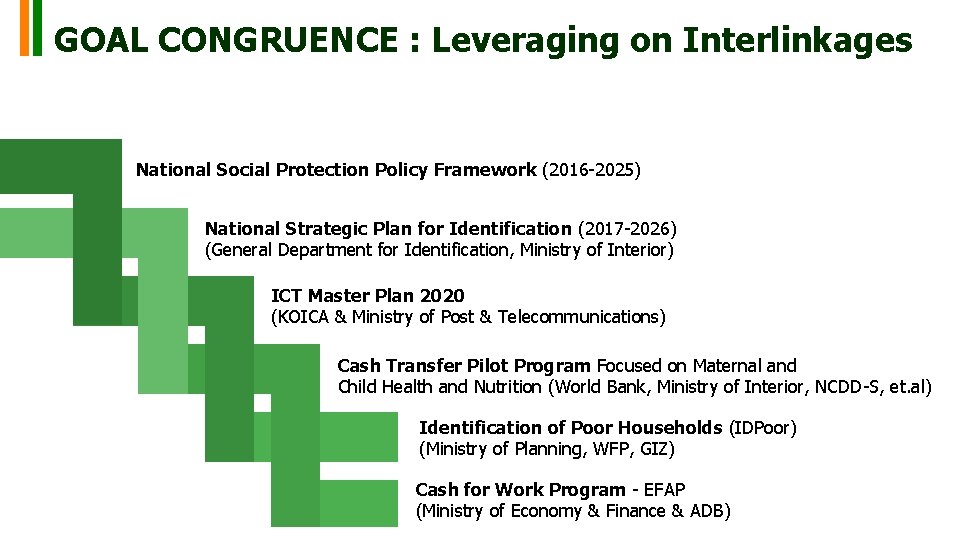
GOAL CONGRUENCE : Leveraging on Interlinkages National Social Protection Policy Framework (2016 -2025) National Strategic Plan for Identification (2017 -2026) (General Department for Identification, Ministry of Interior) ICT Master Plan 2020 (KOICA & Ministry of Post & Telecommunications) Cash Transfer Pilot Program Focused on Maternal and Child Health and Nutrition (World Bank, Ministry of Interior, NCDD-S, et. al) Identification of Poor Households (IDPoor) (Ministry of Planning, WFP, GIZ) Cash for Work Program - EFAP (Ministry of Economy & Finance & ADB)
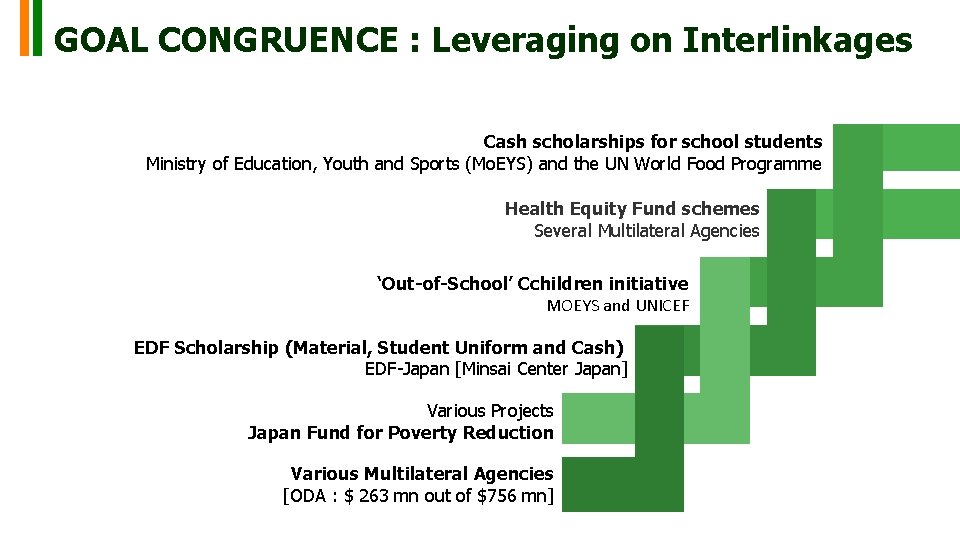
GOAL CONGRUENCE : Leveraging on Interlinkages Cash scholarships for school students Ministry of Education, Youth and Sports (Mo. EYS) and the UN World Food Programme Health Equity Fund schemes Several Multilateral Agencies ‘Out-of-School’ Cchildren initiative MOEYS and UNICEF EDF Scholarship (Material, Student Uniform and Cash) EDF-Japan [Minsai Center Japan] Various Projects Japan Fund for Poverty Reduction Various Multilateral Agencies [ODA : $ 263 mn out of $756 mn]
SECTIONS 01 02 03 Introduction India’s efforts towards Financial Inclusion Aadhaar : Game Changer Strategic Framework for India Financial Inclusion in Cambodia : Suggested Approach 04. 05 Conclusion
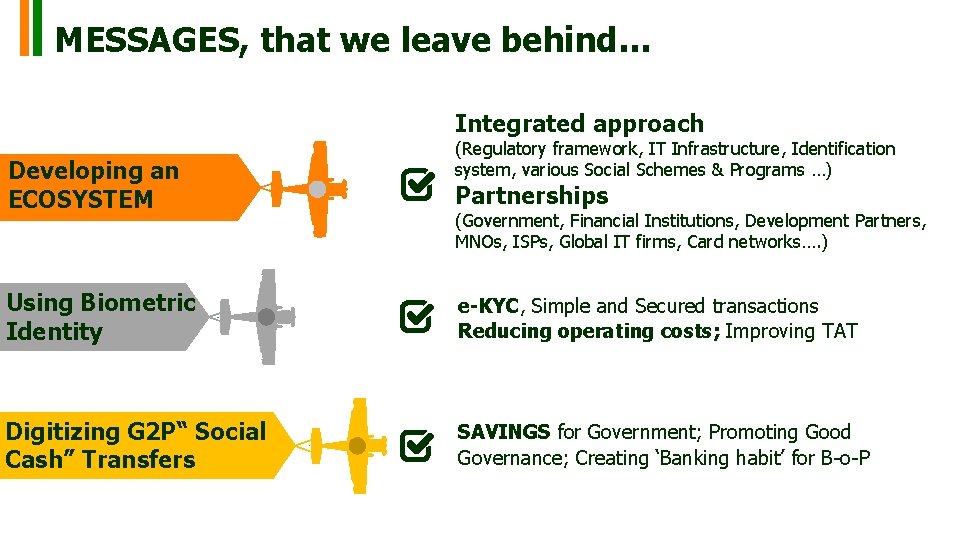
MESSAGES, that we leave behind… Integrated approach Developing an ECOSYSTEM (Regulatory framework, IT Infrastructure, Identification system, various Social Schemes & Programs …) Partnerships (Government, Financial Institutions, Development Partners, MNOs, ISPs, Global IT firms, Card networks…. ) Using Biometric Identity e-KYC, Simple and Secured transactions Reducing operating costs; Improving TAT Digitizing G 2 P“ Social Cash” Transfers SAVINGS for Government; Promoting Good Governance; Creating ‘Banking habit’ for B-o-P
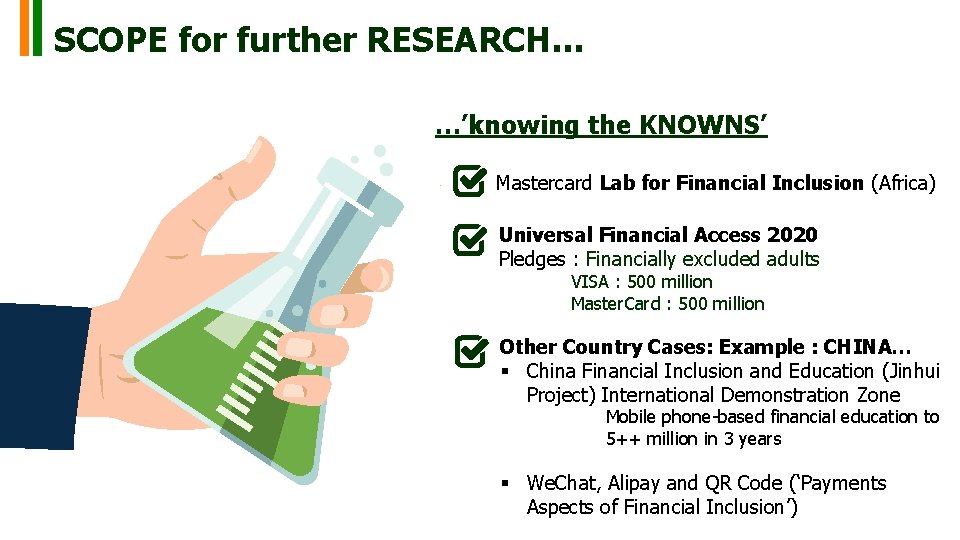
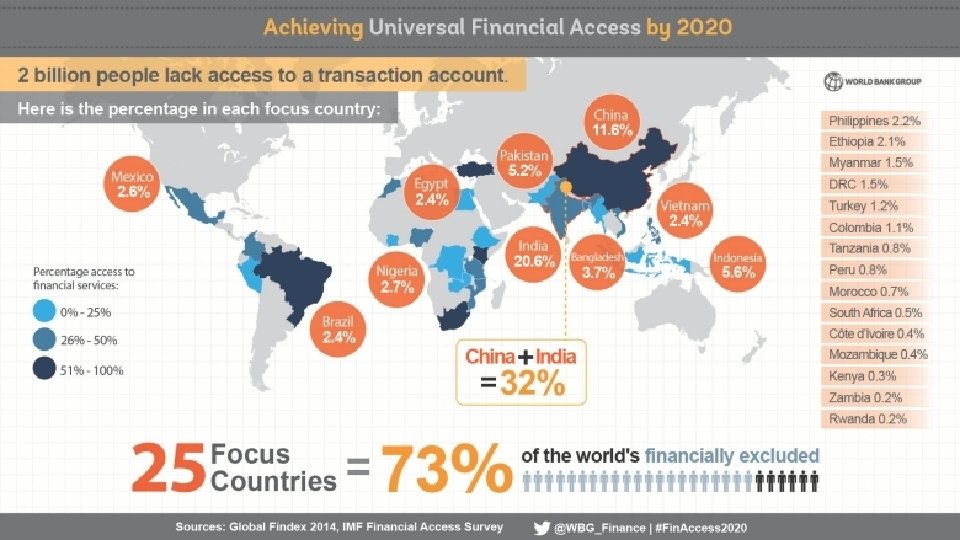
SCOPE for further RESEARCH… …’knowing the KNOWNS’ Mastercard Lab for Financial Inclusion (Africa) Universal Financial Access 2020 Pledges : Financially excluded adults VISA : 500 million Master. Card : 500 million Other Country Cases: Example : CHINA… § China Financial Inclusion and Education (Jinhui Project) International Demonstration Zone Mobile phone-based financial education to 5++ million in 3 years § We. Chat, Alipay and QR Code (‘Payments Aspects of Financial Inclusion’)
Role of Technology in Promoting Financial Inclusion Lessons from India [Academic Report] by - Ratul Rana Sumitomo Mitsui Banking Corporation* [Singapore] Shotaro Kumagai Japan Research Institute* [Tokyo] * Sumitomo Mitsui Financial Group (SMFG) companies
DISCLAIMER The two authors are currently working with Sumitomo Mitsui Banking Corporation (SMBC) and Japan Research Institute (JRI), respectively – subsidiary entities of Sumitomo Mitsui Financial Group (“SMFG”), Japan. All views, opinions, findings, and conclusions or recommendations expressed in this ‘Academic Paper’ are strictly and entirely that of the individual authors and the same does not represent the views/stance of the SMFG and/or its subsidiary/affiliate organizations in any manner and form whatsoever. SMFG and/or its subsidiary/affiliate organizations take no responsibility for any errors or omissions in, or for the correctness of, the information contained in this Paper. The authors bear complete and unconditional responsibility of the correctness and for any/all errors & omissions in the Paper. All views, opinions, findings, and conclusions or recommendations expressed in this ‘Academic Report’ are done with the sole intention of encouraging further deliberation and debate on the subject. All graphics, pictures, logos, etc. are used with the limited intention of creating a better visualisation and understanding. Such usage does not represent any form of endorsement by the authors and/or their affiliated organisation.
ANNEX
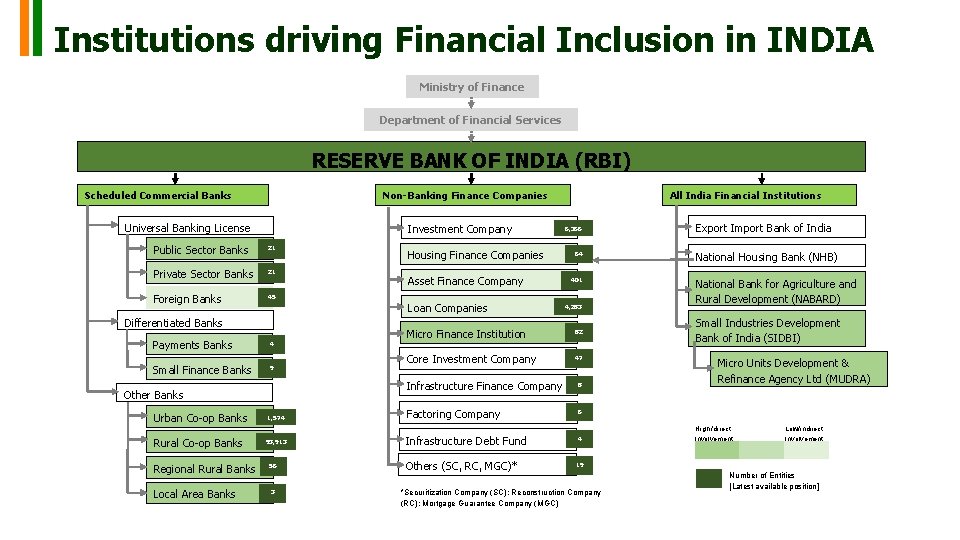
Institutions driving Financial Inclusion in INDIA Ministry of Finance Department of Financial Services RESERVE BANK OF INDIA (RBI) Non-Banking Finance Companies Scheduled Commercial Banks Universal Banking License Public Sector Banks Private Sector Banks Foreign Banks Differentiated Banks Payments Banks Small Finance Banks Other Banks Urban Co-op Banks Rural Co-op Banks egional Rural Banks R Local Area Banks 21 21 45 4 9 1, 574 93, 913 56 6, 366 Investment Company 64 Housing Finance Companies 401 Asset Finance Company 4, 283 Loan Companies 82 Micro Finance Institution 47 Core Investment Company Infrastructure Finance Company 8 Factoring Company 6 Infrastructure Debt Fund 4 Others (SC, RC, MGC)* All India Financial Institutions Export Import Bank of India National Housing Bank (NHB) National Bank for Agriculture and Rural Development (NABARD) S mall Industries Development Bank of India (SIDBI) Micro Units Development & Refinance Agency Ltd (MUDRA) High /direct Involvement 19 3 Low/indirect Involvement *Securitization Company (SC); Reconstruction Company (RC); Mortgage Guarantee Company (MGC) Number of Entities [Latest available position]
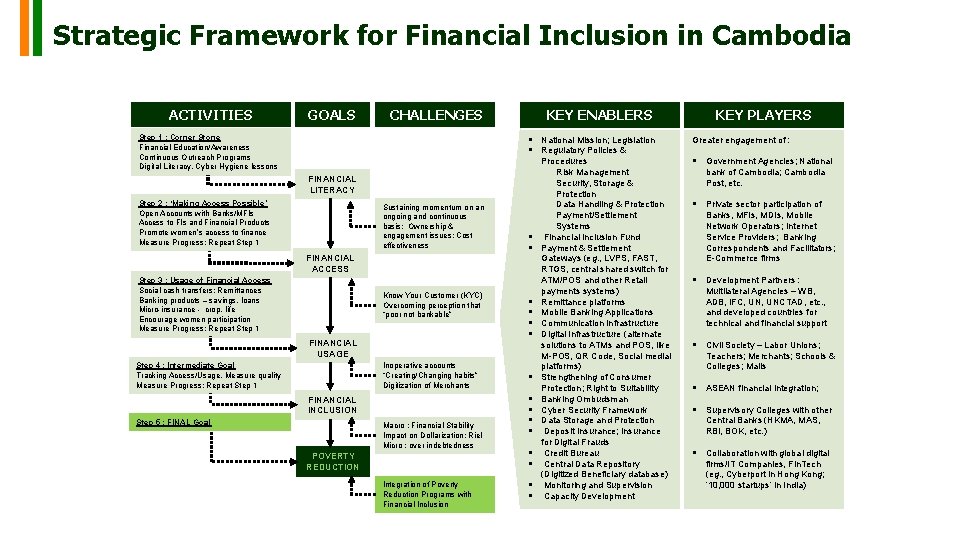
Strategic Framework for Financial Inclusion in Cambodia ACTIVITIES GOALS CHALLENGES Step 1 : Corner Stone Financial Education/Awareness Continuous Outreach Programs Digital Literacy, Cyber Hygiene lessons KEY ENABLERS § National Mission; Legislation § Regulatory Policies & FINANCIAL LITERACY Step 2 : ‘Making Access Possible’ Open Accounts with Banks/MFIs Access to FIs and Financial Products Promote women’s access to finance Measure Progress; Repeat Step 1 Sustaining momentum on an ongoing and continuous basis; Ownership & engagement issues; Cost effectiveness § § FINANCIAL ACCESS Step 3 : Usage of Financial Access Social cash transfers; Remittances Banking products – savings, loans Micro-insurance - crop, life Encourage women participation Measure Progress; Repeat Step 1 Know Your Customer (KYC) Overcoming perception that “poor not bankable” FINANCIAL USAGE Step 4 : Intermediate Goal Tracking Access/Usage, Measure quality Measure Progress; Repeat Step 1 Inoperative accounts “Creating/Changing habits” Digitization of Merchants FINANCIAL INCLUSION Step 5 : FINAL Goal Macro : Financial Stability Impact on Dollarization; Riel Micro : over indebtedness POVERTY REDUCTION Integration of Poverty Reduction Programs with Financial Inclusion § § § § Procedures Risk Management Security, Storage & Protection Data Handling & Protection Payment/Settlement Systems Financial Inclusion Fund Payment & Settlement Gateways (eg. , LVPS, FAST, RTGS, central shared switch for ATM/POS and other Retail payments systems) Remittance platforms Mobile Banking Applications Communication Infrastructure Digital Infrastructure (alternate solutions to ATMs and POS, like M-POS, QR Code, Social medial platforms) Strengthening of Consumer Protection; Right to Suitability Banking Ombudsman Cyber Security Framework Data Storage and Protection Deposit Insurance; Insurance for Digital Frauds Credit Bureau Central Data Repository (Digitized Beneficiary database) Monitoring and Supervision Capacity Development KEY PLAYERS Greater engagement of : § Government Agencies; National bank of Cambodia; Cambodia Post, etc. § Private sector participation of Banks, MFIs, MDIs, Mobile Network Operators; Internet Service Providers; Banking Correspondents and Facilitators; E-Commerce firms § Development Partners : Multilateral Agencies – WB, ADB, IFC, UNCTAD, etc. , and developed countries for technical and financial support § Civil Society – Labor Unions; Teachers; Merchants; Schools & Colleges; Malls § ASEAN financial integration; § Supervisory Colleges with other Central Banks (HKMA, MAS, RBI, BOK, etc. ) § Collaboration with global digital firms/IT Companies, Fin. Tech (eg. , Cyberport in Hong Kong; ‘ 10, 000 startups’ in India)
PMJDY : FUNDING the Account (DBT) Direct Benefit Transfer (DBT) : January 01, 2013 - March 31, 2017 Name of the Scheme 1 MGNREGS NSAP PAHAL 3 Scholarships Other Schemes Total No. of Beneficiaries (Million)2 No. of Beneficiaries data seeded with Aadhaar (%) (Million) Fund Transferred (US$ in Billion) Using Aadhaar Bridge Payment Electronic Fund Transfer W/o Aadhaar Bridge Payment Total Fund transfer using Aadhaar Bridge Payment (%) 111. 5 91. 1 82% 2. 05 10. 74 12. 80 16% 27. 6 14. 4 52% 0. 46 2. 73 3. 19 14% 187. 3 153. 2 82% 5. 47 2. 54 8. 01 68% 22. 7 11. 8 52% 0. 13 3. 23 3. 37 4% 8. 1 3 37% 0. 04 0. 70 0. 74 6% 357. 2 273. 5 77% 8. 20 19. 90 28. 10 29%
Trend of Enrolment of Aadhaar 18 16 14 12 10 8 6 4 2 0 No. of Aadhaar Issued during a Month (in Mn) - LHS 1. 20 1. 18 1. 16 1. 14 1. 12 1. 10 1. 08 1. 06 1. 04 1. 02 Sep 2017 Aug 2017 Jul- Jun 2017 May 2017 Apr 2017 Mar 2017 Feb 2017 Jan 2017 Dec 2016 Nov 2016 1. 18 No. of Aadhaar - Cumulative Total (in Bn) - RHS
Uses of ‘AADHAAR’ : E-KYC & Account Opening (2/2)
‘Digital Payment’ solutions in India Year 2010 Type of Digital Payment Solutions Immediate Payment Service (IMPS) Features Instant, 24 X 7, interbank immediate electronic fund transfer service through multiple channels such as Internet banking, mobile banking 2014 National Unified USSD Platform Immediate low value remittances using mobile phones - both basic feature and smart phones 2016 Unified Payments Interface (UPI) Common Mobile Application developed by the NPCI. UPI uses mobile as the primary device for all (push & pull) payments including P 2 P, P 2 E, and E 2 P. Uses Aadhaar number, mobile number, card number, and account number in an unified way 2016 Bharat Interface for Money (BHIM) Common Mobile Application launched/operated by NPCI. BHIM is an upgraded version of UPI. Real time fund transfer using a single identity like mobile number or name. 2017 Bharat QR Payments between P 2 E wherein physical POS is not required; only virtual POS 2017 Aadhaar Payments on the basis of fingerprints/Aadhar Number; No need for mobiles, payment gateways like Master. Card or VISA
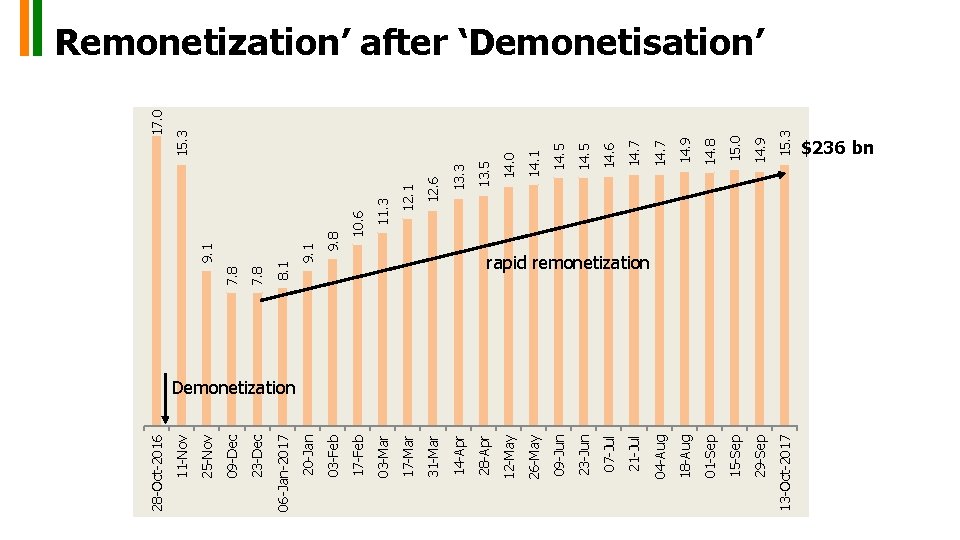
17. 0 15. 3 14. 9 14. 8 15. 0 14. 9 15. 3 18 -Aug 01 -Sep 15 -Sep 29 -Sep 13 -Oct-2017 Demonetization 14. 7 14. 6 14. 5 14. 1 14. 0 13. 5 13. 3 12. 6 12. 1 11. 3 10. 6 9. 8 9. 1 8. 1 7. 8 9. 1 rapid remonetization 04 -Aug 21 -Jul 07 -Jul 23 -Jun 09 -Jun 26 -May 12 -May 28 -Apr 14 -Apr 31 -Mar 17 -Mar 03 -Mar 17 -Feb 03 -Feb 20 -Jan 06 -Jan-2017 23 -Dec 09 -Dec 25 -Nov 11 -Nov 28 -Oct-2016 Remonetization’ after ‘Demonetisation’ $236 bn
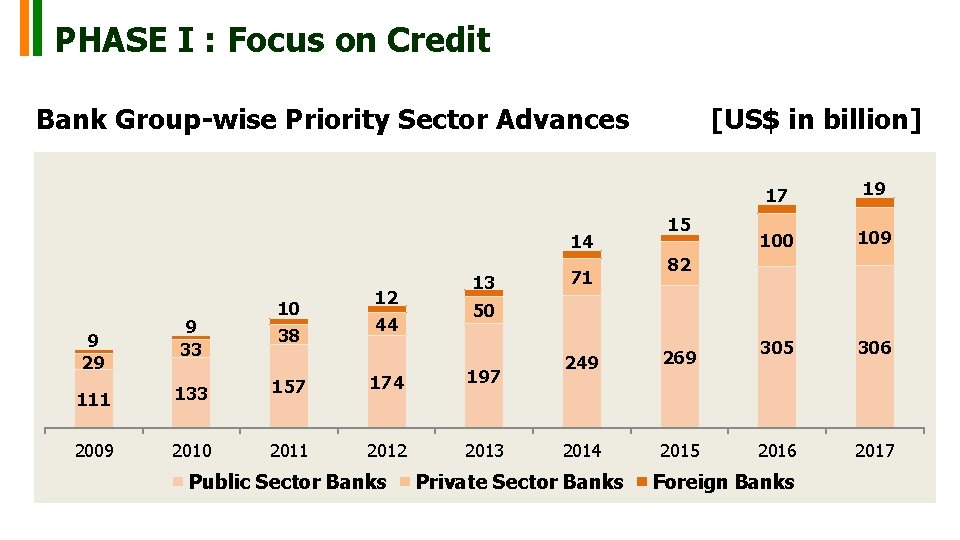
PHASE I : Focus on Credit Bank Group-wise Priority Sector Advances [US$ in billion] 14 9 29 9 33 10 38 12 44 13 19 100 109 305 306 2017 82 50 111 133 157 174 197 2009 2010 2011 2012 2013 Public Sector Banks 71 15 17 249 269 2014 2015 Private Sector Banks Foreign Banks
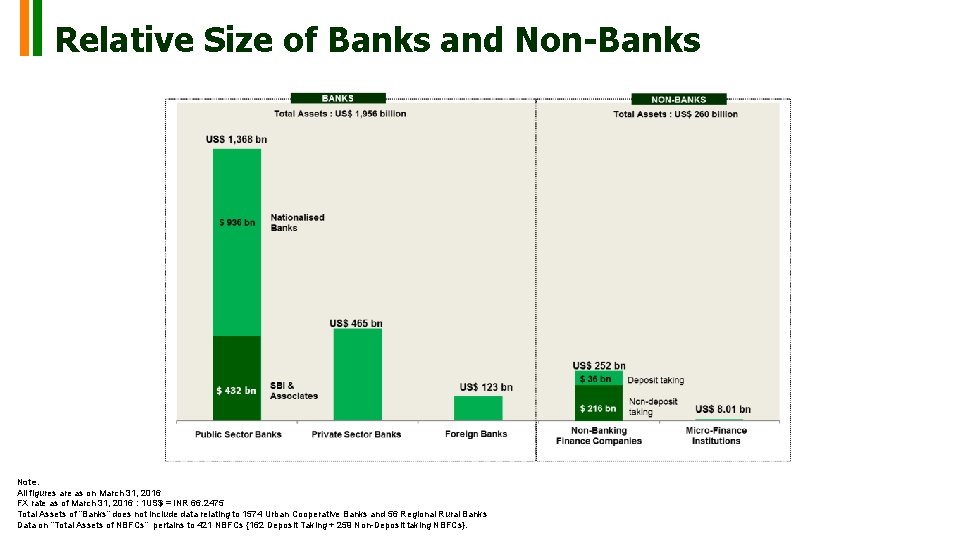
Relative Size of Banks and Non-Banks Note. All figures are as on March 31, 2016 FX rate as of March 31, 2016 : 1 US$ = INR 66. 2475 Total Assets of ”Banks” does not include data relating to 1574 Urban Cooperative Banks and 56 Regional Rural Banks Data on “Total Assets of NBFCs” pertains to 421 NBFCs {162 Deposit Taking + 259 Non-Deposit taking NBFCs}.
PHASE II : Focus on Access Bank Branches [June 2017] Centres Population Group [Census 2011] Public Sector Banks (21) Private Sector Banks (21) Foreign Banks (45) Total Metro 1 million ++ 21, 570 7, 433 243 29, 246 Urban 0. 1 - 0. 99 million 19, 782 5, 473 37 25, 292 Semi-Urban 10, 000 – 99, 999 25, 934 8, 027 10 33, 971 < 99, 999 29, 171 4, 912 9 96, 457 25, 845 299 Rural Total 34, 092 122 k 122, 601
PHASE II : Focus on Access ATMs [September 2017] Centres Metro Urban Semi - Urban Rural Total Public Sector Banks (#21) 33, 567 41, 392 42, 293 29, 655 146, 907 Private Sector Foreign Banks (#20) Banks (#7) 24, 925 733 15, 467 168 14, 199 17 4, 774 16 59, 365 934 Total White (Banks) Label (#8) 59, 225 2, 015 57, 027 1, 807 56, 509 4, 481 34, 445 6, 044 207, 206 Grand Total 61, 240 58, 834 60, 990 40, 489 221 k 14, 347 221, 553