
Role of Salivary Glands Taste perception Introduction The


- Slides: 8
Role of Salivary Glands Taste perception
Introduction The salivary glands play an important role in tasting, by dissolving or diluting tasteful substances and carrying them to the receptors. The secretion of saliva is controlled by the autonomous nervous system, but reflex secretion of saliva occurs when there is food in the mouth. The sight and at times even the thought of food stimulates the flow of saliva. It plays a significant role in taste perception.
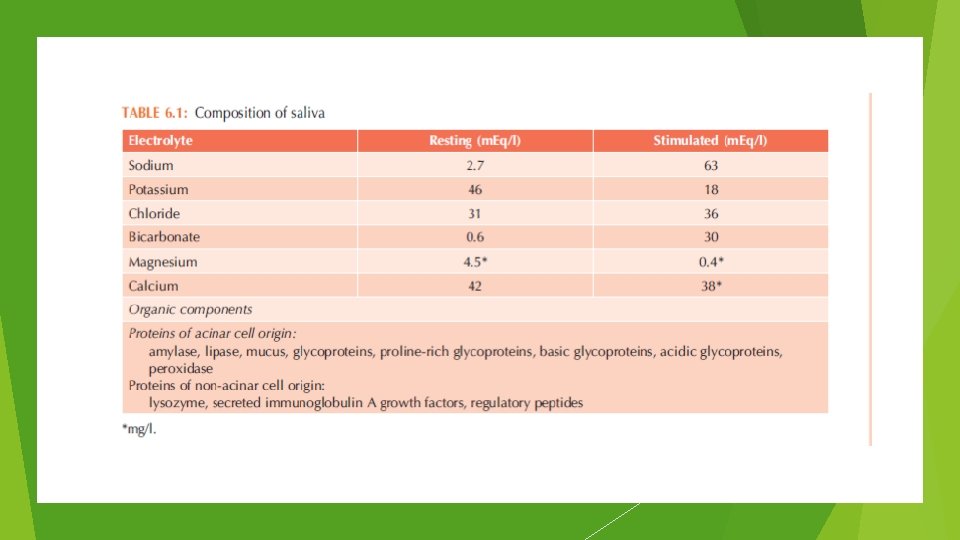
Introduction The amount of saliva secreted varies with the gland that is secreting the saliva. About 1. 5 litres of saliva is produced daily and it consists of water, mineral salts, salivary amylase, mucus, lysozyme, immunoglobins and blood-clotting factor. The composition of saliva serves to modulate taste response. Specific functions of saliva include; preparation of the food for swallowing by altering its consistency, solvent action, cleansing action and moistening and lubrication action (Best and Taylor, 1943). The taste buds are stimulated only by chemical substances in solution. Dry foods stimulate the sense of taste only after thorough mixing with saliva.
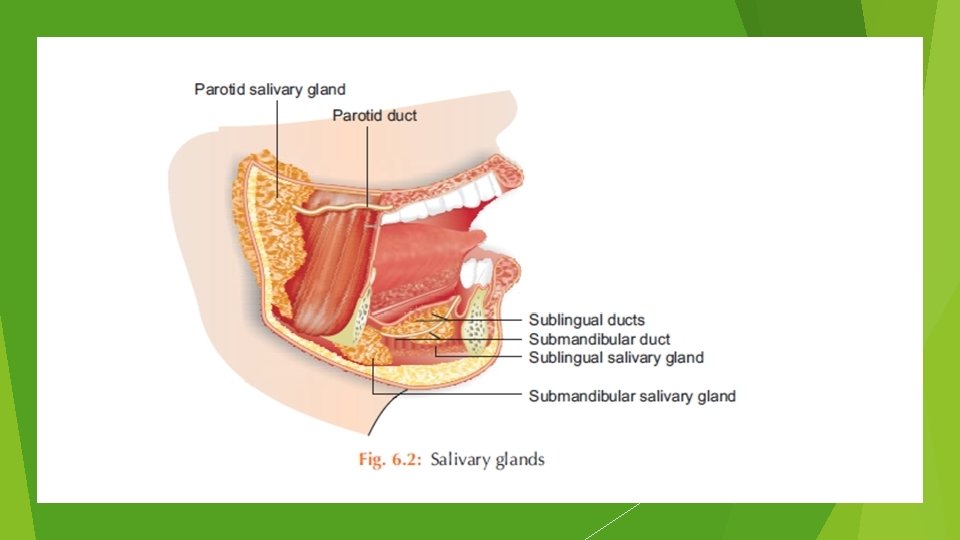
Salivary Glands Saliva is secreted by the three pairs of salivary glands which pour their secretions into the mouth namely; the parotid glands, the sub maxillary and sublingual and reinforced by numerous small buccal glands. Saliva secreted by the parotid gland is thin and watery; this is the saliva that is released in copious amount during mastication and has high digestive power. The sublingual glands secretion is thick and mucous-like while saliva secreted from the submaxillary is either thin and watery or thick and viscous, depending upon the stimulus
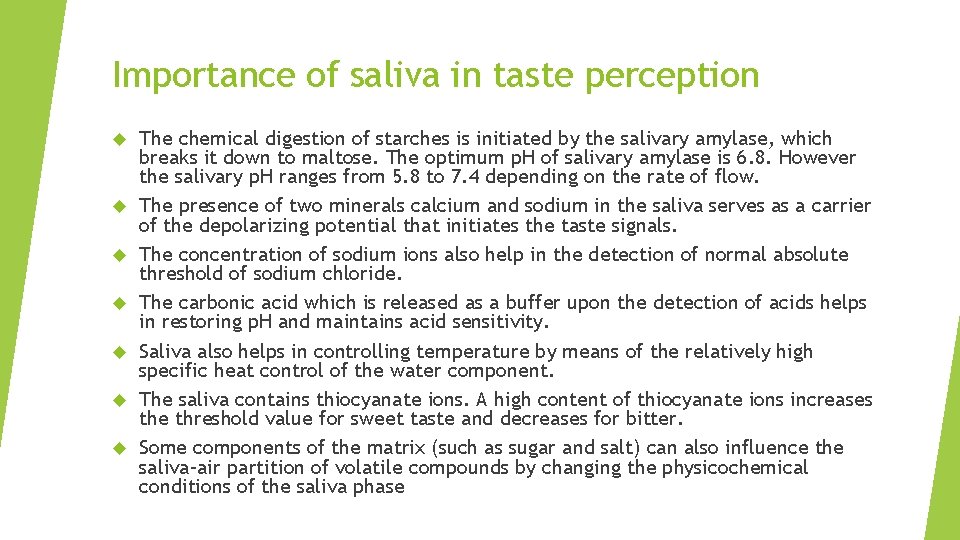
Importance of saliva in taste perception The chemical digestion of starches is initiated by the salivary amylase, which breaks it down to maltose. The optimum p. H of salivary amylase is 6. 8. However the salivary p. H ranges from 5. 8 to 7. 4 depending on the rate of flow. The presence of two minerals calcium and sodium in the saliva serves as a carrier of the depolarizing potential that initiates the taste signals. The concentration of sodium ions also help in the detection of normal absolute threshold of sodium chloride. The carbonic acid which is released as a buffer upon the detection of acids helps in restoring p. H and maintains acid sensitivity. Saliva also helps in controlling temperature by means of the relatively high specific heat control of the water component. The saliva contains thiocyanate ions. A high content of thiocyanate ions increases the threshold value for sweet taste and decreases for bitter. Some components of the matrix (such as sugar and salt) can also influence the saliva–air partition of volatile compounds by changing the physicochemical conditions of the saliva phase
Thank you