
Role of OM in Asset Management Rich Pinder
- Slides: 36
Role of O&M in Asset Management Rich Pinder: Asset Manager, Region of Waterloo Roop Lutchman: Lead Business Consulting, GHD CNAM 2014 Conference Toronto, Ontario May 20 -23, 2014
Agenda • Background • Business Drivers & AM Program at the Region • Implementation Methodology • Approach to Asset Management • AM Elements and the Role of O&M • Results and Next Steps
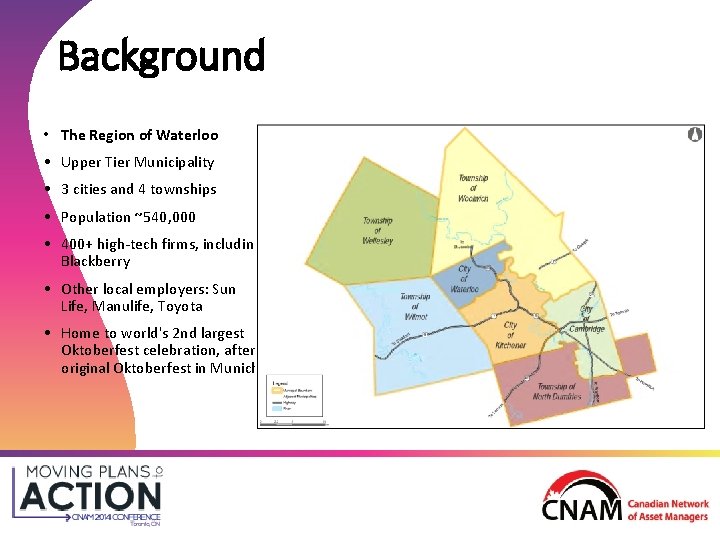
Background • The Region of Waterloo • Upper Tier Municipality • 3 cities and 4 townships • Population ~540, 000 • 400+ high-tech firms, including Blackberry • Other local employers: Sun Life, Manulife, Toyota • Home to world's 2 nd largest Oktoberfest celebration, after original Oktoberfest in Munich
Background Region of Waterloo: • Upper Tier Municipality • Consists of 3 cities and 4 townships • Population approximately 540, 000 Over $6 B in Assets: • Waste Water – 13 WWTP, 5 PS, 2 Biosolids Storage & 1 Biosolids Transfer Facility • Water – 16 WTP, 38 PS, 46 Storage, 125 Wells • Transportation – 700 kilometres roadways, 169 bridges, 478 signalized intersections, 7, 543 street lights • Waste Management – MRC, 2 landfills, transfer stations, waste depots • Fleet and Facilities – 538 vehicles, approx. 800 buildings
Agenda • Background • Business Drivers & AM Program at the Region • Implementation Methodology • Approach to Asset Management • AM Elements and the Role of O&M • Results and Next Steps
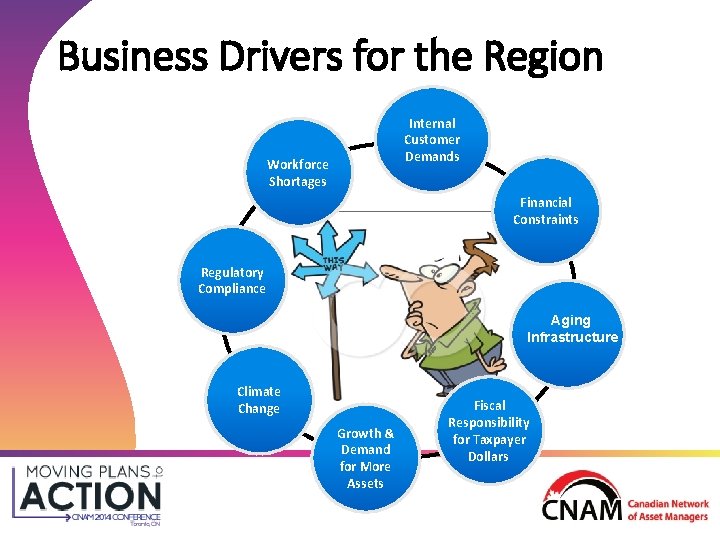
Business Drivers for the Region Internal Customer Demands Workforce Shortages Financial Constraints Regulatory Compliance Aging Infrastructure Climate Change Growth & Demand for More Assets Fiscal Responsibility for Taxpayer Dollars
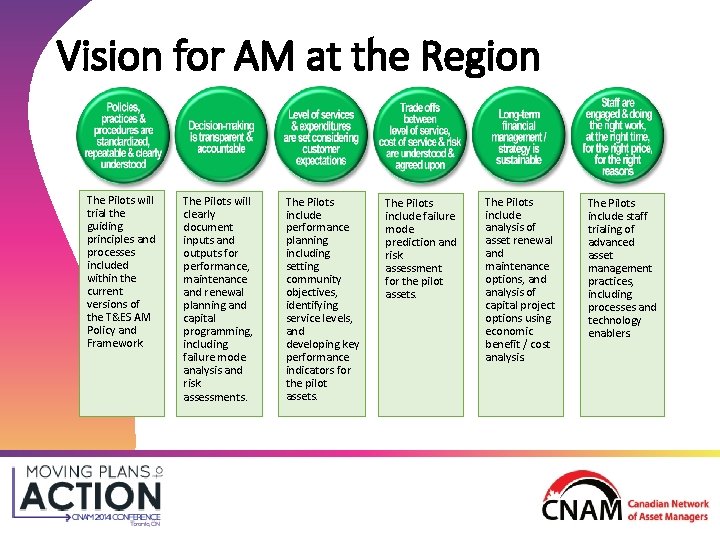
Vision for AM at the Region The Pilots will trial the guiding principles and processes included within the current versions of the T&ES AM Policy and Framework. The Pilots will clearly document inputs and outputs for performance, maintenance and renewal planning and capital programming, including failure mode analysis and risk assessments. The Pilots include performance planning including setting community objectives, identifying service levels, and developing key performance indicators for the pilot assets. The Pilots include failure mode prediction and risk assessment for the pilot assets. The Pilots include analysis of asset renewal and maintenance options, and analysis of capital project options using economic benefit / cost analysis. The Pilots include staff trialing of advanced asset management practices, including processes and technology enablers.
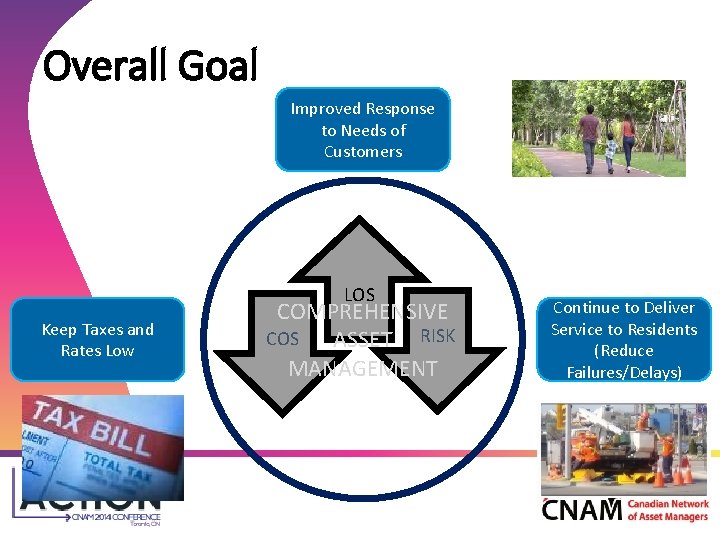
Overall Goal Improved Response to Needs of Customers LOS Keep Taxes and Rates Low COMPREHENSIVE COS ASSET RISK MANAGEMENT Continue to Deliver Service to Residents (Reduce Failures/Delays)
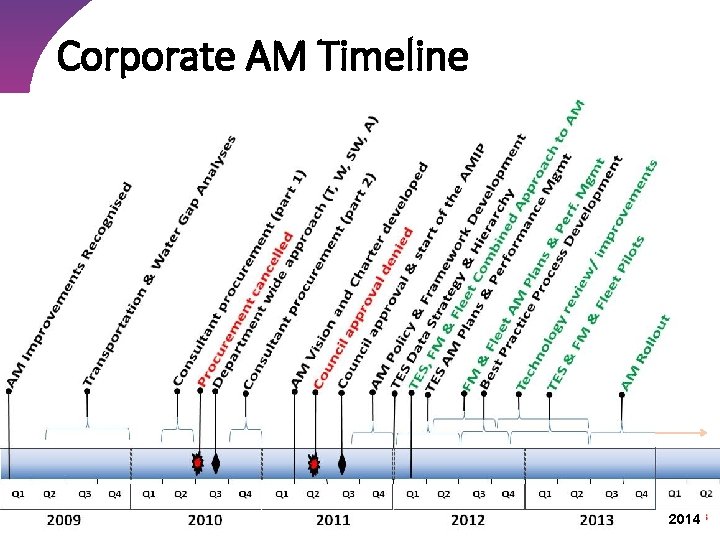
Corporate AM Timeline 2014
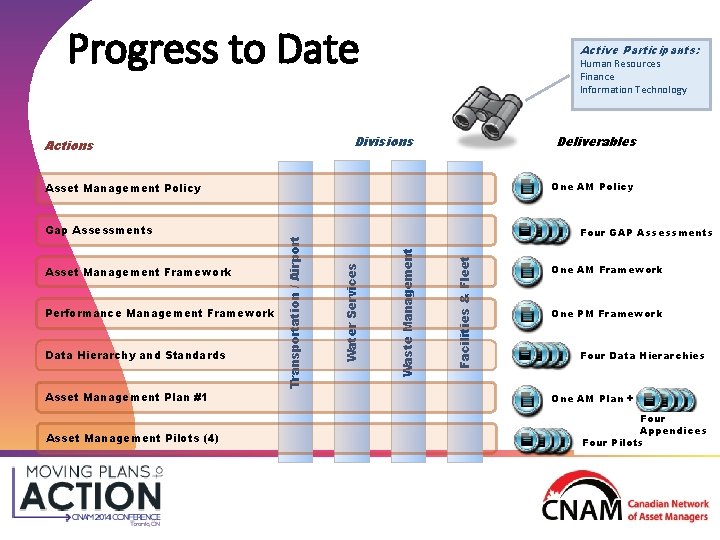
Progress to Date Active Participants: Human Resources Finance Information Technology Divisions Actions Deliverables One AM Policy Data Hierarchy and Standards Asset Management Plan #1 Asset Management Pilots (4) Facilities & Fleet Performance Management Framework Waste Management Asset Management Framework Four GAP Assessments Water Services Gap Assessments Transportation / Airport Asset Management Policy One AM Framework One PM Framework Four Data Hierarchies One AM Plan + Four Appendices Four Pilots
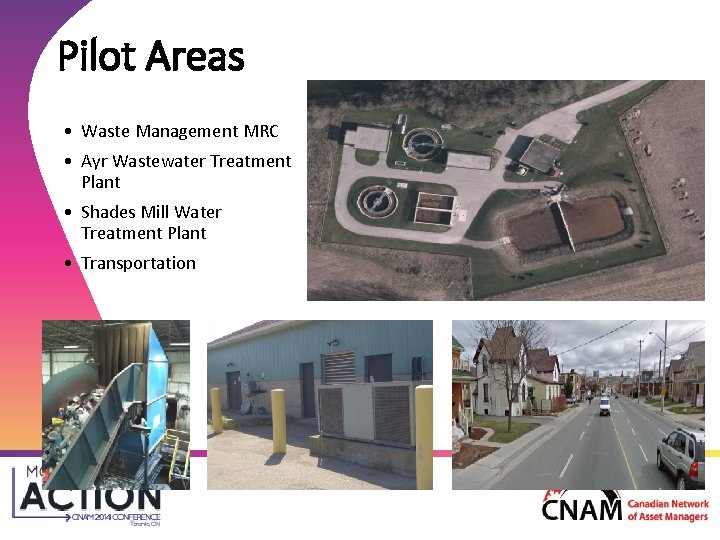
Pilot Areas • Waste Management MRC • Ayr Wastewater Treatment Plant • Shades Mill Water Treatment Plant • Transportation
Agenda • Background • Business Drivers & AM Program at the Region • Implementation Methodology • Approach to Asset Management • AM Elements and the Role of O&M • Results and Next Steps
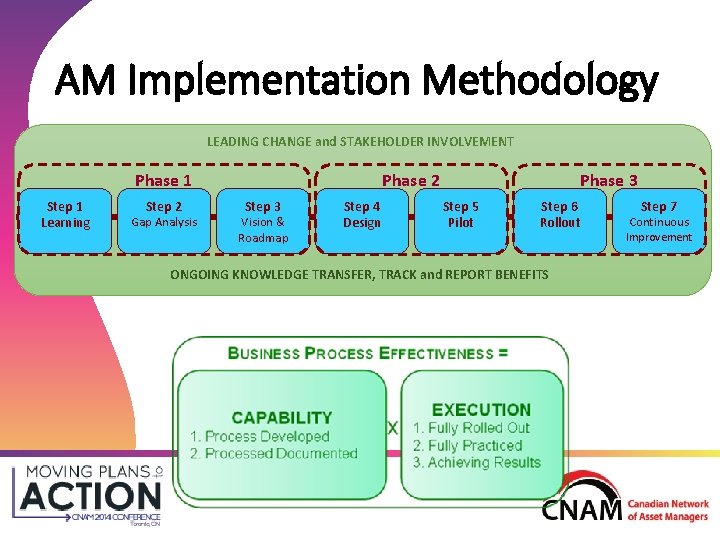
AM Implementation Methodology LEADING CHANGE and STAKEHOLDER INVOLVEMENT Phase 1 Step 1 Learning Step 2 Gap Analysis Phase 2 Step 3 Vision & Roadmap Step 4 Design Phase 3 Step 5 Pilot Step 6 Rollout ONGOING KNOWLEDGE TRANSFER, TRACK and REPORT BENEFITS Step 7 Continuous Improvement
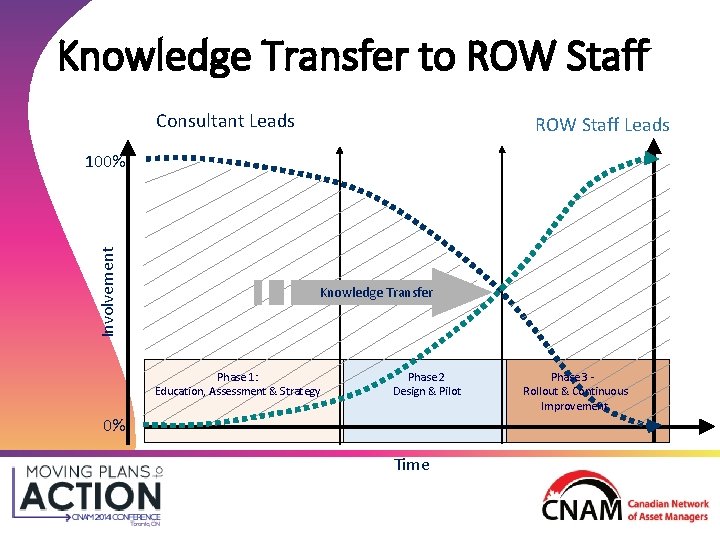
Knowledge Transfer to ROW Staff Consultant Leads ROW Staff Leads Involvement 100% Knowledge Transfer Phase 1: Education, Assessment & Strategy Phase 2 Design & Pilot 0% Time Phase 3 - Rollout & Continuous Improvement
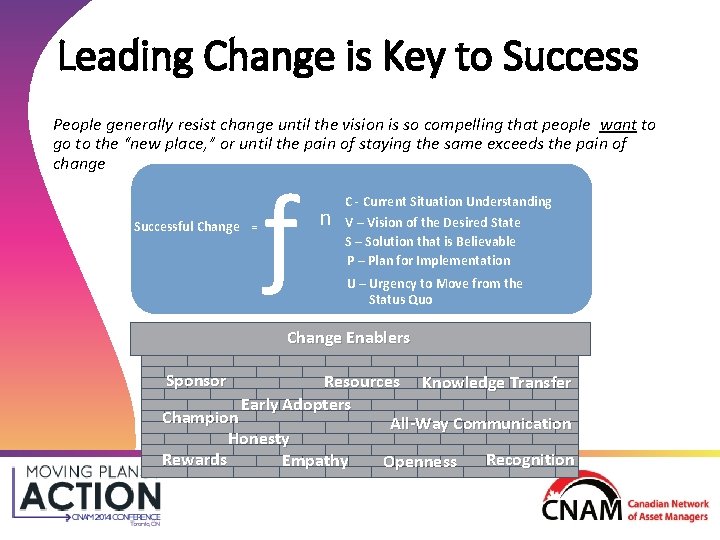
Leading Change is Key to Success People generally resist change until the vision is so compelling that people want to go to the “new place, ” or until the pain of staying the same exceeds the pain of change Successful Change = ƒ n C - Current Situation Understanding V – Vision of the Desired State S – Solution that is Believable P – Plan for Implementation U – Urgency to Move from the Status Quo Change Enablers Sponsor Resources Knowledge Transfer Early Adopters Champion All-Way Communication Honesty Rewards Recognition Empathy Openness
Agenda • Background • Business Drivers & AM Program at the Region • Implementation Methodology • Approach to Asset Management • AM Elements and the Role of O&M • Results and Next Steps
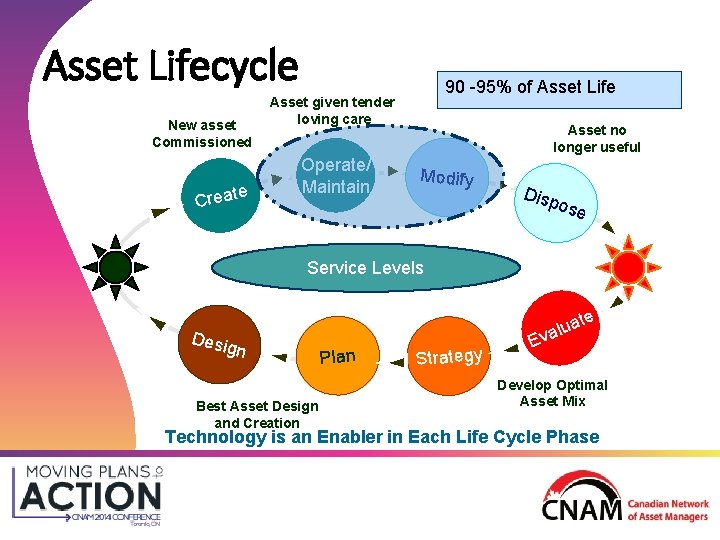
Asset Lifecycle New asset Commissioned e Creat 90 -95% of Asset Life Asset given tender loving care Operate/ Maintain Asset no longer useful Modify Dispose Disp ose Service Levels Desi gn Best Asset Design and Creation ate Plan Strategy lu Eva Develop Optimal Asset Mix Technology is an Enabler in Each Life Cycle Phase
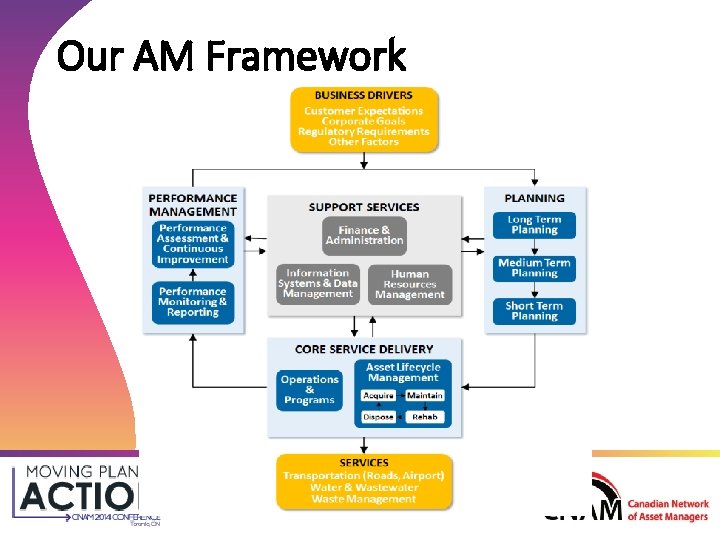
Our AM Framework
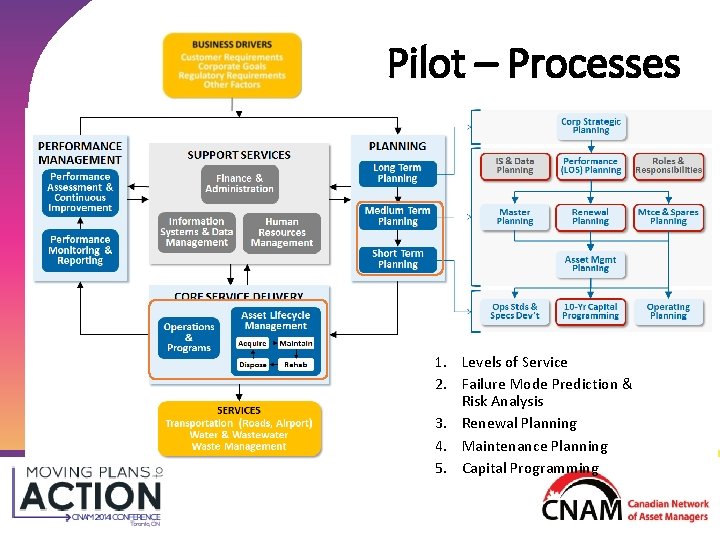
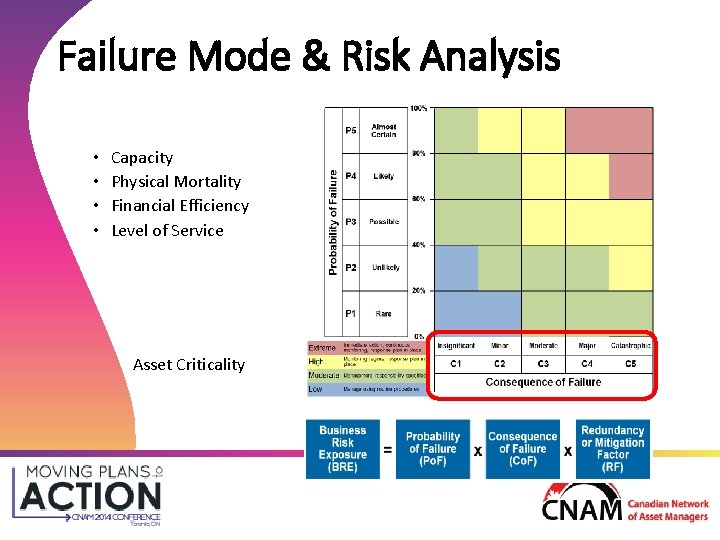
Pilot – Processes 1. Levels of Service 2. Failure Mode Prediction & Risk Analysis 3. Renewal Planning 4. Maintenance Planning 5. Capital Programming
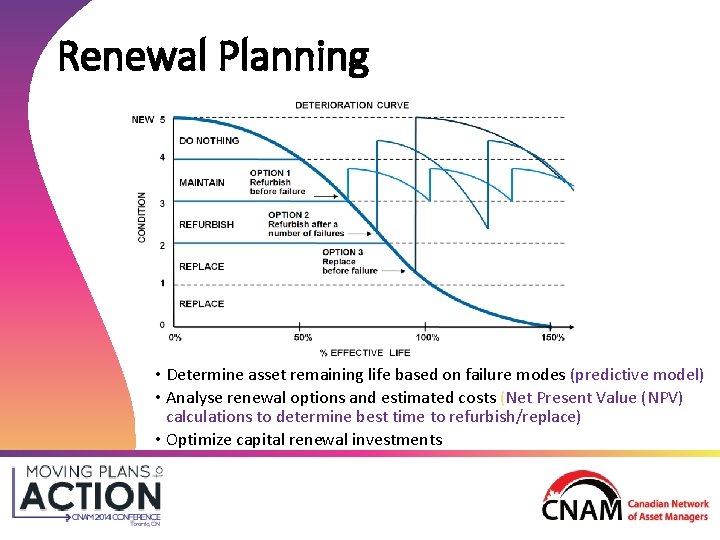
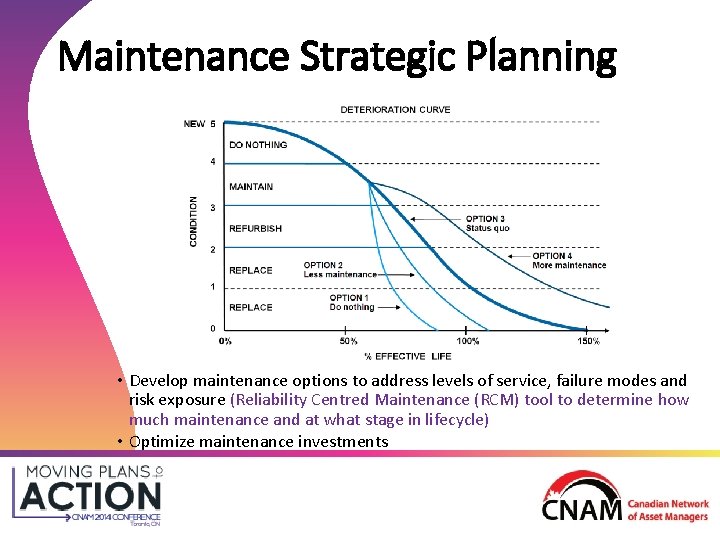
Renewal Planning • Determine asset remaining life based on failure modes (predictive model) • Analyse renewal options and estimated costs (Net Present Value (NPV) calculations to determine best time to refurbish/replace) • Optimize capital renewal investments
Failure Mode & Risk Analysis • • Capacity Physical Mortality Financial Efficiency Level of Service Asset Criticality
Maintenance Strategic Planning • Develop maintenance options to address levels of service, failure modes and risk exposure (Reliability Centred Maintenance (RCM) tool to determine how much maintenance and at what stage in lifecycle) • Optimize maintenance investments
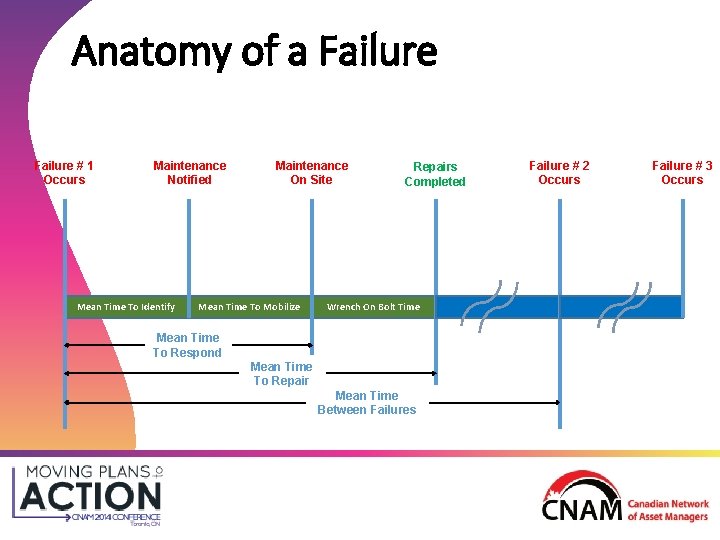
Anatomy of a Failure # 1 Occurs Maintenance Notified Mean Time To Identify Maintenance On Site Mean Time To Mobilize Repairs Completed Wrench On Bolt Time Mean Time To Respond Mean Time To Repair Mean Time Between Failures Failure # 2 Occurs Failure # 3 Occurs
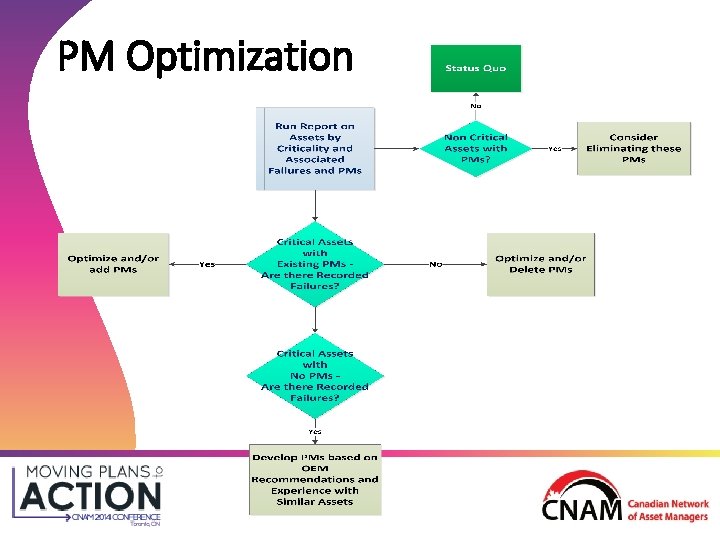
PM Optimization
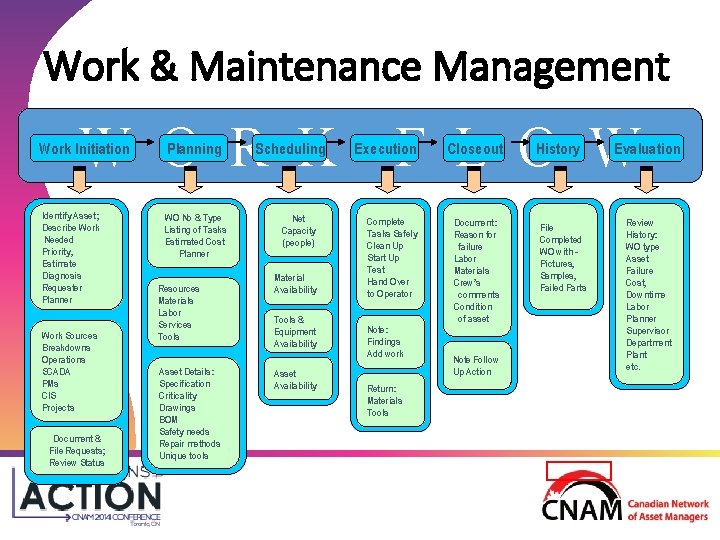
Work & Maintenance Management W O R K Work Initiation Identify Asset; Describe Work Needed Priority, Estimate Diagnosis Requester Planner Work Sources Breakdowns Operations SCADA PMs CIS Projects Document & File Requests; Review Status Planning WO No & Type Listing of Tasks Estimated Cost Planner Resources Materials Labor Services Tools Asset Details: Specification Criticality Drawings BOM Safety needs Repair methods Unique tools Scheduling Net Capacity (people) Material Availability Tools & Equipment Availability Asset Availability F L O W Execution Complete Tasks Safely Clean Up Start Up Test Hand Over to Operator Note: Findings Add work Return: Materials Tools Closeout Document: Reason for failure Labor Materials Crew’s comments Condition of asset Note Follow Up Action History File Completed WO with Pictures, Samples, Failed Parts Evaluation Review History: WO type Asset Failure Cost, Downtime Labor Planner Supervisor Department Plant etc.
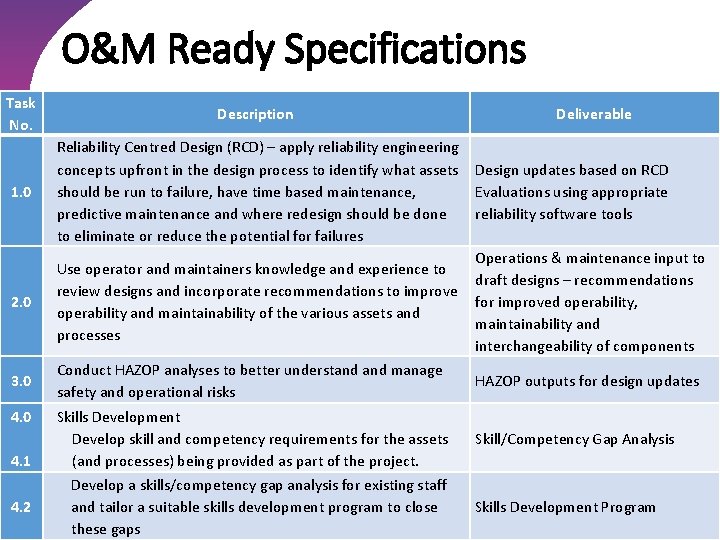
O&M Ready Specifications Task No. 1. 0 2. 0 3. 0 Description Deliverable Reliability Centred Design (RCD) – apply reliability engineering concepts upfront in the design process to identify what assets Design updates based on RCD should be run to failure, have time based maintenance, Evaluations using appropriate predictive maintenance and where redesign should be done reliability software tools to eliminate or reduce the potential for failures Operations & maintenance input to Use operator and maintainers knowledge and experience to draft designs – recommendations review designs and incorporate recommendations to improve for improved operability, operability and maintainability of the various assets and maintainability and processes interchangeability of components Conduct HAZOP analyses to better understand manage HAZOP outputs for design updates safety and operational risks 4. 0 4. 1 Skills Development Develop skill and competency requirements for the assets (and processes) being provided as part of the project. 4. 2 Develop a skills/competency gap analysis for existing staff and tailor a suitable skills development program to close these gaps Skill/Competency Gap Analysis Skills Development Program
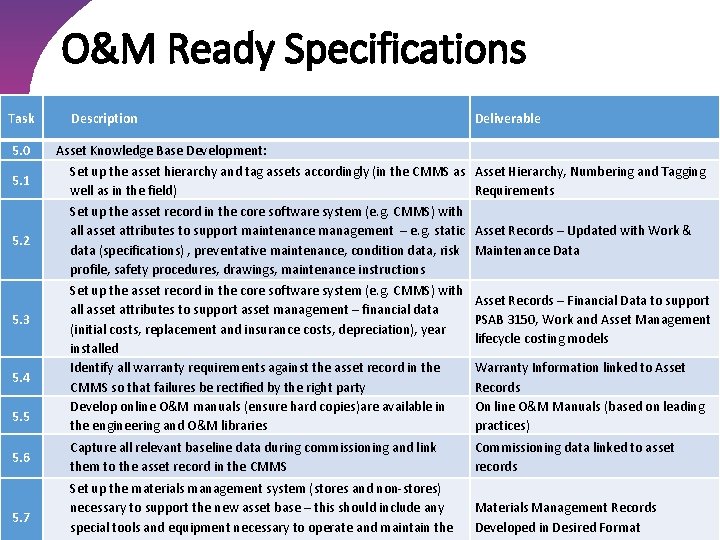
O&M Ready Specifications Task 5. 0 5. 1 5. 2 5. 3 5. 4 5. 5 5. 6 5. 7 Description Deliverable Asset Knowledge Base Development: Set up the asset hierarchy and tag assets accordingly (in the CMMS as Asset Hierarchy, Numbering and Tagging well as in the field) Requirements Set up the asset record in the core software system (e. g. CMMS) with all asset attributes to support maintenance management – e. g. static Asset Records – Updated with Work & data (specifications) , preventative maintenance, condition data, risk Maintenance Data profile, safety procedures, drawings, maintenance instructions Set up the asset record in the core software system (e. g. CMMS) with all asset attributes to support asset management – financial data (initial costs, replacement and insurance costs, depreciation), year installed Identify all warranty requirements against the asset record in the CMMS so that failures be rectified by the right party Develop online O&M manuals (ensure hard copies)are available in the engineering and O&M libraries Asset Records – Financial Data to support PSAB 3150, Work and Asset Management lifecycle costing models Warranty Information linked to Asset Records On line O&M Manuals (based on leading practices) Capture all relevant baseline data during commissioning and link them to the asset record in the CMMS Commissioning data linked to asset records Set up the materials management system (stores and non-stores) necessary to support the new asset base – this should include any special tools and equipment necessary to operate and maintain the Materials Management Records Developed in Desired Format
Agenda • Background • Business Drivers & AM Program at the Region • Implementation Methodology • Approach to Asset Management • AM Elements and the Role of O&M • Results and Next Steps
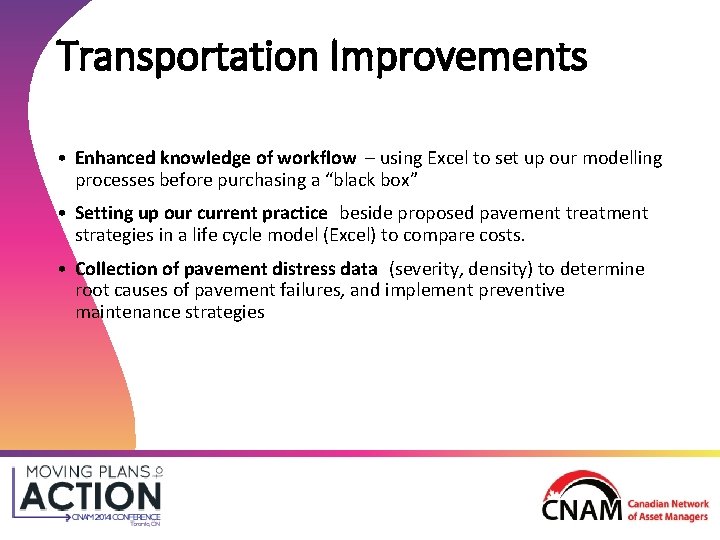
Transportation Improvements • Enhanced knowledge of workflow – using Excel to set up our modelling processes before purchasing a “black box” • Setting up our current practice beside proposed pavement treatment strategies in a life cycle model (Excel) to compare costs. • Collection of pavement distress data (severity, density) to determine root causes of pavement failures, and implement preventive maintenance strategies
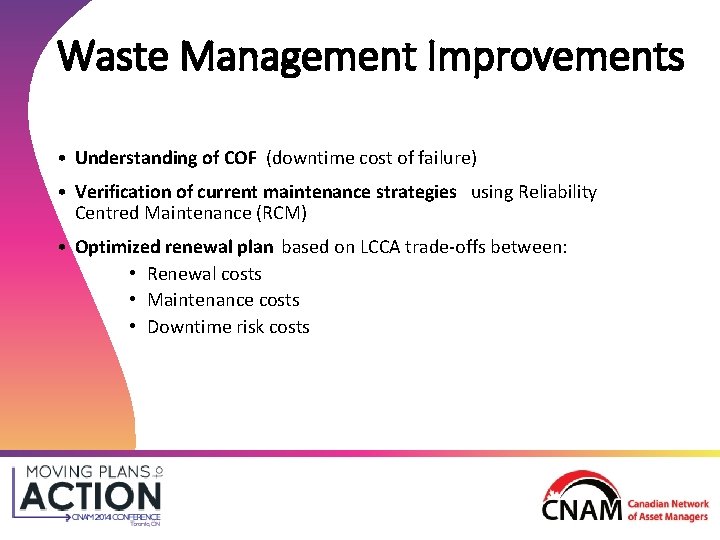
Waste Management Improvements • Understanding of COF (downtime cost of failure) • Verification of current maintenance strategies using Reliability Centred Maintenance (RCM) • Optimized renewal plan based on LCCA trade-offs between: • Renewal costs • Maintenance costs • Downtime risk costs
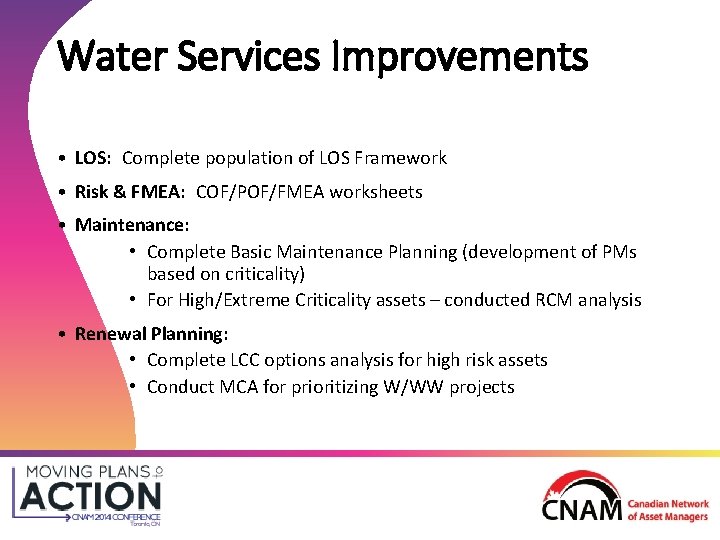
Water Services Improvements • LOS: Complete population of LOS Framework • Risk & FMEA: COF/POF/FMEA worksheets • Maintenance: • Complete Basic Maintenance Planning (development of PMs based on criticality) • For High/Extreme Criticality assets – conducted RCM analysis • Renewal Planning: • Complete LCC options analysis for high risk assets • Conduct MCA for prioritizing W/WW projects
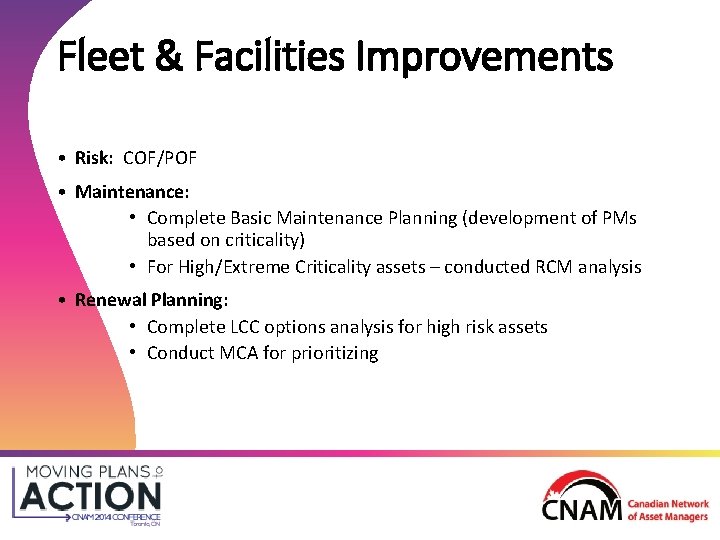
Fleet & Facilities Improvements • Risk: COF/POF • Maintenance: • Complete Basic Maintenance Planning (development of PMs based on criticality) • For High/Extreme Criticality assets – conducted RCM analysis • Renewal Planning: • Complete LCC options analysis for high risk assets • Conduct MCA for prioritizing
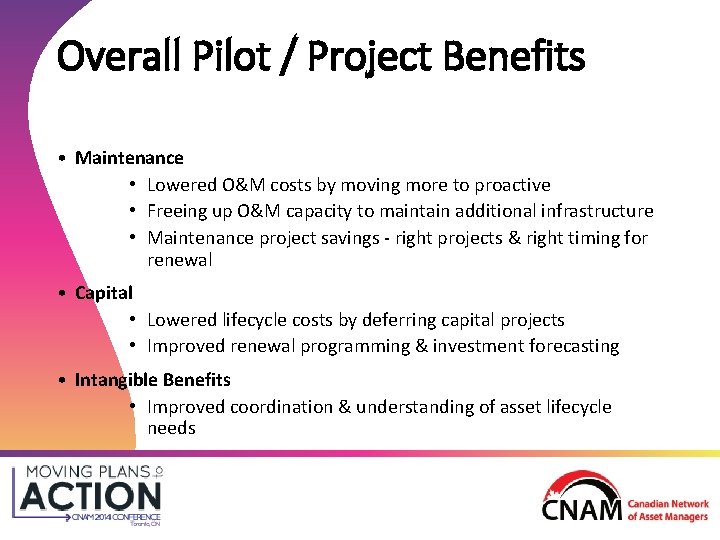
Overall Pilot / Project Benefits • Maintenance • Lowered O&M costs by moving more to proactive • Freeing up O&M capacity to maintain additional infrastructure • Maintenance project savings - right projects & right timing for renewal • Capital • Lowered lifecycle costs by deferring capital projects • Improved renewal programming & investment forecasting • Intangible Benefits • Improved coordination & understanding of asset lifecycle needs
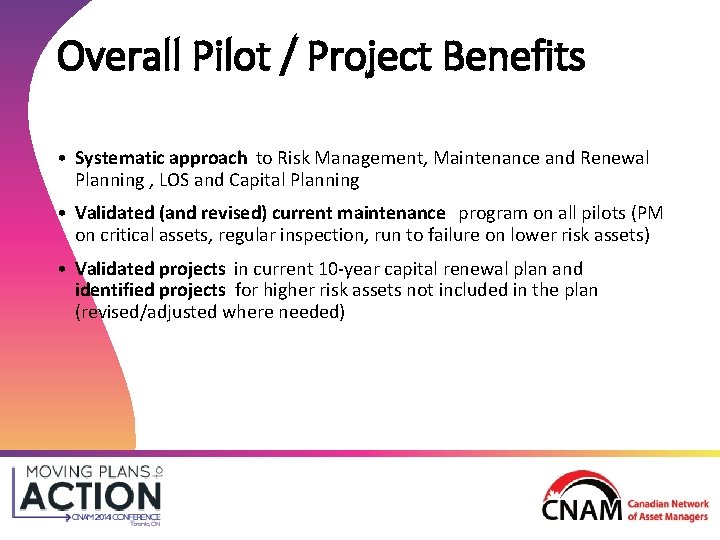
Overall Pilot / Project Benefits • Systematic approach to Risk Management, Maintenance and Renewal Planning , LOS and Capital Planning • Validated (and revised) current maintenance program on all pilots (PM on critical assets, regular inspection, run to failure on lower risk assets) • Validated projects in current 10 -year capital renewal plan and identified projects for higher risk assets not included in the plan (revised/adjusted where needed)
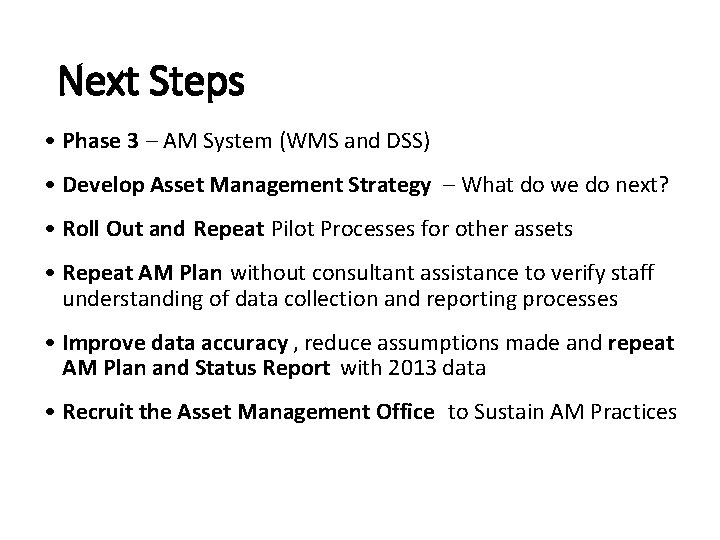
Next Steps • Phase 3 – AM System (WMS and DSS) • Develop Asset Management Strategy – What do we do next? • Roll Out and Repeat Pilot Processes for other assets • Repeat AM Plan without consultant assistance to verify staff understanding of data collection and reporting processes • Improve data accuracy , reduce assumptions made and repeat AM Plan and Status Report with 2013 data • Recruit the Asset Management Office to Sustain AM Practices
Questions? Contact Us: Rich Pinder Asset Manager, Region of Waterloo rpinder@regionofwaterloo. ca Roop Lutchman Lead Business Consulting, GHD Roop. lutchman@ghd. com