
ROLE OF OCCUPATIONAL THERAPY IN DOWN SYNDROME AND
- Slides: 26
ROLE OF OCCUPATIONAL THERAPY IN DOWN SYNDROME AND INTELLECTUAL DIFFICULTIES Snehal Vaidya Masters of Occupational therapy (Pediatrics)
WHAT IS OCCUPATIONAL THERAPY? Occupational therapy is the only profession that helps people across the lifespan to do the things they want and need to do through therapeutic use of daily activities (occupations).
WHAT IS OCCUPATIONAL THERAPY? Occupational therapy practitioners have a holistic perspective, in which the focus is on adapting the environment and /or task to fit the person, and the person is an integral part of therapy team It is an evidence –based practice deeply rooted in science
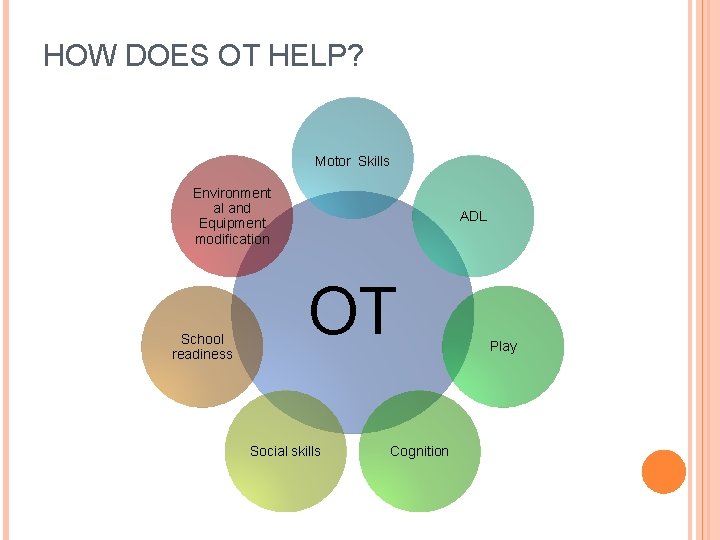
HOW DOES OT HELP? Motor Skills Environment al and Equipment modification School readiness ADL OT Social skills Cognition Play
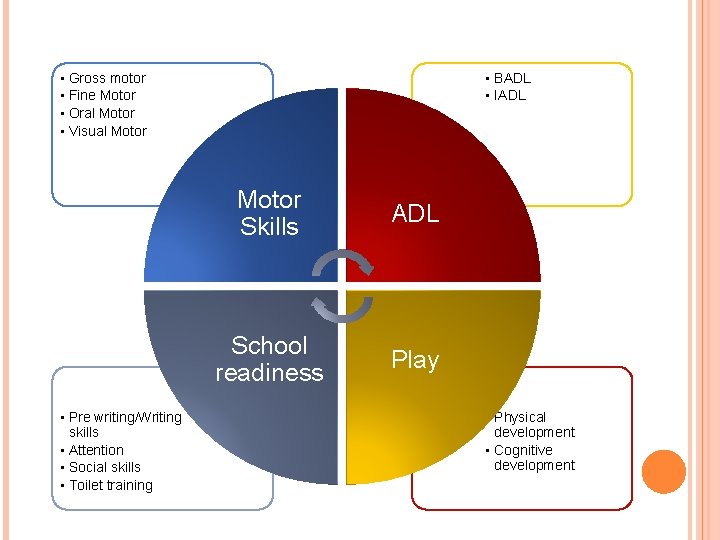
• Gross motor • Fine Motor • Oral Motor • Visual Motor • Pre writing/Writing skills • Attention • Social skills • Toilet training • BADL • IADL Motor Skills ADL School readiness Play • Physical development • Cognitive development
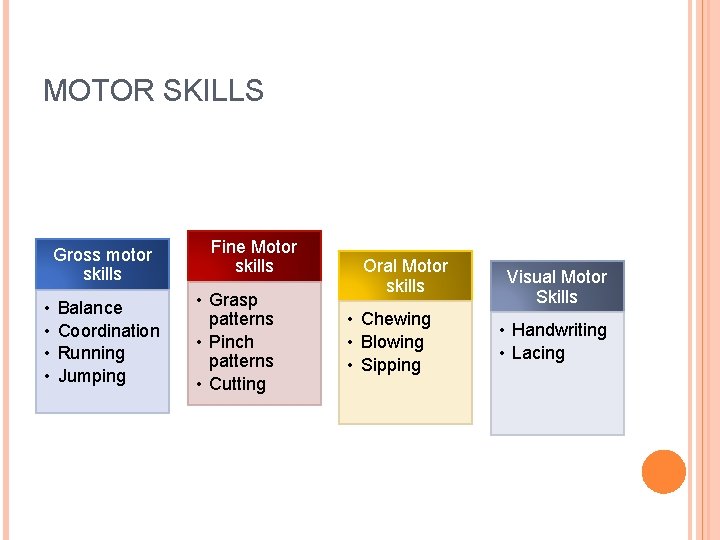
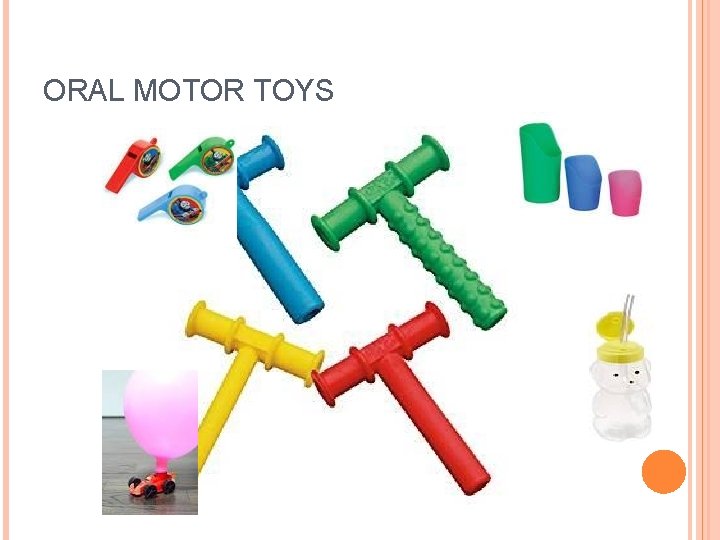
MOTOR SKILLS Gross motor skills • • Balance Coordination Running Jumping Fine Motor skills • Grasp patterns • Pinch patterns • Cutting Oral Motor skills • Chewing • Blowing • Sipping Visual Motor Skills • Handwriting • Lacing
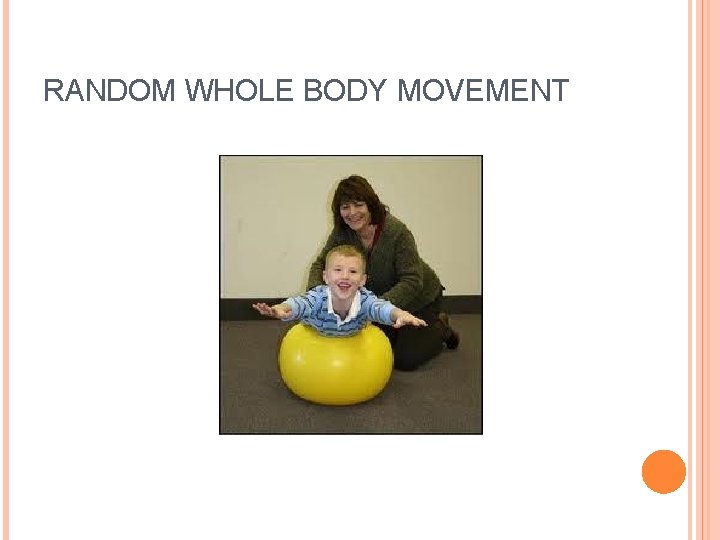
RANDOM WHOLE BODY MOVEMENT
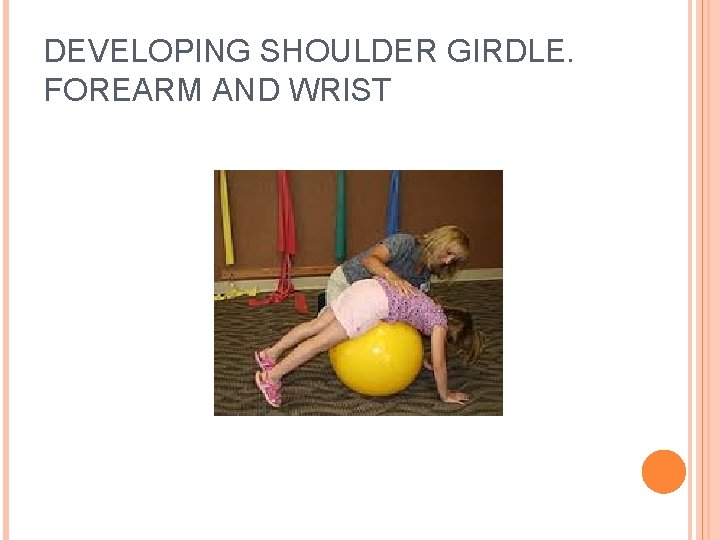
DEVELOPING SHOULDER GIRDLE. FOREARM AND WRIST
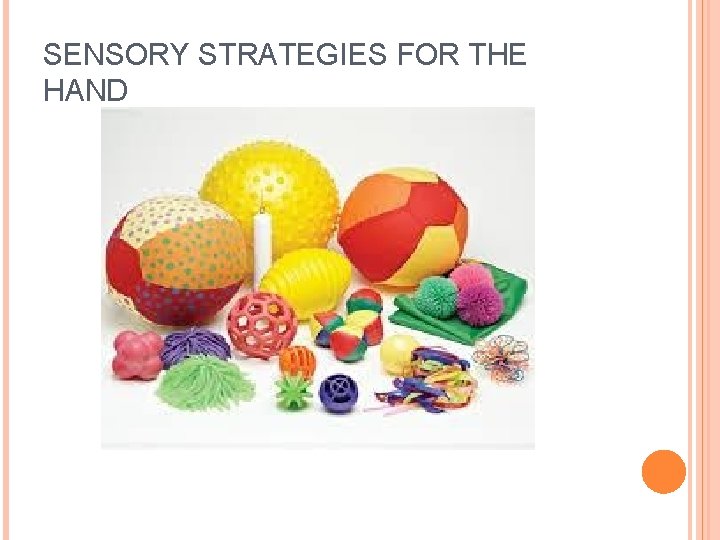
SENSORY STRATEGIES FOR THE HAND
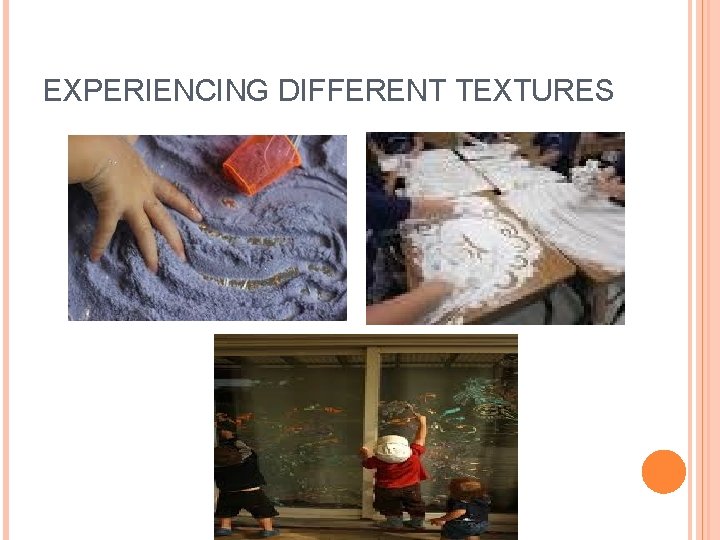
EXPERIENCING DIFFERENT TEXTURES
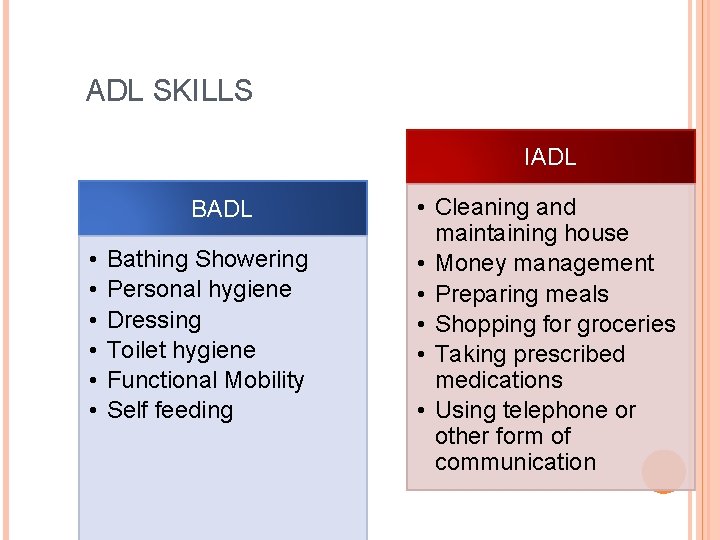
ADL SKILLS IADL BADL • • • Bathing Showering Personal hygiene Dressing Toilet hygiene Functional Mobility Self feeding • Cleaning and maintaining house • Money management • Preparing meals • Shopping for groceries • Taking prescribed medications • Using telephone or other form of communication
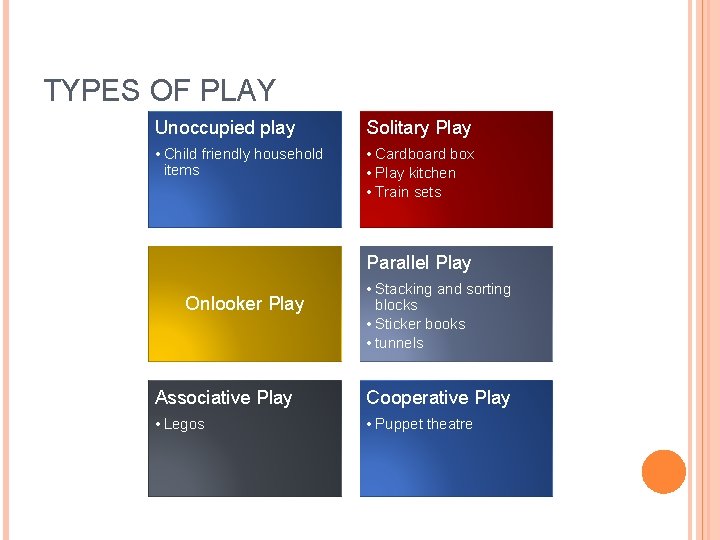
TYPES OF PLAY Unoccupied play Solitary Play • Child friendly household items • Cardboard box • Play kitchen • Train sets Parallel Play Onlooker Play • Stacking and sorting blocks • Sticker books • tunnels Associative Play Cooperative Play • Legos • Puppet theatre
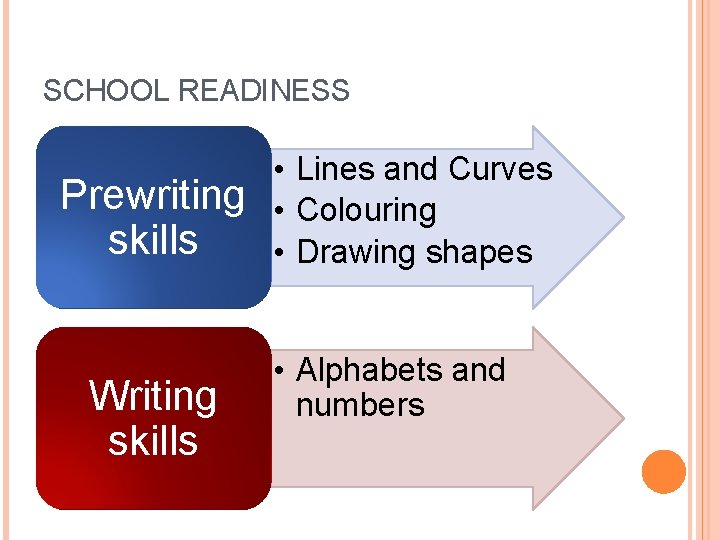
SCHOOL READINESS Prewriting skills Writing skills • Lines and Curves • Colouring • Drawing shapes • Alphabets and numbers
PRE WRITING SKILLS Help your child move from Tracing straight line To Tracing Zig zag line To Tracing curved lines To Tracing diagonal lines To Tracing Circles
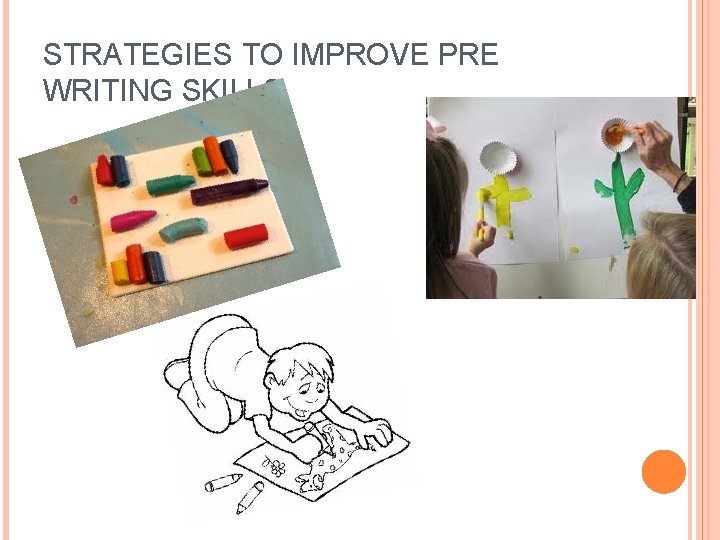
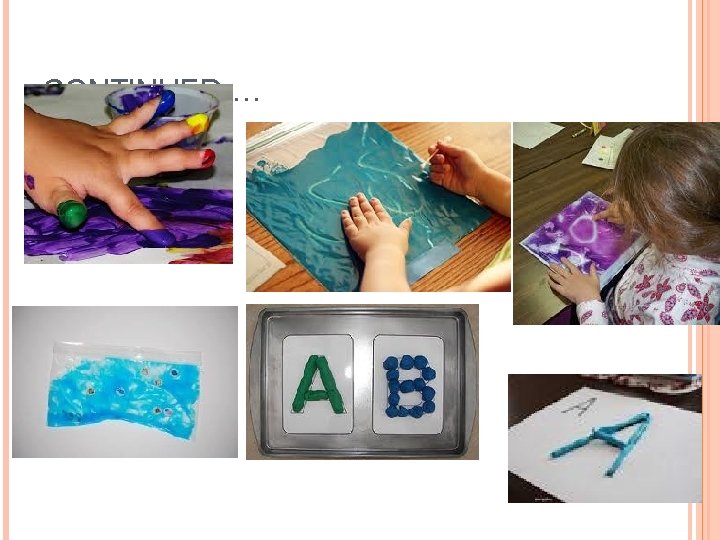
STRATEGIES TO IMPROVE PRE WRITING SKILLS
CONTINUED….
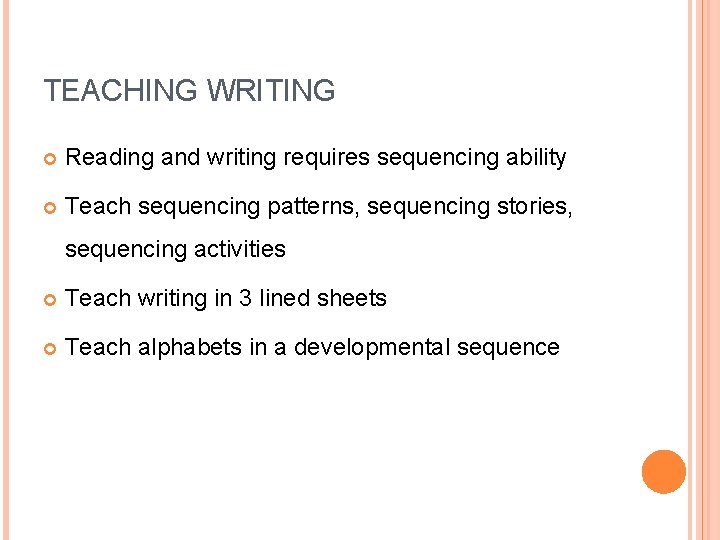
TEACHING WRITING Reading and writing requires sequencing ability Teach sequencing patterns, sequencing stories, sequencing activities Teach writing in 3 lined sheets Teach alphabets in a developmental sequence
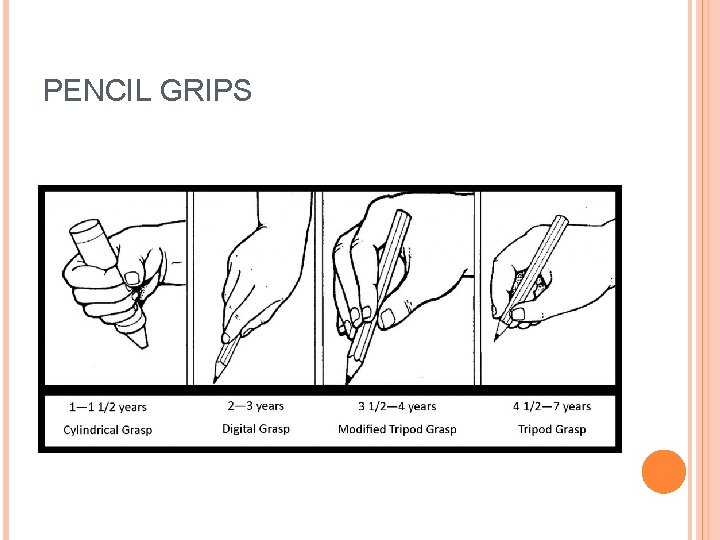
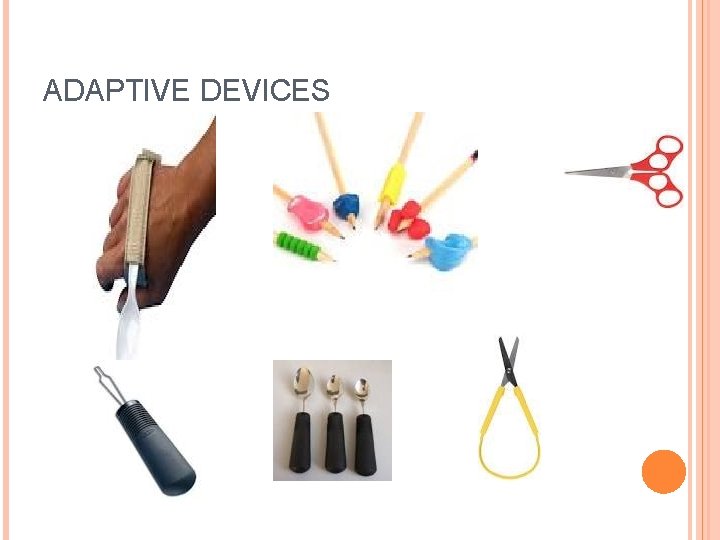
PENCIL GRIPS
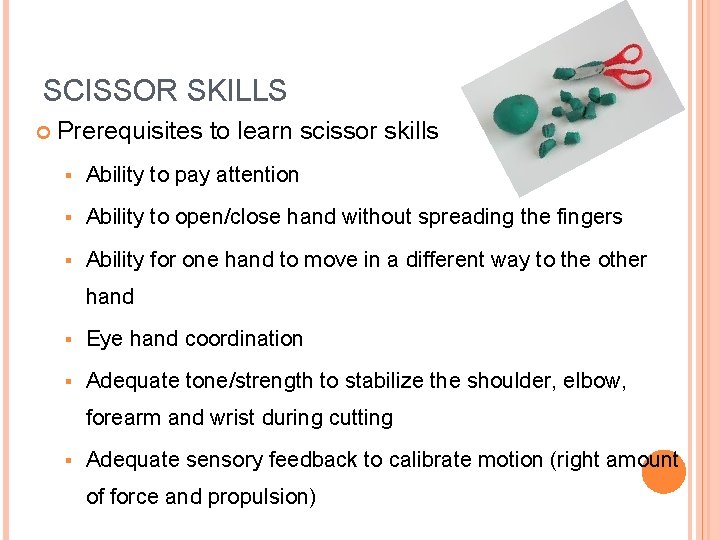
SCISSOR SKILLS Prerequisites to learn scissor skills § Ability to pay attention § Ability to open/close hand without spreading the fingers § Ability for one hand to move in a different way to the other hand § Eye hand coordination § Adequate tone/strength to stabilize the shoulder, elbow, forearm and wrist during cutting § Adequate sensory feedback to calibrate motion (right amount of force and propulsion)
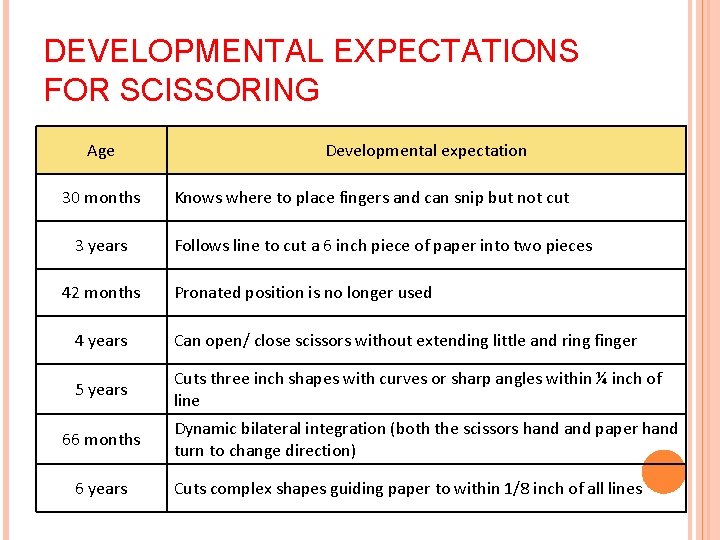
DEVELOPMENTAL EXPECTATIONS FOR SCISSORING Age 30 months 3 years 42 months Developmental expectation Knows where to place fingers and can snip but not cut Follows line to cut a 6 inch piece of paper into two pieces Pronated position is no longer used 4 years Can open/ close scissors without extending little and ring finger 5 years Cuts three inch shapes with curves or sharp angles within ¼ inch of line 66 months 6 years Dynamic bilateral integration (both the scissors hand paper hand turn to change direction) Cuts complex shapes guiding paper to within 1/8 inch of all lines
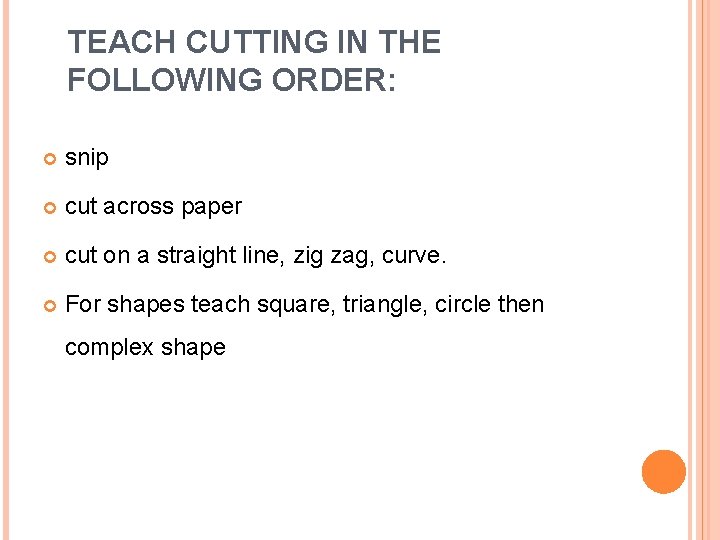
TEACH CUTTING IN THE FOLLOWING ORDER: snip cut across paper cut on a straight line, zig zag, curve. For shapes teach square, triangle, circle then complex shape
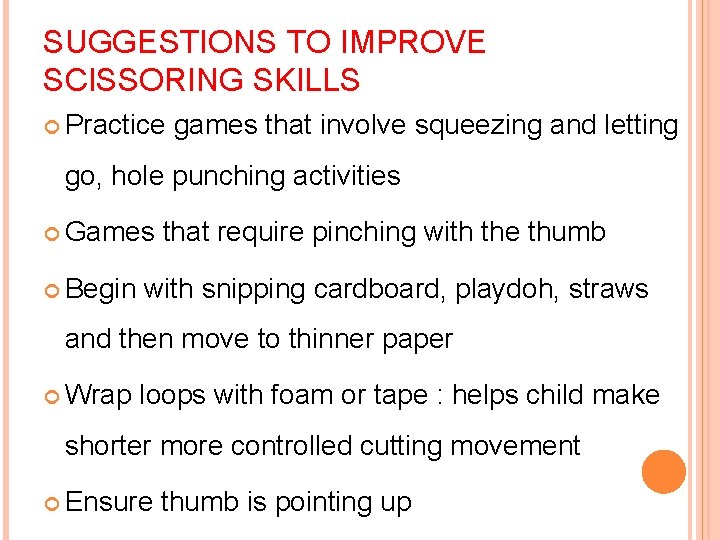
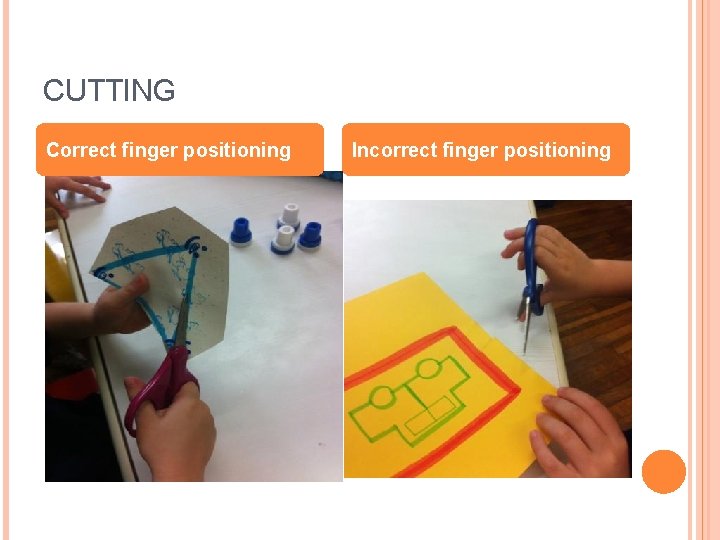
SUGGESTIONS TO IMPROVE SCISSORING SKILLS Practice games that involve squeezing and letting go, hole punching activities Games Begin that require pinching with the thumb with snipping cardboard, playdoh, straws and then move to thinner paper Wrap loops with foam or tape : helps child make shorter more controlled cutting movement Ensure thumb is pointing up
CUTTING Correct finger positioning Incorrect finger positioning
ADAPTIVE DEVICES
ORAL MOTOR TOYS