
Role of Innovation in a Forest Based Economy
Role of Innovation in a Forest Based Economy Stefan Sundman VP, Corporate Relations and Development UPM-Kymmene Corporation

FOREST OF NEW OPPORTUNITIES Biofore growth and competitiveness World is changing Resource scarcity Power shift in global economy Climate change Digitalisation 2 | © UPM Materials and energy efficiency Renewable and recyclable products Innovation and new businesses Internal
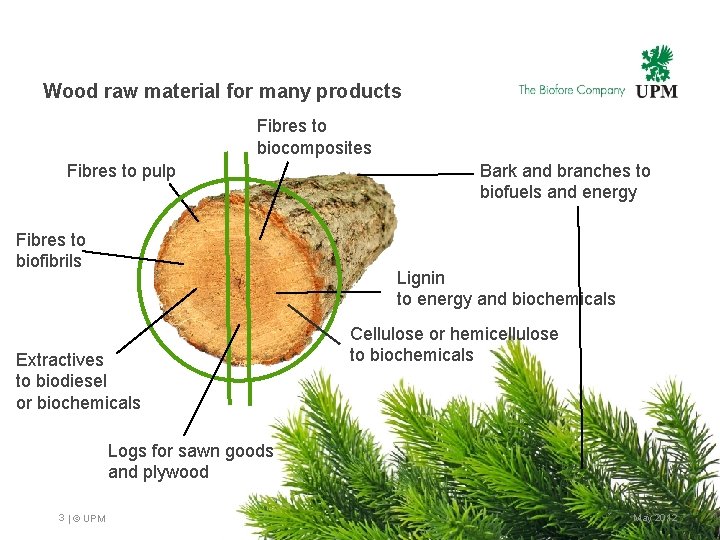
Wood raw material for many products Fibres to biocomposites Fibres to pulp Fibres to biofibrils Bark and branches to biofuels and energy Lignin to energy and biochemicals Extractives to biodiesel or biochemicals Cellulose or hemicellulose to biochemicals Logs for sawn goods and plywood 3 | © UPM May 2012
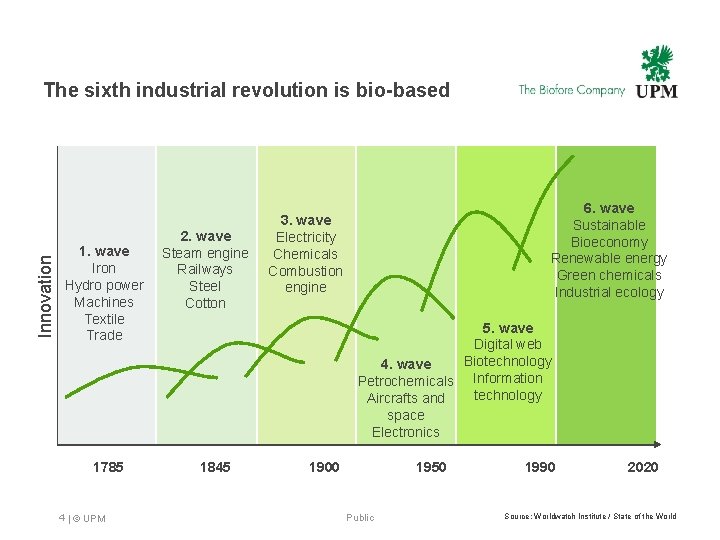
Innovation The sixth industrial revolution is bio-based 1. wave Iron Hydro power Machines Textile Trade 1785 4 | © UPM 2. wave Steam engine Railways Steel Cotton 6. wave Sustainable Bioeconomy Renewable energy Green chemicals Industrial ecology 3. wave Electricity Chemicals Combustion engine 5. wave Digital web Biotechnology 4. wave Petrochemicals Information technology Aircrafts and space Electronics 1845 1900 1950 Public 1990 2020 Source: Worldwatch Institute / State of the World
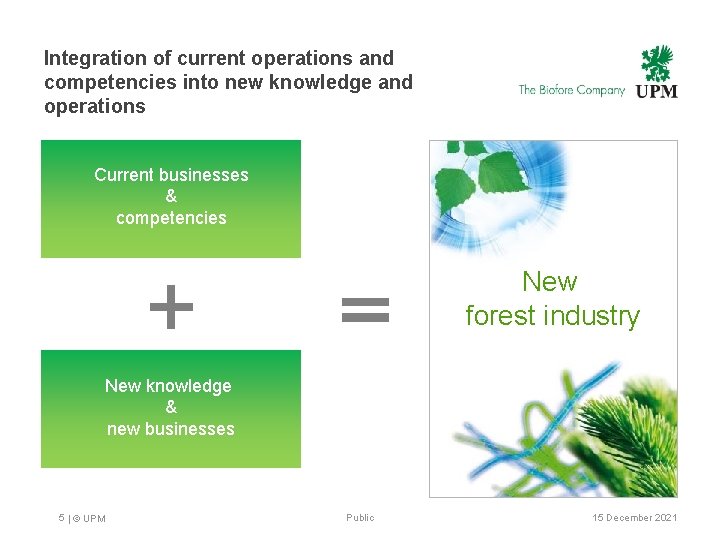
Integration of current operations and competencies into new knowledge and operations Current businesses & competencies New forest industry New knowledge & new businesses 5 | © UPM Public 15 December 2021
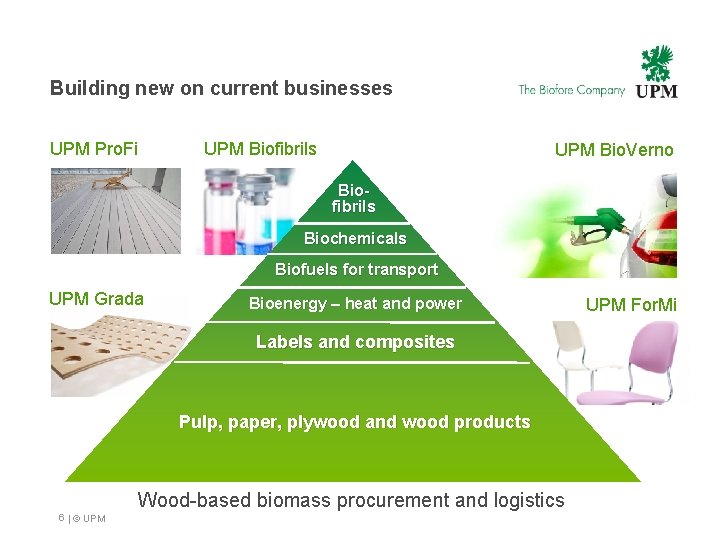
Building new on current businesses UPM Pro. Fi UPM Biofibrils UPM Bio. Verno Biofibrils Biochemicals Biofuels for transport UPM Grada Bioenergy – heat and power Labels and composites Pulp, paper, plywood and wood products 6 | © UPM Wood-based biomass procurement and logistics UPM For. Mi
Commercialisation and industrial-scale business operations as primary goals 7 | © UPM Public 15 December 2021
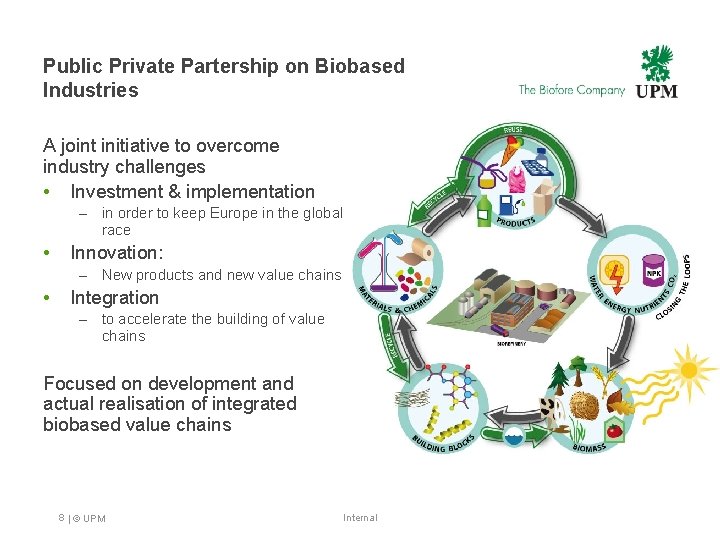
Public Private Partership on Biobased Industries A joint initiative to overcome industry challenges • Investment & implementation – in order to keep Europe in the global race • Innovation: – New products and new value chains • Integration – to accelerate the building of value chains Focused on development and actual realisation of integrated biobased value chains 8 | © UPM Internal
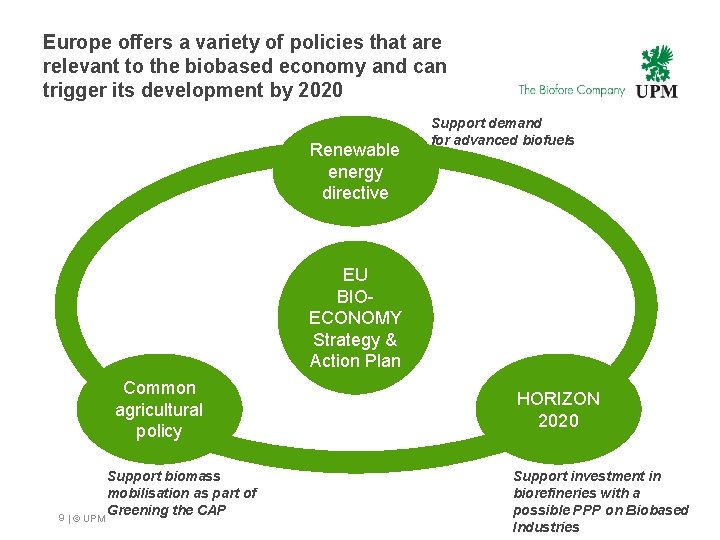
Europe offers a variety of policies that are relevant to the biobased economy and can trigger its development by 2020 Renewable energy directive Support demand for advanced biofuels EU BIOECONOMY Strategy & Action Plan Common agricultural policy 9 | © UPM Support biomass mobilisation as part of Greening the CAP HORIZON 2020 Support investment in biorefineries with a possible PPP on Biobased Industries
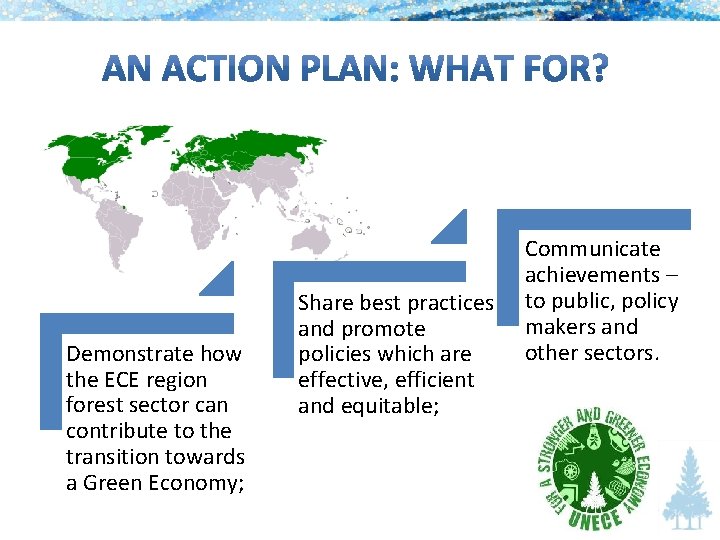
Demonstrate how the ECE region forest sector can contribute to the transition towards a Green Economy; Share best practices and promote policies which are effective, efficient and equitable; Communicate achievements – to public, policy makers and other sectors.
1. Sustainable wood consumption and production • Patterns of consumption and production of forest products are truly sustainable. 2. The low-carbon forest sector • The forest sector makes the best possible contribution to mitigation of, and adaptation to, climate change. 3. Decent green jobs in the forest sector • The workforce is able to implement SFM and the forest sector provides decent jobs. 4. Valuation of and payment forest ecosystem services • Forest functions are valued and PES are established. 5. Monitoring and governance • The forest sector policies and institutions promote SFM, policy making is evidence-based, and policy of the forest sector instruments are effective, efficient and equitable For more information: http: //www. unece. org/forests/greeneconomy. html
Attractive growth investment based on UPM’s competitive advantages Competitive raw material • Crude tall oil, a residue from pulp production • Steady supply partially from own sources • Outside food value chain • No indirect land-use change 12| © UPM Efficient production process • Technology based on UPM innovations • Efficient use of raw material • Integrate synergies • Industrial infrastructure High quality product • 2 nd generation biodiesel fully compatible with current diesel motors • 80% reduction in greenhouse gas emissions • High energy content • No blend wall issues
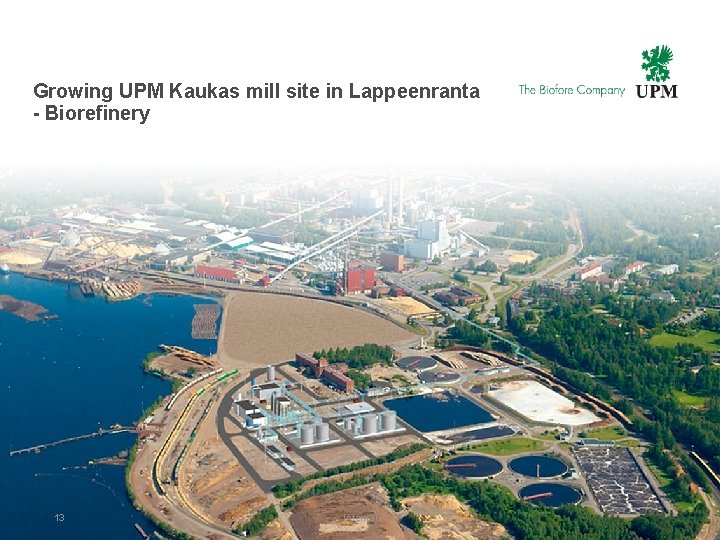
Growing UPM Kaukas mill site in Lappeenranta - Biorefinery 13 | © UPM Internal
- Slides: 14