
Role of FDIC during 2008 Financial Crisis By
Role of FDIC during 2008 Financial Crisis By: Ryan Banker, Ian Miller, & Saurav Chetteri

What is FDIC? • The Federal Deposit Insurance Corporation • Preserves and promotes public confidence in the U. S. financial system by insuring deposits in banks and thrift institution for at least $250, 000 • Identifies, monitors, and address risks to the deposit insurance funds • Limits the effect on the economy and the financial system when a bank or thrift institution fails
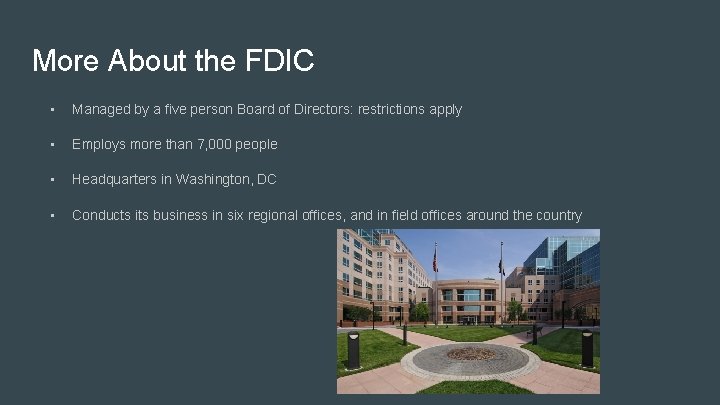
More About the FDIC • Managed by a five person Board of Directors: restrictions apply • Employs more than 7, 000 people • Headquarters in Washington, DC • Conducts its business in six regional offices, and in field offices around the country
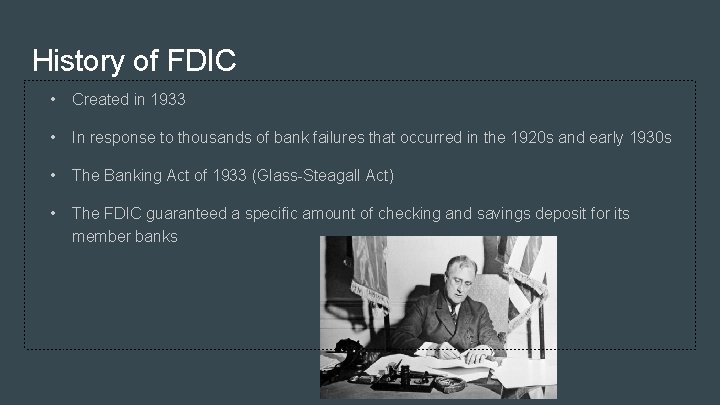
History of FDIC • Created in 1933 • In response to thousands of bank failures that occurred in the 1920 s and early 1930 s • The Banking Act of 1933 (Glass-Steagall Act) • The FDIC guaranteed a specific amount of checking and savings deposit for its member banks
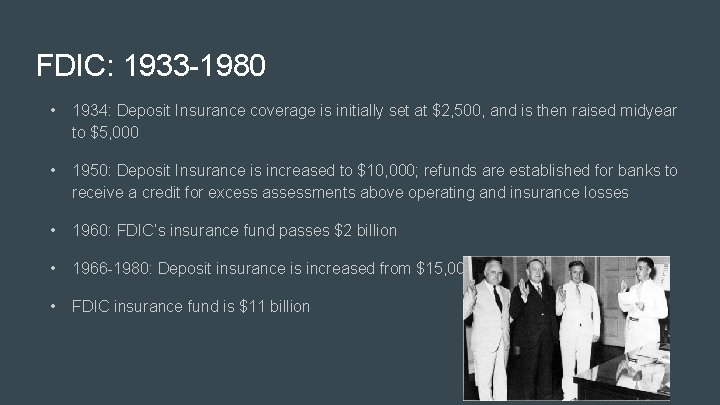
FDIC: 1933 -1980 • 1934: Deposit Insurance coverage is initially set at $2, 500, and is then raised midyear to $5, 000 • 1950: Deposit Insurance is increased to $10, 000; refunds are established for banks to receive a credit for excess assessments above operating and insurance losses • 1960: FDIC’s insurance fund passes $2 billion • 1966 -1980: Deposit insurance is increased from $15, 000 to $100, 000 • FDIC insurance fund is $11 billion
FDIC: 1980 -2008 • 1983: Deposit Insurance refunds are discontinued • 1987: Congress refinances the Federal Savings and Loan Insurance Corp ($10 Billion) • 1991: Insurance premiums go up to 23 cents per $100 deposits • FDICIA increases FDIC borrowing capacity, and to big to fail procedures are written into law and a risk based premium system is created
FDIC: 1980 -2008 continued • 1993: Banks begin paying premiums based on their risk • 1996: FDIC is prevented from assessing premiums against well capitalized banks, if the deposit insurance funds exceeds the 1. 25% reserve ratio • 2006: Deposit Insurance is increased to $250, 000 by Individual Retirement Accounts (IRA)
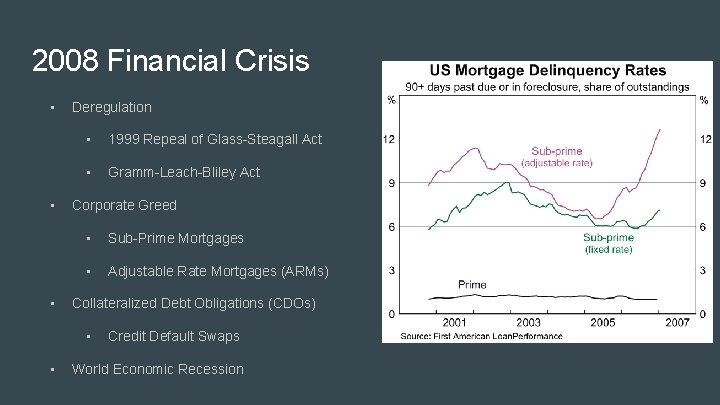
2008 Financial Crisis • • • Deregulation • 1999 Repeal of Glass-Steagall Act • Gramm-Leach-Bliley Act Corporate Greed • Sub-Prime Mortgages • Adjustable Rate Mortgages (ARMs) Collateralized Debt Obligations (CDOs) • • Credit Default Swaps World Economic Recession
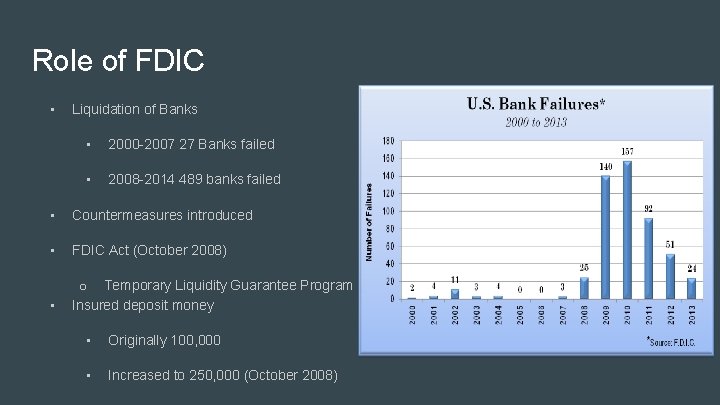
Role of FDIC • Liquidation of Banks • 2000 -2007 27 Banks failed • 2008 -2014 489 banks failed • Countermeasures introduced • FDIC Act (October 2008) • o Temporary Liquidity Guarantee Program Insured deposit money • Originally 100, 000 • Increased to 250, 000 (October 2008)
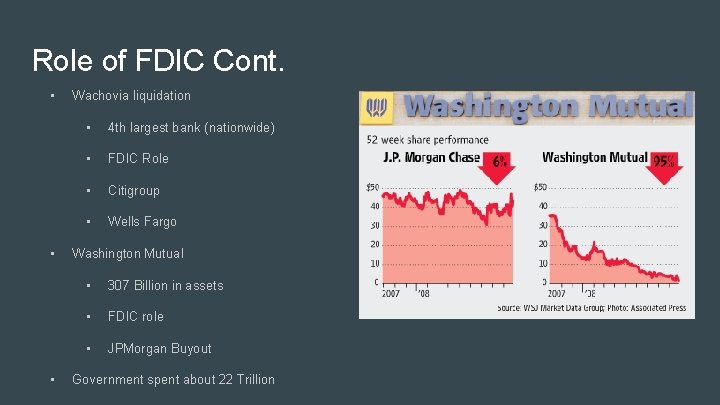
Role of FDIC Cont. • • • Wachovia liquidation • 4 th largest bank (nationwide) • FDIC Role • Citigroup • Wells Fargo Washington Mutual • 307 Billion in assets • FDIC role • JPMorgan Buyout Government spent about 22 Trillion
The FDIC is Not Ready For Another Crisis • The current real estate market looks similar to what it did in 2008 • Experts suggest holding money in banks and build up capital before a crash • People don’t know the current financial condition of their bank because: • Banks could be extremely insolvent • Banks could be illiquid • Banks are still claiming they are backed by the government
FDIC Problems • FDIC has said that their reserve ratio of just over one percent • They can’t insure investors and system is set up to fail • This is the lower than the minimum ratio required by law • Don’t think they will meet this ratio until the year 2020 • FDIC can support less and banks are continuing to grow • Looking for opinions of the public for solutions
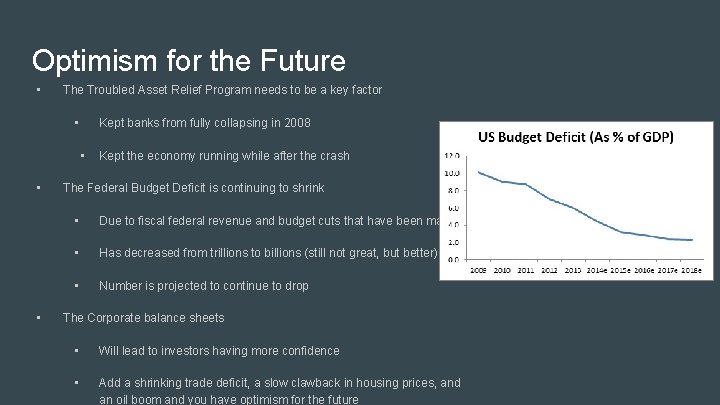
Optimism for the Future • The Troubled Asset Relief Program needs to be a key factor • Kept banks from fully collapsing in 2008 • • • Kept the economy running while after the crash The Federal Budget Deficit is continuing to shrink • Due to fiscal federal revenue and budget cuts that have been made • Has decreased from trillions to billions (still not great, but better) • Number is projected to continue to drop The Corporate balance sheets • Will lead to investors having more confidence • Add a shrinking trade deficit, a slow clawback in housing prices, and an oil boom and you have optimism for the future
- Slides: 13