
Role of Disaster Governance in Disaster Risk Management
- Slides: 24
Role of Disaster Governance in Disaster Risk Management Abu-hena Mostofa Kamal 1 Lecturer (Sociology) Department of Humanities Khulna University of Engineering & Technology (KUET) mostofakamal@hum. kuet. ac. bd Mohammed Moniruzzaman Khan 2 Associate Professor Department of Sociology, Jagannath University, Dhaka zontu 75@yahoo. com 1
Introduction and Background ü Geographic location has made Bangladesh as one of the most climatic vulnerable countries of the world. ü Bangladesh is located between the -Himalayas and the Bay of Bengal. ü It's a low and flat country. ü The mighty river system and their nearly unpredictable courses, soil conditions, the agriculture industry and livelihoods of millions of people depend extensively on the locational context. ü The more alarming fact is that we are very near to three tectonic plates; any movement of these plates and their adjacent faults can generate catastrophic situations. ü The history of a hundred years and the recent experiences from the occurrences in regional countries lead us to believe that we are very vulnerable to seismological events, particularly earthquakes. 2
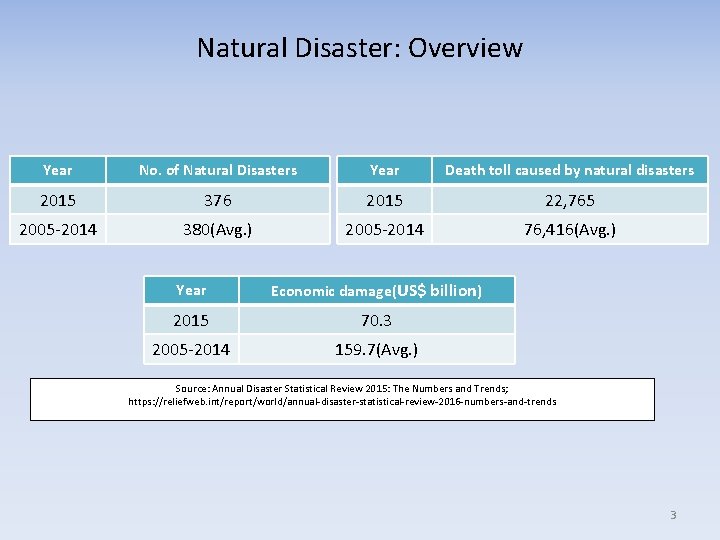
Natural Disaster: Overview Year No. of Natural Disasters Year Death toll caused by natural disasters 2015 376 2015 22, 765 2005 -2014 380(Avg. ) 2005 -2014 76, 416(Avg. ) Year Economic damage(US$ billion) 2015 70. 3 2005 -2014 159. 7(Avg. ) Source: Annual Disaster Statistical Review 2015: The Numbers and Trends; https: //reliefweb. int/report/world/annual-disaster-statistical-review-2016 -numbers-and-trends 3
4
5
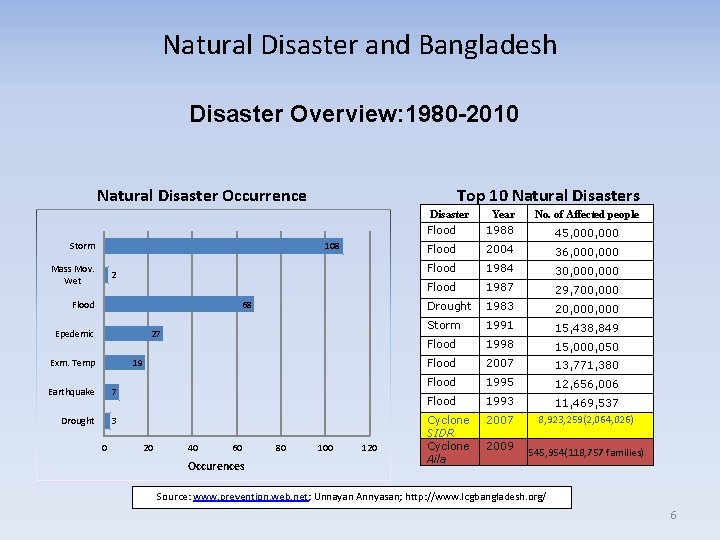
Natural Disaster and Bangladesh Disaster Overview: 1980 -2010 Natural Disaster Occurrence Storm Top 10 Natural Disasters 108 Mass Mov. Wet 2 Flood 68 Epedemic 27 Exm. Temp 19 Earthquake 7 Drought 3 0 20 40 60 Occurences 80 100 120 Disaster Flood Year 1988 No. of Affected people Flood 2004 36, 000 Flood 1984 30, 000 Flood 1987 29, 700, 000 Drought 1983 20, 000 Storm 1991 15, 438, 849 Flood 1998 15, 000, 050 Flood 2007 13, 771, 380 Flood 1995 12, 656, 006 Flood 1993 Cyclone SIDR Cyclone Aila 2007 11, 469, 537 8, 923, 259(2, 064, 026) 2009 45, 000 545, 954(118, 757 families) Source: www. prevention. web. net; Unnayan Annyasan; http: //www. lcgbangladesh. org/ 6
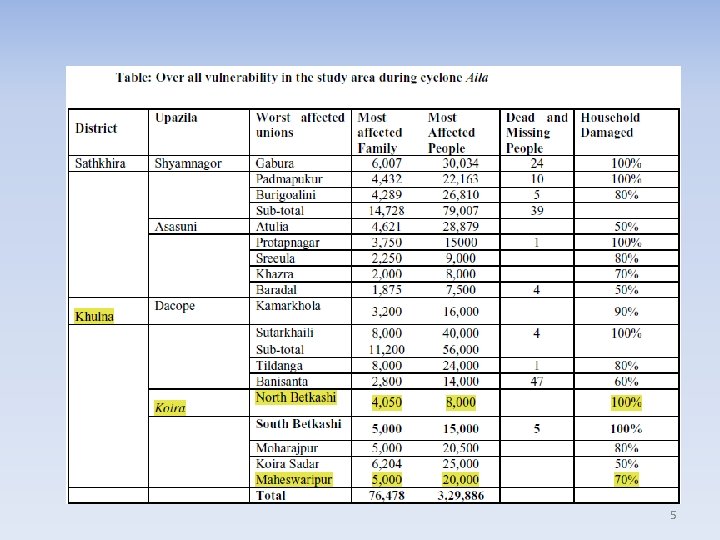
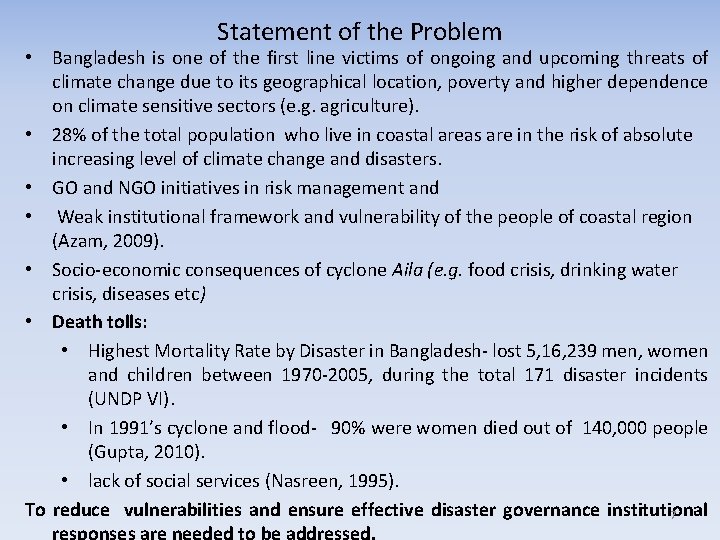
Statement of the Problem • Bangladesh is one of the first line victims of ongoing and upcoming threats of climate change due to its geographical location, poverty and higher dependence on climate sensitive sectors (e. g. agriculture). • 28% of the total population who live in coastal areas are in the risk of absolute increasing level of climate change and disasters. • GO and NGO initiatives in risk management and • Weak institutional framework and vulnerability of the people of coastal region (Azam, 2009). • Socio-economic consequences of cyclone Aila (e. g. food crisis, drinking water crisis, diseases etc) • Death tolls: • Highest Mortality Rate by Disaster in Bangladesh- lost 5, 16, 239 men, women and children between 1970 -2005, during the total 171 disaster incidents (UNDP VI). • In 1991’s cyclone and flood- 90% were women died out of 140, 000 people (Gupta, 2010). • lack of social services (Nasreen, 1995). To reduce vulnerabilities and ensure effective disaster governance institutional 7 responses are needed to be addressed.
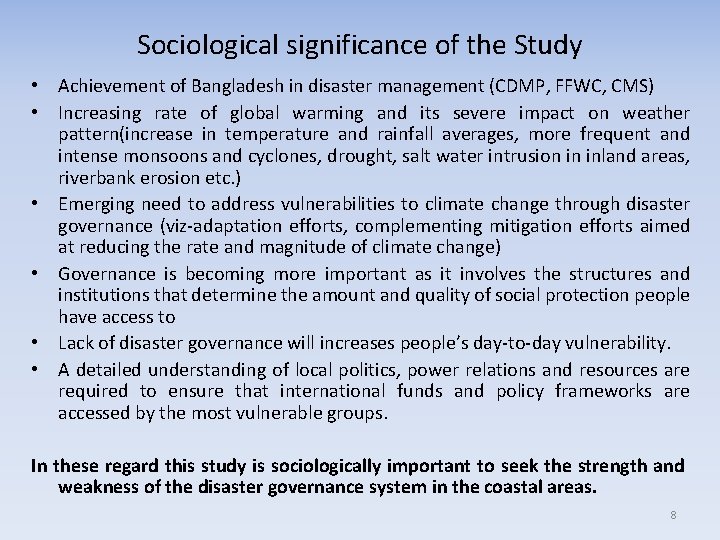
Sociological significance of the Study • Achievement of Bangladesh in disaster management (CDMP, FFWC, CMS) • Increasing rate of global warming and its severe impact on weather pattern(increase in temperature and rainfall averages, more frequent and intense monsoons and cyclones, drought, salt water intrusion in inland areas, riverbank erosion etc. ) • Emerging need to address vulnerabilities to climate change through disaster governance (viz-adaptation efforts, complementing mitigation efforts aimed at reducing the rate and magnitude of climate change) • Governance is becoming more important as it involves the structures and institutions that determine the amount and quality of social protection people have access to • Lack of disaster governance will increases people’s day-to-day vulnerability. • A detailed understanding of local politics, power relations and resources are required to ensure that international funds and policy frameworks are accessed by the most vulnerable groups. In these regard this study is sociologically important to seek the strength and weakness of the disaster governance system in the coastal areas. 8
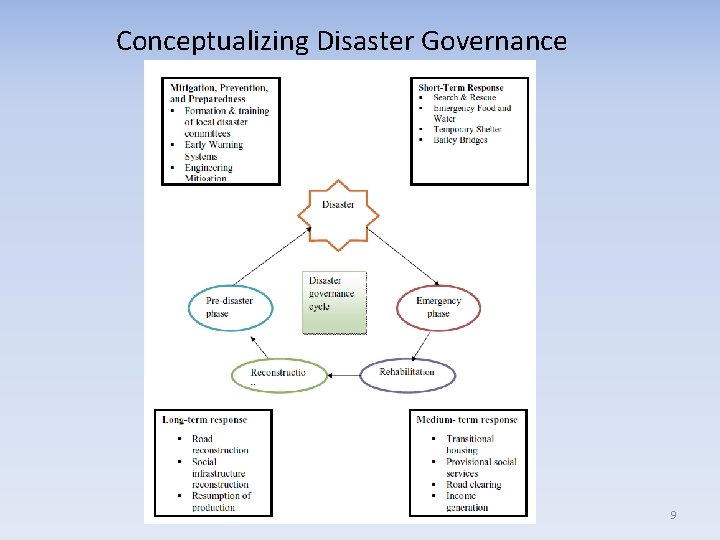
Conceptualizing Disaster Governance 9
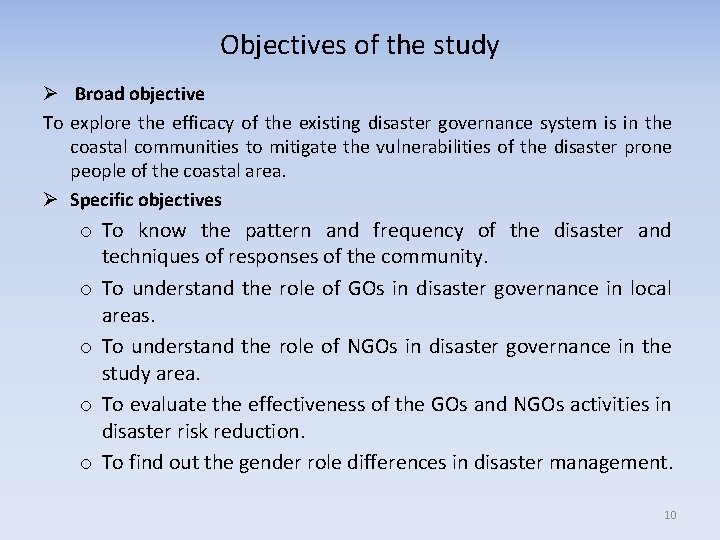
Objectives of the study Ø Broad objective To explore the efficacy of the existing disaster governance system is in the coastal communities to mitigate the vulnerabilities of the disaster prone people of the coastal area. Ø Specific objectives o To know the pattern and frequency of the disaster and techniques of responses of the community. o To understand the role of GOs in disaster governance in local areas. o To understand the role of NGOs in disaster governance in the study area. o To evaluate the effectiveness of the GOs and NGOs activities in disaster risk reduction. o To find out the gender role differences in disaster management. 10
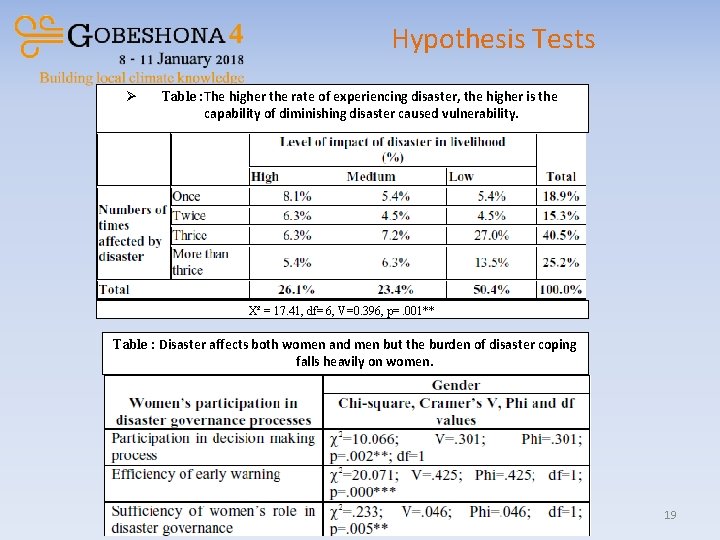
Hypotheses of the Study Ø The higher the rate of experiencing disaster, the higher is the capability of diminishing disaster caused vulnerability. Ø Disaster affects both women and men but the burden of disaster coping falls heavily on women. 11
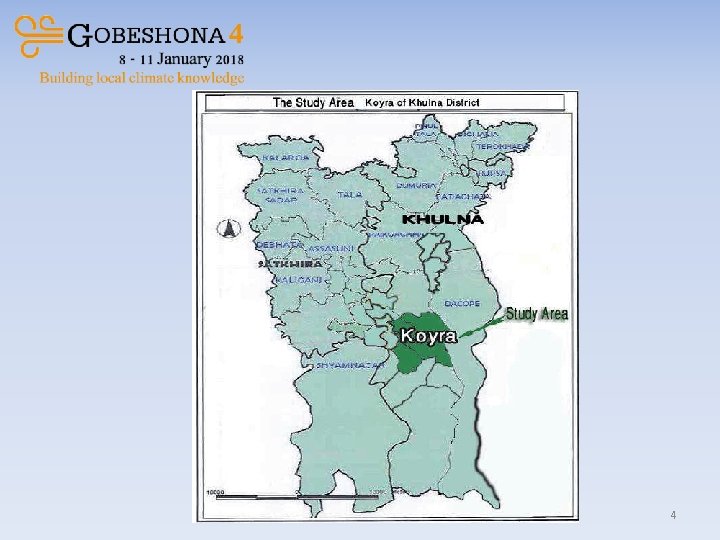
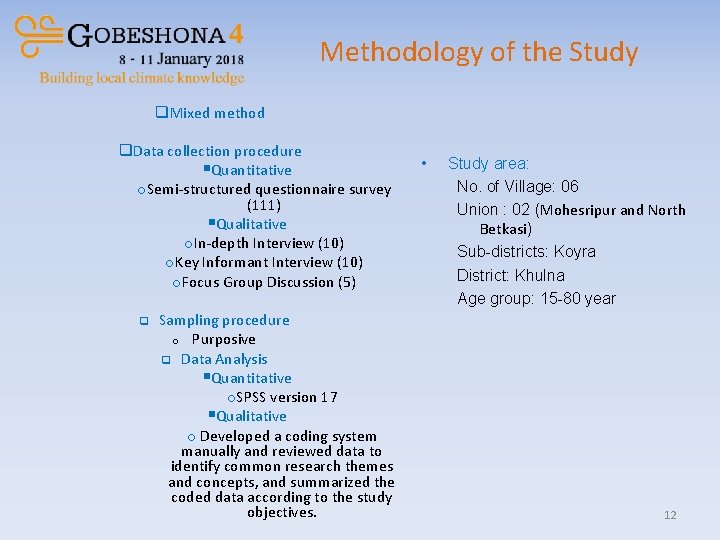
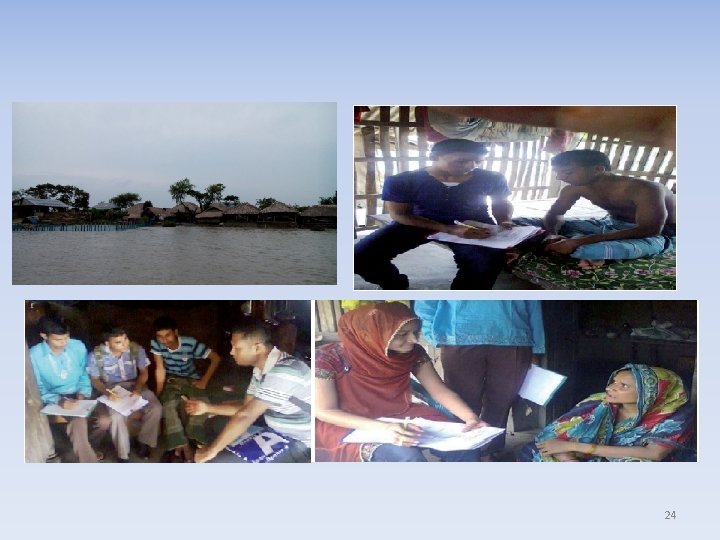
Methodology of the Study q. Mixed method q. Data collection procedure §Quantitative o. Semi-structured questionnaire survey (111) §Qualitative o. In-depth Interview (10) o. Key Informant Interview (10) o. Focus Group Discussion (5) q Sampling procedure o Purposive q Data Analysis §Quantitative o. SPSS version 17 §Qualitative o Developed a coding system manually and reviewed data to identify common research themes and concepts, and summarized the coded data according to the study objectives. • Study area: No. of Village: 06 Union : 02 (Mohesripur and North Betkasi) Sub-districts: Koyra District: Khulna Age group: 15 -80 year 12
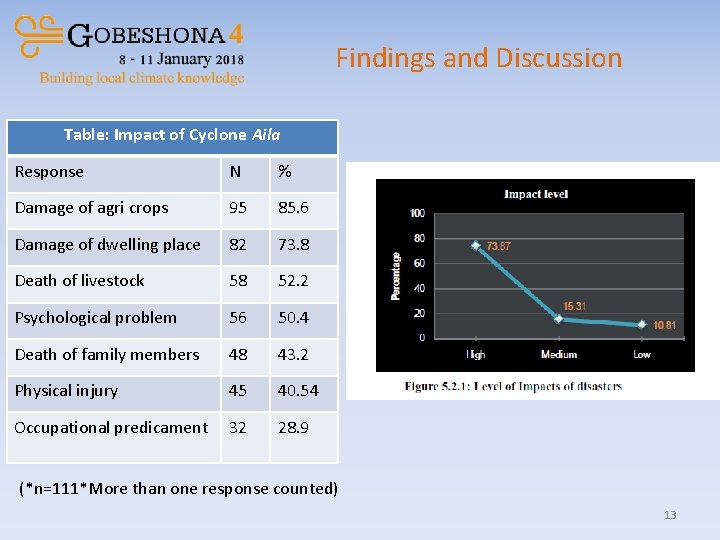
Findings and Discussion Table: Impact of Cyclone Aila Response N % Damage of agri crops 95 85. 6 Damage of dwelling place 82 73. 8 Death of livestock 58 52. 2 Psychological problem 56 50. 4 Death of family members 48 43. 2 Physical injury 45 40. 54 Occupational predicament 32 28. 9 (*n=111*More than one response counted) 13
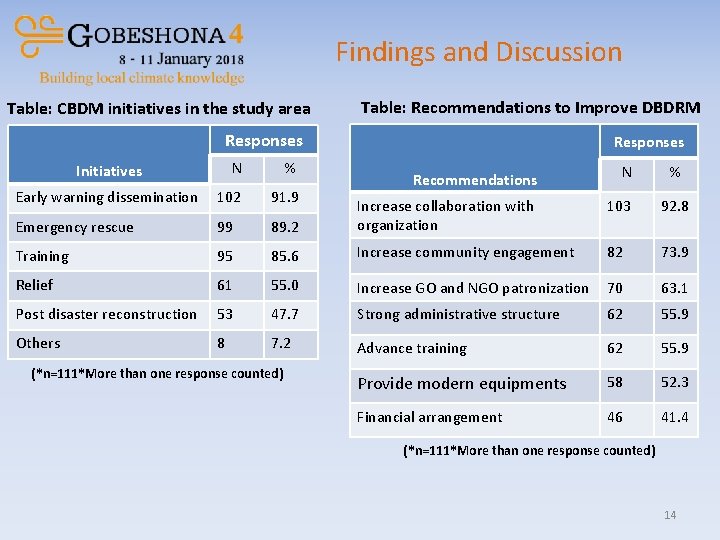
Findings and Discussion Table: CBDM initiatives in the study area Table: Recommendations to Improve DBDRM Responses N % Early warning dissemination 102 91. 9 Emergency rescue 99 Training Initiatives Responses Recommendations N 103 92. 8 89. 2 Increase collaboration with organization 95 85. 6 Increase community engagement 82 73. 9 Relief 61 55. 0 Increase GO and NGO patronization 70 63. 1 Post disaster reconstruction 53 47. 7 Strong administrative structure 62 55. 9 Others 8 7. 2 Advance training 62 55. 9 Provide modern equipments 58 52. 3 Financial arrangement 46 41. 4 (*n=111*More than one response counted) % (*n=111*More than one response counted) 14
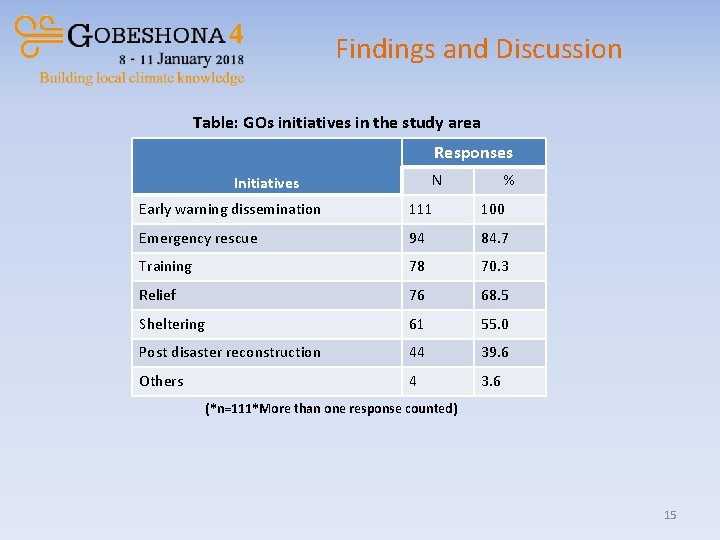
Findings and Discussion Table: GOs initiatives in the study area Responses N Initiatives % Early warning dissemination 111 100 Emergency rescue 94 84. 7 Training 78 70. 3 Relief 76 68. 5 Sheltering 61 55. 0 Post disaster reconstruction 44 39. 6 Others 4 3. 6 (*n=111*More than one response counted) 15
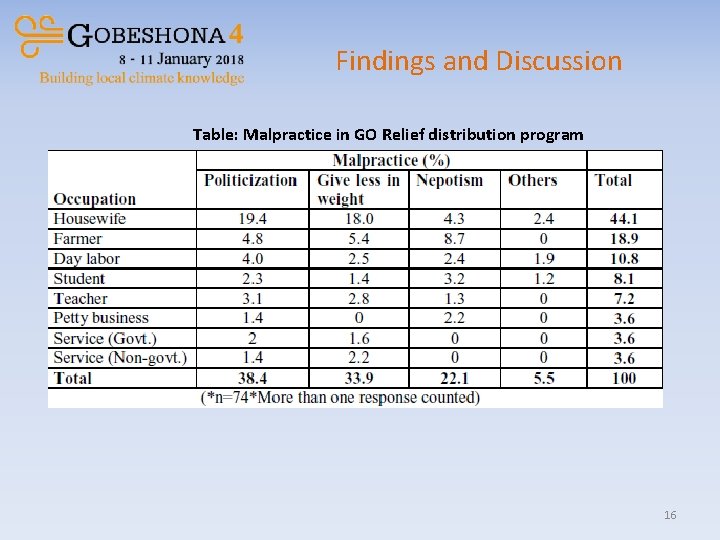
Findings and Discussion Table: Malpractice in GO Relief distribution program 16
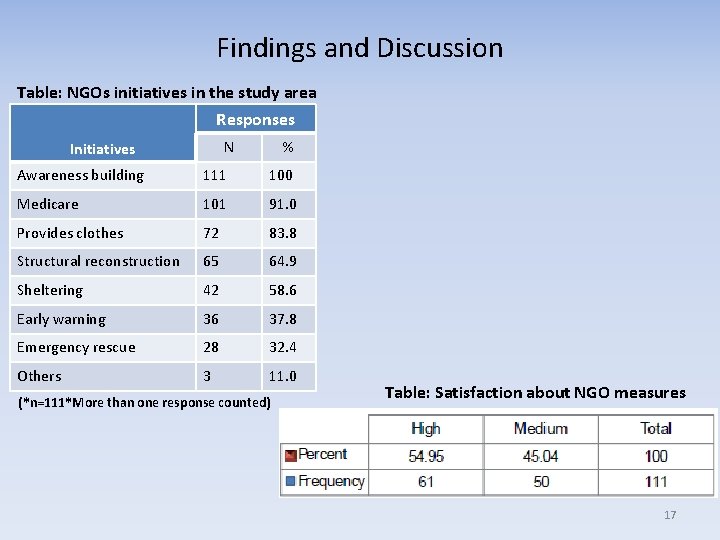
Findings and Discussion Table: NGOs initiatives in the study area Responses N Initiatives % Awareness building 111 100 Medicare 101 91. 0 Provides clothes 72 83. 8 Structural reconstruction 65 64. 9 Sheltering 42 58. 6 Early warning 36 37. 8 Emergency rescue 28 32. 4 Others 3 11. 0 (*n=111*More than one response counted) Table: Satisfaction about NGO measures 17
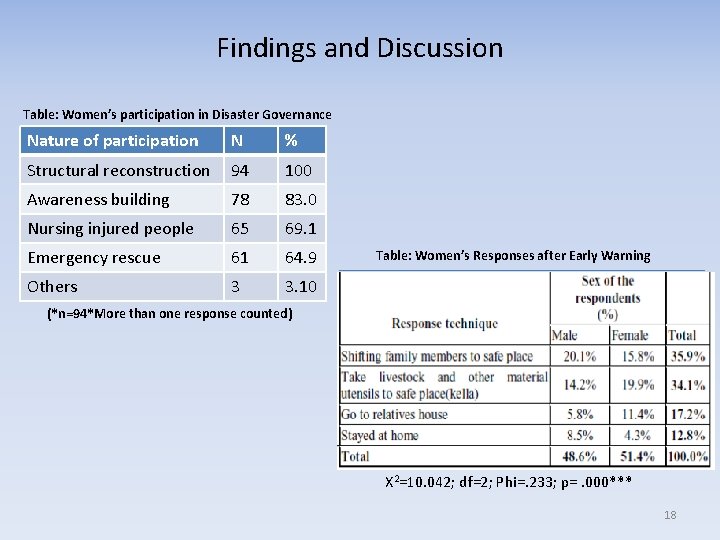
Findings and Discussion Table: Women’s participation in Disaster Governance Nature of participation N % Structural reconstruction 94 100 Awareness building 78 83. 0 Nursing injured people 65 69. 1 Emergency rescue 61 64. 9 Others 3 3. 10 Table: Women’s Responses after Early Warning (*n=94*More than one response counted) X 2=10. 042; df=2; Phi=. 233; p=. 000*** 18
Hypothesis Tests Ø Table : The higher the rate of experiencing disaster, the higher is the capability of diminishing disaster caused vulnerability. Χ² = 17. 41, df= 6, V=0. 396, p=. 001** Table : Disaster affects both women and men but the burden of disaster coping falls heavily on women. 19
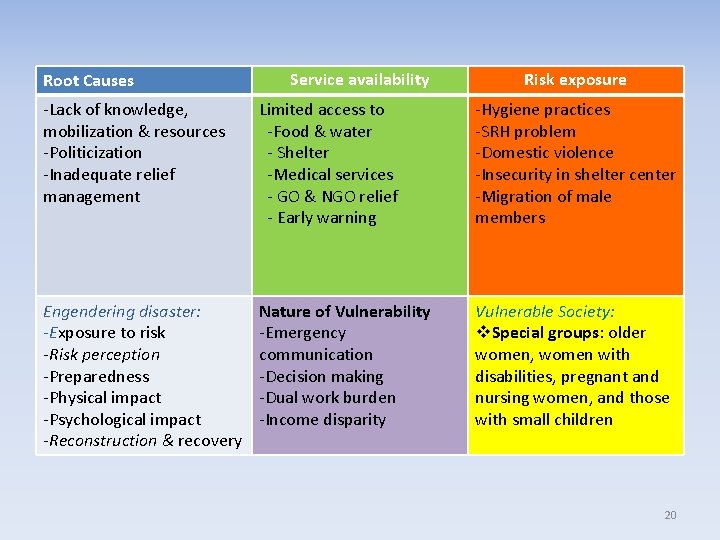
Root Causes Service availability Risk exposure -Lack of knowledge, mobilization & resources -Politicization -Inadequate relief management Limited access to -Food & water - Shelter -Medical services - GO & NGO relief - Early warning -Hygiene practices -SRH problem -Domestic violence -Insecurity in shelter center -Migration of male members Engendering disaster: -Exposure to risk -Risk perception -Preparedness -Physical impact -Psychological impact -Reconstruction & recovery Nature of Vulnerability -Emergency communication -Decision making -Dual work burden -Income disparity Vulnerable Society: v. Special groups: older women, women with disabilities, pregnant and nursing women, and those with small children 20
• • Limitations: -Self-reported data -Recall bias -Socio-Religious stigma • • • Acknowledgement -Participants -Hon’ble supervisor Mohammed Moniruzzaman Khan -Department of Sociology, Jagannath University -Field assistants 21
Conclusion and Recommendations üSuccessful operations of GOs, NGOs and Community based organizations have reduced disaster risk and vulnerabilities of the study area. üAlthough GOs are working in collaboration with NGOs and community people but GO initiatives required intensive monitoring and supervision to avoid politicization, nepotism. üNGO measures seem to be more adequate compared to GOs but engaging community people is recommended. üFindings indicates less domination of gender identity during disaster but women’s participation in decision making processes requires further consideration üMore research is needed in this nascent field of study on factors that contribute to effective governance and on other topics, such as the extent to which governance approaches contribute to long-term sustainability 22
Final Words Accountability, resource availability, selection of target groups, and prioritizing of activities have to be ensured. This slide is made possible by the support of American people through the United States Agency for International Development (USAID). The contents are the sole responsibility of the presenter and do not necessarily reflect the views of USAID or the United States government. 23
24