
Role of control functions in Solvency II How
- Slides: 15
Role of control functions in Solvency II: How the 3 lines of defense are organized ERM Seminar – Institute of Actuaries of India Mart 2017
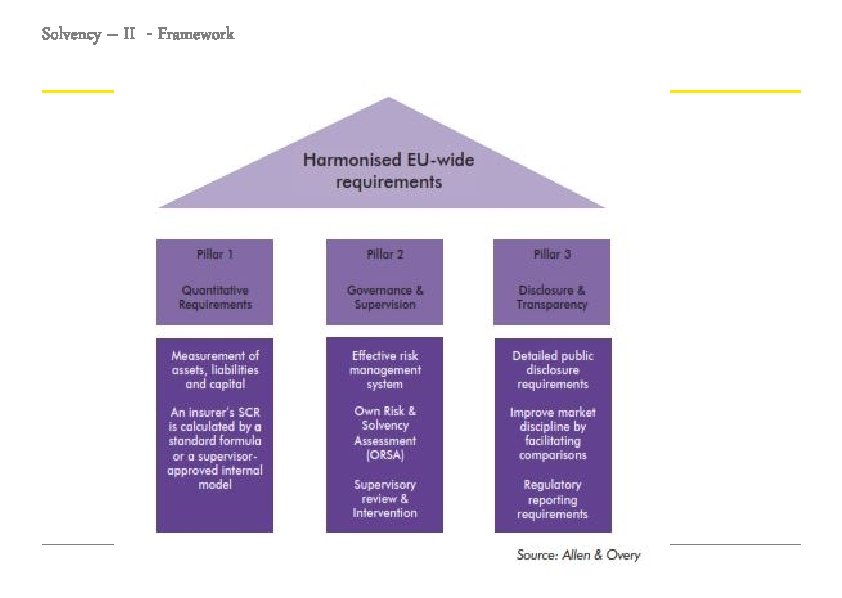
Solvency – II - Framework
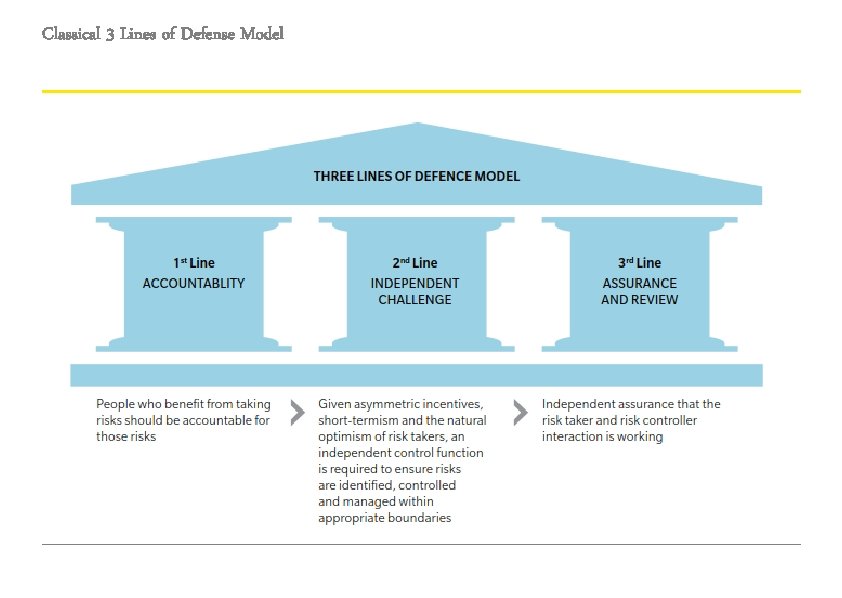
Classical 3 Lines of Defense Model
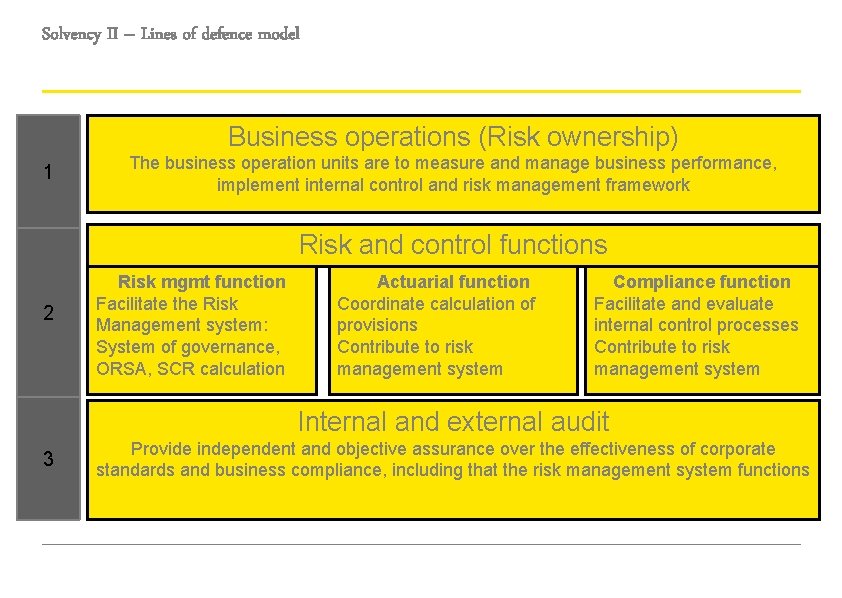
Solvency II – Lines of defence model Business operations (Risk ownership) 1 The business operation units are to measure and manage business performance, implement internal control and risk management framework Risk and control functions 2 Risk mgmt function Facilitate the Risk Management system: System of governance, ORSA, SCR calculation Actuarial function Coordinate calculation of provisions Contribute to risk management system Compliance function Facilitate and evaluate internal control processes Contribute to risk management system Internal and external audit 3 Provide independent and objective assurance over the effectiveness of corporate standards and business compliance, including that the risk management system functions
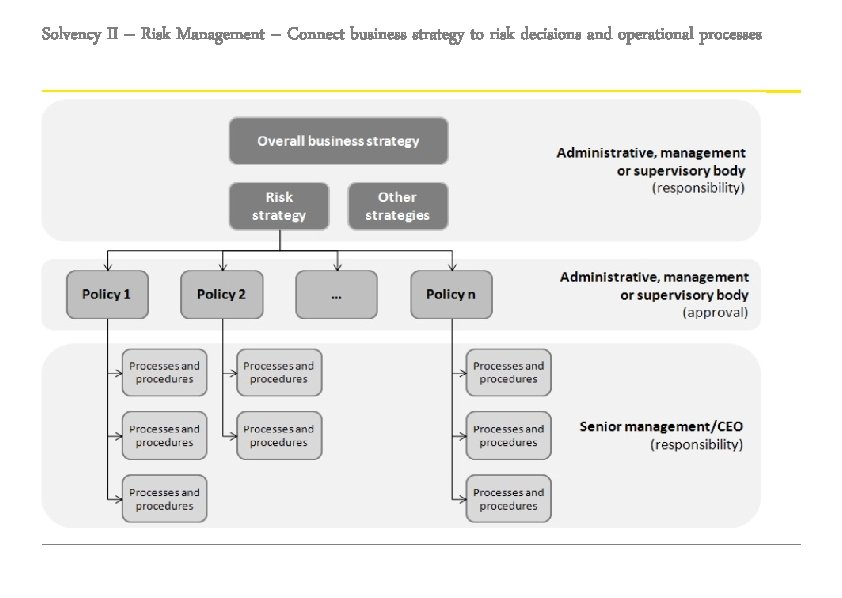
Solvency II – Risk Management – Connect business strategy to risk decisions and operational processes
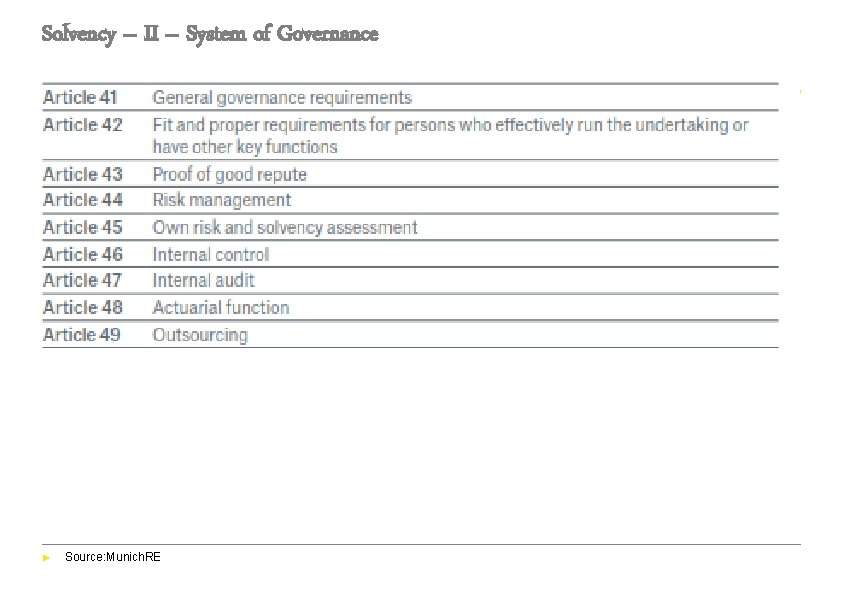
Solvency – II – System of Governance ► Source: Munich. RE
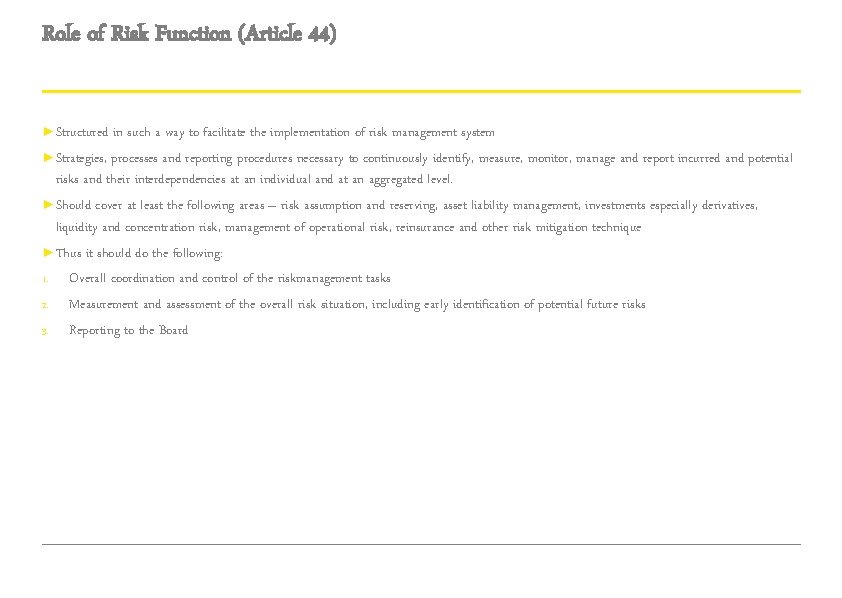
Role of Risk Function (Article 44) ► Structured in such a way to facilitate the implementation of risk management system ► Strategies, processes and reporting procedures necessary to continuously identify, measure, monitor, manage and report incurred and potential risks and their interdependencies at an individual and at an aggregated level. ► Should cover at least the following areas – risk assumption and reserving, asset liability management, investments especially derivatives, liquidity and concentration risk, management of operational risk, reinsurance and other risk mitigation technique ► Thus it should do the following: 1. Overall coordination and control of the risk management tasks 2. Measurement and assessment of the overall risk situation, including early identification of potential future risks 3. Reporting to the Board
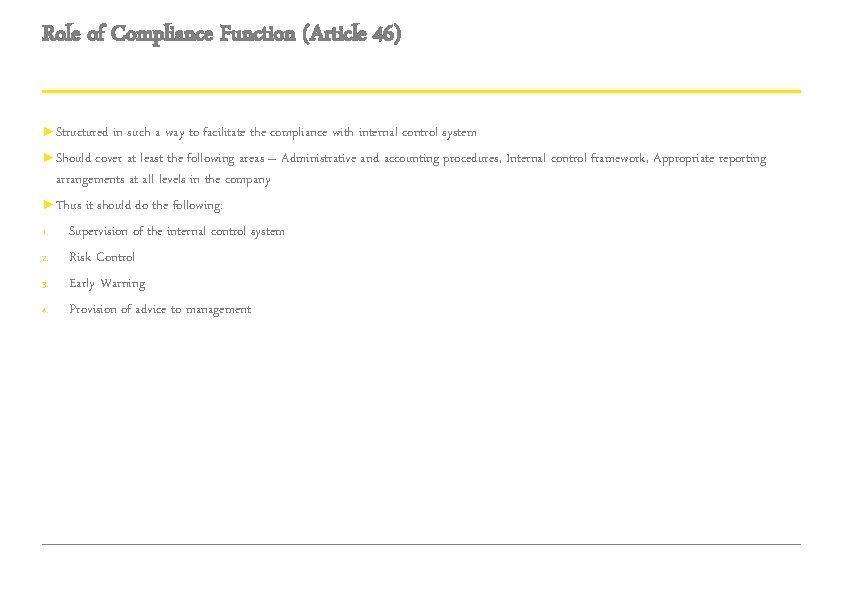
Role of Compliance Function (Article 46) ► Structured in such a way to facilitate the compliance with internal control system ► Should cover at least the following areas – Administrative and accounting procedures, Internal control framework, Appropriate reporting arrangements at all levels in the company ► Thus it should do the following: 1. Supervision of the internal control system 2. Risk Control 3. Early Warning 4. Provision of advice to management
Role of Internal Audit Function (Article 47) ► Responsibilities include - evaluation of the adequacy and effectiveness of the internal control system and other elements of the system of governance ► Audit report to be produced at least annually
Role of Actuarial Function (Article 48) ► Responsibilities include -Coordination and monitoring of the evaluation of technical provisions (including methodology, assumptions and data), Reporting and Supporting the risk management function ► The function is not responsible for calculating the technical provisions, but for coordi nating the calculation process and assessing the methods, tools and data used for the evaluation ► Responsibilities include 1. To understand the individual model components, their interdependencies and the way the model depicts and takes account of the resultant diversification effects 2. To develop and regularly review the reserving methodology (stochastic simulation, deterministic approach, etc. ) 3. To compare the current assumptions with those for the previous year and those for the previous year with the actual figures to calculate the technical provisions (best esti 4. mate comparison), and identify the reasons for the variances 5. To express opinion on reserving and underwriting guidelines 6. To express opiinion on reinsurance cover, adequacy of premiums, main risk factors and their influence on next year profit, appropriatenes of IT system
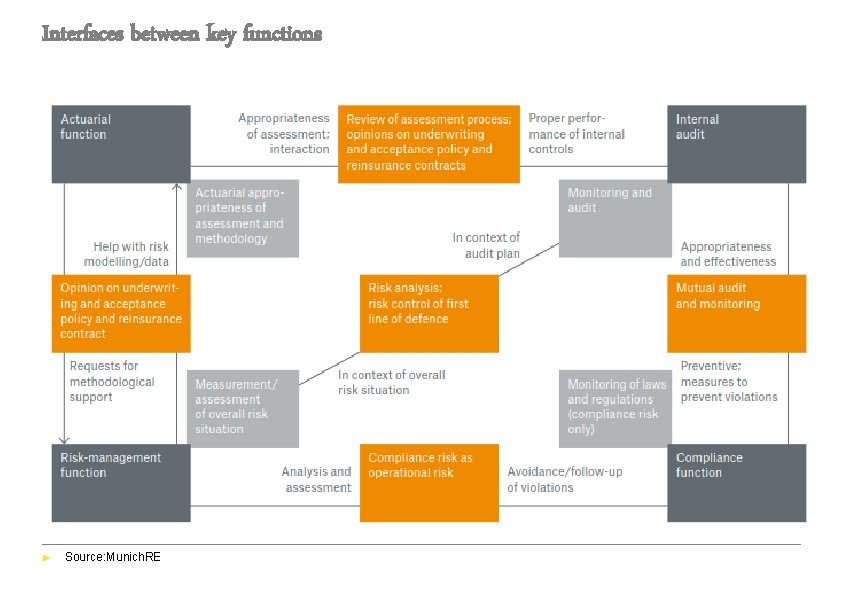
Interfaces between key functions ► Source: Munich. RE
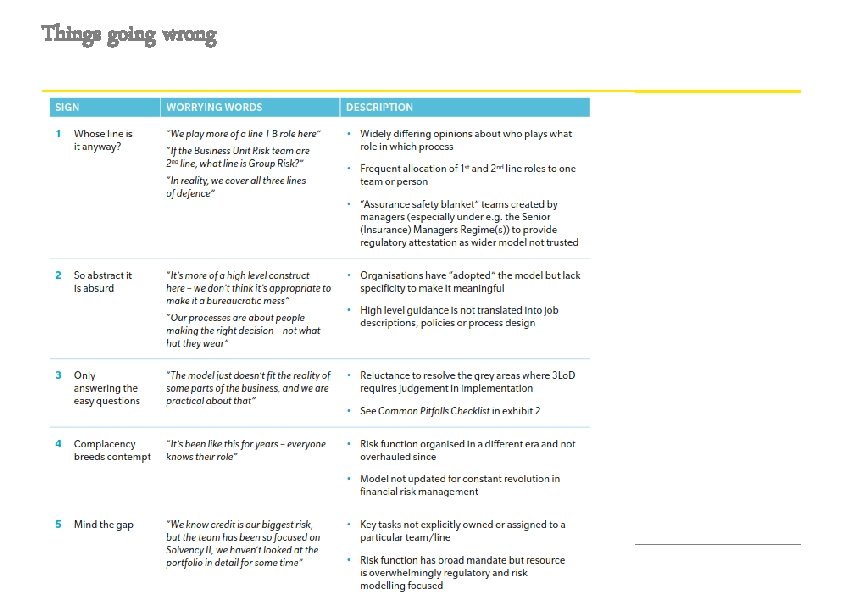
Things going wrong
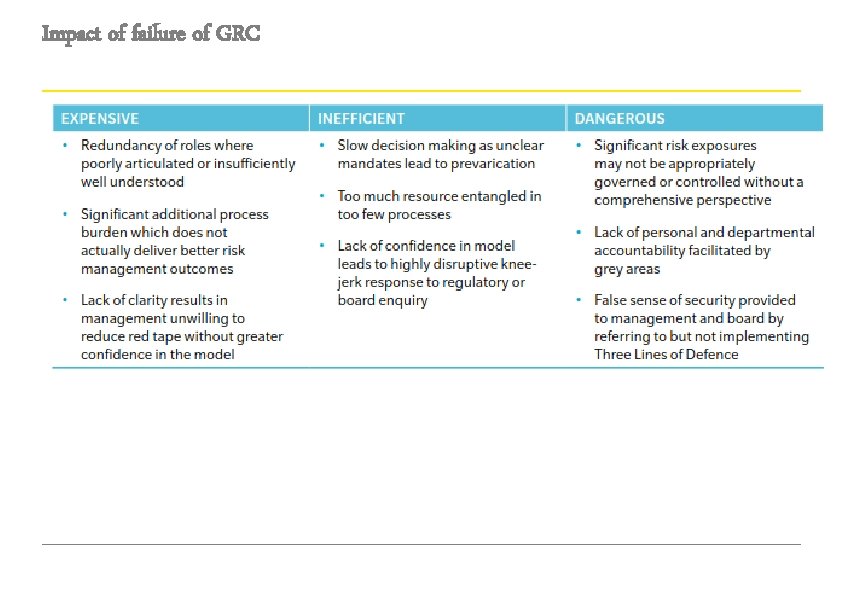
Impact of failure of GRC
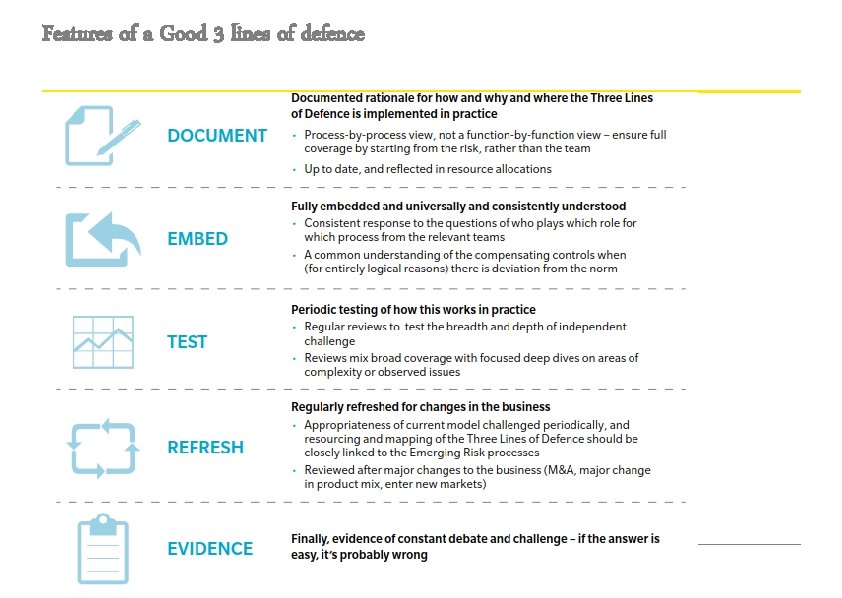
Features of a Good 3 lines of defence
Thank you