
Role of Bt Transgenic Hybrids in Sweet Corn
Role of Bt Transgenic Hybrids in Sweet Corn Pest Management Galen P. Dively Department of Entomology
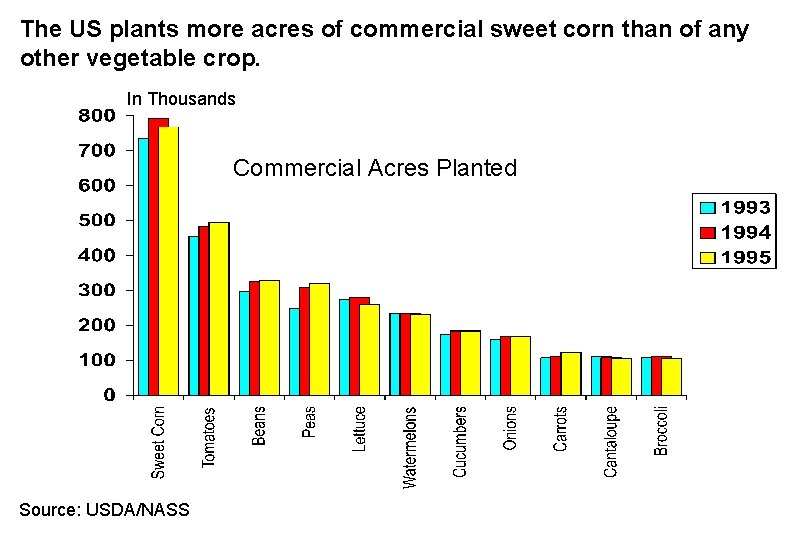
The US plants more acres of commercial sweet corn than of any other vegetable crop. In Thousands Commercial Acres Planted Source: USDA/NASS
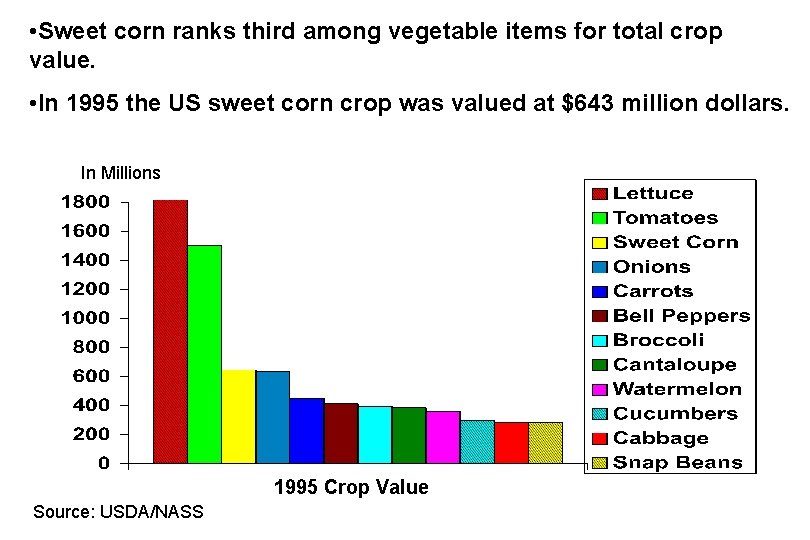
• Sweet corn ranks third among vegetable items for total crop value. • In 1995 the US sweet corn crop was valued at $643 million dollars. In Millions 1995 Crop Value Source: USDA/NASS

Northwest 21. 5% West Central 39% East Central 10. 1% Southwest 4. 3% Northeast 15. 5% Southeast 9. 6% 1999 Sweet Corn Acres Planted Total US = 742, 000

• Fresh market outlets demand high ear quality - >98% clean ears. • Processing standards allow more insect damage - >90% clean ears if kernel injury is confined on the ear tip. • Requires heavy use of insecticides • Most treatments on fresh market corn are applied by ground. • Insecticides used on processing corn are applied by air. • Time-consuming and requires considerable management and logistical coordination.

2001 84 7. 4 2. 1 – 16. 5 73 1. 9 1. 3 – 3. 8 153, 000
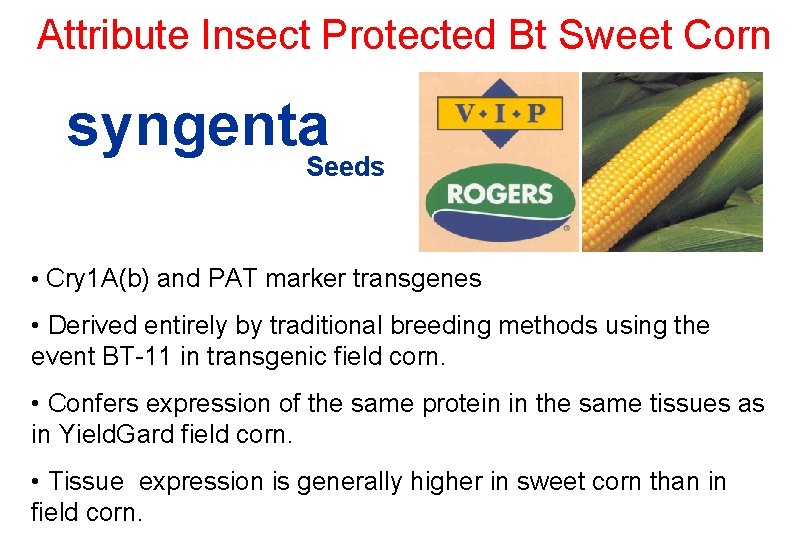
Attribute Insect Protected Bt Sweet Corn syngenta Seeds • Cry 1 A(b) and PAT marker transgenes • Derived entirely by traditional breeding methods using the event BT-11 in transgenic field corn. • Confers expression of the same protein in the same tissues as in Yield. Gard field corn. • Tissue expression is generally higher in sweet corn than in field corn.
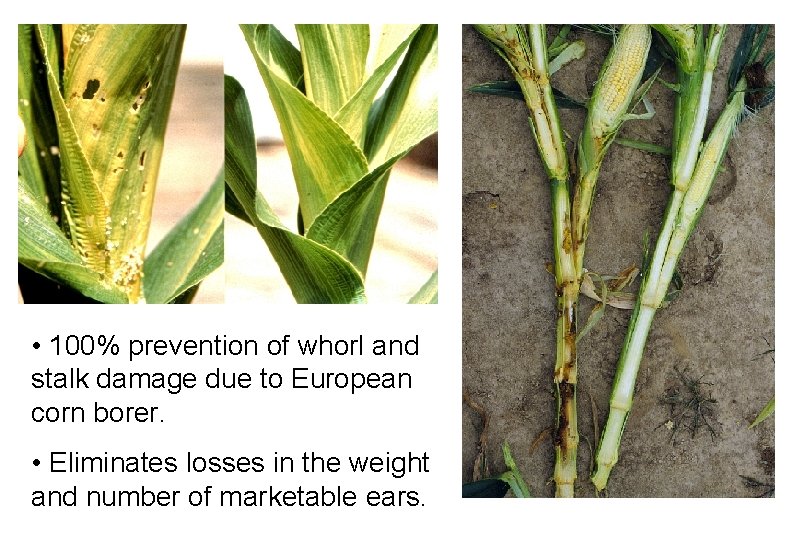
• 100% prevention of whorl and stalk damage due to European corn borer. • Eliminates losses in the weight and number of marketable ears.

Attribute GSS 0966 (Bt) Prime Plus (non. Bt)

FALL ARMYWORM - Primary pest in Florida • Normally requires up to 15 applications per acre • Use of Bt hybrids reduces insecticide use to 1 application.

Economic Benefits of Bt Sweet Corn • Saves growers on costs of using insecticides (chemical, application, protective clothing, waste disposal). • Improves grower efficiency; easy-to-use, no re-entry intervals or pre-harvest intervals. • Healthier plants mean fewer losses to secondary pests and environmental stresses. • Helps preserve high yields & product quality
Health and Environmental Benefits l l l Reduces risks of pesticide use: worker exposure, pesticide residues, spray drift, non-target effects, misapplication. Prevents pollution: groundwater contamination, fossil fuel consumption, spills, pesticide containers and waste’ Preserves beneficial populations; can help keep other pest populations in check on sweet corn & neighboring crops.
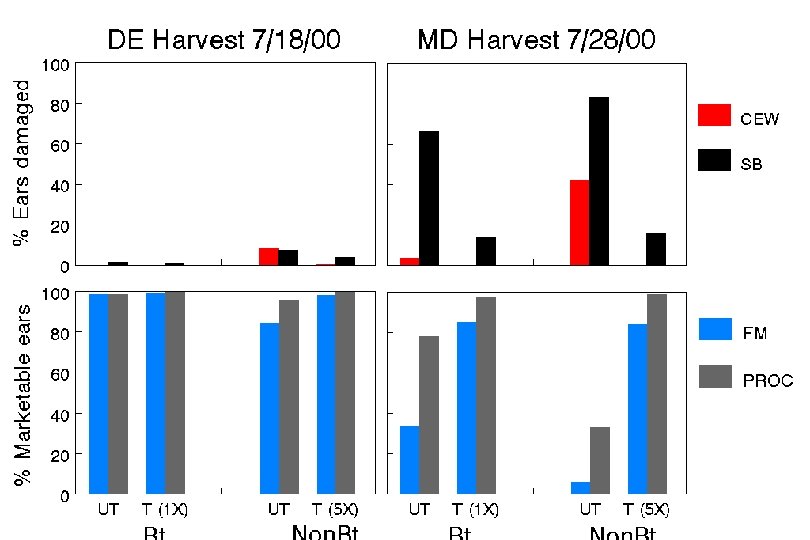
Insecticide reductions by using Bt sweet corn depend on: • Population pressure and relative pest status of the target insects (e. g. ECB, CEW, and FAW) • Phenology of silking and ear formation coincident with peak moth activity • Production region • Secondary pests not affected by Cry. IAb protein (e. g. sap beetles, silk flies, aphids, cutworms) • Quality standards (fresh market vs. processing)
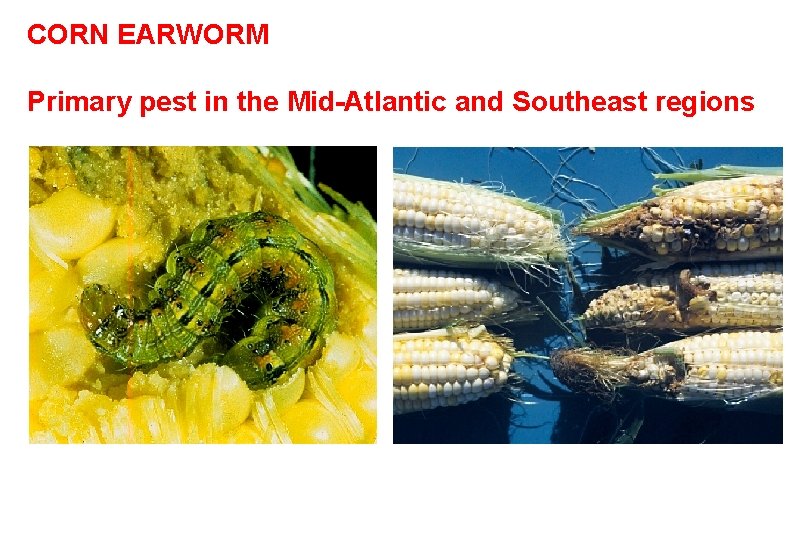
CORN EARWORM Primary pest in the Mid-Atlantic and Southeast regions
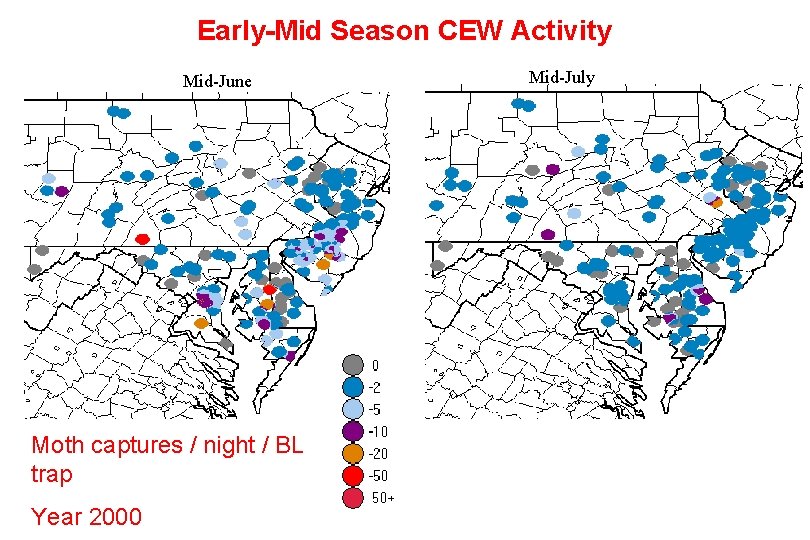
Early-Mid Season CEW Activity Mid-June Moth captures / night / BL trap Year 2000 Mid-July
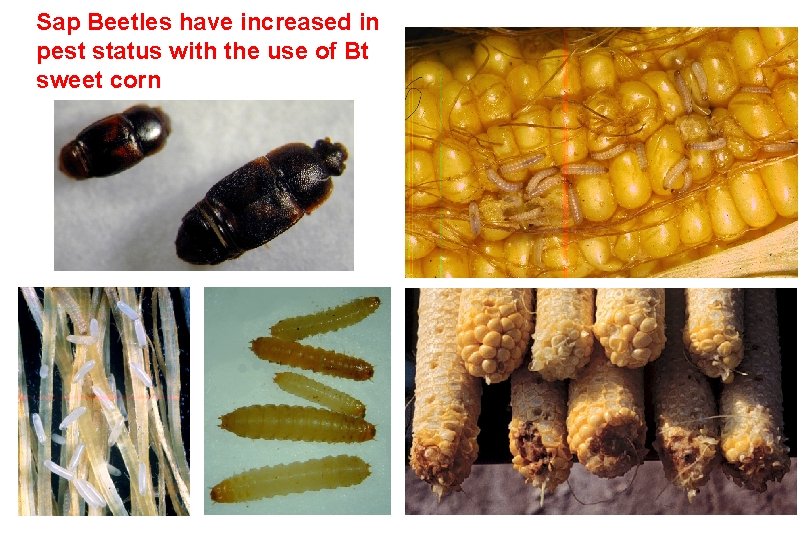
Sap Beetles have increased in pest status with the use of Bt sweet corn
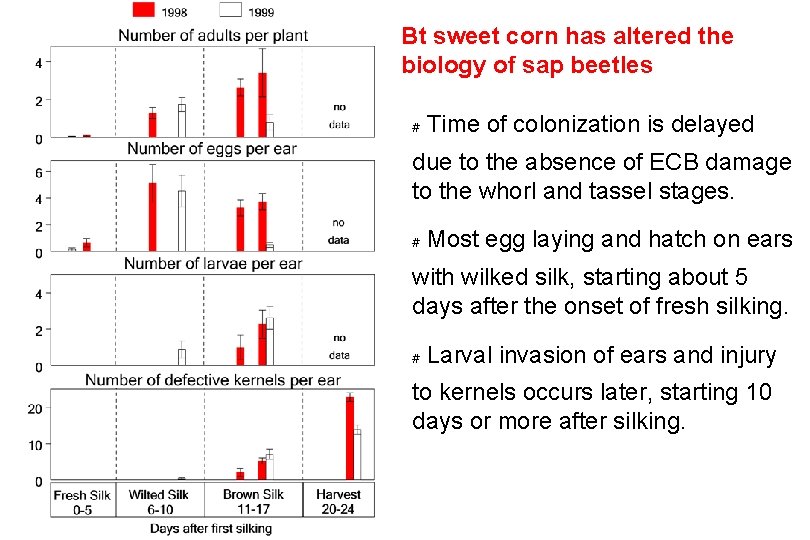
Bt sweet corn has altered the biology of sap beetles # Time of colonization is delayed due to the absence of ECB damage to the whorl and tassel stages. # Most egg laying and hatch on ears with wilked silk, starting about 5 days after the onset of fresh silking. # Larval invasion of ears and injury to kernels occurs later, starting 10 days or more after silking.
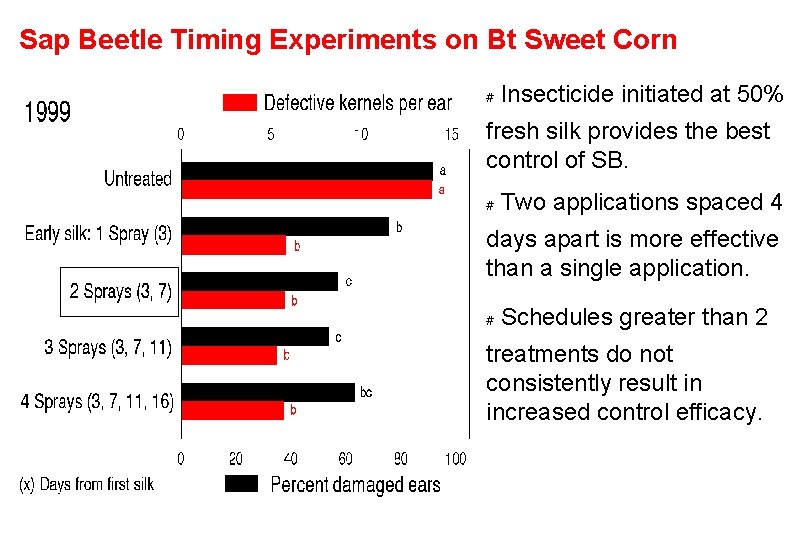
Sap Beetle Timing Experiments on Bt Sweet Corn # Insecticide initiated at 50% fresh silk provides the best control of SB. # Two applications spaced 4 days apart is more effective than a single application. # Schedules greater than 2 treatments do not consistently result in increased control efficacy.
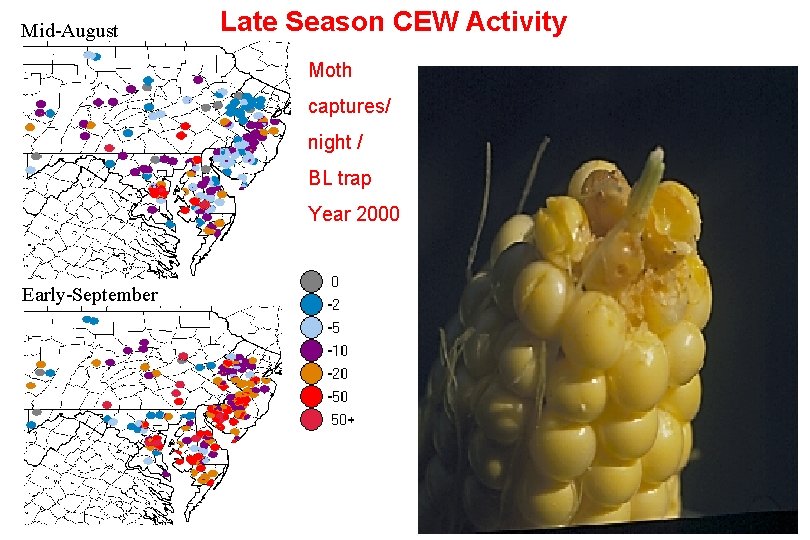
Mid-August Late Season CEW Activity Moth captures/ night / BL trap Year 2000 Early-September
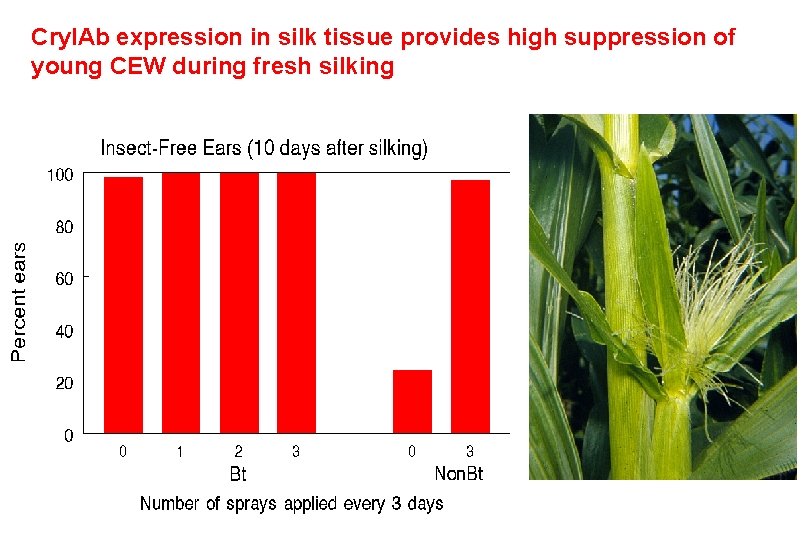
Cry. IAb expression in silk tissue provides high suppression of young CEW during fresh silking
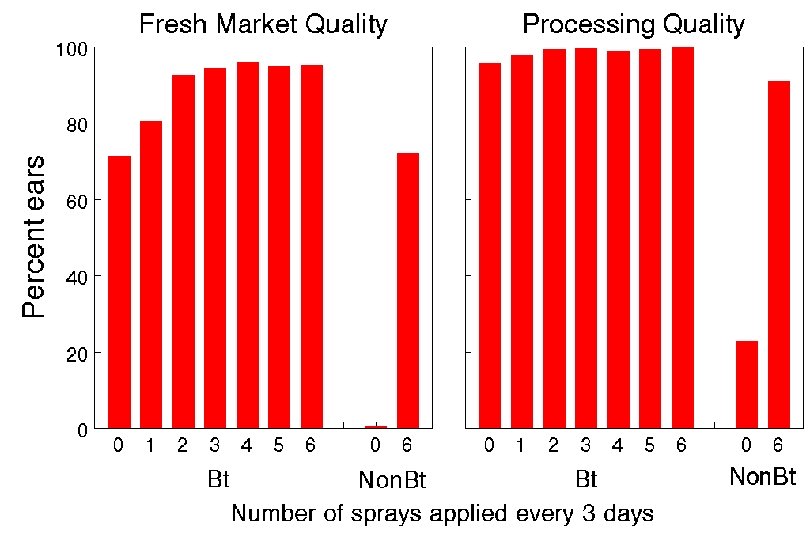
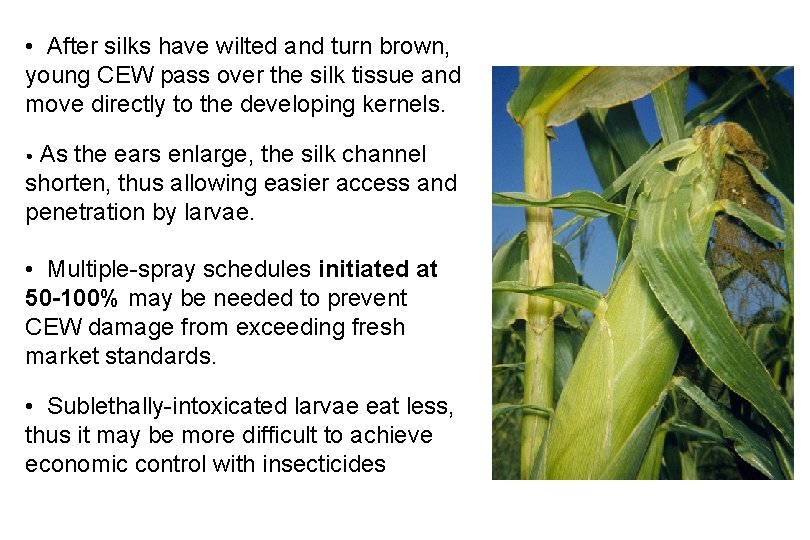
• After silks have wilted and turn brown, young CEW pass over the silk tissue and move directly to the developing kernels. • As the ears enlarge, the silk channel shorten, thus allowing easier access and penetration by larvae. • Multiple-spray schedules initiated at 50 -100% may be needed to prevent CEW damage from exceeding fresh market standards. • Sublethally-intoxicated larvae eat less, thus it may be more difficult to achieve economic control with insecticides
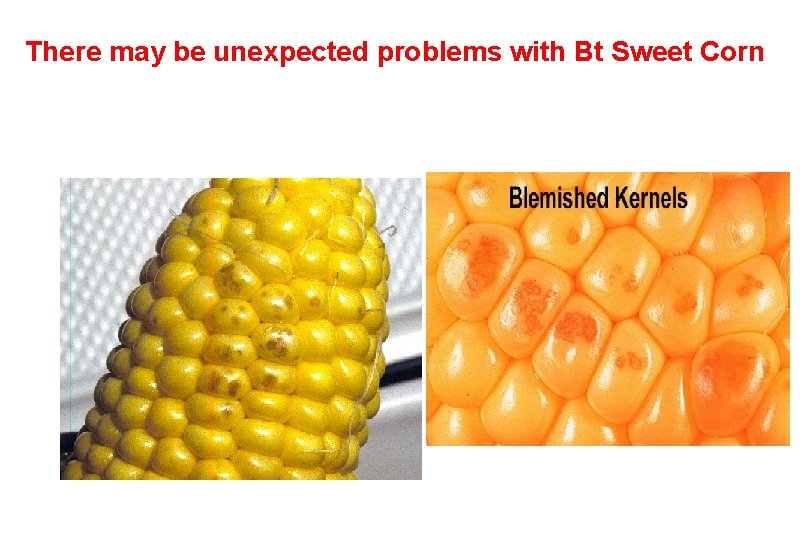
There may be unexpected problems with Bt Sweet Corn
Available Rogers Brand Bt hybrids for Fresh Market • GSS 0966 VP - a mid-season yellow SH 2 supersweet, widely adapted for shipping, tolerant to northern corn leaf blight and Stewart’s wilt, and comparable to conventional varieties, A&C SS 7210 and SS 7710 Y, Prime time, Prime Plus, Flagship, Zenith, Daystar, and Bandit. • BSS 0977 VP - a mid-season bicolor SH 2 supersweet, adapted for commercial shipping, tolerant to northern corn leaf blight and Stewart’s wilt, resistant to common rust (Rpl-d, Rpl-I), and comparable to conventional varieties, Quest, SS 8102 BC, and Bi-Time. • BC 0801 - a mid-season bicolor homozygous SE, designed for the local markets, resistant to common rust (Rpl-d), tolerant to northern corn leaf blight and Stewart’s wilt, and comparable to conventional varieties, Jackpot and Delectable.
Processing Bt Hybrids • GH 0990 - the Bt version of GH 2547, which has a huge disease package and is expected to replace Bonus and other varieties. • Very little Bt sweet corn is used by processors due to the European concerns over GMOs. • Syngenta Seeds and other seed companies are continuing to develop new Bt hybrids which will be ready to go commercially if the GMO controversy changes. Bt Seed Dealers Serving Ohio Rupp Seeds, Martin Rispin&Sons, and Speedway, Inc.
Requirements to Grow Bt Sweet Corn • Must be a commercial grower producing >20 acres of sweet corn. Must purchase at least one 100 M bag. • Recommend planting in blocks separate from non. Bt hybrids. • No refuge required. • Must rotary mow, disc, or plowdown remaining stalks immediately following or within 30 days after harvest. • Must cooperate with Syngenta Seeds in its effort to comply with EPA requirements for resistance management. Scouting for non-target pests Monitoring for signs of resistant insects Reporting any unusual events
Is it profitable to grow Bt sweet corn? • Potential savings depend on the number of insecticide sprays typically used on a conventional hybrid. • GSS 0966 and BSS 0977 seed costs about $63 per acre more than comparable non. Bt hybrids. This means that a grower would have to typically apply 5 sprays per acre to break even, assuming that an insecticide spray costs $12 per acre and use of the Bt hybrid eliminates all sprays. • BC 0801 looks a little better economically because seed cost is around $47 per acre more than the conventional hybrid. • Growers should look beyond the potential variable cost savings and consider other factors, such as greater worker safety, less risk, convenient to use, and time savings, before making a decision about planting Bt sweet corn.
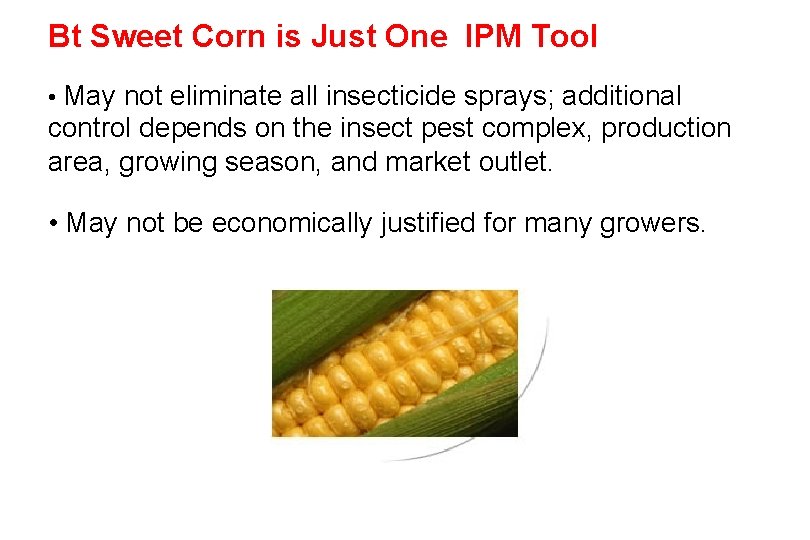
Bt Sweet Corn is Just One IPM Tool • May not eliminate all insecticide sprays; additional control depends on the insect pest complex, production area, growing season, and market outlet. • May not be economically justified for many growers.
- Slides: 30