
Role of AirSea Interaction on the Predictability of
Role of Air-Sea Interaction on the Predictability of Tropical Intraseasonal Oscillation (TISO) Xiouhua Fu International Pacific Research Center (IPRC) SOEST, University of Hawaii (UH) at Manoa Honolulu, Hawaii 96822 http: //www. soest. hawaii. edu/~xfu
OUTLINE Motivation Review of Previous Studies Air-Sea Coupling on TISO Predictability Best Lower Boundary Condition for TISO Predictability Summary
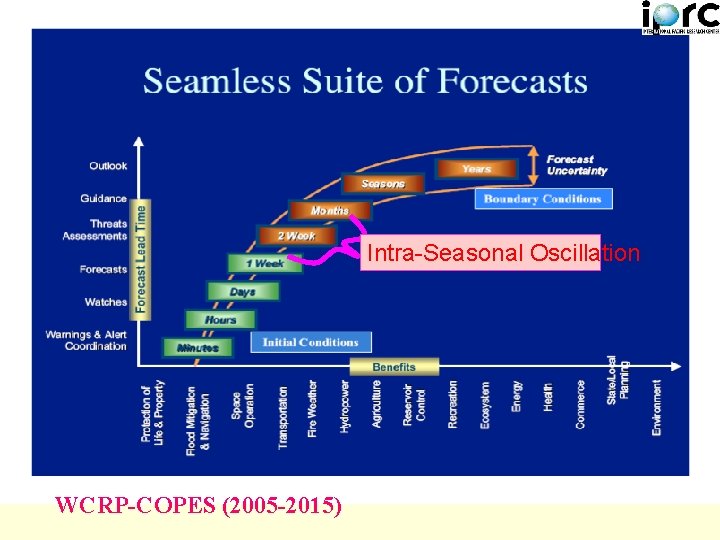
Intra-Seasonal Oscillation WCRP-COPES (2005 -2015)
Review of Previous Studies on the Predictability of Tropical Intraseasonal Oscillation (TISO)
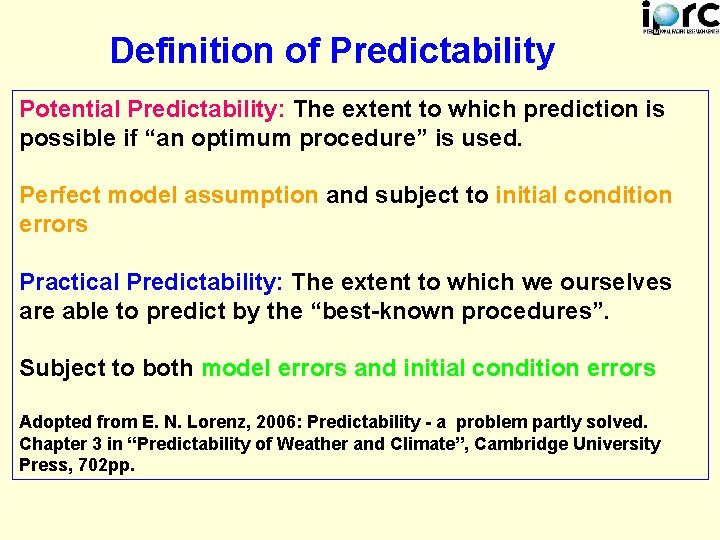
Definition of Predictability Potential Predictability: The extent to which prediction is possible if “an optimum procedure” is used. Perfect model assumption and subject to initial condition errors Practical Predictability: The extent to which we ourselves are able to predict by the “best-known procedures”. Subject to both model errors and initial condition errors Adopted from E. N. Lorenz, 2006: Predictability - a problem partly solved. Chapter 3 in “Predictability of Weather and Climate”, Cambridge University Press, 702 pp.
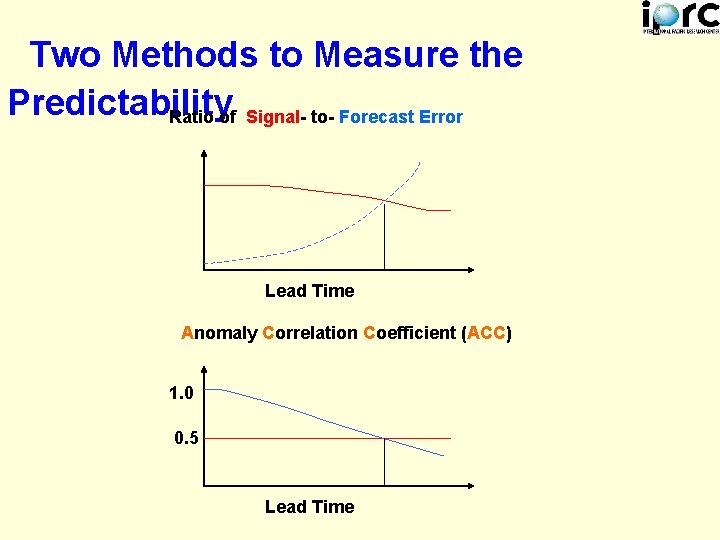
Two Methods to Measure the Predictability Ratio of Signal- to- Forecast Error Lead Time Anomaly Correlation Coefficient (ACC) 1. 0 0. 5 Lead Time
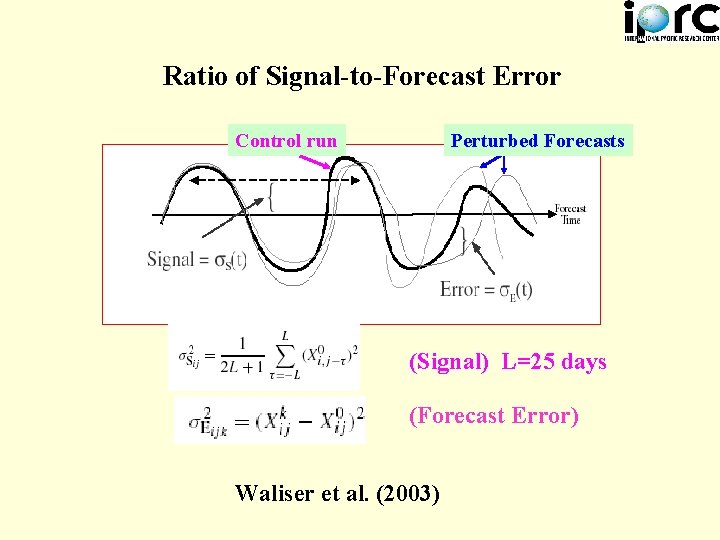
Ratio of Signal-to-Forecast Error Control run Perturbed Forecasts (Signal) L=25 days (Forecast Error) Waliser et al. (2003)
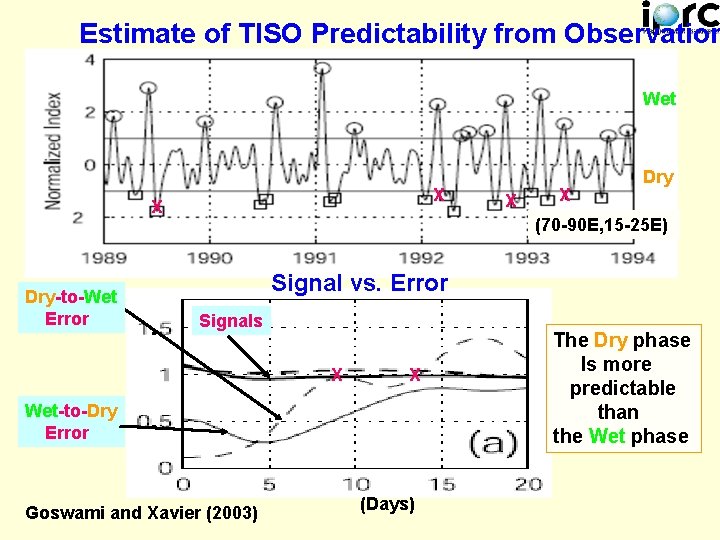
Estimate of TISO Predictability from Observation Wet X X Dry-to-Wet Error X X Dry (70 -90 E, 15 -25 E) Signal vs. Error Signals X X Wet-to-Dry Error Goswami and Xavier (2003) (Days) The Dry phase Is more predictable than the Wet phase
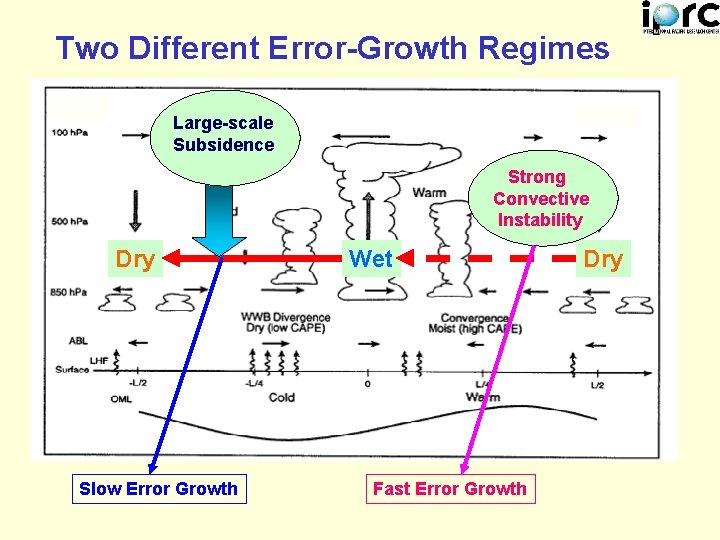
Two Different Error-Growth Regimes Large-scale Subsidence Strong Convective Instability Dry Slow Error Growth Wet Fast Error Growth Dry
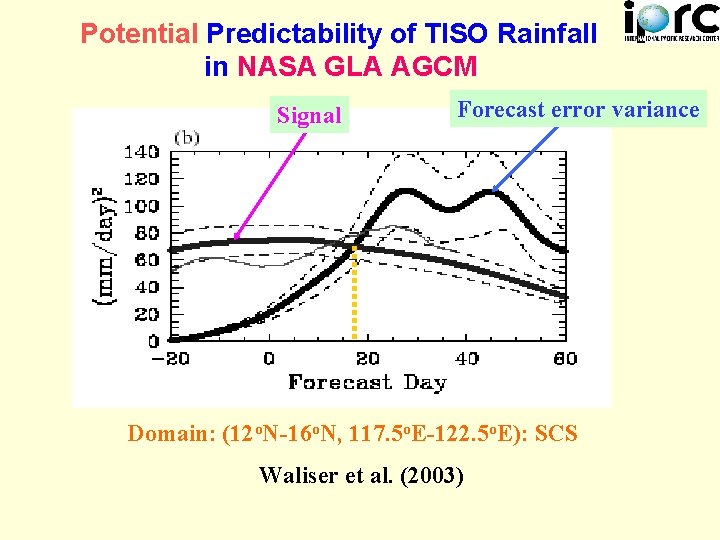
Potential Predictability of TISO Rainfall in NASA GLA AGCM Signal Forecast error variance Domain: (12 o. N-16 o. N, 117. 5 o. E-122. 5 o. E): SCS Waliser et al. (2003)
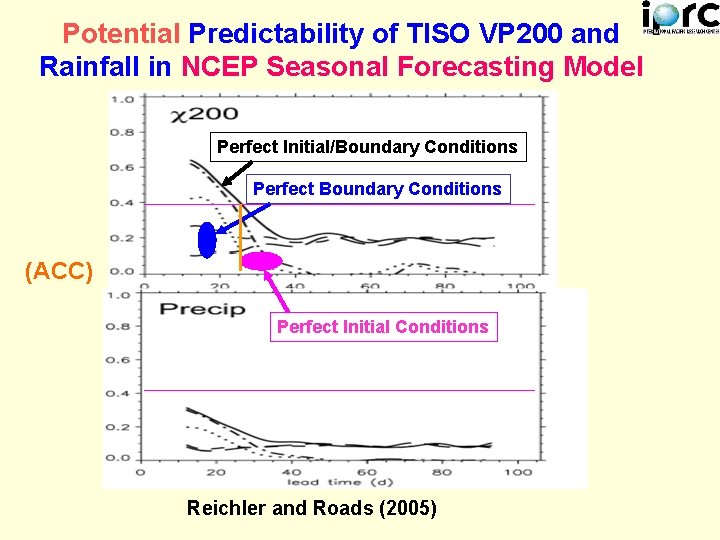
Potential Predictability of TISO VP 200 and Rainfall in NCEP Seasonal Forecasting Model Perfect Initial/Boundary Conditions Perfect Boundary Conditions (ACC) Perfect Initial Conditions Reichler and Roads (2005)
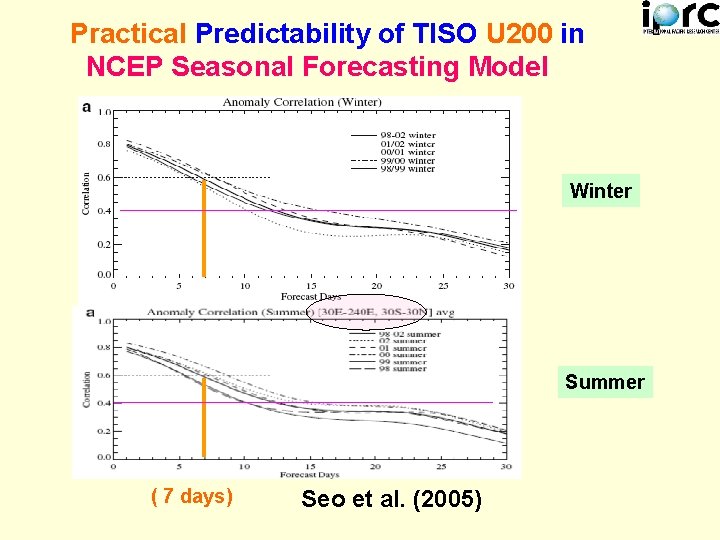
Practical Predictability of TISO U 200 in NCEP Seasonal Forecasting Model Winter Summer ( 7 days) Seo et al. (2005)
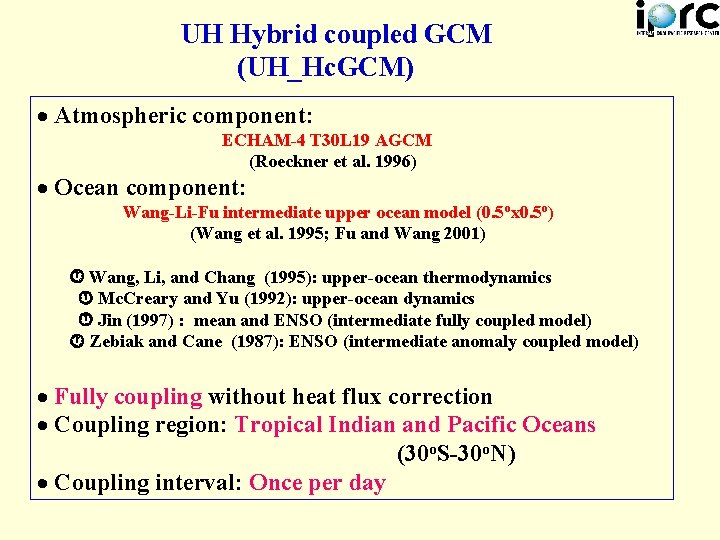
UH Hybrid coupled GCM (UH_Hc. GCM) · Atmospheric component: ECHAM-4 T 30 L 19 AGCM (Roeckner et al. 1996) · Ocean component: Wang-Li-Fu intermediate upper ocean model (0. 5 ox 0. 5 o) (Wang et al. 1995; Fu and Wang 2001) Wang, Li, and Chang (1995): upper-ocean thermodynamics Mc. Creary and Yu (1992): upper-ocean dynamics Jin (1997) : mean and ENSO (intermediate fully coupled model) Zebiak and Cane (1987): ENSO (intermediate anomaly coupled model) · Fully coupling without heat flux correction · Coupling region: Tropical Indian and Pacific Oceans (30 o. S-30 o. N) · Coupling interval: Once per day
Role of Air-Sea Coupling on TISO Predictability Fu et al. 2007, JAS
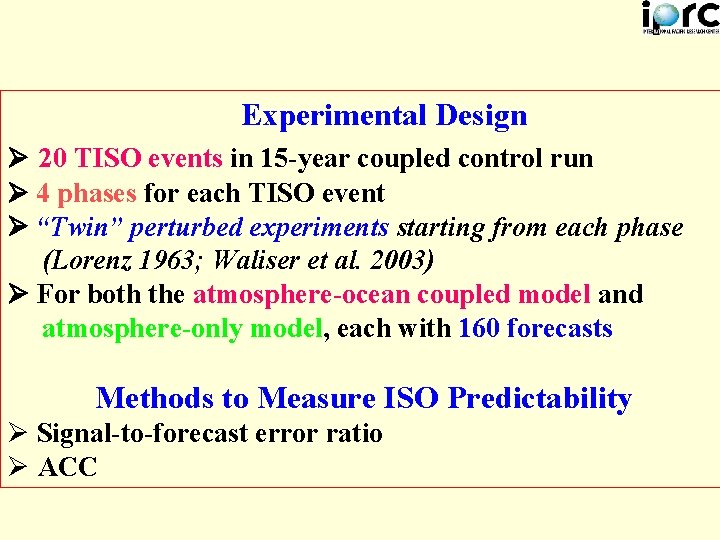
Experimental Design 20 TISO events in 15 -year coupled control run 4 phases for each TISO event “Twin” perturbed experiments starting from each phase (Lorenz 1963; Waliser et al. 2003) For both the atmosphere-ocean coupled model and atmosphere-only model, each with 160 forecasts Methods to Measure ISO Predictability Ø Signal-to-forecast error ratio Ø ACC
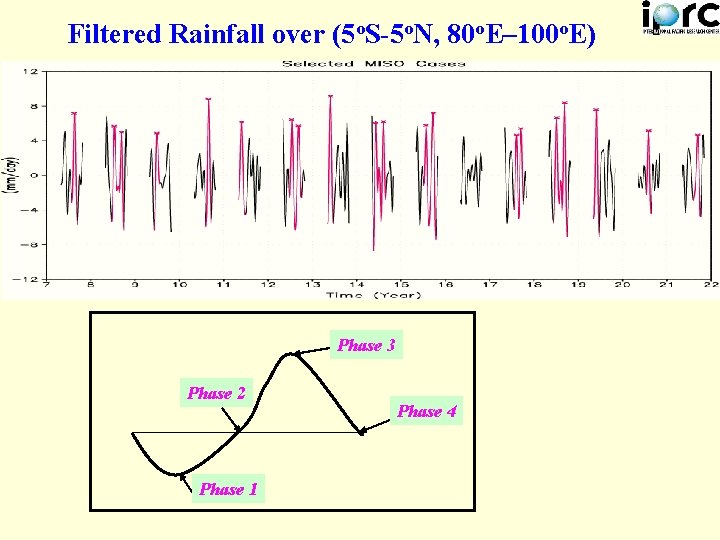
Filtered Rainfall over (5 o. S-5 o. N, 80 o. E– 100 o. E) Phase 3 Phase 2 Phase 1 Phase 4
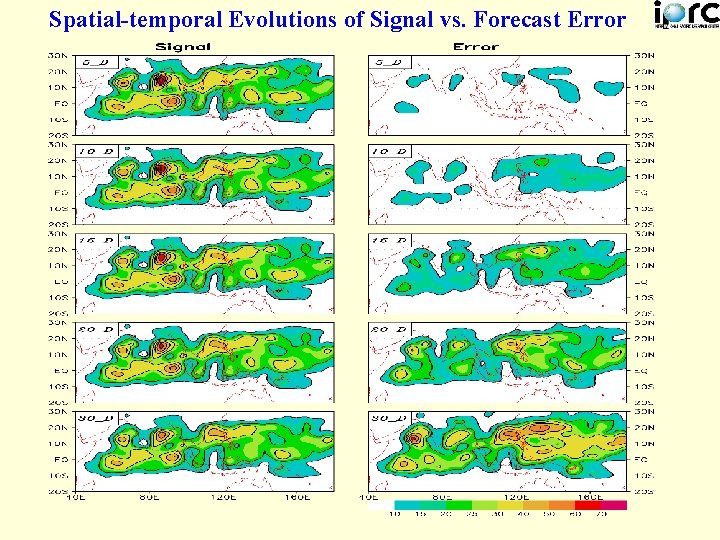
Spatial-temporal Evolutions of Signal vs. Forecast Error
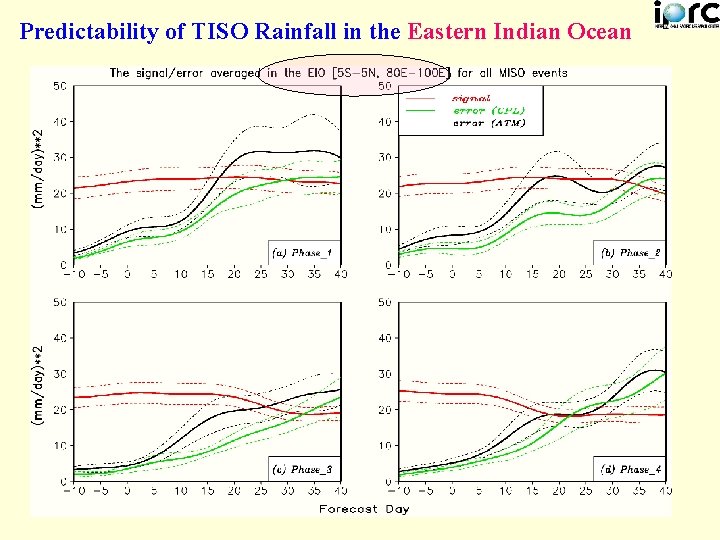
Predictability of TISO Rainfall in the Eastern Indian Ocean
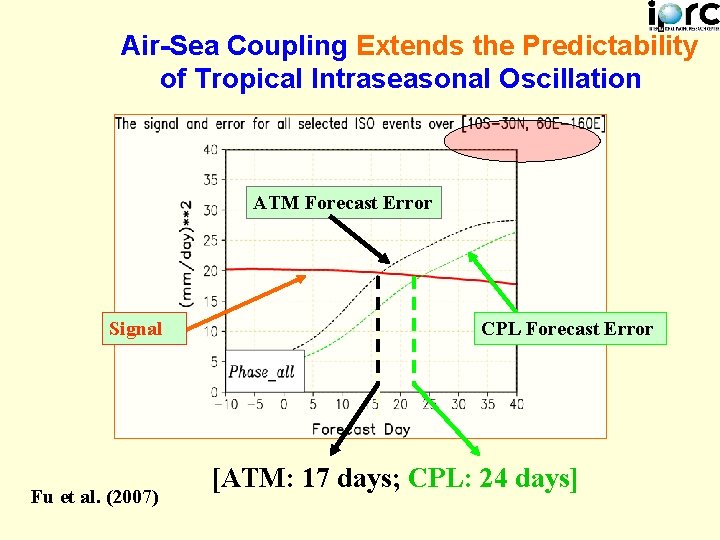
Air-Sea Coupling Extends the Predictability of Tropical Intraseasonal Oscillation ATM Forecast Error Signal Fu et al. (2007) CPL Forecast Error [ATM: 17 days; CPL: 24 days]
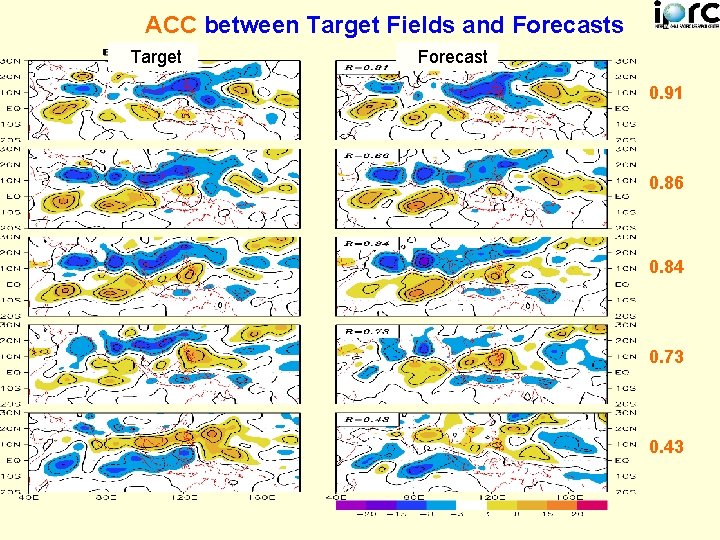
ACC between Target Fields and Forecasts Target Forecast 0. 91 0. 86 0. 84 0. 73 0. 43
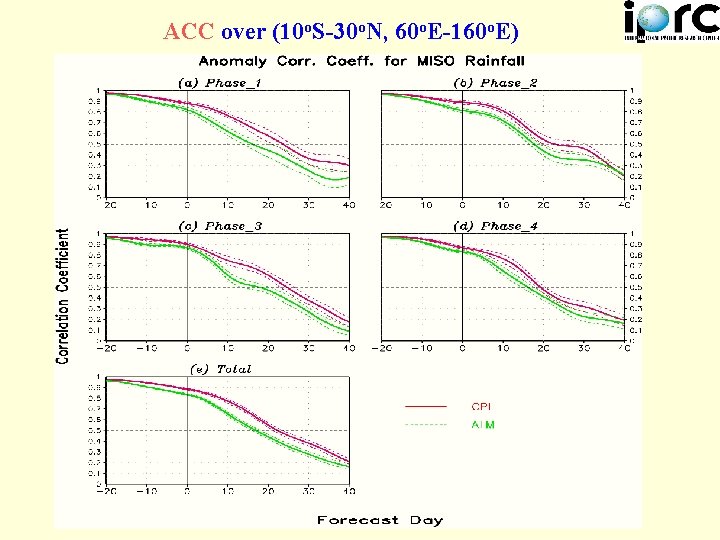
ACC over (10 o. S-30 o. N, 60 o. E-160 o. E)
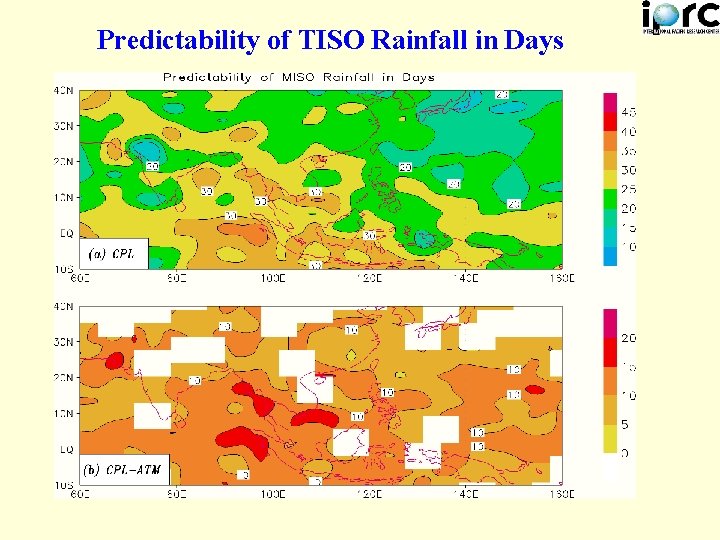
Predictability of TISO Rainfall in Days
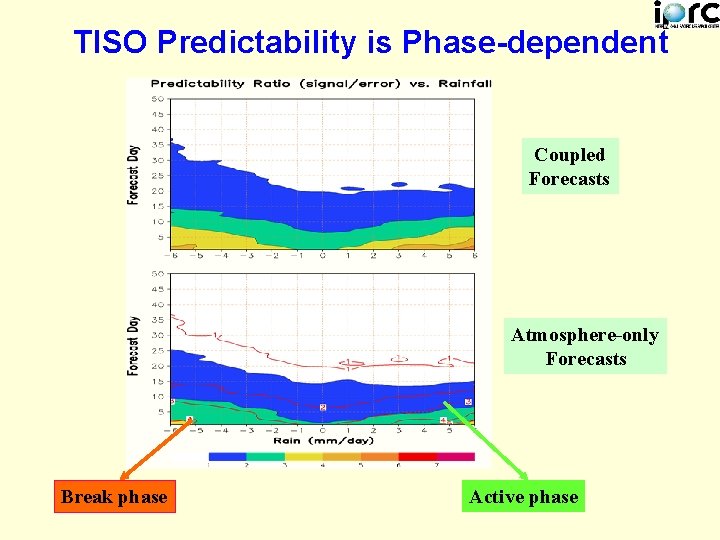
TISO Predictability is Phase-dependent Coupled Forecasts Atmosphere-only Forecasts Break phase Active phase
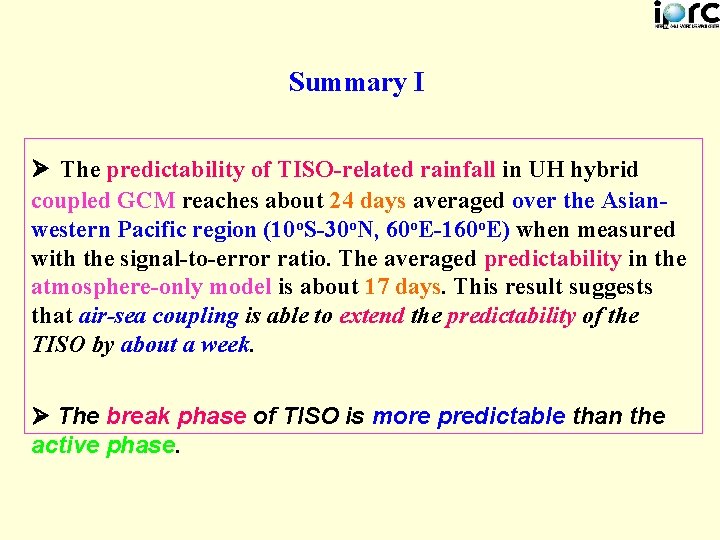
Summary I The predictability of TISO-related rainfall in UH hybrid coupled GCM reaches about 24 days averaged over the Asianwestern Pacific region (10 o. S-30 o. N, 60 o. E-160 o. E) when measured with the signal-to-error ratio. The averaged predictability in the atmosphere-only model is about 17 days. This result suggests that air-sea coupling is able to extend the predictability of the TISO by about a week. The break phase of TISO is more predictable than the active phase.
Best Lower Boundary Condition for TISO Predictability Fu et al. 2007 MWR, in press
What are the best SST configurations (e. g. , tierone vs. tier-two) for TISO hindcasts and forecasts? Could air-sea coupling extend the weather predictability?
Experimental Design 2 TISO events in a coupled control run 4 phases for each TISO event 10 ensemble forecasts starting from each phase of selected events under 5 different SST settings Data Processing TISO: 20 -90 -day filtered daily rainfall Weather: unfiltered daily rainfall Method to Measure TISO Predictability Ø Signal-to-forecast error ratio Ø ACC
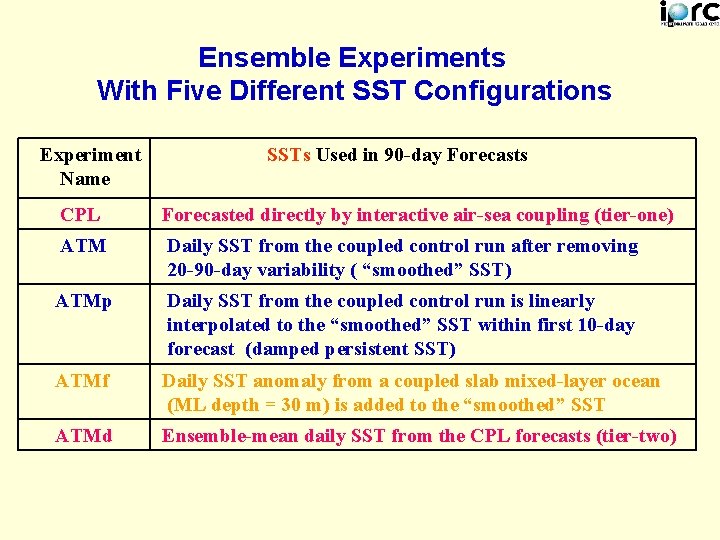
Ensemble Experiments With Five Different SST Configurations Experiment Name SSTs Used in 90 -day Forecasts CPL Forecasted directly by interactive air-sea coupling (tier-one) ATM Daily SST from the coupled control run after removing 20 -90 -day variability ( “smoothed” SST) ATMp Daily SST from the coupled control run is linearly interpolated to the “smoothed” SST within first 10 -day forecast (damped persistent SST) ATMf Daily SST anomaly from a coupled slab mixed-layer ocean (ML depth = 30 m) is added to the “smoothed” SST ATMd Ensemble-mean daily SST from the CPL forecasts (tier-two)
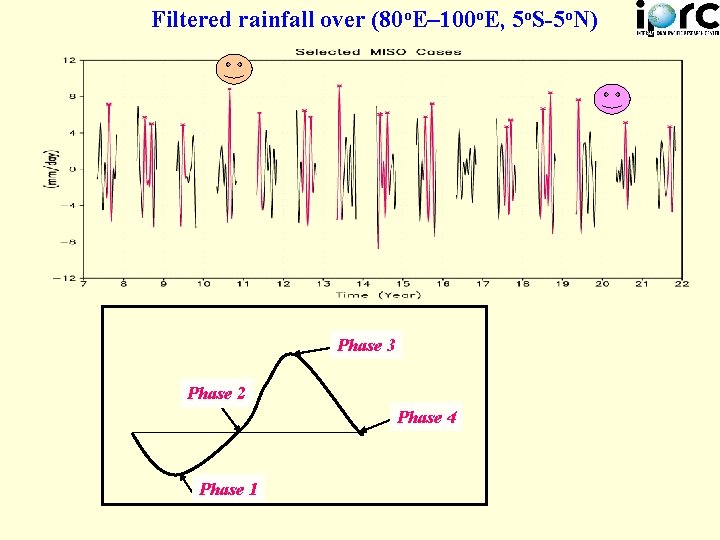
Filtered rainfall over (80 o. E– 100 o. E, 5 o. S-5 o. N) Phase 3 Phase 2 Phase 4 Phase 1
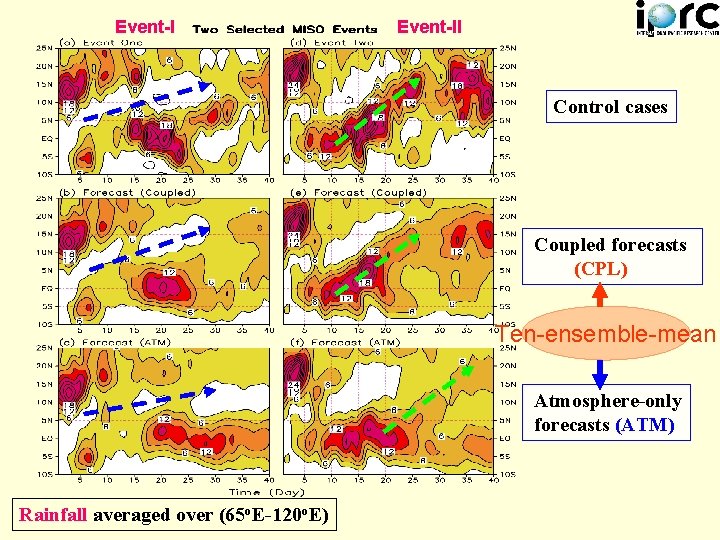
Event-II Control cases Coupled forecasts (CPL) Ten-ensemble-mean Atmosphere-only forecasts (ATM) Rainfall averaged over (65 o. E-120 o. E)
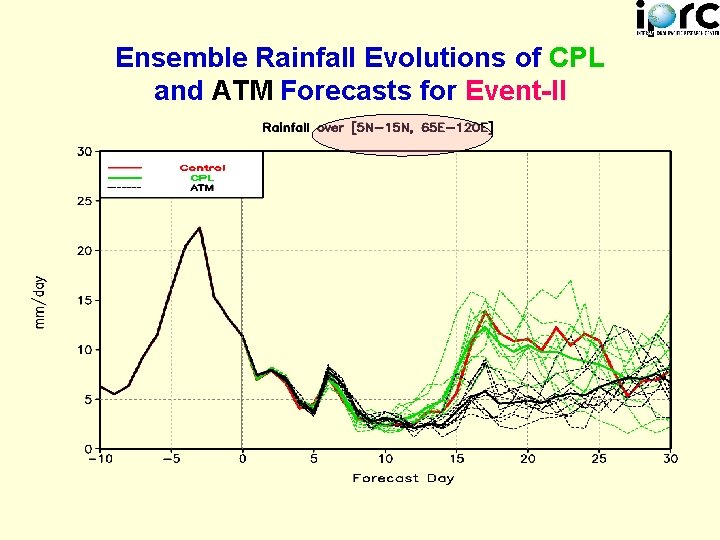
Ensemble Rainfall Evolutions of CPL and ATM Forecasts for Event-II
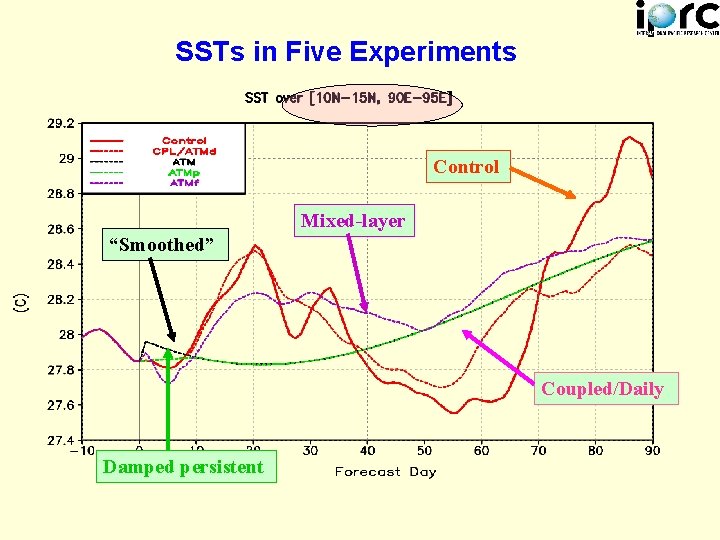
SSTs in Five Experiments Control Mixed-layer “Smoothed” Coupled/Daily Damped persistent
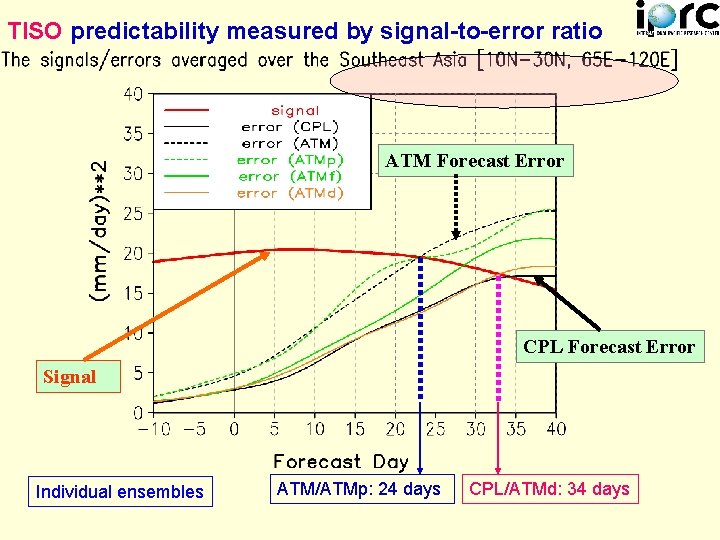
TISO predictability measured by signal-to-error ratio ATM Forecast Error CPL Forecast Error Signal Individual ensembles ATM/ATMp: 24 days CPL/ATMd: 34 days
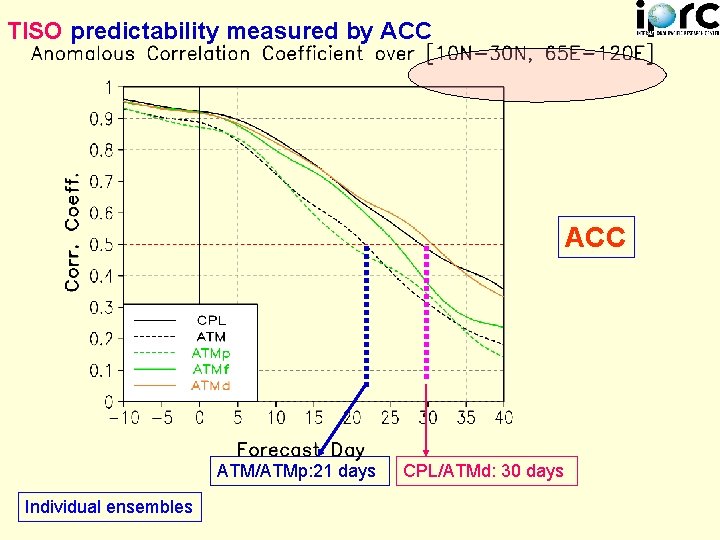
TISO predictability measured by ACC ATM/ATMp: 21 days Individual ensembles CPL/ATMd: 30 days
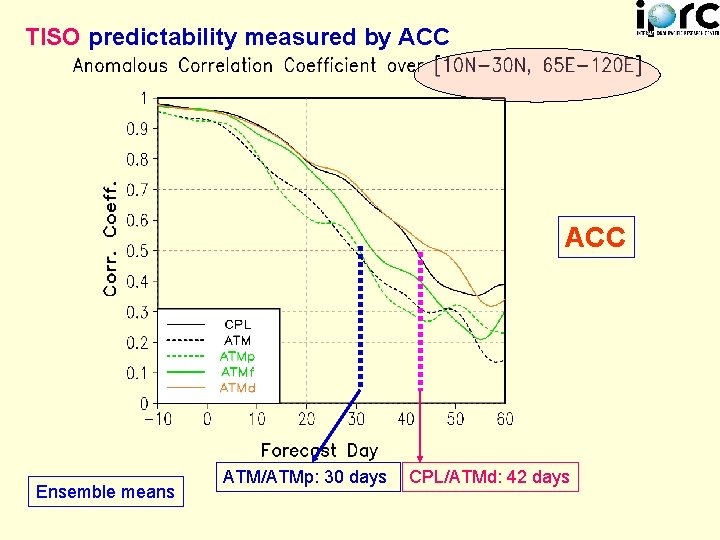
TISO predictability measured by ACC Ensemble means ATM/ATMp: 30 days CPL/ATMd: 42 days
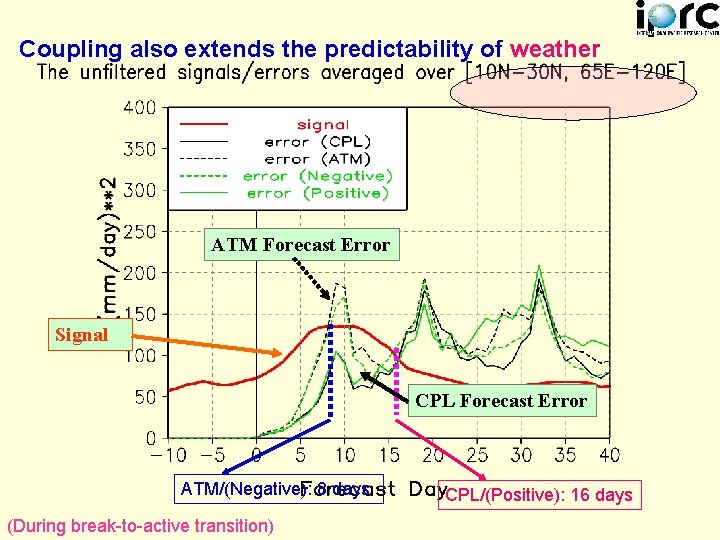
Coupling also extends the predictability of weather ATM Forecast Error Signal CPL Forecast Error ATM/(Negative): 8 days (During break-to-active transition) CPL/(Positive): 16 days
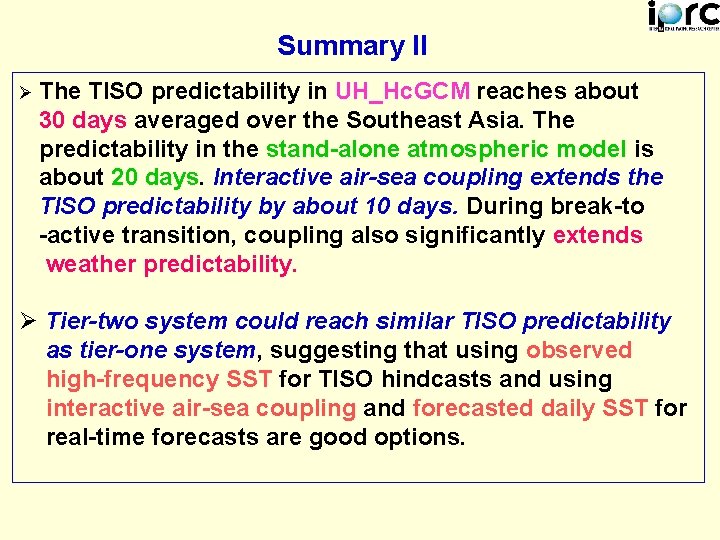
Summary II Ø The TISO predictability in UH_Hc. GCM reaches about 30 days averaged over the Southeast Asia. The predictability in the stand-alone atmospheric model is about 20 days. Interactive air-sea coupling extends the TISO predictability by about 10 days. During break-to -active transition, coupling also significantly extends weather predictability. Ø Tier-two system could reach similar TISO predictability as tier-one system, suggesting that using observed high-frequency SST for TISO hindcasts and using interactive air-sea coupling and forecasted daily SST for real-time forecasts are good options.
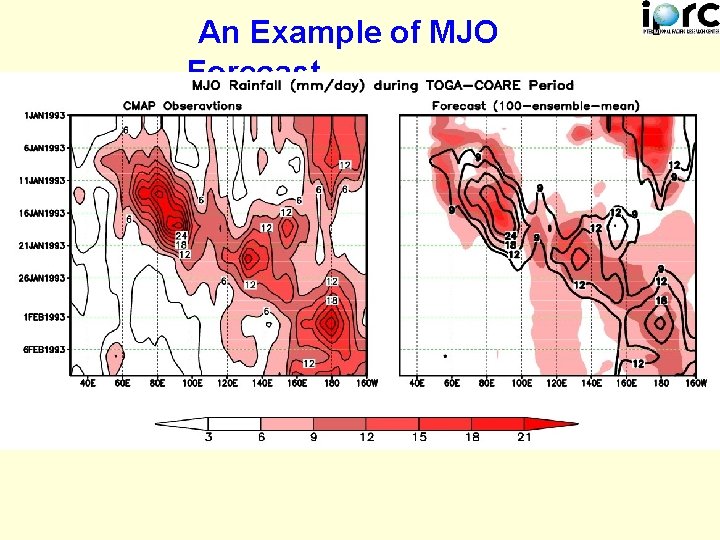
An Example of MJO Forecast
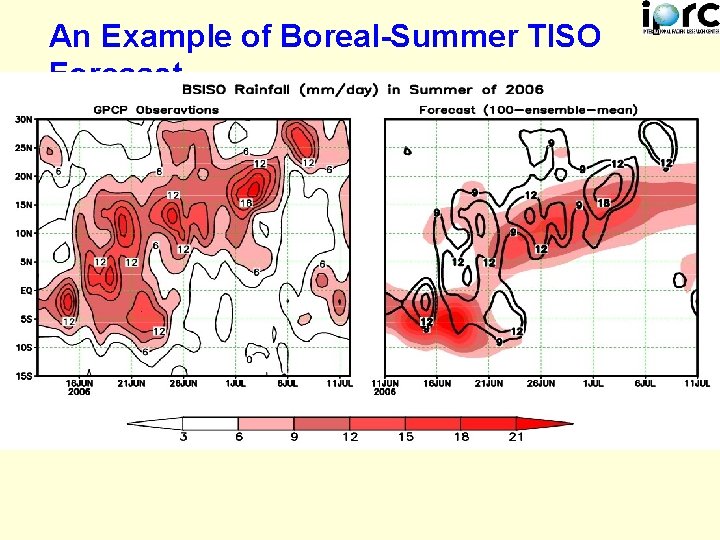
An Example of Boreal-Summer TISO Forecast

Thanks
Why does the daily SST-forced atmospheric forecasts (ATMd, tier-two) have similar predictability with the coupled forecasts (CPL, tier-one)?
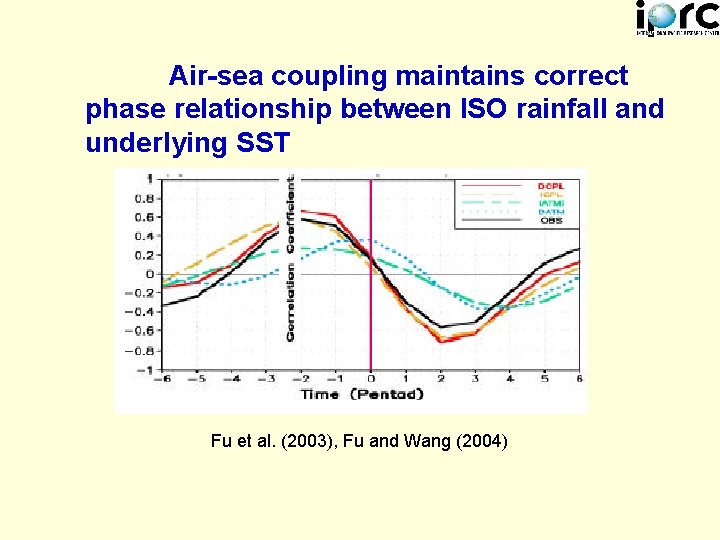
Air-sea coupling maintains correct phase relationship between ISO rainfall and underlying SST Fu et al. (2003), Fu and Wang (2004)
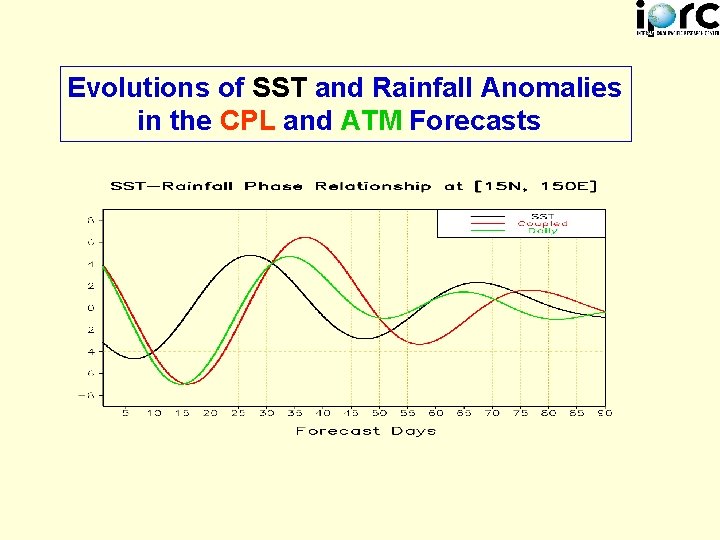
Evolutions of SST and Rainfall Anomalies in the CPL and ATM Forecasts
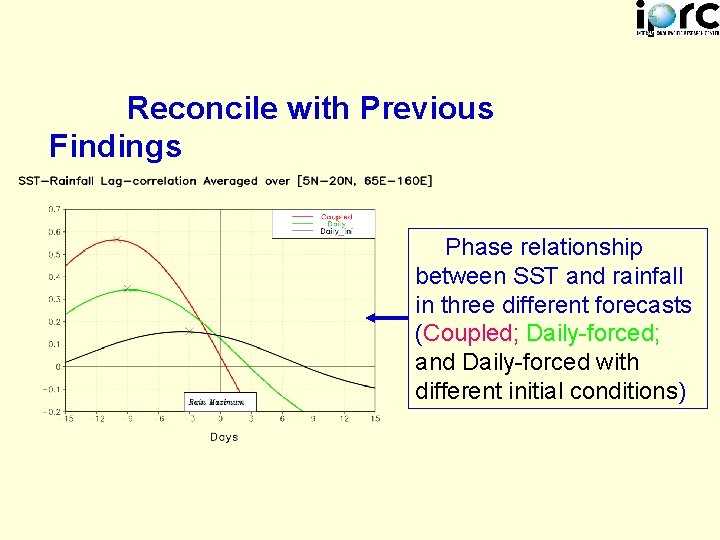
Reconcile with Previous Findings Phase relationship between SST and rainfall in three different forecasts (Coupled; Daily-forced; and Daily-forced with different initial conditions)
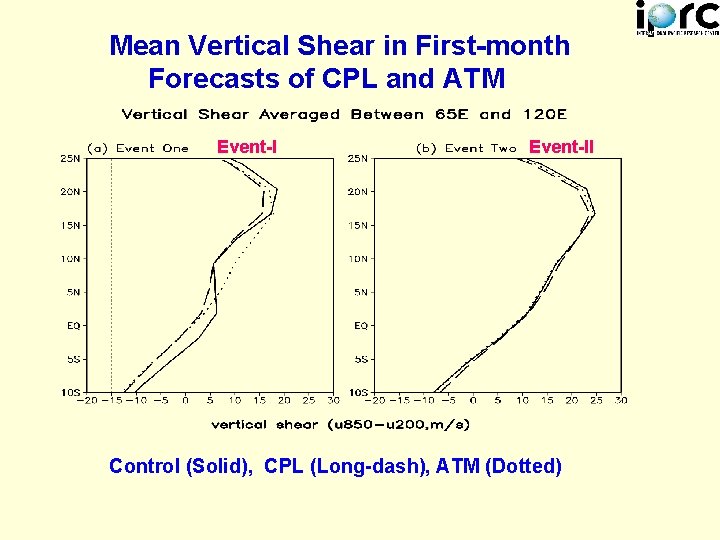
Mean Vertical Shear in First-month Forecasts of CPL and ATM Event-II Control (Solid), CPL (Long-dash), ATM (Dotted)
- Slides: 45