
ROLE AND INFLUENCE OF MAIN INTEREST GROUPS IN
- Slides: 14
ROLE AND INFLUENCE OF MAIN INTEREST GROUPS IN THE NATIONAL TRADE POLICY MAKING PROCESS IN KENYA BY C. H. ONYANGO
OUTLINE l l l Introduction Rationale for stakeholder participation Role of Interest Groups Key Interest Groups How interest groups influence policy Conclusion
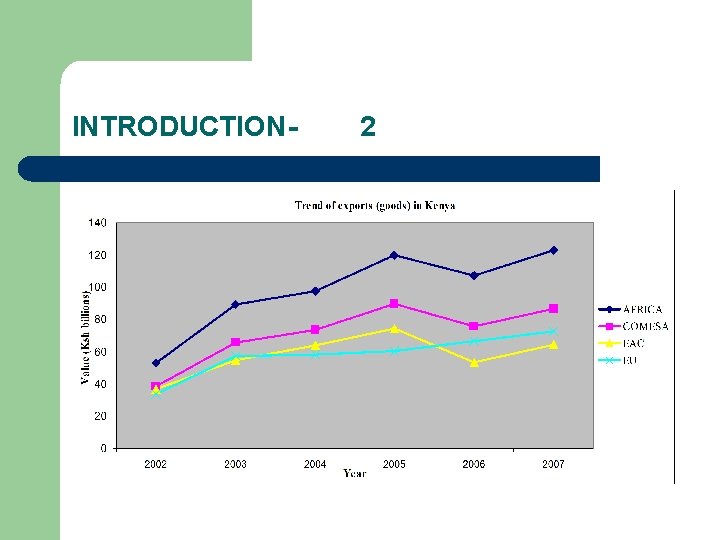
INTRODUCTION- l Major trade policy reforms in Kenya – – l Prices decontrols Removal/reduction of import duties Removal of quantitative restrictions Export promotion etc Increased integration in world economy – – – l 1 Reduction of av. MFN tariffs from 18% in 2000 to 12. 7% in 2007 Growth in trade – exports and imports Increase of exports in regional trade – EAC, COMESA Mixed effects i. e. Winners and Losers – – – Factors of production Employment and Household welfare
INTRODUCTION- 2
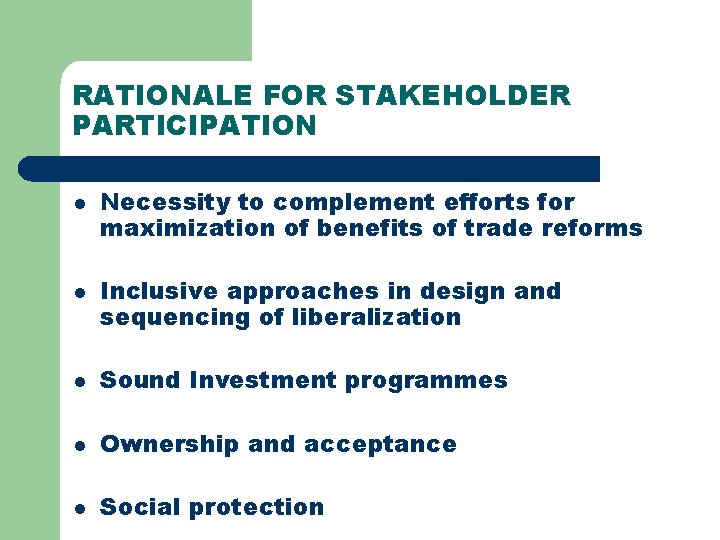
RATIONALE FOR STAKEHOLDER PARTICIPATION l l Necessity to complement efforts for maximization of benefits of trade reforms Inclusive approaches in design and sequencing of liberalization l Sound Investment programmes l Ownership and acceptance l Social protection
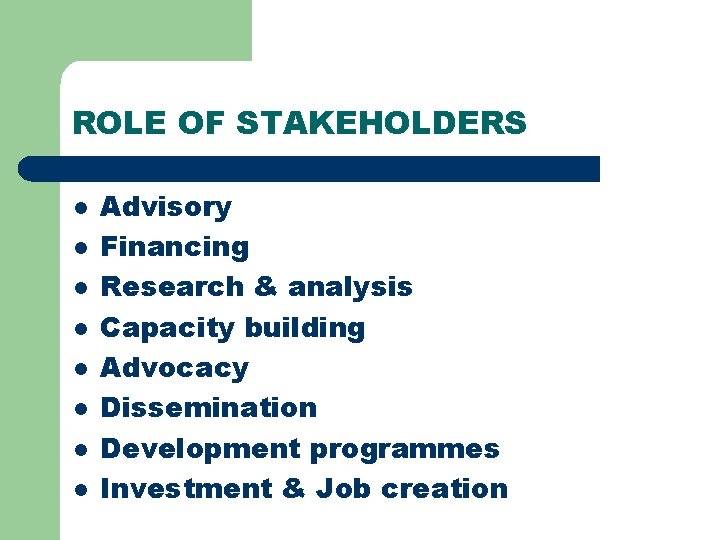
ROLE OF STAKEHOLDERS l l l l Advisory Financing Research & analysis Capacity building Advocacy Dissemination Development programmes Investment & Job creation
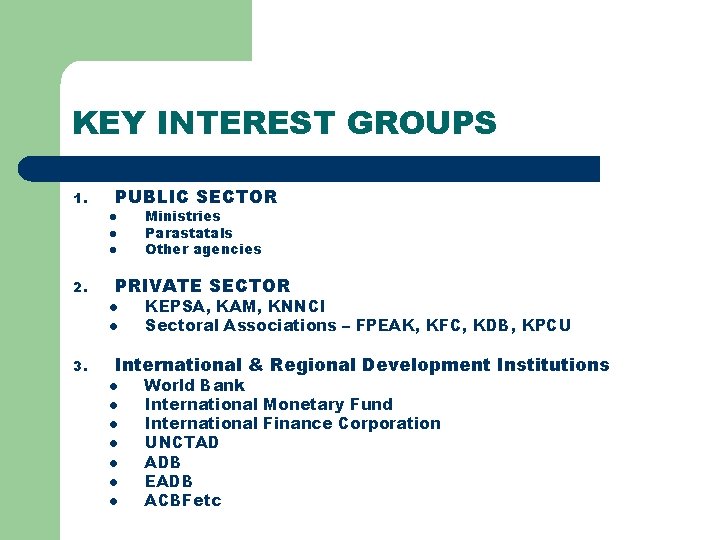
KEY INTEREST GROUPS 1. PUBLIC SECTOR l l l 2. PRIVATE SECTOR l l 3. Ministries Parastatals Other agencies KEPSA, KAM, KNNCI Sectoral Associations – FPEAK, KFC, KDB, KPCU International & Regional Development Institutions l l l l World Bank International Monetary Fund International Finance Corporation UNCTAD ADB EADB ACBFetc
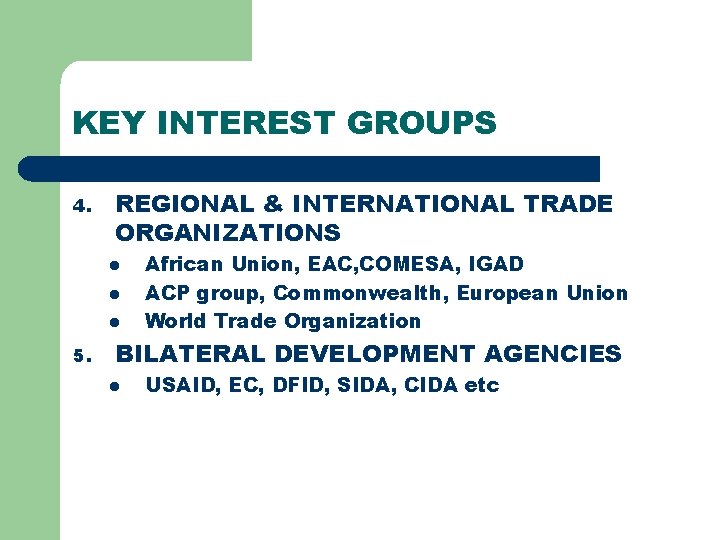
KEY INTEREST GROUPS 4. REGIONAL & INTERNATIONAL TRADE ORGANIZATIONS l l l 5. African Union, EAC, COMESA, IGAD ACP group, Commonwealth, European Union World Trade Organization BILATERAL DEVELOPMENT AGENCIES l USAID, EC, DFID, SIDA, CIDA etc
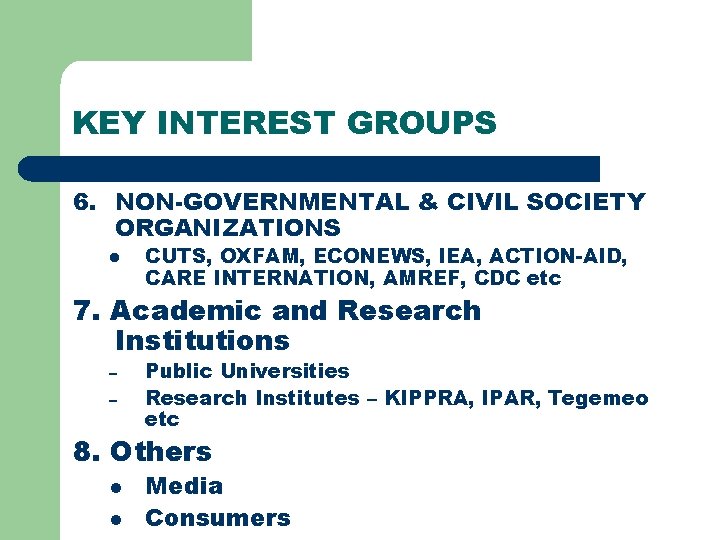
KEY INTEREST GROUPS 6. NON-GOVERNMENTAL & CIVIL SOCIETY ORGANIZATIONS l CUTS, OXFAM, ECONEWS, IEA, ACTION-AID, CARE INTERNATION, AMREF, CDC etc 7. Academic and Research Institutions – – Public Universities Research Institutes – KIPPRA, IPAR, Tegemeo etc 8. Others l l Media Consumers
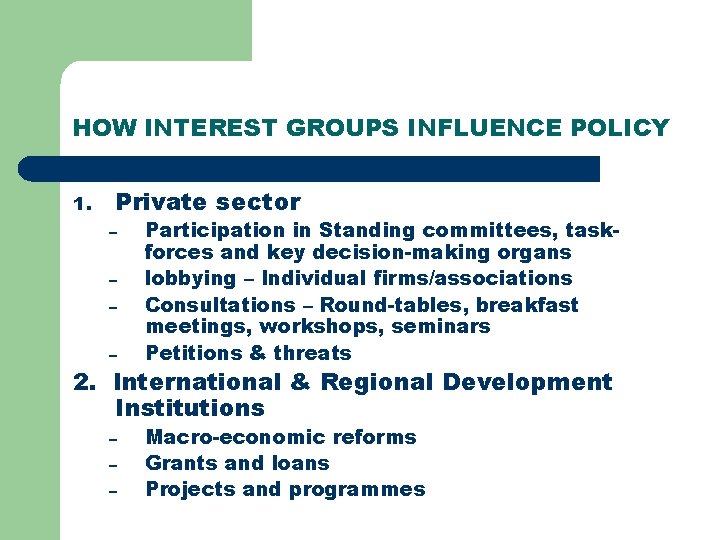
HOW INTEREST GROUPS INFLUENCE POLICY 1. Private sector – – Participation in Standing committees, taskforces and key decision-making organs lobbying – Individual firms/associations Consultations – Round-tables, breakfast meetings, workshops, seminars Petitions & threats 2. International & Regional Development Institutions – – – Macro-economic reforms Grants and loans Projects and programmes
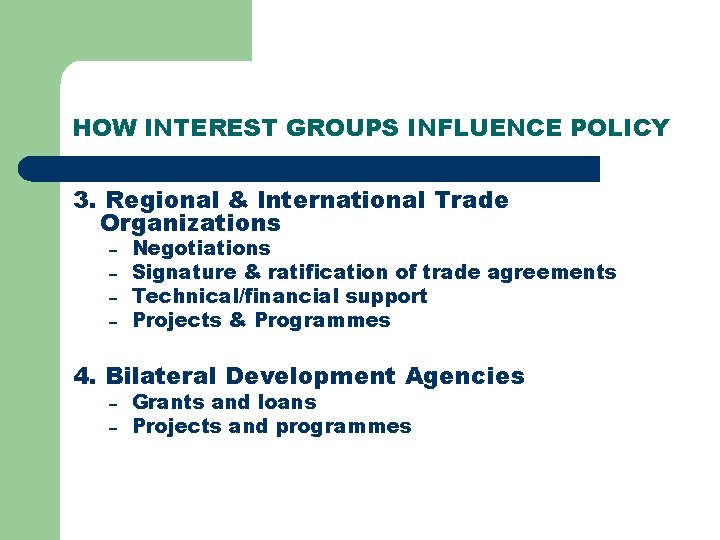
HOW INTEREST GROUPS INFLUENCE POLICY 3. Regional & International Trade Organizations – – Negotiations Signature & ratification of trade agreements Technical/financial support Projects & Programmes 4. Bilateral Development Agencies – – Grants and loans Projects and programmes
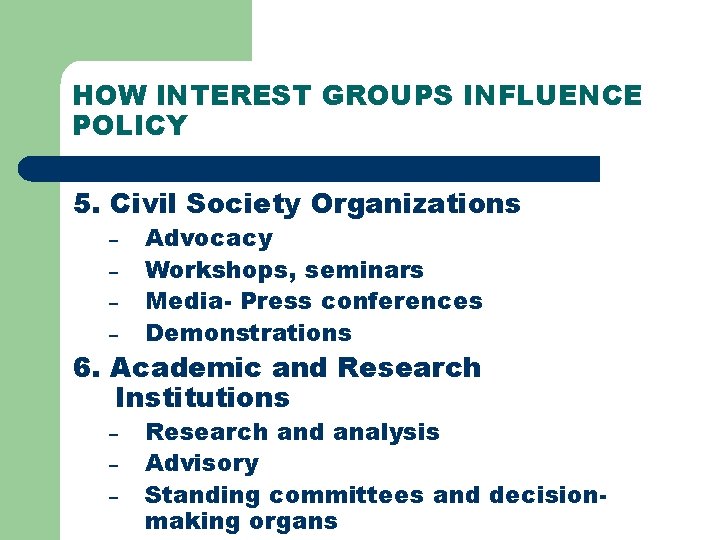
HOW INTEREST GROUPS INFLUENCE POLICY 5. Civil Society Organizations – – Advocacy Workshops, seminars Media- Press conferences Demonstrations 6. Academic and Research Institutions – – – Research and analysis Advisory Standing committees and decisionmaking organs
HOW INTEREST GROUPS INFLUENCE POLICY 7. Media l l l Outreach programmes Discussion forums Impacts, Feed-backs
CONCLUSION 1. 2. Increasingly consultative Un-balanced influence l l 3. 4. 5. A dominant public sector and external participants Dis-jointed private sector, NGO and Civil Society Organizations Lack of effective representation of consumers Role of media Room for building stronger partnerships