
ROCOCO Definition of Rococo Rococo also referred to
- Slides: 12
ROCOCO
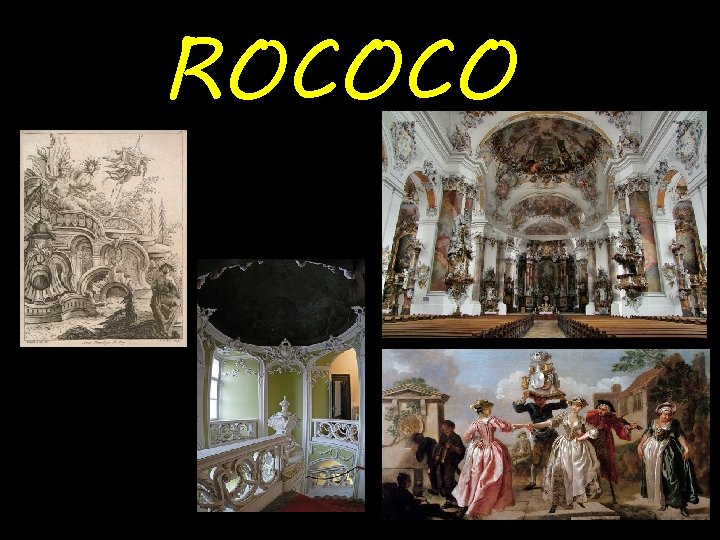
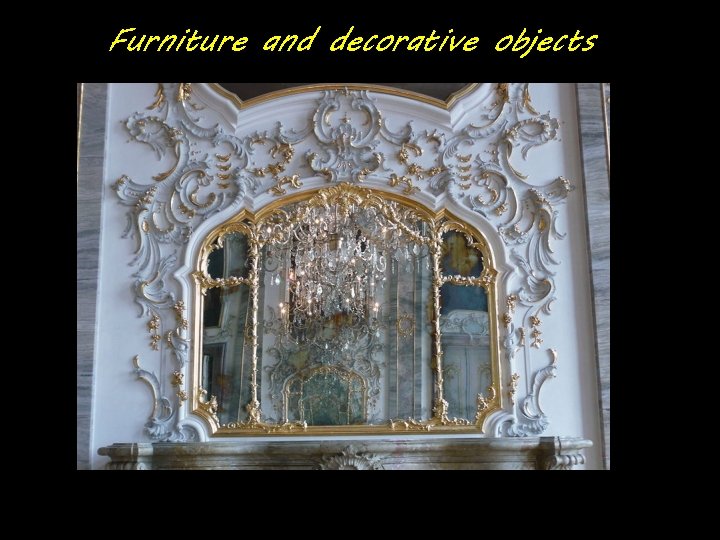
Definition of Rococo • Rococo, also referred to as "Late Baroque", is an 18 th-century artistic movement and style, which affected several aspects of the arts including painting, sculpture, architecture, interior, design, decoration, literature, music and theatre. • Rococo developed in the early part of the 18 th century in Paris, France as a reaction against the grandeur, symmetry and strict regulations of the Baroque, especially that of the Palace of Versailles. • Rococo was the dominant style during the first half of the century, although it enjoyed manifestations throughout Europe. • “Rococo" probably derived from a combination of the first two syllables of the French words rocaille (a form of rockwork found in architectural ornament and decorative arts) and coquillage (a shell motif that accompanied the rocaille )
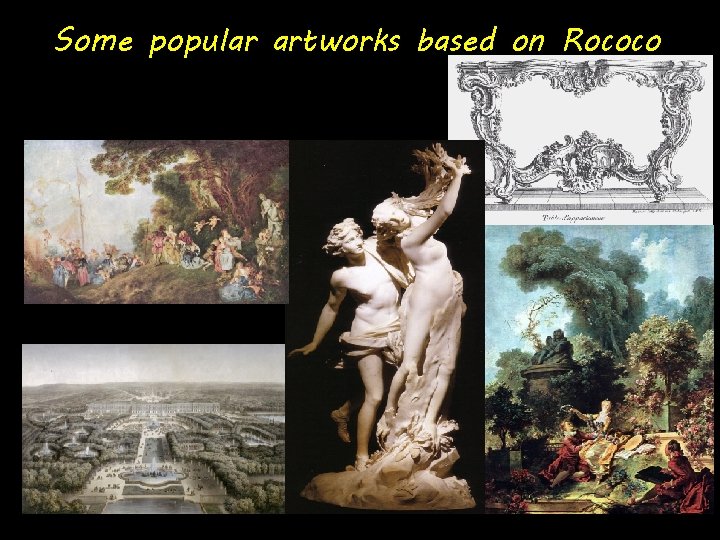
Facts of Rococo • The style was characterized by a free, graceful movement, a playful use of line and delicate colours. • Jean-Antoine Watteau (French, 1684 -1721) is often referred to as the greatest of the Rococo painters, and his picture of the Embarkation for Cythera demonstrates the elegance of this style. The Rococo is sometimes considered a final phase of the Baroque period.
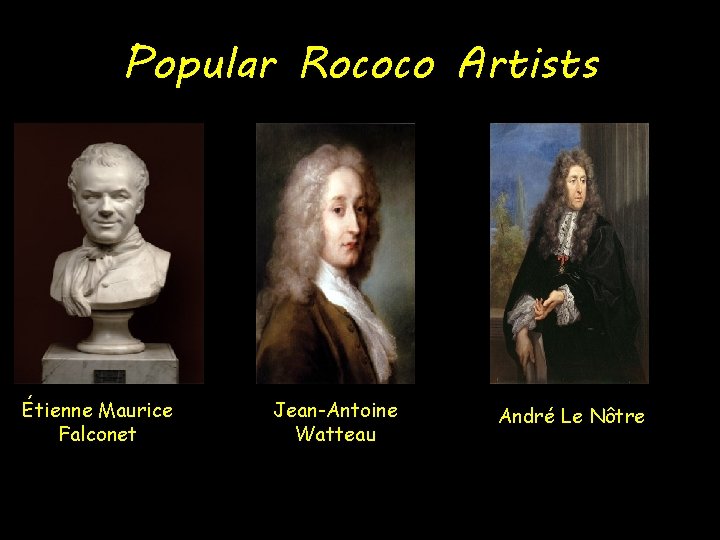
Popular Rococo Artists Étienne Maurice Falconet Jean-Antoine Watteau André Le Nôtre
Some popular artworks based on Rococo
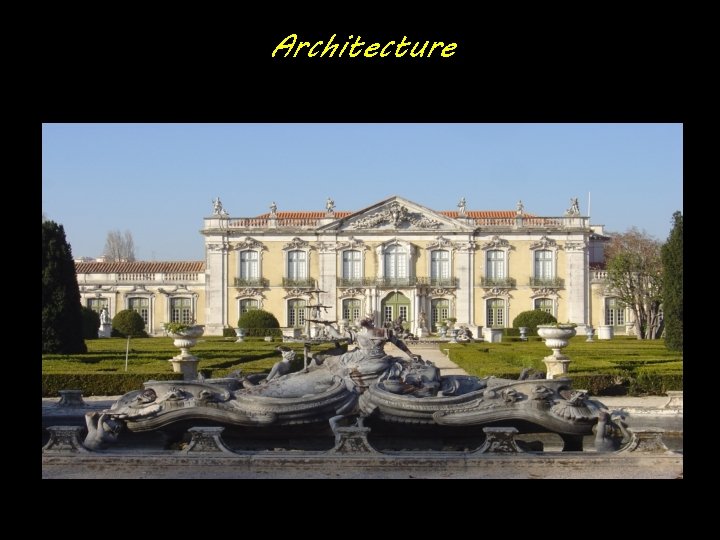
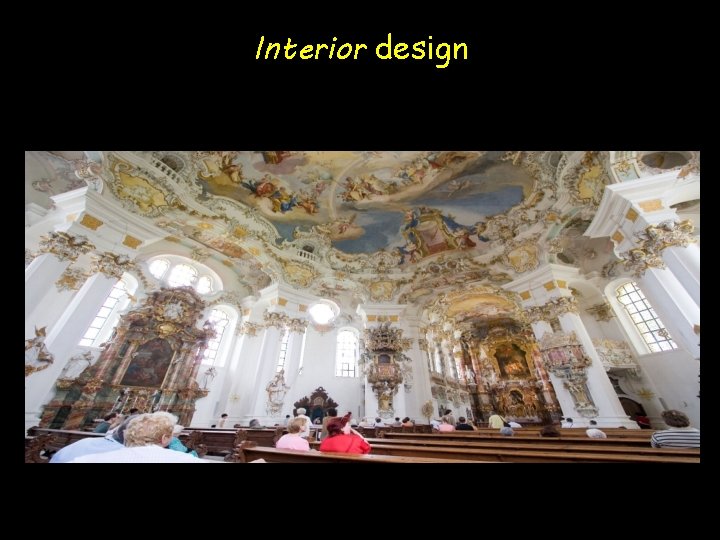
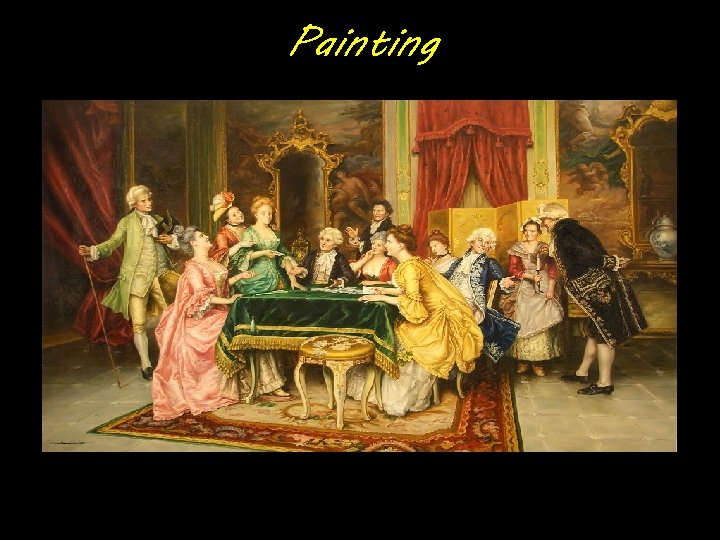
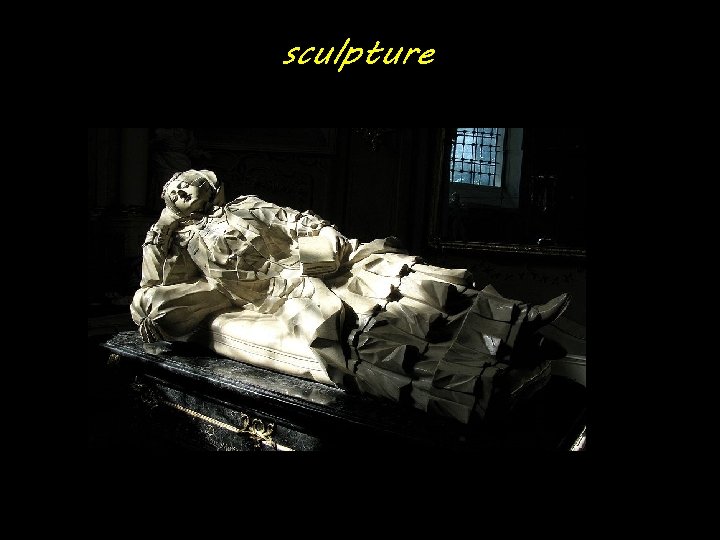
Rococo in different artistic modes Such as : • Furniture and decorative objects • Garden designs • Architecture • Interior design • Painting • Sculpture
Furniture and decorative objects
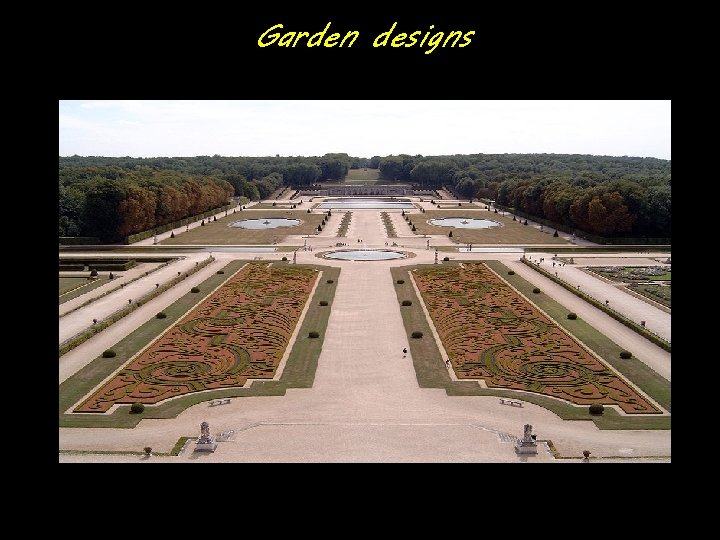
Garden designs
Architecture
Interior design
Painting
sculpture