
Rocky Mountain Tobacco Treatment Specialist Certification RMTTSC Program

Rocky Mountain Tobacco Treatment Specialist Certification (RMTTS-C) Program

Module 5: Pharmacotherapy
Module 5: Pharmacotherapy Objectives § Describe the biology of tobacco dependence § Describe the symptoms and duration of nicotine withdrawal § Provide information on: ‒ ‒ ‒ All approved tobacco dependence medications Second-line medications Combination therapy Alternative therapies Special considerations for specific groups © 2016 BHWP
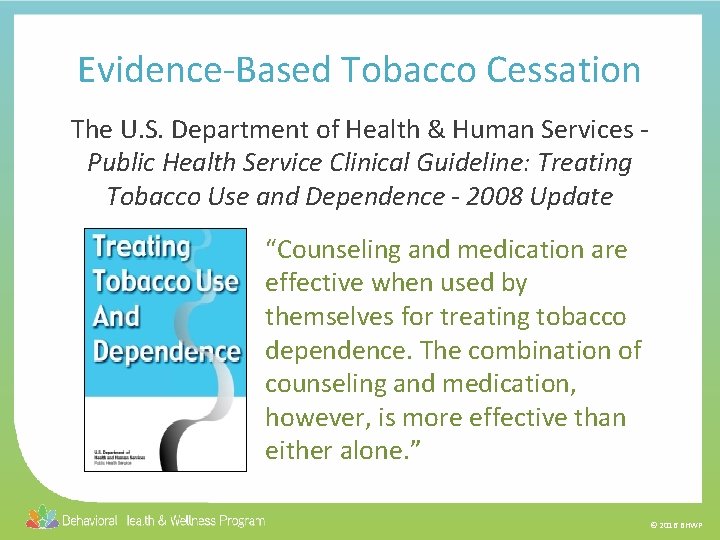
Evidence-Based Tobacco Cessation The U. S. Department of Health & Human Services Public Health Service Clinical Guideline: Treating Tobacco Use and Dependence - 2008 Update “Counseling and medication are effective when used by themselves for treating tobacco dependence. The combination of counseling and medication, however, is more effective than either alone. ” © 2016 BHWP
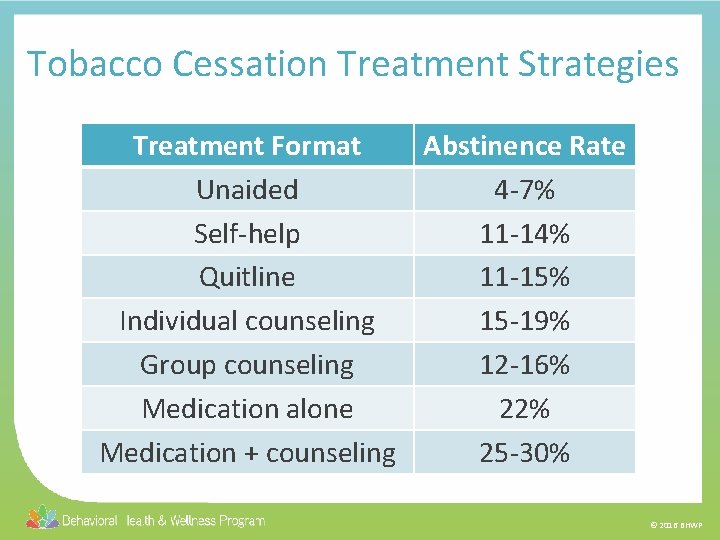
Tobacco Cessation Treatment Strategies Treatment Format Abstinence Rate Unaided 4 -7% Self-help 11 -14% Quitline 11 -15% Individual counseling 15 -19% Group counseling 12 -16% Medication alone 22% Medication + counseling 25 -30% © 2016 BHWP
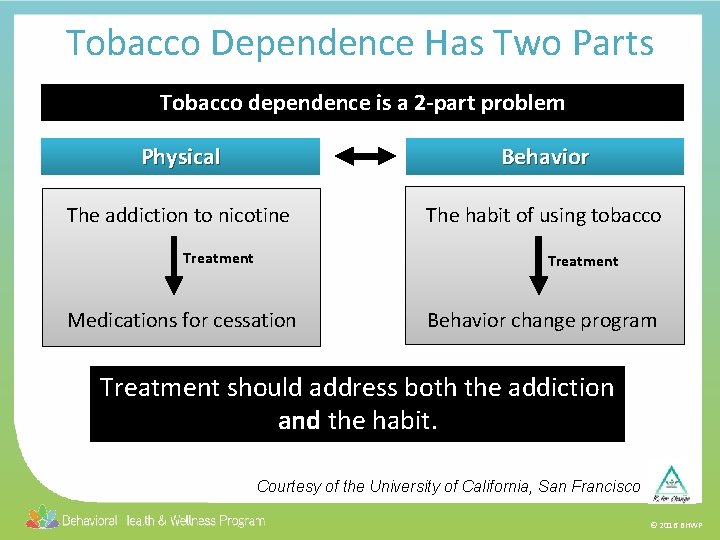
Tobacco Dependence Has Two Parts Tobacco dependence is a 2 -part problem Physical Behavior The addiction to nicotine The habit of using tobacco Treatment Medications for cessation Behavior change program Treatment should address both the addiction and the habit. Courtesy of the University of California, San Francisco © 2016 BHWP

The Biology of Tobacco Dependence
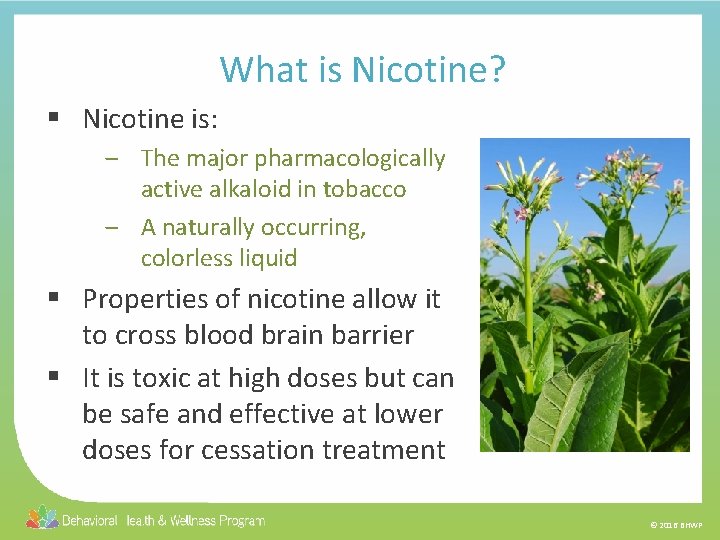
What is Nicotine? § Nicotine is: ‒ The major pharmacologically active alkaloid in tobacco ‒ A naturally occurring, colorless liquid § Properties of nicotine allow it to cross blood brain barrier § It is toxic at high doses but can be safe and effective at lower doses for cessation treatment © 2016 BHWP
Nicotine differs from other drugs of abuse since a greater percentage of those who try it become daily users than those who try other drugs. © 2016 BHWP
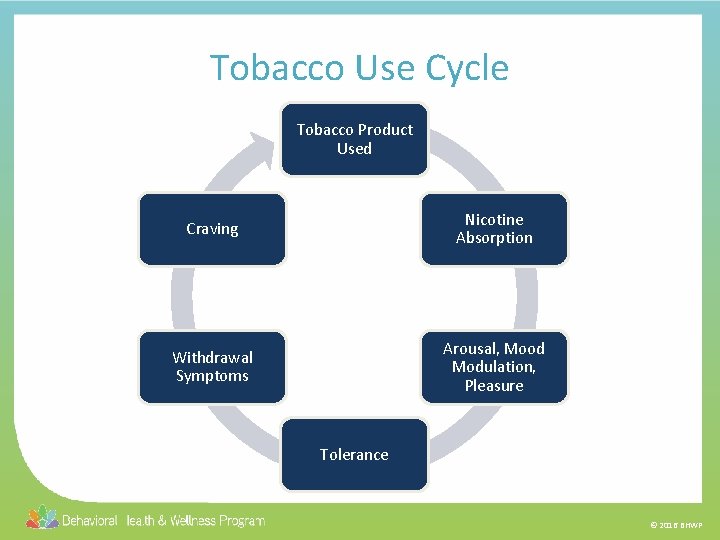
Tobacco Use Cycle Tobacco Product Used Craving Nicotine Absorption Withdrawal Symptoms Arousal, Mood Modulation, Pleasure Tolerance © 2016 BHWP
Tobacco Smoke Delivery and Absorption § Cigarettes can readily deliver approximately 1 -2 mg of nicotine § Reaches the brain within 10 seconds after inhalation § 90% of nicotine is absorbed through inhaled or “mainstream” smoke directly from a cigarette rather than second-hand or “sidestream” smoke © 2016 BHWP
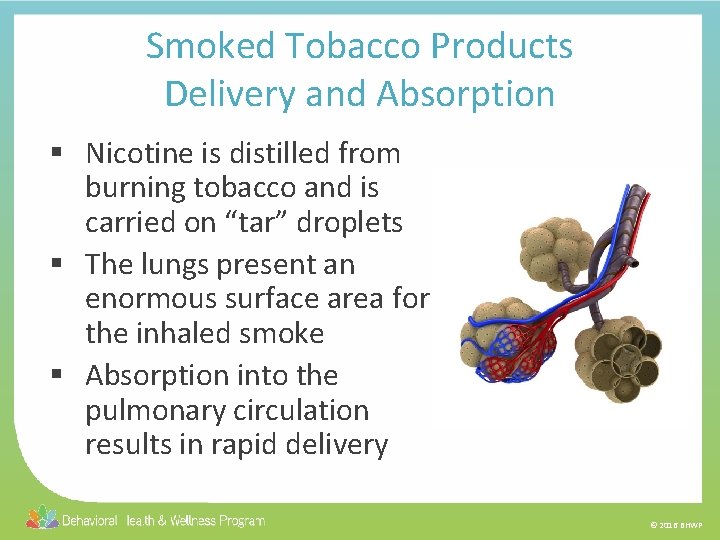
Smoked Tobacco Products Delivery and Absorption § Nicotine is distilled from burning tobacco and is carried on “tar” droplets § The lungs present an enormous surface area for the inhaled smoke § Absorption into the pulmonary circulation results in rapid delivery © 2016 BHWP
Smokeless Tobacco Products Delivery and Absorption § Nicotine is readily absorbed through oral and nasal mucous membrane from products like chew or snuff § Absorption is slower than for cigarettes ‒ The highest levels of nicotine occur after about 30 minutes © 2016 BHWP
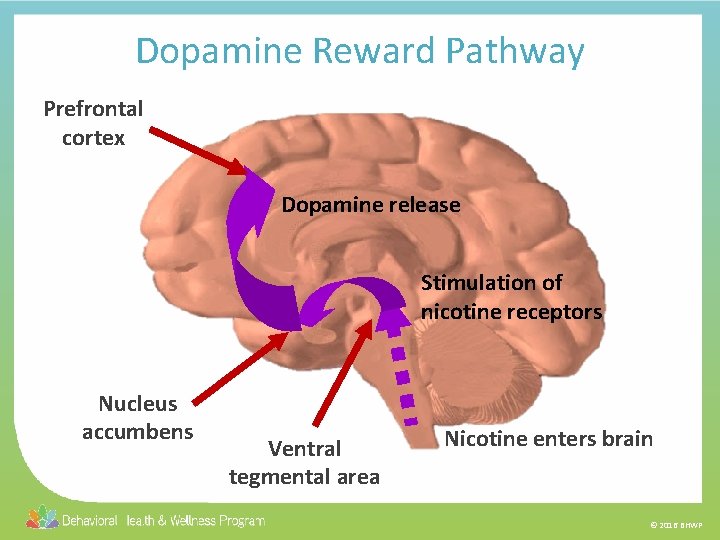
Dopamine Reward Pathway Prefrontal cortex Dopamine release Stimulation of nicotine receptors Nucleus accumbens Ventral tegmental area Nicotine enters brain © 2016 BHWP
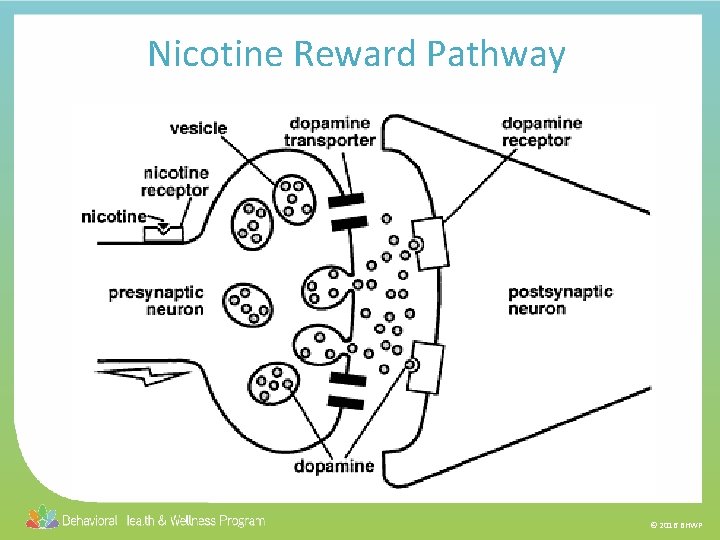
Nicotine Reward Pathway © 2016 BHWP
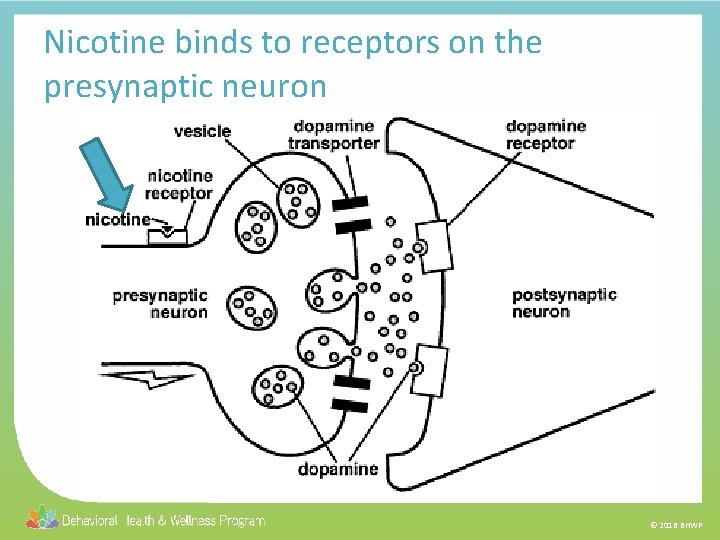
Nicotine binds to receptors on the presynaptic neuron © 2016 BHWP
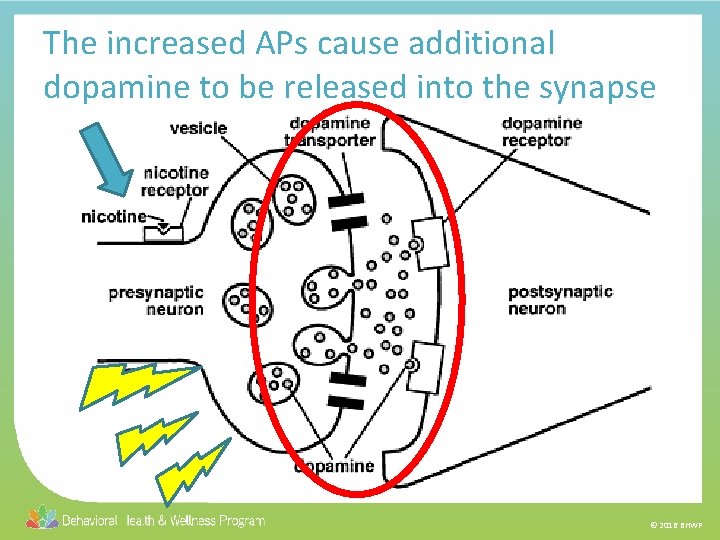
The increased APs cause additional dopamine to be released into the synapse © 2016 BHWP
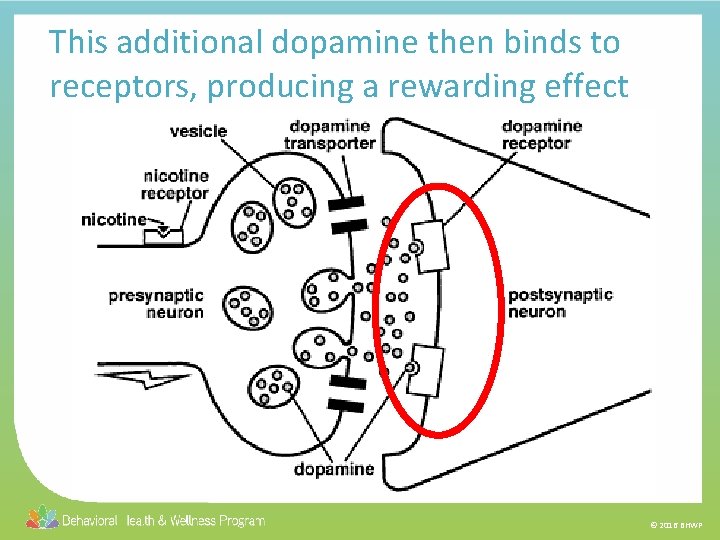
This additional dopamine then binds to receptors, producing a rewarding effect © 2016 BHWP
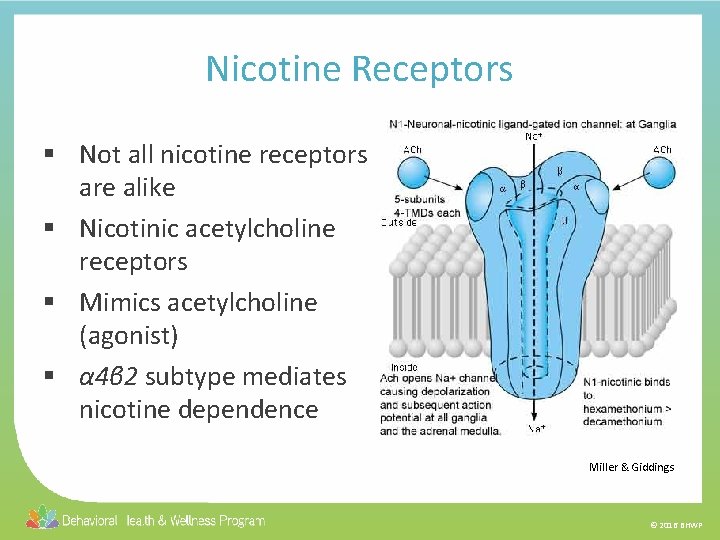
Nicotine Receptors § Not all nicotine receptors are alike § Nicotinic acetylcholine receptors § Mimics acetylcholine (agonist) § α 4β 2 subtype mediates nicotine dependence Miller & Giddings © 2016 BHWP
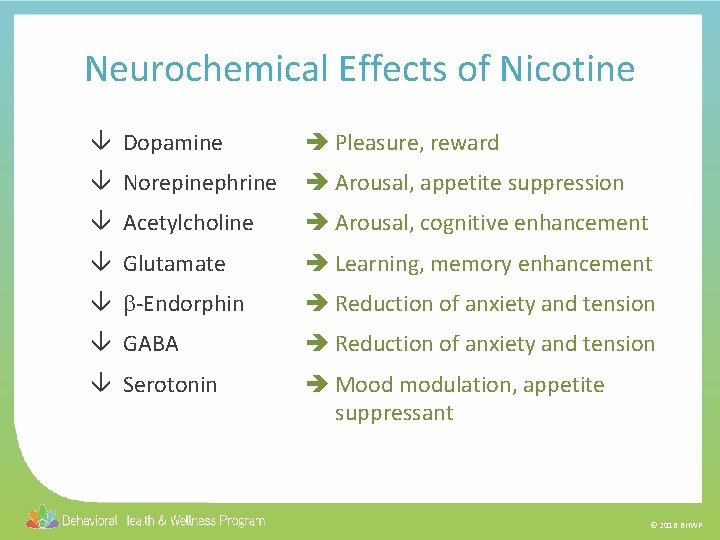
Neurochemical Effects of Nicotine â Dopamine Pleasure, reward â Norepinephrine Arousal, appetite suppression â Acetylcholine Arousal, cognitive enhancement â Glutamate Learning, memory enhancement â -Endorphin Reduction of anxiety and tension â GABA Reduction of anxiety and tension â Serotonin Mood modulation, appetite suppressant © 2016 BHWP
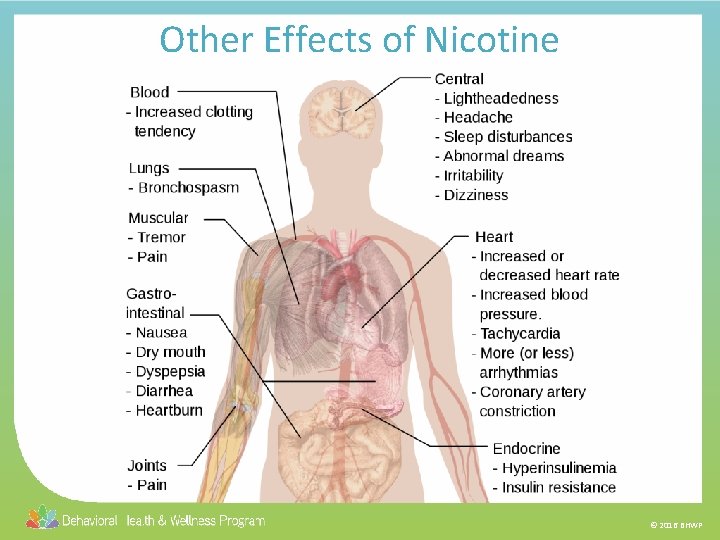
Other Effects of Nicotine © 2016 BHWP
Initial Effects of Nicotine § Initial experience with smoking can cause nausea, dizziness, and/or coughing in some individuals § It can also cause pleasurable experiences in others (e. g. , head rush, buzz, dizziness) § Aversive effects diminish quickly with repeated tobacco use © 2016 BHWP
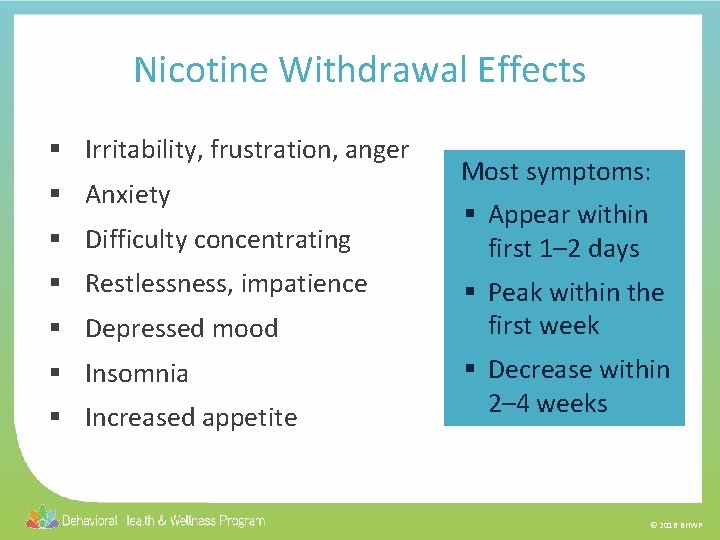
Nicotine Withdrawal Effects § Irritability, frustration, anger § Anxiety § Difficulty concentrating § Restlessness, impatience § Depressed mood § Insomnia § Increased appetite Most symptoms: § Appear within first 1– 2 days § Peak within the first week § Decrease within 2– 4 weeks © 2016 BHWP
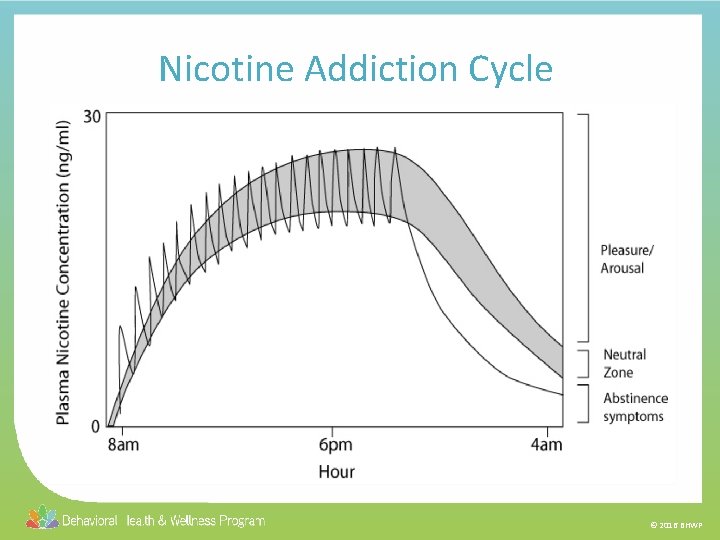
Nicotine Addiction Cycle © 2016 BHWP
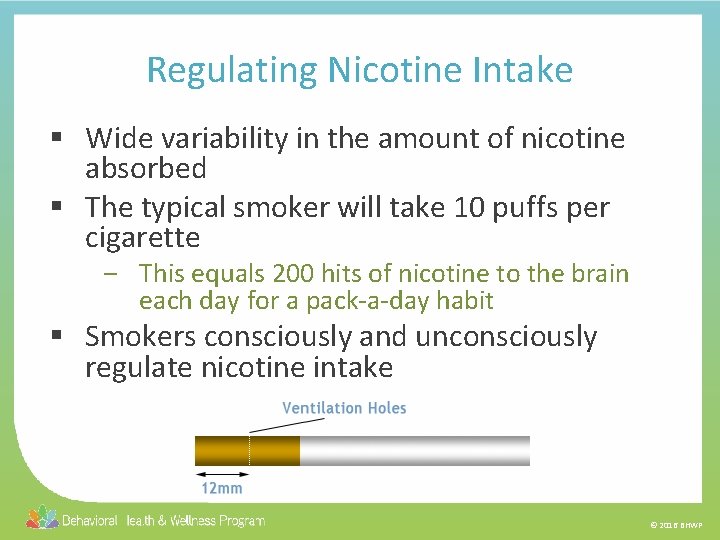
Regulating Nicotine Intake § Wide variability in the amount of nicotine absorbed § The typical smoker will take 10 puffs per cigarette ‒ This equals 200 hits of nicotine to the brain each day for a pack-a-day habit § Smokers consciously and unconsciously regulate nicotine intake © 2016 BHWP
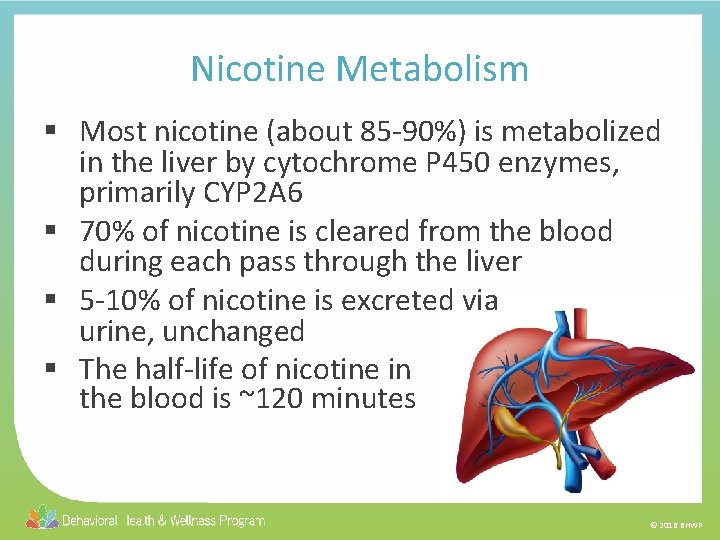
Nicotine Metabolism § Most nicotine (about 85 -90%) is metabolized in the liver by cytochrome P 450 enzymes, primarily CYP 2 A 6 § 70% of nicotine is cleared from the blood during each pass through the liver § 5 -10% of nicotine is excreted via urine, unchanged § The half-life of nicotine in the blood is ~120 minutes © 2016 BHWP
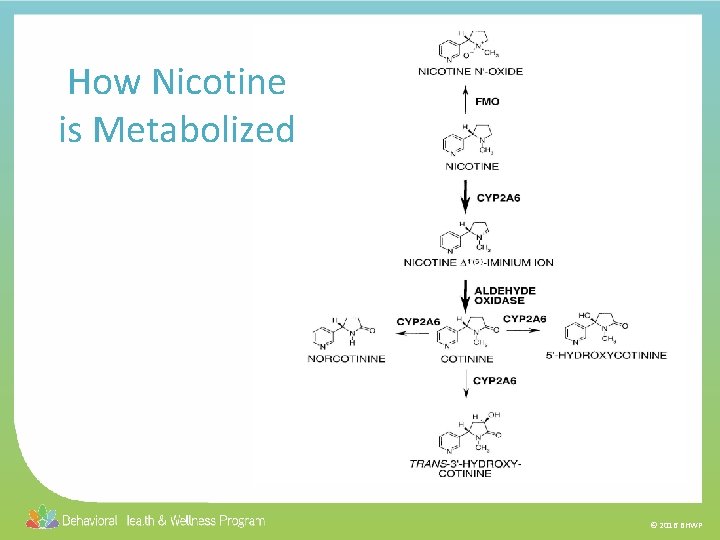
How Nicotine is Metabolized © 2016 BHWP
Variations in Nicotine Metabolism Slow metabolizers (compared to fast metabolizers): § Smoke fewer cigarettes per day § Are less dependent on nicotine § Are more likely to quit © 2016 BHWP
Factors Affecting Metabolism Age: § Nicotine half-life is 3 to 4 times longer in newborns than adults § Nicotine metabolism is decreased by 23% in adults over 65 compared to younger adults Diet: § Nicotine metabolism increases about 40% 30 to 60 minutes after the end of a meal © 2016 BHWP
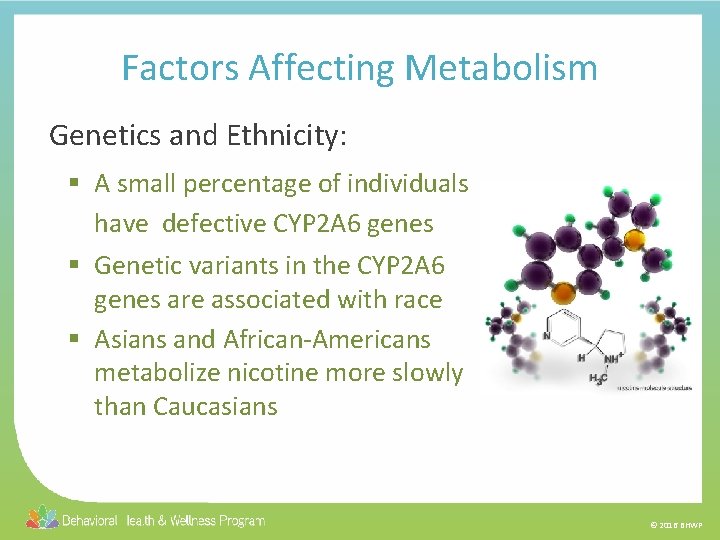
Factors Affecting Metabolism Genetics and Ethnicity: § A small percentage of individuals have defective CYP 2 A 6 genes § Genetic variants in the CYP 2 A 6 genes are associated with race § Asians and African-Americans metabolize nicotine more slowly than Caucasians © 2016 BHWP
Factors Affecting Metabolism Sex Hormones: § Women (not taking oral contraceptives) metabolize nicotine 13% faster than men § Women taking oral contraceptives metabolize nicotine 28% faster than women not taking oral contraceptives § Women who are pregnant metabolize nicotine 60% faster than postpartum women © 2016 BHWP
Group Exercise Explaining the Addiction Process

Cessation Pharmacotherapy
Why Use a Medication for Quitting? Medications: § Make people more comfortable while quitting by reducing withdrawal symptoms § Allow people to focus on changing their behavior § Improve chances of a successful quit attempt © 2016 BHWP
Tobacco Cessation Medications The only medications approved by the Food and Drug Administration (FDA) for tobacco cessation are: § § Nicotine gum Nicotine lozenge Nicotine patch Nicotine nasal spray § Nicotine inhaler § Bupropion SR tablets § Varenicline tablets © 2016 BHWP
Safety of NRT § No interactions with most psychiatric medications § Safe in presence of cardiovascular disease § Effective for patients with chronic obstructive pulmonary disease (COPD) § Safe while individual is still smoking § General precautions: ‒ Within 2 weeks of a heart attack ‒ Serious arrhythmia ‒ Uncontrolled hypertension ‒ Peptic ulcers ‒ Insulin-dependent diabetes ‒ Severe or worsening angina © 2016 BHWP
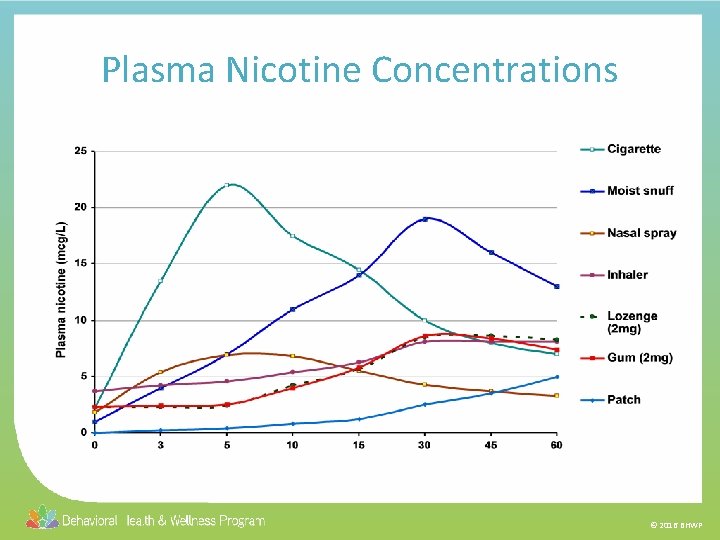
Plasma Nicotine Concentrations © 2016 BHWP
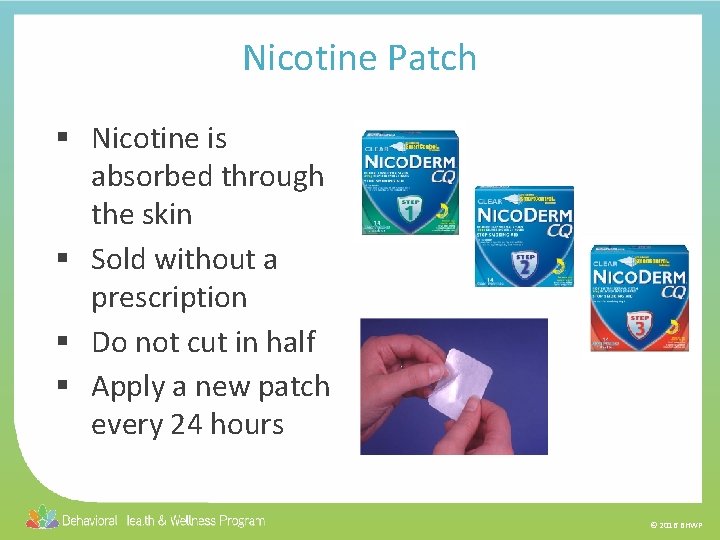
Nicotine Patch § Nicotine is absorbed through the skin § Sold without a prescription § Do not cut in half § Apply a new patch every 24 hours © 2016 BHWP
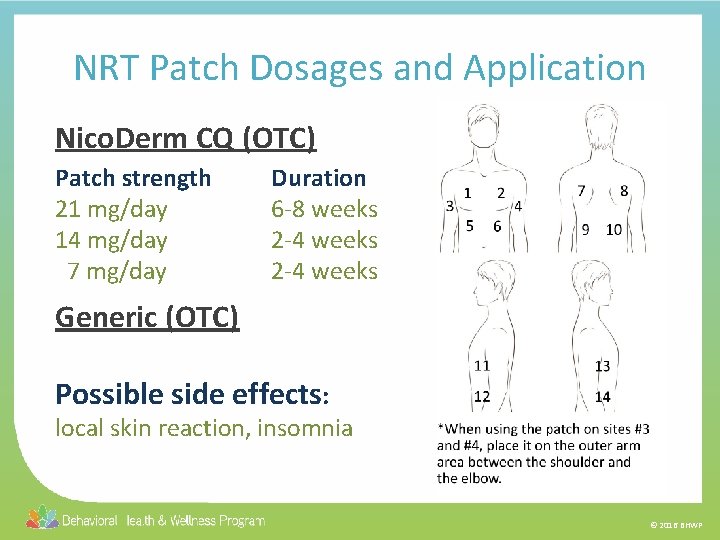
NRT Patch Dosages and Application Nico. Derm CQ (OTC) Patch strength 21 mg/day 14 mg/day 7 mg/day Duration 6 -8 weeks 2 -4 weeks Generic (OTC) Possible side effects: local skin reaction, insomnia © 2016 BHWP
Patch Application: Tips for Clients § § § § Peel off ½ of the adhesive backing Apply adhesive exposed side to skin Peel off remaining backing Press firmly with palm of hand for 10 seconds Make sure patch is firmly adhered to skin Do not cut the patch in half Carefully dispose of patch after removing © 2016 BHWP
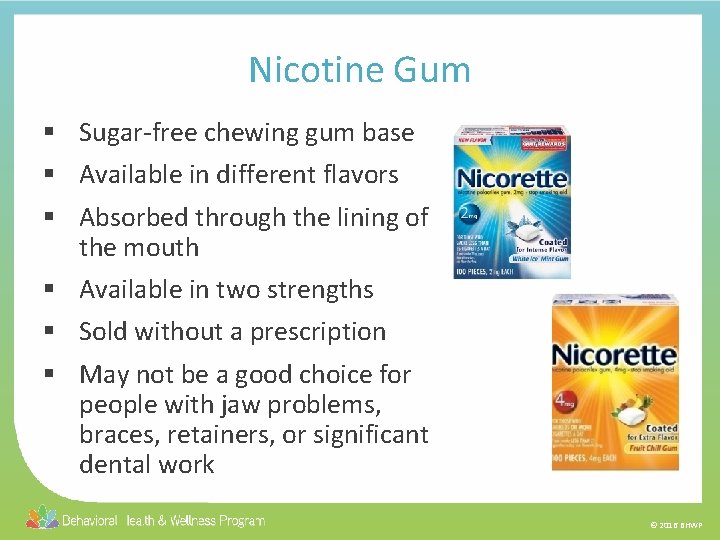
Nicotine Gum § Sugar-free chewing gum base § Available in different flavors § Absorbed through the lining of the mouth § Available in two strengths § Sold without a prescription § May not be a good choice for people with jaw problems, braces, retainers, or significant dental work © 2016 BHWP
Nicotine Gum Dosages § Scheduled dosing increases success with this treatment ‒ <20 cigarettes per day • 2 mg gum every 1 -2 hours ‒ >20 cigarettes per day or smoke within 30 minutes of waking up • 4 mg gum every 1 -2 hours ‒ Slowly taper dosing as tolerated over 8 to 12 weeks ‒ No less than 9 doses and no more that 24 doses per day © 2016 BHWP
Nicotine Gum: Directions for Use § Chew each piece slowly until the gum releases a peppery taste or a slight tingling occurs § “Park” the gum between cheek and gum to allow for absorption across the buccal mucosa § Resume chewing when taste or tingle fades § When tingle returns, stop chewing and park gum in a different place in mouth § Repeat process until the tingle is gone (about 30 minutes) © 2016 BHWP
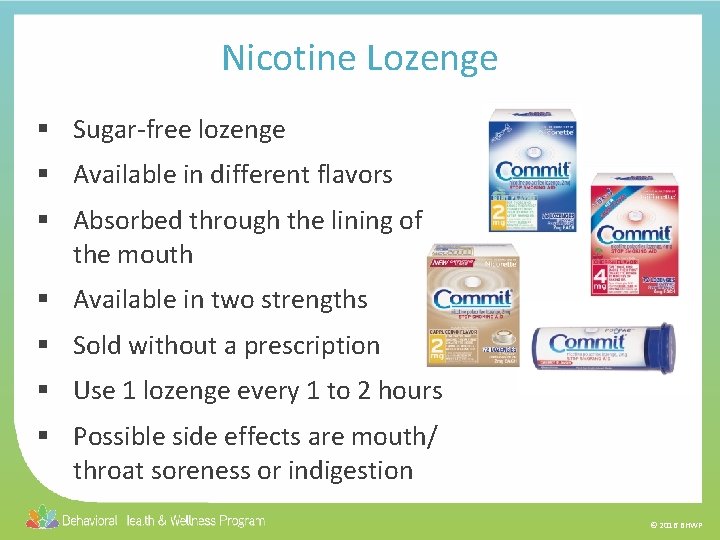
Nicotine Lozenge § Sugar-free lozenge § Available in different flavors § Absorbed through the lining of the mouth § Available in two strengths § Sold without a prescription § Use 1 lozenge every 1 to 2 hours § Possible side effects are mouth/ throat soreness or indigestion © 2016 BHWP
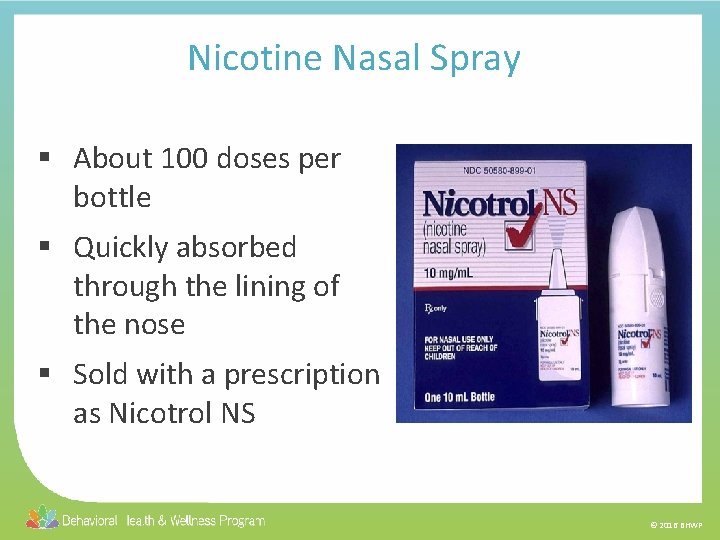
Nicotine Nasal Spray § About 100 doses per bottle § Quickly absorbed through the lining of the nose § Sold with a prescription as Nicotrol NS © 2016 BHWP
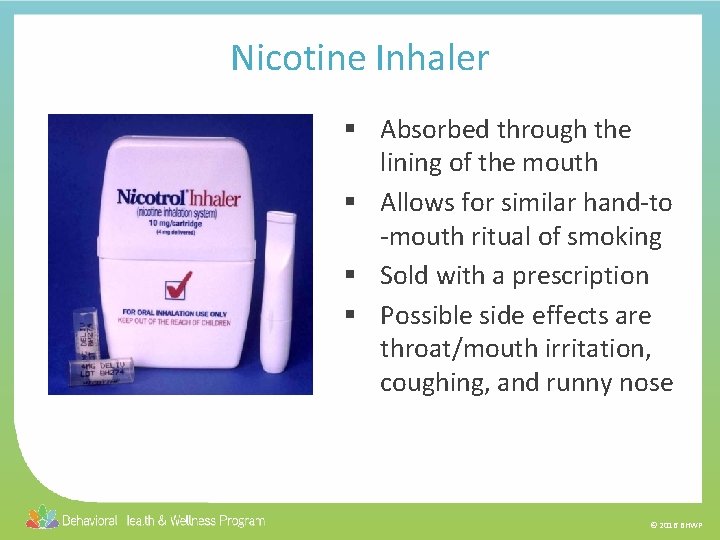
Nicotine Inhaler § Absorbed through the lining of the mouth § Allows for similar hand-to -mouth ritual of smoking § Sold with a prescription § Possible side effects are throat/mouth irritation, coughing, and runny nose © 2016 BHWP
Nicotine Inhaler Directions
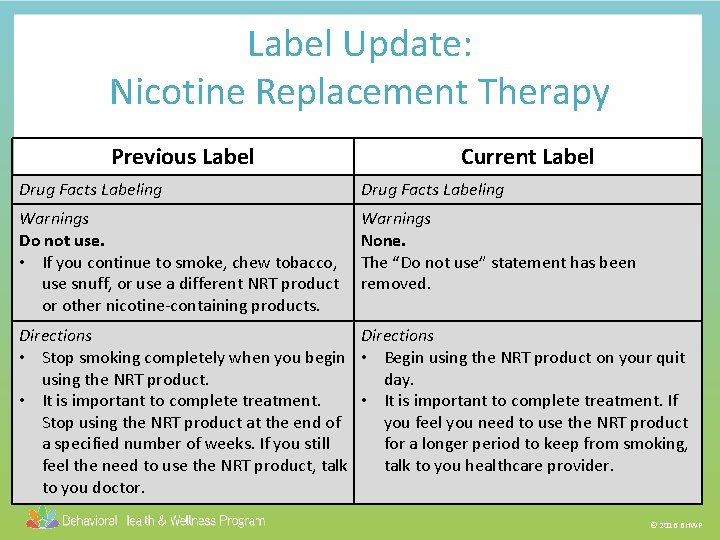
Label Update: Nicotine Replacement Therapy Previous Label Current Label Drug Facts Labeling Warnings Do not use. • If you continue to smoke, chew tobacco, use snuff, or use a different NRT product or other nicotine-containing products. Warnings None. The “Do not use” statement has been removed. Directions • Stop smoking completely when you begin • Begin using the NRT product on your quit using the NRT product. day. • It is important to complete treatment. If Stop using the NRT product at the end of you feel you need to use the NRT product a specified number of weeks. If you still for a longer period to keep from smoking, feel the need to use the NRT product, talk to you healthcare provider. to you doctor. © 2016 BHWP
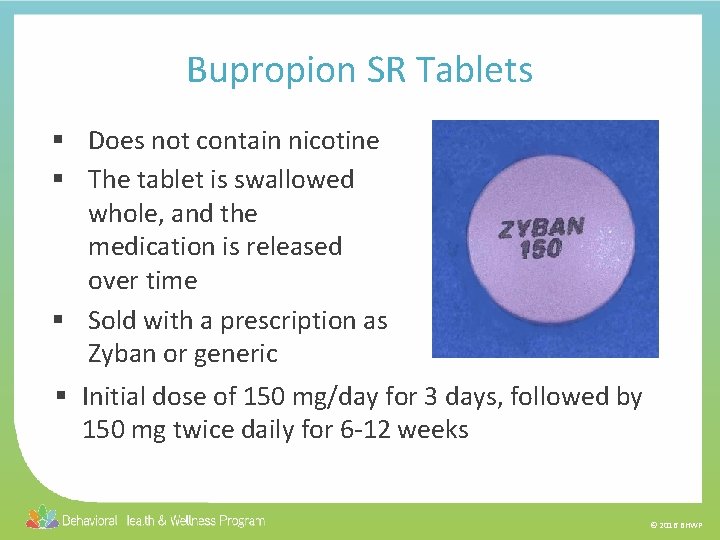
Bupropion SR Tablets § Does not contain nicotine § The tablet is swallowed whole, and the medication is released over time § Sold with a prescription as Zyban or generic § Initial dose of 150 mg/day for 3 days, followed by 150 mg twice daily for 6 -12 weeks © 2016 BHWP
Bupropion Side Effects and Precautions § Side effects include: ‒ Insomnia (35 -40%) ‒ Dry mouth (<10%) ‒ Agitation, decreased appetite, dizziness, headache, nausea § Avoid recommending to individuals: ‒ ‒ With eating disorders At increased risk for seizures Diagnosed with bipolar disorder With concomitant or recent use (past 2 weeks) of MAO inhibitors § Take precautions for individuals with schizophrenia © 2016 BHWP
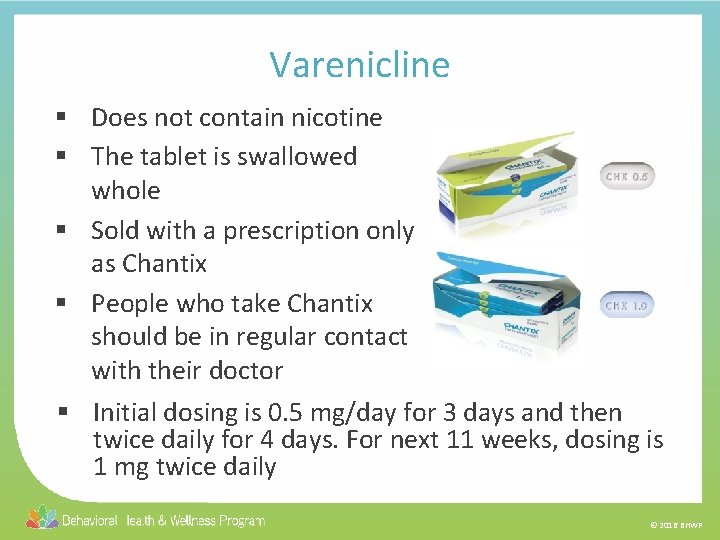
Varenicline § Does not contain nicotine § The tablet is swallowed whole § Sold with a prescription only as Chantix § People who take Chantix should be in regular contact with their doctor § Initial dosing is 0. 5 mg/day for 3 days and then twice daily for 4 days. For next 11 weeks, dosing is 1 mg twice daily © 2016 BHWP
Varenicline Side Effects and Precautions § Side effects include: ‒ ‒ Nausea Headache Insomnia and abnormal dreams Constipation and flatulence § Precautions for individuals: ‒ Operating heavy machinery ‒ With kidney or cardiac problems ‒ Taking insulin, asthma medications, or blood thinners © 2016 BHWP
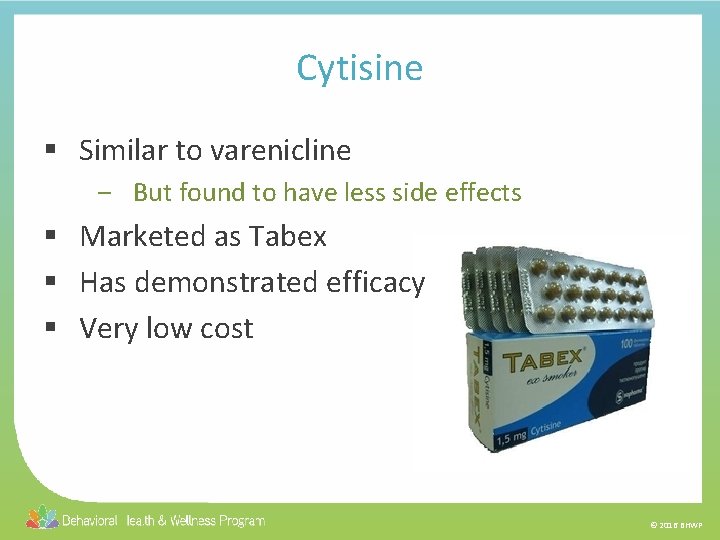
Cytisine § Similar to varenicline ‒ But found to have less side effects § Marketed as Tabex § Has demonstrated efficacy § Very low cost © 2016 BHWP
Other Medications § Clonidine § Nortriptyline ‒ Precautions for individuals with • • • Cardiovascular disease Taking MAO inhibitor medications Operating heavy machines § Ineffective medications ‒ SSRI antidepressants ‒ Naltrexone © 2016 BHWP
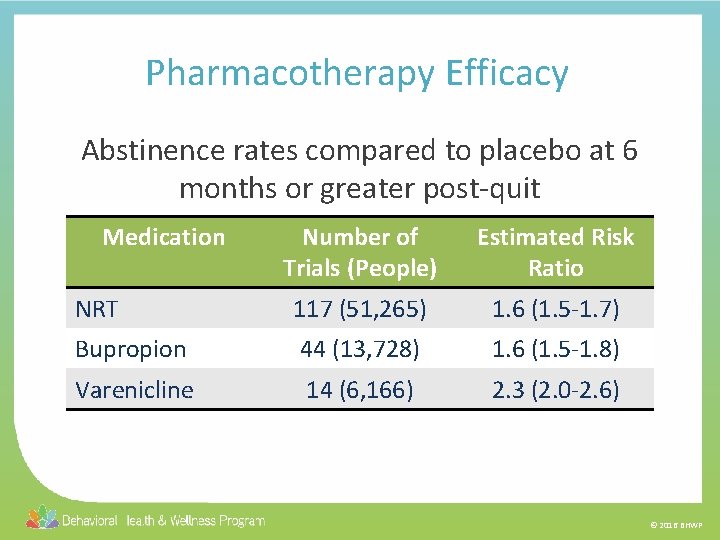
Pharmacotherapy Efficacy Abstinence rates compared to placebo at 6 months or greater post-quit Medication Number of Trials (People) Estimated Risk Ratio NRT 117 (51, 265) 1. 6 (1. 5 -1. 7) Bupropion 44 (13, 728) 1. 6 (1. 5 -1. 8) Varenicline 14 (6, 166) 2. 3 (2. 0 -2. 6) © 2016 BHWP
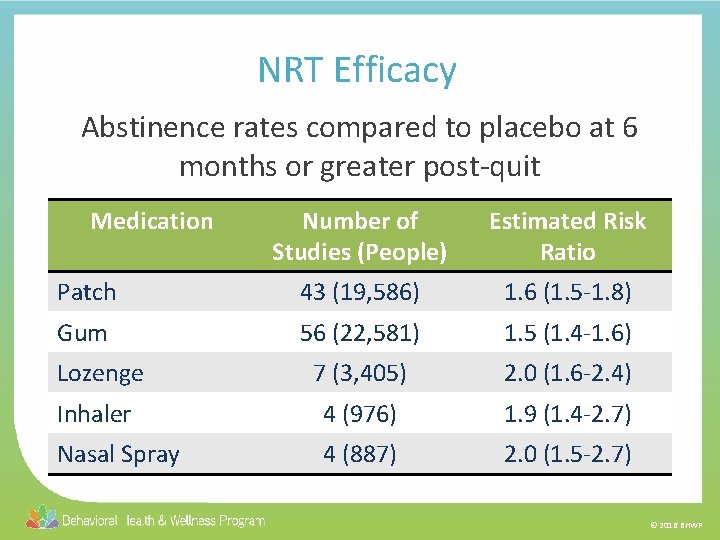
NRT Efficacy Abstinence rates compared to placebo at 6 months or greater post-quit Medication Number of Studies (People) Estimated Risk Ratio Patch 43 (19, 586) 1. 6 (1. 5 -1. 8) Gum 56 (22, 581) 1. 5 (1. 4 -1. 6) Lozenge 7 (3, 405) 2. 0 (1. 6 -2. 4) Inhaler 4 (976) 1. 9 (1. 4 -2. 7) Nasal Spray 4 (887) 2. 0 (1. 5 -2. 7) © 2016 BHWP
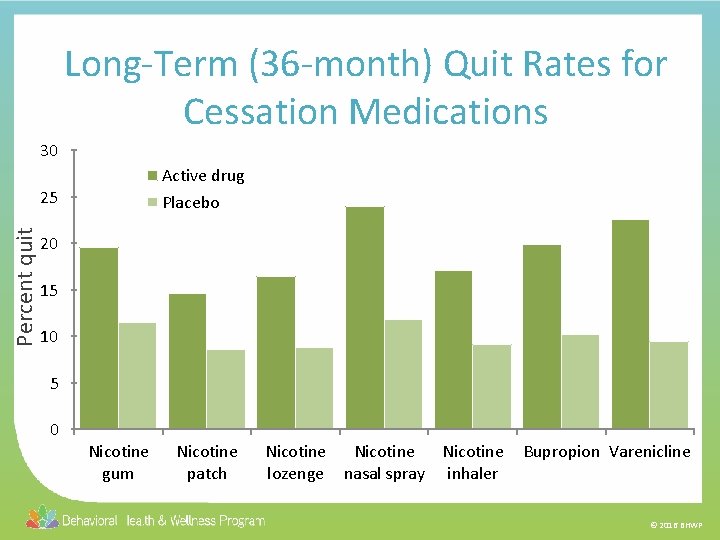
Long-Term (36 -month) Quit Rates for Cessation Medications 30 Active drug Placebo Percent quit 25 20 15 10 5 0 Nicotine gum Nicotine patch Nicotine lozenge nasal spray inhaler Bupropion Varenicline © 2016 BHWP
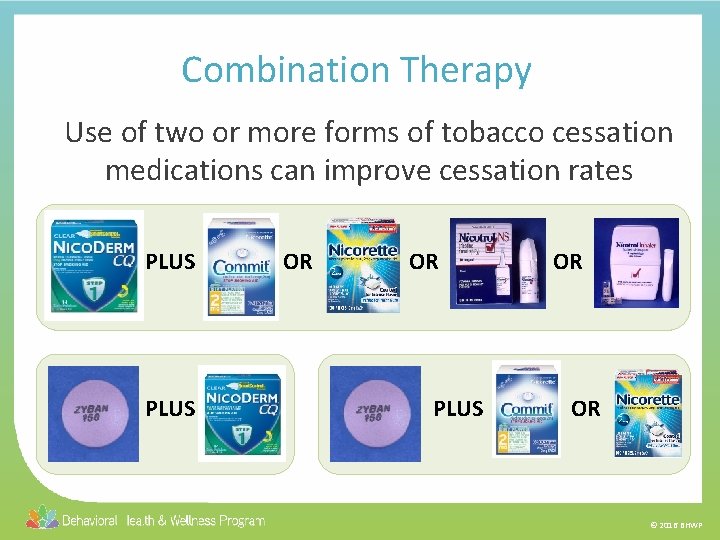
Combination Therapy Use of two or more forms of tobacco cessation medications can improve cessation rates PLUS OR OR © 2016 BHWP
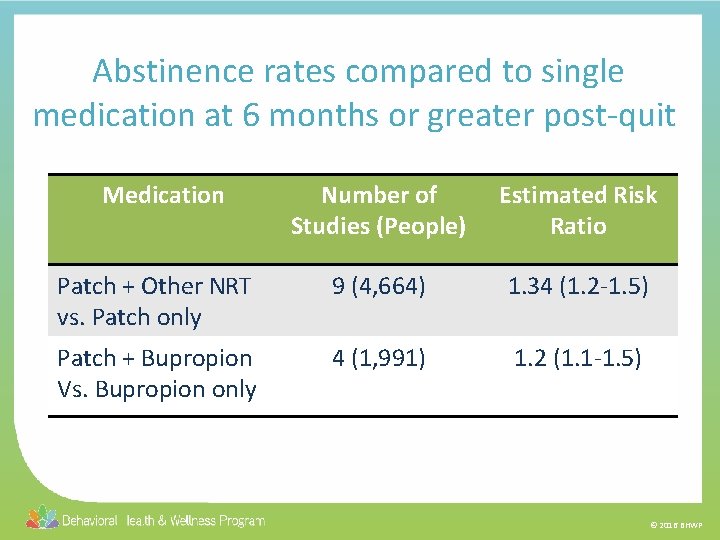
Abstinence rates compared to single medication at 6 months or greater post-quit Medication Number of Studies (People) Estimated Risk Ratio Patch + Other NRT vs. Patch only 9 (4, 664) 1. 34 (1. 2 -1. 5) Patch + Bupropion Vs. Bupropion only 4 (1, 991) 1. 2 (1. 1 -1. 5) © 2016 BHWP
Pre-Cessation Nicotine Replacement Studies show individuals who used NRT before their quit date: § Did not experience any significant side effects § Experienced an increase in their quit rates § Were twice as likely to maintain their abstinence at 6 months © 2016 BHWP

Considerations for Specific Groups
Women and Pregnancy and Nursing Mothers § NRT is not as effective with women ‒ Women may need more intensive behavioral and pharmacological support § Pregnant/nursing mothers ‒ Pharmacotherapy should only be considered when behavioral treatments fail ‒ Treatment must be monitored by a physician ‒ Although NRT exposes woman to nicotine, it does NOT expose her to the other harmful chemicals in tobacco © 2016 BHWP
Youth § NRT is a consideration for youth who are clearly nicotine dependent ‒ Use is “off-label” ‒ Must present a clear desire to quit § Evidence and recommendations are mixed © 2016 BHWP
Smokeless Tobacco Users § There is limited research on the effectiveness of tobacco cessation medications for smokeless tobacco cessation ‒ Use of bupropion and NRT in this population is inconclusive ‒ One study showed that varenicline appears to increase abstinence rates § Behavioral interventions are effective in increasing short-term quit rates © 2016 BHWP
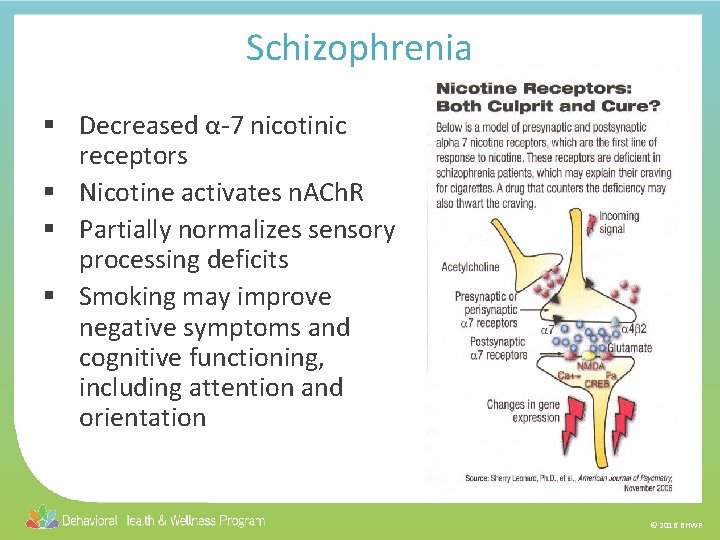
Schizophrenia § Decreased α-7 nicotinic receptors § Nicotine activates n. ACh. R § Partially normalizes sensory processing deficits § Smoking may improve negative symptoms and cognitive functioning, including attention and orientation © 2016 BHWP
Cessation Medications for Persons with Mental Illnesses and Addictions § Higher levels of nicotine dependence § There is no medical reason not to use cessation medications ‒ First line treatments are recommended for all § Comfortable detox for temporary abstinence § Recent trials of varenicline for schizophrenia and depression ‒ Effective ‒ No greater side effects © 2016 BHWP
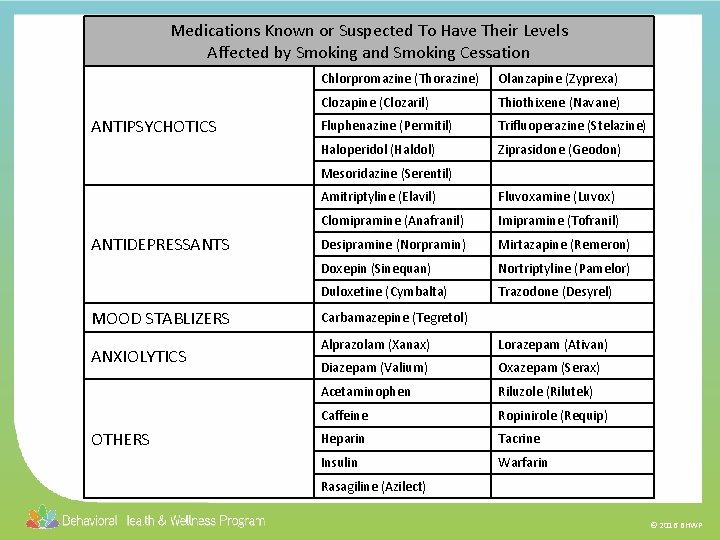
Medications Known or Suspected To Have Their Levels Affected by Smoking and Smoking Cessation ANTIPSYCHOTICS Chlorpromazine (Thorazine) Olanzapine (Zyprexa) Clozapine (Clozaril) Thiothixene (Navane) Fluphenazine (Permitil) Trifluoperazine (Stelazine) Haloperidol (Haldol) Ziprasidone (Geodon) Mesoridazine (Serentil) ANTIDEPRESSANTS MOOD STABLIZERS ANXIOLYTICS OTHERS Amitriptyline (Elavil) Fluvoxamine (Luvox) Clomipramine (Anafranil) Imipramine (Tofranil) Desipramine (Norpramin) Mirtazapine (Remeron) Doxepin (Sinequan) Nortriptyline (Pamelor) Duloxetine (Cymbalta) Trazodone (Desyrel) Carbamazepine (Tegretol) Alprazolam (Xanax) Lorazepam (Ativan) Diazepam (Valium) Oxazepam (Serax) Acetaminophen Riluzole (Rilutek) Caffeine Ropinirole (Requip) Heparin Tacrine Insulin Warfarin Rasagiline (Azilect) © 2016 BHWP

Pharmacotherapy Practice – Alice What factors should be considered in identifying options for pharmacotherapy?

Pharmacotherapy Practice – Justin What factors should be considered in identifying options for pharmacotherapy?

Pharmacotherapy Discussion
- Slides: 70