
Rocky Mountain Spotted Fever Caused by the bacteria
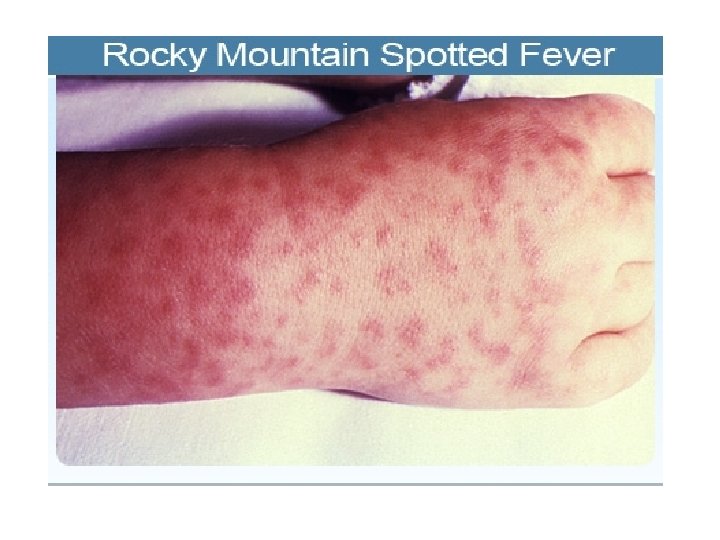
Rocky Mountain Spotted Fever • • Caused by the bacteria Rickettsia ricketsiae Carried by Dermacenter (hard or dog) ticks Untreated, the mortality is very high The disease is usually characterized by a fine skin rash, high fever, headaches and muscle pain • Doxycycline and chloramphenicol are very effective in treating the disease • Is less common on Nantucket than previously, probably because the dog ticks are less common
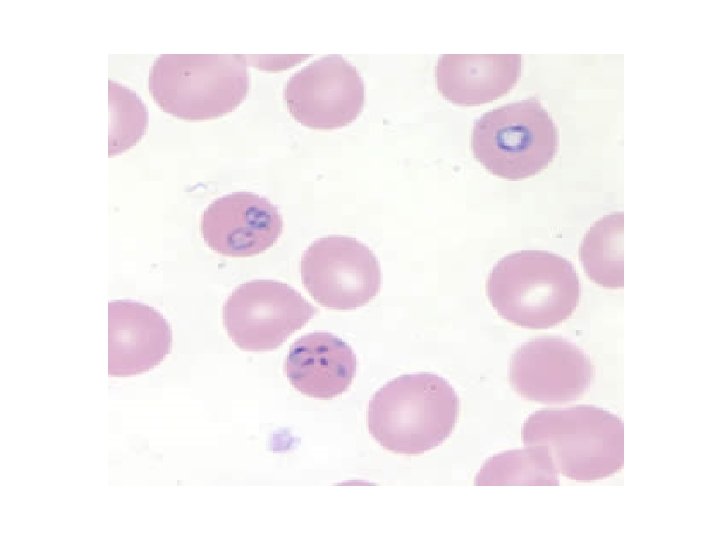
Babesiosis • Caused by the intracellular parasite Babesia microti • Carried by the black legged (deer) tick • The babesia are inoculated into the skin by the bite of the tick and then get into the bloodstream • The organism multiplies within red blood cells in a manner similar to malaria • Most cases are self limited in otherwise healthy persons but may be severe in those who are immunosuppressed or without a spleen • May be life-threatening • Symptoms include fever, chills, muscle and joint pains, nausea, vomiting and fatigue • Treatment includes atovaquone plus azithromycin or clindamycin plus quinine
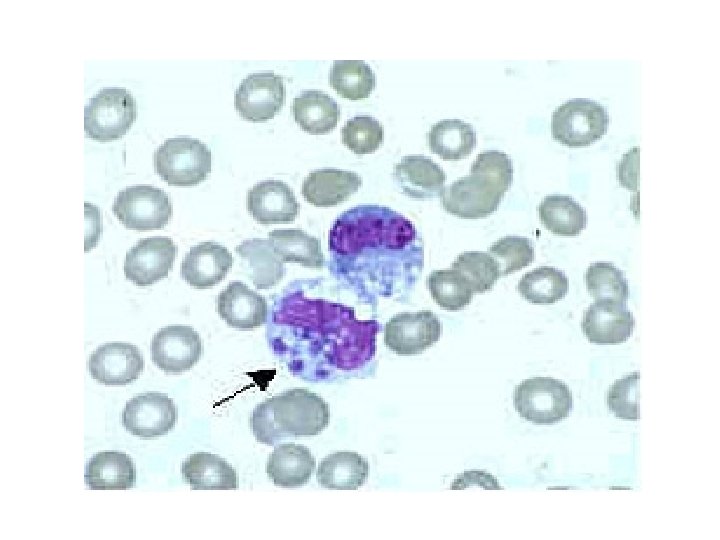
Anaplasmosis (Ehrlichiosis) • Caused by Anaplasma phagocytophilum • Carried by the black legged (deer) tick • Enters the bloodstream after a tick bite and concentrates in the neutrophilic white blood cells • Causes fever, nausea, headache, muscle pain, reduced white blood cells and platelets and liver inflammation • Rarely fatal (<1%) and responds well to treatment with doxycycline or rifampin • Diagnosed by finding a rise in antibodies to the organism or rarely by observing the organism in white blood cells
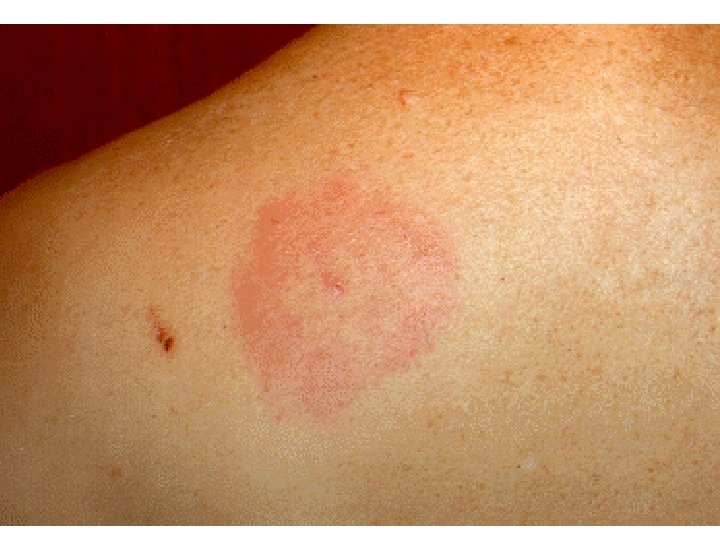
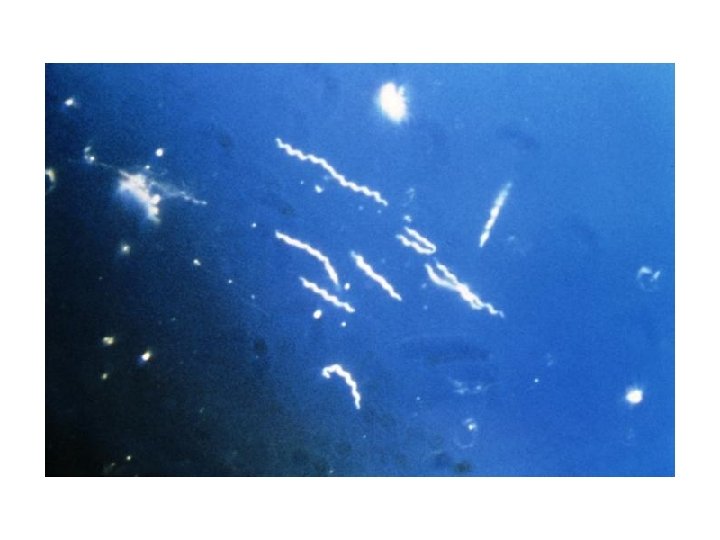
Lyme disease • Caused by Borrelia burgdorferi • Carried by the black legged (deer) tick • The bacteria are inoculated into the skin by a tick bite, replicate locally and then disseminate • The organism may localize in joints, the nervous system or heart causing symptoms in these organs • May cause a skin rash (often a target-shaped lesion), fever, chills, muscle pains, facial palsy, or heart irregularities • It may also lead to immunologic reactions that can cause symptoms of arthritis

Lyme disease continued • The arthritis is rarely if ever destructive • The disease rarely if ever causes mortality • Diagnosis of early disease is usually made by observing the typical skin rash in the presence of the above symptoms • Antibody titers don’t rise until later in the disease (weeks) • Diagnosis is made by identifying several different antibodies to bacterial components on a “Western blot test” later in the course • Treatment with doxycycline, amoxicillin or other drugs is highly effective in early disease. • Ceftriaxone is usually used for disease in the central nervous system and is often used to treat suspected treatment failures
- Slides: 10