
Rocky Mountain Computer Measurement Group October 1 2009
Rocky Mountain Computer Measurement Group October 1, 2009 Stop Guessing. Start Knowing. Business Transaction Management
Agenda Current Challenges What is BTM Isolate How BTM is Different Real Usage Examples
Why Monitor? • Visibility into your Application and Runtime Performance • Proactive – tackle issues before performance degrades further • Incident Management – automatic notification when a threshold is breached (indicative of a problem) • Ability to diagnose the root cause of a problem • Capacity analysis and trending • Track SLAs, KPIs • Why not? Keep the Customer Happy 3
many You have good monitoring capabilities, yet…

…critical situations still require “All Hands”Calls
Distributed Application Challenges Outage reduction Change, change Problem isolation Too much time spent / SWAT teams and all hands calls Operational efficiency No Business impact visibility, dependencies not automatically mapped, prioritization? Adoption of shared services What is the workload types Accurately understanding actual usage What transactions are using what share of the resources 6
Benefits of Business Transaction Management (BTM) Outage reduction Avoid software, configuration and change related outages Problem isolation Reduce Mean Time to Repair by slashing time to problem isolation Improved operational efficiency Provide business impact visibility, prioritize alerts and assign correct teams, reduce all hands calls Adoption of shared services & usage analysis Enable SLA monitoring, activity-based costing and business unit reporting 7

Business Transaction Management provides unique Visibility From the Transaction perspective

APM focuses on Applications , but… Users Experience Transactions
BTM’s Transaction Perspective
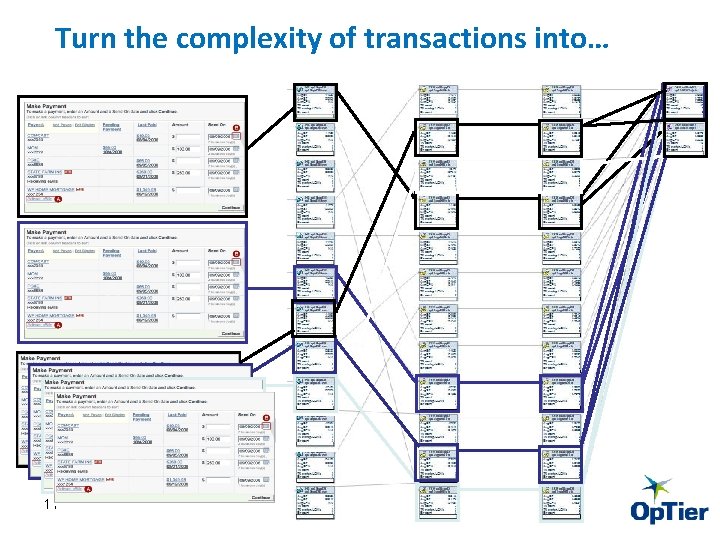
Turn the complexity of transactions into… 11
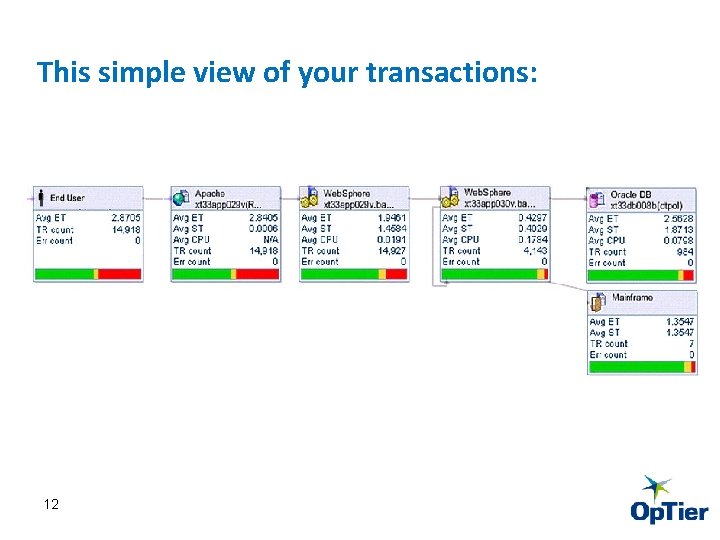
This simple view of your transactions: 12
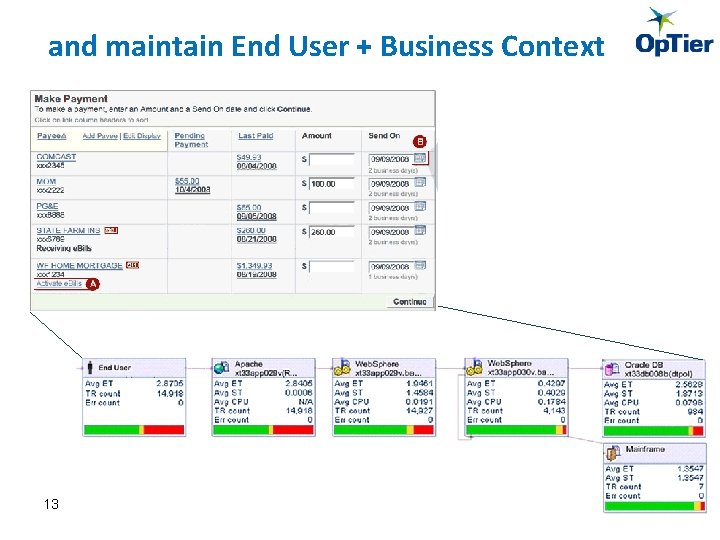
and maintain End User + Business Context 13
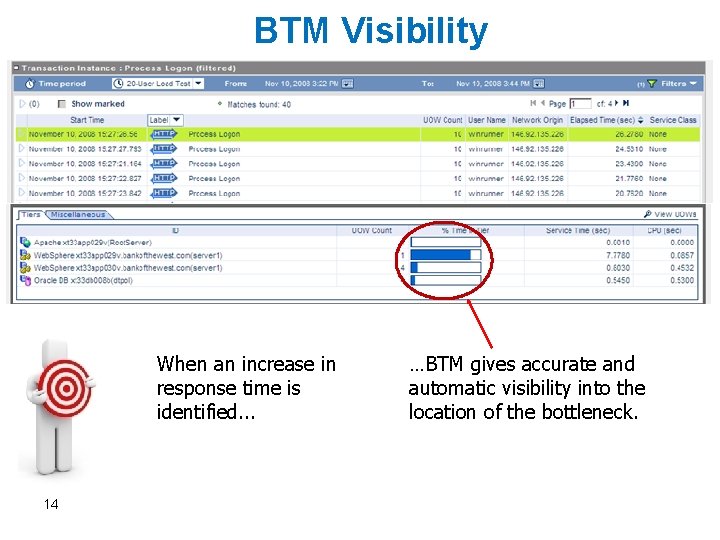
BTM Visibility When an increase in response time is identified. . . 14 …BTM gives accurate and automatic visibility into the location of the bottleneck.
Save Money in Problem Isolation “The average organization suffers 60 hours of downtime each year – at $1 million per hour – and wastes 50% of that downtime just trying to determine who should fix it. ” Source: EMA Research, 2008
“BTM is the center of application management …BTM gives IT organizations the ability to focus on the precise point where the Business and IT intersect. ” Gartner Research Vice President Will Cappelli, September 2009 Gartner APM report how BTM addresses the following challenges: • Rapidly identifying and isolating performance problems • Delivering a consistent end-user experience • Reducing outages • Attaining visibility into transactions and application flows
Business Transaction Management Better Problem Isolation
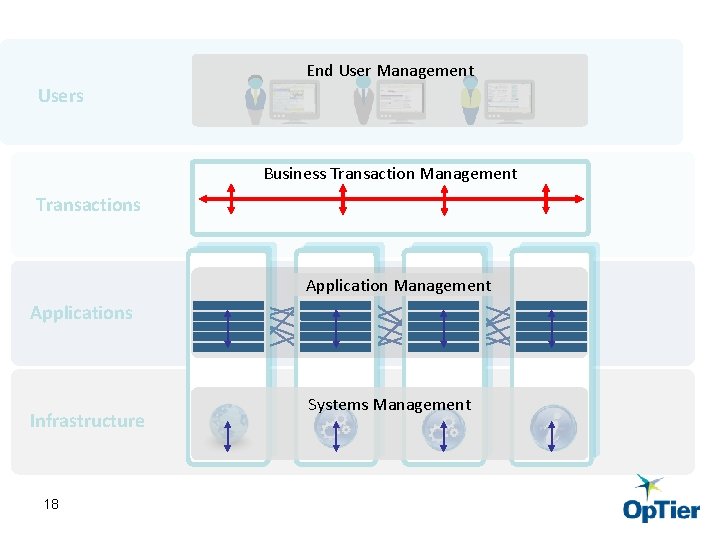
End User Management Users Business Transaction Management Transactions Application Management Applications Infrastructure 18 Systems Management 18
Definition of Business Transactions • Business transactions are All tasks or services that an application provides to users or other applications (e. g. , customer search, new claim, stock trade, risk compliance report, …) • Business transactions have – A unique business context – A profile composed of • Transaction flow topology across a set of IT components (e. g. , Java beans, Web services, SQL queries) that execute on multiple tiers to jointly deliver the service • End User metrics and context • Performance metrics: RT, Trans Vol • Resource metrics: CPU, etc 19 19
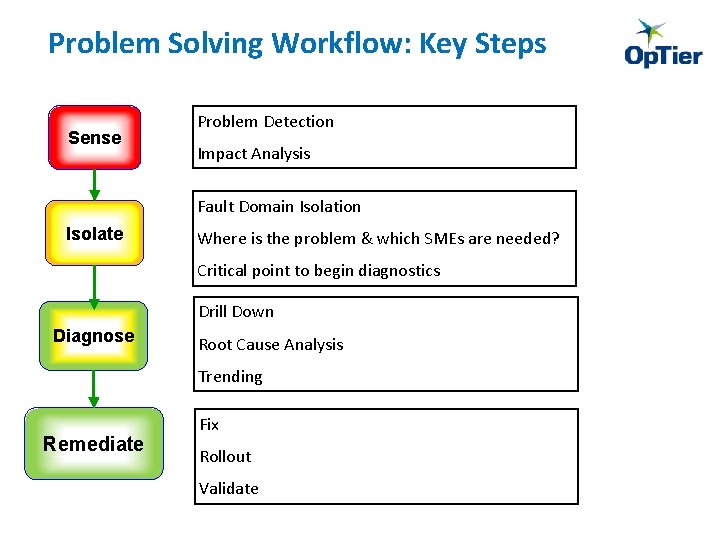
Problem Solving Workflow: Key Steps Sense Problem Detection Impact Analysis Fault Domain Isolation Isolate Where is the problem & which SMEs are needed? Critical point to begin diagnostics Drill Down Diagnose Root Cause Analysis Trending Remediate Fix Rollout Validate
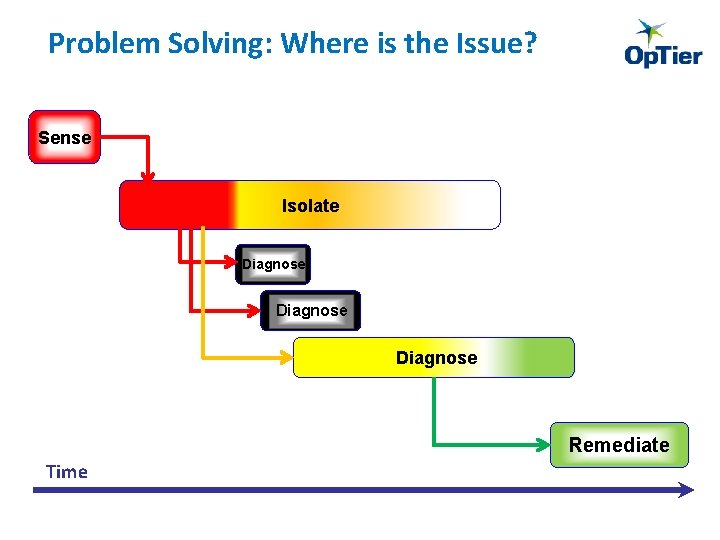
Problem Solving: Where is the Issue? Sense Isolate Diagnose Remediate Time
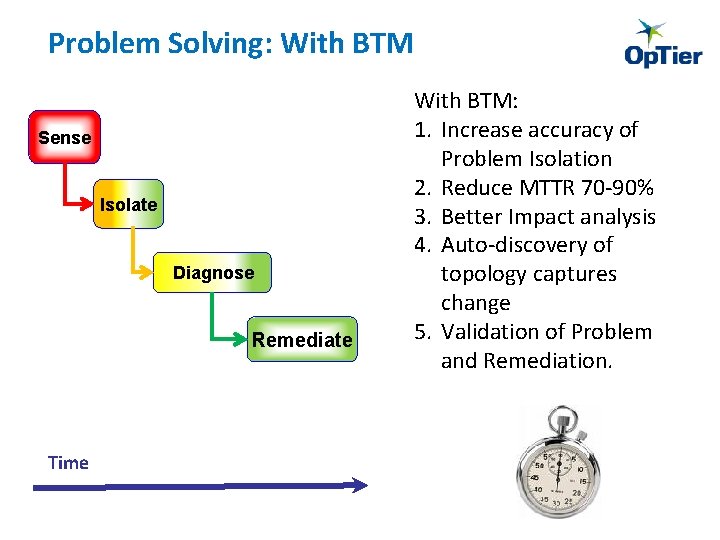
Problem Solving: With BTM Sense Isolate Diagnose Remediate Time With BTM: 1. Increase accuracy of Problem Isolation 2. Reduce MTTR 70 -90% 3. Better Impact analysis 4. Auto-discovery of topology captures change 5. Validation of Problem and Remediation.
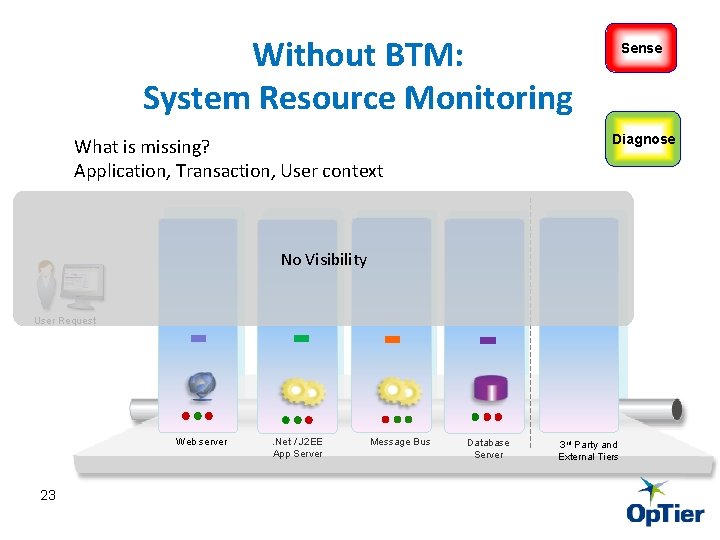
Without BTM: System Resource Monitoring Sense Diagnose What is missing? Application, Transaction, User context No Visibility User Request Web server 23 . Net / J 2 EE App Server Message Bus Database Server 3 rd Party and External Tiers
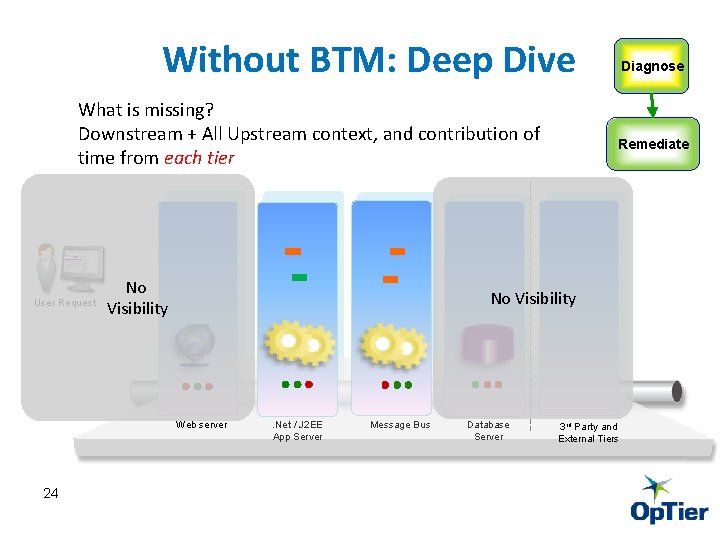
Without BTM: Deep Dive What is missing? Downstream + All Upstream context, and contribution of time from each tier User Request No Visibility Remediate No Visibility Web server 24 Diagnose . Net / J 2 EE App Server Message Bus Database Server 3 rd Party and External Tiers
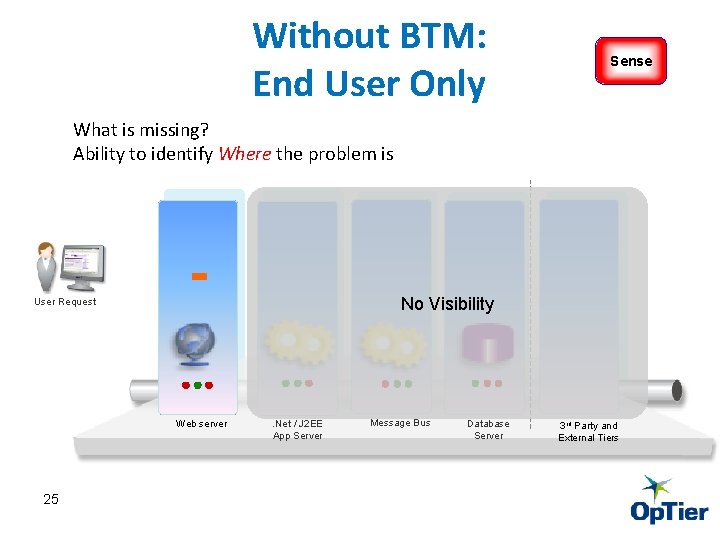
Without BTM: End User Only Sense What is missing? Ability to identify Where the problem is No Visibility User Request Web server 25 . Net / J 2 EE App Server Message Bus Database Server 3 rd Party and External Tiers
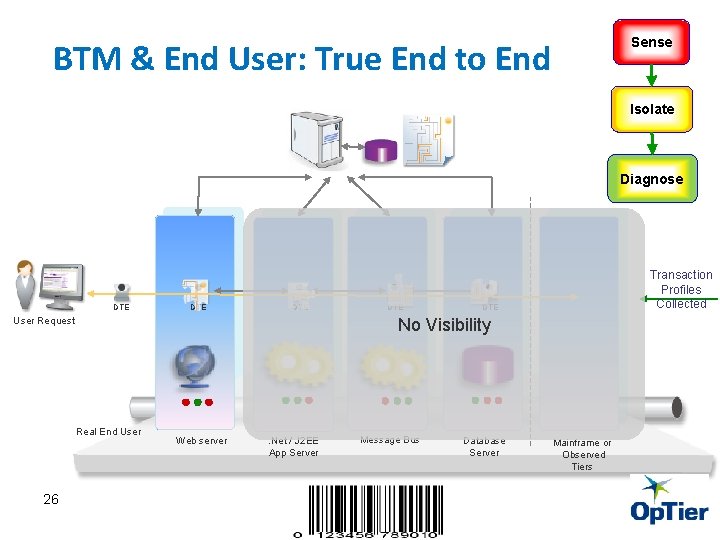
Sense BTM & End User: True End to End Isolate Diagnose DTE DTE No Visibility User Request Real End User 26 DTE Transaction Profiles Collected Web server . Net / J 2 EE App Server Message Bus Database Server Mainframe or Observed Tiers
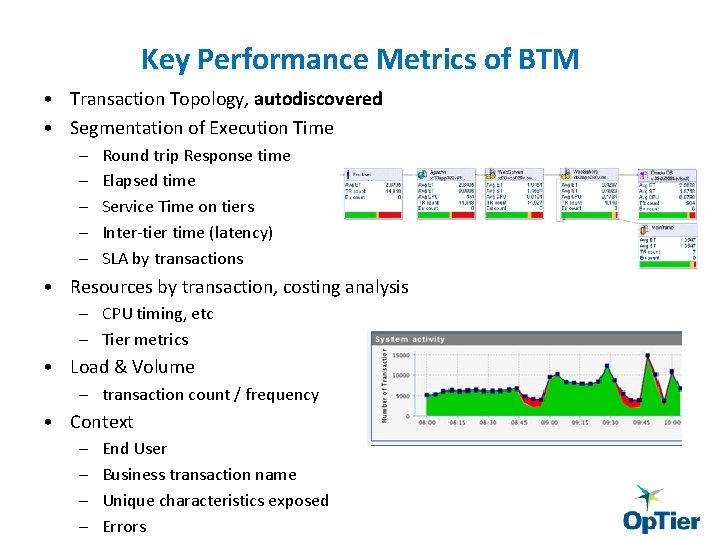
Key Performance Metrics of BTM • Transaction Topology, autodiscovered • Segmentation of Execution Time – – – Round trip Response time Elapsed time Service Time on tiers Inter-tier time (latency) SLA by transactions • Resources by transaction, costing analysis – CPU timing, etc – Tier metrics • Load & Volume – transaction count / frequency • Context – – End User Business transaction name Unique characteristics exposed Errors
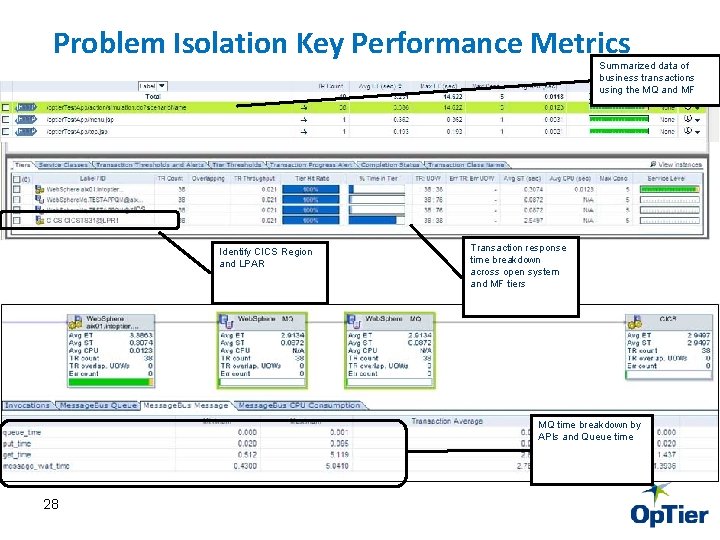
Problem Isolation Key Performance Metrics Summarized data of business transactions using the MQ and MF Identify CICS Region and LPAR Transaction response time breakdown across open system and MF tiers MQ time breakdown by APIs and Queue time 28
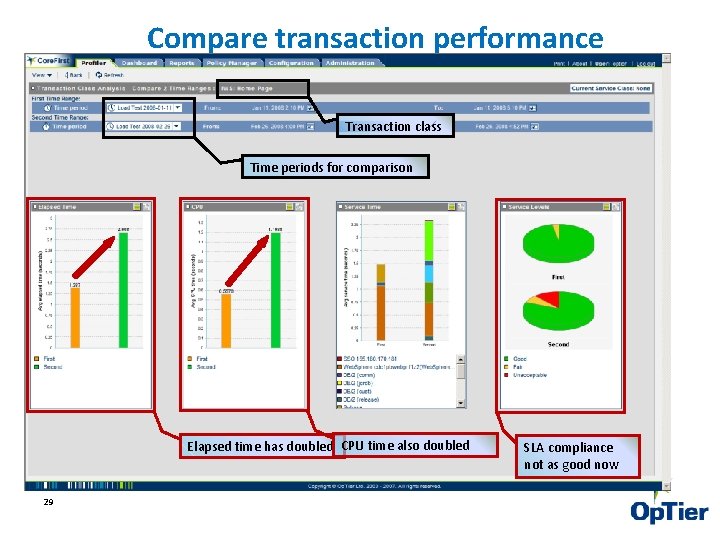
Compare transaction performance Transaction class Time periods for comparison Elapsed time has doubled CPU time also doubled 29 SLA compliance not as good now
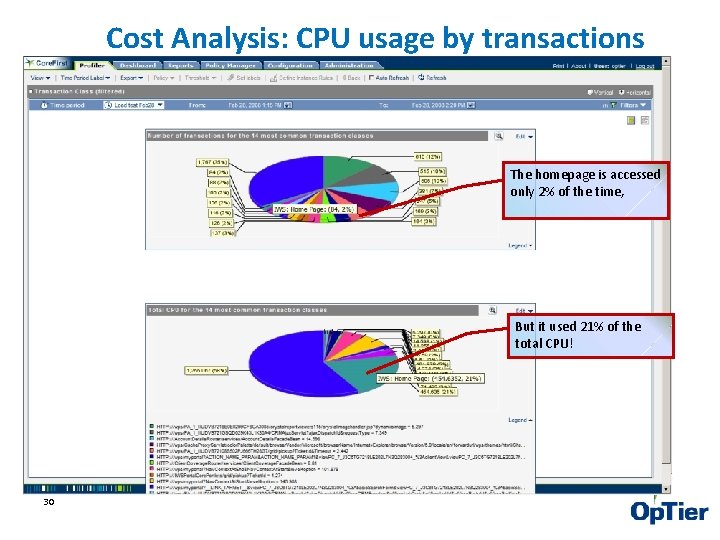
Cost Analysis: CPU usage by transactions The homepage is accessed only 2% of the time, But it used 21% of the total CPU! 30
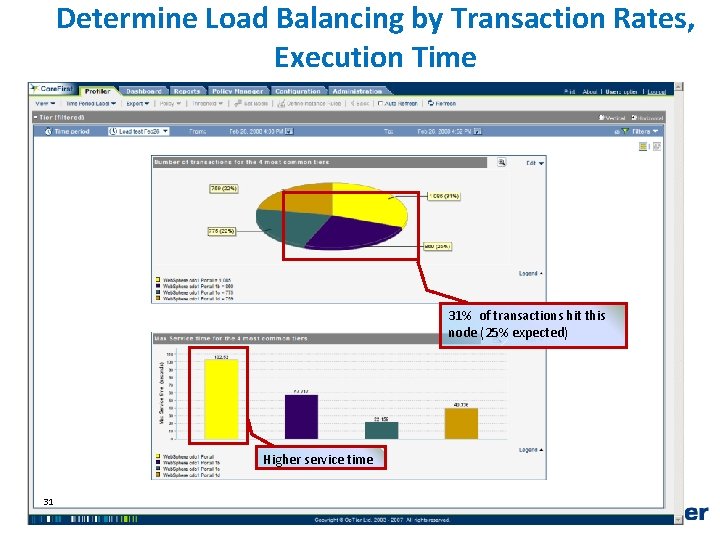
Determine Load Balancing by Transaction Rates, Execution Time 31% of transactions hit this node (25% expected) Higher service time 31
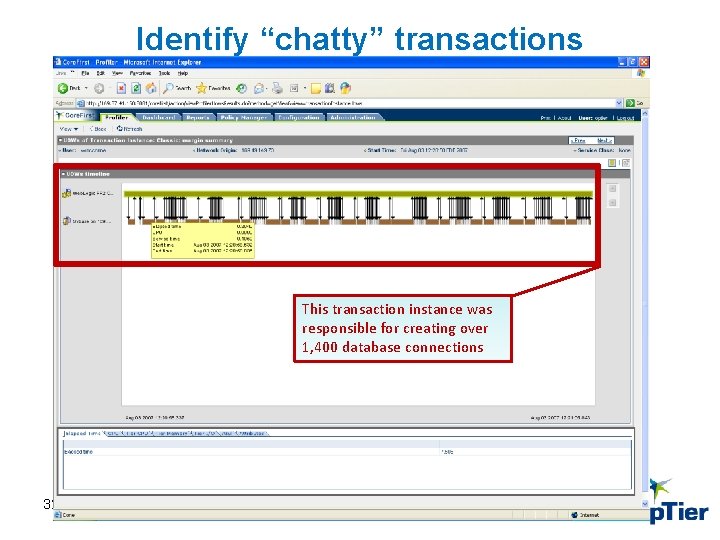
Identify “chatty” transactions This transaction instance was responsible for creating over 1, 400 database connections 32
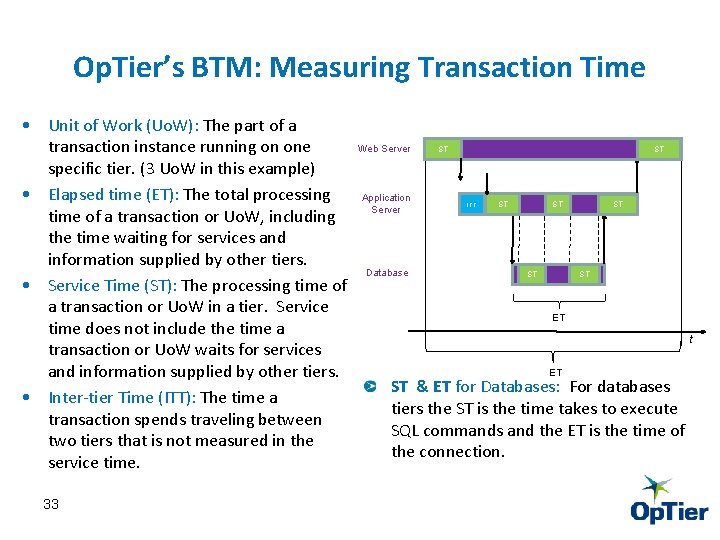
Op. Tier’s BTM: Measuring Transaction Time • Unit of Work (Uo. W): The part of a transaction instance running on one specific tier. (3 Uo. W in this example) • Elapsed time (ET): The total processing time of a transaction or Uo. W, including the time waiting for services and information supplied by other tiers. • Service Time (ST): The processing time of a transaction or Uo. W in a tier. Service time does not include the time a transaction or Uo. W waits for services and information supplied by other tiers. • Inter-tier Time (ITT): The time a transaction spends traveling between two tiers that is not measured in the service time. 33 Web Server Application Server Database ST ST ITT ST ST ST ET t ET ST & ET for Databases: For databases tiers the ST is the time takes to execute SQL commands and the ET is the time of the connection.
Business Transaction Management Use Cases
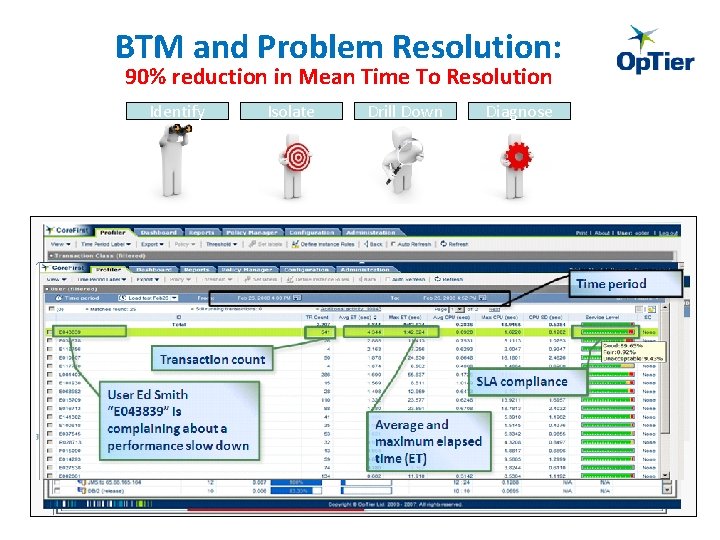
What can BTM do for IT: Save Money • Rapid Problem Identification – 100% of the transactions, 100% of the time – every end-user and every transaction is measured to quickly detect degradation – track real end-user performance for SLA’s at a transaction level • Accurate and Fast Problem Isolation – Accurate Transaction Topology: immediately isolate where the bottleneck is. – Establish baselines at a transaction level, measuring performance with analysis of where the bottleneck is. – 70 – 90% Faster MTTR • Less Costly Application Rollouts – Catch problems and optimize before applications roll-out – Day 1 Application Stability – Better performance tracking before, during, after Changes
BTM and Problem Resolution: 90% reduction in Mean Time To Resolution Identify Isolate Drill Down Diagnose
BTM Key Factors • • 100% of transactions in production all the time Round trip metrics, and segmentation analysis Auto-discovery of application topology Not completely reliant on where the solution runs – observed tier • Must be able to retain instance level data • Not limited to response time data • Capture end user information – End User response time data – Who is invoking transactions • Different data dimensions – view transaction performance from trans name, user, tier, etc. • Provide real time and historical details – “play back” 37

Thank you! Eva Tuczai eva. tuczai@optier. com Stop Guessing. Start Knowing. Op. Tier. We Know Transactions.
Op. Tier at a Glance • The de facto leader in Business Transaction Management • Op. Tier software manages more business transactions on a daily basis than does any other solution in the market • Well funded and financially solid • Founded in 2002, product launched in 2005 • Global presence: NYC, London, France, Tel Aviv • Validated by Analysts: Gartner, Forrester, IDC, EMA 2009 SIIA 2008 SIIA 2007 SIIA 2006 SIIA Cool Vendor 39 39
- Slides: 39