
ROCKS What is a rock What is a

- Slides: 27
ROCKS
What is a rock?
What is a rock? n Made of entirely one mineral or several minerals. n Could contain organic matter (composed of living material, usually carbon based). n The chemical make-up of the rock may vary from one sample to another.
Types of Rocks n What are three classes of rocks?
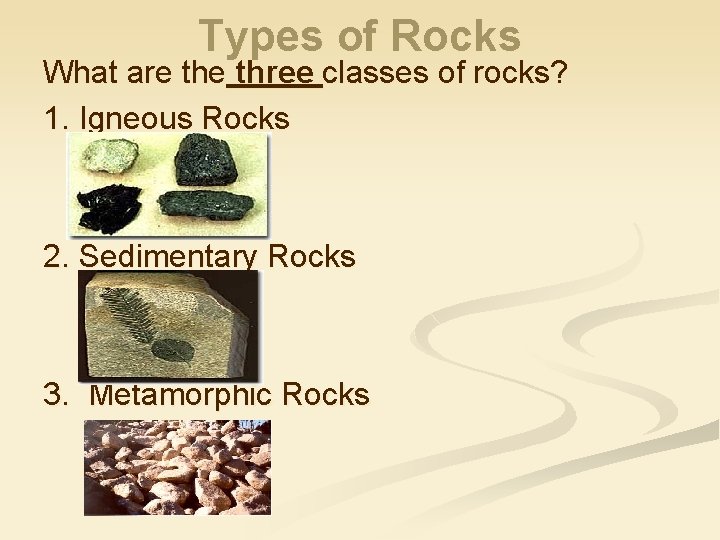
Types of Rocks What are three classes of rocks? 1. Igneous Rocks 2. Sedimentary Rocks 3. Metamorphic Rocks
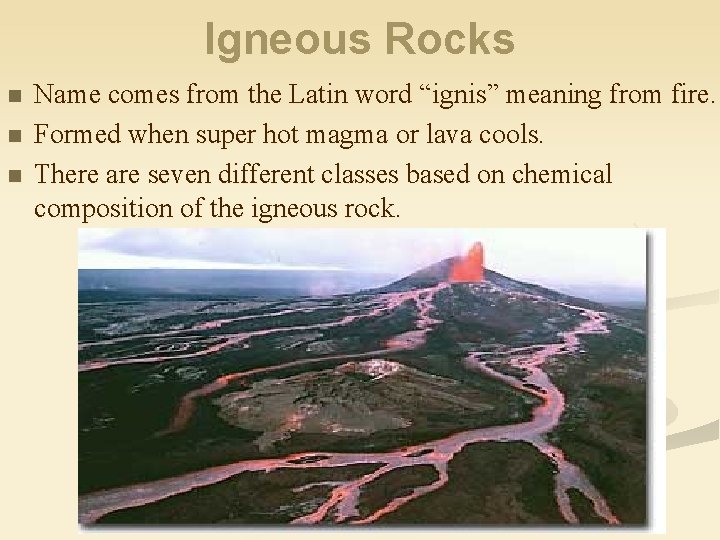
Igneous Rocks n n n Name comes from the Latin word “ignis” meaning from fire. Formed when super hot magma or lava cools. There are seven different classes based on chemical composition of the igneous rock.
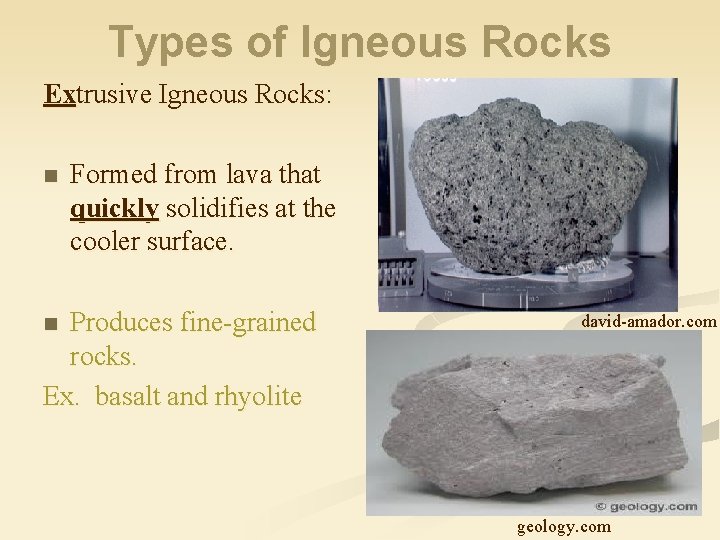
Types of Igneous Rocks Extrusive Igneous Rocks: n Formed from lava that quickly solidifies at the cooler surface. Produces fine-grained rocks. Ex. basalt and rhyolite n david-amador. com geology. com
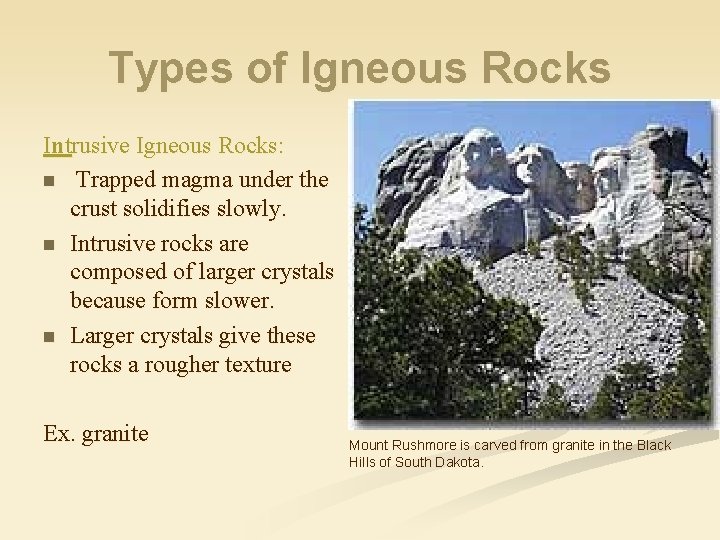
Types of Igneous Rocks Intrusive Igneous Rocks: n Trapped magma under the crust solidifies slowly. n Intrusive rocks are composed of larger crystals because form slower. n Larger crystals give these rocks a rougher texture Ex. granite n Mount Rushmore is carved from granite in the Black Hills of South Dakota.
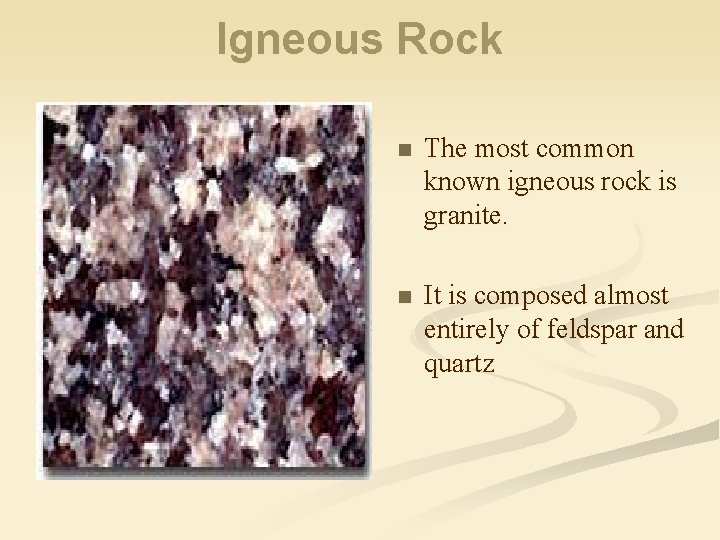
Igneous Rock n The most common known igneous rock is granite. n It is composed almost entirely of feldspar and quartz
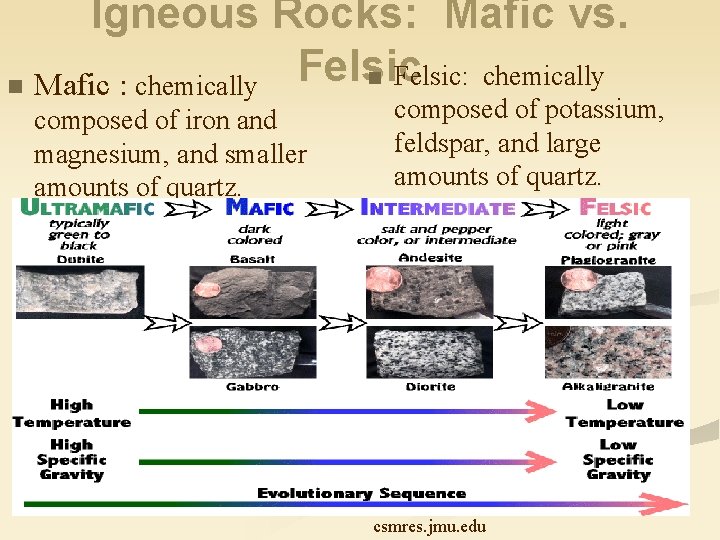
Igneous Rocks: Mafic vs. Felsic n Felsic: chemically n Mafic : chemically composed of iron and magnesium, and smaller amounts of quartz. composed of potassium, feldspar, and large amounts of quartz. csmres. jmu. edu
Bell Ringer: Rocks n What is the difference between intrusive and extrusive igneous rocks? n T or F: Intrusive igneous rocks are composed of larger crystals then extrusive igneous rocks. n Would mafic or felsic magma be magnetic? Explain your answer.
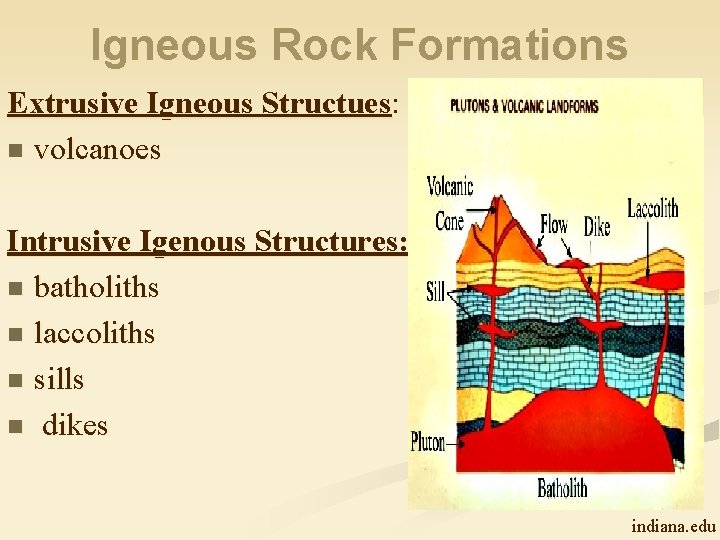
Igneous Rock Formations Extrusive Igneous Structues: n volcanoes Intrusive Igenous Structures: n batholiths n laccoliths n sills n dikes indiana. edu
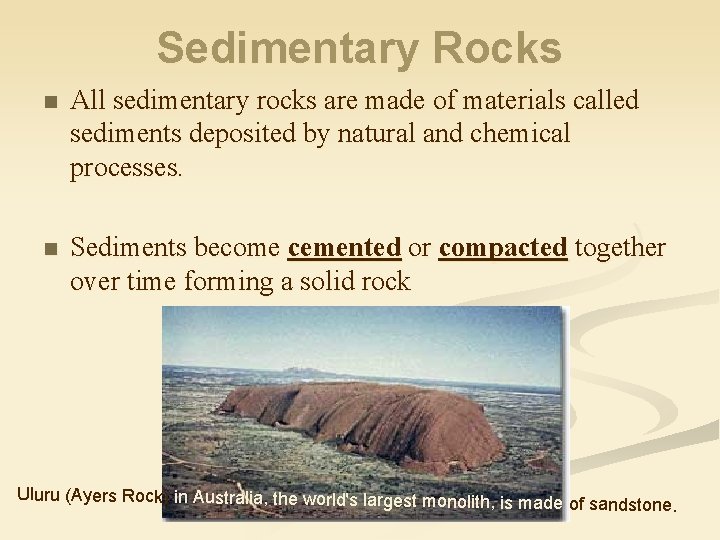
Sedimentary Rocks n All sedimentary rocks are made of materials called sediments deposited by natural and chemical processes. n Sediments become cemented or compacted together over time forming a solid rock Uluru (Ayers Rock) in Australia, the world's largest monolith, is mad e of sandstone.
Types of Sediments Tiny grains of sand n Broken pieces of rock along the bottom of a stream n Fragments of seashells n Layers of mud n Organic matter (plant and animal remains) n
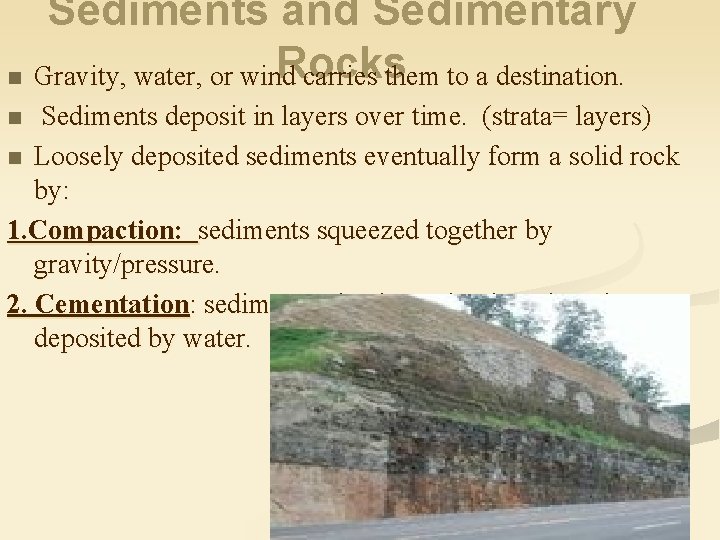
Sediments and Sedimentary Rocks n Gravity, water, or wind carries them to a destination. Sediments deposit in layers over time. (strata= layers) n Loosely deposited sediments eventually form a solid rock by: 1. Compaction: sediments squeezed together by gravity/pressure. 2. Cementation: sediments glued together by minerals deposited by water. n
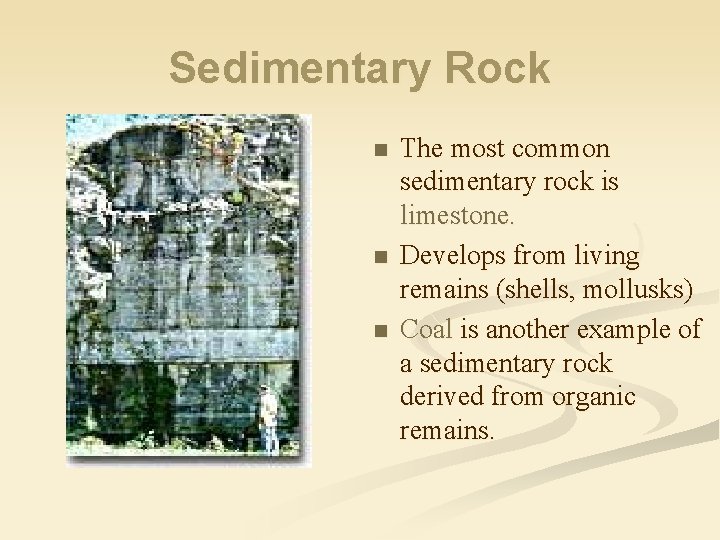
Sedimentary Rock n n n The most common sedimentary rock is limestone. Develops from living remains (shells, mollusks) Coal is another example of a sedimentary rock derived from organic remains.
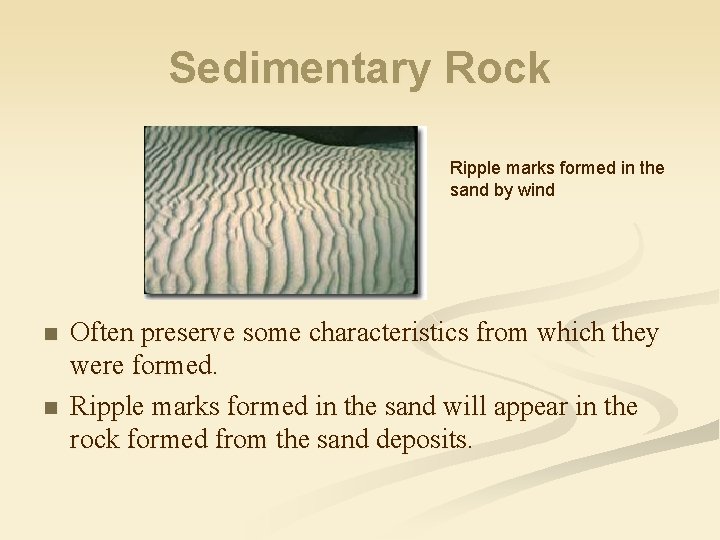
Sedimentary Rock Ripple marks formed in the sand by wind n n Often preserve some characteristics from which they were formed. Ripple marks formed in the sand will appear in the rock formed from the sand deposits.
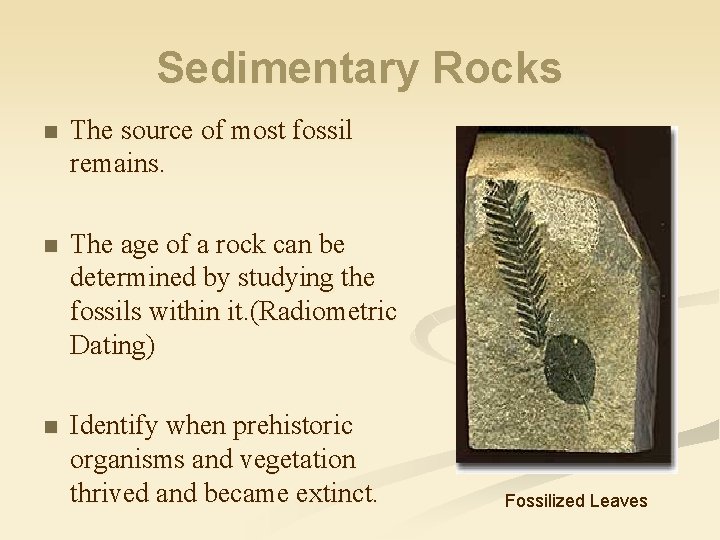
Sedimentary Rocks n The source of most fossil remains. n The age of a rock can be determined by studying the fossils within it. (Radiometric Dating) n Identify when prehistoric organisms and vegetation thrived and became extinct. Fossilized Leaves
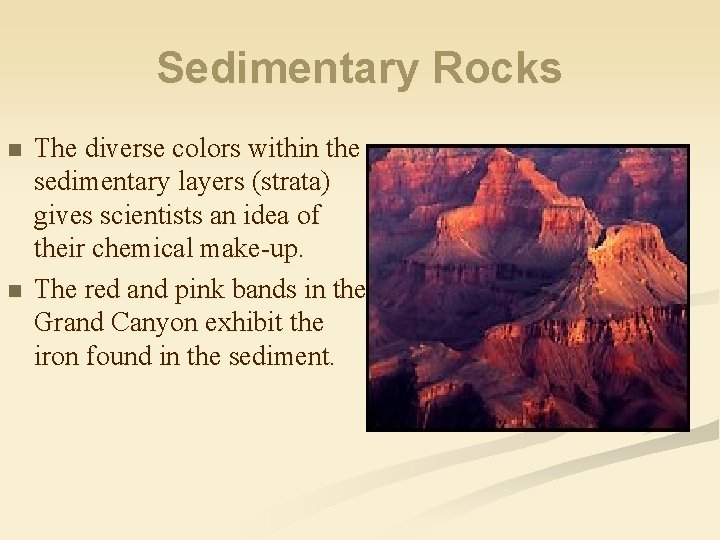
Sedimentary Rocks n n The diverse colors within the sedimentary layers (strata) gives scientists an idea of their chemical make-up. The red and pink bands in the Grand Canyon exhibit the iron found in the sediment.
Sedimentary Rocks: Location n Sedimentary rocks cover almost all of the ocean floor and about three-fourths of Earth's surface land area.
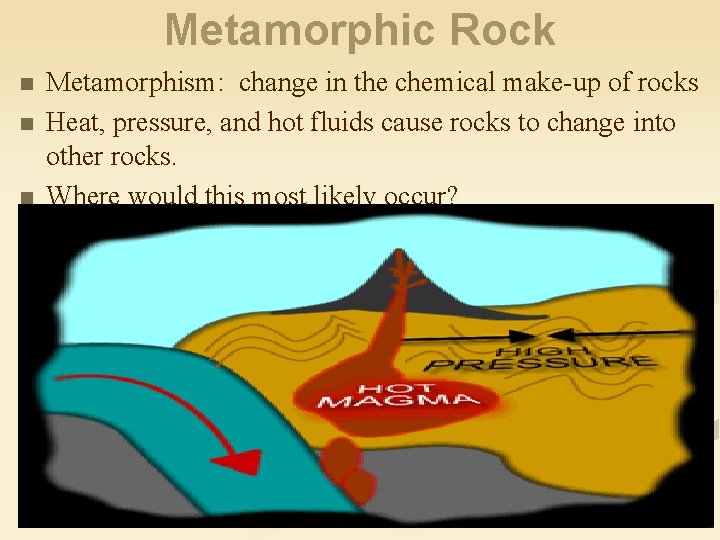
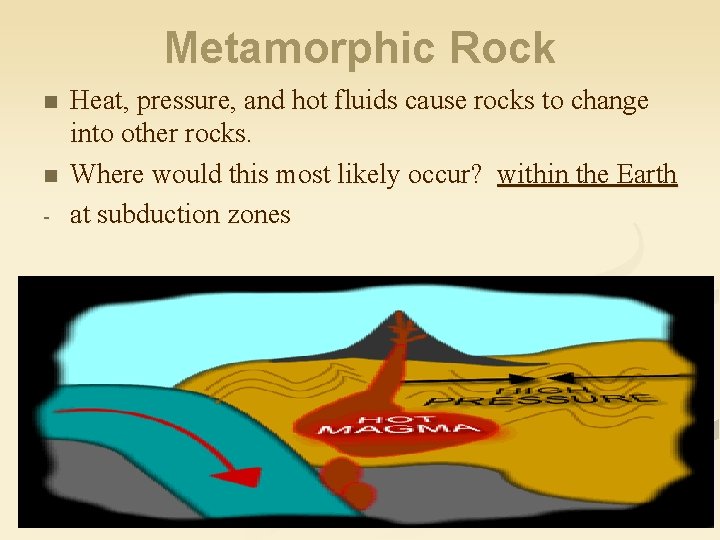
Metamorphic Rock n n n Metamorphism: change in the chemical make-up of rocks Heat, pressure, and hot fluids cause rocks to change into other rocks. Where would this most likely occur?
Metamorphic Rock n n - Heat, pressure, and hot fluids cause rocks to change into other rocks. Where would this most likely occur? within the Earth at subduction zones
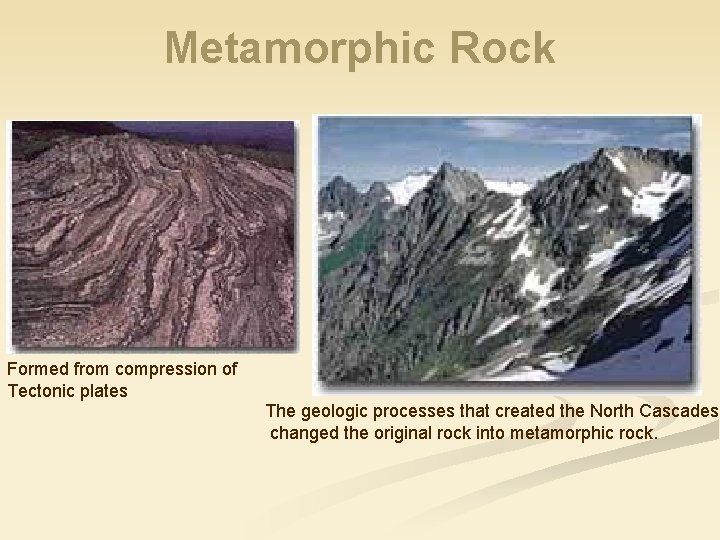
Metamorphic Rock Formed from compression of Tectonic plates The geologic processes that created the North Cascades changed the original rock into metamorphic rock.
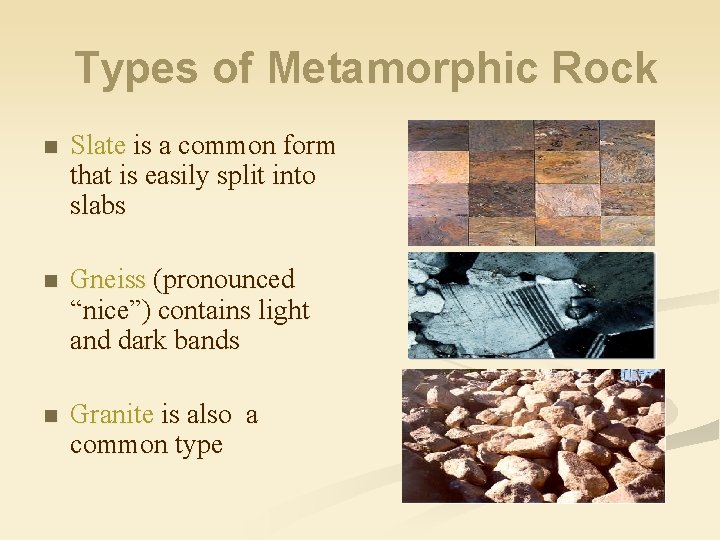
Types of Metamorphic Rock n Slate is a common form that is easily split into slabs n Gneiss (pronounced “nice”) contains light and dark bands n Granite is also a common type
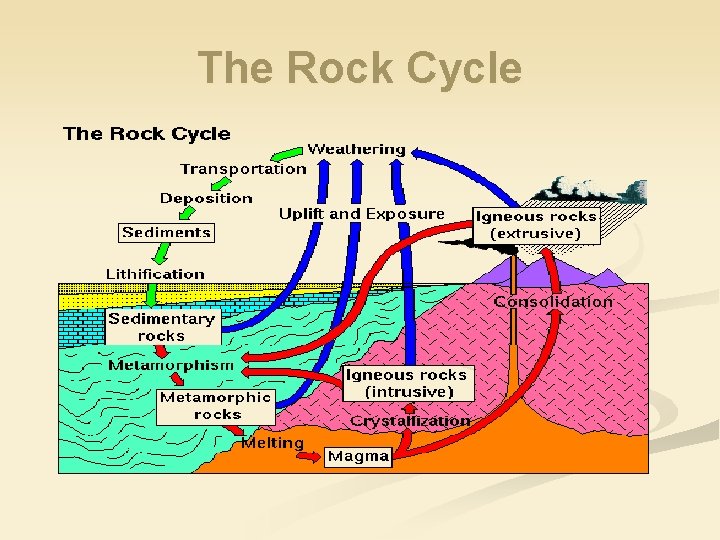
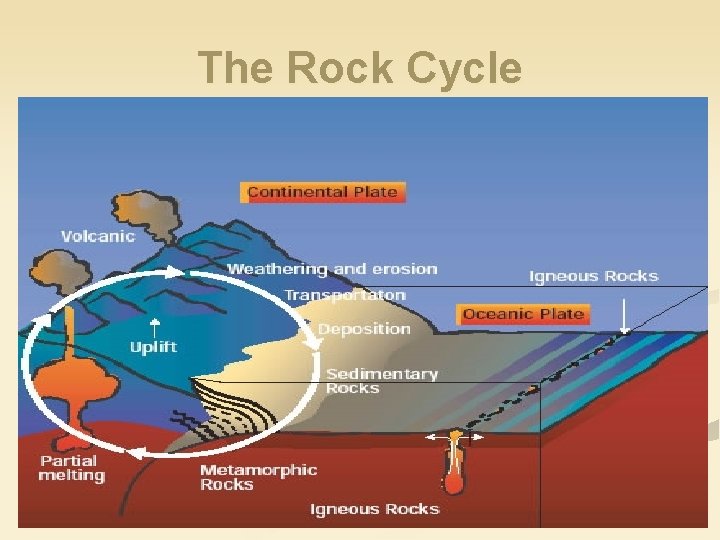
The Rock Cycle n Almost all of the rocks that compose the Earth’s crust today are made of the same stuff as the rocks that dinosaurs and other ancient life forms walked, crawled, or swam over. While the stuff(matter) that rocks are made of has changed, the rocks themselves, have not. Over time rocks are recycled into other rocks.
The Rock Cycle
The Rock Cycle