
Rocks Weathering Chapter 3 Weathering the process that
- Slides: 23
Rocks & Weathering Chapter 3
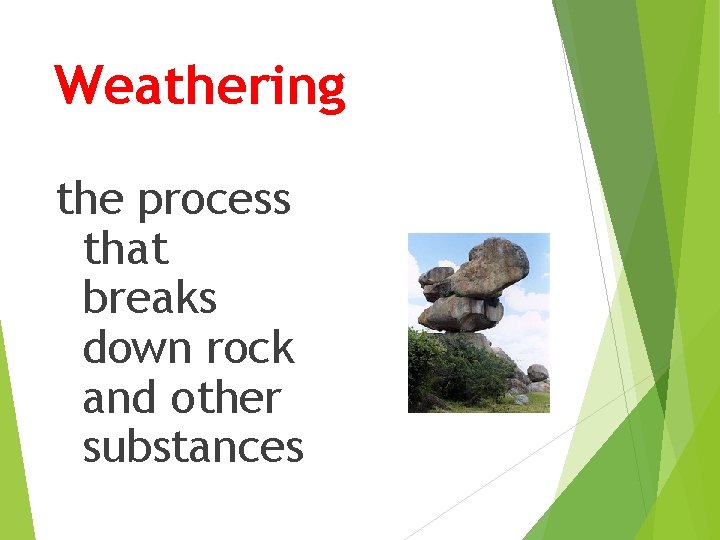
Weathering the process that breaks down rock and other substances
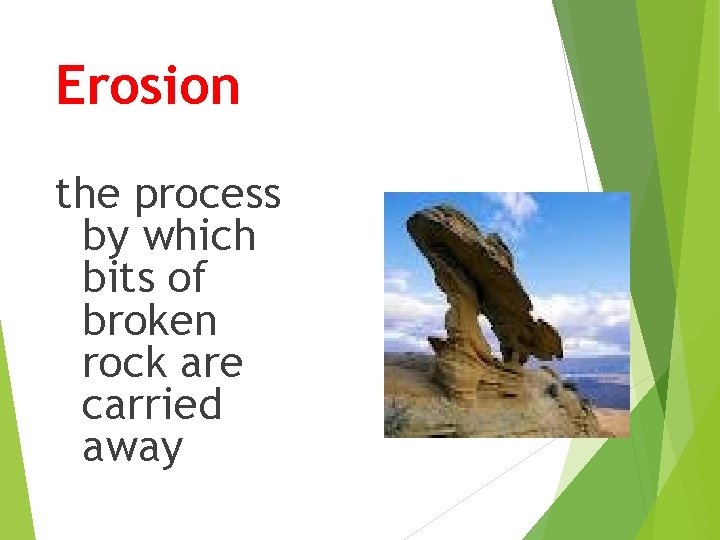
Erosion the process by which bits of broken rock are carried away
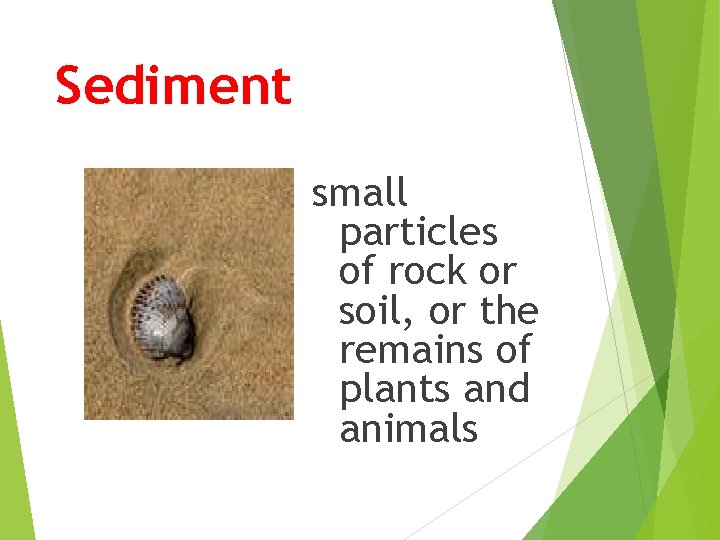
Sediment small particles of rock or soil, or the remains of plants and animals
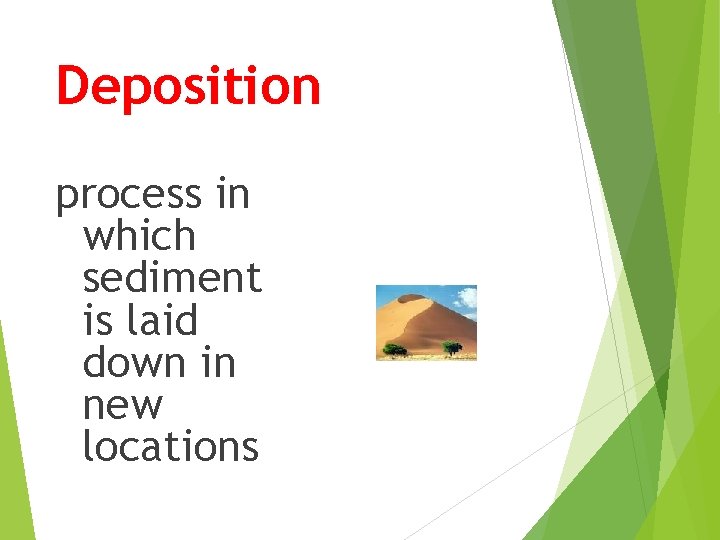
Deposition process in which sediment is laid down in new locations
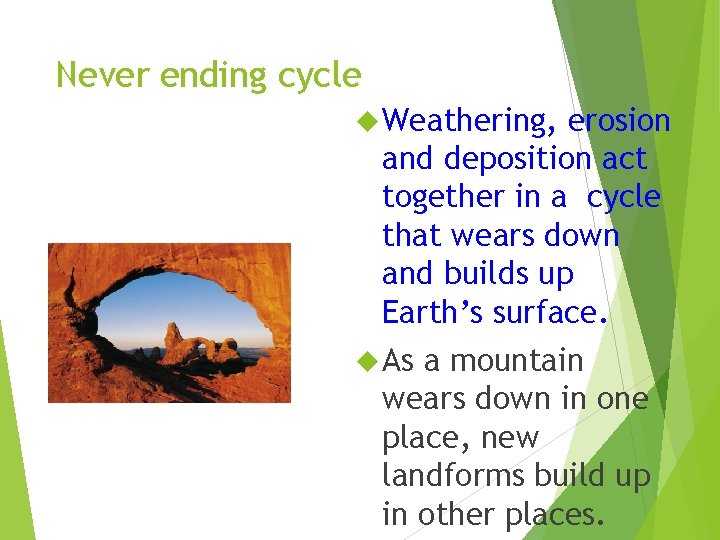
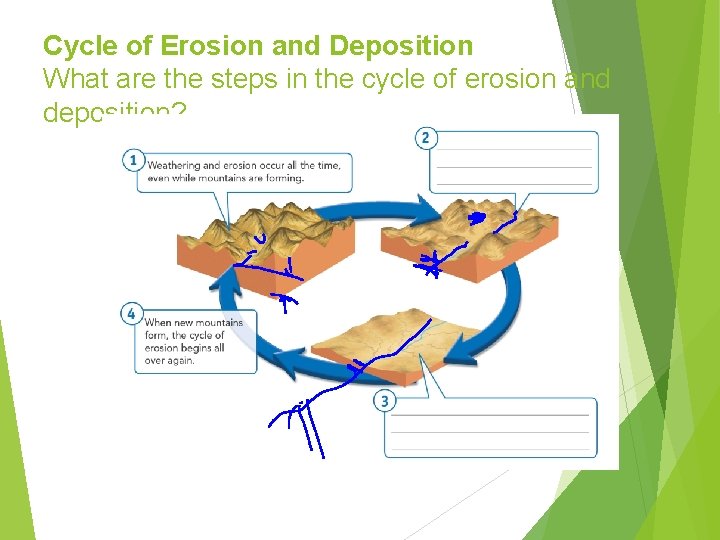
Never ending cycle Weathering, erosion and deposition act together in a cycle that wears down and builds up Earth’s surface. As a mountain wears down in one place, new landforms build up in other places.
Cycle of Erosion and Deposition What are the steps in the cycle of erosion and deposition?
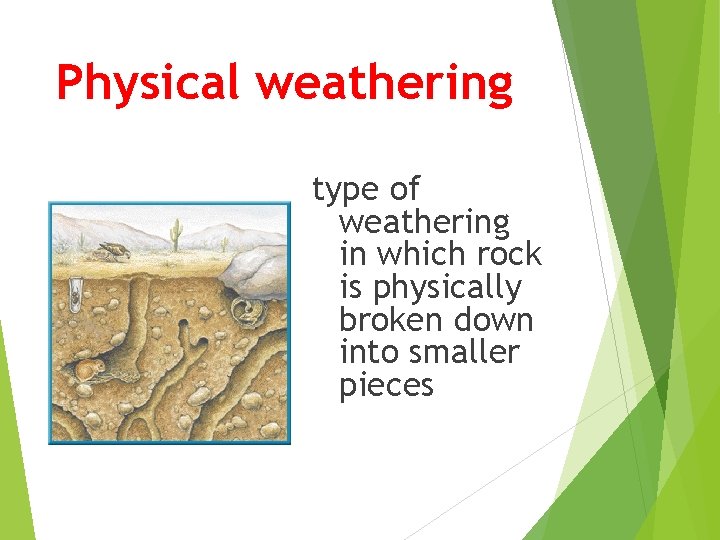
Physical weathering type of weathering in which rock is physically broken down into smaller pieces
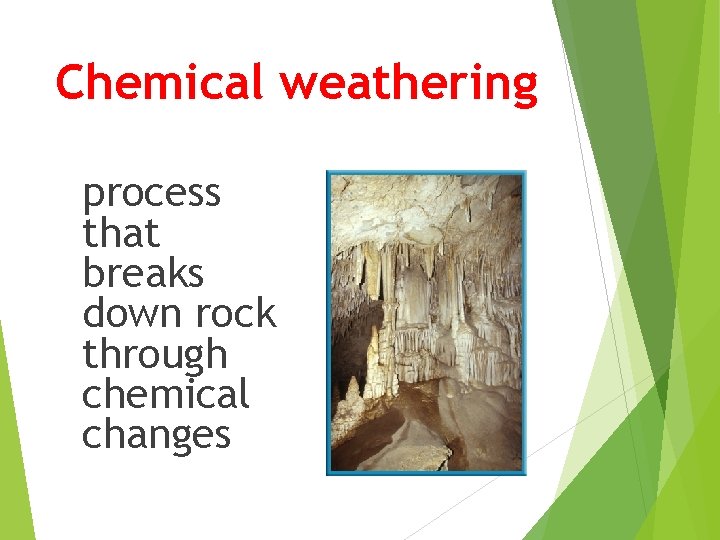
Chemical weathering process that breaks down rock through chemical changes
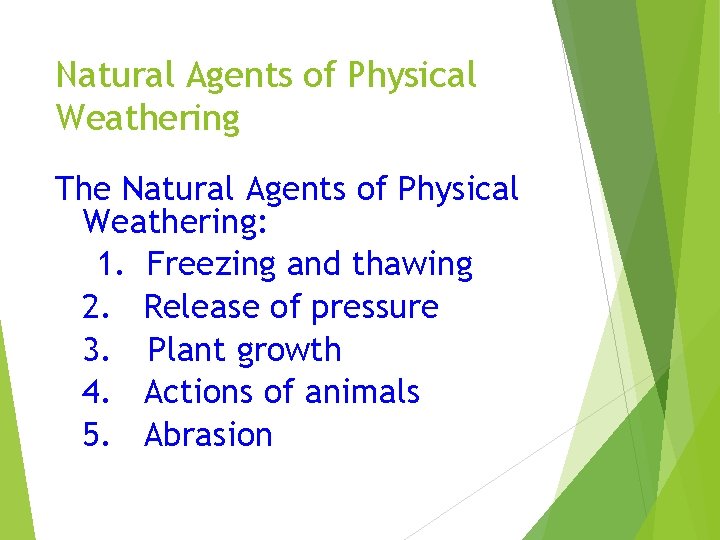
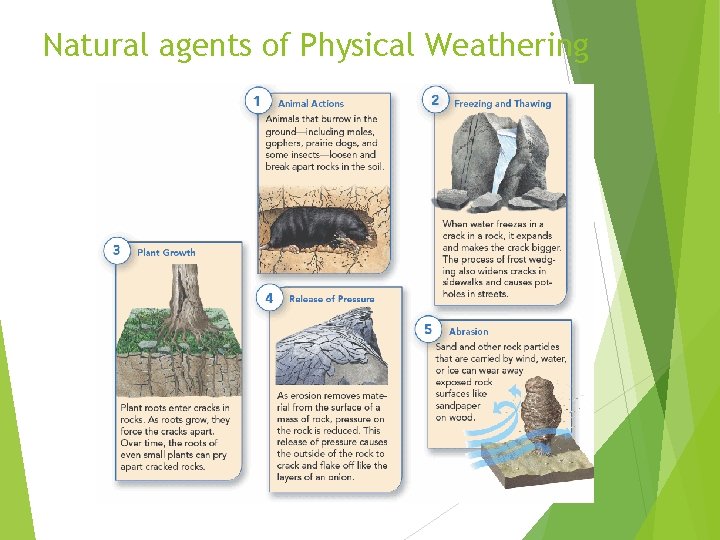
Natural Agents of Physical Weathering The Natural Agents of Physical Weathering: 1. Freezing and thawing 2. Release of pressure 3. Plant growth 4. Actions of animals 5. Abrasion
Natural agents of Physical Weathering
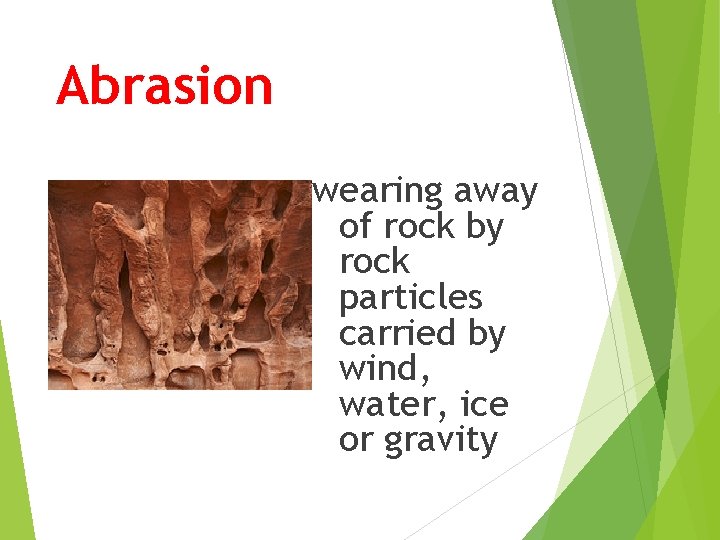
Abrasion wearing away of rock by rock particles carried by wind, water, ice or gravity
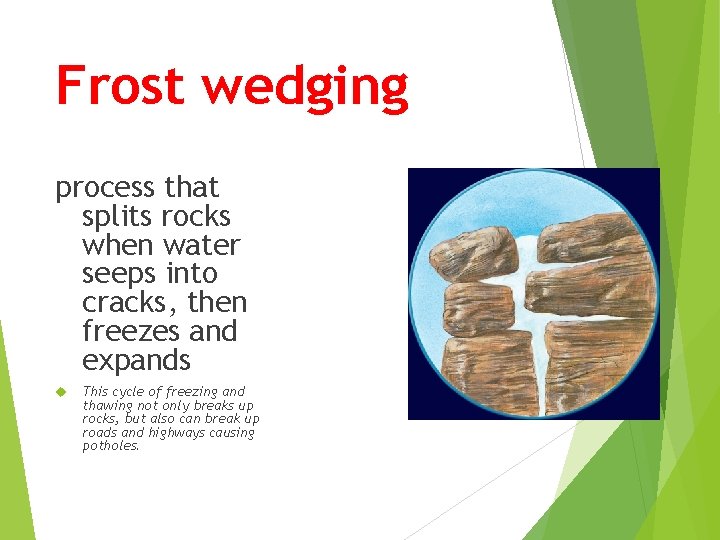
Frost wedging process that splits rocks when water seeps into cracks, then freezes and expands This cycle of freezing and thawing not only breaks up rocks, but also can break up roads and highways causing potholes.
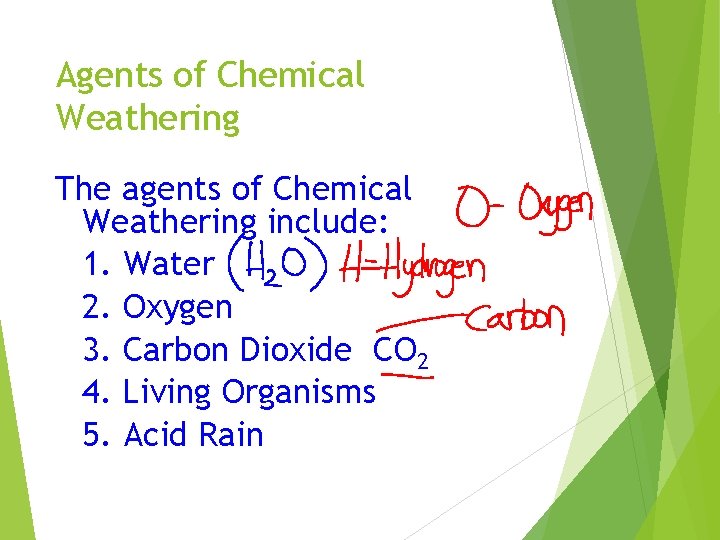
Agents of Chemical Weathering The agents of Chemical Weathering include: 1. Water 2. Oxygen 3. Carbon Dioxide CO 2 4. Living Organisms 5. Acid Rain
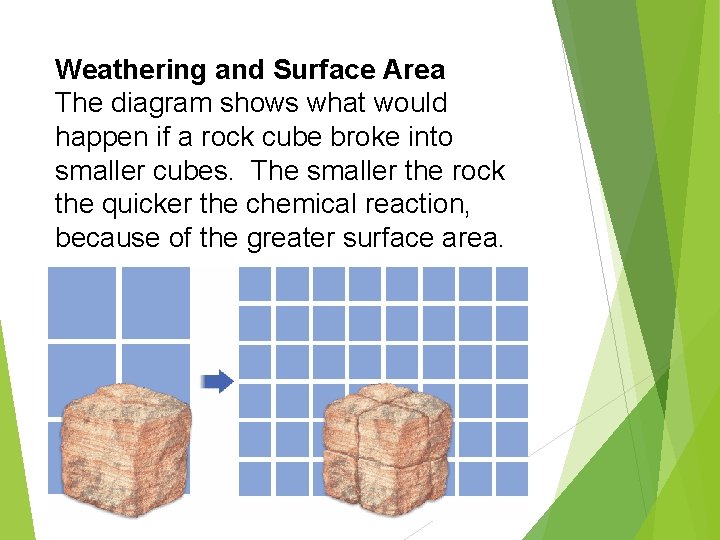
Weathering and Surface Area The diagram shows what would happen if a rock cube broke into smaller cubes. The smaller the rock the quicker the chemical reaction, because of the greater surface area.
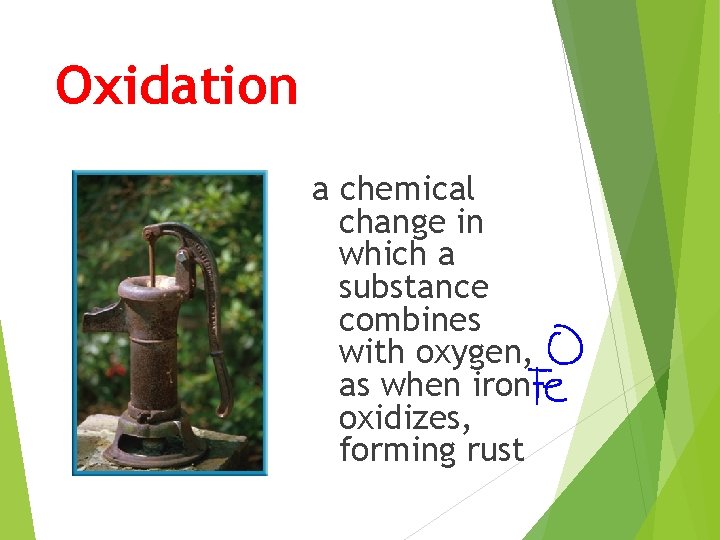
Oxidation a chemical change in which a substance combines with oxygen, as when iron oxidizes, forming rust
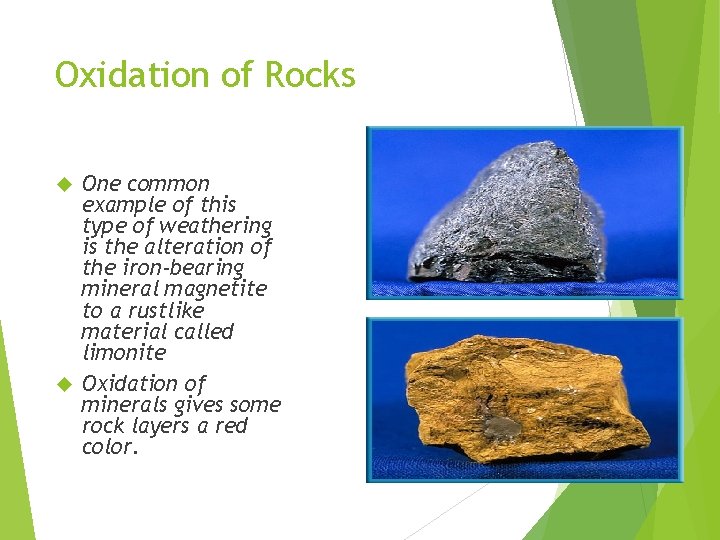
Oxidation of Rocks One common example of this type of weathering is the alteration of the iron-bearing mineral magnetite to a rustlike material called limonite Oxidation of minerals gives some rock layers a red color.
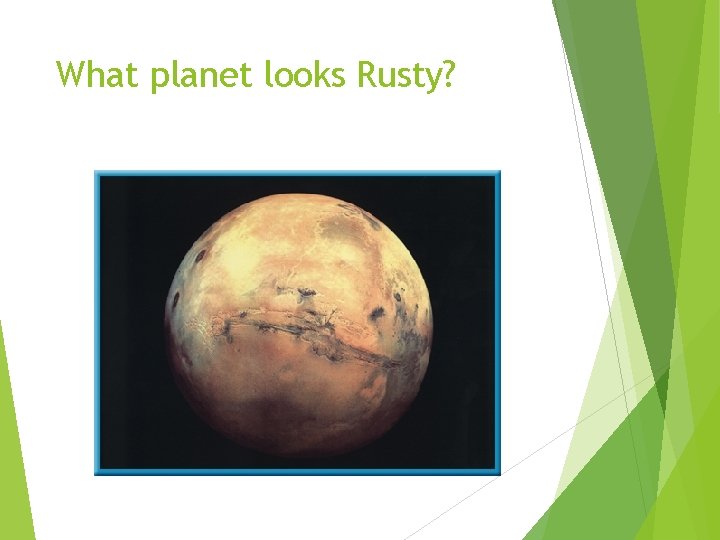
What planet looks Rusty?
Carbon Dioxide: Chemical weathering Gas found in the air that we as humans produce called CO 2 Carbon Dioxide. Mixes with water to form Carbonic Acid…this is also found in sodas.
Living organisms: Chemical Weathering Plants like lichens produce an acid which dissolve rocks.
Acid Rain: Chemical weathering. Pollution in the air from burning coal, oil and gas pollute the air with compounds like sulfur and carbon. These then mix with water particles to form acid rain. This is a weak acid which breaks down rocks chemically.
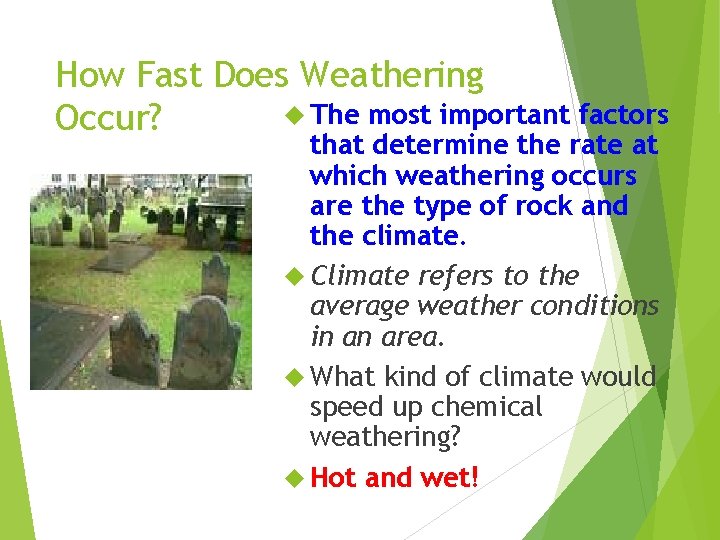
How Fast Does Weathering The most important factors Occur? that determine the rate at which weathering occurs are the type of rock and the climate. Climate refers to the average weather conditions in an area. What kind of climate would speed up chemical weathering? Hot and wet!
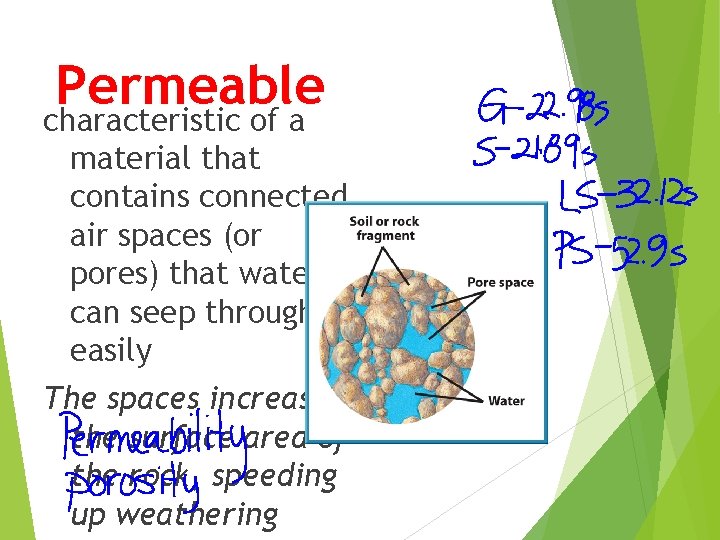
Permeable characteristic of a material that contains connected air spaces (or pores) that water can seep through easily The spaces increase the surface area of the rock, speeding up weathering