
Rocks and Minerals Minerals Naturally Occurring Formed from





- Slides: 76
Rocks and Minerals
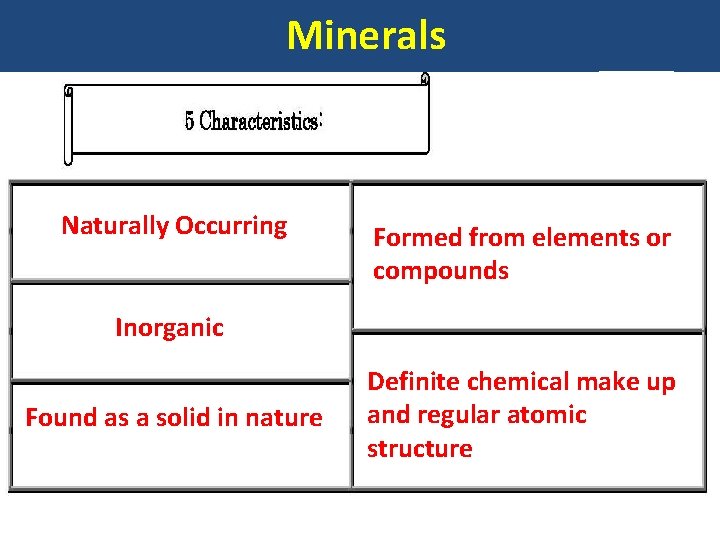
Minerals Naturally Occurring Formed from elements or compounds Inorganic Found as a solid in nature Definite chemical make up and regular atomic structure
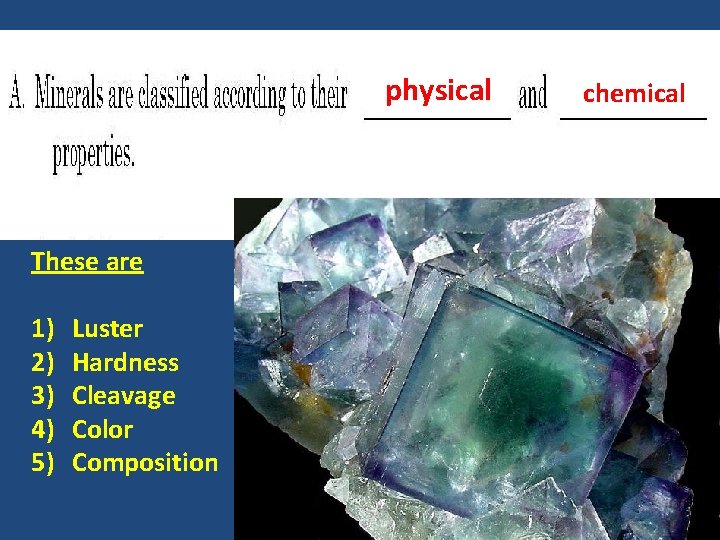
physical These are 1) 2) 3) 4) 5) Luster Hardness Cleavage Color Composition chemical
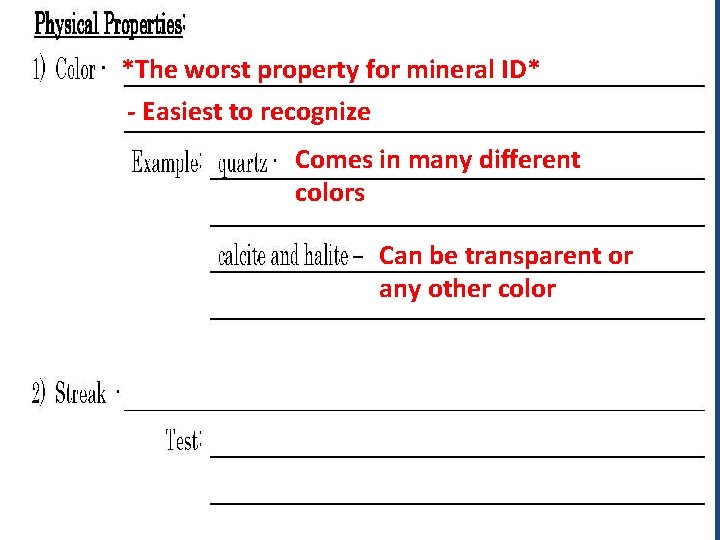
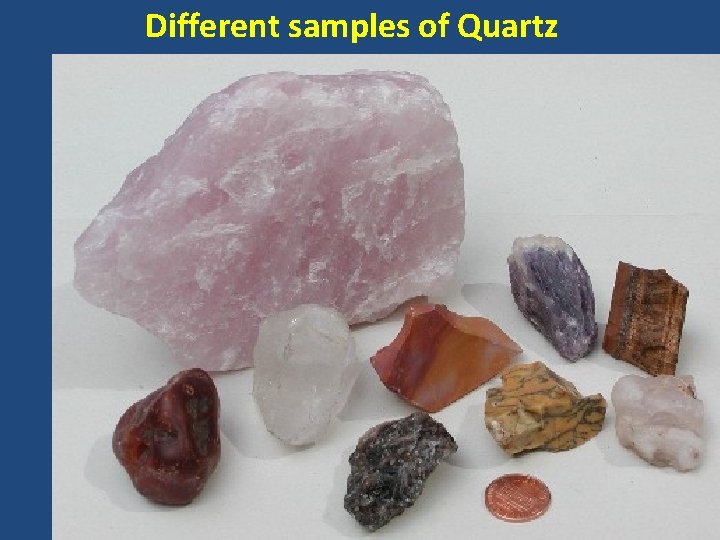
*The worst property for mineral ID* - Easiest to recognize Comes in many different colors Can be transparent or any other color
Different samples of Quartz
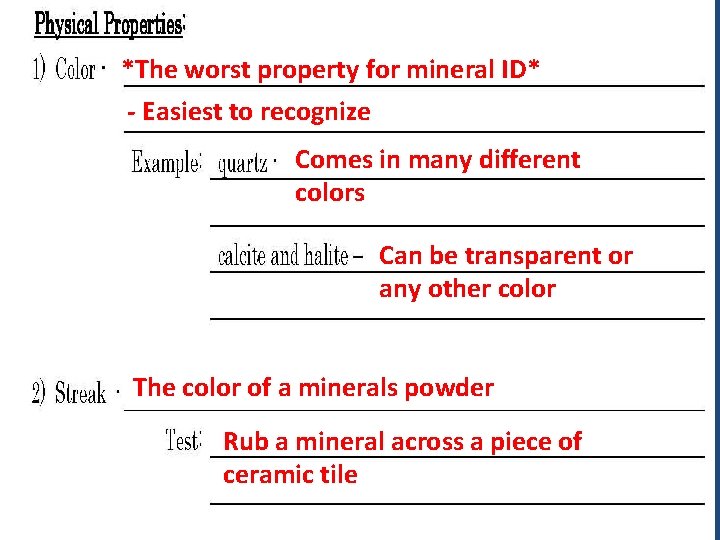
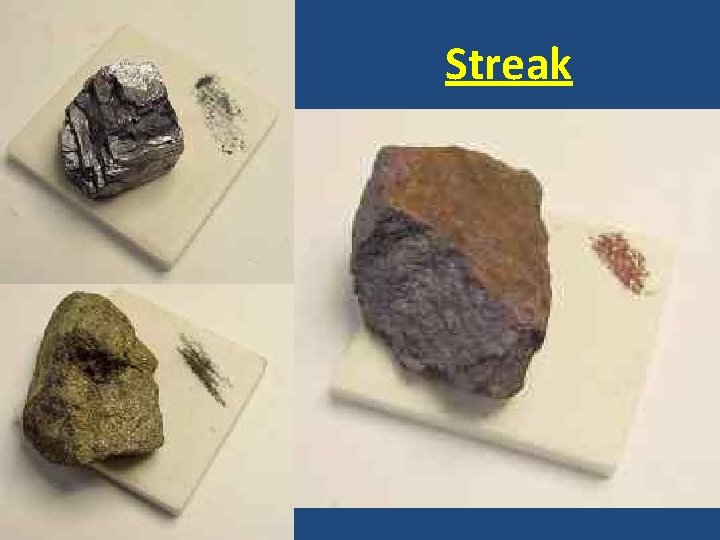
*The worst property for mineral ID* - Easiest to recognize Comes in many different colors Can be transparent or any other color The color of a minerals powder Rub a mineral across a piece of ceramic tile
Streak
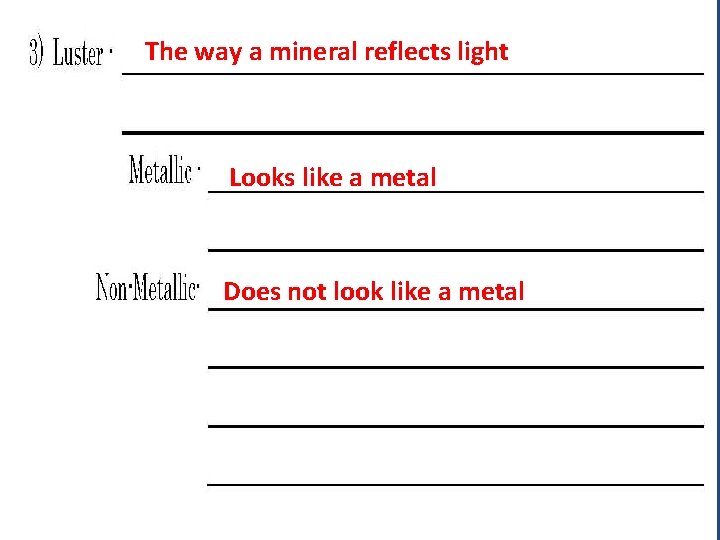
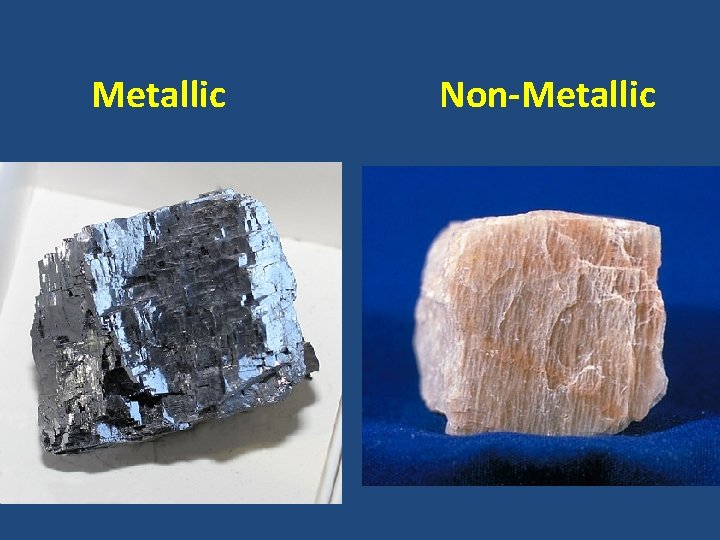
The way a mineral reflects light Looks like a metal Does not look like a metal
Metallic Non-Metallic
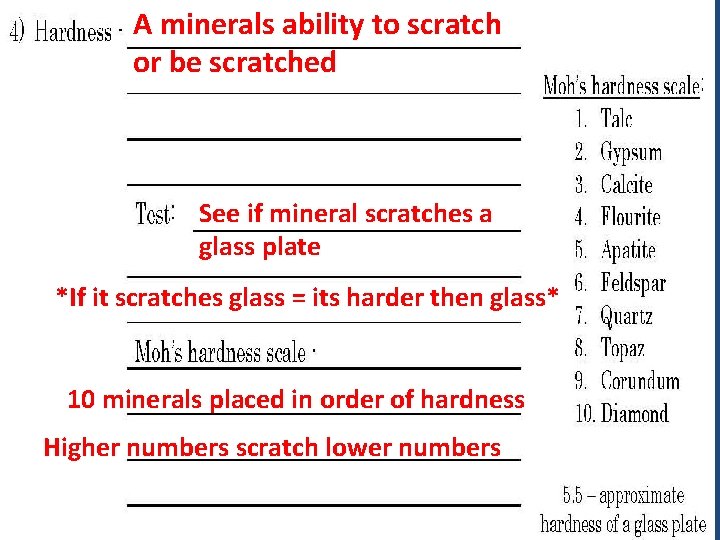
A minerals ability to scratch or be scratched See if mineral scratches a glass plate *If it scratches glass = its harder then glass* 10 minerals placed in order of hardness Higher numbers scratch lower numbers
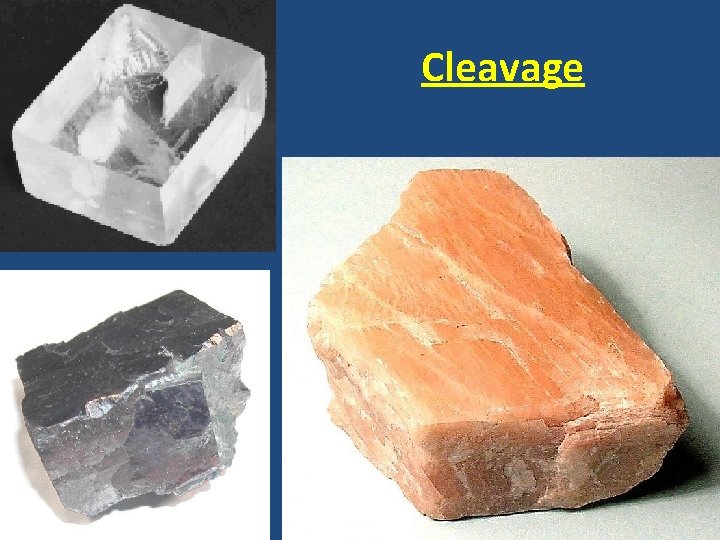
The ability of a mineral to break along smooth flat surfaces Look at a mineral carefully and check if light is reflecting off flat surfaces
Cleavage
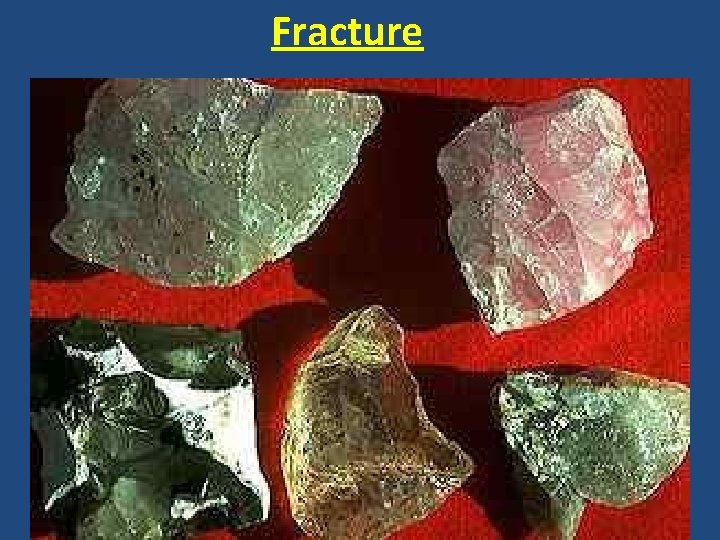
The ability of a mineral to break along smooth flat surfaces Look at a mineral carefully and check if light is reflecting off flat surfaces When a mineral breaks in to pieces with uneven surfaces
Fracture
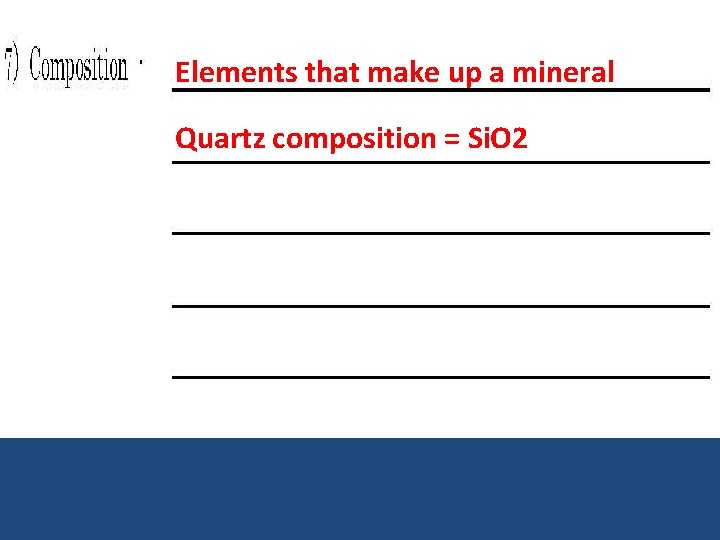
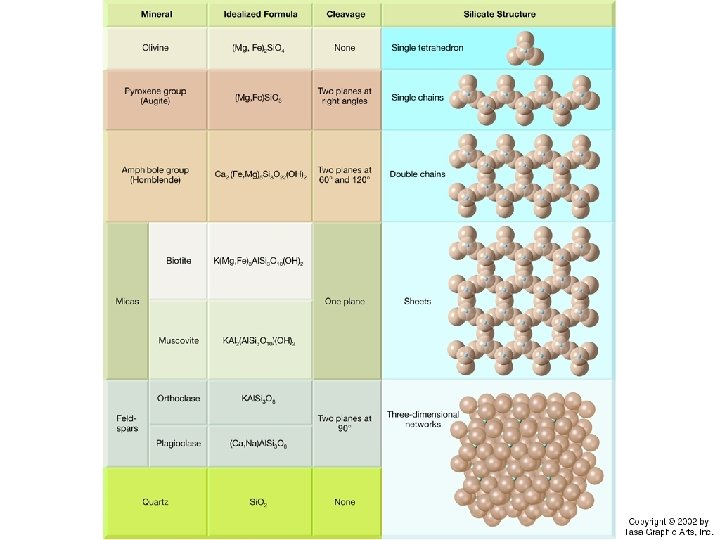
Elements that make up a mineral Quartz composition = Si. O 2
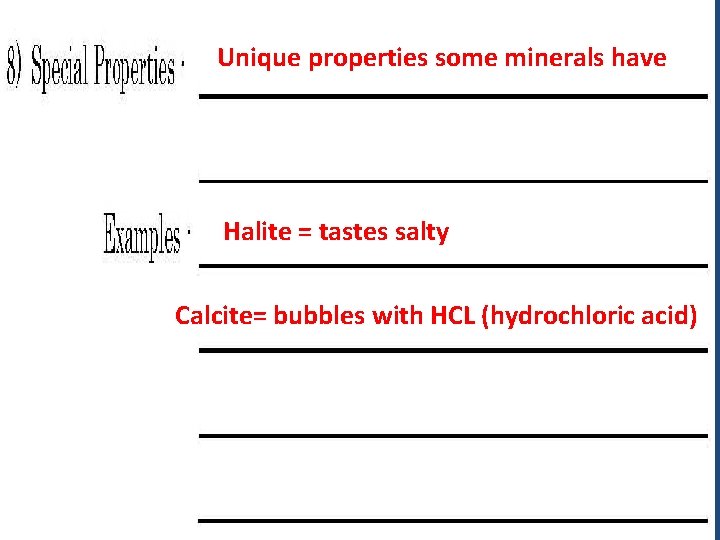
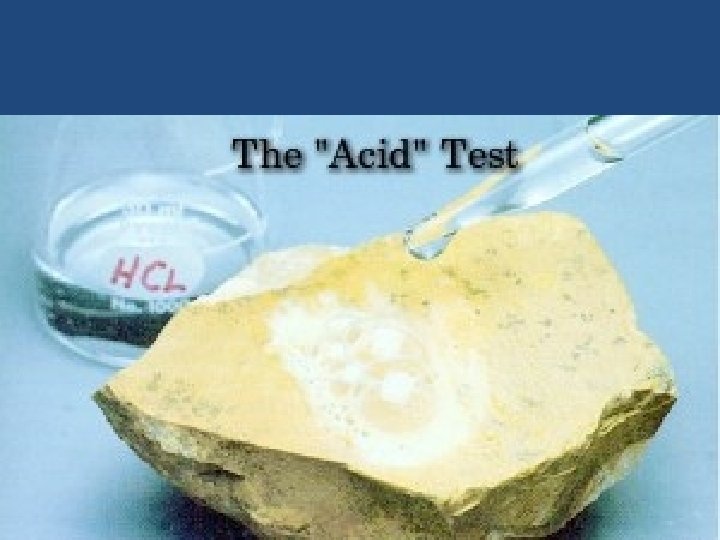
Unique properties some minerals have Halite = tastes salty Calcite= bubbles with HCL (hydrochloric acid)
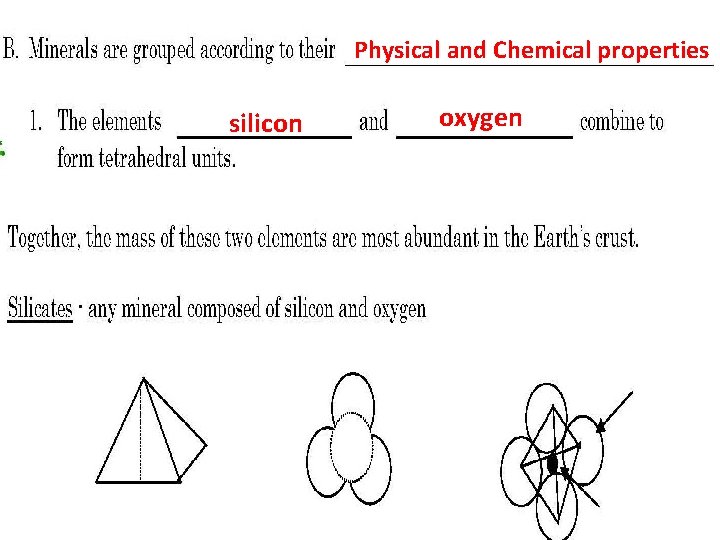
Physical and Chemical properties silicon oxygen
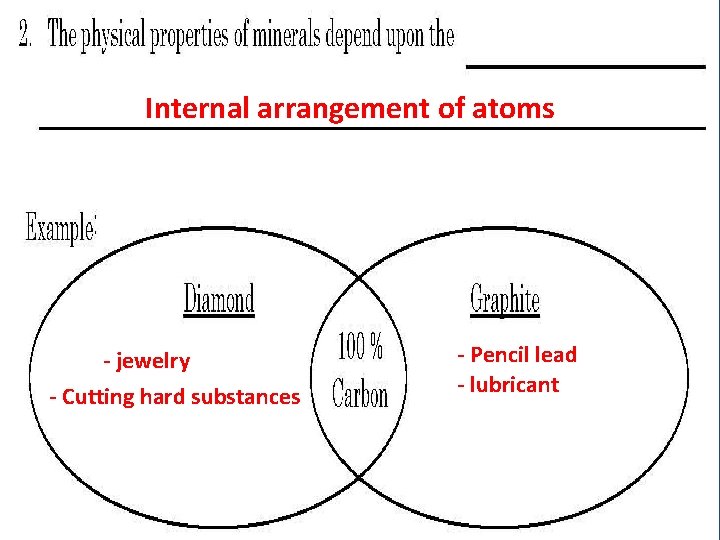
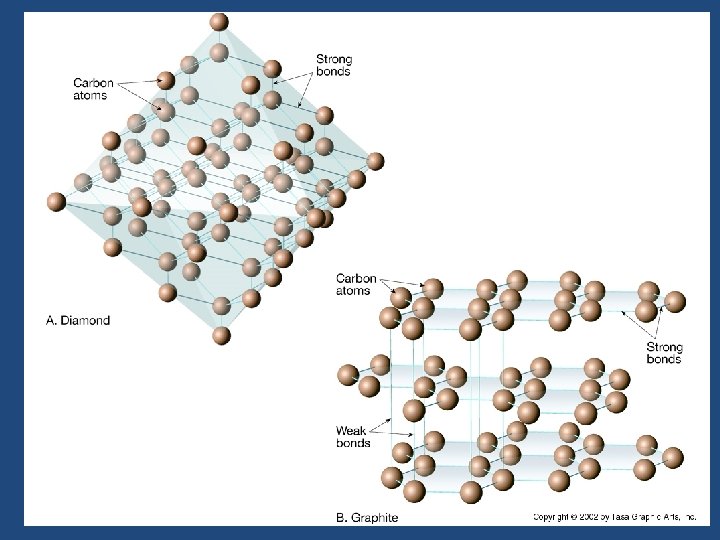
Internal arrangement of atoms - jewelry - Cutting hard substances - Pencil lead - lubricant
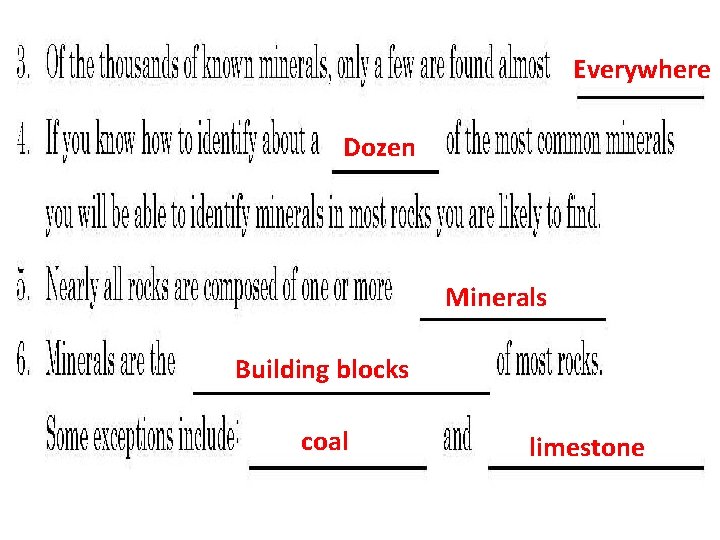
Everywhere Dozen Minerals Building blocks coal limestone
Complete pg 6, 7 in notes packet
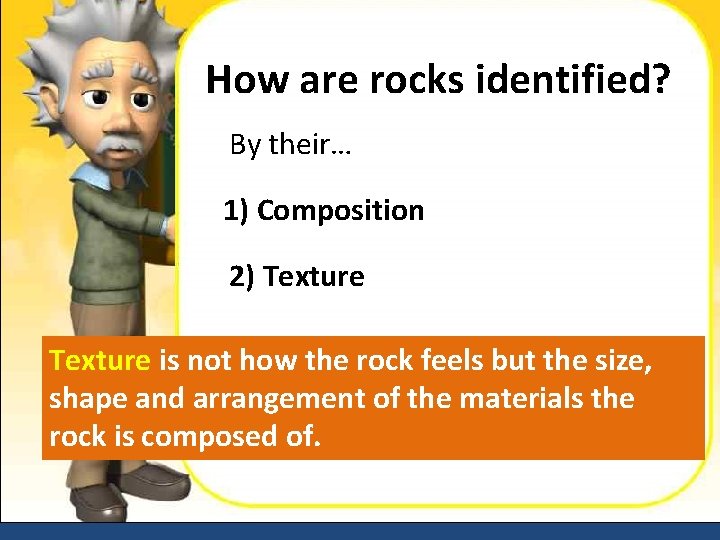
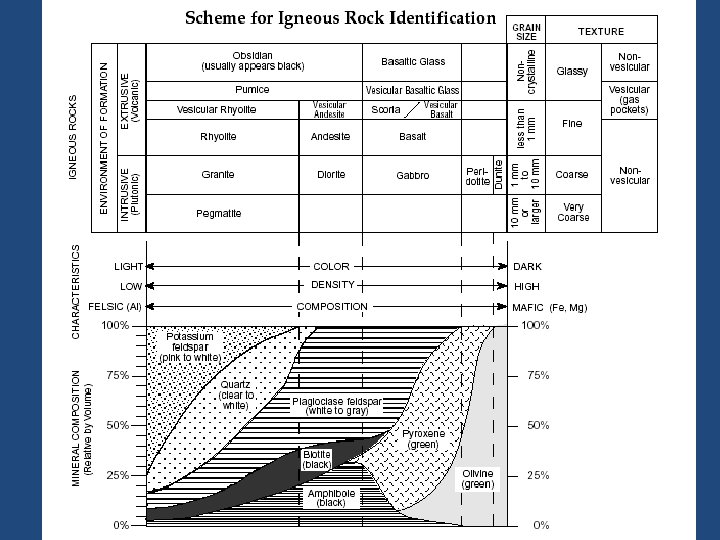
How are rocks identified? By their… 1) Composition 2) Texture is not how the rock feels but the size, shape and arrangement of the materials the rock is composed of.
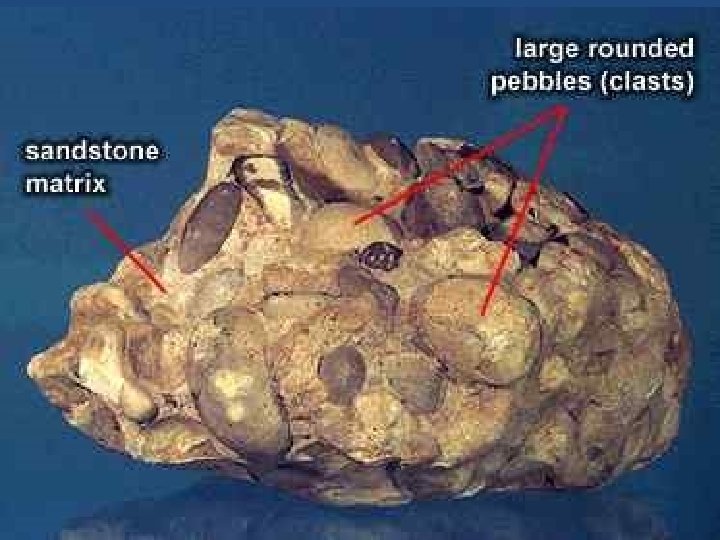
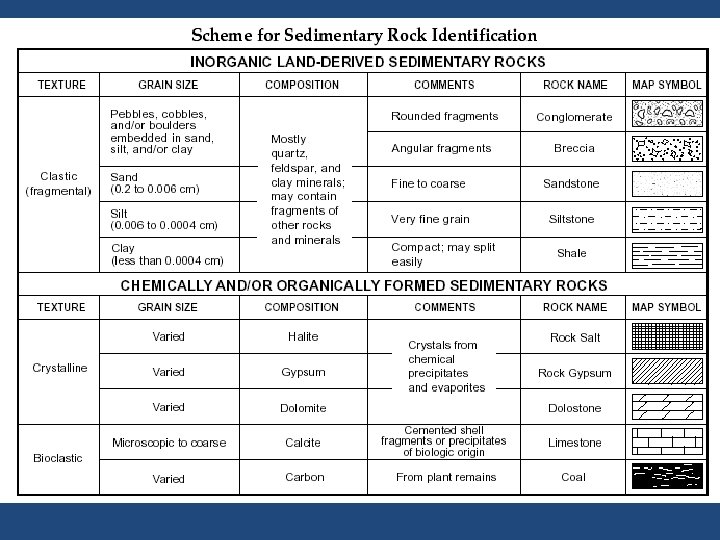
Sedimentary Rocks clasts
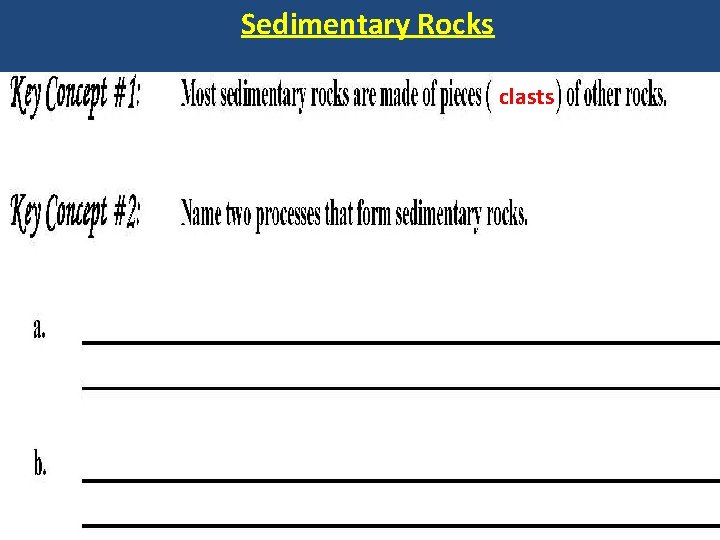
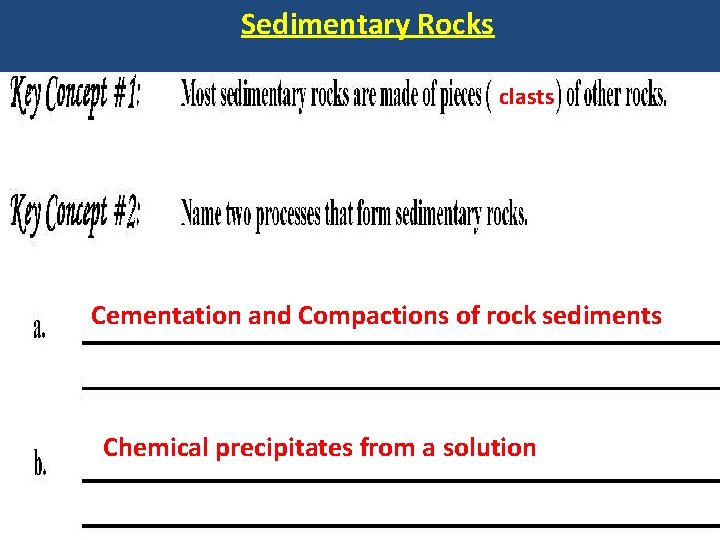
Sedimentary Rocks clasts Cementation and Compactions of rock sediments Chemical precipitates from a solution
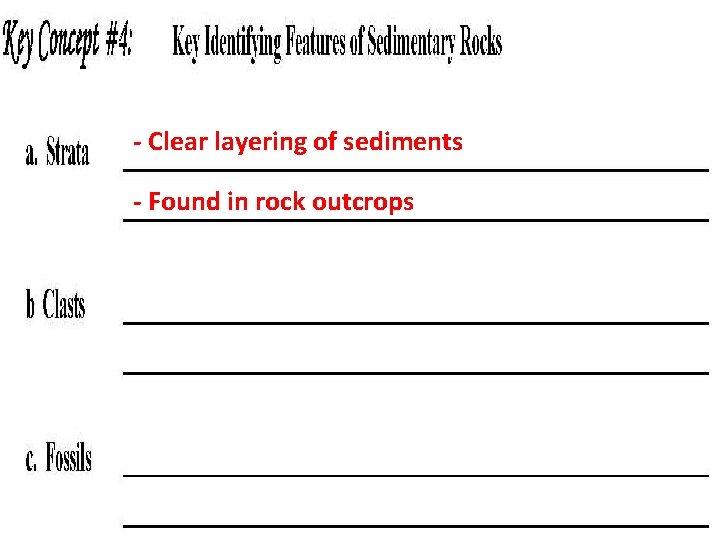
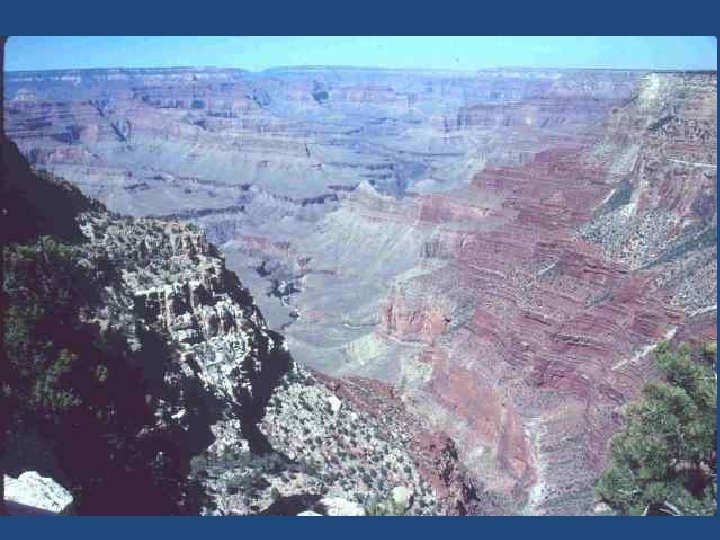
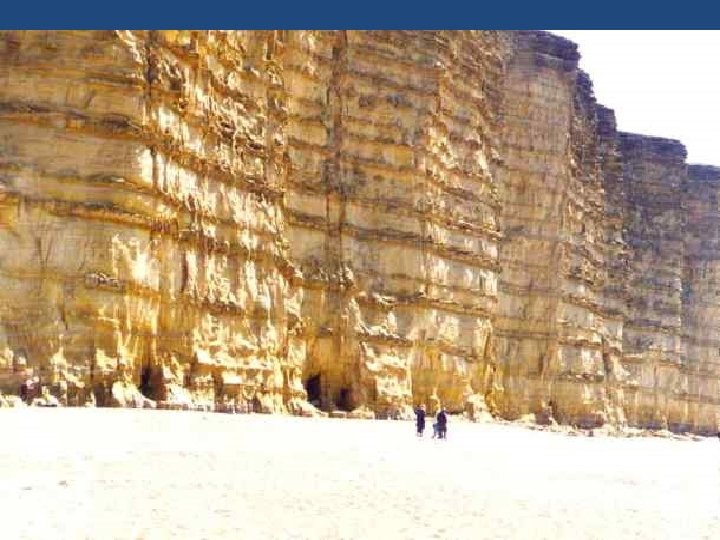
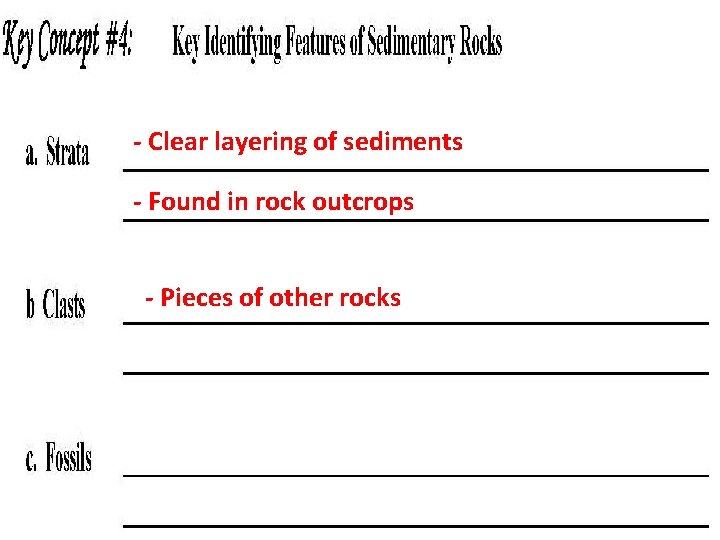
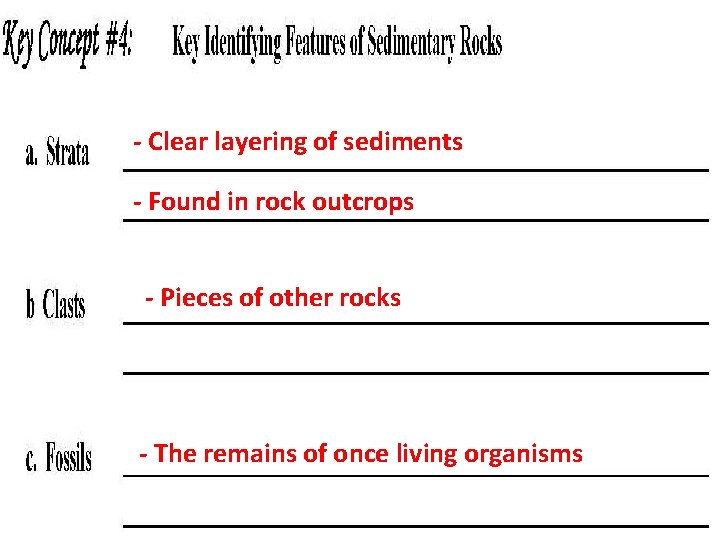
- Clear layering of sediments - Found in rock outcrops
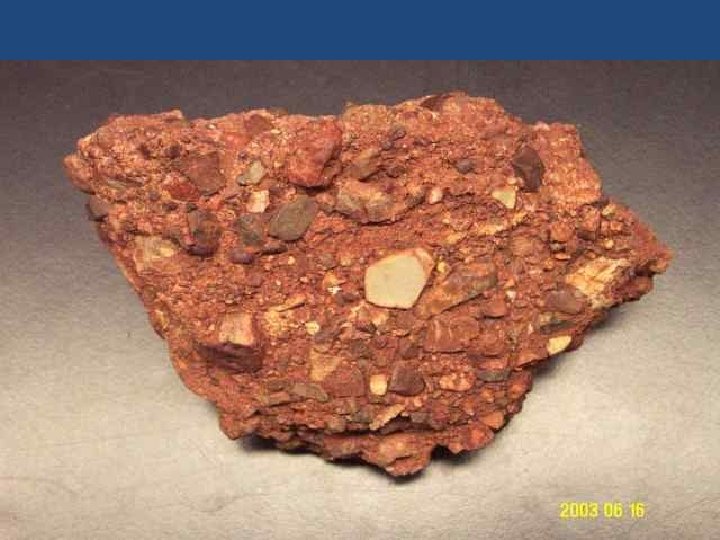
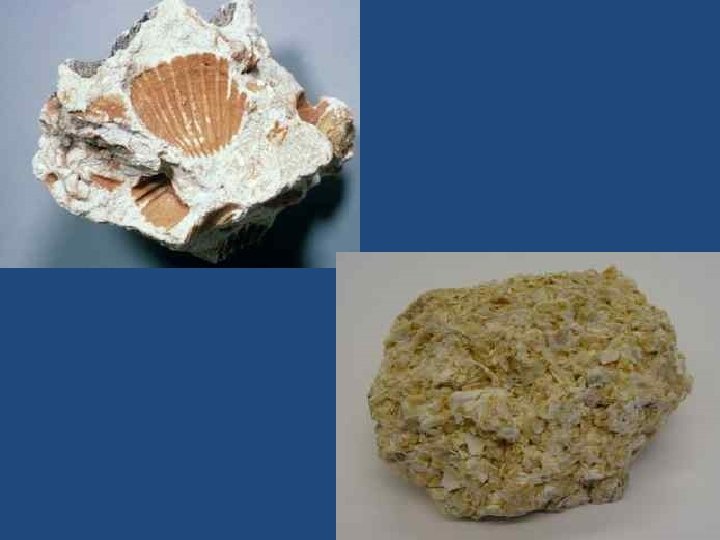
- Clear layering of sediments - Found in rock outcrops - Pieces of other rocks
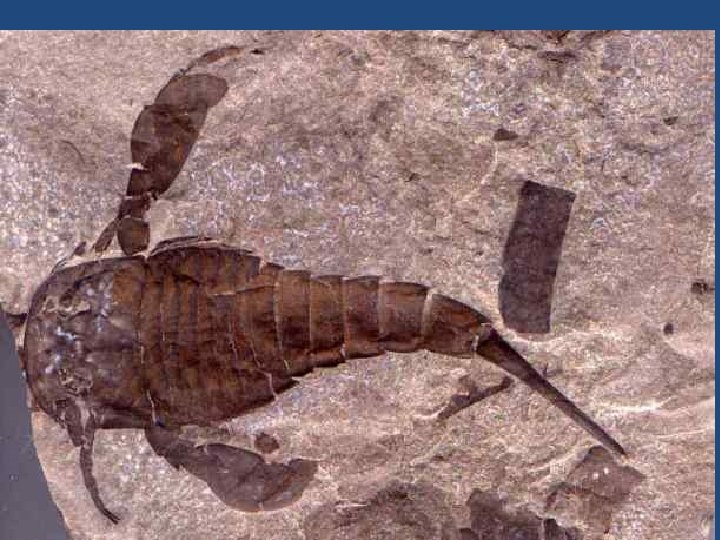
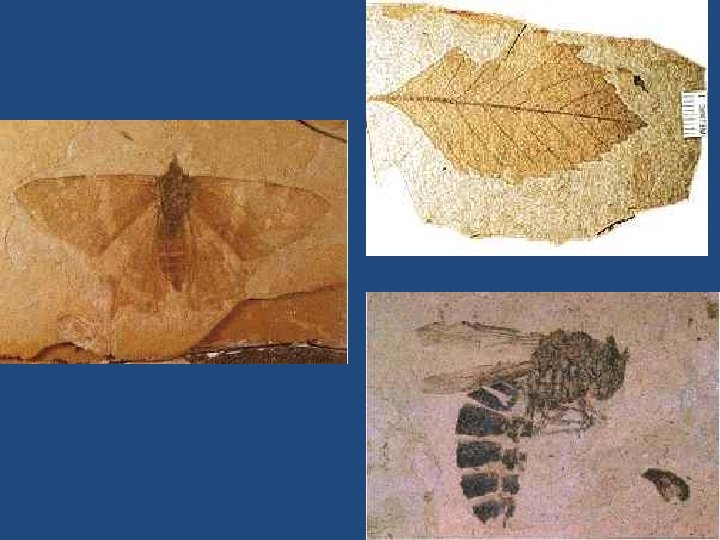
- Clear layering of sediments - Found in rock outcrops - Pieces of other rocks - The remains of once living organisms
http: //www. eram. k 12. ny. us/educatio n/sctemp/47599442 ab 8 e 5070 f 121 df 9 cd 8 bba 399/1255982708/sedimentary. swf Animated sedimentary rocks esrt
Complete pages 9 -10 in notes packet
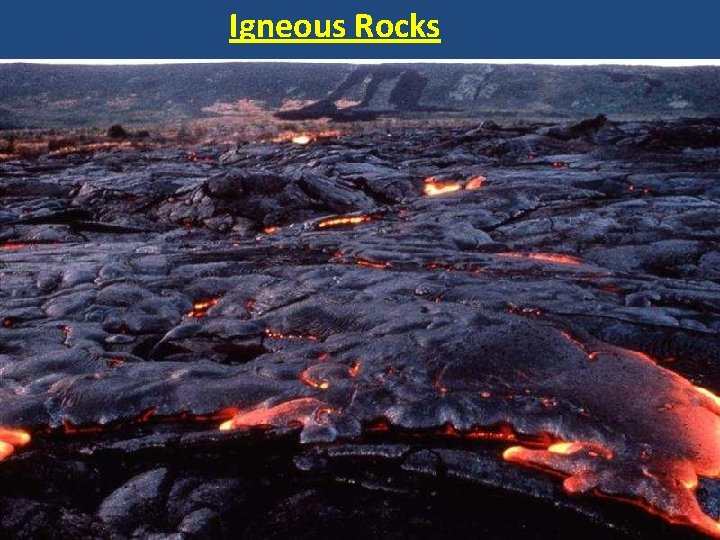
Igneous Rocks
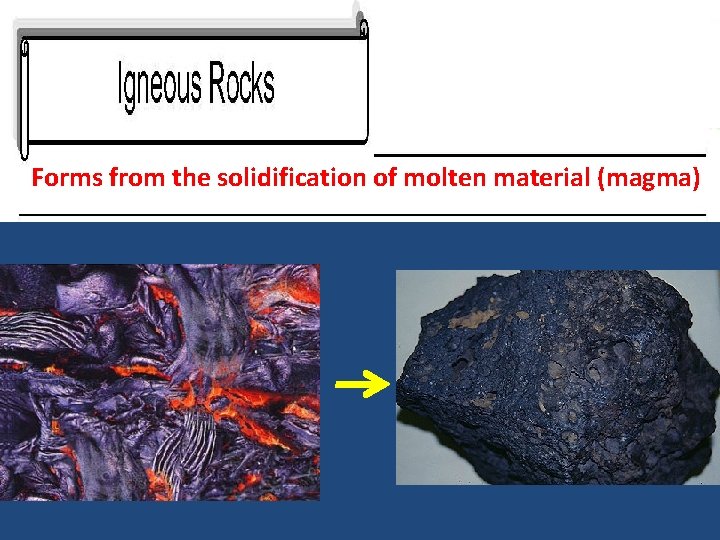
Forms from the solidification of molten material (magma)
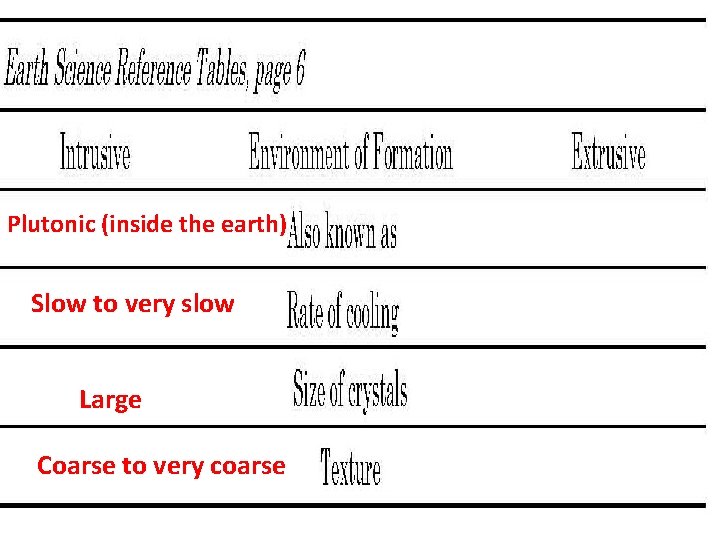
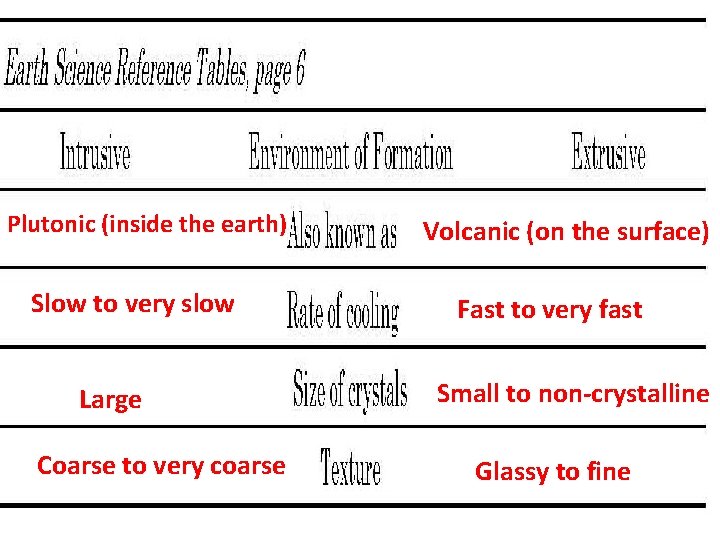
Plutonic (inside the earth) Slow to very slow Large Coarse to very coarse
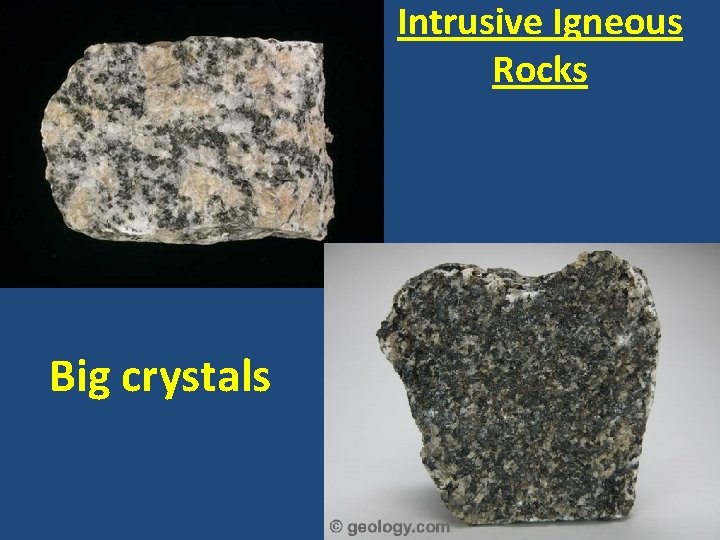
Intrusive Igneous Rocks Big crystals
Plutonic (inside the earth) Slow to very slow Large Coarse to very coarse Volcanic (on the surface) Fast to very fast Small to non-crystalline Glassy to fine
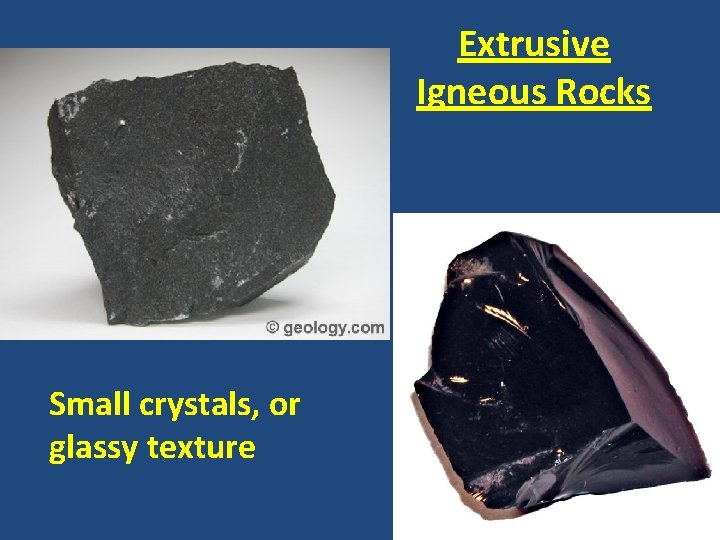
Extrusive Igneous Rocks Small crystals, or glassy texture
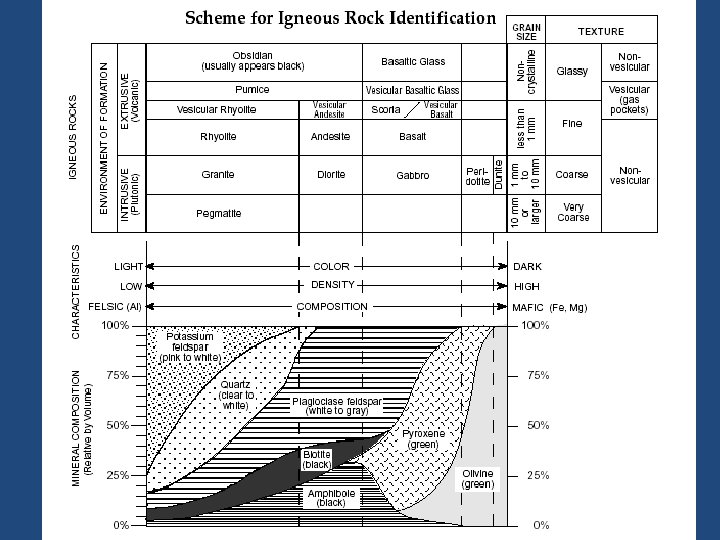
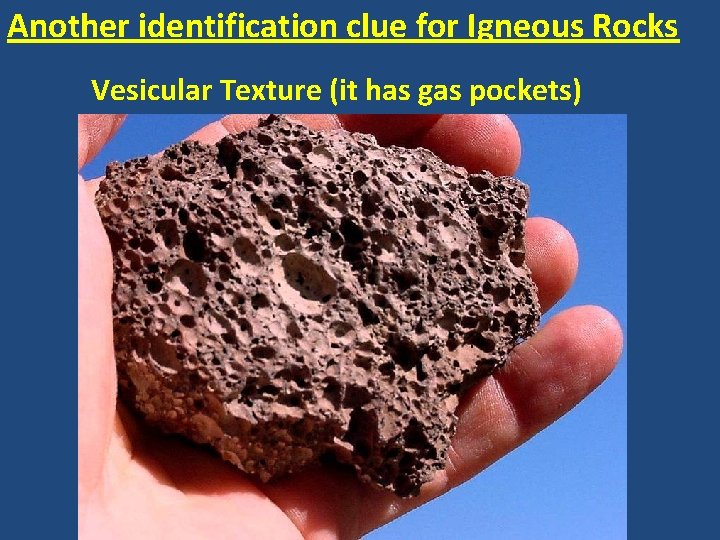
Another identification clue for Igneous Rocks Vesicular Texture (it has gas pockets)
Complete page 11 -13 in notes packet
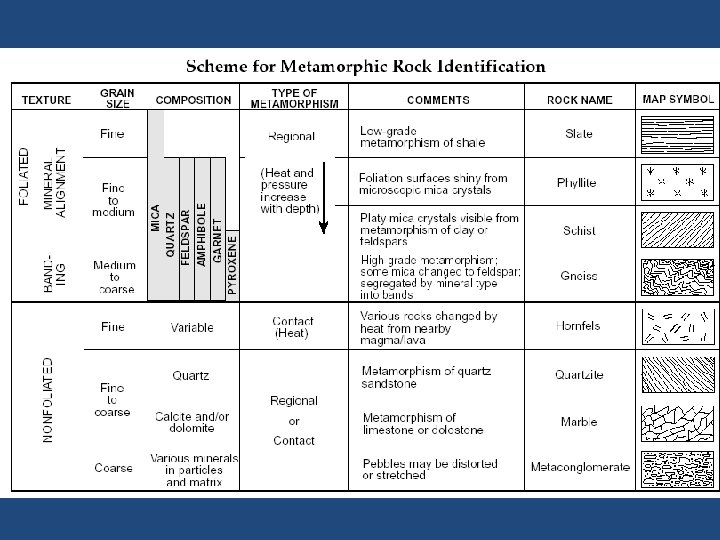
Metamorphic Rocks
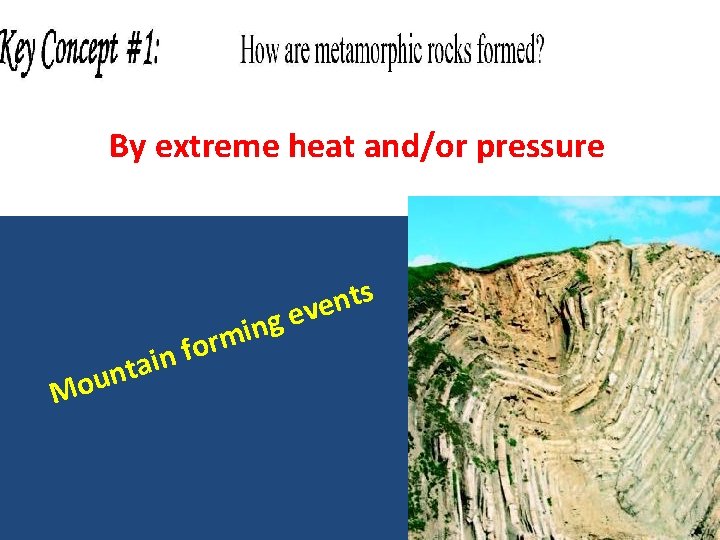
By extreme heat and/or pressure u o M o f n i nta g n i rm s t n eve
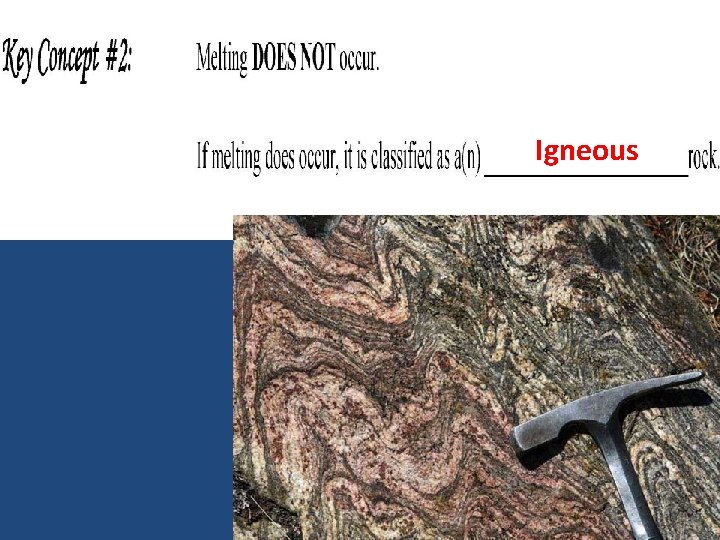
Igneous
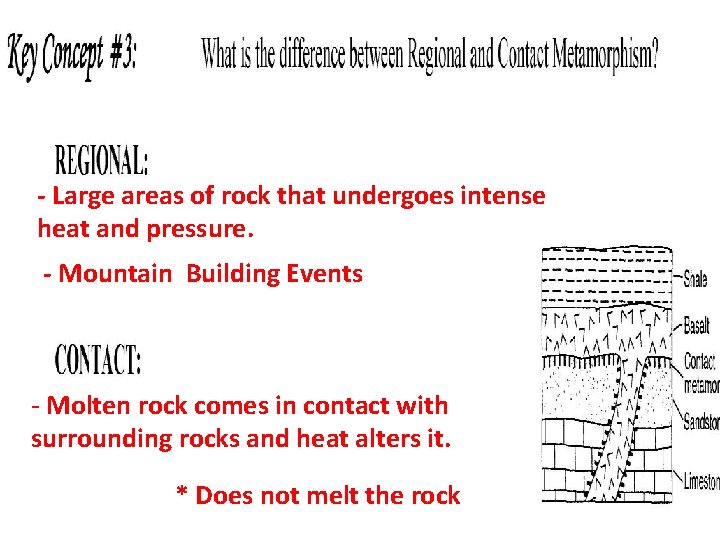
- Large areas of rock that undergoes intense heat and pressure. - Mountain Building Events - Molten rock comes in contact with surrounding rocks and heat alters it. * Does not melt the rock
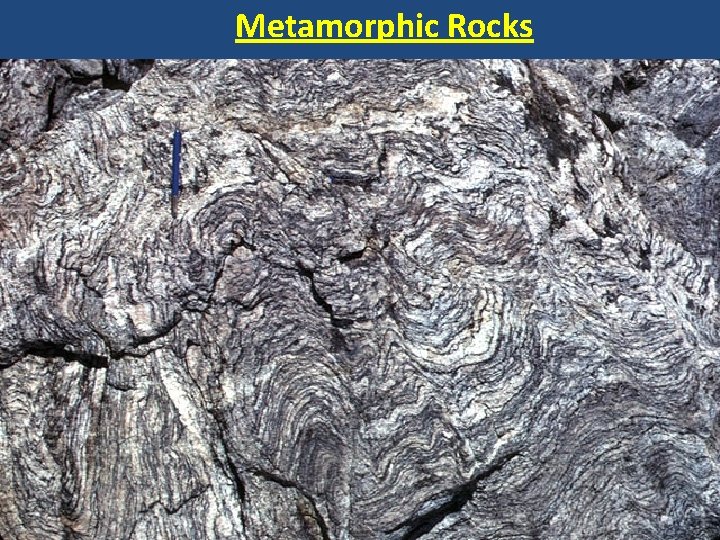
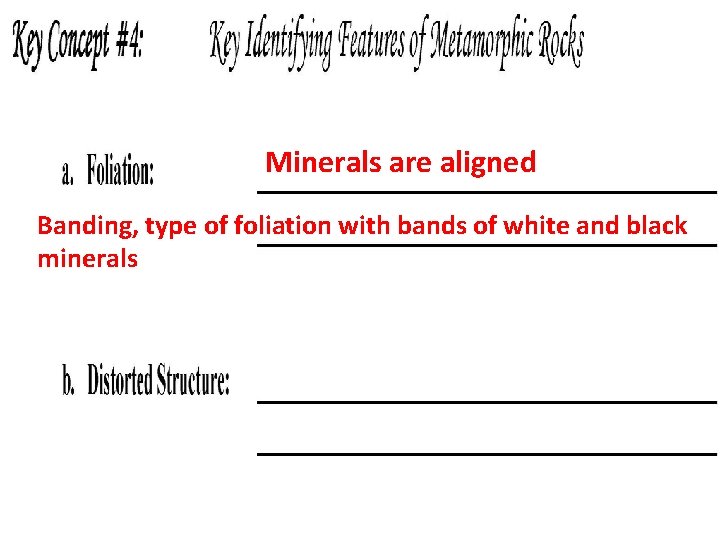
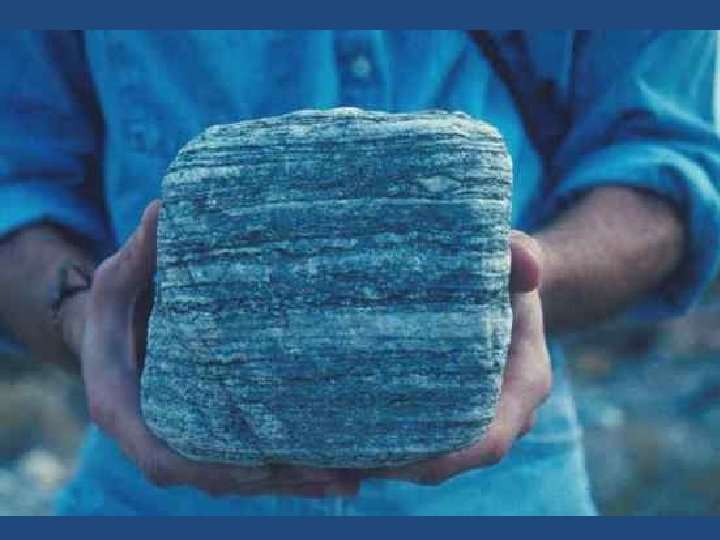
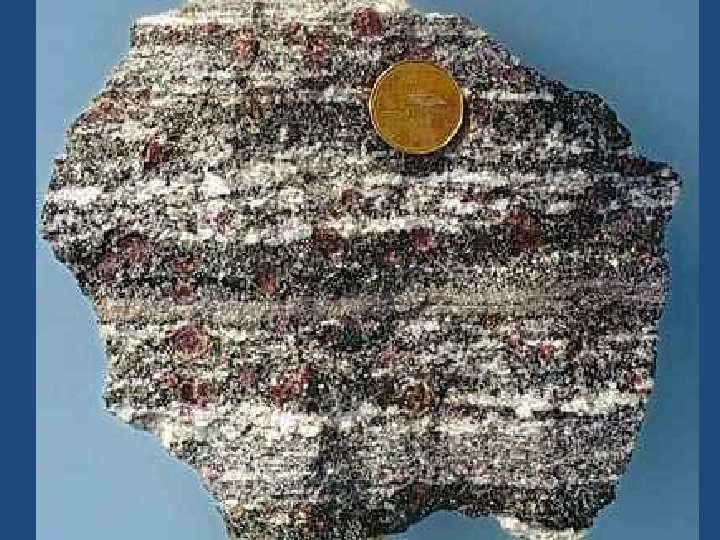
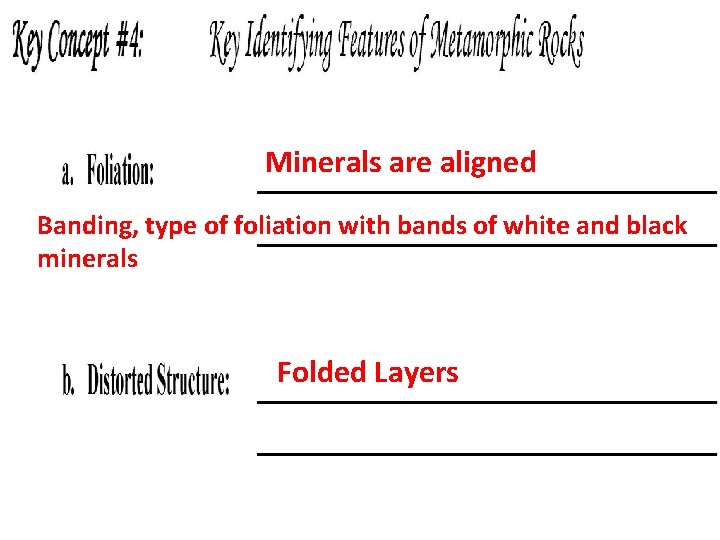
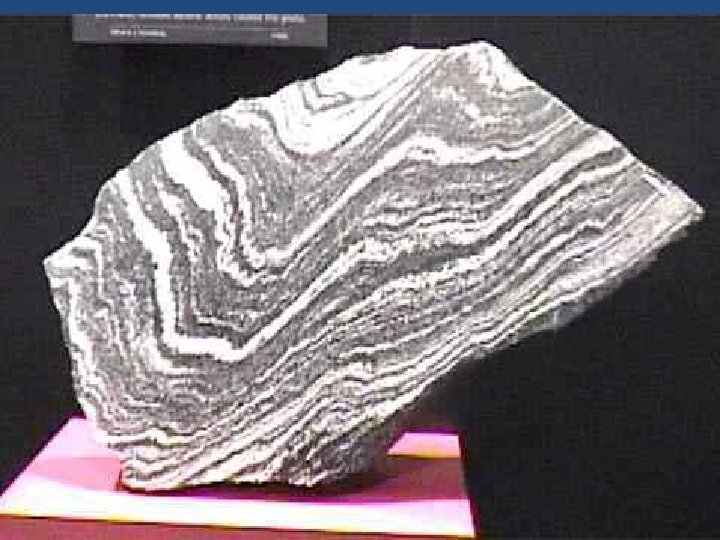
Minerals are aligned Banding, type of foliation with bands of white and black minerals
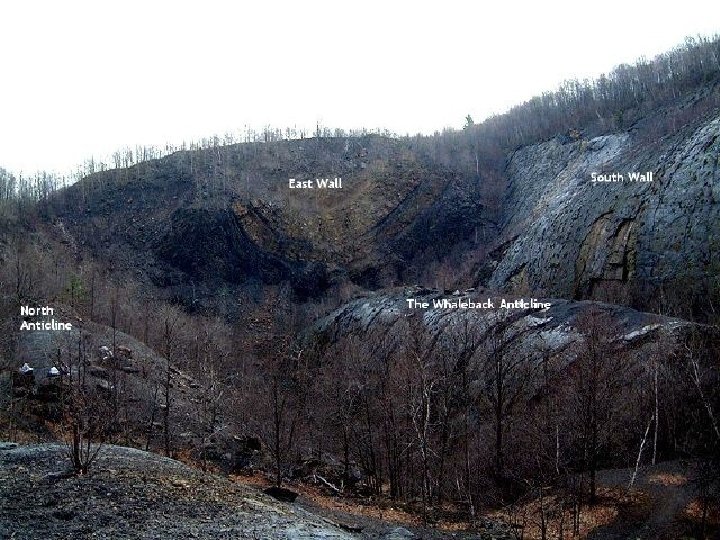
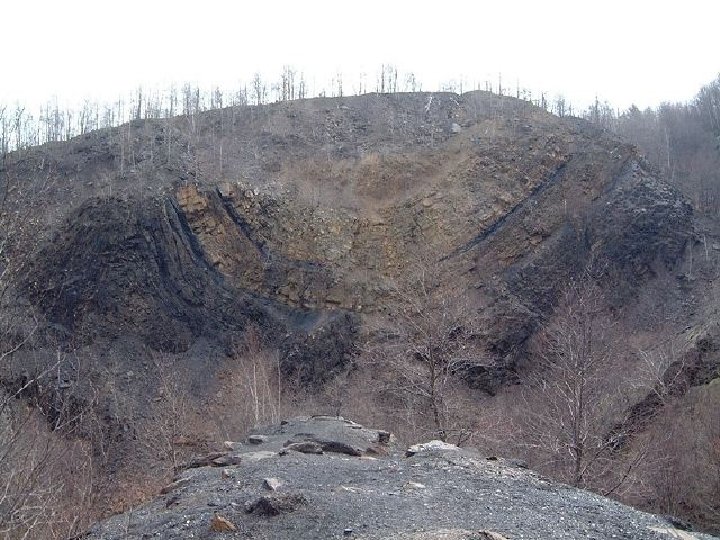
Minerals are aligned Banding, type of foliation with bands of white and black minerals Folded Layers
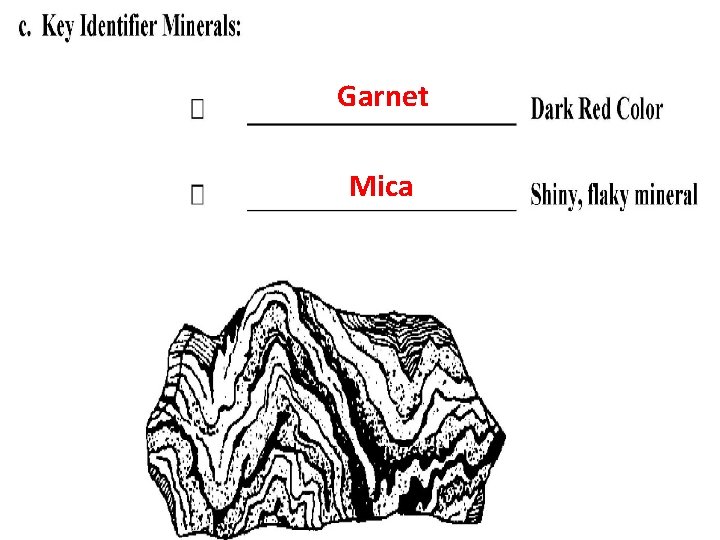
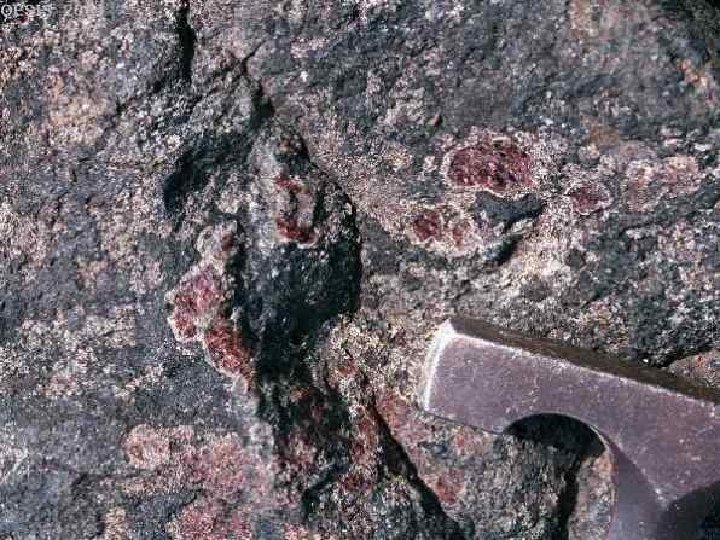
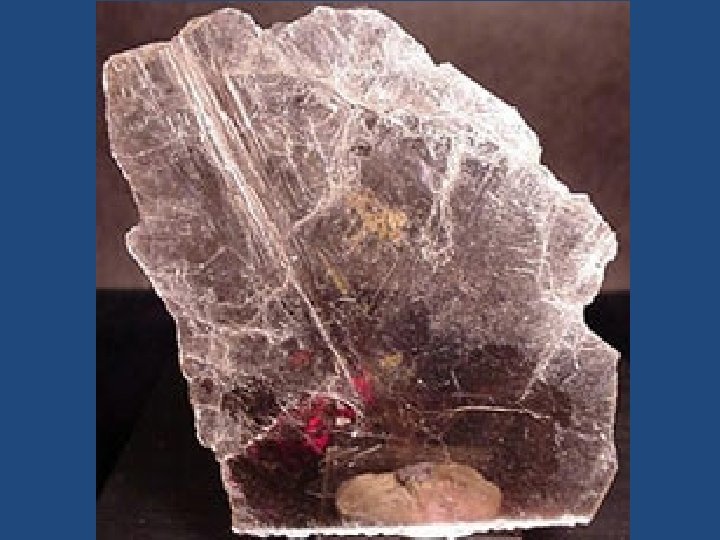
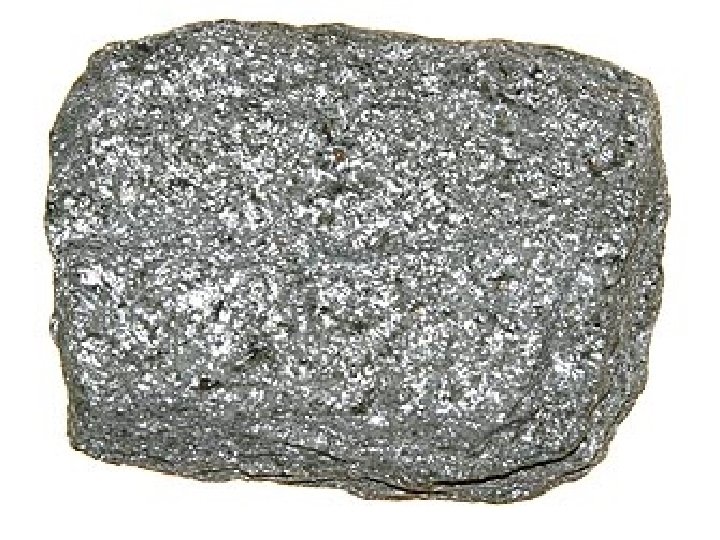
Garnet Mica
Complete pg 15 in notes packet
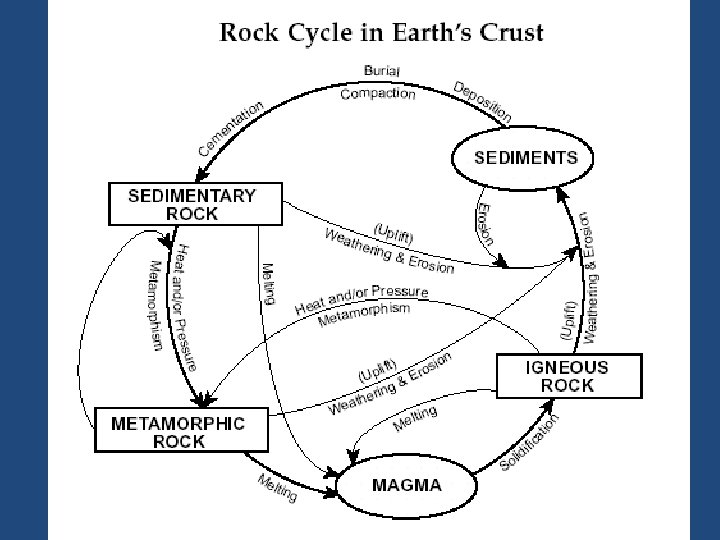
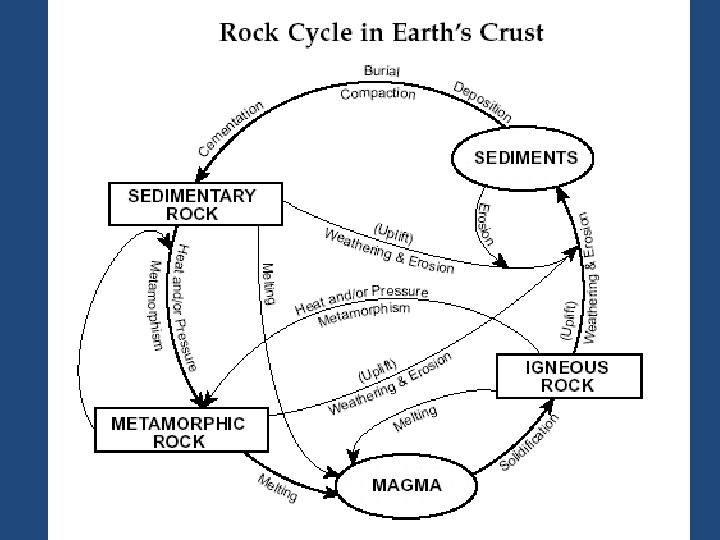
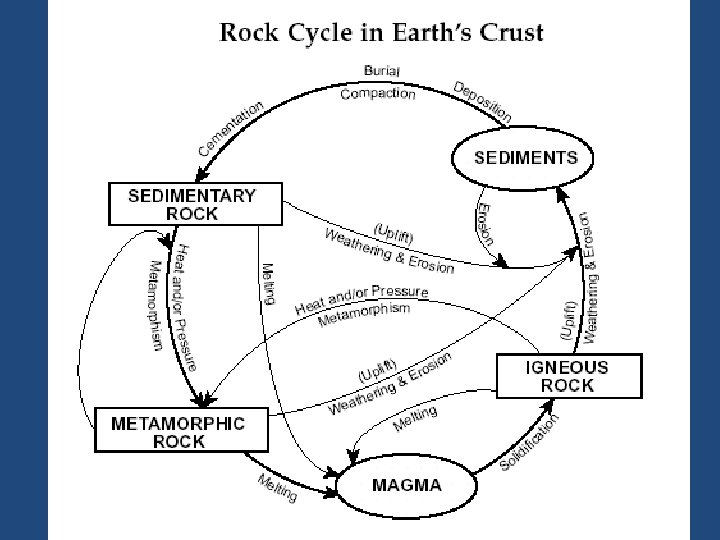
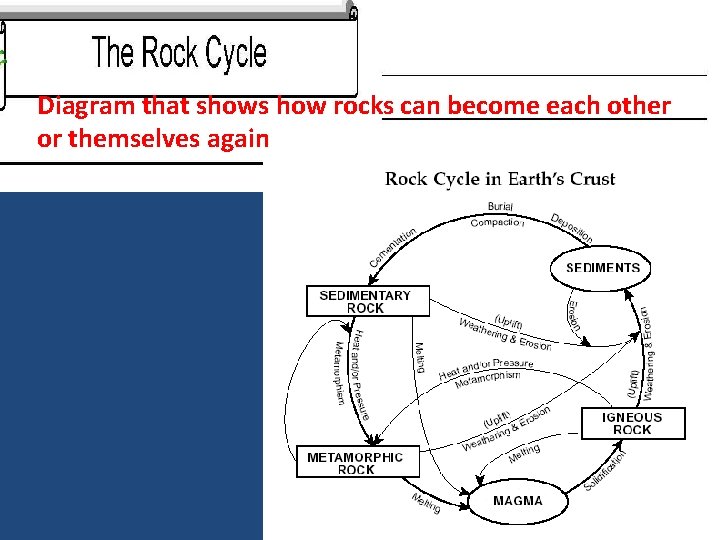
Diagram that shows how rocks can become each other or themselves again
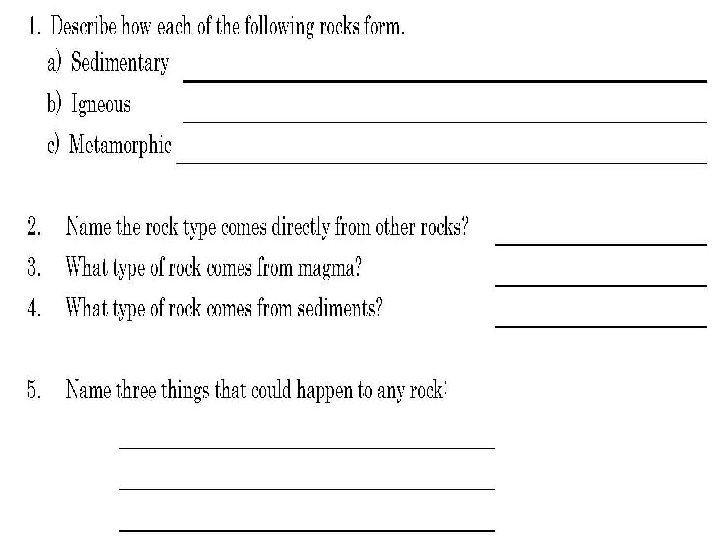
Complete packet