
Rocks And Minerals II CHEMICAL COMPOSITION OF MINERALS

- Slides: 29
Rocks And Minerals
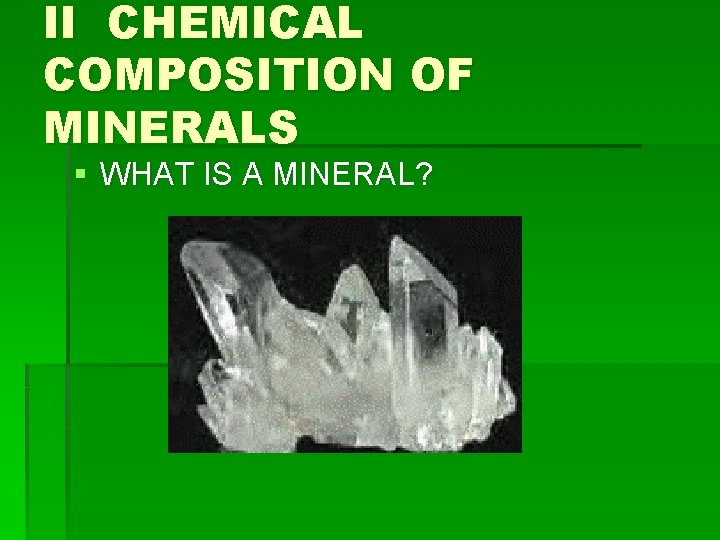
II CHEMICAL COMPOSITION OF MINERALS § WHAT IS A MINERAL?
WHAT IS A MINERAL? § § § A mineral occurs naturally is a solid has definite chemical composition has atoms arranged in orderly pattern is inorganic - no life
WHAT IS A MINERAL? § § § List the names of some minerals quartz halite (keep your eyes off my fries) mica gold diamond
WHAT IS A MINERAL? § Why is a pearl not considered a mineral? How about coal? § Made by an oyster § coal is organic and a sedimentary rock. I think they’re getting this!
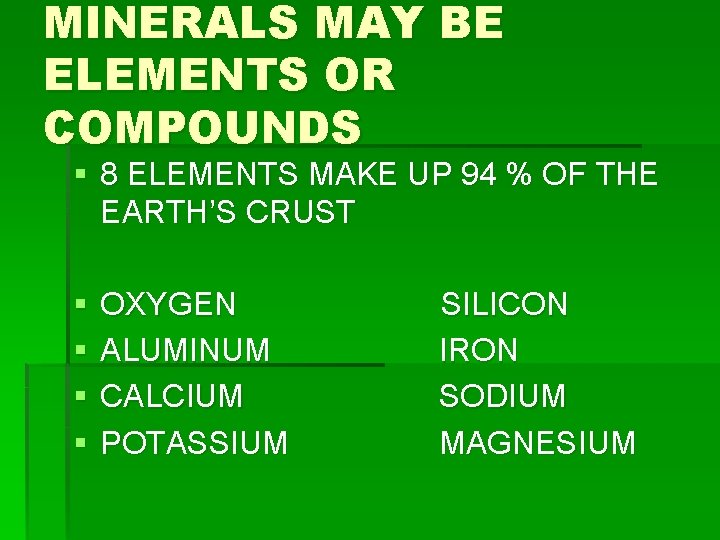
MINERALS MAY BE ELEMENTS OR COMPOUNDS § 8 ELEMENTS MAKE UP 94 % OF THE EARTH’S CRUST § § OXYGEN ALUMINUM CALCIUM POTASSIUM SILICON IRON SODIUM MAGNESIUM
MINERALS MAY BE ELEMENTS OR COMPOUNDS § What are native minerals? § Single element minerals such as § gold § silver § copper § sulfur § diamond
HOW MINERALS FORM § What is the size of the crystal dependant on? § TIME § What are evaporates? § Minerals that form when water containing minerals evaporates.
HOW MINERALS FORM § § List three more ways minerals can form: heat pressure chemical action of water
MINERALS HAVE CRYSTALLINE STRUCTURE § A crystal is a regular geometric solid with smooth surfaces called crystal faces. § Crystals have orderly arrangement of ions and these determine the shape of the crystal.
MINERALS HAVE CRYSTALLINE STRUCTURE six crystal systems § CUBIC § ORTHORHOMBIC § TETRAGONAL § TRICLINIC § HEXAGONAL § MONOCLINIC
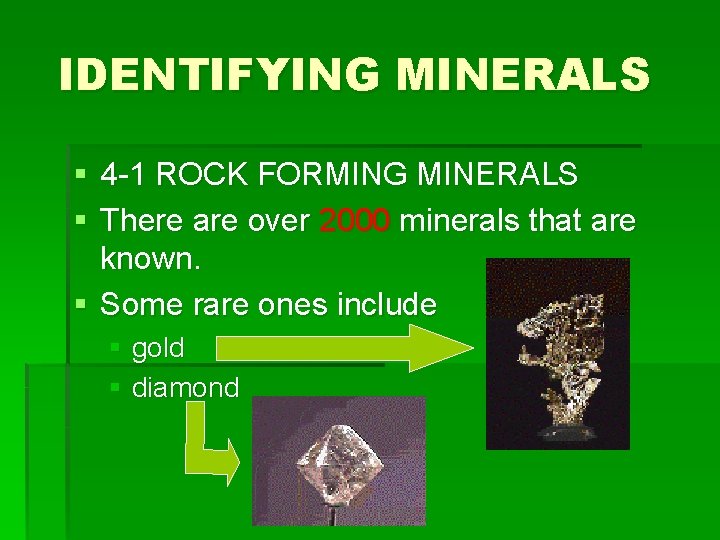
IDENTIFYING MINERALS § 4 -1 ROCK FORMING MINERALS § There are over 2000 minerals that are known. § Some rare ones include § gold § diamond
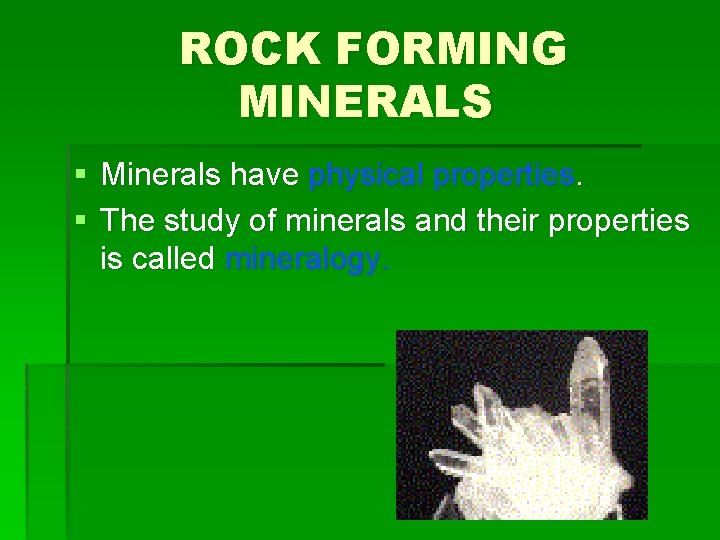
ROCK FORMING MINERALS § Minerals have physical properties. § The study of minerals and their properties is called mineralogy.
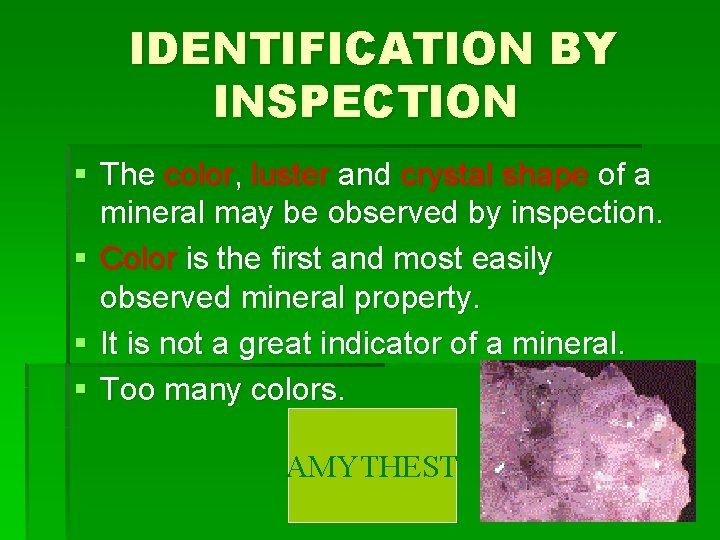
IDENTIFICATION BY INSPECTION § The color, luster and crystal shape of a mineral may be observed by inspection. § Color is the first and most easily observed mineral property. § It is not a great indicator of a mineral. § Too many colors. AMYTHEST
IDENTIFICATION BY SIMPLE TESTS § There are many tests that can be performed in the field to also help identify a mineral. § Steak, cleavage, fracture, hardness, specific gravity
SPECIAL PROPERTIES OF MINERALS § § § § List 6 special properties of minerals. 1. Magnetic 2. Taste 3. Fluorescence 4. Phosphorescent 5. Radioactive 6. Double refraction
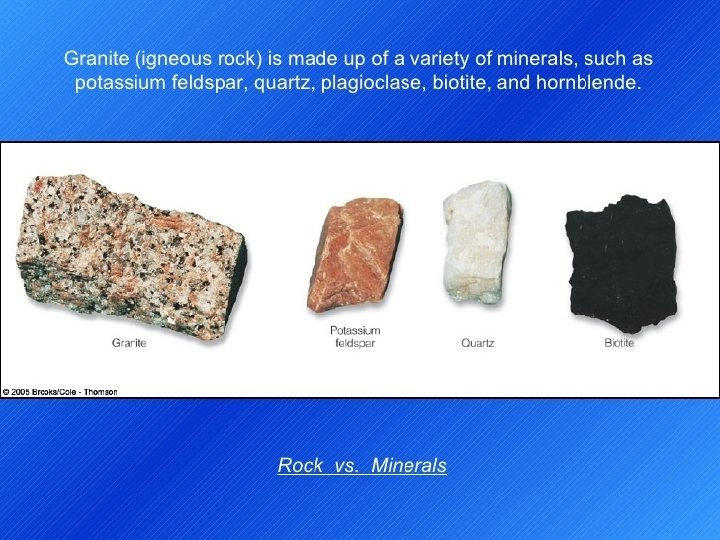
THREE GROUPS OF ROCKS § A rock can be generally defined as a group of minerals bound together in some way. § All rocks on the crust of the Earth in one of three general ways § IGNEOUS § SEDIMENTARY § METAMORPHIC
IGNEOUS ROCKS § Igneous rocks form by the cooling and hardening of hot molten rock from inside Earth. § This hot molten rock is called magma. This magma is HOT stuff!
IGNEOUS ROCKS § Igneous rocks can form inside the earth or at the surface. § 1. PLUTONIC OR INTRUSIVE igneous rocks. Cooled inside the Earth then later exposed. MAGMA § 2. VOLCANIC OR EXTRUSIVE igneous rocks. Cooled outside the Earth’s crust. LAVA
SEDIMENTARY ROCKS § Sedimentary rocks are formed by the hardening and cementing of layers of sediments. § The sediments may consist of rock fragments, plant and animal remains, or chemicals that form on lake and ocean bottoms.
KINDS OF SEDIMENTS § Sedimentary rocks form when sediments form into rocks. § Three kinds of sedimentary rocks; § 1. CLASTIC § 2. CHEMICAL § 3. ORGANIC
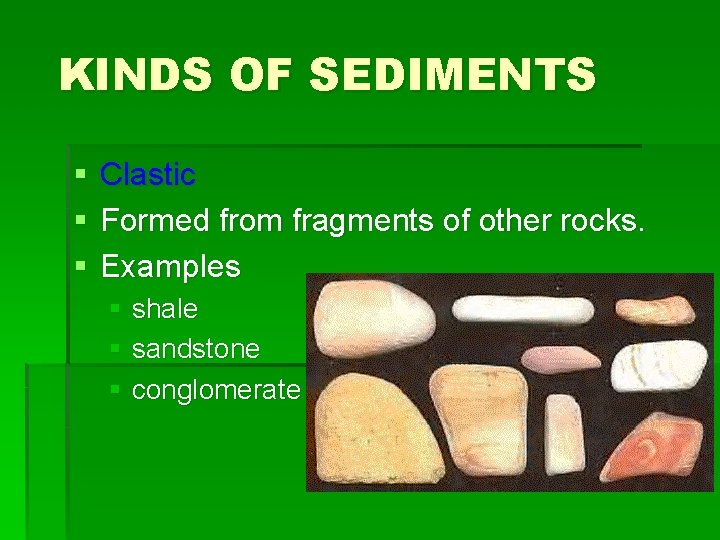
KINDS OF SEDIMENTS § Clastic § Formed from fragments of other rocks. § Examples § shale § sandstone § conglomerate
KINDS OF SEDIEMNTS § Chemical § Formed from mineral grains that fall out of solution (precipitate) by evaporation or chemical action. § Examples § rock salt (halite) § limestone
KINDS OF SEDIMENTS § ORGANIC § Formed from the remains of plants and animals. § examples § coal § limestone formed from shells
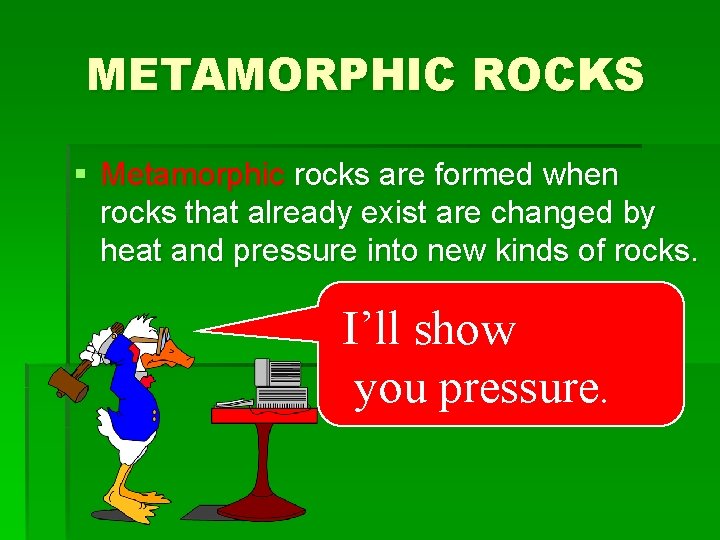
METAMORPHIC ROCKS § Metamorphic rocks are formed when rocks that already exist are changed by heat and pressure into new kinds of rocks. I’ll show you pressure.
METAMORPHIC ROCKS § § Name four metamorphic rocks. 1. MARBLE 2. SLATE 3. GNEISS 4. QUARTZITE Metamorphic rocks are rocks that have been changed through either heat or pressure or chemicals.
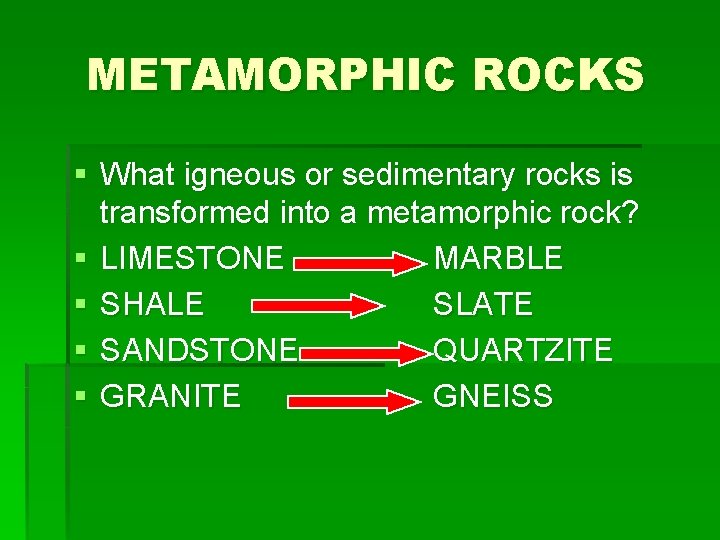
METAMORPHIC ROCKS § What igneous or sedimentary rocks is transformed into a metamorphic rock? § LIMESTONE MARBLE § SHALE SLATE § SANDSTONE QUARTZITE § GRANITE GNEISS
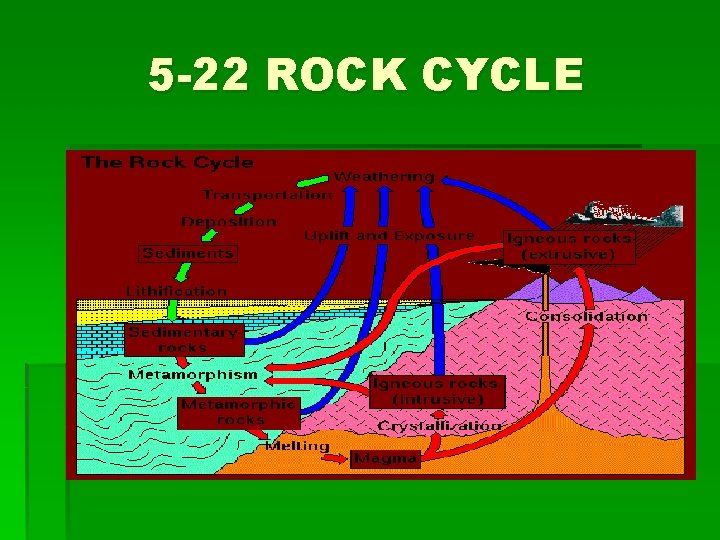
5 -22 ROCK CYCLE