
Rocks and Fossils Learning about ROCKS Rocks are
Rocks and Fossils

Learning about ROCKS • Rocks are all around us. • Scientists who study rocks are known as geologists. • Geologists examine rocks to learn about the earth. • Sedimentary rocks are the most common. – They form in layers. [Example 1] [Example 2]
Fossils • Sometimes geologists find fossils in rocks and between layers of rocks. • Fossils of plants and animals, along with rock layers, help geologists learn about the past.
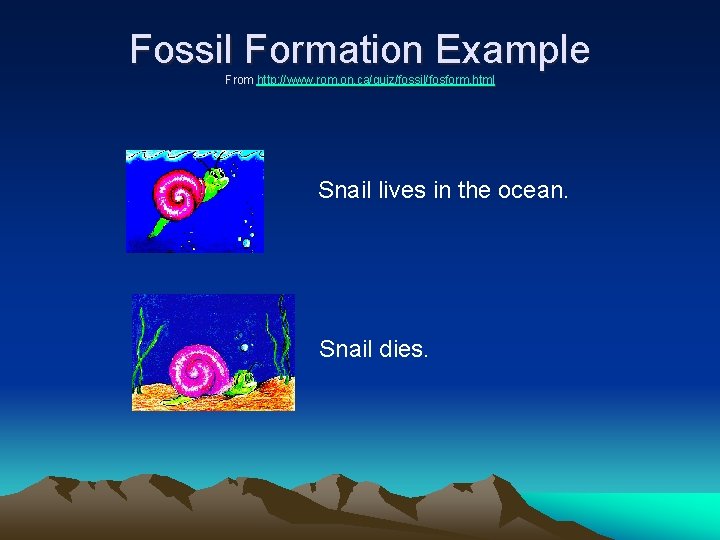
Fossil Formation Example From http: //www. rom. on. ca/quiz/fossil/fosform. html Snail lives in the ocean. Snail dies.
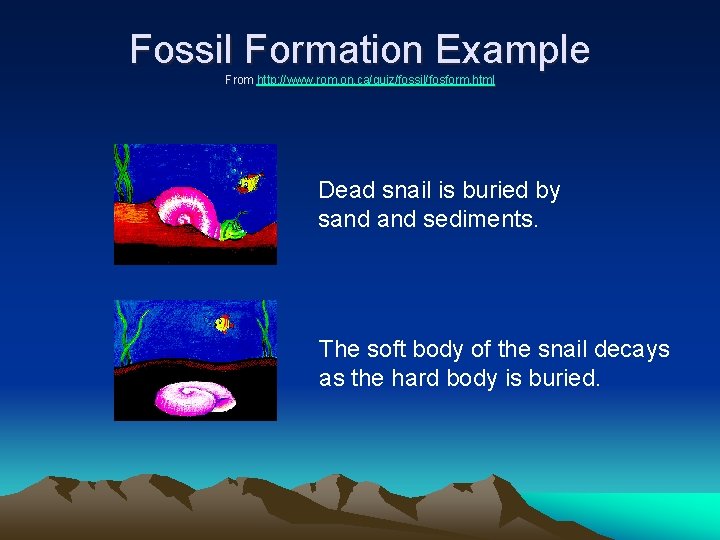
Fossil Formation Example From http: //www. rom. on. ca/quiz/fossil/fosform. html Dead snail is buried by sand sediments. The soft body of the snail decays as the hard body is buried.
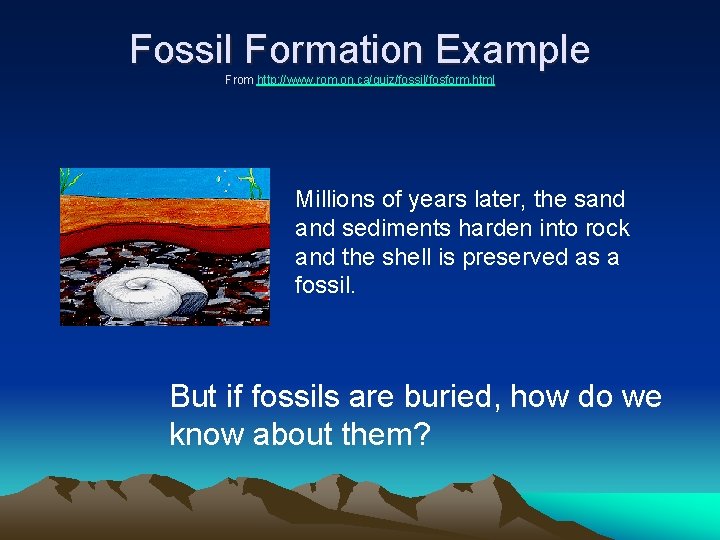
Fossil Formation Example From http: //www. rom. on. ca/quiz/fossil/fosform. html Millions of years later, the sand sediments harden into rock and the shell is preserved as a fossil. But if fossils are buried, how do we know about them?
Chalk Talk • Chalk can help us answer the question. • What happens to chalk if your teacher uses it to write on the chalkboard day after day? – It wears away slowly. – This wearing away is called weathering. • Erosion carries weathered rock away – Water, wind and ice cause erosion.
Did you know…? • All rocks can be weathered and eroded. • As layers of rock are weathered or eroded, fossils appear. • Mountains don’t grow up over time—they shrink. Any idea why?
Study Question As part of a school project, you place a rock weighing exactly 2 kg (kilograms) at the top of a hill. After 10 years, no person has touched the rock. What would you expect the rock to weigh—more than 2 kg, exactly 2 kg, or less than 2 kg? Give a reason for your answer. http: //www. ode. state. oh. us/proficiency/sample_tests/fourth/4 ptscie. pdf

Appalachian Mountains
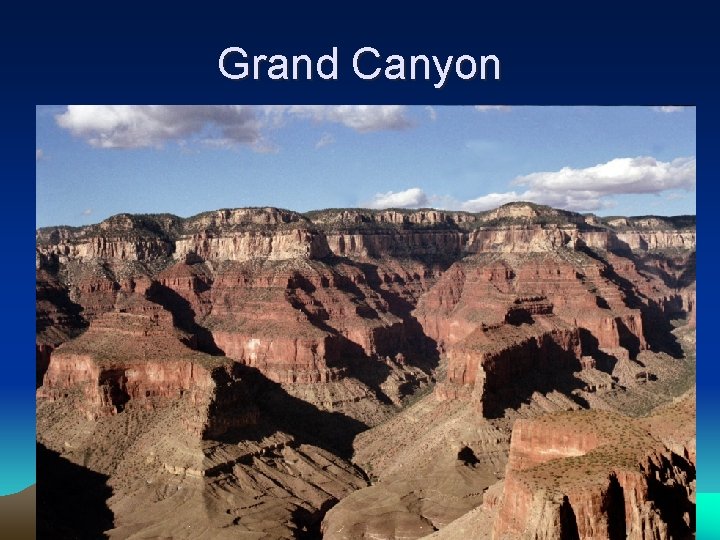
Grand Canyon
- Slides: 11