
ROCKS 1 2 nd Year Biology Class Faculty
ROCKS 1 2 nd Year – Biology Class – Faculty of Education – 2020 PRESENTED BY DR. MOHAMED OMRAN FACULTY OF SCIENCE
What is a rock ? • Naturally-occurring mixtures of minerals, mineraloids, glass or organic matter. • Rocks are divided into 3 groups based on how they were formed: § IGNEOUS § SEDIMENTARY § METAMORPHIC
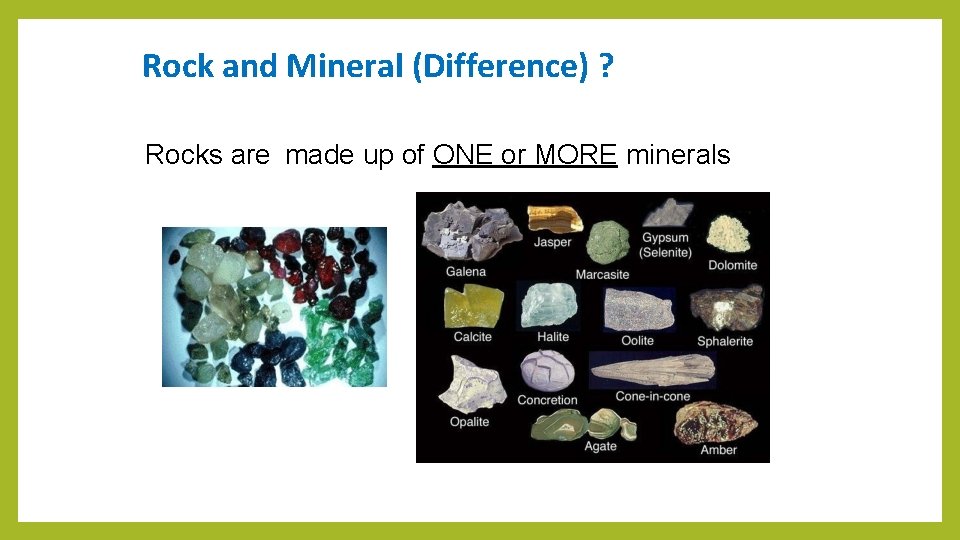
Rock and Mineral (Difference) ? Rocks are made up of ONE or MORE minerals .
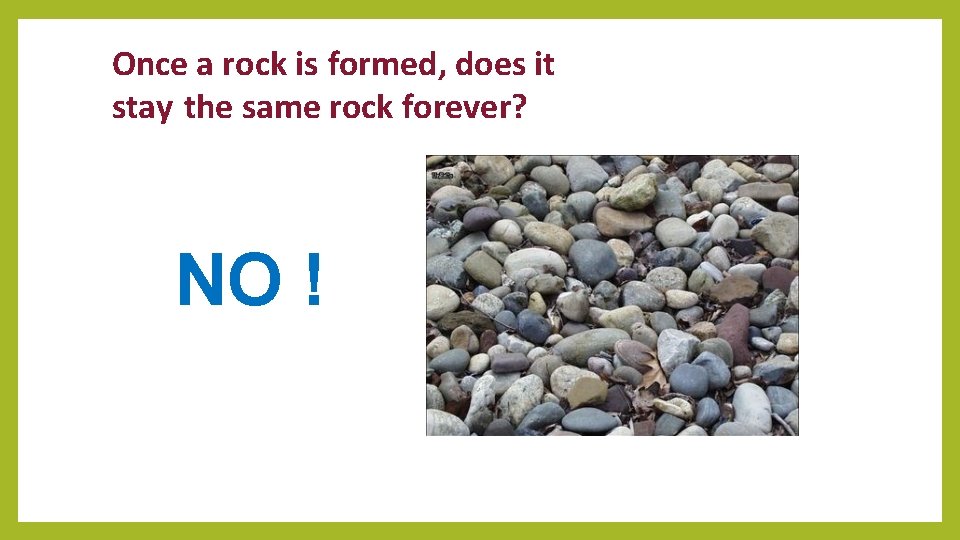
Once a rock is formed, does it stay the same rock forever? NO !
Rocks are continually changed to and from the three types by many processes, such as: • • • Weathering Erosion Compaction Cementation Melting Cooling
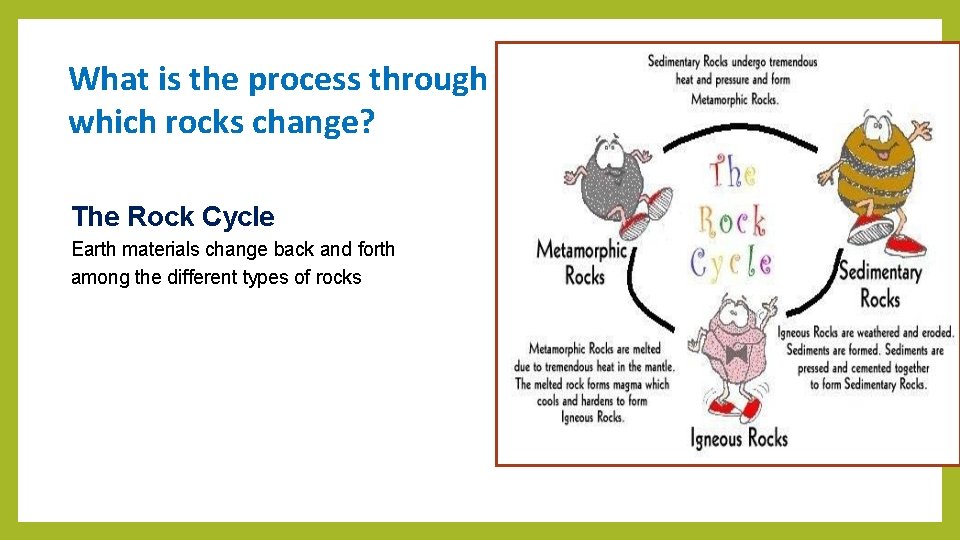
What is the process through which rocks change? The Rock Cycle Earth materials change back and forth among the different types of rocks
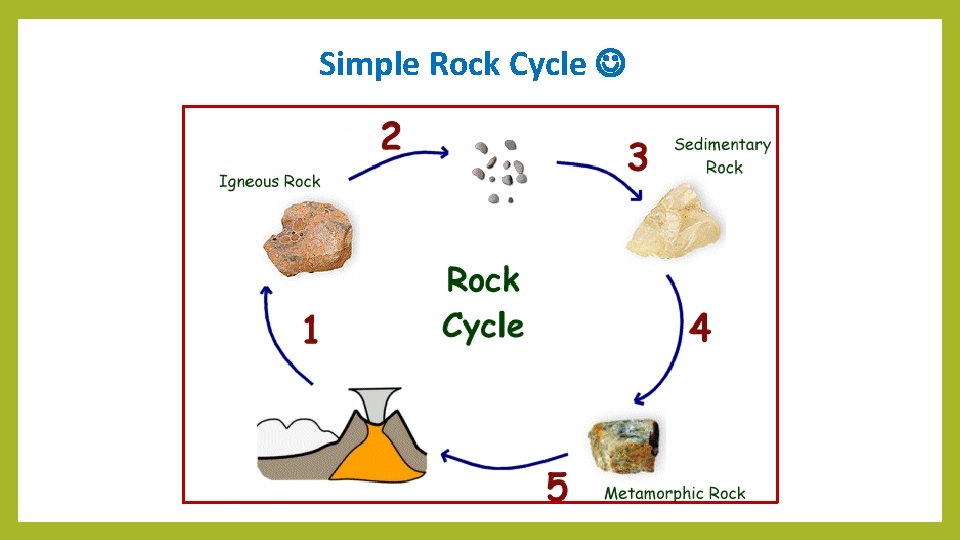
Simple Rock Cycle
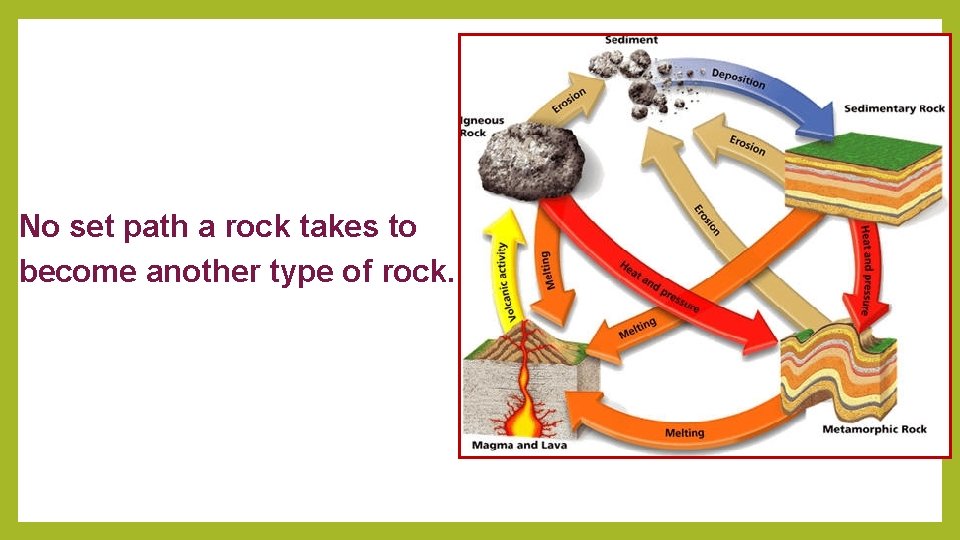
No set path a rock takes to become another type of rock.
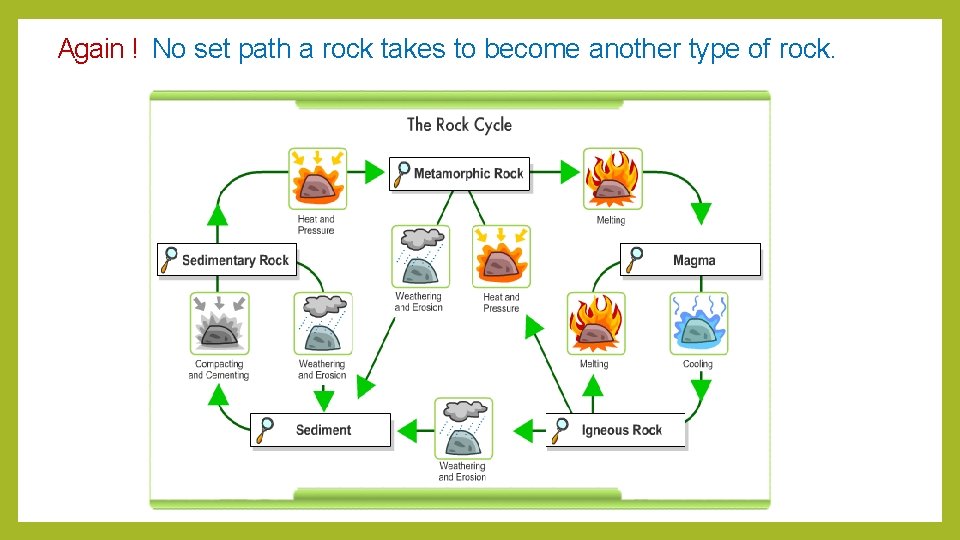
Again ! No set path a rock takes to become another type of rock.
How Rocks Change § All rocks change slowly from one type to another, again and again. The changes form a cycle, called "the rock cycle. “ § The way rocks change depends on various processes that are always taking place on and under the earth's surface.
Heat & Pressure Heat § Below the earth's surface, temperatures are hot enough to melt most rocks. § Before the melting point is reached, a rock can undergo many changes while in a solid state. § Changing from one type to another without melting. Pressure § An additional factor that can transform rocks is the pressure caused by tons of other rocks pressing down on it from above.
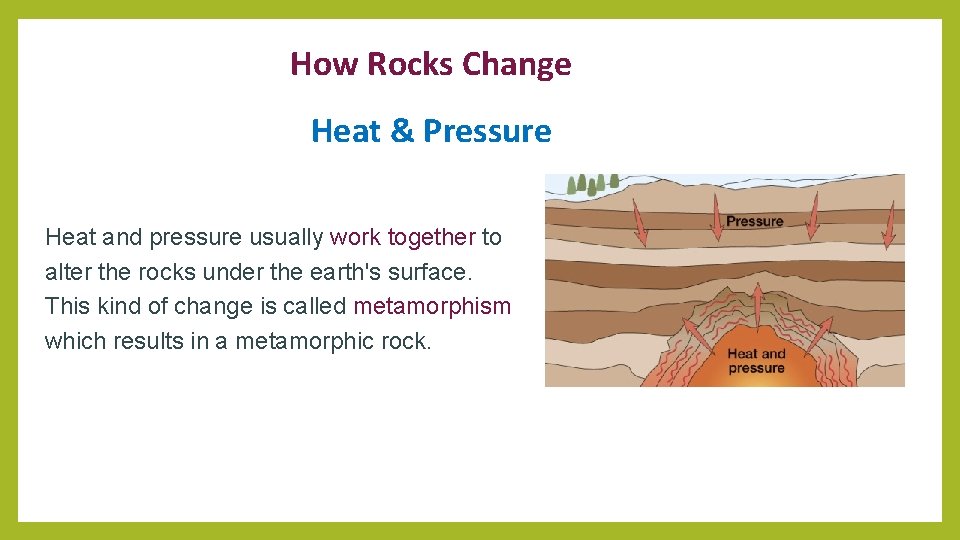
How Rocks Change Heat & Pressure Heat and pressure usually work together to alter the rocks under the earth's surface. This kind of change is called metamorphism which results in a metamorphic rock.
How Rocks Change Melting & Cooling Melting § The high temperatures required to melt a rock are generally found only deep within the earth. § It takes temperatures between 600 and 1, 300 degrees Celsius to melt a rock, turning it into a substance called magma (molten rock). Cooling Liquid magma also turns into a solid — a rock — when it is cooled. Any rock that forms from the cooling of magma is an igneous rock. Magma that cools quickly forms one kind of igneous rock, and magma that cools slowly forms another kind.
How Rocks Change Melting & Cooling Extrusive Igneous § When magma rises from deep within the earth and explodes out of a volcano, it is called lava, and it cools quickly on the surface. § Rock formed in this way is called extrusive igneous rock. It is extruded, or pushed, out of the earth's interior and cools outside of or very near the earth's surface. Intrusive Igneous § Magma that cools at a much slower rate than lava. The type of rock formed in this way is called intrusive igneous rock. It intrudes, or pushes, into the earth's interior and cools beneath the surface.
How Rocks Change Weathering & Compacting Weathering § Weathering, such as rain or wind, cause rocks to get eroded or broken down into smaller pieces. § These small pieces of rock form the sediment that creates sedimentary rock. Compacting § As these little pieces of sediment get compacted together, they eventually for a sedimentary rock.
- Slides: 15