
Rocket Nomenclature EGR 4347 Analysis and Design of


- Slides: 8
Rocket Nomenclature EGR 4347 Analysis and Design of Propulsion Systems
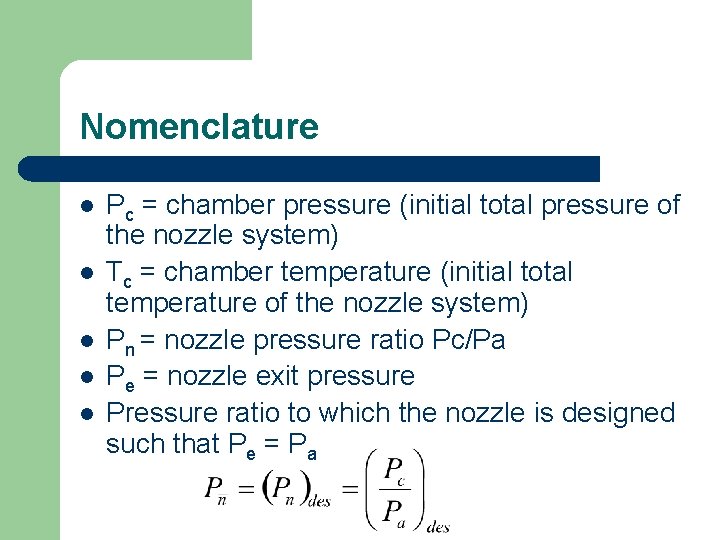
Nomenclature l l l Pc = chamber pressure (initial total pressure of the nozzle system) Tc = chamber temperature (initial total temperature of the nozzle system) Pn = nozzle pressure ratio Pc/Pa Pe = nozzle exit pressure Pressure ratio to which the nozzle is designed such that Pe = Pa
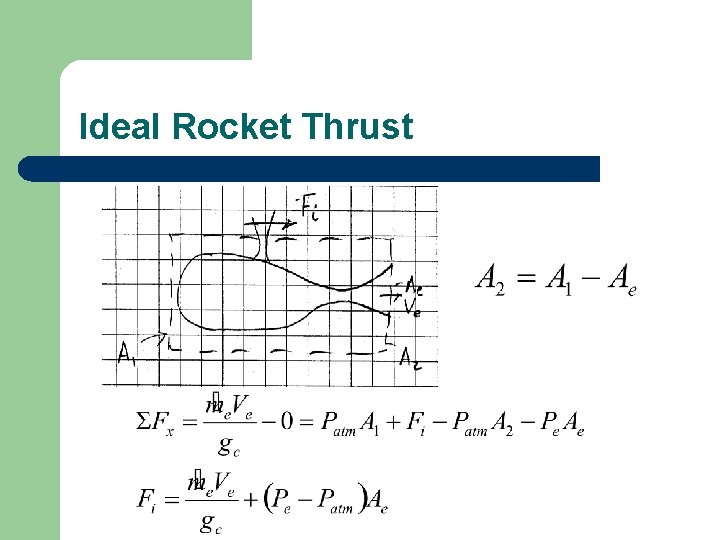
Ideal Rocket Thrust
Ideal Rocket Thrust l Force required to hold a rocket at rest as the rocket ejects a propellant rearward under the following conditions: – – Patm acts everywhere on the rocket’s external surface Propellant flow rate is constant The rate of change of momentum within the rocket is negligible Isentropic flow through nozzle, total pressure and temperatures are constant
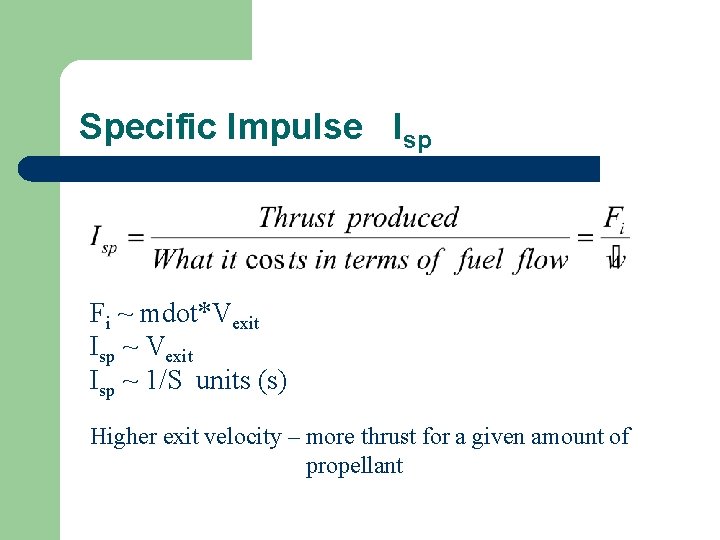
Specific Impulse Isp Fi ~ mdot*Vexit Isp ~ 1/S units (s) Higher exit velocity – more thrust for a given amount of propellant
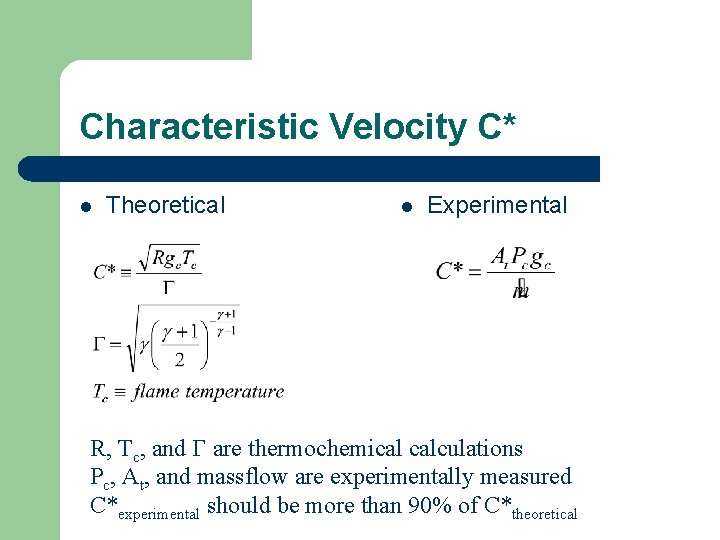
Characteristic Velocity C* l l l “*” does not mean sonic conditions Characteristic of reaction process Units of velocity
Characteristic Velocity C* l Theoretical l Experimental R, Tc, and are thermochemical calculations Pc, At, and massflow are experimentally measured C*experimental should be more than 90% of C*theoretical
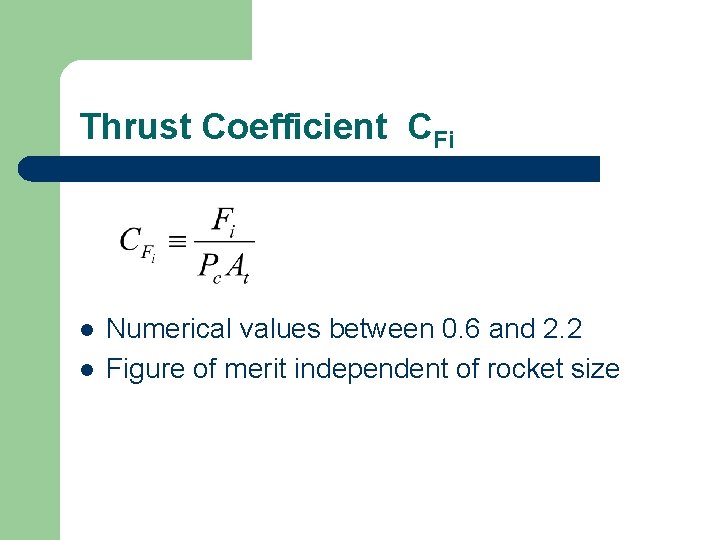
Thrust Coefficient CFi l l Numerical values between 0. 6 and 2. 2 Figure of merit independent of rocket size