
Rock Weathering and Soil Mineralogy Physical Weathering I
![Concentration of H+ * Concentration of OH- = 10 -14 [10 -7 ] =](https://slidetodoc.com/presentation_image_h/c3b8521f29f45467da93c6efcaf974ff/image-9.jpg "Concentration of H+ * Concentration of OH- = 10 -14 [10 -7 ] =")
![Concentration of H+ * Concentration of OH- = 10 -14 [10 -7 ] =](https://slidetodoc.com/presentation_image_h/c3b8521f29f45467da93c6efcaf974ff/image-10.jpg "Concentration of H+ * Concentration of OH- = 10 -14 [10 -7 ] =")
![Concentration of H+ * Concentration of OH- = 10 -14 [10 -7 ] =](https://slidetodoc.com/presentation_image_h/c3b8521f29f45467da93c6efcaf974ff/image-11.jpg "Concentration of H+ * Concentration of OH- = 10 -14 [10 -7 ] =")
![Concentration of H+ * Concentration of OH- = 10 -14 [10 -7 ] =](https://slidetodoc.com/presentation_image_h/c3b8521f29f45467da93c6efcaf974ff/image-12.jpg "Concentration of H+ * Concentration of OH- = 10 -14 [10 -7 ] =")
![Concentration of H+ * Concentration of OH- = 10 -14 [10 -7 ] =](https://slidetodoc.com/presentation_image_h/c3b8521f29f45467da93c6efcaf974ff/image-13.jpg "Concentration of H+ * Concentration of OH- = 10 -14 [10 -7 ] =")
- Slides: 47
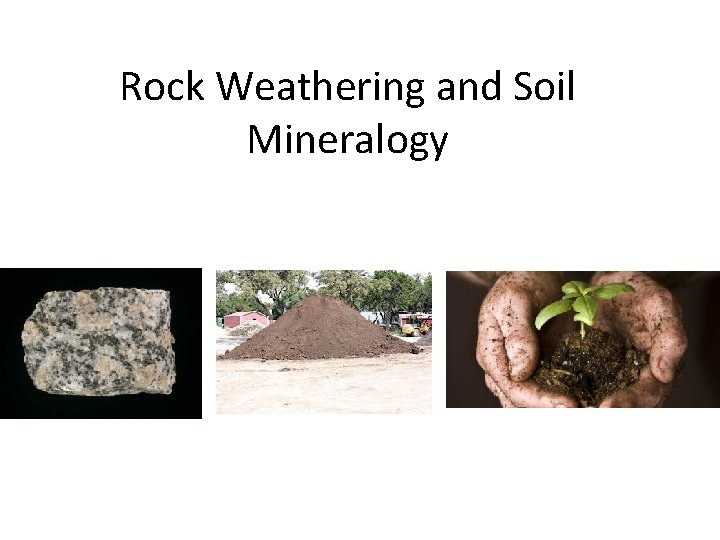
Rock Weathering and Soil Mineralogy
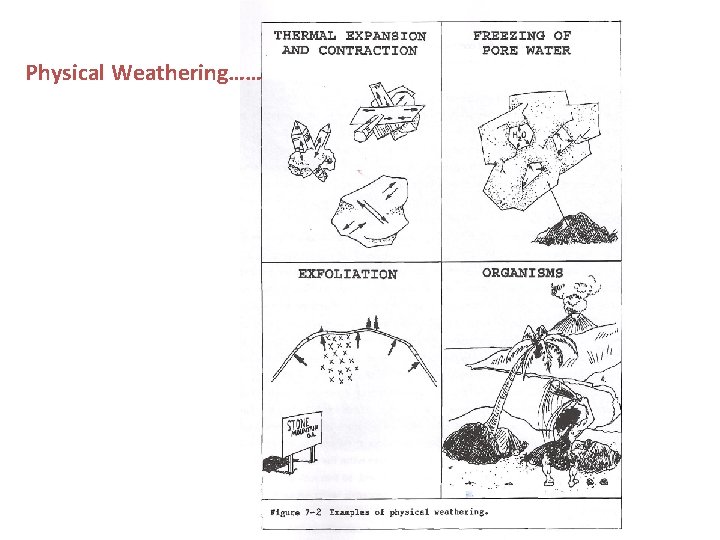
Physical Weathering……
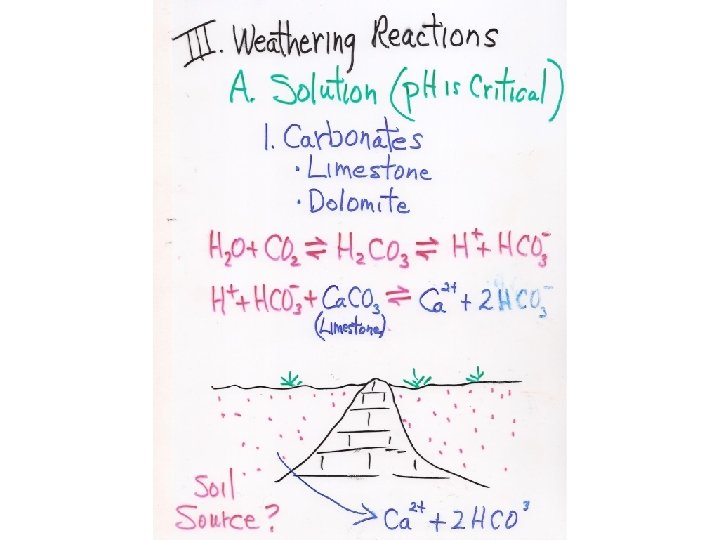
I. Weathering A. Chemical Weathering 1. Water is critical (and heat serves as a catalyst) 2. Complex Process (involves several reactions) 3. Biological Activity (helps accelerate weathering processes)
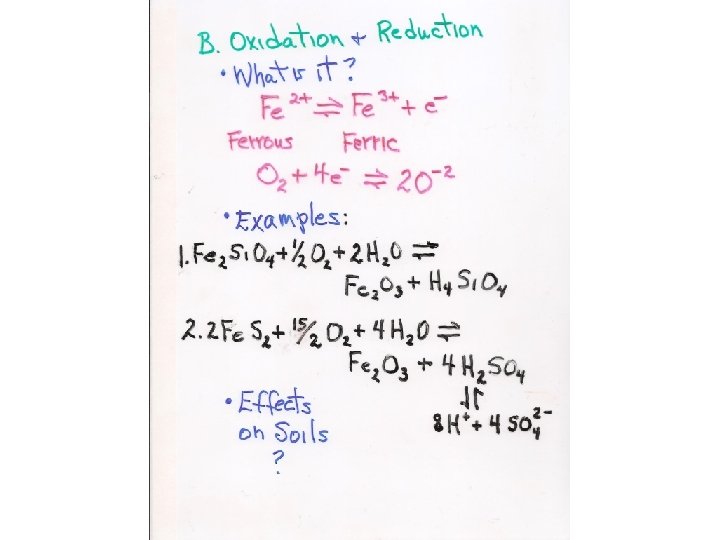
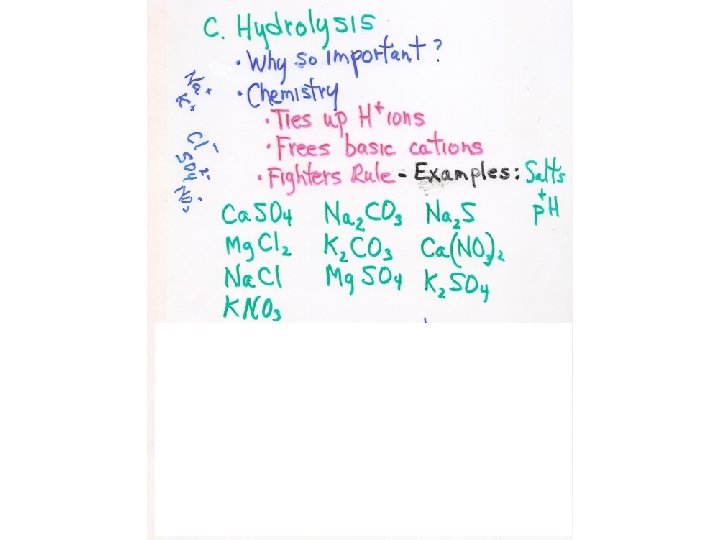
1. Complex Process • Solution • Hydrolysis • Oxidation • Hydration • Chelation • Dialysis • Chemical Reconstitution
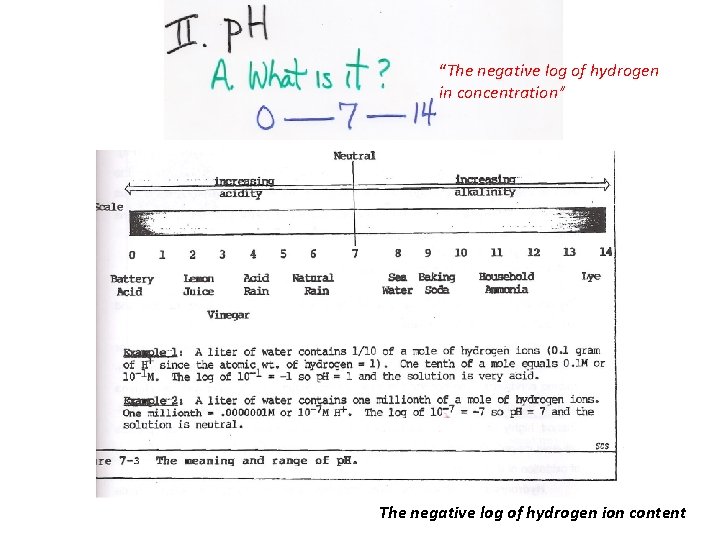
“The negative log of hydrogen in concentration” The negative log of hydrogen ion content
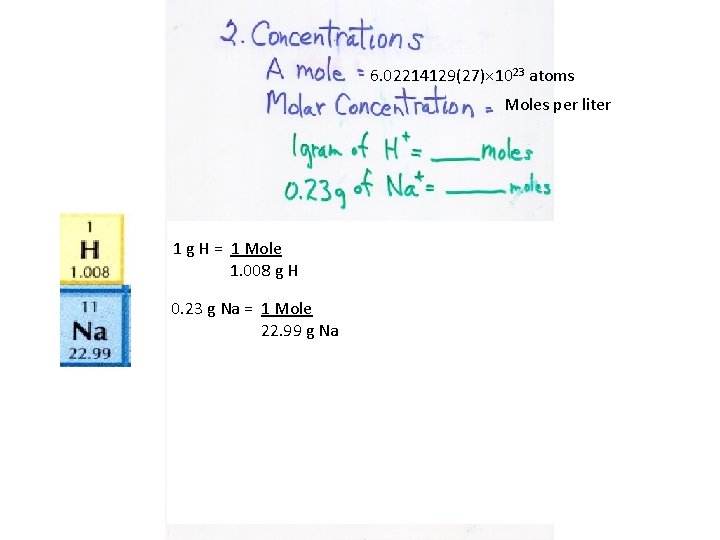
6. 02214129(27)× 1023 atoms Moles per liter 1 g H = 1 Mole 1. 008 g H 0. 23 g Na = 1 Mole 22. 99 g Na
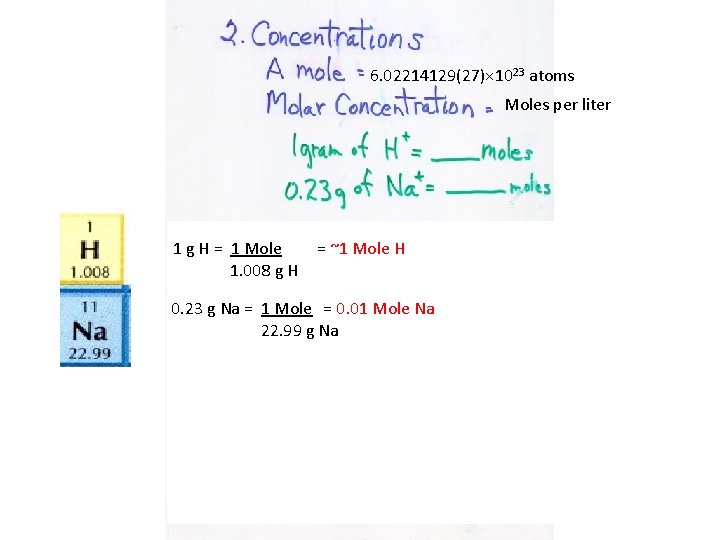
6. 02214129(27)× 1023 atoms Moles per liter 1 g H = 1 Mole 1. 008 g H = ~1 Mole H 0. 23 g Na = 1 Mole = 0. 01 Mole Na 22. 99 g Na
Concentration of H+ * Concentration of OH- = 10 -14 [10 -7 ] = 10 -14 “The negative log of hydrogen in concentration” “Always a constant for this reaction”
Concentration of H+ * Concentration of OH- = 10 -14 [10 -7 ] = 10 -14 [10 -3 ] [10 -11 ] “The negative log of hydrogen in concentration” “Always a constant for this reaction”
Concentration of H+ * Concentration of OH- = 10 -14 [10 -7 ] = 10 -14 [10 -3 ] [10 -11 ] [10 x ][10 -3. 4 ] = 10 -14 “The negative log of hydrogen in concentration” “Always a constant for this reaction”
Concentration of H+ * Concentration of OH- = 10 -14 [10 -7 ] = 10 -14 [10 -3 ] [10 -11 ] [10 -10. 6 ][10 -3. 4 ] = 10 -14 “The negative log of hydrogen in concentration” “Always a constant for this reaction”
Concentration of H+ * Concentration of OH- = 10 -14 [10 -7 ] = 10 -14 “Always a constant” p. H of 0. 1 M HCl = 10 -1 M = log 10 -1 = p. H is 1 p. H of 1 M HCl = 100 M = log 100 = p. H is 0 p. H: “The negative log of hydrogen in concentration”
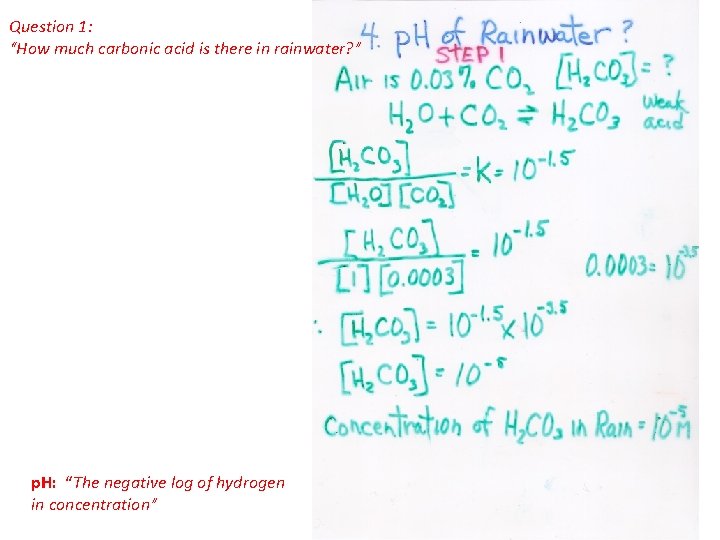
Question 1: “How much carbonic acid is there in rainwater? ” p. H: “The negative log of hydrogen in concentration”
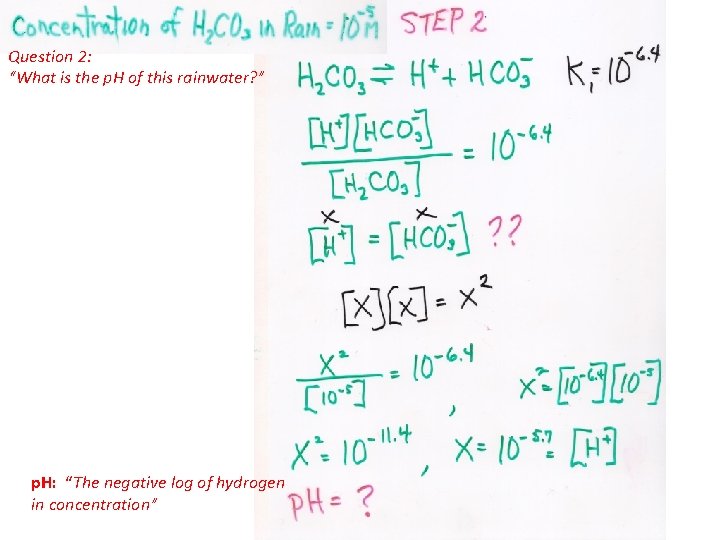
Question 2: “What is the p. H of this rainwater? ” p. H: “The negative log of hydrogen in concentration”
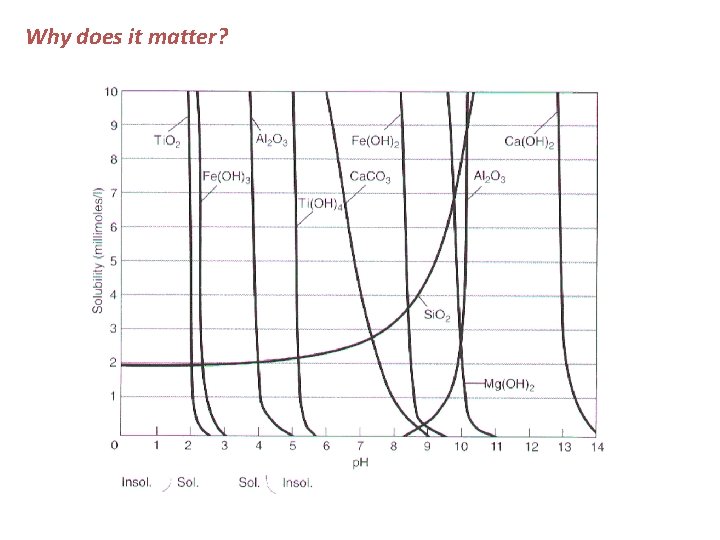
Why does it matter?
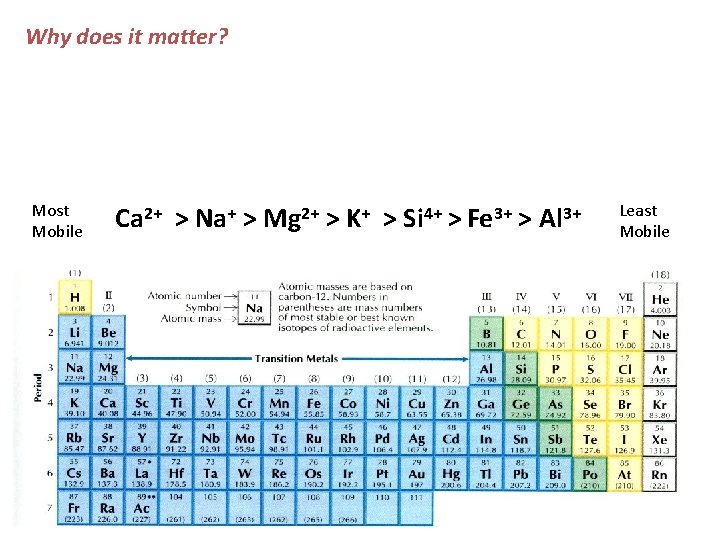
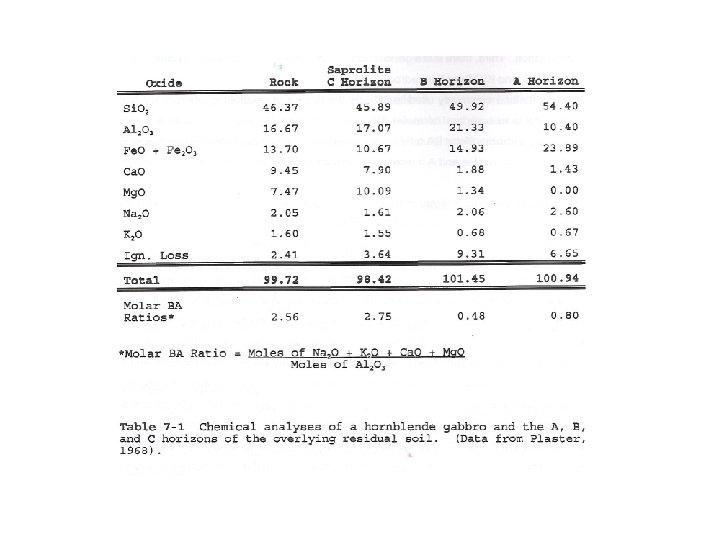
Why does it matter? Most Mobile Ca 2+ > Na+ > Mg 2+ > K+ > Si 4+ > Fe 3+ > Al 3+ Least Mobile
Molar BA Ratio
“Mineralogy made me do this!” Molar BA Ratio ? ? Uncle Festus Cuzzin Cletus
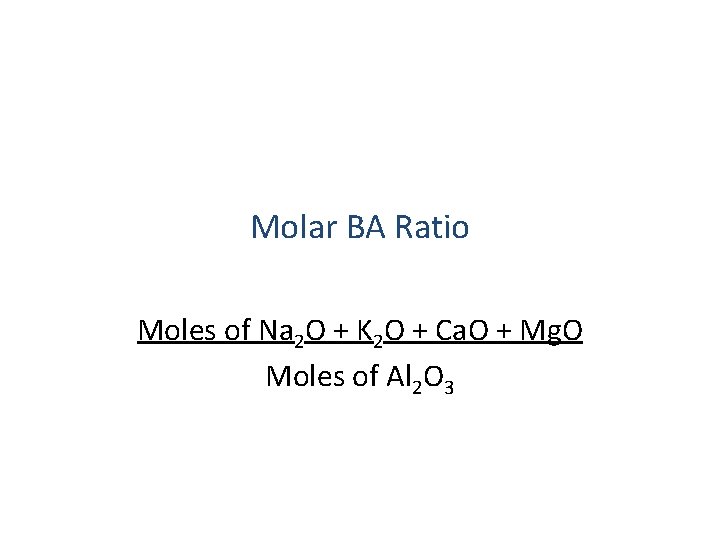
Molar BA Ratio Moles of Na 2 O + K 2 O + Ca. O + Mg. O Moles of Al 2 O 3
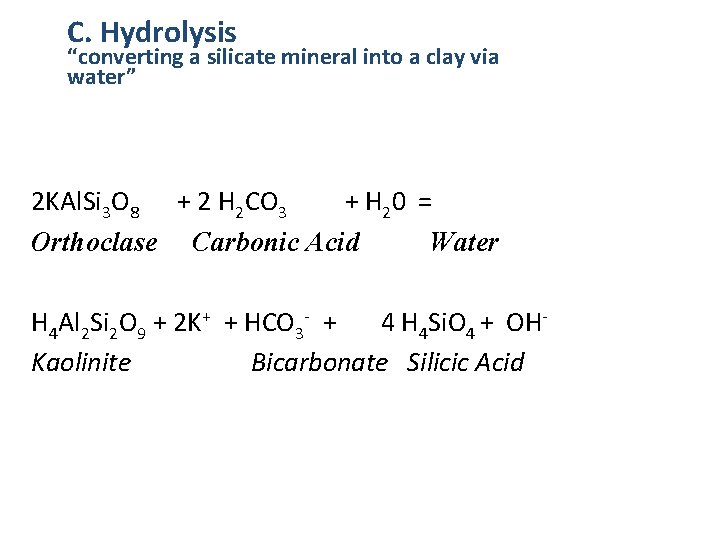
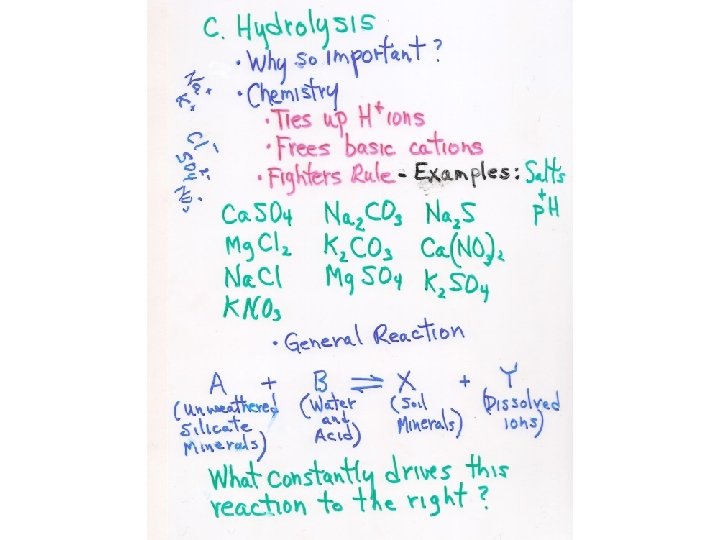
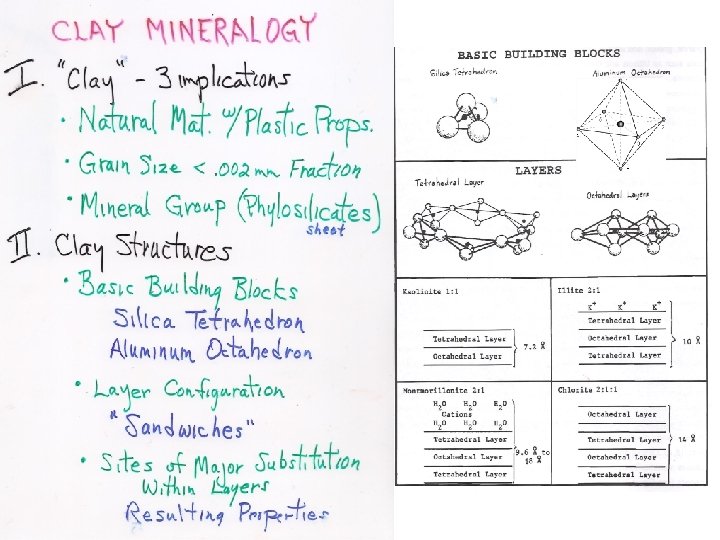
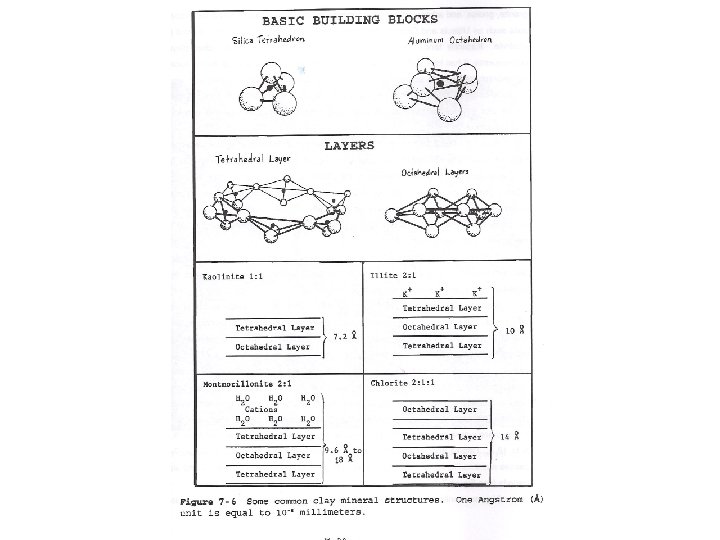
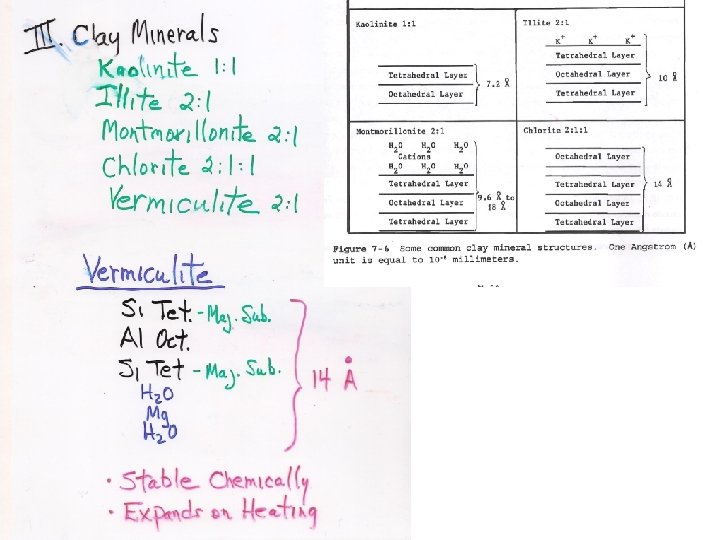
C. Hydrolysis “converting a silicate mineral into a clay via water” 2 KAl. Si 3 O 8 + 2 H 2 CO 3 + H 20 = Orthoclase Carbonic Acid Water H 4 Al 2 Si 2 O 9 + 2 K+ + HCO 3 - + 4 H 4 Si. O 4 + OHKaolinite Bicarbonate Silicic Acid
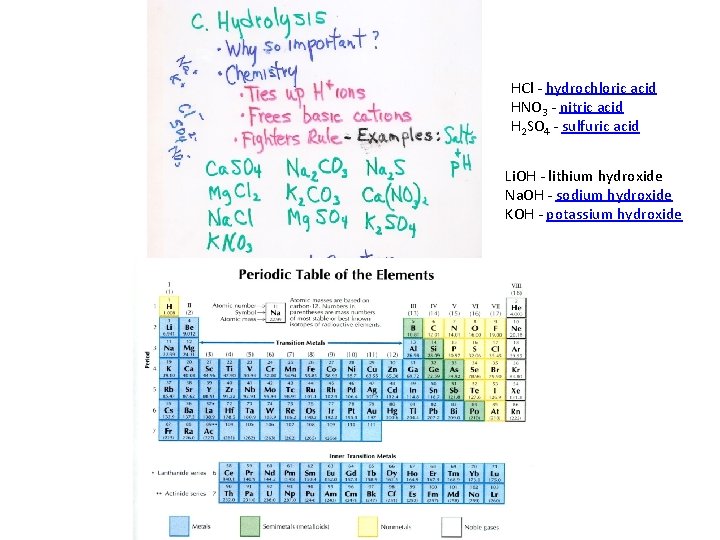
HCl - hydrochloric acid HNO 3 - nitric acid H 2 SO 4 - sulfuric acid Li. OH - lithium hydroxide Na. OH - sodium hydroxide KOH - potassium hydroxide
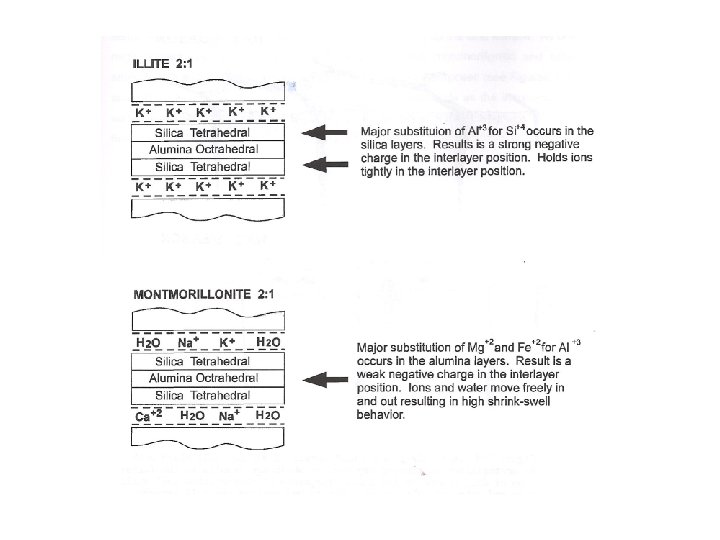
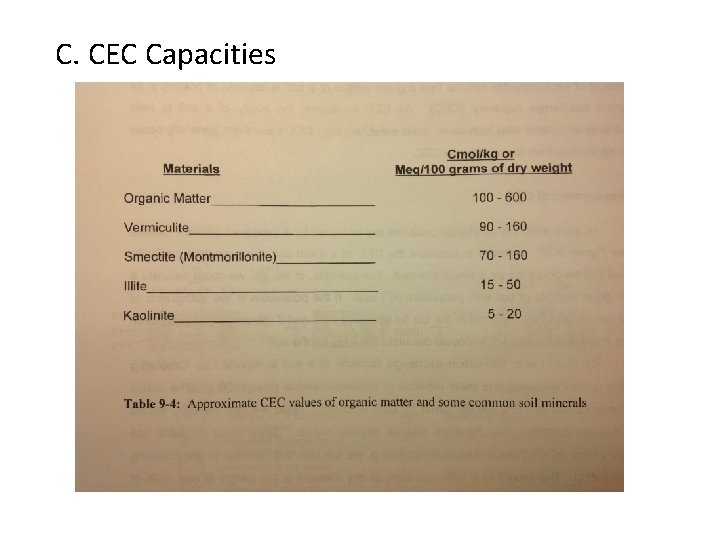
Cation Exchange Capacity (CEC): The amount of exchangeable cations that a given weight of soil is capable of holding
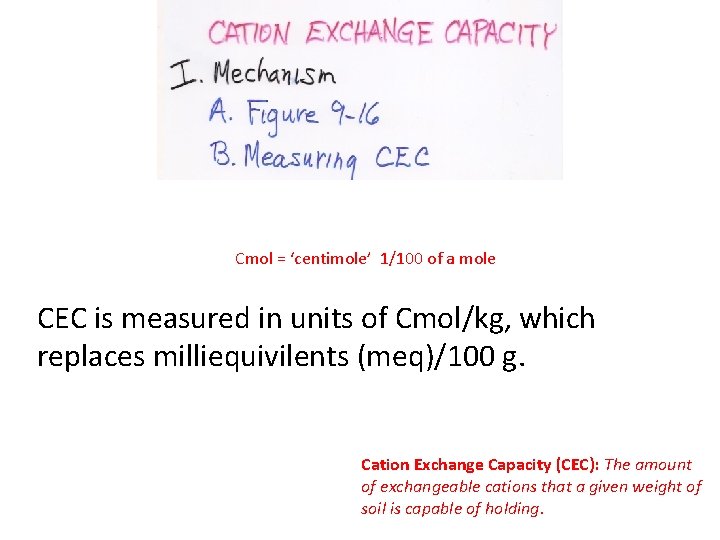
Cmol = ‘centimole’ 1/100 of a mole CEC is measured in units of Cmol/kg, which replaces milliequivilents (meq)/100 g. Cation Exchange Capacity (CEC): The amount of exchangeable cations that a given weight of soil is capable of holding.
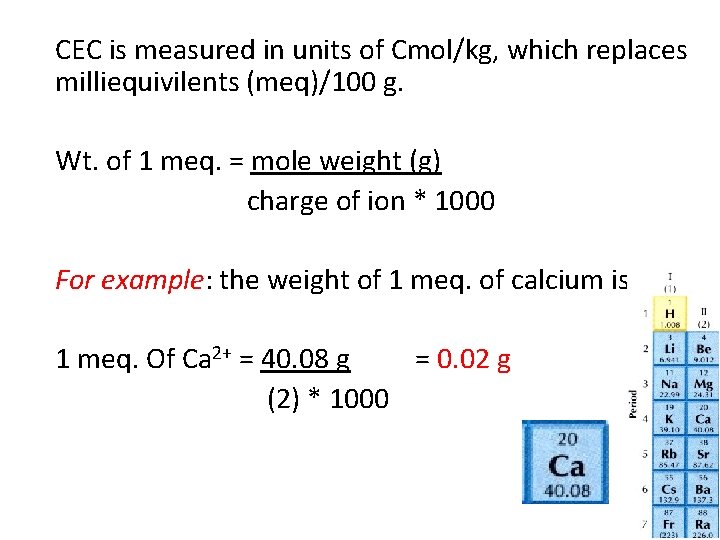
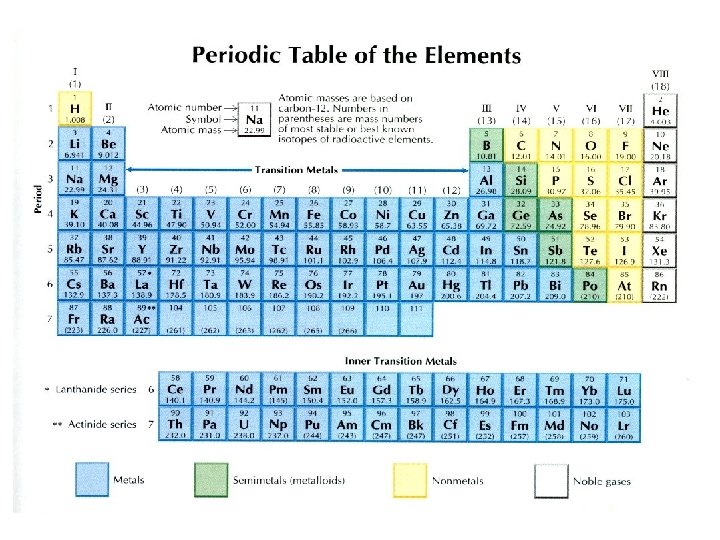
CEC is measured in units of Cmol/kg, which replaces milliequivilents (meq)/100 g. Wt. of 1 meq. = mole weight (g) charge of ion * 1000 For example: the weight of 1 meq. of calcium is: 1 meq. Of Ca 2+ = 40. 08 g = 0. 02 g (2) * 1000
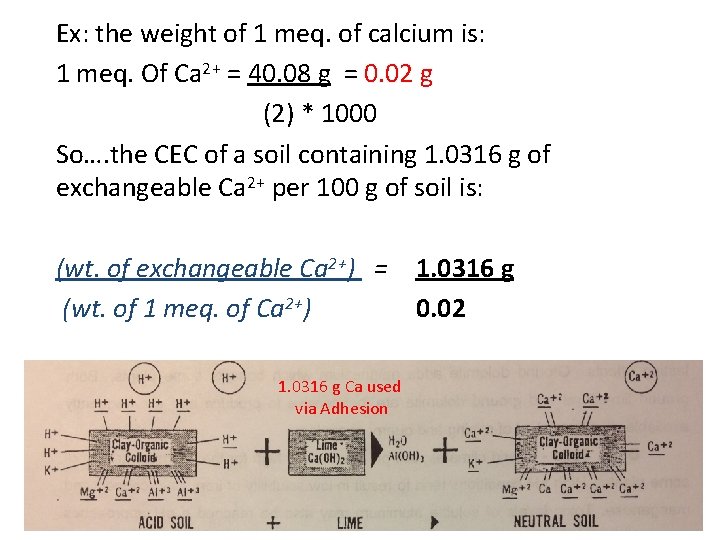
Ex: the weight of 1 meq. of calcium is: 1 meq. Of Ca 2+ = 40. 08 g = 0. 02 g (2) * 1000 So…. the CEC of a soil containing 1. 0316 g of exchangeable Ca 2+ per 100 g of soil is: (wt. of exchangeable Ca 2+) = 1. 0316 g (wt. of 1 meq. of Ca 2+) 0. 02 1. 0316 g Ca used via Adhesion
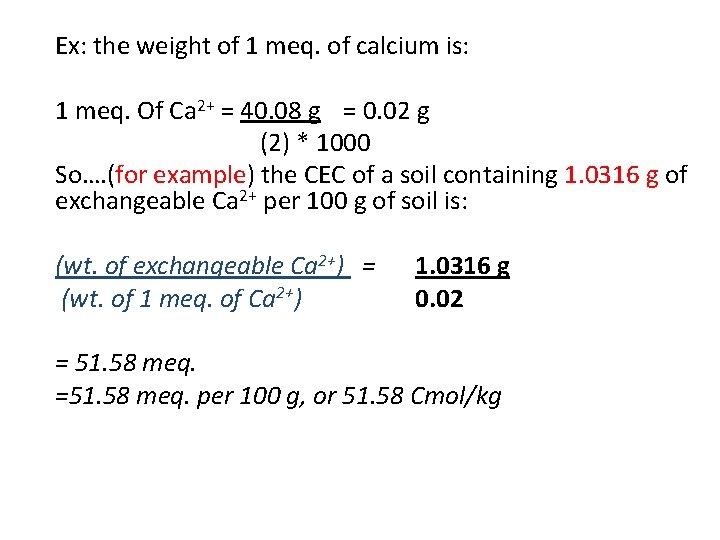
Ex: the weight of 1 meq. of calcium is: 1 meq. Of Ca 2+ = 40. 08 g = 0. 02 g (2) * 1000 So…. (for example) the CEC of a soil containing 1. 0316 g of exchangeable Ca 2+ per 100 g of soil is: (wt. of exchangeable Ca 2+) = (wt. of 1 meq. of Ca 2+) 1. 0316 g 0. 02 = 51. 58 meq. =51. 58 meq. per 100 g, or 51. 58 Cmol/kg
C. CEC Capacities
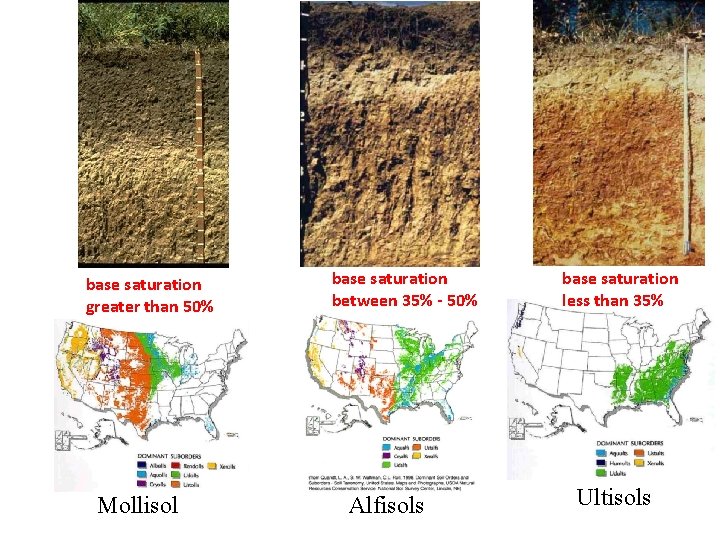
Base Saturation
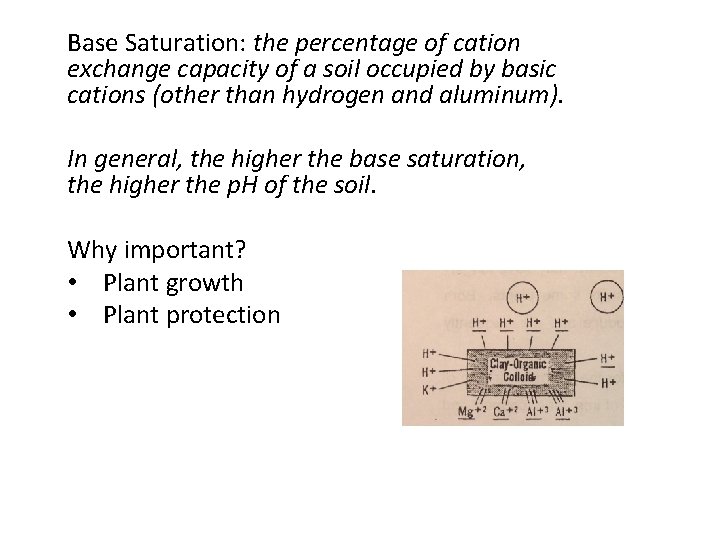
Base Saturation: the percentage of cation exchange capacity of a soil occupied by basic cations (other than hydrogen and aluminum). In general, the higher the base saturation, the higher the p. H of the soil. Why important? • Plant growth • Plant protection
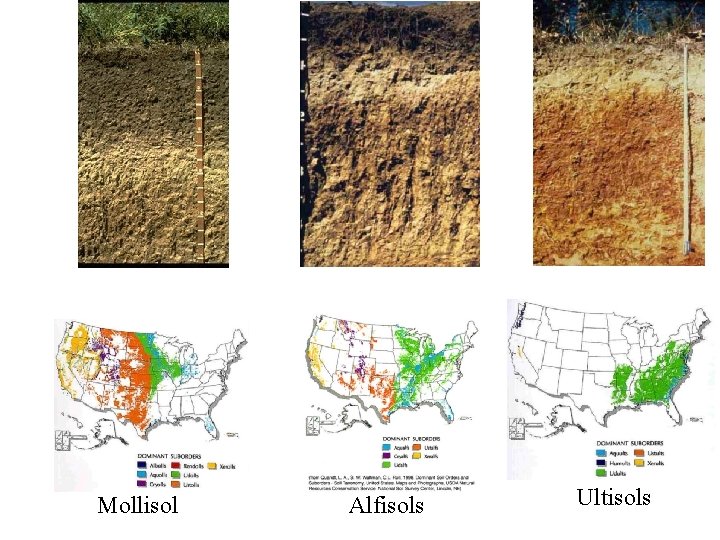
Mollisol Alfisols Ultisols
base saturation greater than 50% Mollisol base saturation between 35% - 50% Alfisols base saturation less than 35% Ultisols
End of material for Exam II