
ROCK CYCLE By Ariella Vazquez The Rock Cycle
ROCK CYCLE By: Ariella Vazquez
The Rock Cycle
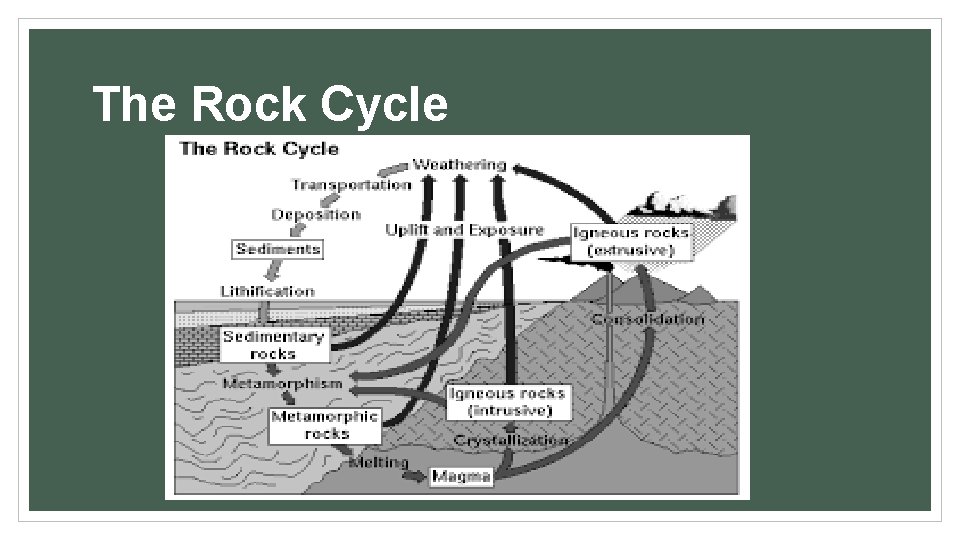
What is the Rock Cycle? The rock cycle is the long, slow journey of rocks down from Earth's surface and then back up again. Rocks often change during this process. During the rock cycle, rocks form deep in the Earth, move and sometimes change, go up to the surface, and eventually return below the ground.
Steps of the Rock Cycle (Part 1) Weathering- Weathering is the breaking down or dissolving of rocks and minerals on Earths surface. Once a rock has been broken down, a process called erosion transports the bits of rock and minerals away. It can be broken down into chemical, physical, and biological influencing agents. Erosion & Transport- Erosion breaks rocks down further and then moves them. Forces like wind and water move the rock pieces. Deposition of Sediment- Deposition is the geological process in which sediments, soil and rocks are added to a landform or land mass. It usually occurs by wind & water, biological influence, and evaporation. sediment is often formed when weathering and erosion break down a rock into loose material in a source area.
Steps of the Rock Cycle (Part 2) Burial & Compaction-As the layers of sediment build up, the pressure on the lower layers increases. The layers are squeezed together and any water mixed in with the sediments is forced out. Cementation- hardening and welding of clastic sediments Crystallization of Magma-Magma can also be created when hot (heating), liquid rock intrudes into Earth's cold crust. Melting-The reverse of the previous process is melting. As soon as the rocks reach the bottom of the earth, the more the temperature rises the more the pressure rises.
Steps of the Rock Cycle (Part 3) Uplift: The process of forming a crust of earth upwards due to natural forces causing movements in the tectonic plates is calling uplifting. This is how mountains rise higher new islands come up in the idle of the oceans. Deformation & Metamorphism- Metamorphic rocks are created by the physical or chemical alteration by heat and pressure of an existing igneous or sedimentary material into a denser form. Solidification- igneous rocks are formed through the cooling and solidification of magma
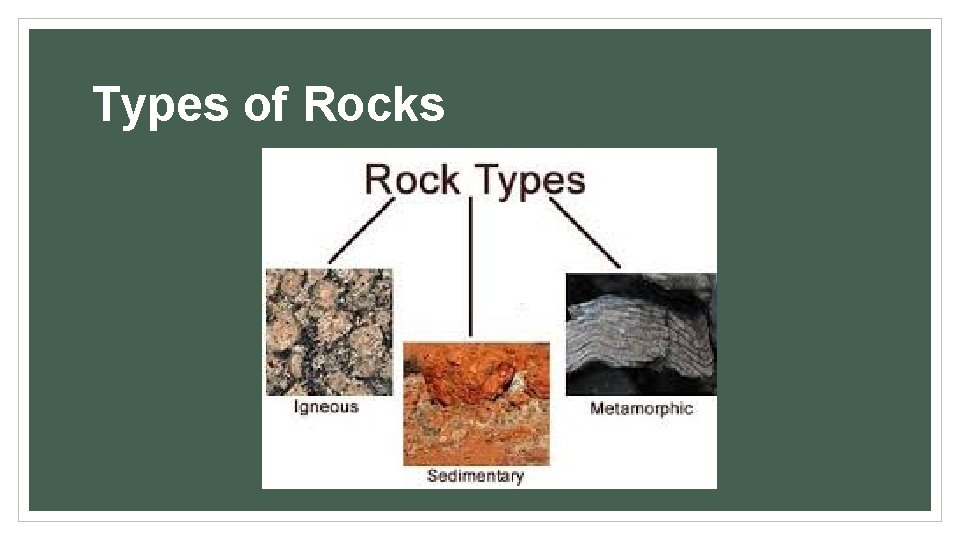
Types of Rocks
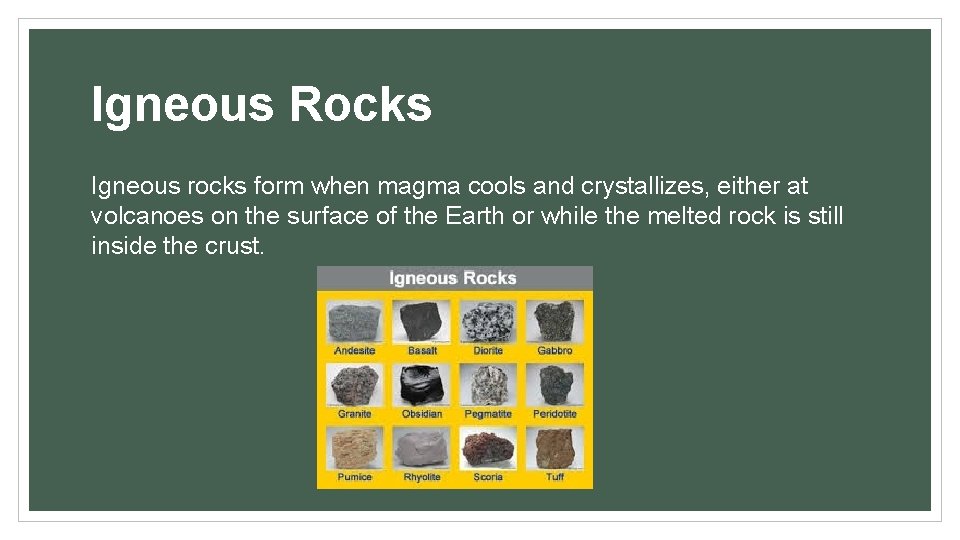
Igneous Rocks Igneous rocks form when magma cools and crystallizes, either at volcanoes on the surface of the Earth or while the melted rock is still inside the crust.
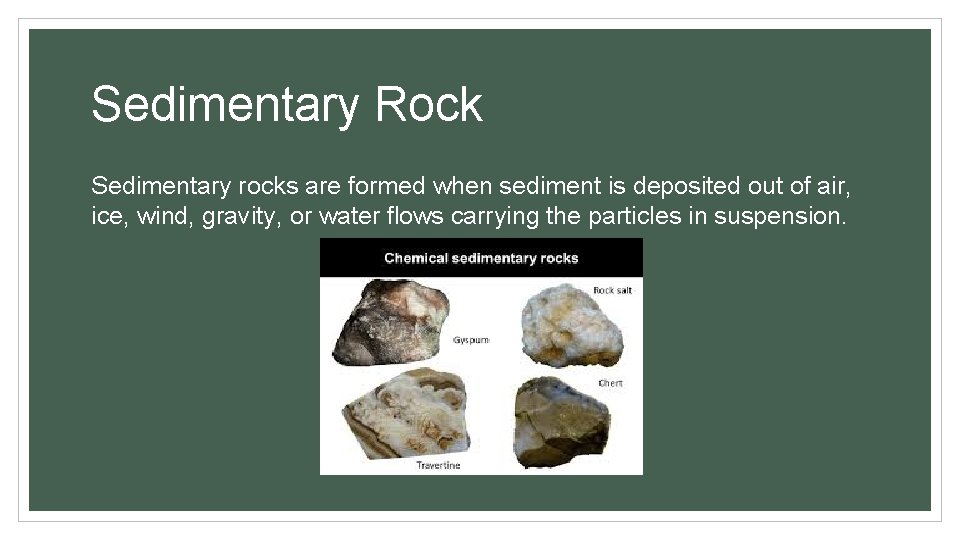
Sedimentary Rock Sedimentary rocks are formed when sediment is deposited out of air, ice, wind, gravity, or water flows carrying the particles in suspension.
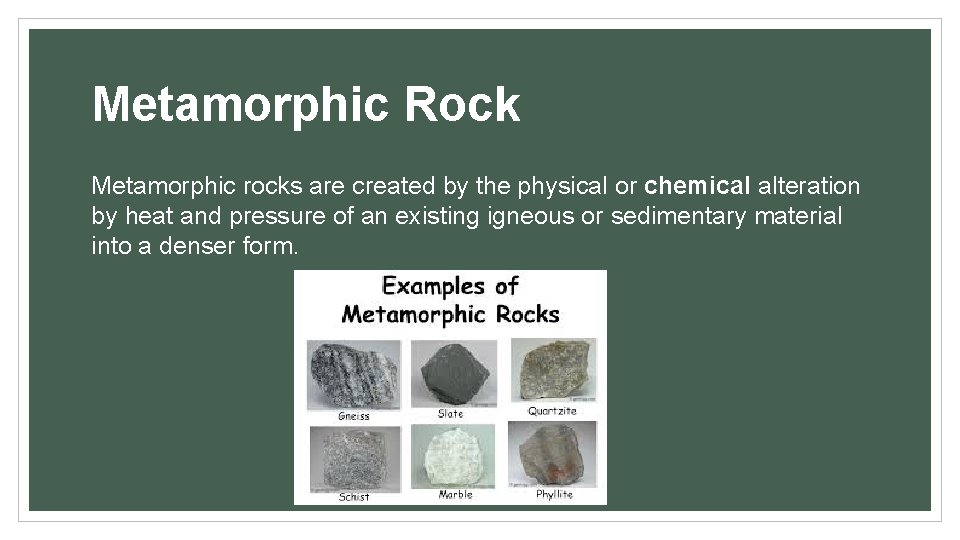
Metamorphic Rock Metamorphic rocks are created by the physical or chemical alteration by heat and pressure of an existing igneous or sedimentary material into a denser form.
- Slides: 10