
Rock Chute Mike Cox State Conservation Engineer Contractor
- Slides: 14
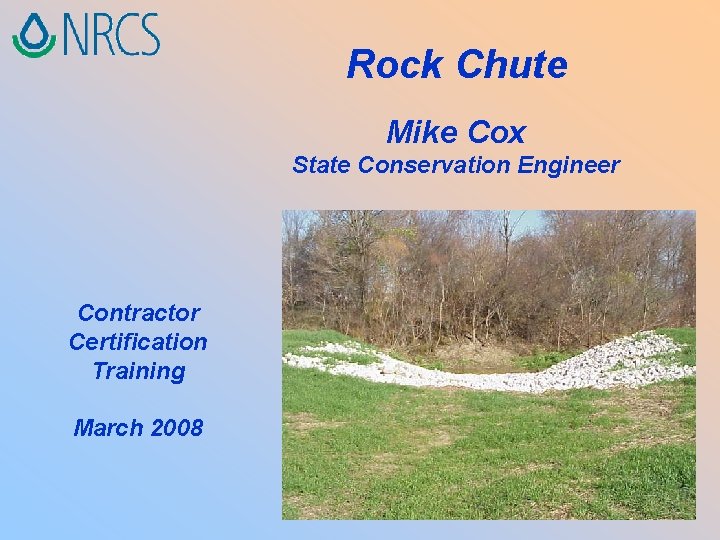
Rock Chute Mike Cox State Conservation Engineer Contractor Certification Training March 2008
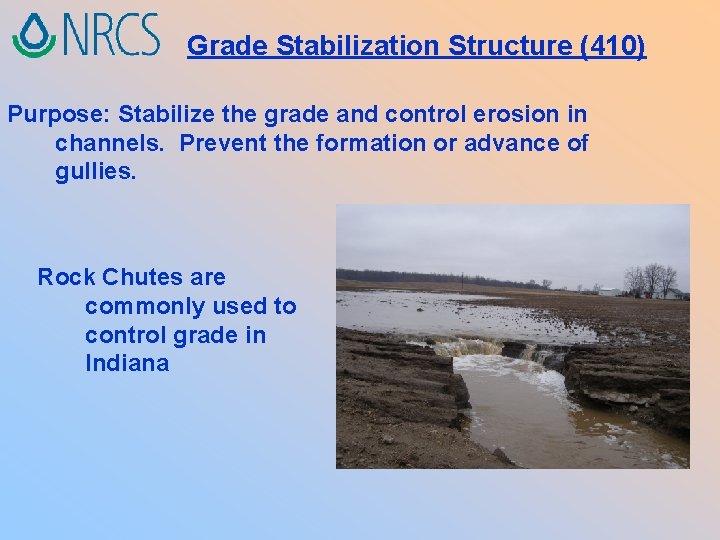
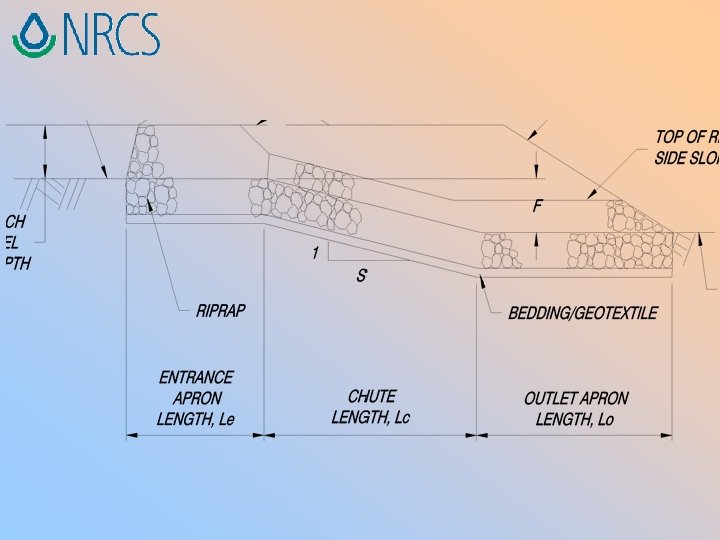
Grade Stabilization Structure (410) Purpose: Stabilize the grade and control erosion in channels. Prevent the formation or advance of gullies. Rock Chutes are commonly used to control grade in Indiana
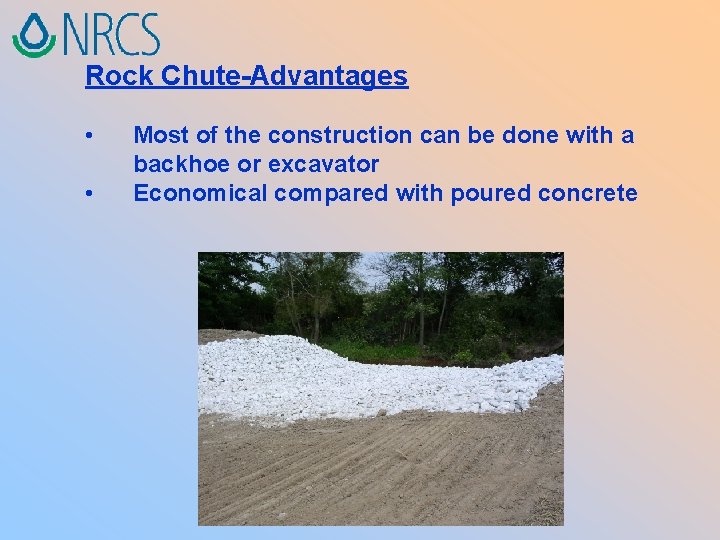
Rock Chute-Advantages • • Most of the construction can be done with a backhoe or excavator Economical compared with poured concrete
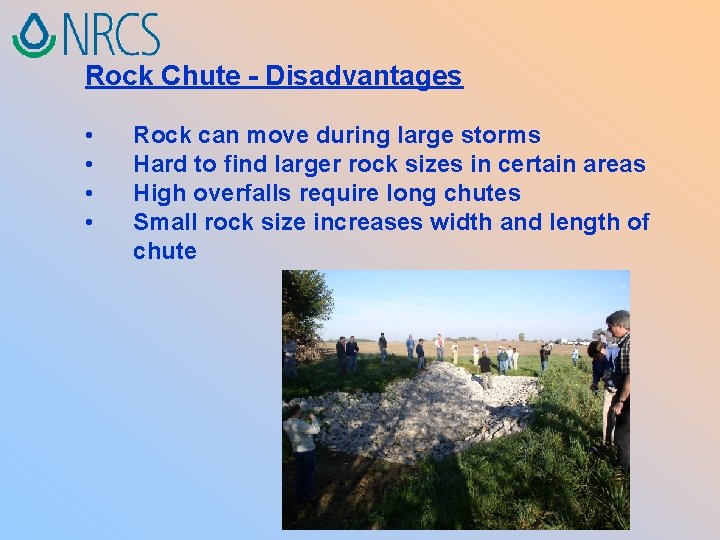
Rock Chute - Disadvantages • • Rock can move during large storms Hard to find larger rock sizes in certain areas High overfalls require long chutes Small rock size increases width and length of chute
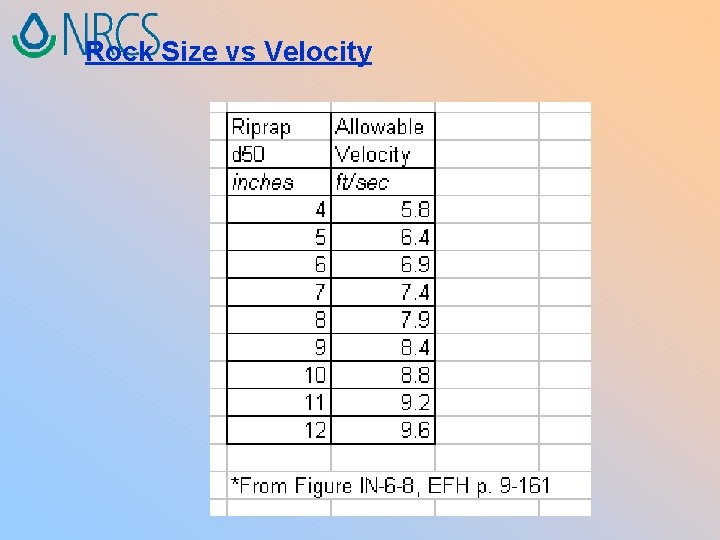
Rock Size vs Velocity
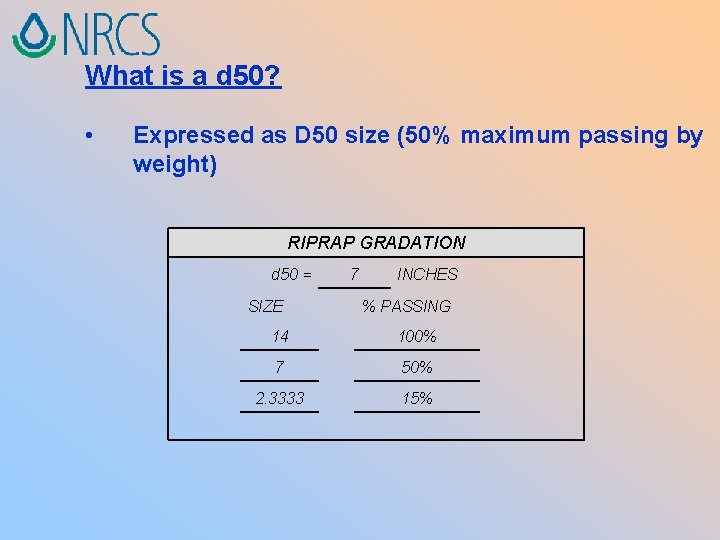
What is a d 50? • Expressed as D 50 size (50% maximum passing by weight) RIPRAP GRADATION d 50 = 7 SIZE INCHES % PASSING 14 100% 7 50% 2. 3333 15%
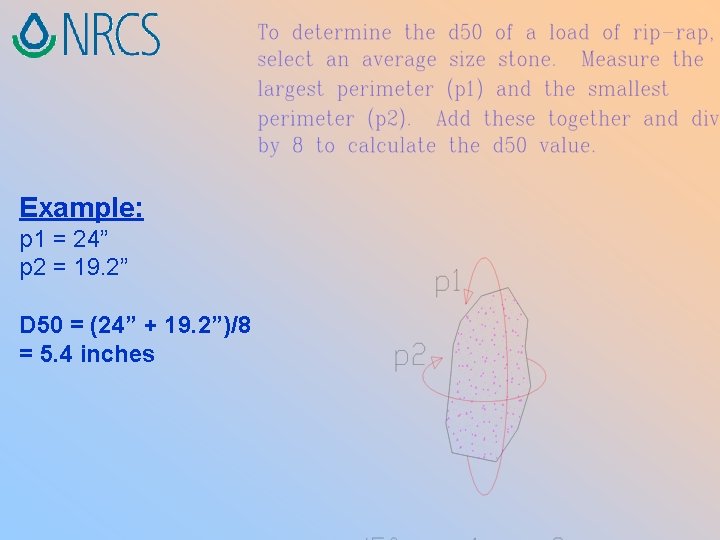
Example: p 1 = 24” p 2 = 19. 2” D 50 = (24” + 19. 2”)/8 = 5. 4 inches
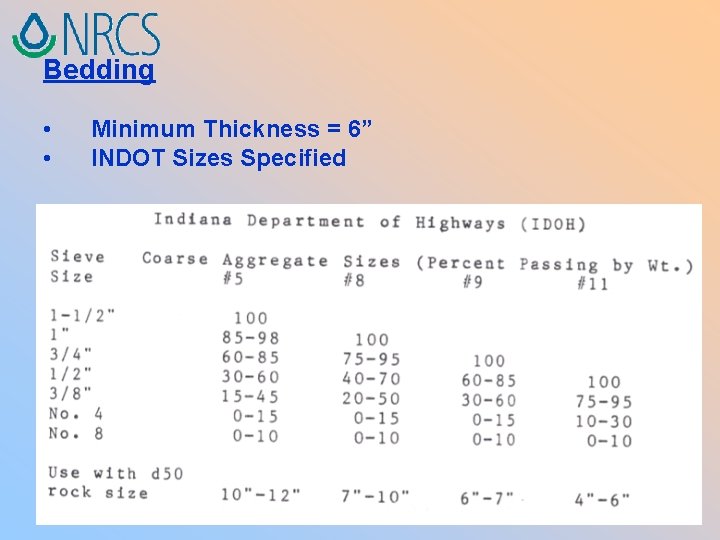
Bedding • • Minimum Thickness = 6” INDOT Sizes Specified
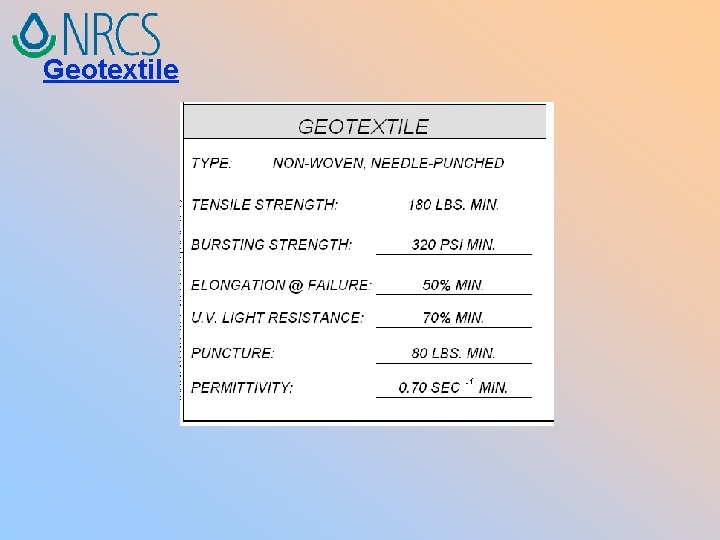
Geotextile
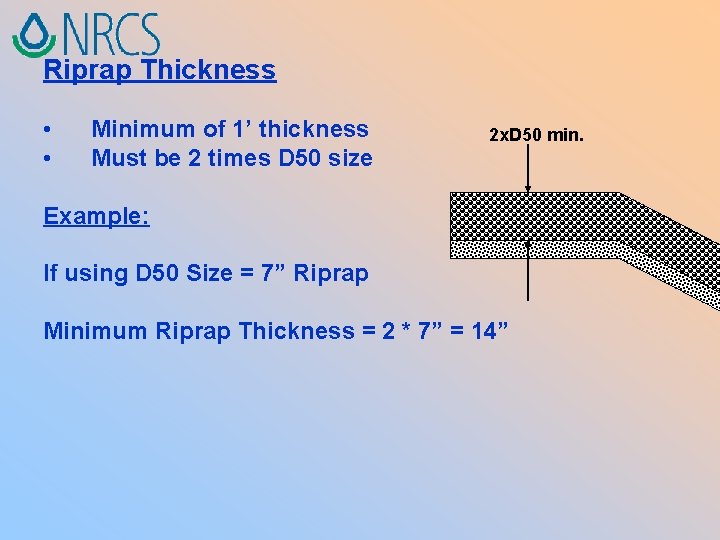
Riprap Thickness • • Minimum of 1’ thickness Must be 2 times D 50 size 2 x. D 50 min. Example: If using D 50 Size = 7” Riprap Minimum Riprap Thickness = 2 * 7” = 14”
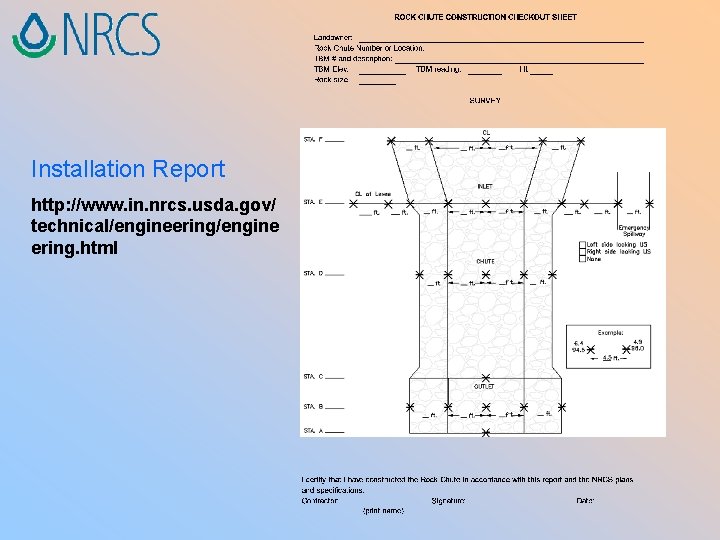
Installation Report http: //www. in. nrcs. usda. gov/ technical/engineering/engine ering. html
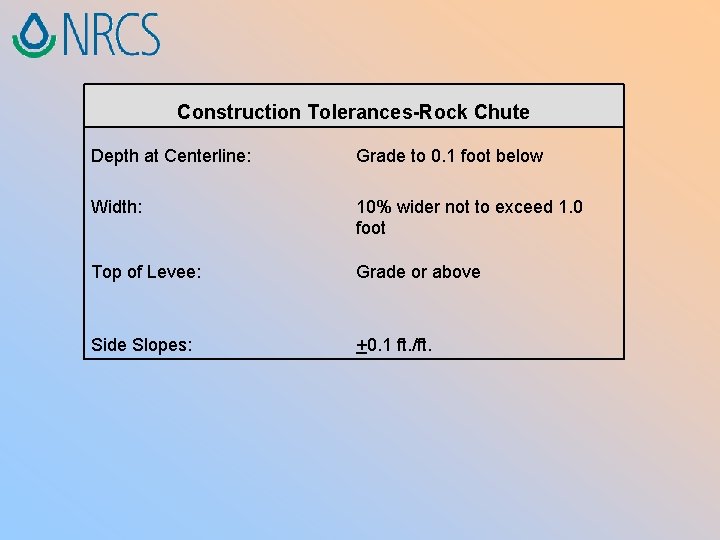
Construction Tolerances-Rock Chute Depth at Centerline: Grade to 0. 1 foot below Width: 10% wider not to exceed 1. 0 foot Top of Levee: Grade or above +0. 1 ft. /ft. Side Slopes:
Helping People Help the Land