
Robustness of Neural Networks A Probabilistic and Practical
Robustness of Neural Networks: A Probabilistic and Practical Perspective Ravi Mangal Aditya V. Nori Alessandro Orso
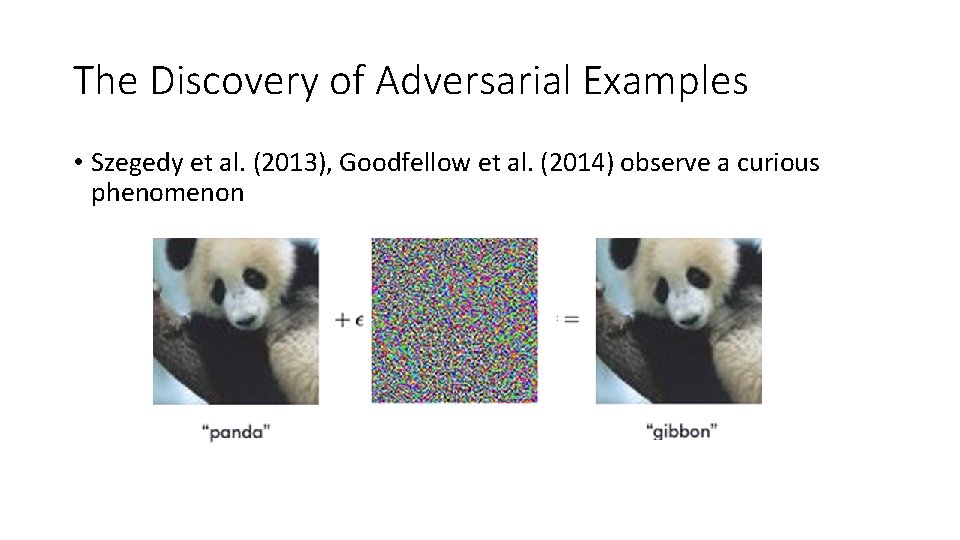
The Discovery of Adversarial Examples • Szegedy et al. (2013), Goodfellow et al. (2014) observe a curious phenomenon
What the heck is going on? • Why do neural networks exhibit such behavior? • How can we train neural networks to be robust? • How can we check if a trained neural network is robust?
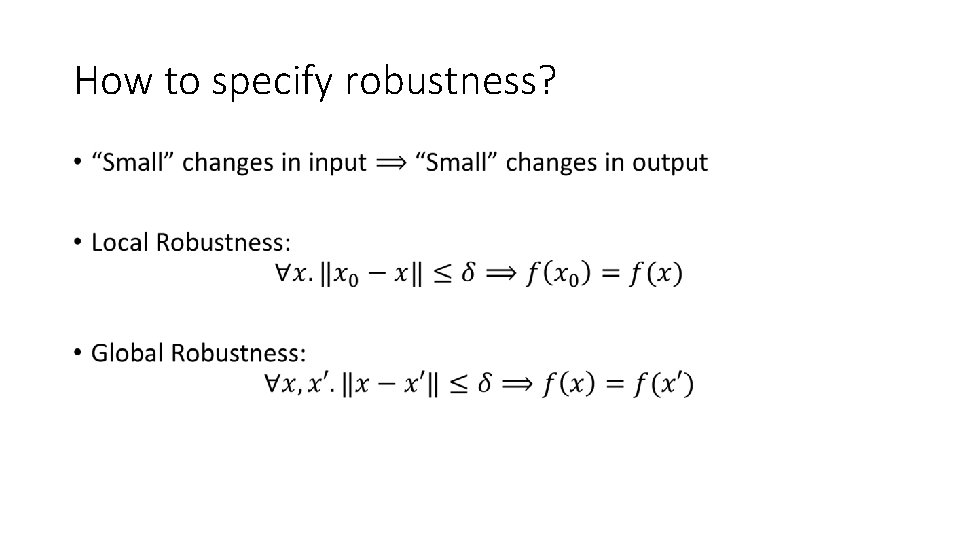
How to specify robustness? •
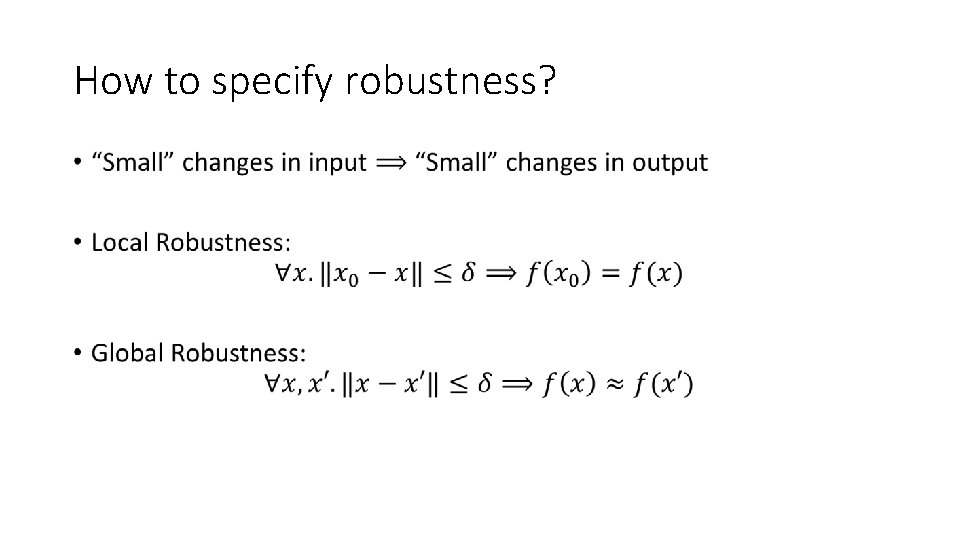
How to specify robustness? •
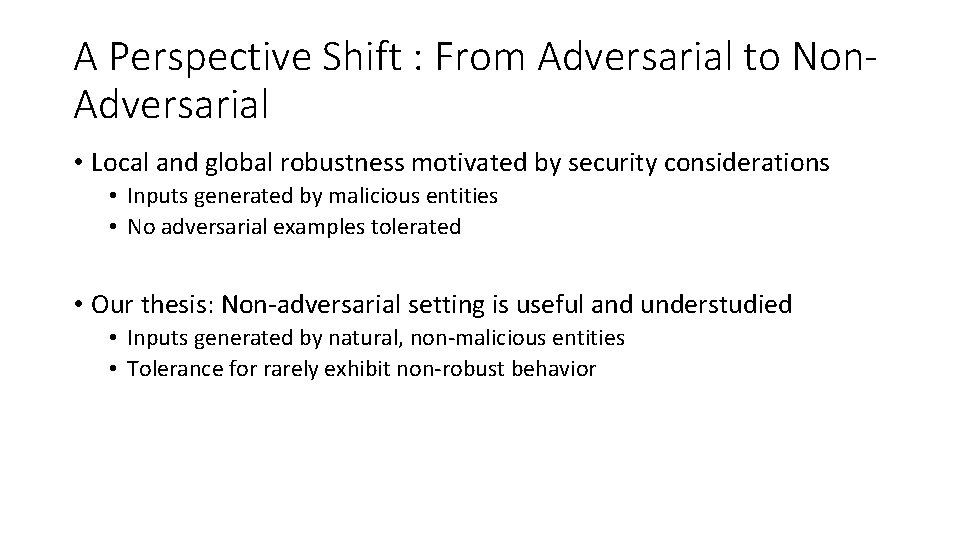
A Perspective Shift : From Adversarial to Non. Adversarial • Local and global robustness motivated by security considerations • Inputs generated by malicious entities • No adversarial examples tolerated • Our thesis: Non-adversarial setting is useful and understudied • Inputs generated by natural, non-malicious entities • Tolerance for rarely exhibit non-robust behavior
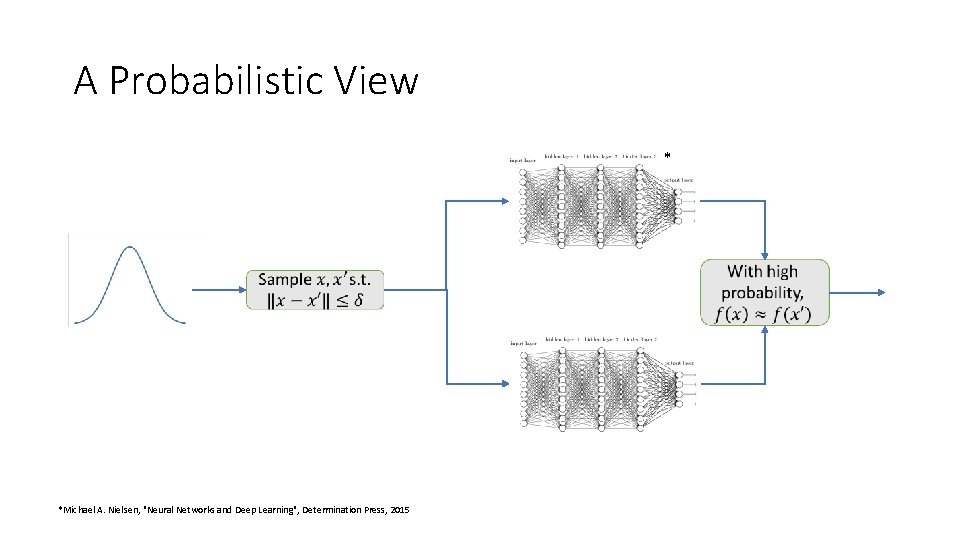
A Probabilistic View * *Michael A. Nielsen, "Neural Networks and Deep Learning", Determination Press, 2015
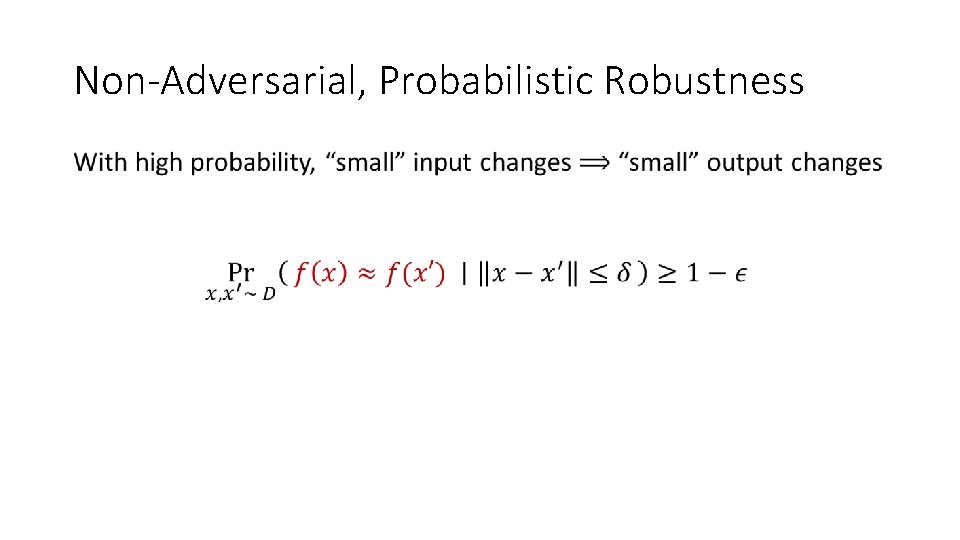
Non-Adversarial, Probabilistic Robustness •
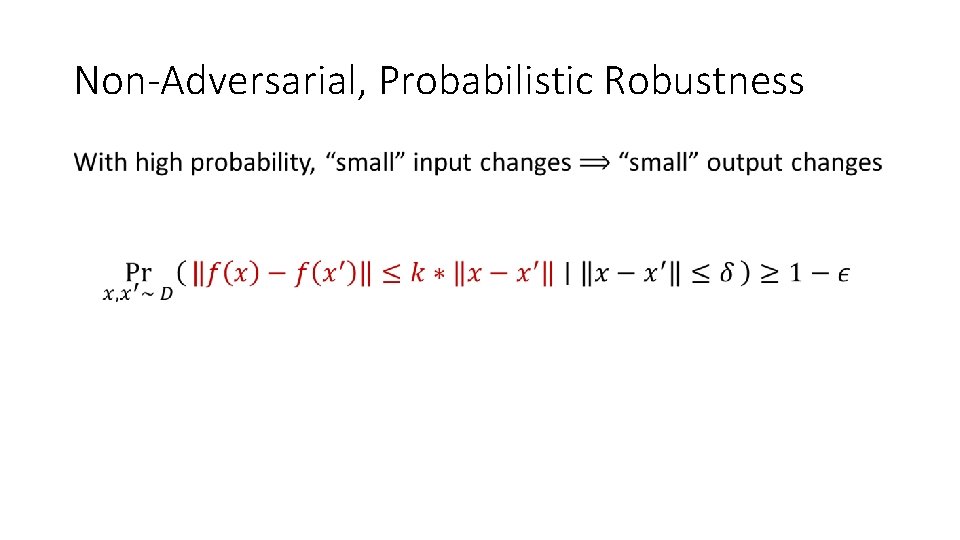
Non-Adversarial, Probabilistic Robustness •
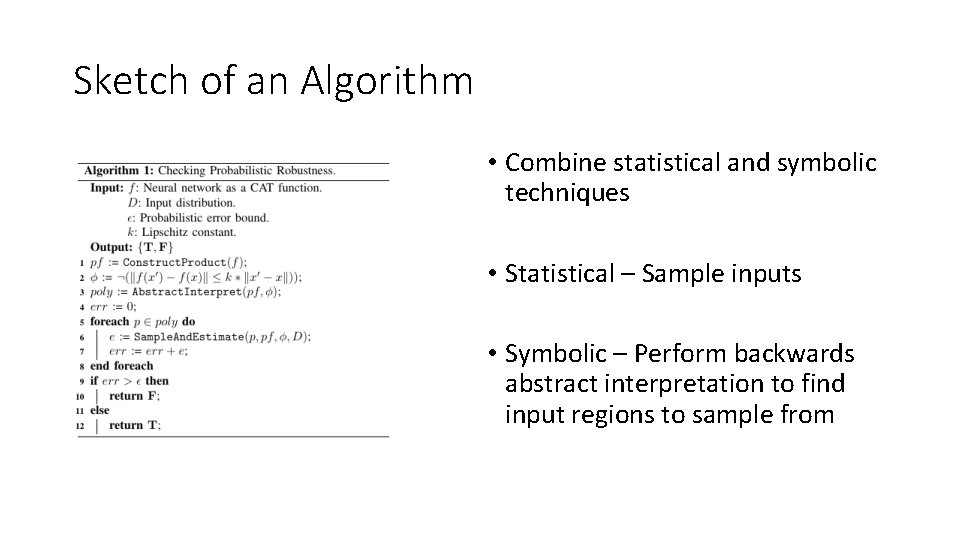
Sketch of an Algorithm • Combine statistical and symbolic techniques • Statistical – Sample inputs • Symbolic – Perform backwards abstract interpretation to find input regions to sample from
Summary
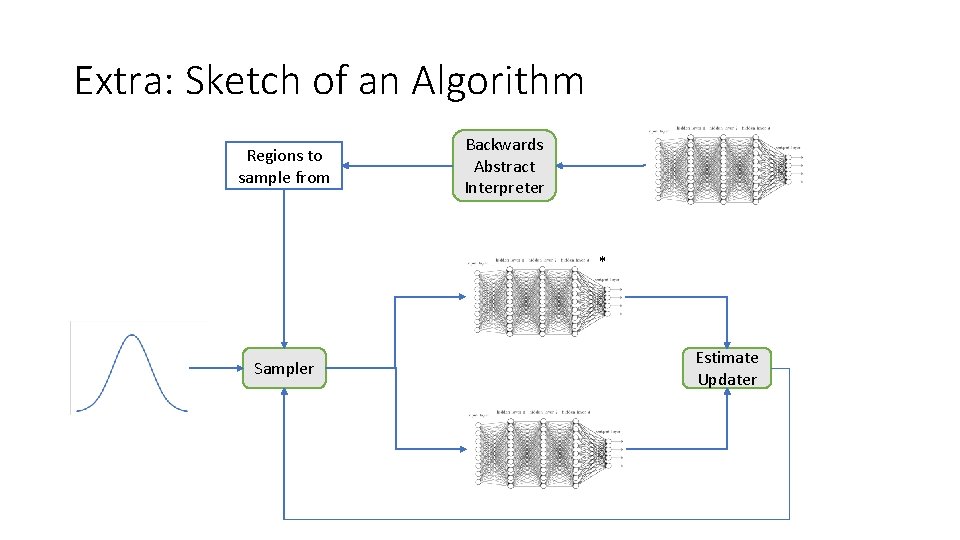
Extra: Sketch of an Algorithm Regions to sample from Backwards Abstract Interpreter * Sampler Estimate Updater
- Slides: 12