
Robust Moving Leastsquares Fitting with Sharp Features Shachar

Robust Moving Least-squares Fitting with Sharp Features Shachar Fleishman* Daniel Cohen-Or§ Claudio T. Silva* * University of Utah § Tel-Aviv university

Surface reconstruction • Noise • Smooth surface • Smooth sharp features • Method for identifying and reconstructing sharp features
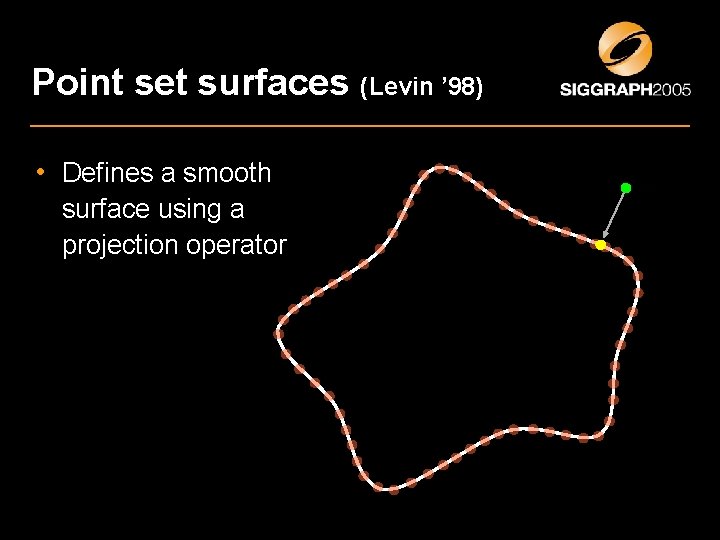
Point set surfaces (Levin ’ 98) • Defines a smooth surface using a projection operator
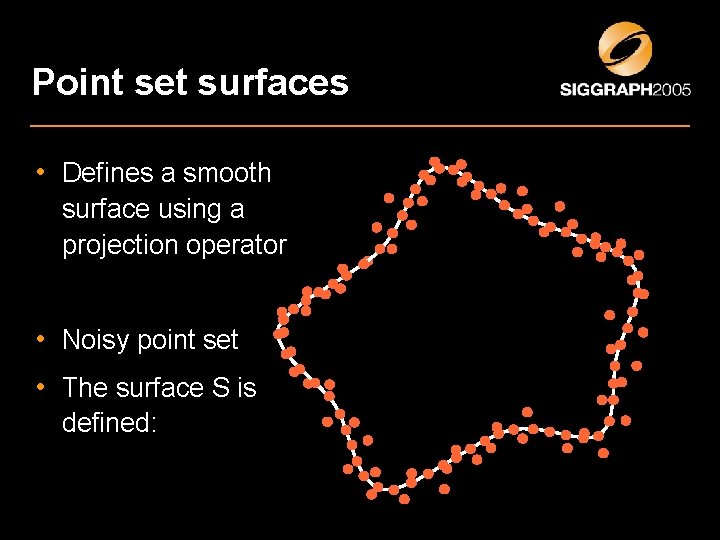
Point set surfaces • Defines a smooth surface using a projection operator • Noisy point set • The surface S is defined:
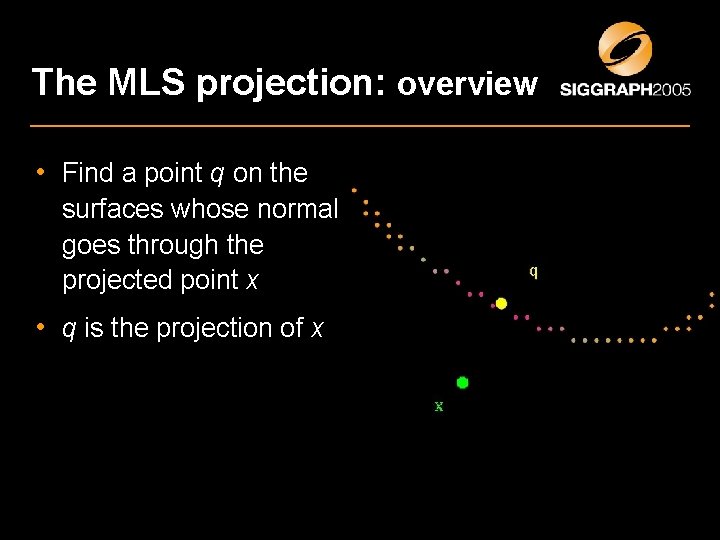
The MLS projection: overview • Find a point q on the surfaces whose normal goes through the projected point x • q is the projection of x
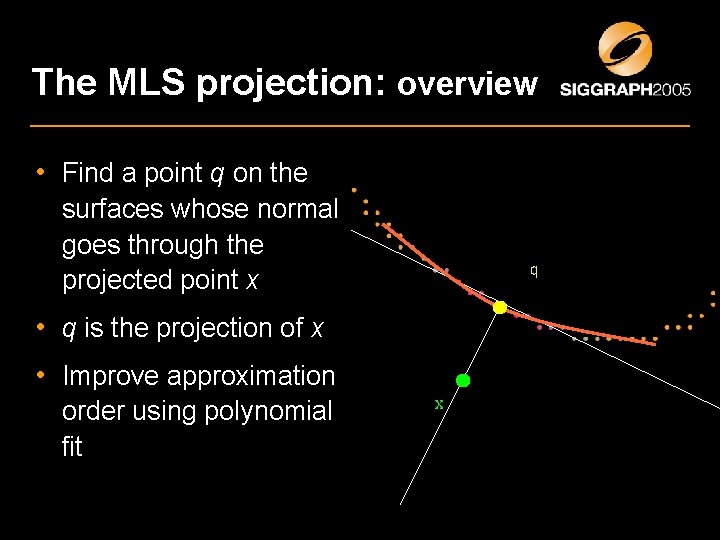
The MLS projection: overview • Find a point q on the surfaces whose normal goes through the projected point x • q is the projection of x • Improve approximation order using polynomial fit
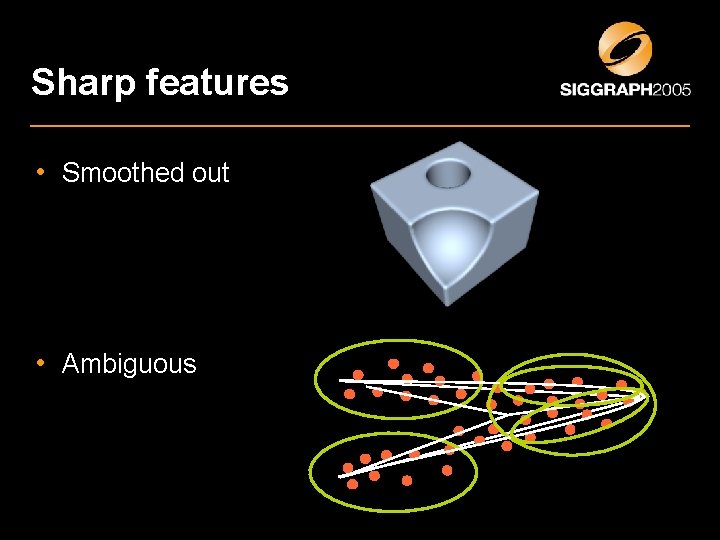
Sharp features • Smoothed out • Ambiguous
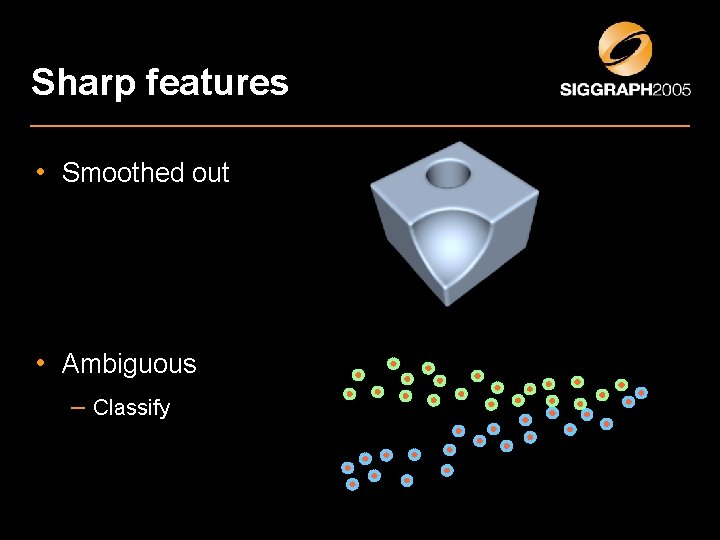
Sharp features • Smoothed out • Ambiguous – Classify
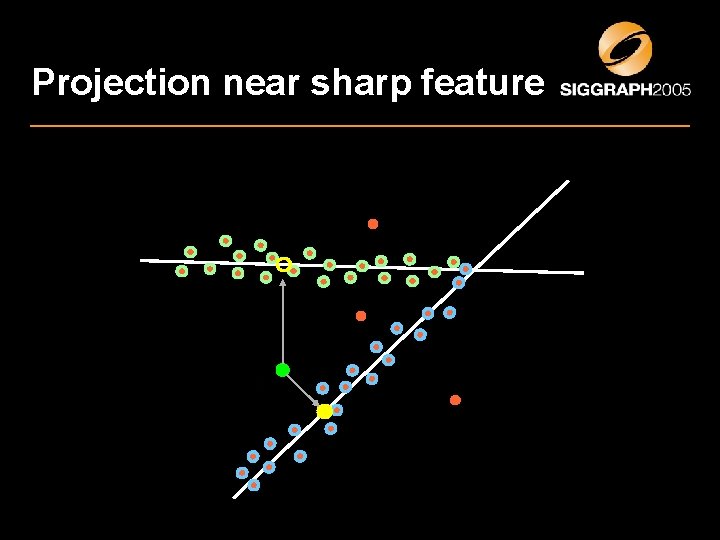
Projection near sharp feature
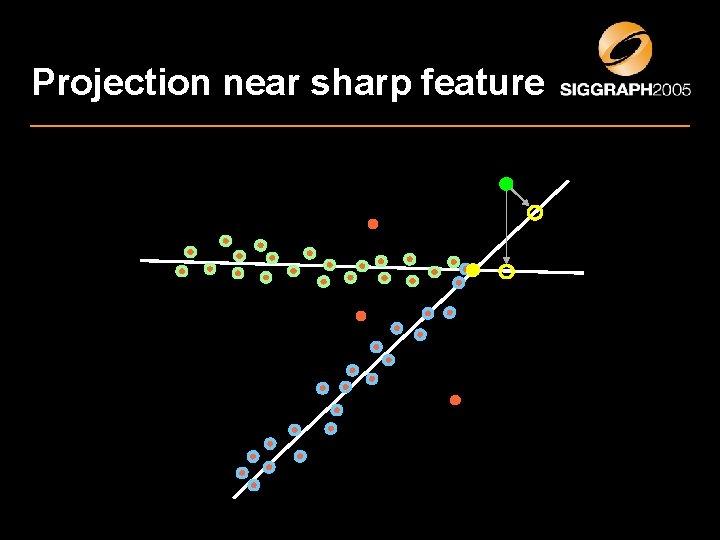
Projection near sharp feature
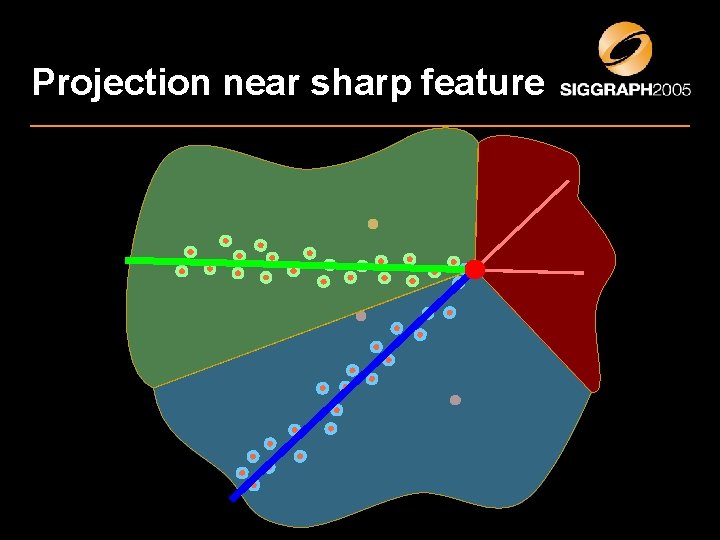
Projection near sharp feature
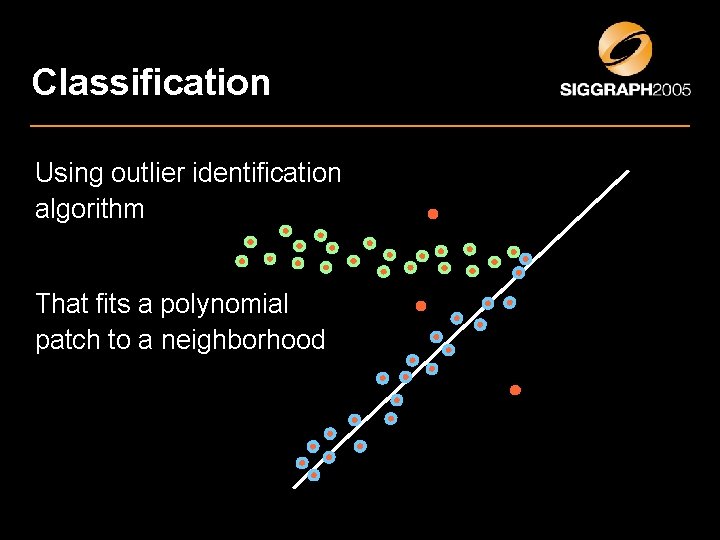
Classification Using outlier identification algorithm That fits a polynomial patch to a neighborhood
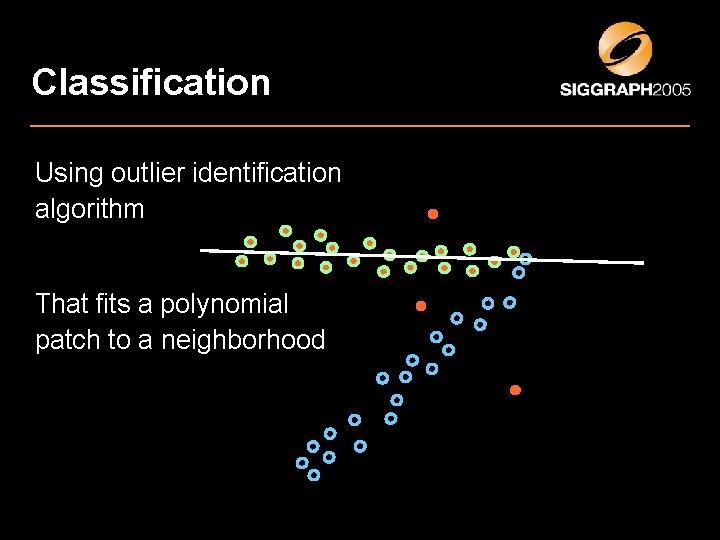
Classification Using outlier identification algorithm That fits a polynomial patch to a neighborhood
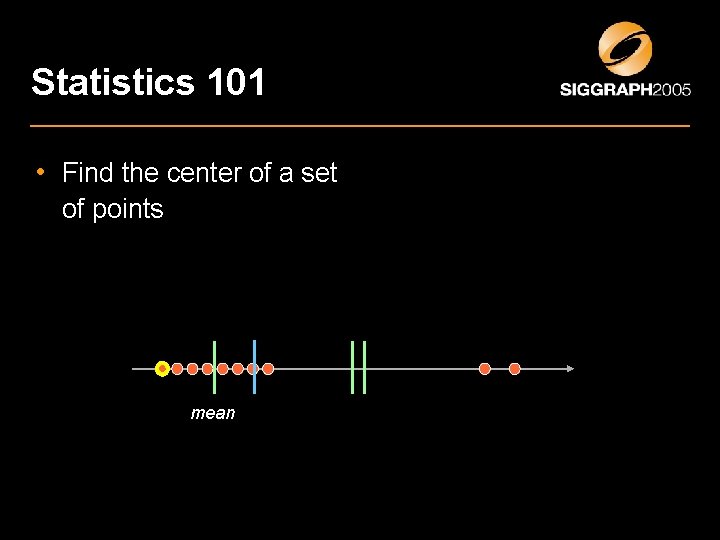
Statistics 101 • Find the center of a set of points mean
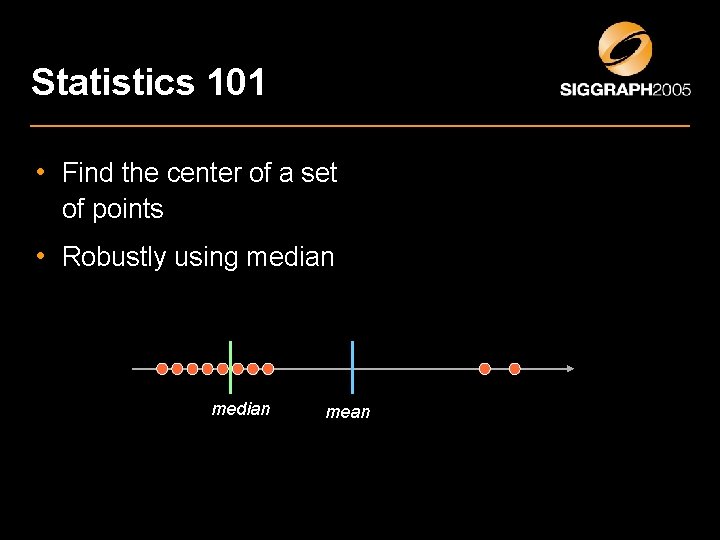
Statistics 101 • Find the center of a set of points • Robustly using median mean
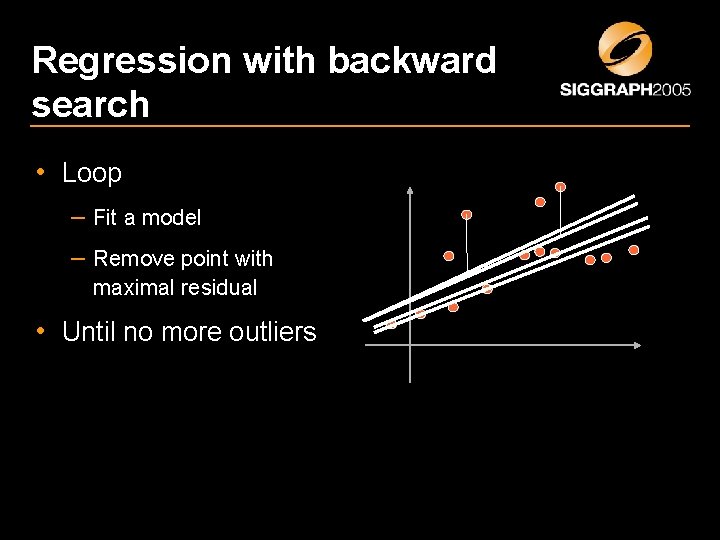
Regression with backward search • Loop – Fit a model – Remove point with maximal residual • Until no more outliers
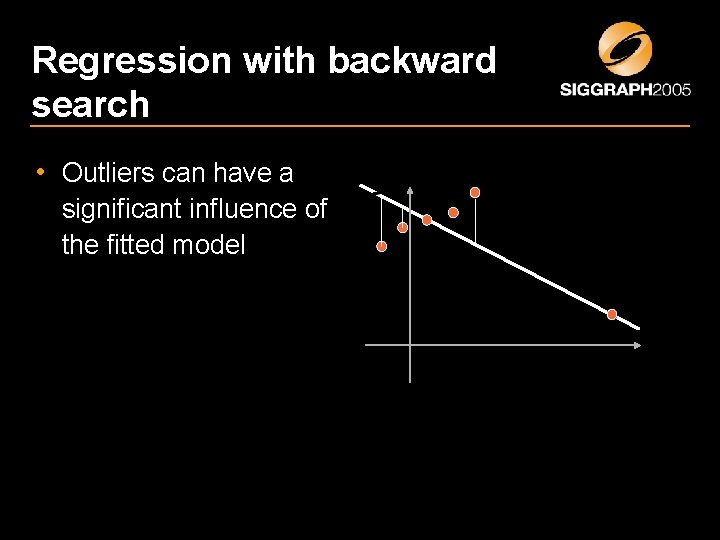
Regression with backward search • Outliers can have a significant influence of the fitted model
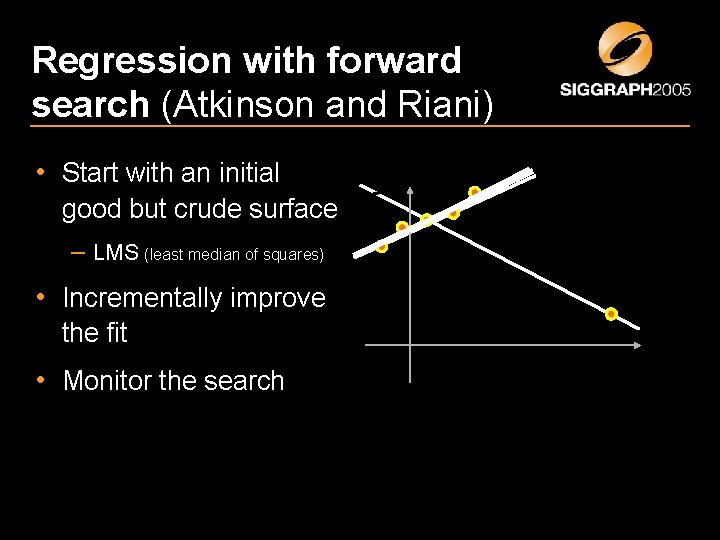
Regression with forward search (Atkinson and Riani) • Start with an initial good but crude surface – LMS (least median of squares) • Incrementally improve the fit • Monitor the search
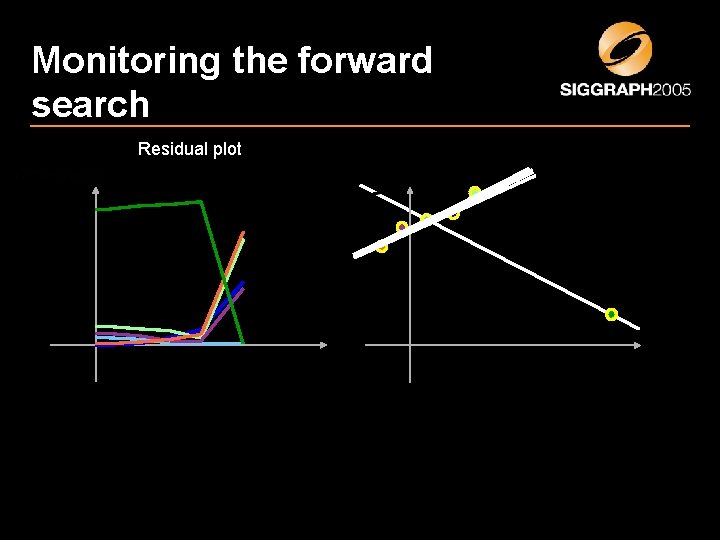
Monitoring the forward search Residual plot
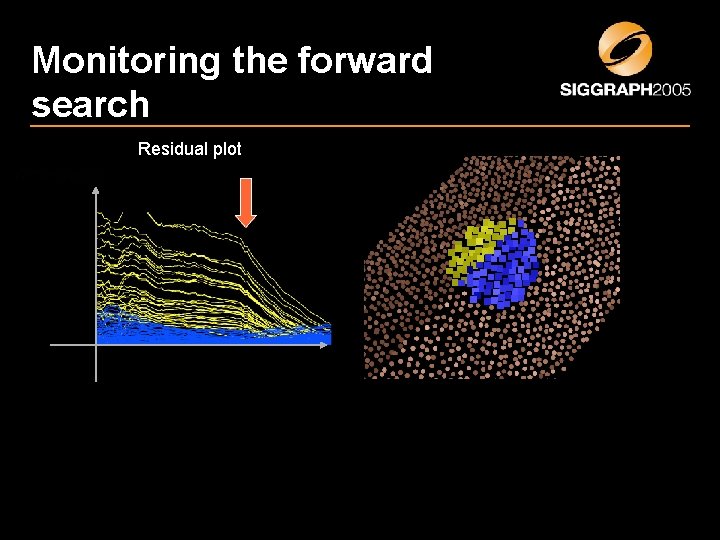
Monitoring the forward search Residual plot
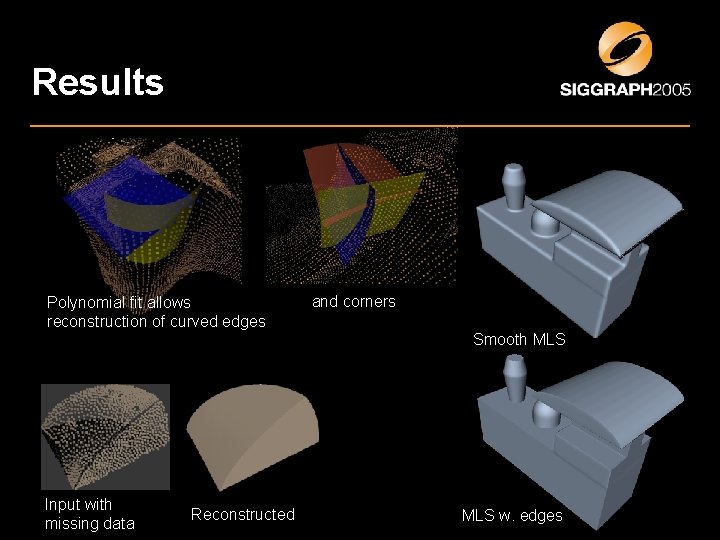
Results Polynomial fit allows reconstruction of curved edges and corners Smooth MLS Input with missing data Reconstructed MLS w. edges
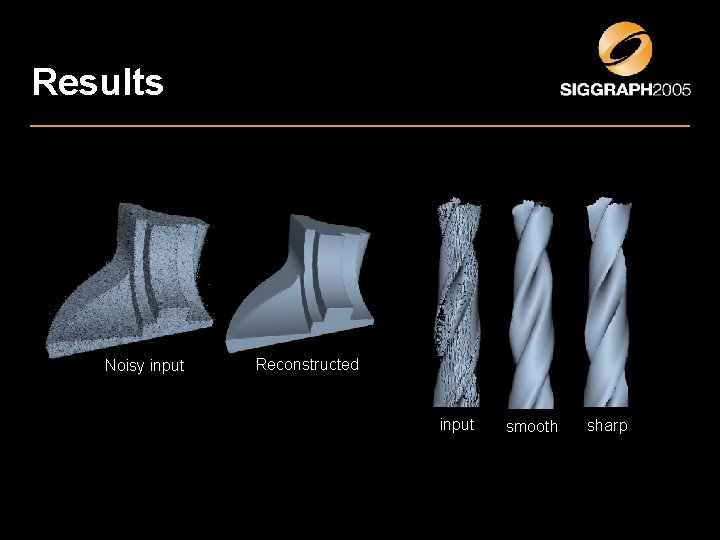
Results Noisy input Reconstructed input smooth sharp
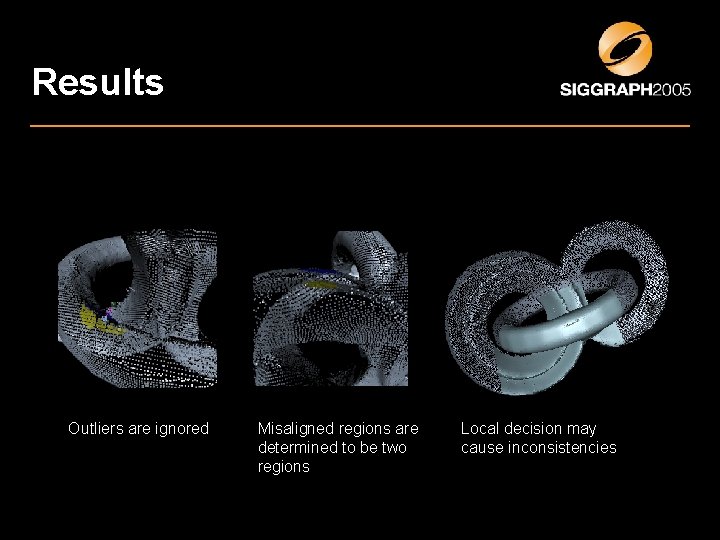
Results Outliers are ignored Misaligned regions are determined to be two regions Local decision may cause inconsistencies
Summary • Classification of noisy point sets to smooth regions • Application to PSS – Reconstruct surfaces with sharp features from noisy data – Improve the stability of the projection • Local decisions may result different neighborhoods for adjacent points • Can be applied to other surface reconstruction methods such as the MPU

Acknowledgements • Department of Energy under the VIEWS program and the MICS office • The National Science Foundation under grants CCF -0401498, EIA-0323604, and OISE-0405402 • A University of Utah Seed Grant • The Israel Science Foundation (founded by the Israel Academy of Sciences and Humanities), and the Israeli Ministry of Science
- Slides: 25