
Robust DeviceIndependent Quantum Key Distribution Rene Schwonnek Koon
Robust Device-Independent Quantum Key Distribution Rene Schwonnek, Koon Tong Goh, Ignatius W. Primaatmaja, Ernest Y. -Z. Tan, Ramona Wolf, Valerio Scarani, Charles C. -W. Lim
Overview § Device-independent QKD (DIQKD) intro § Approach for improved robustness § Computing key rate § Results § Implications for Bell experiments § Next steps § Generalizations Slide 2
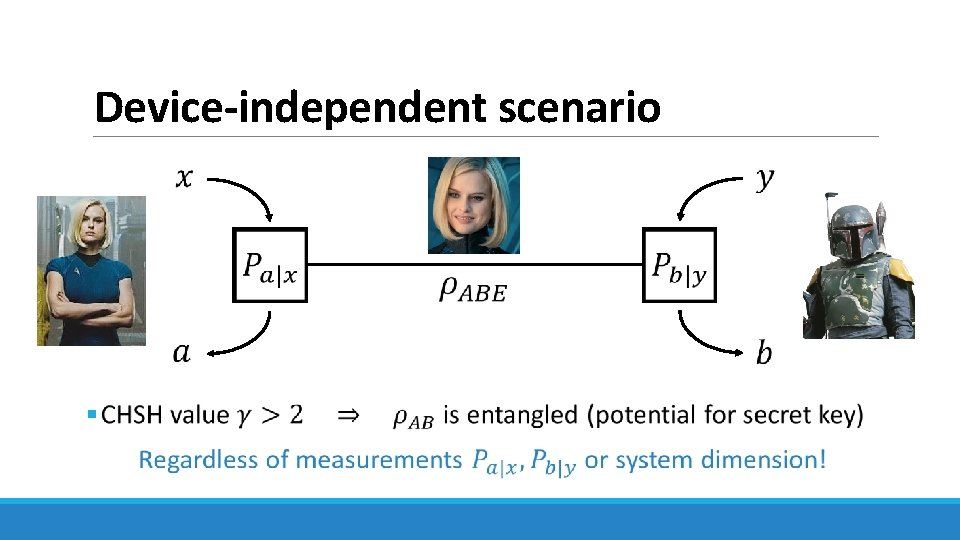
Device-independent scenario §
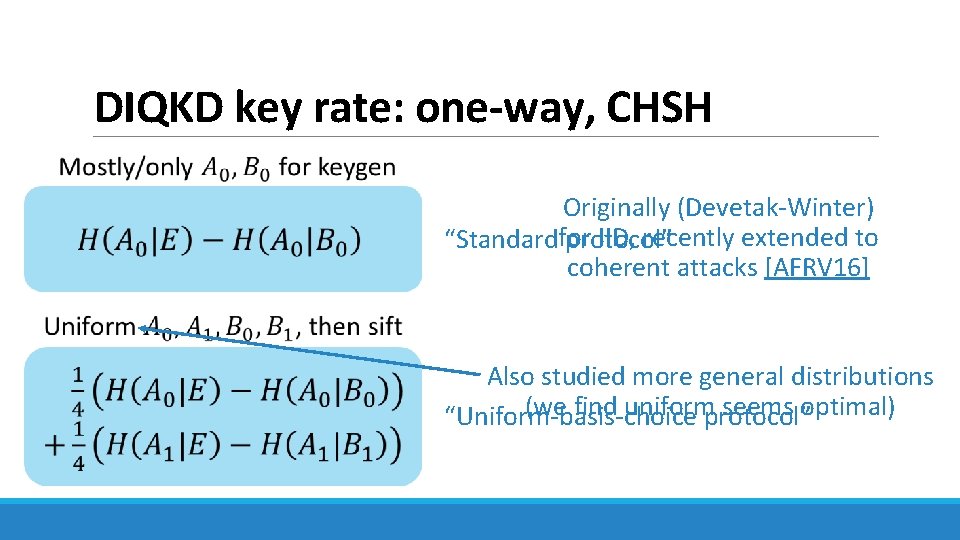
DIQKD key rate: one-way, CHSH Originally (Devetak-Winter) for IID, recently extended to “Standard protocol” coherent attacks [AFRV 16] Also studied more general distributions (we find uniform seems optimal) “Uniform-basis-choice protocol”
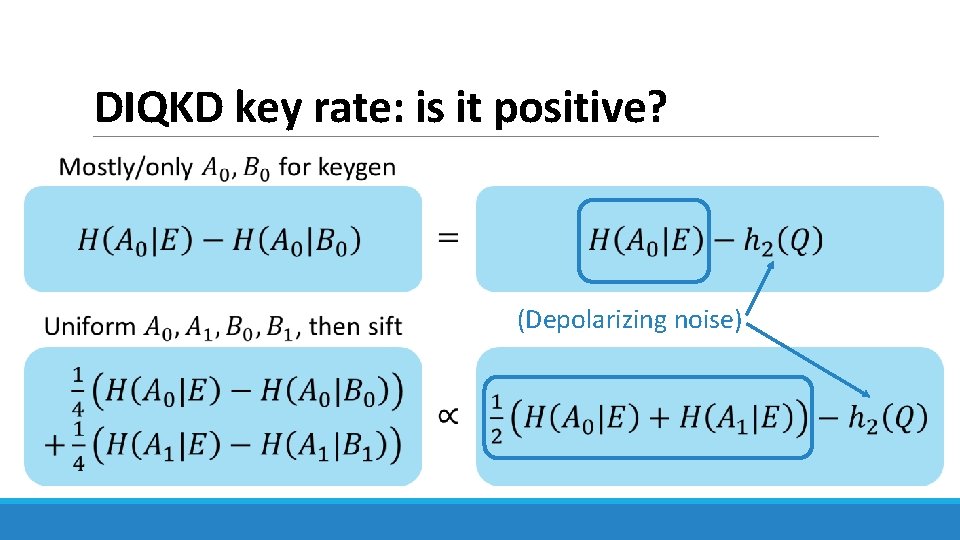
DIQKD key rate: is it positive? (Depolarizing noise)
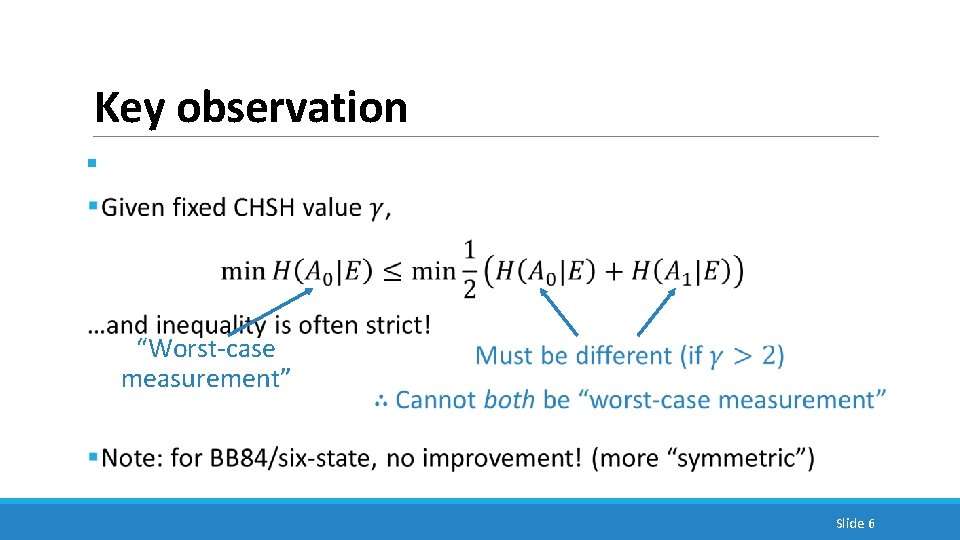
Key observation § “Worst-case measurement” Slide 6
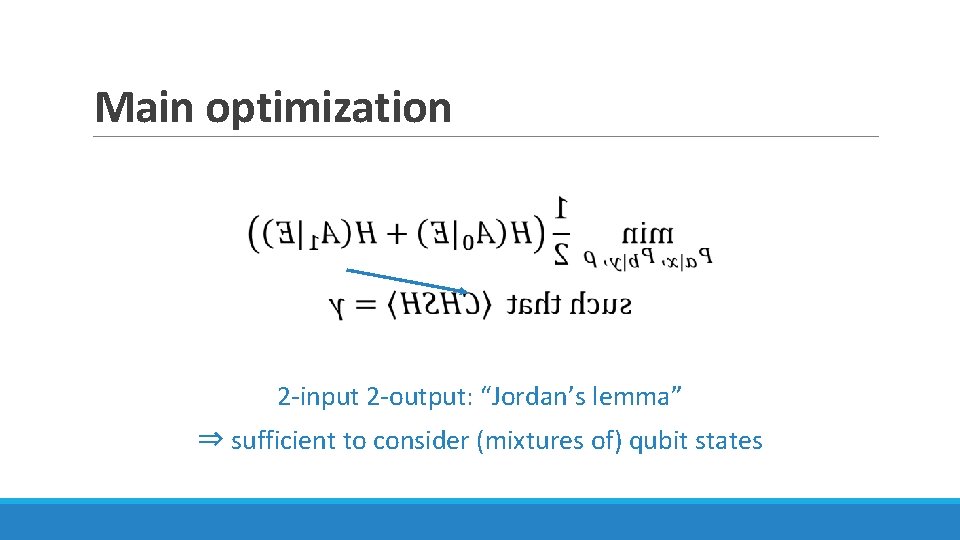
Main optimization 2 -input 2 -output: “Jordan’s lemma” ⇒ sufficient to consider (mixtures of) qubit states
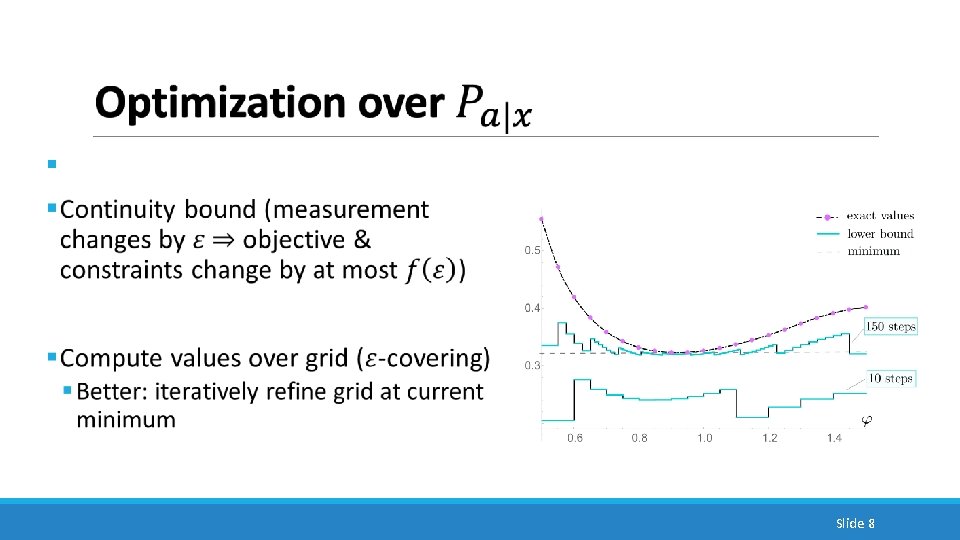
§ Slide 8
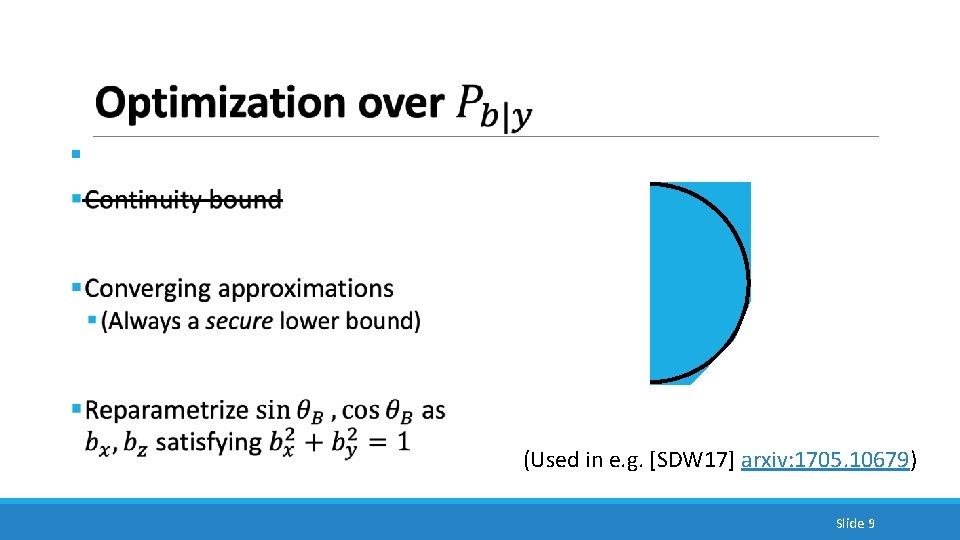
§ (Used in e. g. [SDW 17] arxiv: 1705. 10679) Slide 9
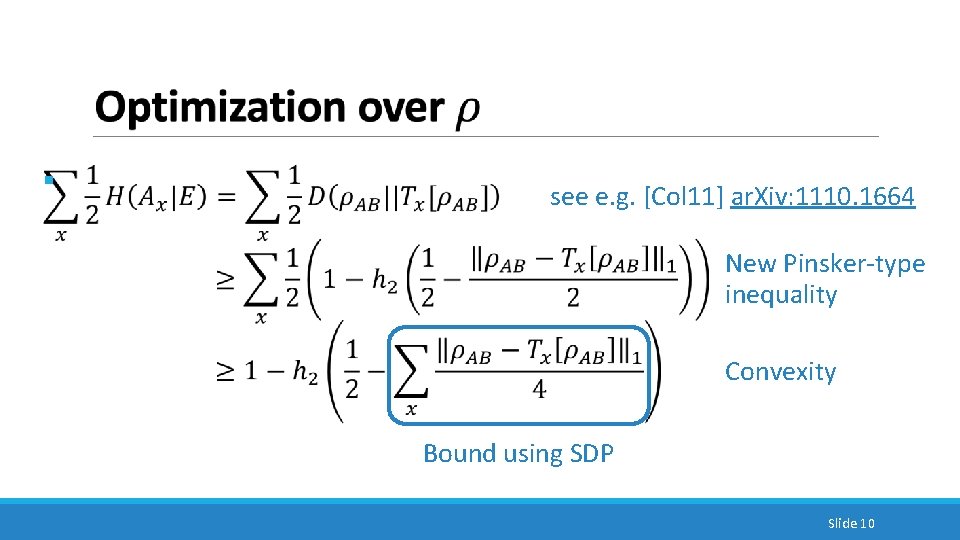
§ see e. g. [Col 11] ar. Xiv: 1110. 1664 New Pinsker-type inequality Convexity Bound using SDP Slide 10
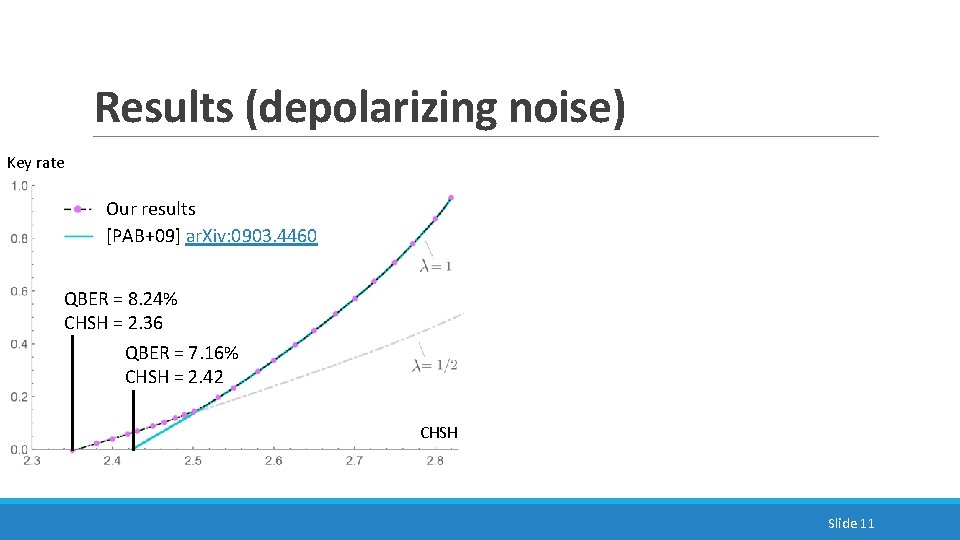
Results (depolarizing noise) Key rate Our results [PAB+09] ar. Xiv: 0903. 4460 Best possible bound (by convexity) QBER = 8. 24% CHSH = 2. 36 QBER = 7. 16% CHSH = 2. 42 CHSH Slide 11
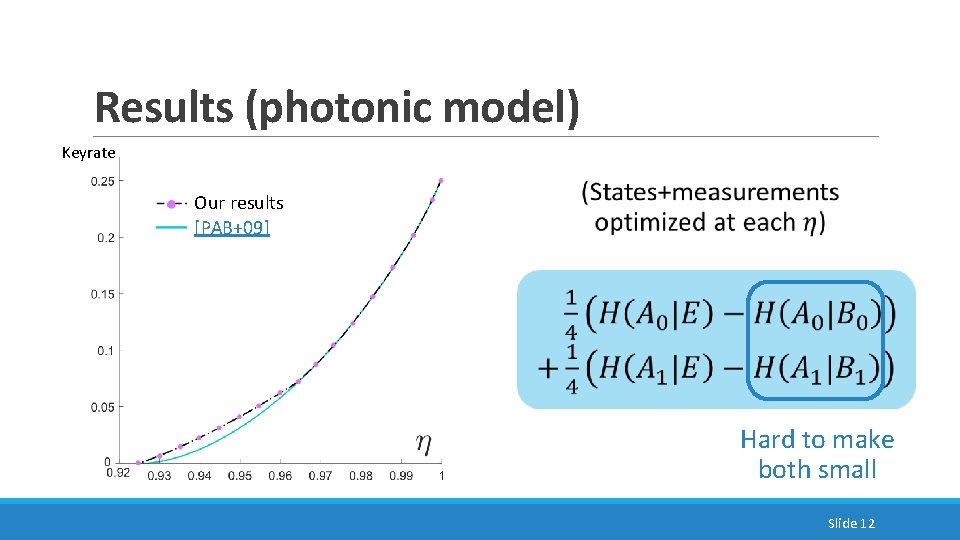
Results (photonic model) Keyrate Our results [PAB+09] Hard to make both small Slide 12
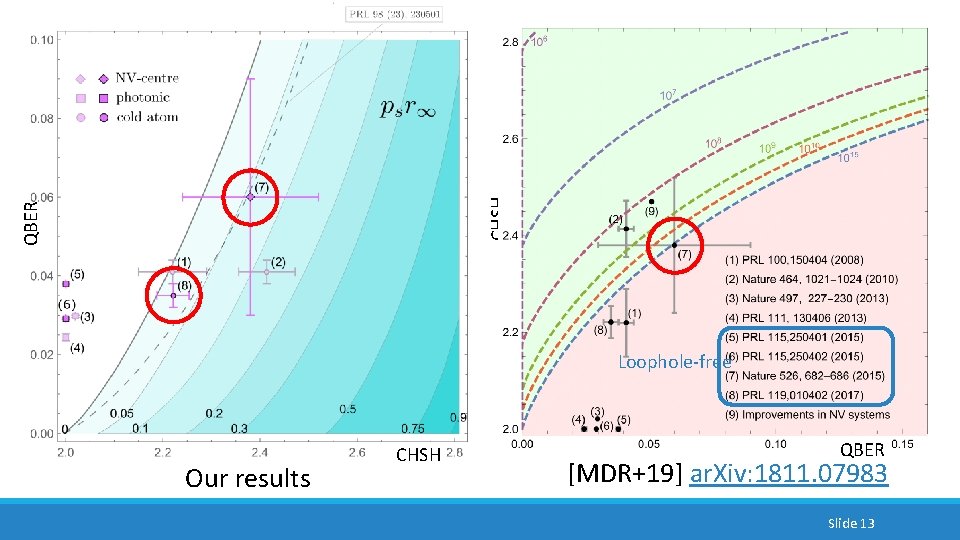
CHSH QBER Loophole-free Our results CHSH QBER [MDR+19] ar. Xiv: 1811. 07983 Slide 13
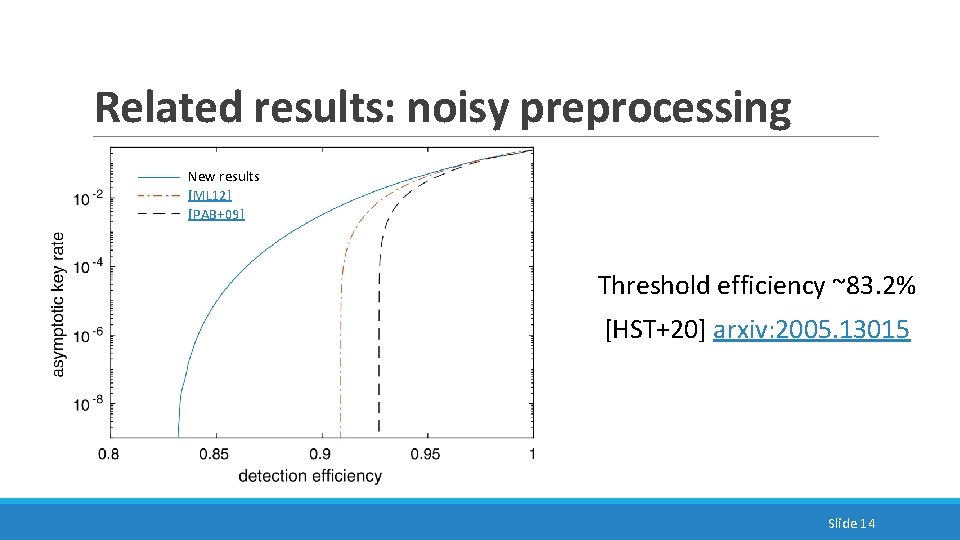
Related results: noisy preprocessing New results [ML 12] [PAB+09] Threshold efficiency ~83. 2% [HST+20] arxiv: 2005. 13015 Slide 14
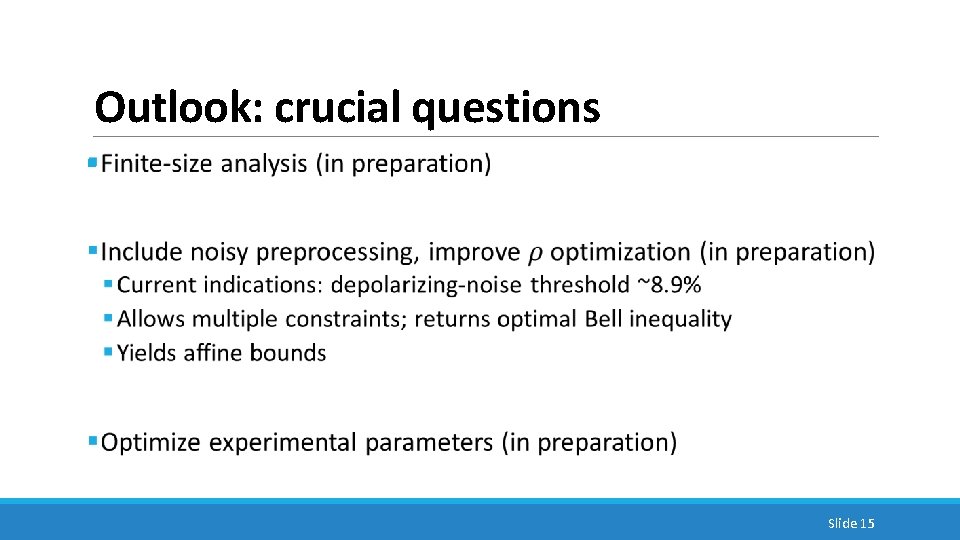
Outlook: crucial questions § Slide 15
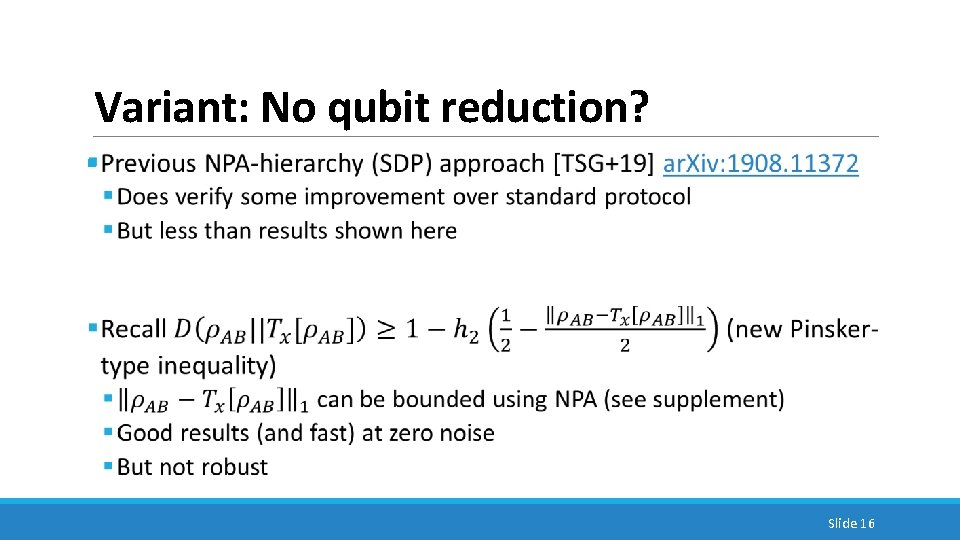
Variant: No qubit reduction? § Slide 16
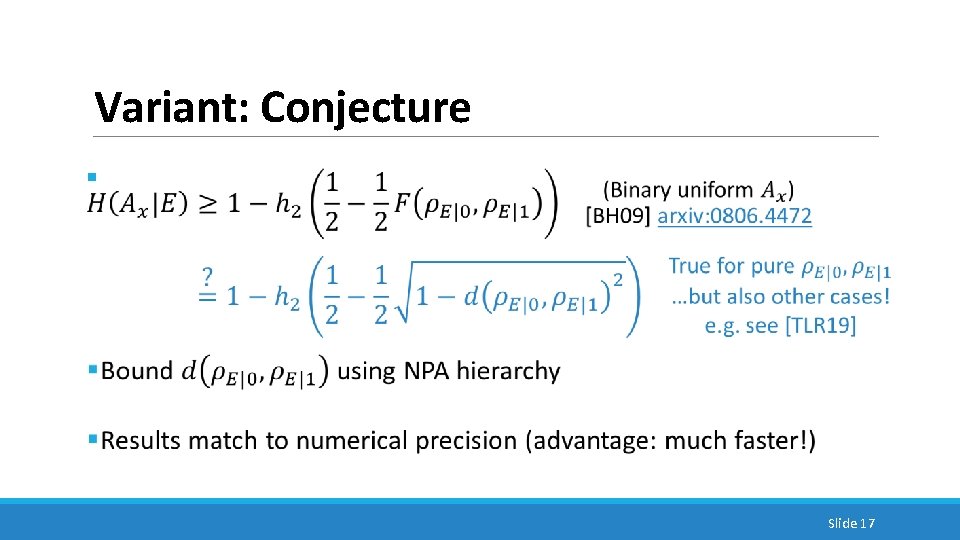
Variant: Conjecture § Slide 17
Summary § Substantial improvement to noise tolerance § Going forward: § Finite-size effect (manuscript in preparation) § Improved optimization method (in progress) § Experimental demonstration (in progress) § Related: [BFF 20] arxiv: 2007. 12575, [WAP 20] arxiv: 2007. 16146 Thank you! Slide 18
- Slides: 18