
Robotics MSE 2400 1 2 What is a
Robotics MSE 2400 1
2
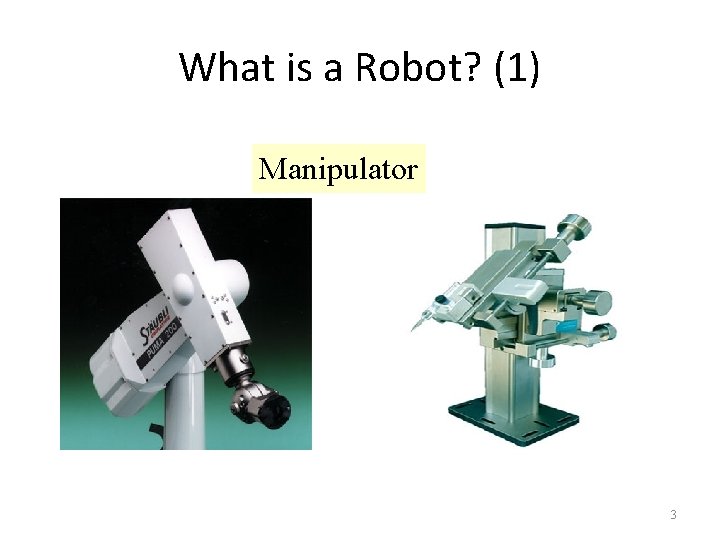
What is a Robot? (1) Manipulator 3
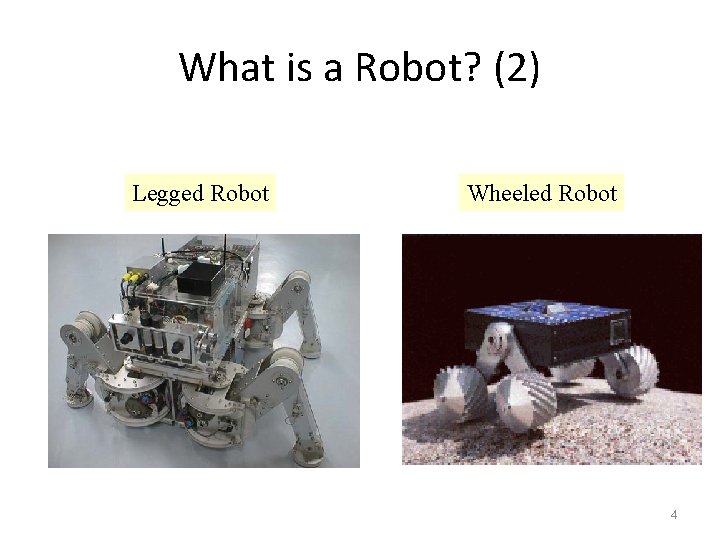
What is a Robot? (2) Legged Robot Wheeled Robot 4
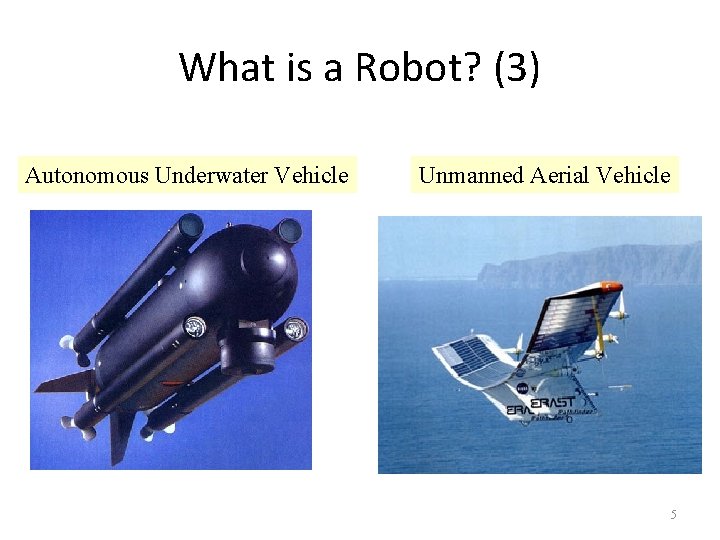
What is a Robot? (3) Autonomous Underwater Vehicle Unmanned Aerial Vehicle 5
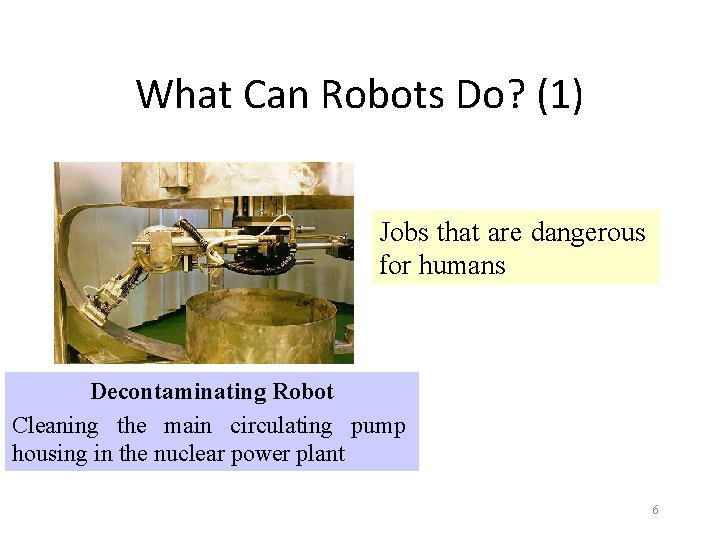
What Can Robots Do? (1) Jobs that are dangerous for humans Decontaminating Robot Cleaning the main circulating pump housing in the nuclear power plant 6
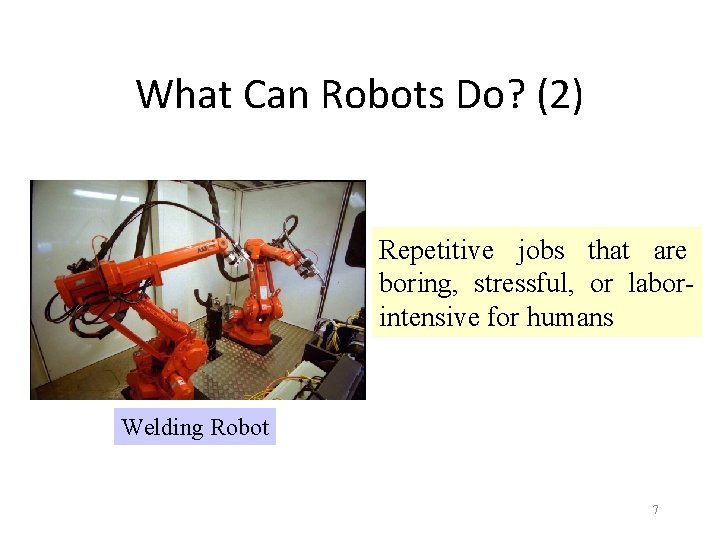
What Can Robots Do? (2) Repetitive jobs that are boring, stressful, or laborintensive for humans Welding Robot 7
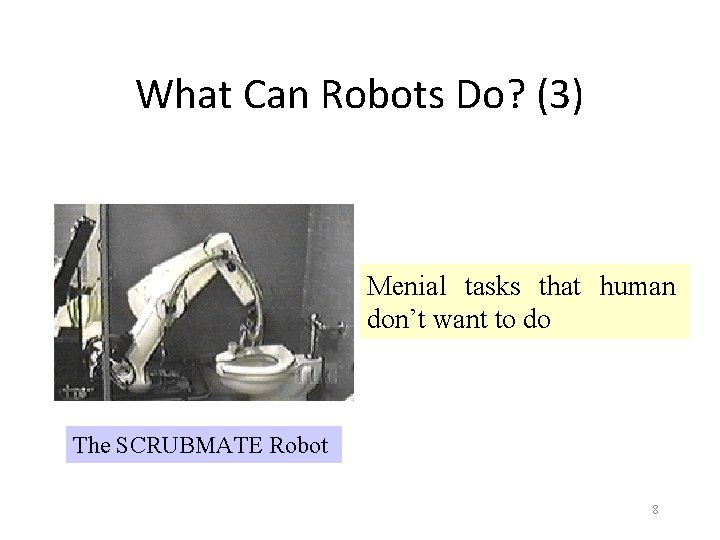
What Can Robots Do? (3) Menial tasks that human don’t want to do The SCRUBMATE Robot 8
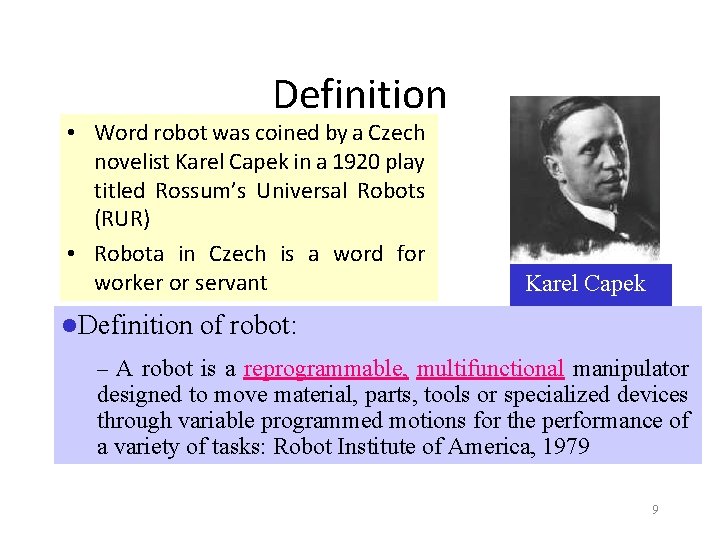
Definition • Word robot was coined by a Czech novelist Karel Capek in a 1920 play titled Rossum’s Universal Robots (RUR) • Robota in Czech is a word for worker or servant Definition Karel Capek of robot: – A robot is a reprogrammable, multifunctional manipulator designed to move material, parts, tools or specialized devices through variable programmed motions for the performance of a variety of tasks: Robot Institute of America, 1979 9
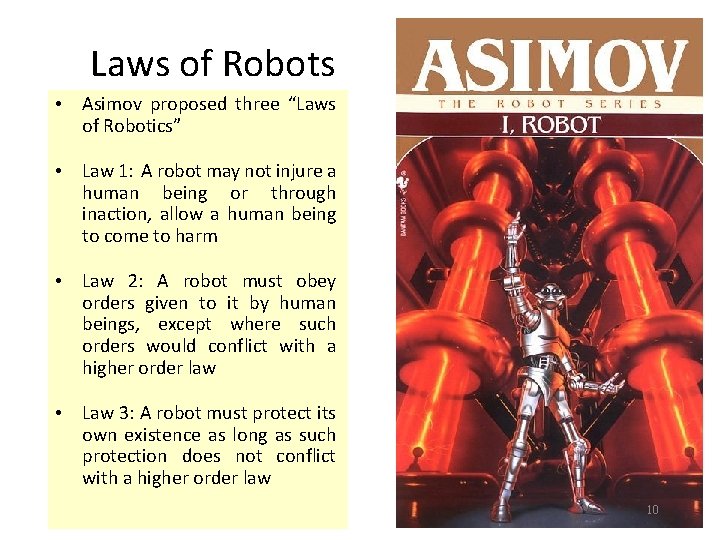
Laws of Robots • Asimov proposed three “Laws of Robotics” • Law 1: A robot may not injure a human being or through inaction, allow a human being to come to harm • Law 2: A robot must obey orders given to it by human beings, except where such orders would conflict with a higher order law • Law 3: A robot must protect its own existence as long as such protection does not conflict with a higher order law 10

History of Robotics (1) • The first industrial robot: UNIMATE • 1954: The first programmable robot is designed by George Devol, who coins the term Universal Automation. He later shortens this to Unimation, which becomes the name of the first robot company (1962). UNIMATE originally automated the manufacture of TV picture tubes 11
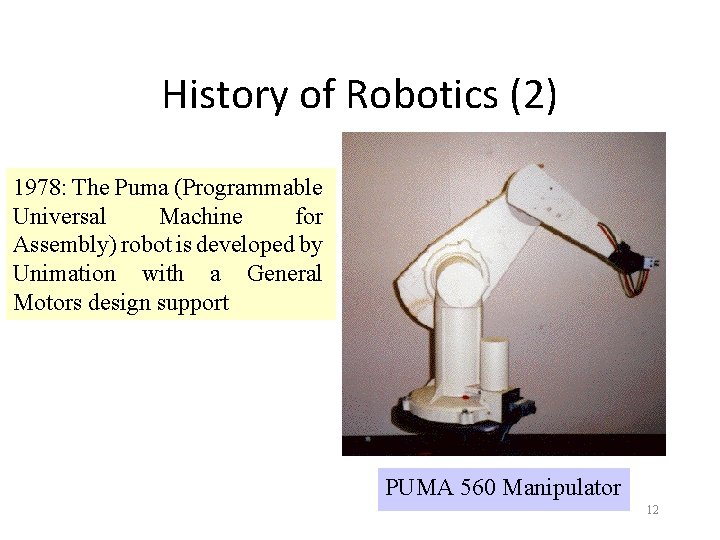
History of Robotics (2) 1978: The Puma (Programmable Universal Machine for Assembly) robot is developed by Unimation with a General Motors design support PUMA 560 Manipulator 12
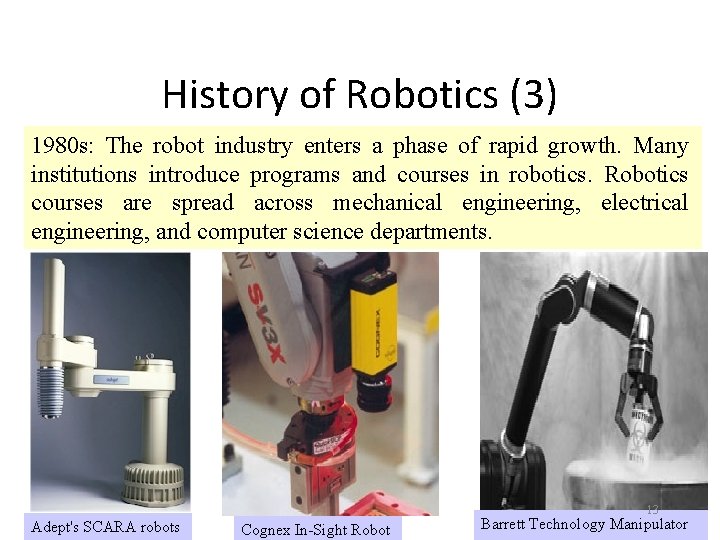
History of Robotics (3) 1980 s: The robot industry enters a phase of rapid growth. Many institutions introduce programs and courses in robotics. Robotics courses are spread across mechanical engineering, electrical engineering, and computer science departments. 13 Adept's SCARA robots Cognex In-Sight Robot Barrett Technology Manipulator
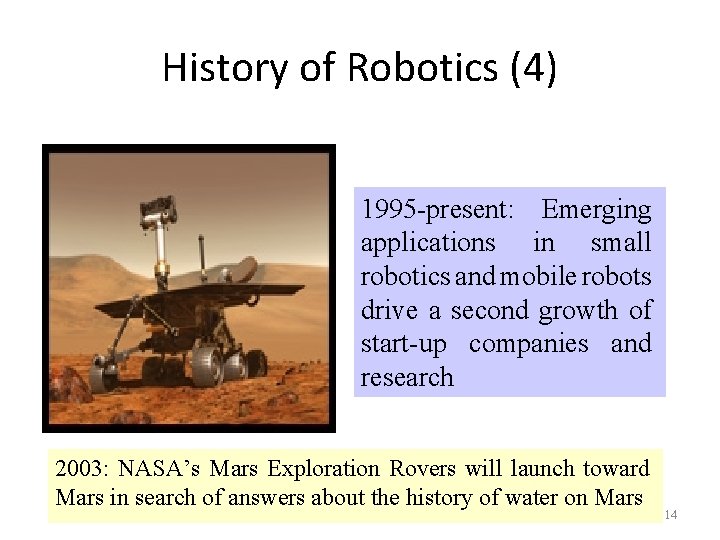
History of Robotics (4) 1995 -present: Emerging applications in small robotics and mobile robots drive a second growth of start-up companies and research 2003: NASA’s Mars Exploration Rovers will launch toward Mars in search of answers about the history of water on Mars 14
Knowledgebase for Robotics • Typical knowledgebase for the design and operation of robotics systems –Dynamic system modeling and analysis –Feedback control –Sensors and signal conditioning –Actuators and power electronics –Hardware/computer interfacing –Computer programming Disciplines: mathematics, physics, biology, mechanical engineering, electrical engineering, computer engineering, and computer science 15
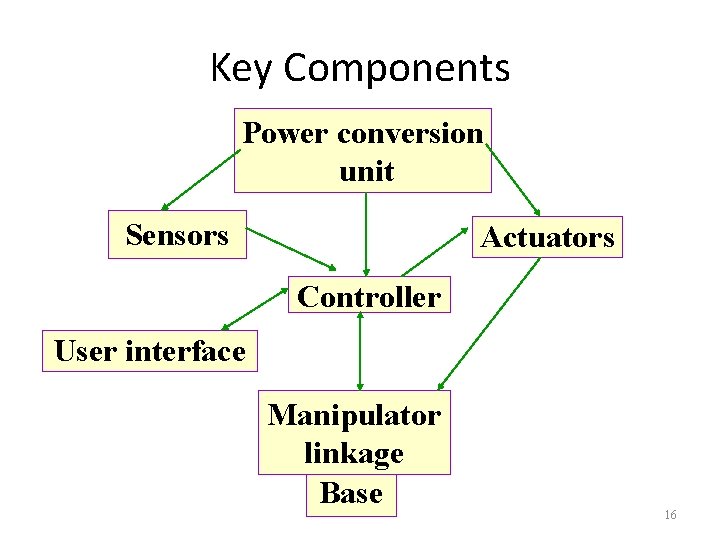
Key Components Power conversion unit Sensors Actuators Controller User interface Manipulator linkage Base 16
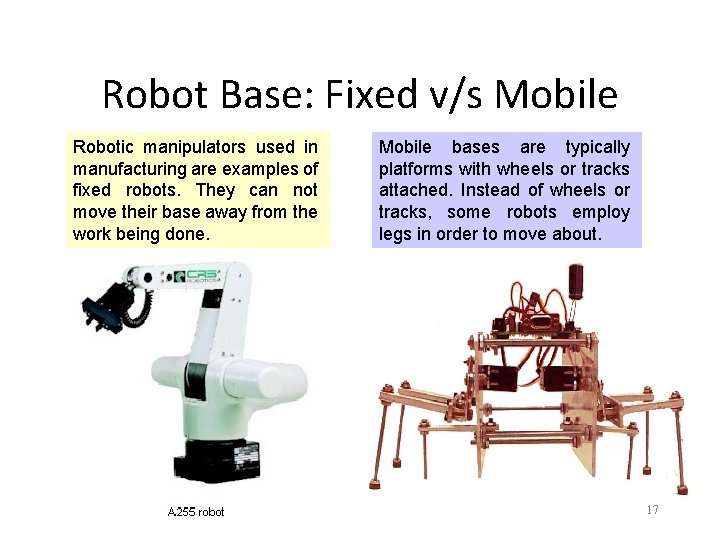
Robot Base: Fixed v/s Mobile Robotic manipulators used in manufacturing are examples of fixed robots. They can not move their base away from the work being done. Mobile bases are typically platforms with wheels or tracks attached. Instead of wheels or tracks, some robots employ legs in order to move about. 17
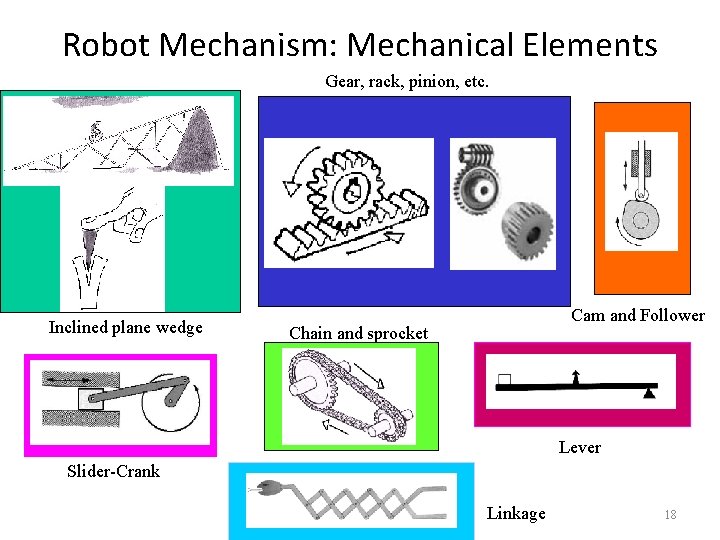
Robot Mechanism: Mechanical Elements Gear, rack, pinion, etc. Inclined plane wedge Cam and Follower Chain and sprocket Lever Slider-Crank Linkage 18
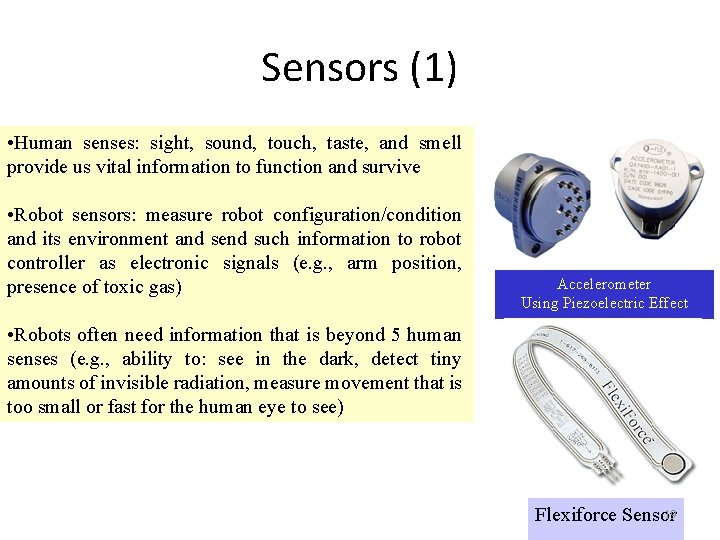
Sensors (1) • Human senses: sight, sound, touch, taste, and smell provide us vital information to function and survive • Robot sensors: measure robot configuration/condition and its environment and send such information to robot controller as electronic signals (e. g. , arm position, presence of toxic gas) Accelerometer Using Piezoelectric Effect • Robots often need information that is beyond 5 human senses (e. g. , ability to: see in the dark, detect tiny amounts of invisible radiation, measure movement that is too small or fast for the human eye to see) 19 Flexiforce Sensor
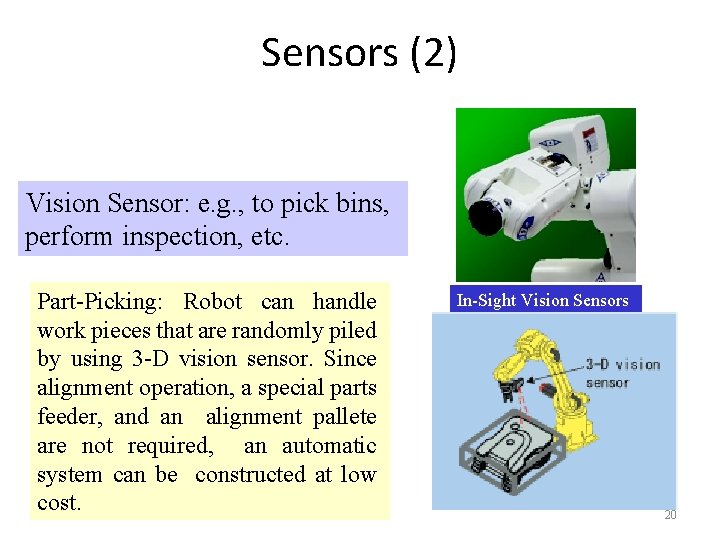
Sensors (2) Vision Sensor: e. g. , to pick bins, perform inspection, etc. Part-Picking: Robot can handle work pieces that are randomly piled by using 3 -D vision sensor. Since alignment operation, a special parts feeder, and an alignment pallete are not required, an automatic system can be constructed at low cost. In-Sight Vision Sensors 20
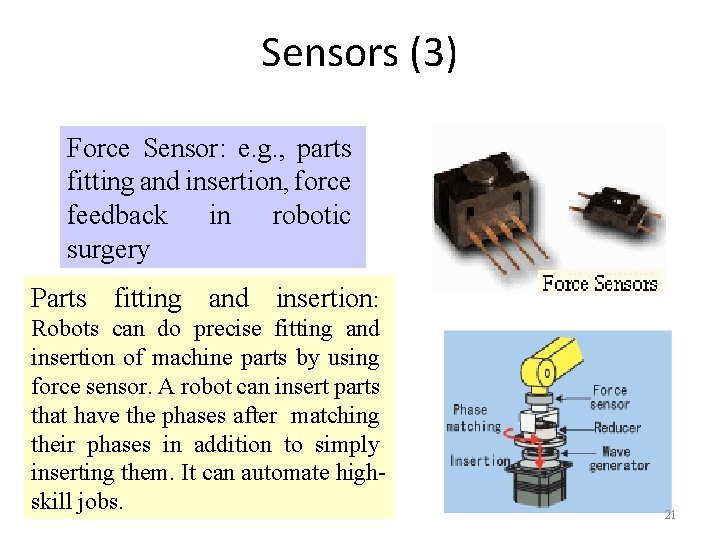
Sensors (3) Force Sensor: e. g. , parts fitting and insertion, force feedback in robotic surgery Parts fitting and insertion: Robots can do precise fitting and insertion of machine parts by using force sensor. A robot can insert parts that have the phases after matching their phases in addition to simply inserting them. It can automate highskill jobs. 21
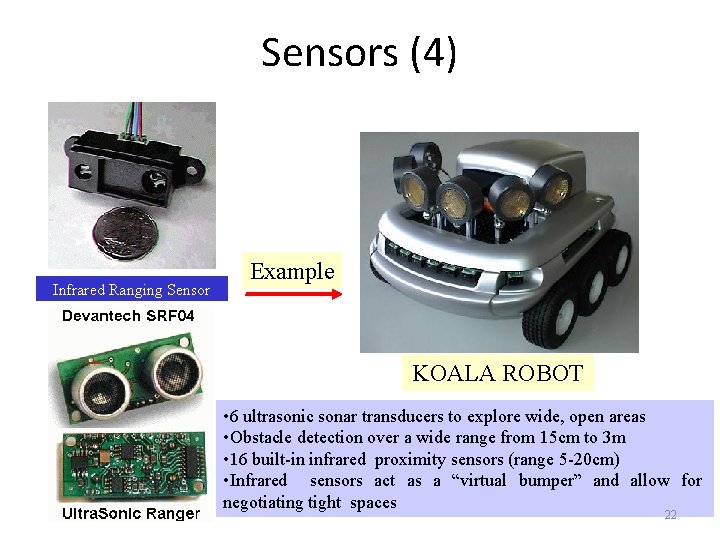
Sensors (4) Infrared Ranging Sensor Example KOALA ROBOT • 6 ultrasonic sonar transducers to explore wide, open areas • Obstacle detection over a wide range from 15 cm to 3 m • 16 built-in infrared proximity sensors (range 5 -20 cm) • Infrared sensors act as a “virtual bumper” and allow for negotiating tight spaces 22
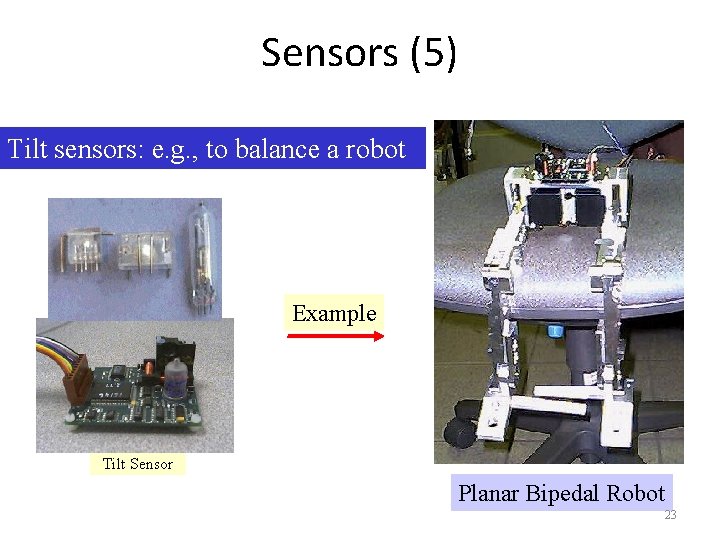
Sensors (5) Tilt sensors: e. g. , to balance a robot Example Tilt Sensor Planar Bipedal Robot 23
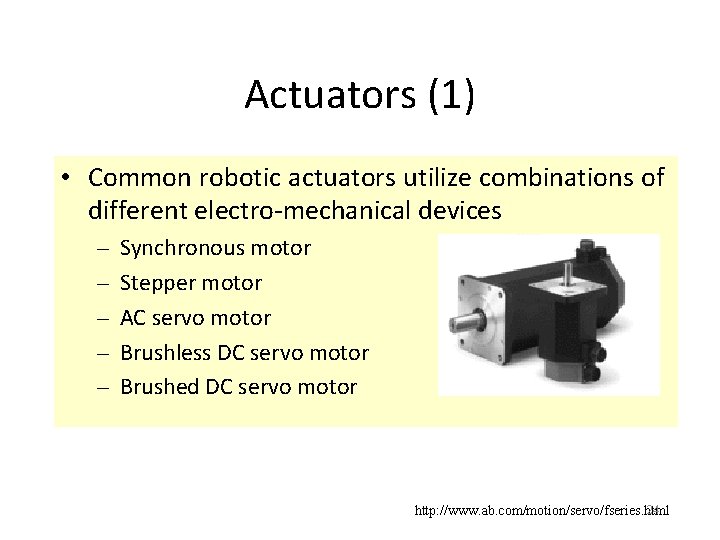
Actuators (1) • Common robotic actuators utilize combinations of different electro-mechanical devices – – – Synchronous motor Stepper motor AC servo motor Brushless DC servo motor Brushed DC servo motor 24 http: //www. ab. com/motion/servo/fseries. html
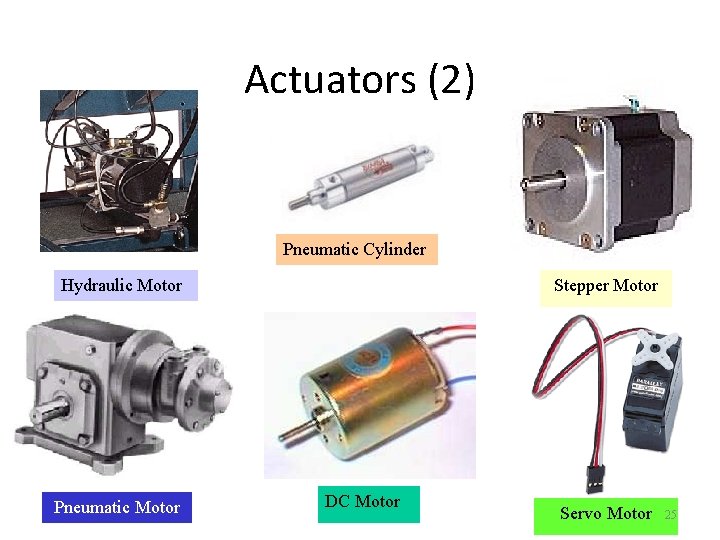
Actuators (2) Pneumatic Cylinder Hydraulic Motor Pneumatic Motor Stepper Motor DC Motor Servo Motor 25
Controller Provide necessary intelligence to control the manipulator/mobile robot Process the sensory information and compute the control commands for the actuators to carry out specified tasks 26
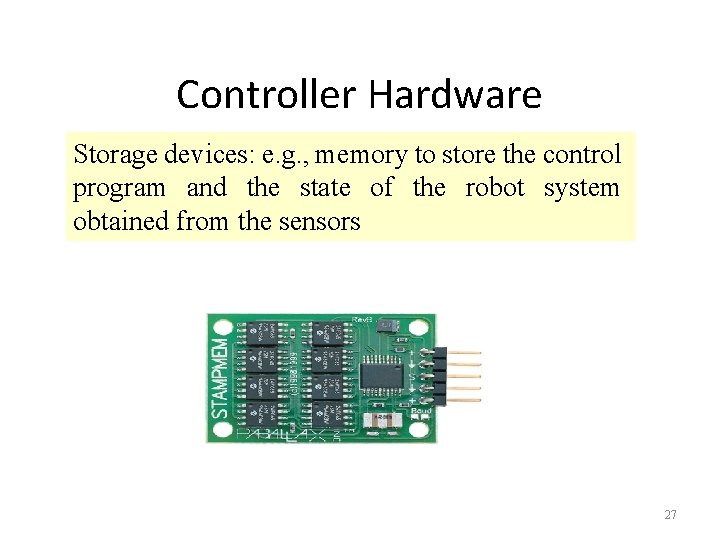
Controller Hardware Storage devices: e. g. , memory to store the control program and the state of the robot system obtained from the sensors 27
Industries Using Robotics • Agriculture • Automobile • Construction • Entertainment • Health care: hospitals, patient-care, surgery , research, etc. • Laboratories: science, engineering , etc. • Law enforcement: surveillance, patrol, etc. • Manufacturing • Military: demining, surveillance, attack, etc. • Mining, excavation, and exploration • Transportation: air, ground, rail, space, etc. • Utilities: gas, water, and electric • Warehouses 28
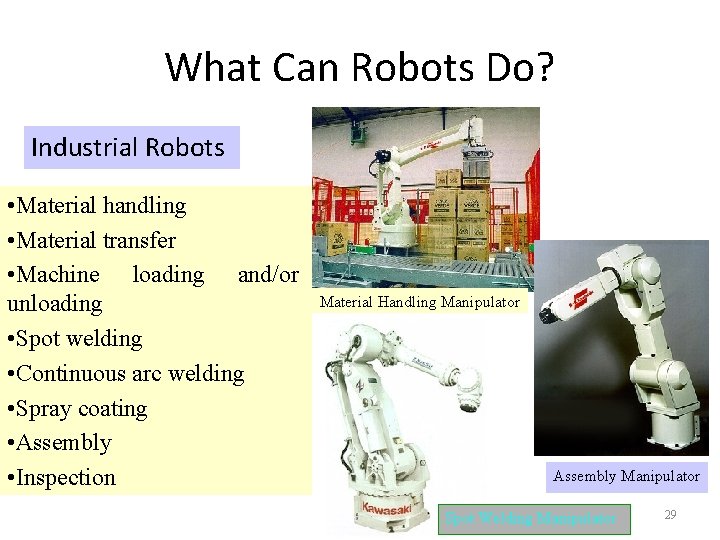
What Can Robots Do? Industrial Robots • Material handling • Material transfer • Machine loading and/or unloading • Spot welding • Continuous arc welding • Spray coating • Assembly • Inspection Material Handling Manipulator Assembly Manipulator Spot Welding Manipulator 29
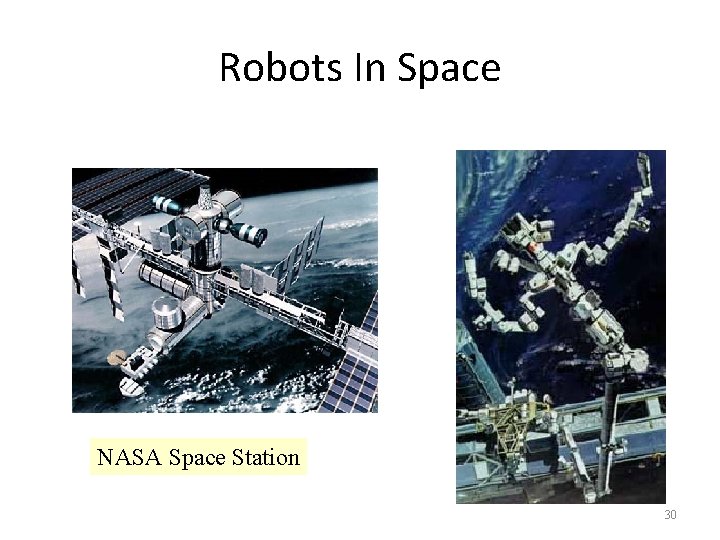
Robots In Space NASA Space Station 30
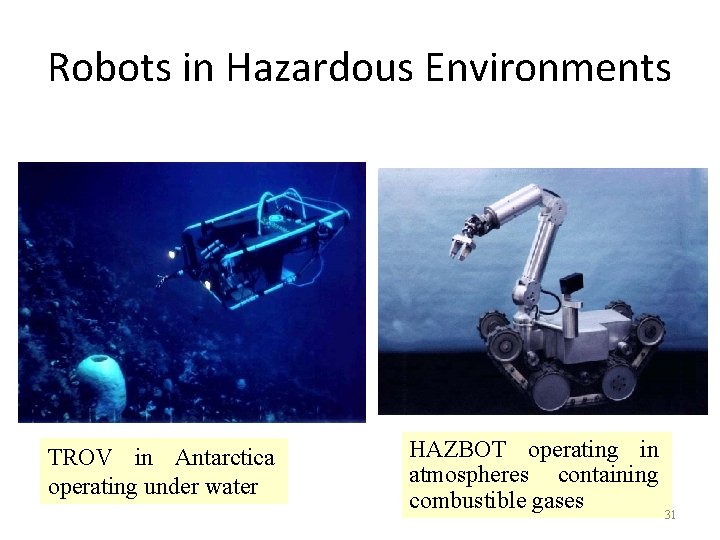
Robots in Hazardous Environments TROV in Antarctica operating under water HAZBOT operating in atmospheres containing combustible gases 31
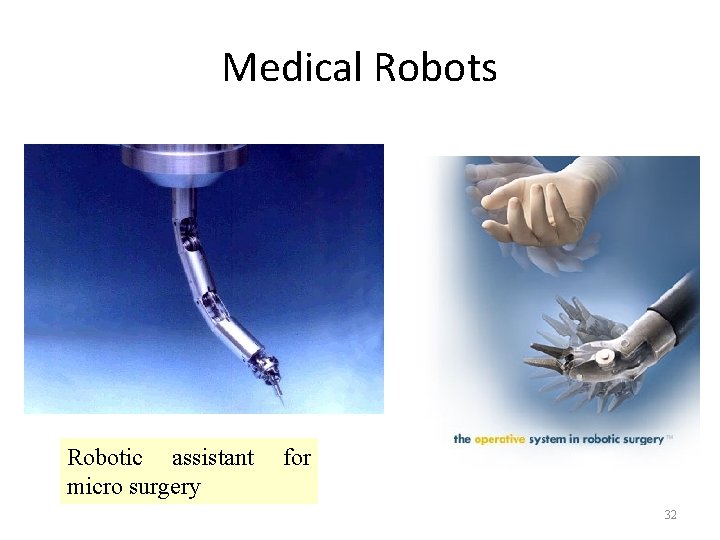
Medical Robots Robotic assistant micro surgery for 32
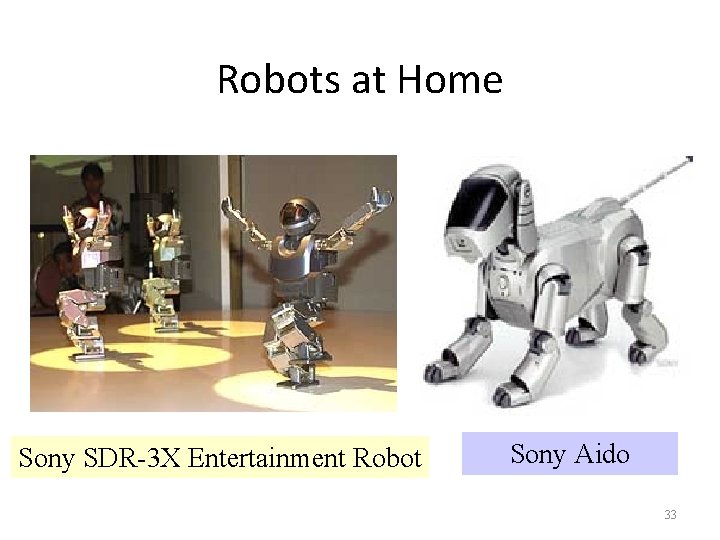
Robots at Home Sony SDR-3 X Entertainment Robot Sony Aido 33
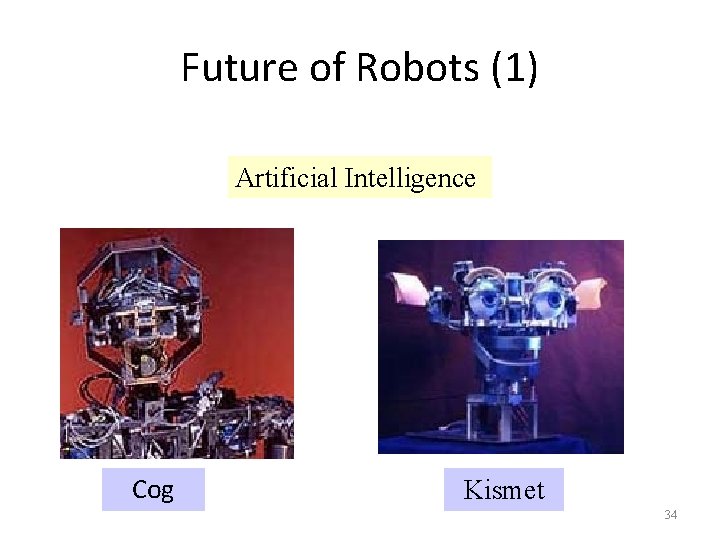
Future of Robots (1) Artificial Intelligence Cog Kismet 34
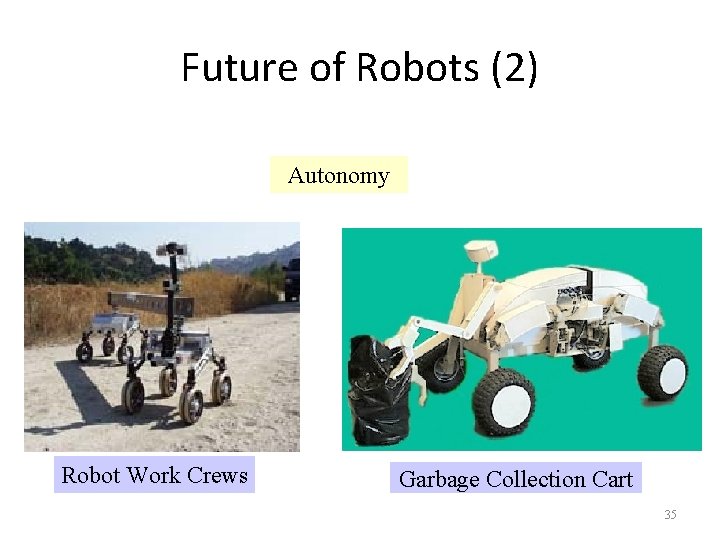
Future of Robots (2) Autonomy Robot Work Crews Garbage Collection Cart 35
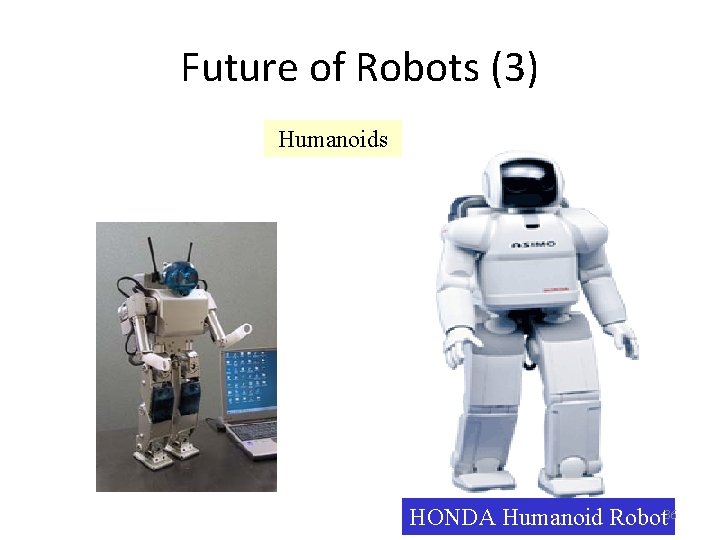
Future of Robots (3) Humanoids HONDA Humanoid Robot 36
- Slides: 36