
Robotics digitalization workplace automation What future for manufacturing
Robotics, digitalization, workplace automation: What future for manufacturing in Hungary? Andrea Szalavetz Third bilateral Polish-Hungarian Conference Warsaw, 29 th September, 2016
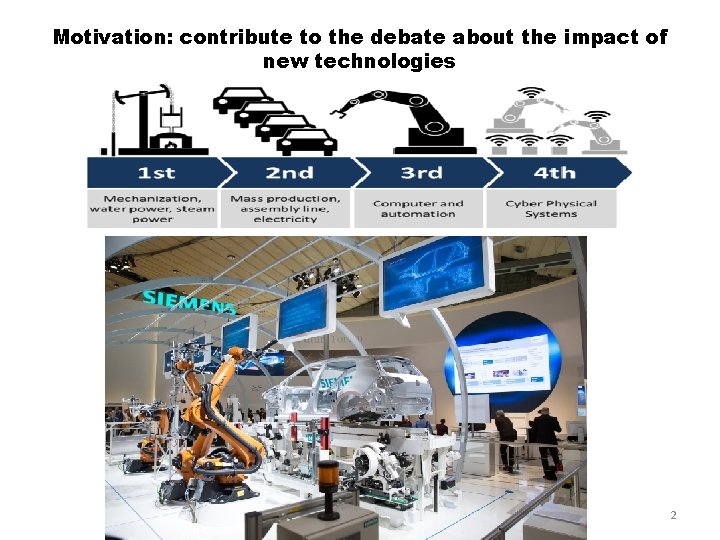
Motivation: contribute to the debate about the impact of new technologies 2
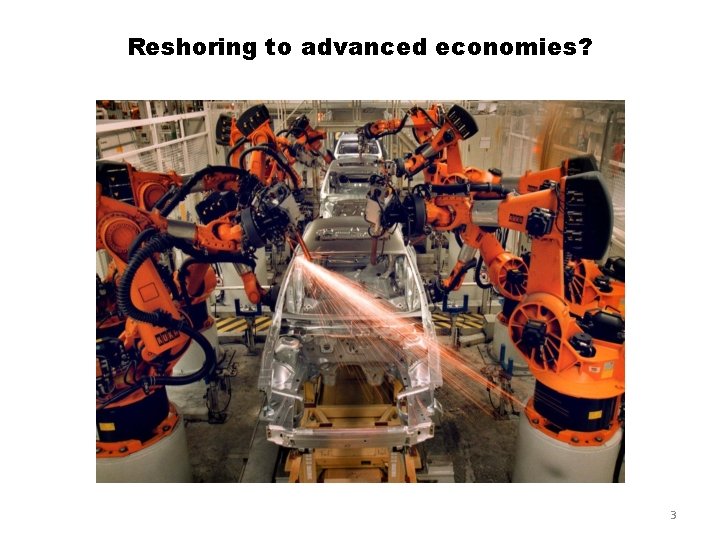
Reshoring to advanced economies? 3
Investigation methods 1. Conceptual analysis based on overview of science and engineering and business literature on the attributes of individual technologies e. g. Journal of Mechanical, Industrial Science and Engineering; IFAC Papers, CIRP Annals-Manufacturing Technology; CIRP Journal of Manufacturing Technology; Robotics and Computer-Integrated Manufacturing; Virtual and Augmented reality applications in manufacturing – Springer; etc. 2. Interviews with MNC subsidiaries and research institutions specialised in industry 4. 0 solutions 8+2 interviews 4
What does the literature tell us? Evolutionary view of economic change (Nelson and Winter, 1982) Technological change induces selection, retention and reconfiguration mechanisms → also within GVCs! New manufacturing technologies → GVC orchestrators make strategic locational decisions (a) Keep and upgrade existing manufacturing facilities through installing industry 4. 0 technologies (retention); (b) Consolidate and concentrate manufacturing activities in a (couple of) specific location(s) (selection); (c) Backshore part of the activities, establish new facilities, and/or outsource certain tasks (reconfiguration) 5
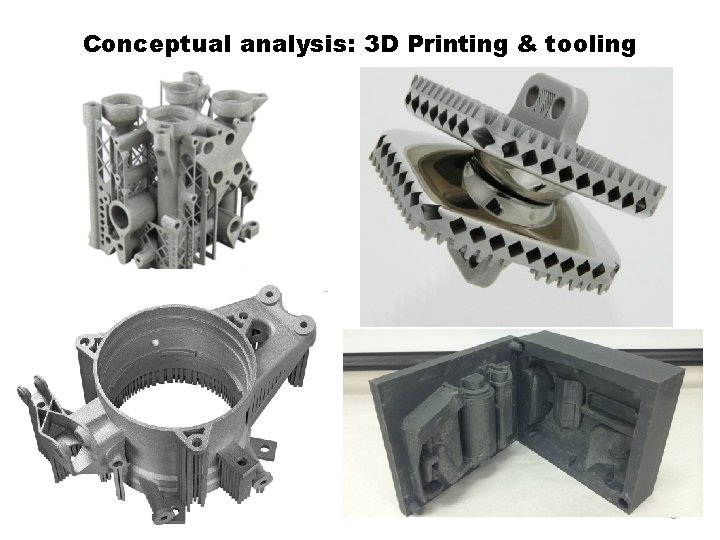
Conceptual analysis: 3 D Printing & tooling 6
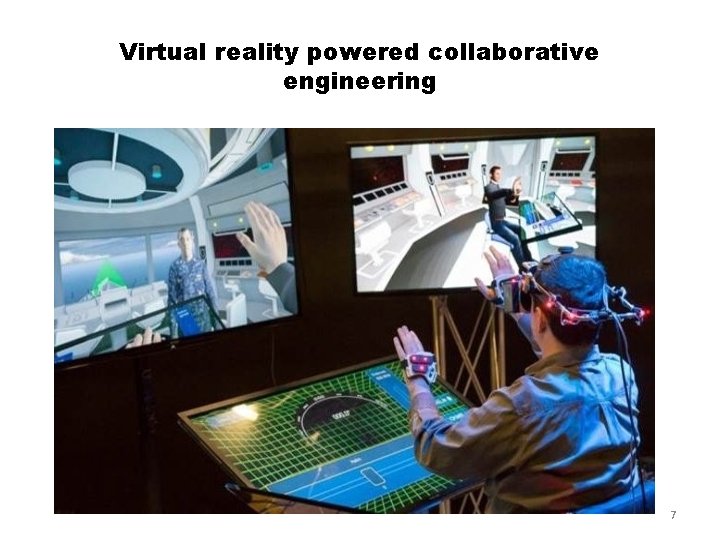
Virtual reality powered collaborative engineering 7
8
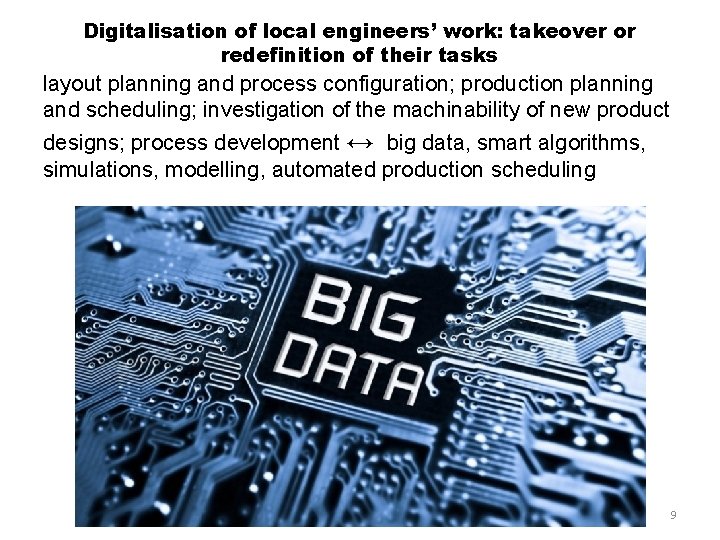
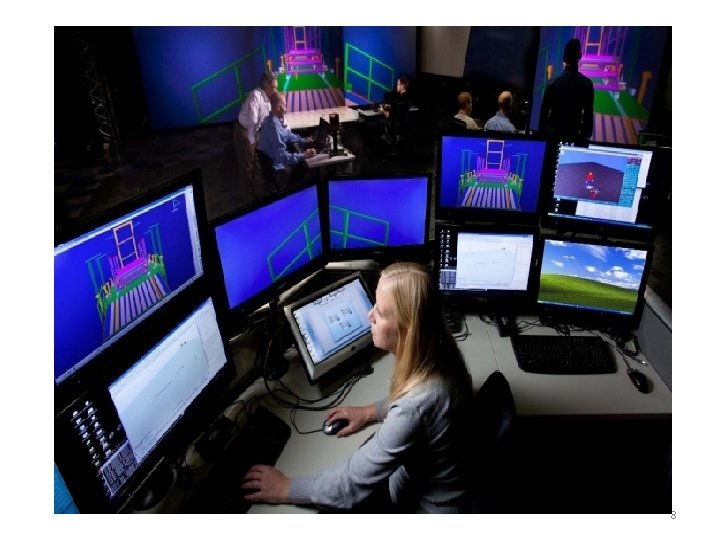
Digitalisation of local engineers’ work: takeover or redefinition of their tasks layout planning and process configuration; production planning and scheduling; investigation of the machinability of new product designs; process development ↔ big data, smart algorithms, simulations, modelling, automated production scheduling 9
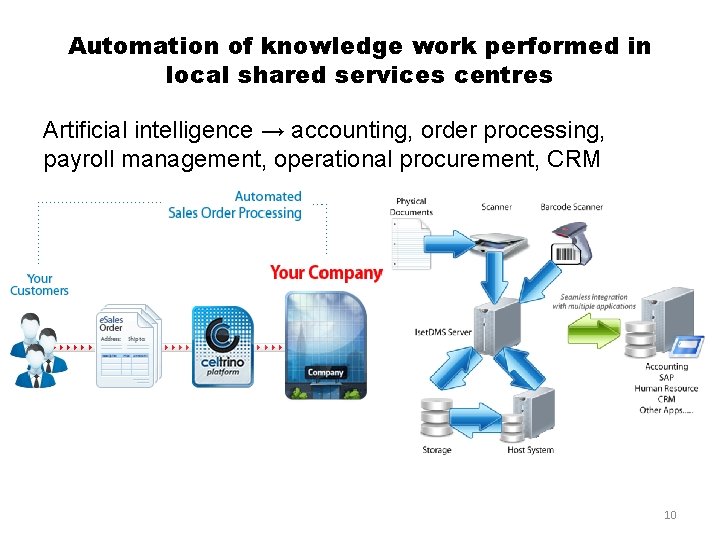
Automation of knowledge work performed in local shared services centres Artificial intelligence → accounting, order processing, payroll management, operational procurement, CRM 10
Not only T from SWOT → also O • Compatibility with legacy systems • The deployment, operation and maintenance of advanced manufacturing solutions require substantial development of subsidiary-level engineering capabilities 11
Interview results • Industry 4. 0. → Gradual, evolutionary journey • Local showcases of ‘factory of the future’ → MNCs apply global corporate standards Why did MNCs invest? • Factory economy: digitising the shop-floor (making factories smart) is easier than transition to platform competition, entry in new industries, business model innovation, innovative digital services provision • Purpose: solution of specific challenges: shop-floor technological problems, overview of complex processes, customer requirements, + quest for operational excellence + !! labour shortage !! 12
Interview results (cont. ) • Instead of relocating / reshoring production, (so far) MNC owners have upgraded their existing production facilities • Job losses BUT demand has grown for both skilled operators and highly skilled engineers • Instead of reshoring (centralising) knowledge-intensive activities MNC owners would like to assign additional knowledge work to their subsidiaries → e. g. programming of industrial robots; process development, experimental analysis, measurement and testing, modelling and simulation of manufacturing processes • Labour shortage!! 13
Policy implication • Immediate action is needed to reform factory economies’ education system • Delays may eventually hinder technology adoption, and will indeed lead to the relocation of activities ! • Conclusion: it is not technological progress per se that hits factory economies: it is the rigidity of their labour market and of their education system that makes them a loser of the digital transformation of manufacturing! 14
15
- Slides: 15