
Robotic Calibration of MultiSensor Capture System EXCALIBR Team
Robotic Calibration of Multi-Sensor Capture System EXCALIBR Team G

MEET THE TEAM MRSD Team Mechanical Engineer Perception Engineer PETER MANDY SID Creative Director SAM YASER SHEIKH Electrical Engineer YIQING Software Engineer Electrical Engineer Sponsor HATEM ALISMAIL TIM GODISART
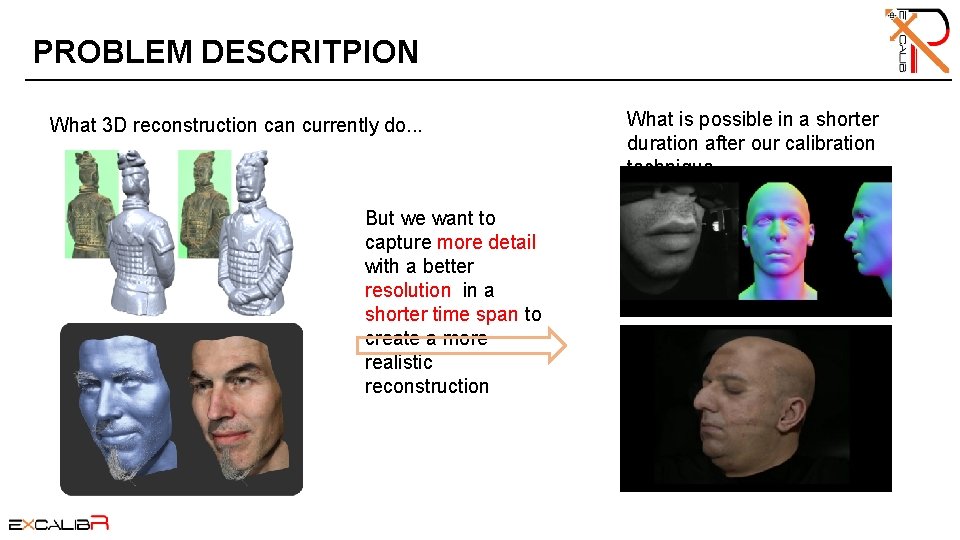
PROBLEM DESCRITPION What 3 D reconstruction can currently do. . . But we want to capture more detail with a better resolution in a shorter time span to create a more realistic reconstruction What is possible in a shorter duration after our calibration technique. .
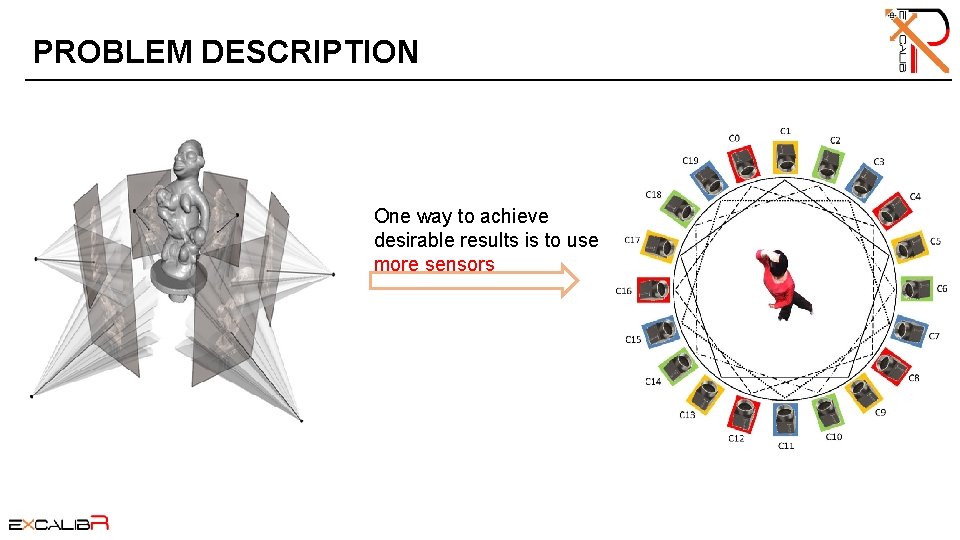
PROBLEM DESCRIPTION One way to achieve desirable results is to use more sensors
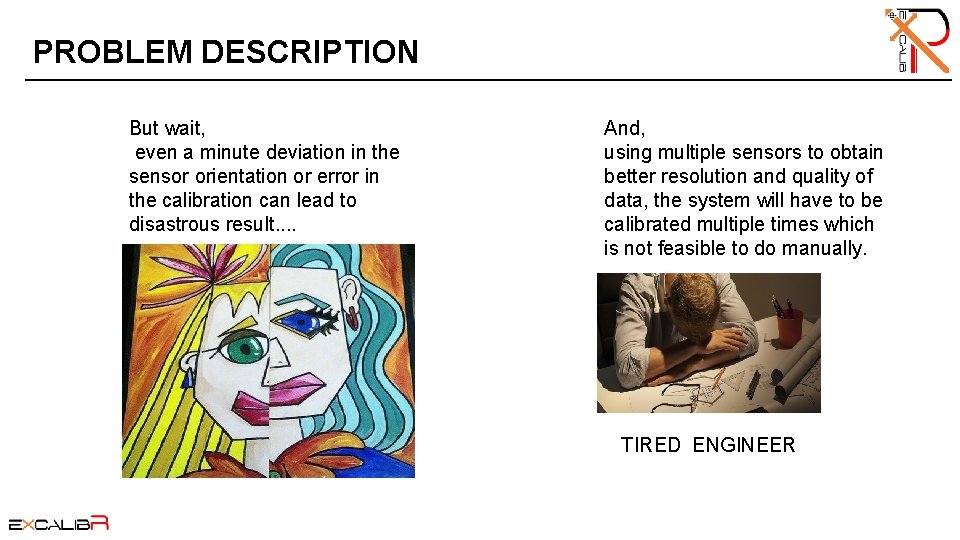
PROBLEM DESCRIPTION But wait, even a minute deviation in the sensor orientation or error in the calibration can lead to disastrous result. . And, using multiple sensors to obtain better resolution and quality of data, the system will have to be calibrated multiple times which is not feasible to do manually. TIRED ENGINEER
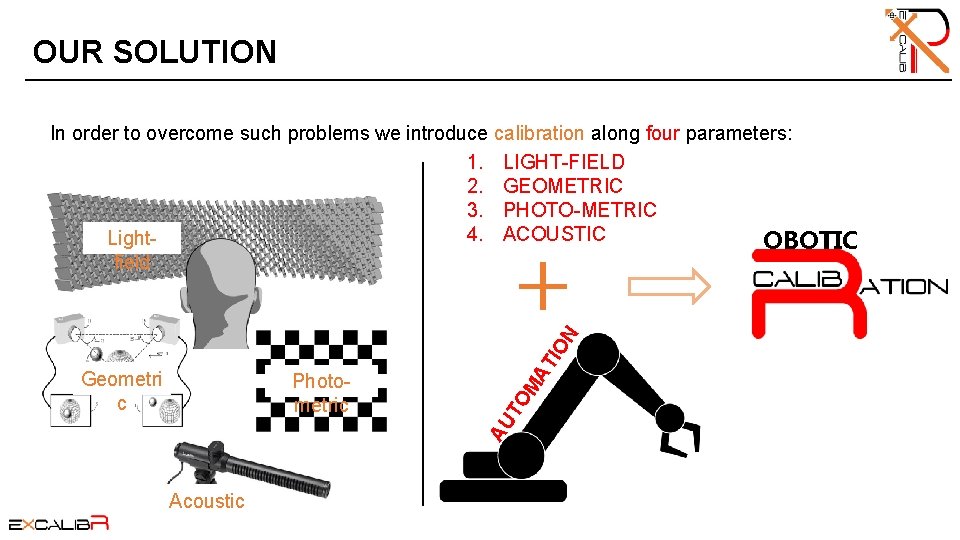
OUR SOLUTION AU Photometric TO Geometri c MA TI ON In order to overcome such problems we introduce calibration along four parameters: 1. LIGHT-FIELD 2. GEOMETRIC 3. PHOTO-METRIC 4. ACOUSTIC Light. OBOTIC field Acoustic
OBJECTIVES • A robot-based calibration system for multi-sensor system (cameras and microphones) • Calibration of: • Light-field • Geometric • Photometric • Acoustic • Positional Accuracy & Precision • Rotational Accuracy & Precision • Repeatable & Scalable • Audiovisual 3 D reconstructions with unprecedented precision. • Ease of Use.

OBJECTIVE TREE Robotic Calibration of Multi-Sensor Capture System Microphone Calibration Core Objectives Photometric Calibration Geometric Calibration Secondary Light-field Calibration Move Microphone Move calibration Target Move Calibration Target Fix Light Source Detect the frequency Capture Image of Target Capture Multiple Images of Target Move Calibration Target Localize Source Execute Calibration User friendly Is Accurate & Precise Is efficient Warn people when calibrating the system. Don’t hit anything(sen sor, equipment, etc) Acoustic accuracy & precision Calibrate multi-sensor Rotational accuracy & precision Complete in one night One action operation Positional accuracy & precision Is Scalable Replicate on multiple setups sensors
FUNCTIONAL REQUIREMENTS • • Move the calibration target ( Photometric, Geometric & Light-field). Produce sound with a frequency sweep. Apply calibration algorithms to meet standards. Fix light source. Complete in one night. Take high resolution, stable and clear picture of target. Check accuracy. Maintain user safety.
Performance REQUIREMENTS • Move the robot arm: at most 8 hours per single motion • Produce a consistent sound with frequency sweep: (82~1200 Hz & 60~100 d. B) • Apply calibration: around 100 microphones and 140 cameras at the same time • Fix light source: correct it with a suitable offset ~ 100 microns. • Take the picture: at least 3000 images at a time. • Warn people when calibrating: sound alarm if human in close proximity of the system. • Don’t hit anything: keep a distance 1 m away from the dome extremities and sensors. • Check accuracy: Positional 10 -100 microns; Rotational: an arc second (1/3600°)
NON-FUNCTIONAL REQUIREMENTS • Completely autonomous operation. • Create a easy to use GUI & physical buttons for managing operations. • Restrict budget to $5000
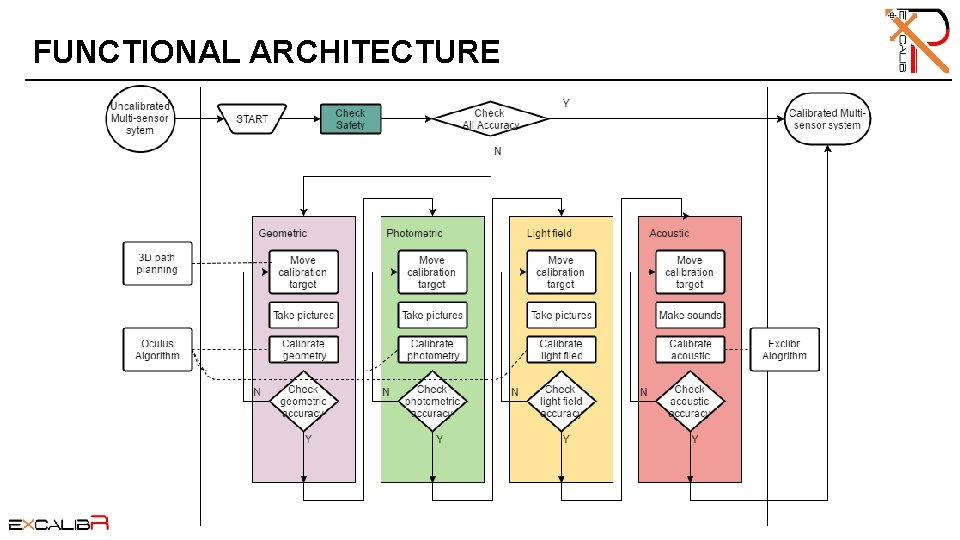
FUNCTIONAL ARCHITECTURE
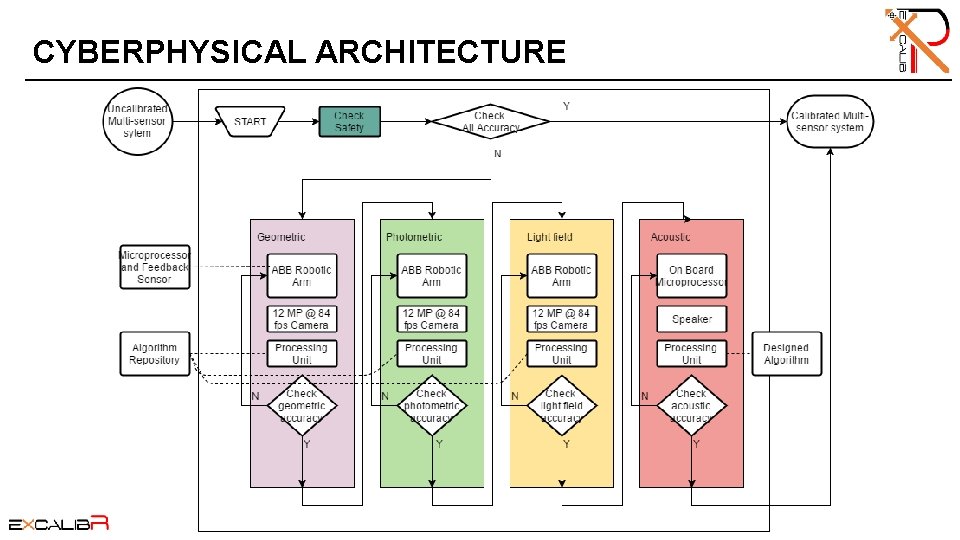
CYBERPHYSICAL ARCHITECTURE
Q&A Got any queries?
- Slides: 14