
Robert W Strayer Ways of the World A
Robert W. Strayer Ways of the World: A Brief Global History with Sources Second Edition Chapter 21 Revolution, Socialism, and Global Conflict: The Rise and Fall of World Communism, 1917–Present Copyright © 2013 by Bedford/St. Martin’s
I. Global Communism A. Marxism’s path to the future B. Communist revolutions in agrarian societies C. Communist parties outside of communist regimes D. Internationalism E. Conflict among communist states
II. Revolutions as a Path to Communism A. Russia: Revolution in a Single Year 1. Romanov collapse in WWI, February 1917 2. Continued chaos under the Provisional Government 3. Bolsheviks seize power, October 1917
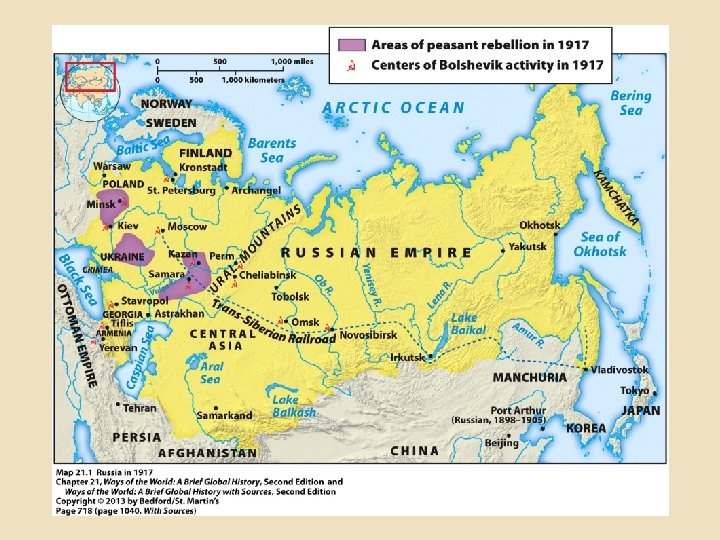
II. Revolutions as a Path to Communism A. Russia: Revolution in a Single Year 4. Lenin’s revision of Marxism 5. Civil War, 1918– 1921 6. Stalin in Eastern Europe after WWII
II. Revolutions as a Path to Communism B. China: A Prolonged Revolutionary Struggle 1. CCP not founded until 1921 2. Conflict with Chiang Kai-shek’s Guomindang 3. Chinese peasant villages 4. Mao Zedong
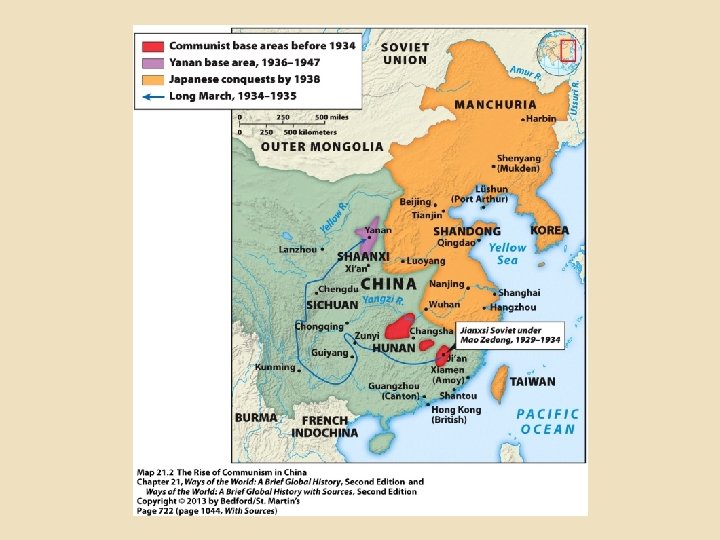
II. Revolutions as a Path to Communism B. China: A Prolonged Revolutionary Struggle 5. Appeal to women 6. Japanese invasion, 1937– 1945 7. CCP triumphant in 1949
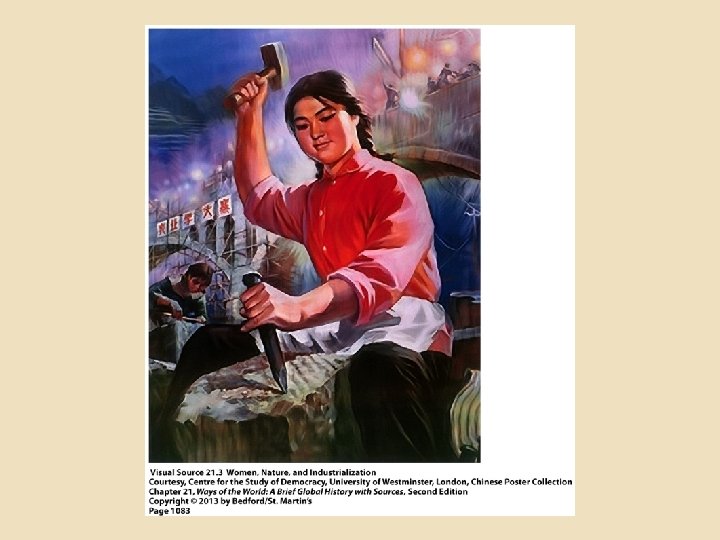
III. Building Socialism A. Communist Feminism 1. Soviet state enacts reforms for women 2. Zhenotdel, 1919– 1930 3. “Women can do anything” 4. Limits
III. Building Socialism B. Socialism in the Countryside 1. Peasants seize land in Russia, 1917 2. “Speak bitterness meetings” in China, 1949– 1952 3. Collectivization and famines
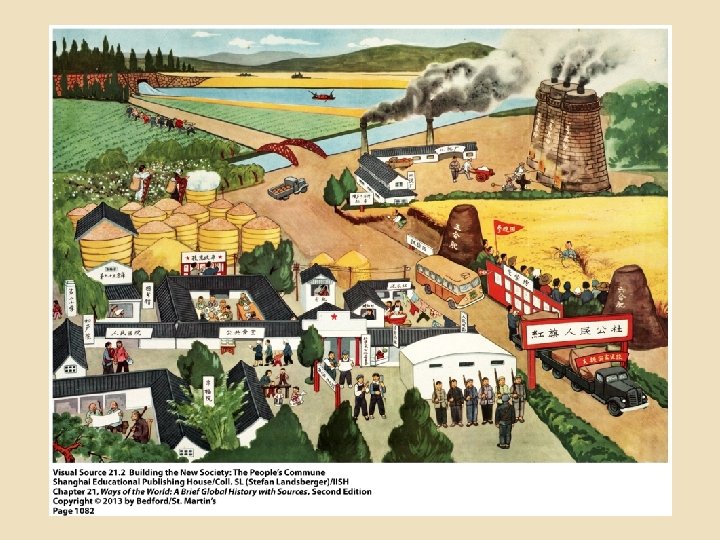
III. Building Socialism C. Communism and Industrial Development 1. Anticapitalist but ardently pro-modernizing 2. Planned economies with an emphasis on industry 3. Urbanization, exploitation of the countryside, and rise of privileged bureaucrats and technocrats 4. Stalin accepted social changes, Mao did not
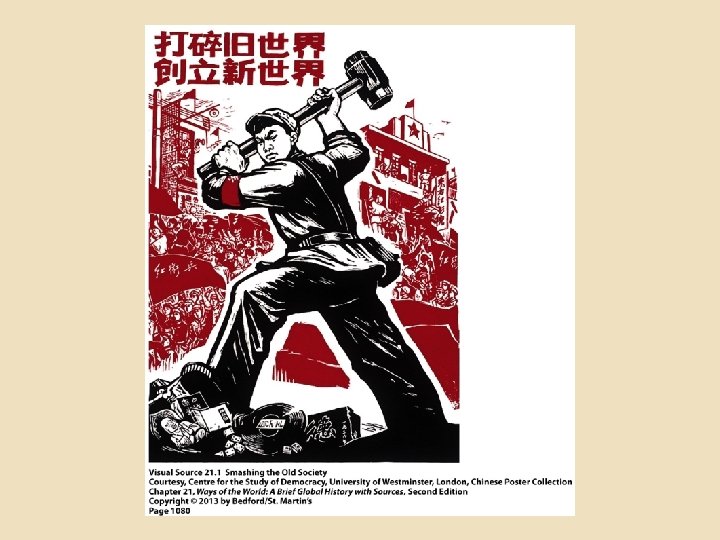
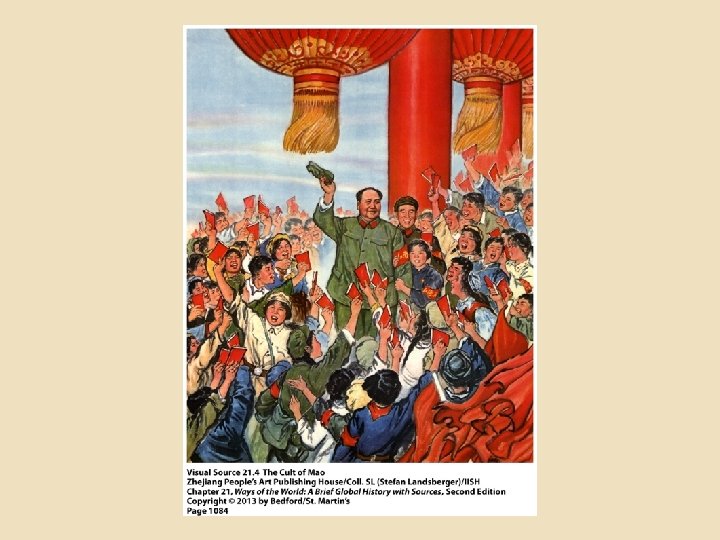
III. Building Socialism C. Communism and Industrial Development 5. Great Leap Forward, 1958– 1960 6. Great Proletarian Cultural Revolution, 1966– 1969 7. Environmental consequences
III. Building Socialism D. The Search for Enemies 1. Old regime remnants and high-ranking party officials 2. Counterrevolutionary conspiracies? 3. Stalin’s Terror and Great Purges, 1936– 1941 4. Mao’s Red Guards in the Cultural Revolution, 1966– 1969
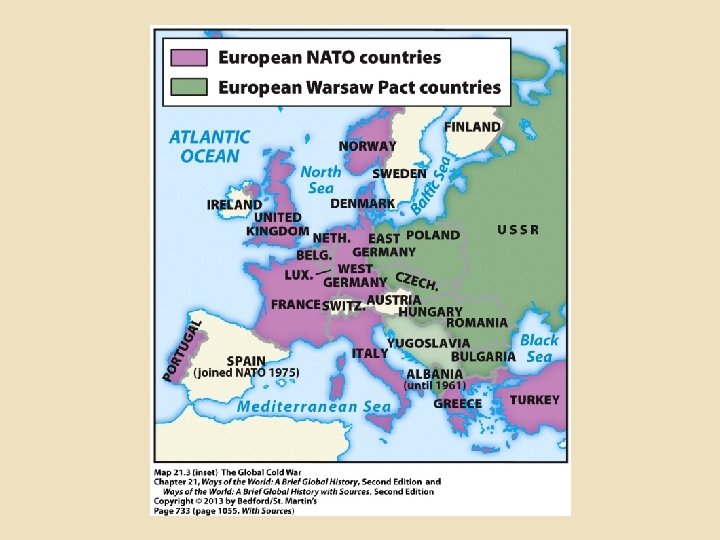
IV. East versus West: A Global Divide and a Cold War A. Military Conflict and the Cold War 1. Europe divided by the Iron Curtain 2. “Hot wars” in Korea and Vietnam 3. Marxism versus Islam in Afghanistan 4. Cuba
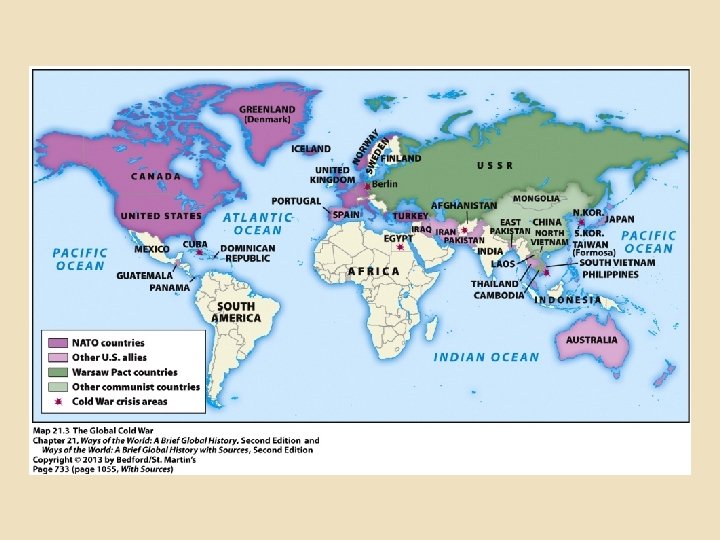
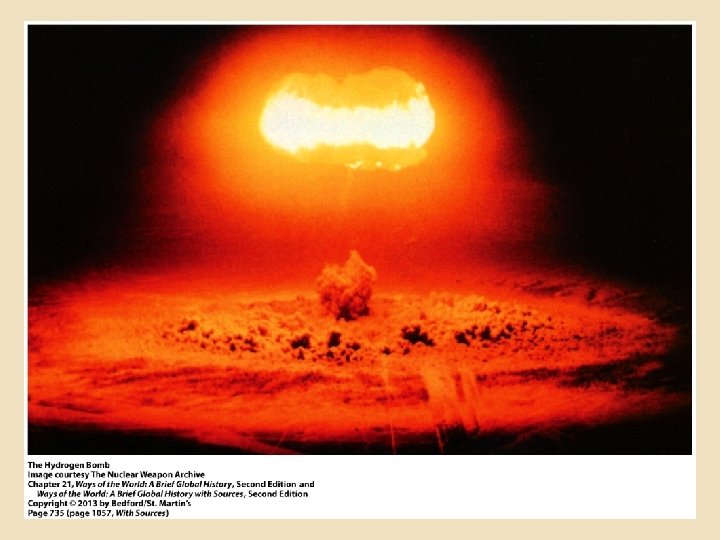
IV. East versus West: A Global Divide and a Cold War B. Nuclear Standoff and Third World Rivalry 1. Fear of nuclear war 2. Aid and intervention in the Third World
IV. East versus West: A Global Divide and a Cold War C. The Cold War and the Superpowers 1. “Imperial” presidency, “national security state, ” and “military-industrial complex” 2. American economic and cultural power 3. Soviet military spending and propaganda 4. Conflicts within the communist world
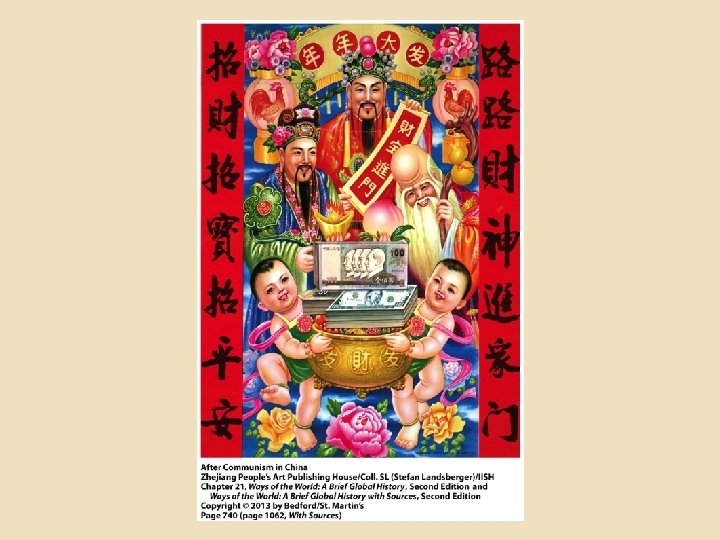
V. Paths to the End of Communism A. China: Abandoning Communism and Maintaining the Party 1. Deng Xiaoping’s post-Mao reforms 2. Mao’s worst fears? 3. Message of Tiananmen Square, 1989
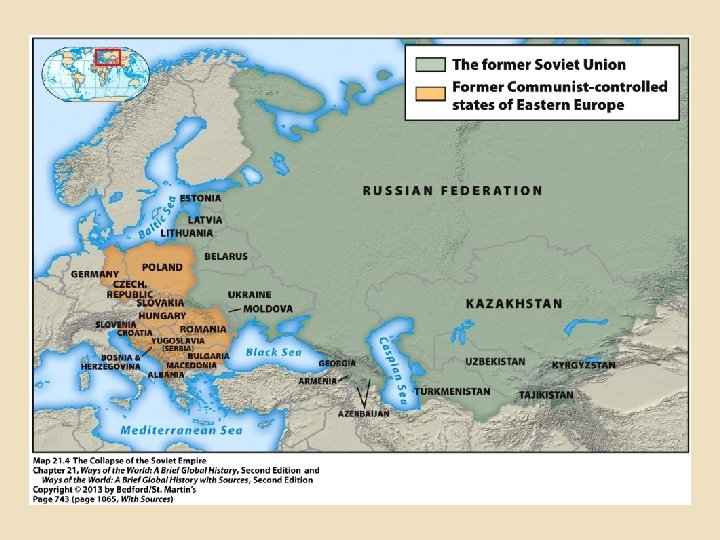
V. Paths to the End of Communism B. The Soviet Union: The Collapse of Communism and Country 1. Mikhail Gorbachev’s perestroika and glasnost 2. Nationalist movements 3. Collapse of regimes in Eastern Europe, 1989 4. USSR becomes Russia and 14 other states, 1991
VI. Reflections: To Judge or Judge Not A. Are moral judgments on history appropriate? B. Difficulty of discussing communism in the United States C. Freedom or justice? D. Modernization at what cost?
- Slides: 29