
Robert Burns is my favourite writer The project
Robert Burns is my favourite writer. The project of the pupil of the 7 a class. Tolstikov Alexander.
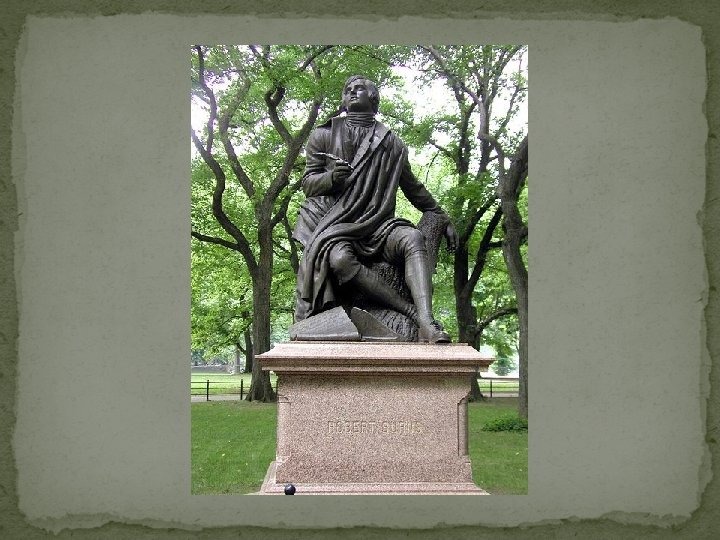
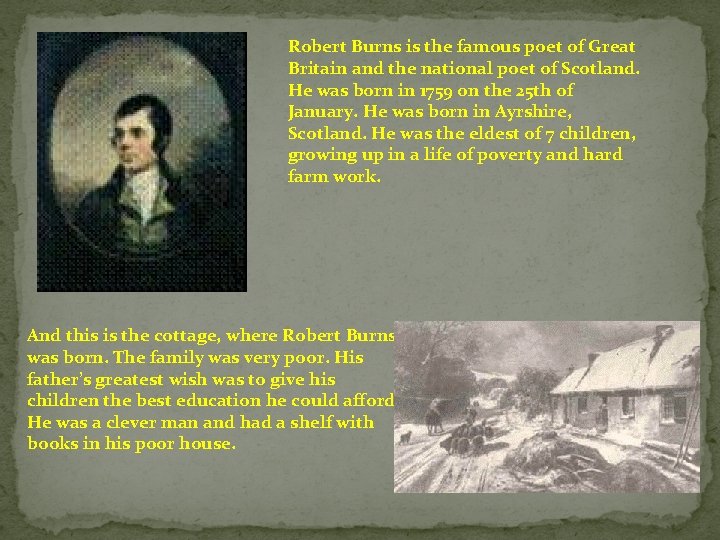
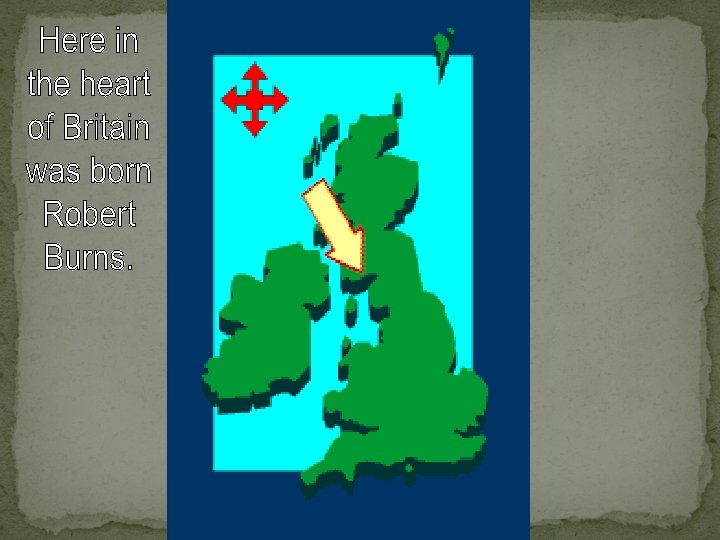
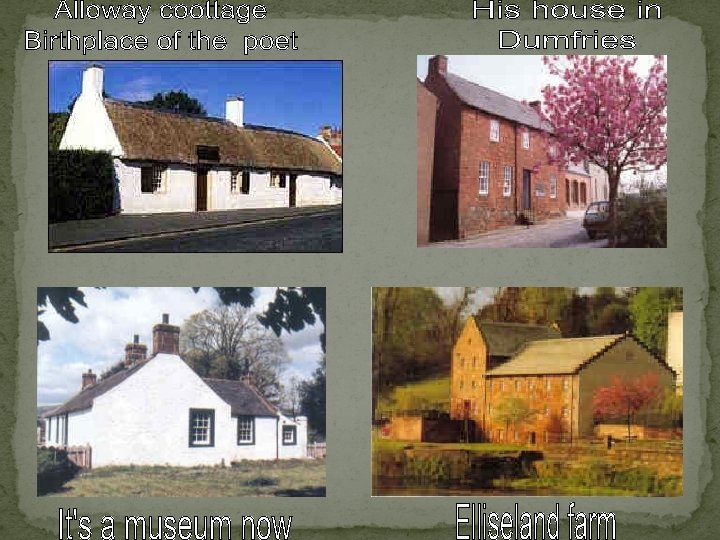
Robert Burns is the famous poet of Great Britain and the national poet of Scotland. He was born in 1759 on the 25 th of January. He was born in Ayrshire, Scotland. He was the eldest of 7 children, growing up in a life of poverty and hard farm work. And this is the cottage, where Robert Burns was born. The family was very poor. His father’s greatest wish was to give his children the best education he could afford. He was a clever man and had a shelf with books in his poor house.
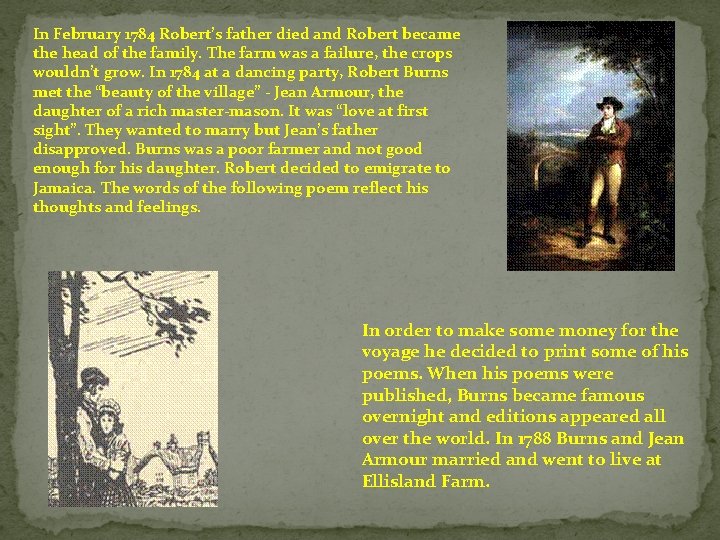
In February 1784 Robert’s father died and Robert became the head of the family. The farm was a failure, the crops wouldn’t grow. In 1784 at a dancing party, Robert Burns met the “beauty of the village” - Jean Armour, the daughter of a rich master-mason. It was “love at first sight”. They wanted to marry but Jean’s father disapproved. Burns was a poor farmer and not good enough for his daughter. Robert decided to emigrate to Jamaica. The words of the following poem reflect his thoughts and feelings. In order to make some money for the voyage he decided to print some of his poems. When his poems were published, Burns became famous overnight and editions appeared all over the world. In 1788 Burns and Jean Armour married and went to live at Ellisland Farm.
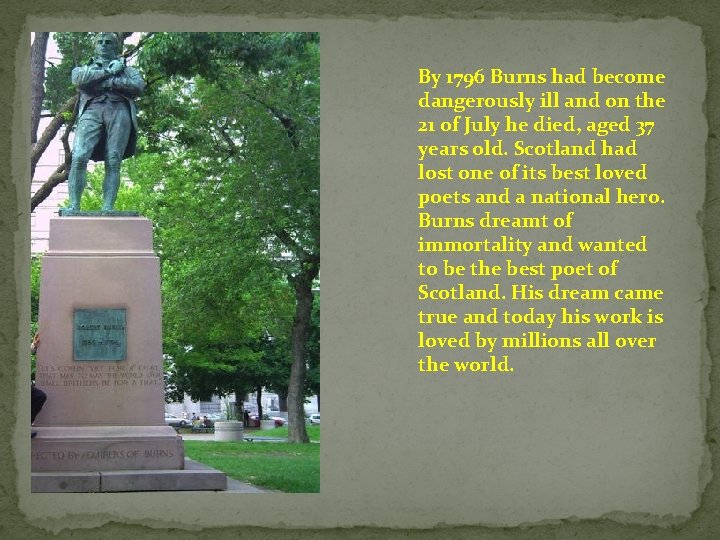
By 1796 Burns had become dangerously ill and on the 21 of July he died, aged 37 years old. Scotland had lost one of its best loved poets and a national hero. Burns dreamt of immortality and wanted to be the best poet of Scotland. His dream came true and today his work is loved by millions all over the world.
� Should acquaintance be forgot � And never brought to mind? � Should acquaintance be forgot, � And auld lang syne! � For auld lang syne, my dear, � For auld lang syne, �We’ll take a cup of kindness yet �For auld lang syne. �And here’s a hand, �My trusty friend �And give a hand of thine! �We’ll take a right good cordial drink �For auld lang syne.
- Slides: 16