
Roads to Revolution CHAPTER 5 Triumph of British
Roads to Revolution CHAPTER 5
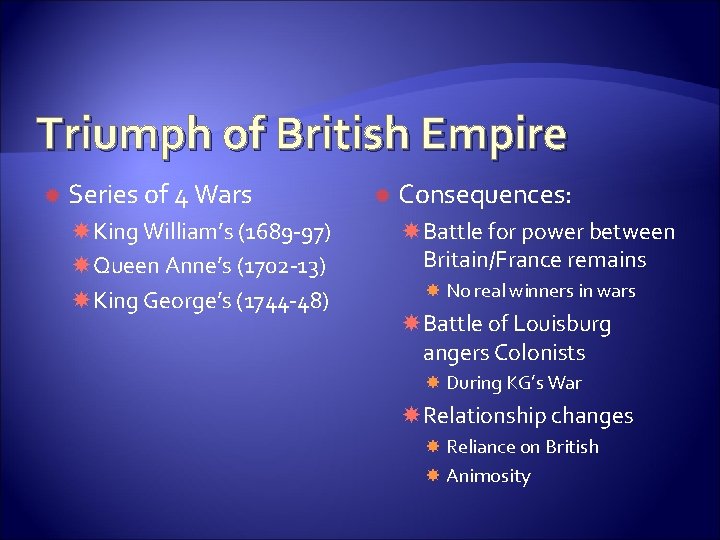
Triumph of British Empire Series of 4 Wars King William’s (1689 -97) Queen Anne’s (1702 -13) King George’s (1744 -48) Consequences: Battle for power between Britain/France remains No real winners in wars Battle of Louisburg angers Colonists During KG’s War Relationship changes Reliance on British Animosity
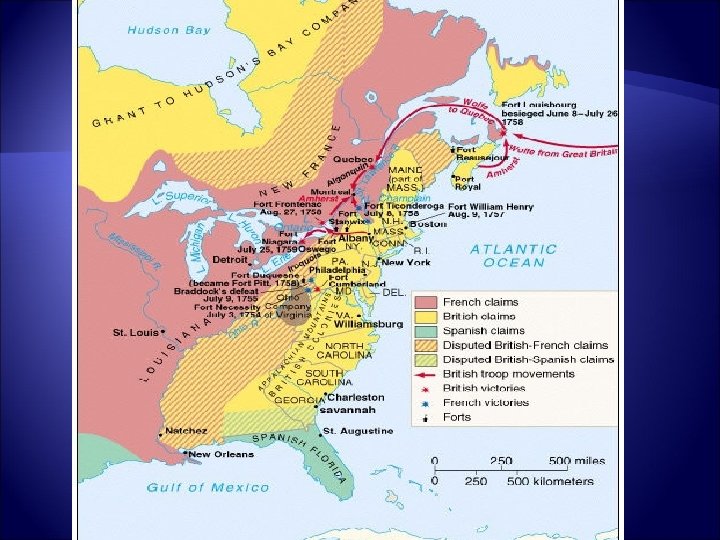
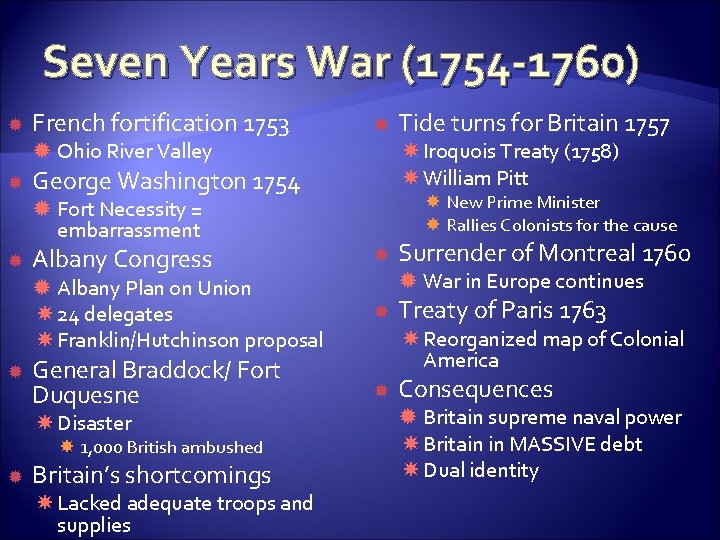
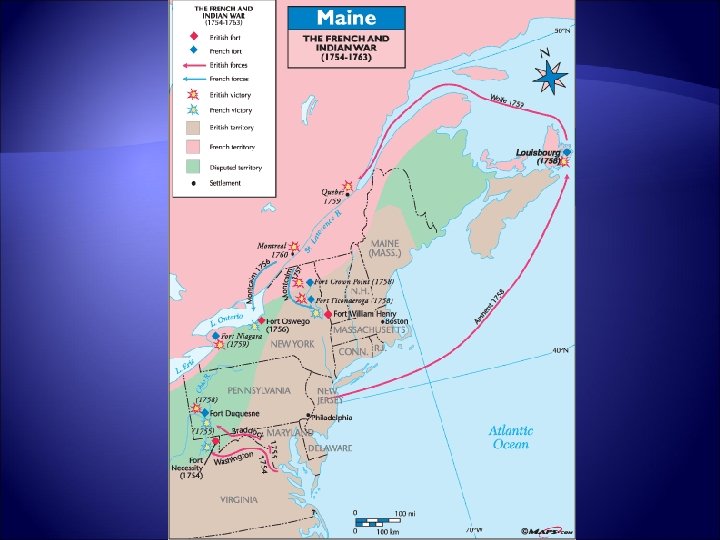
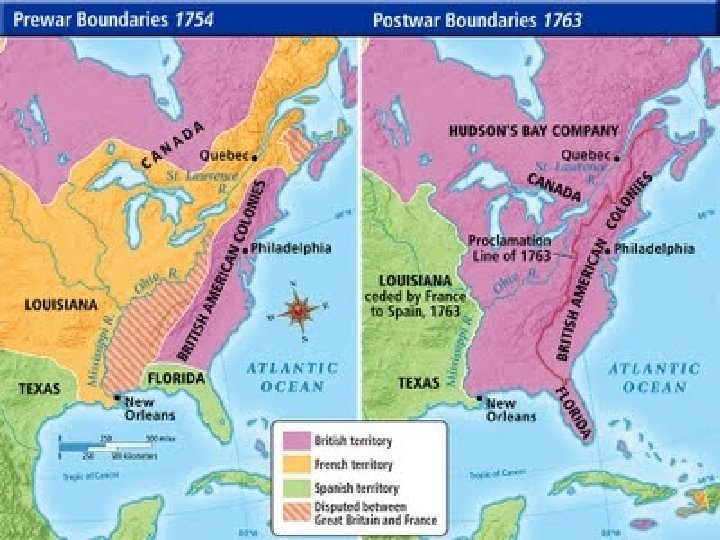
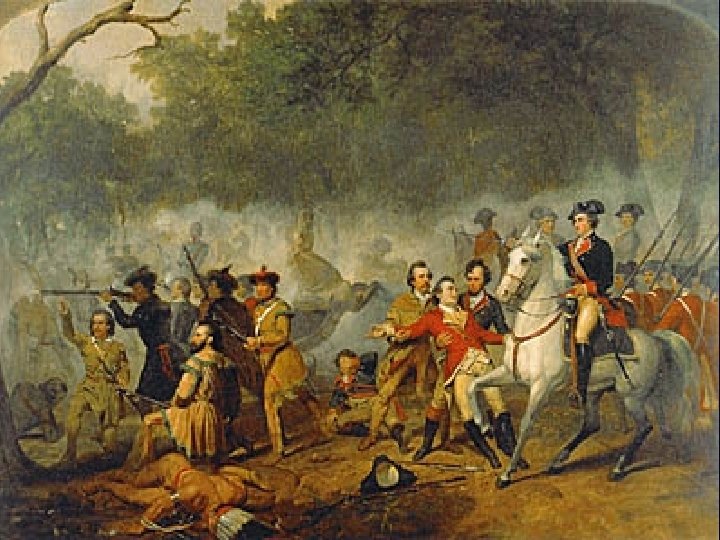
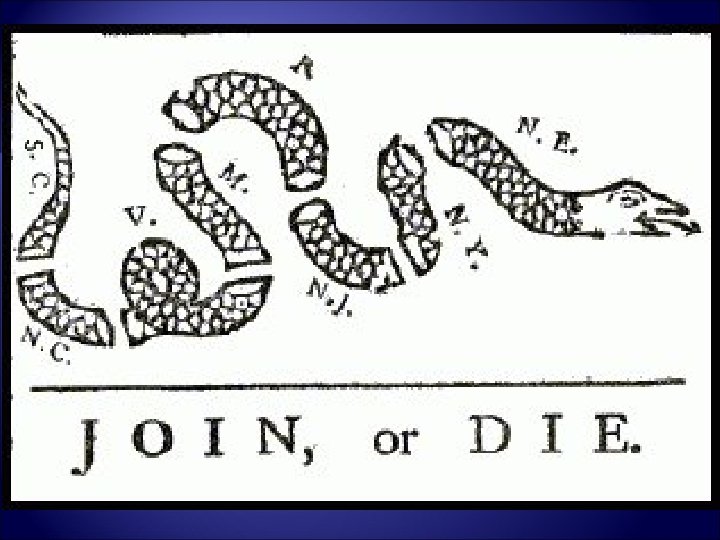
Seven Years War (1754 -1760) French fortification 1753 Ohio River Valley Iroquois Treaty (1758) William Pitt George Washington 1754 New Prime Minister Rallies Colonists for the cause Fort Necessity = embarrassment Albany Congress Albany Plan on Union 24 delegates Franklin/Hutchinson proposal General Braddock/ Fort Duquesne Disaster 1, 000 British ambushed Britain’s shortcomings Lacked adequate troops and supplies Tide turns for Britain 1757 Surrender of Montreal 1760 War in Europe continues Treaty of Paris 1763 Reorganized map of Colonial America Consequences Britain supreme naval power Britain in MASSIVE debt Dual identity
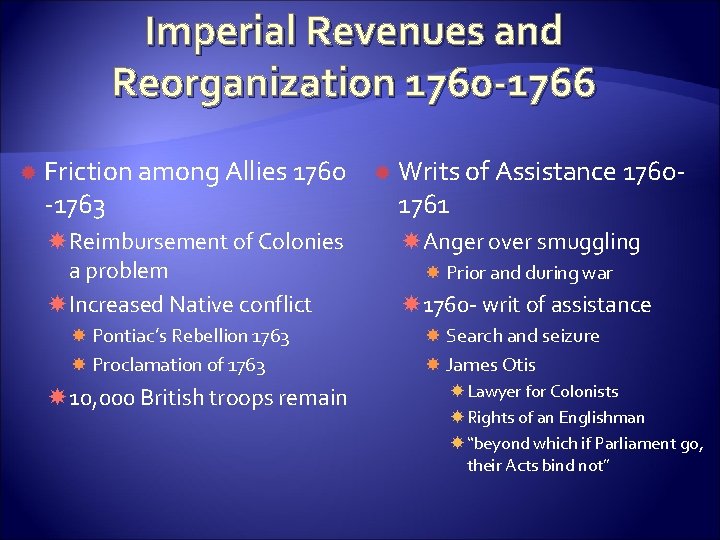
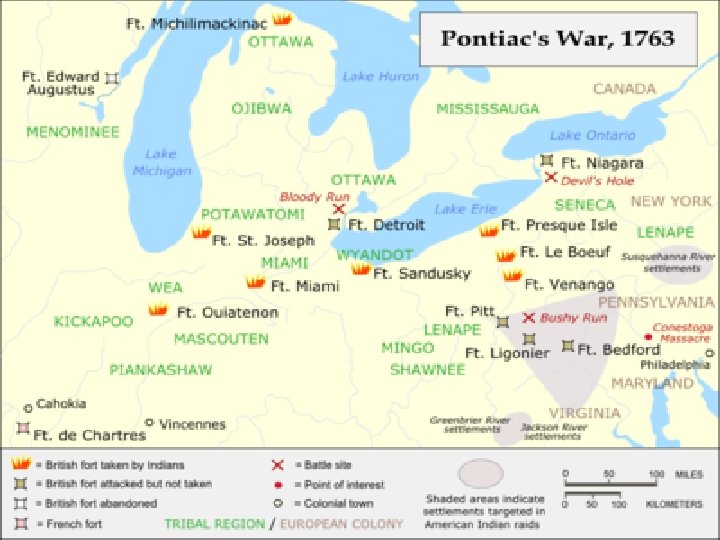
Imperial Revenues and Reorganization 1760 -1766 Friction among Allies 1760 -1763 Reimbursement of Colonies a problem Increased Native conflict Pontiac’s Rebellion 1763 Proclamation of 1763 10, 000 British troops remain Writs of Assistance 17601761 Anger over smuggling Prior and during war 1760 - writ of assistance Search and seizure James Otis Lawyer for Colonists Rights of an Englishman “beyond which if Parliament go, their Acts bind not”
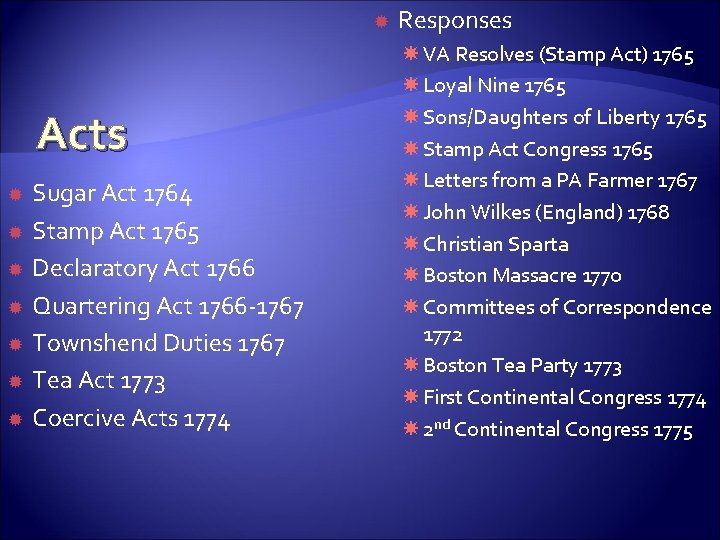
Acts Sugar Act 1764 Stamp Act 1765 Declaratory Act 1766 Quartering Act 1766 -1767 Townshend Duties 1767 Tea Act 1773 Coercive Acts 1774 Responses VA Resolves (Stamp Act) 1765 Loyal Nine 1765 Sons/Daughters of Liberty 1765 Stamp Act Congress 1765 Letters from a PA Farmer 1767 John Wilkes (England) 1768 Christian Sparta Boston Massacre 1770 Committees of Correspondence 1772 Boston Tea Party 1773 First Continental Congress 1774 2 nd Continental Congress 1775
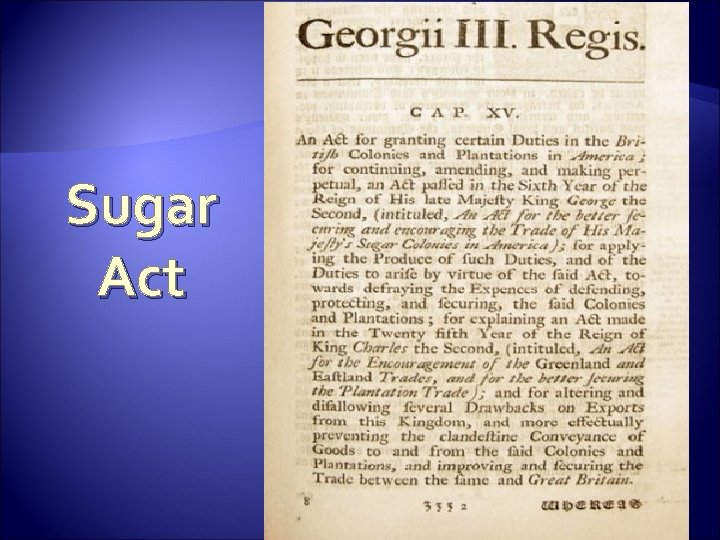
Sugar Act
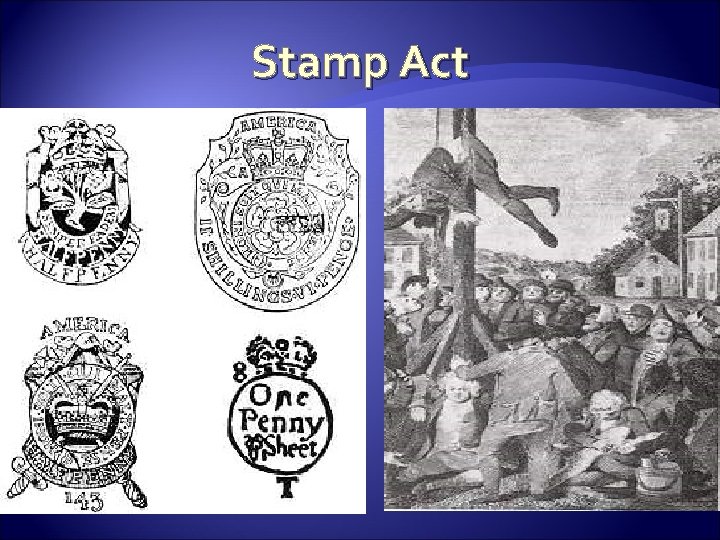
Stamp Act
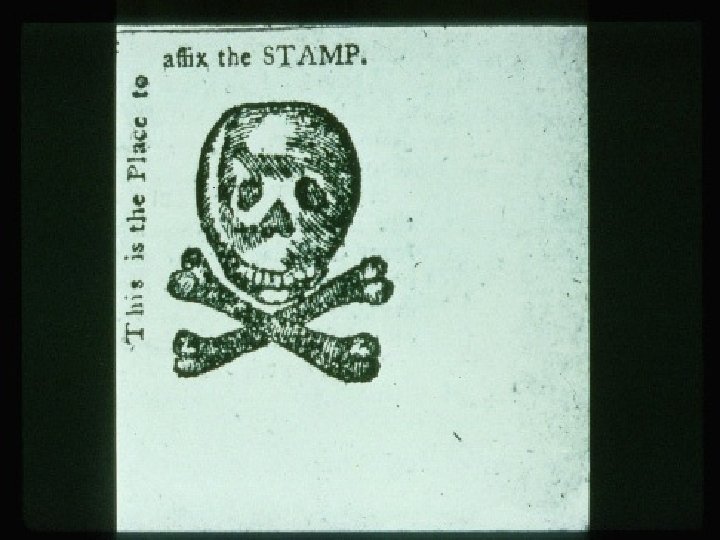
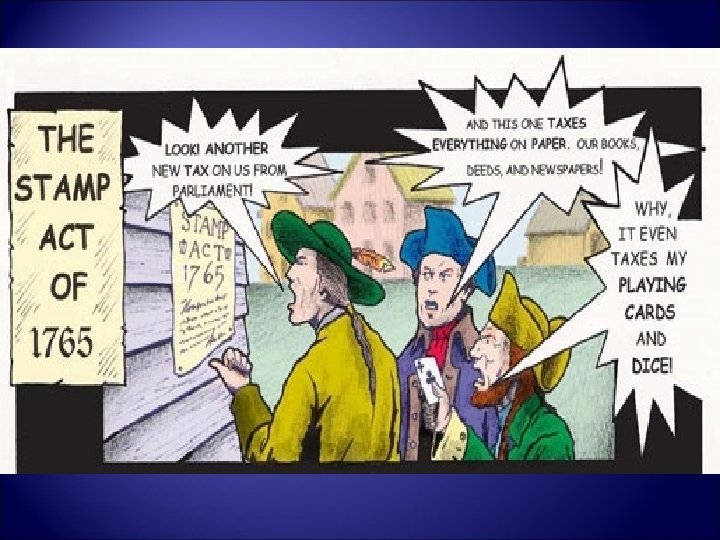
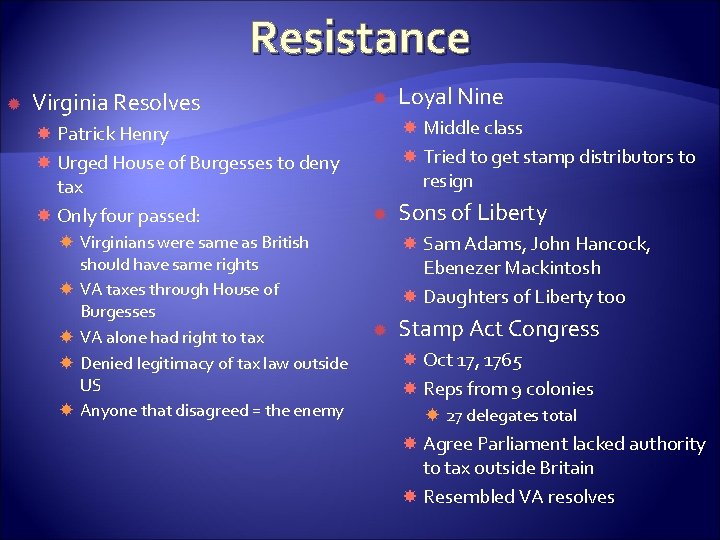
Resistance Virginia Resolves Patrick Henry Urged House of Burgesses to deny tax Only four passed: Virginians were same as British should have same rights VA taxes through House of Burgesses VA alone had right to tax Denied legitimacy of tax law outside US Anyone that disagreed = the enemy Loyal Nine Middle class Tried to get stamp distributors to resign Sons of Liberty Sam Adams, John Hancock, Ebenezer Mackintosh Daughters of Liberty too Stamp Act Congress Oct 17, 1765 Reps from 9 colonies 27 delegates total Agree Parliament lacked authority to tax outside Britain Resembled VA resolves
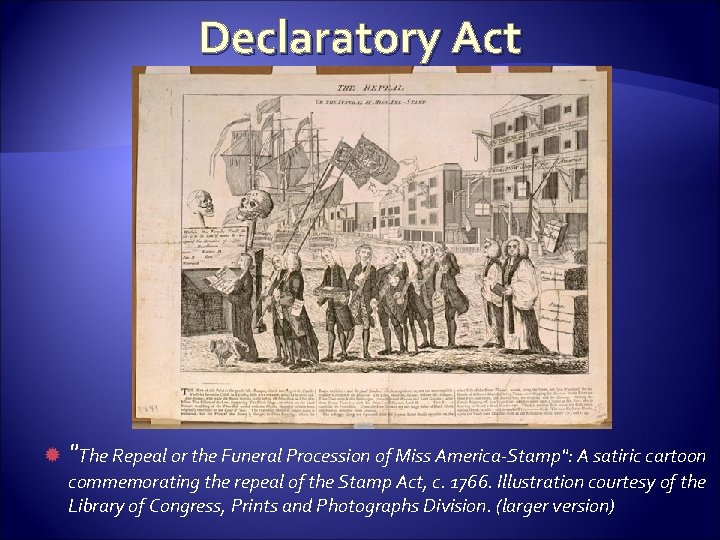
Declaratory Act "The Repeal or the Funeral Procession of Miss America-Stamp": A satiric cartoon commemorating the repeal of the Stamp Act, c. 1766. Illustration courtesy of the Library of Congress, Prints and Photographs Division. (larger version)
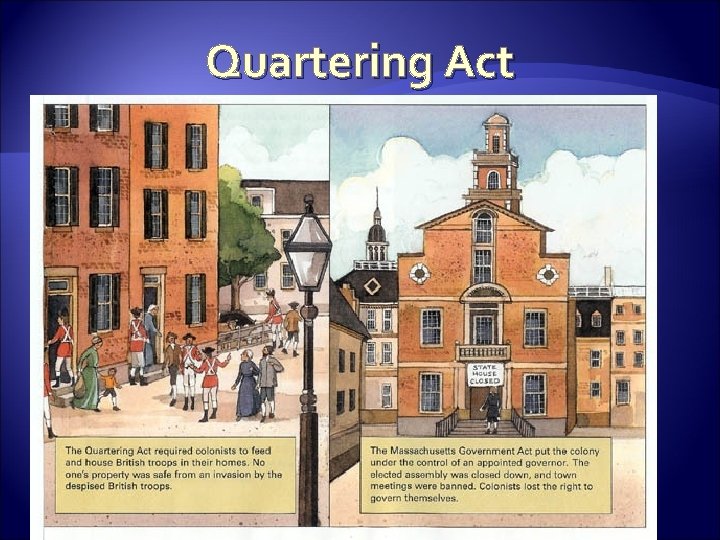
Quartering Act
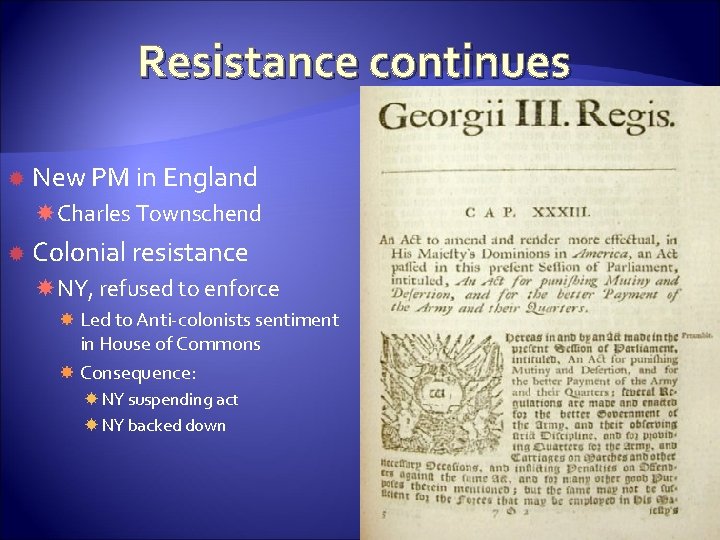
Resistance continues New PM in England Charles Townschend Colonial resistance NY, refused to enforce Led to Anti-colonists sentiment in House of Commons Consequence: NY suspending act NY backed down
Townshend Acts
Colonists Reaction John Dickinson “Letters from a PA Farmer” Reorganize “Save your $, Save your country” campaign Nonimportation agreement = boycott No right to tax for single purpose of raising revenue Circular Letter 1768 written by Sam Adams Condemned taxation w/out rep Advocated no illegal activities Mass legislation adopted letters British response Over-reacts Royal governors dissolve letter Townschend creates American Board of Customs Commissioners 1767 Raised number of port officials $ for secret informers “Liberty” incident June 1768 Sons of Liberty John Wilkes In England Denounces KGIII Ran for Parliament Woman resistance Sarah Osborn Religious activist Starts Daughters of Liberty Key role in nonconsumption movvement
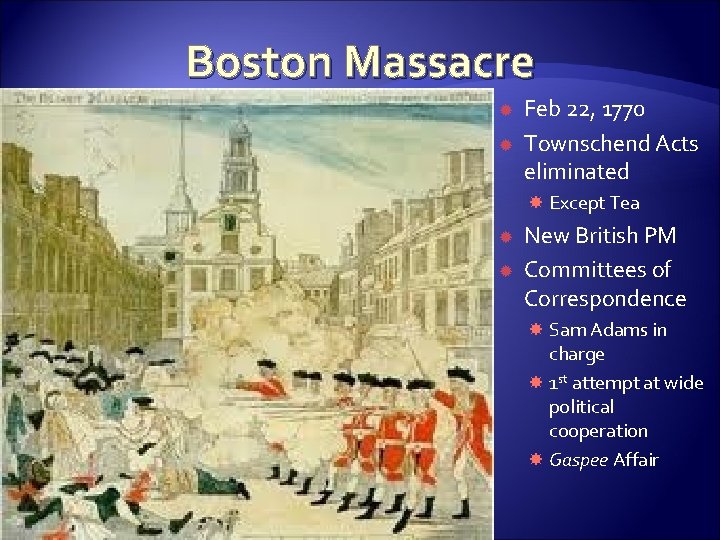
Boston Massacre Feb 22, 1770 Townschend Acts eliminated Except Tea New British PM Committees of Correspondence Sam Adams in charge 1 st attempt at wide political cooperation Gaspee Affair
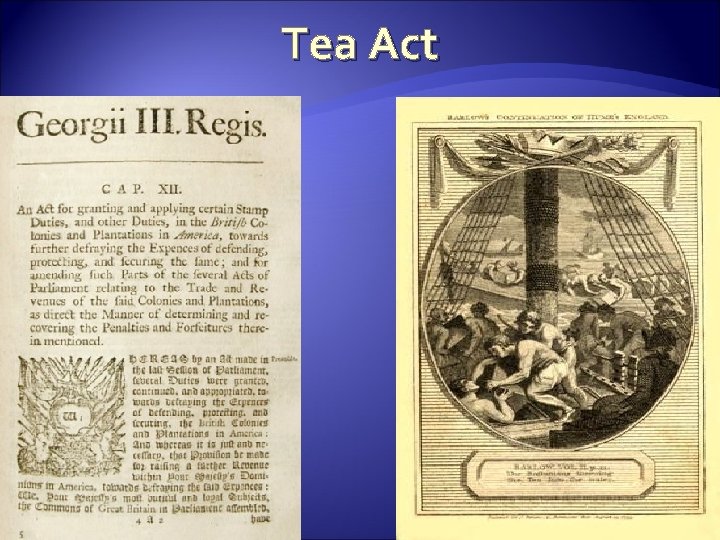
Tea Act
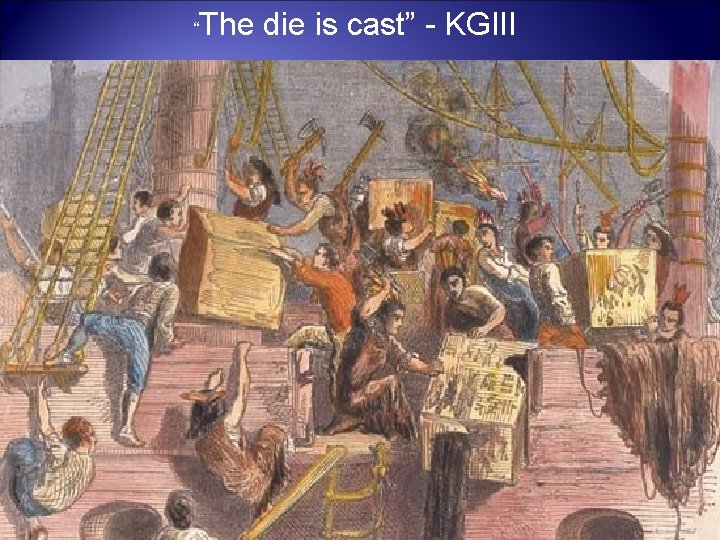
“ The die is cast” - KGIII
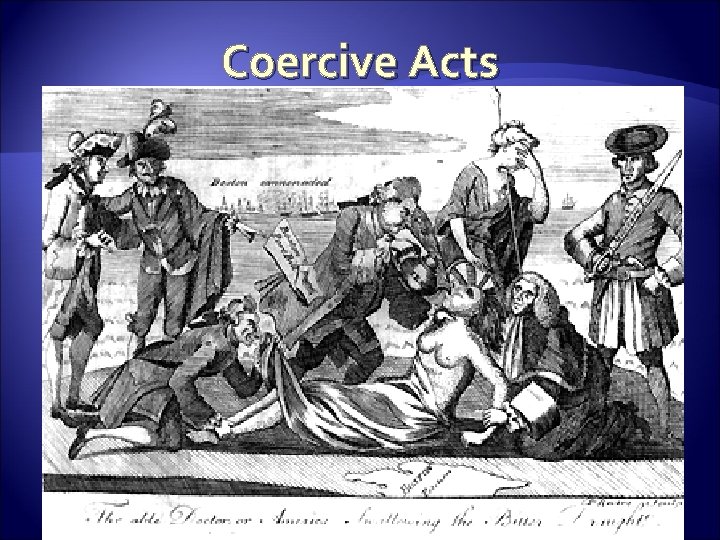
Coercive Acts
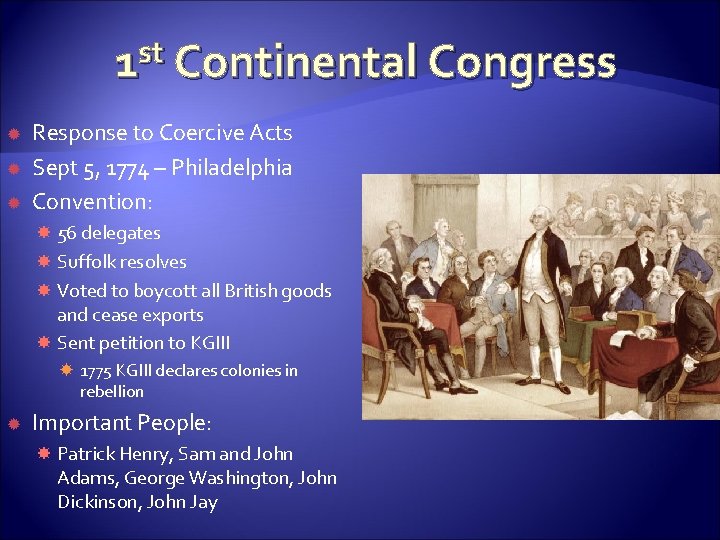
st 1 Continental Congress Response to Coercive Acts Sept 5, 1774 – Philadelphia Convention: 56 delegates Suffolk resolves Voted to boycott all British goods and cease exports Sent petition to KGIII 1775 KGIII declares colonies in rebellion Important People: Patrick Henry, Sam and John Adams, George Washington, John Dickinson, John Jay
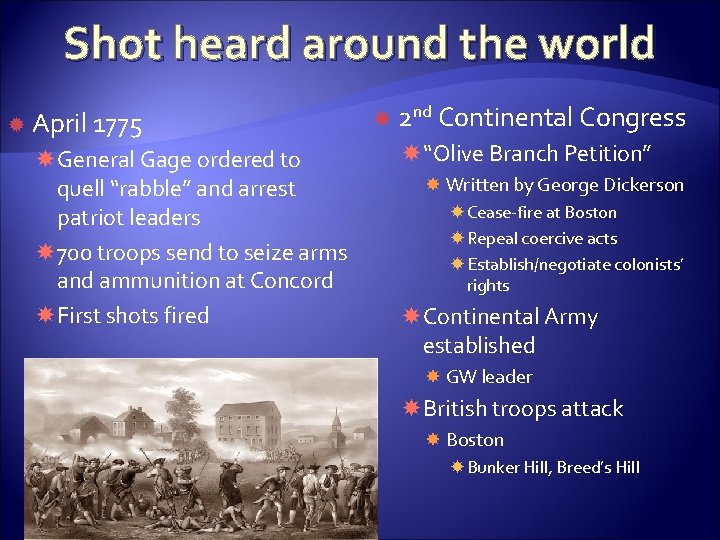
Shot heard around the world April 1775 General Gage ordered to quell “rabble” and arrest patriot leaders 700 troops send to seize arms and ammunition at Concord First shots fired 2 nd Continental Congress “Olive Branch Petition” Written by George Dickerson Cease-fire at Boston Repeal coercive acts Establish/negotiate colonists’ rights Continental Army established GW leader British troops attack Boston Bunker Hill, Breed’s Hill
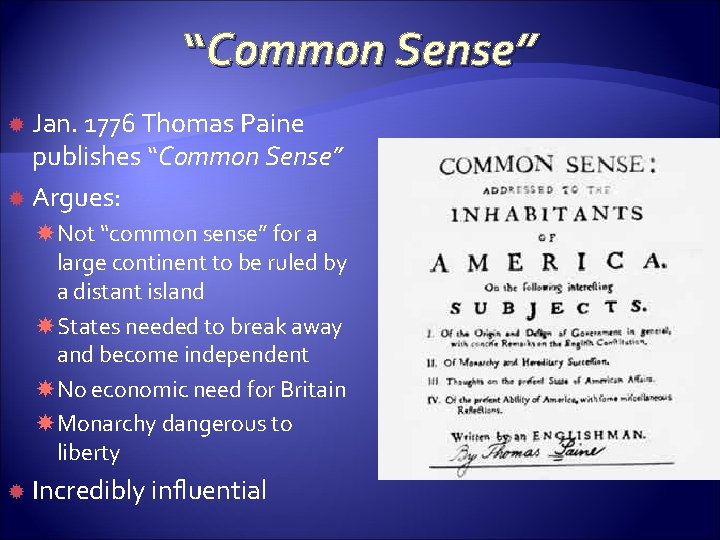
“Common Sense” Jan. 1776 Thomas Paine publishes “Common Sense” Argues: Not “common sense” for a large continent to be ruled by a distant island States needed to break away and become independent No economic need for Britain Monarchy dangerous to liberty Incredibly influential
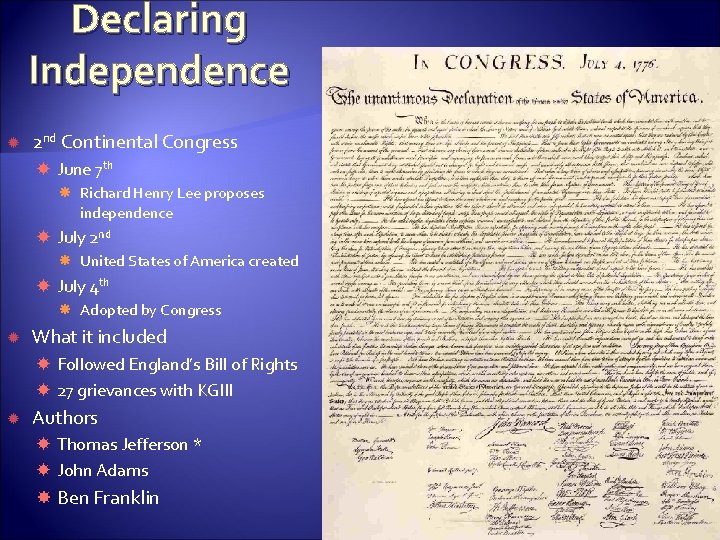
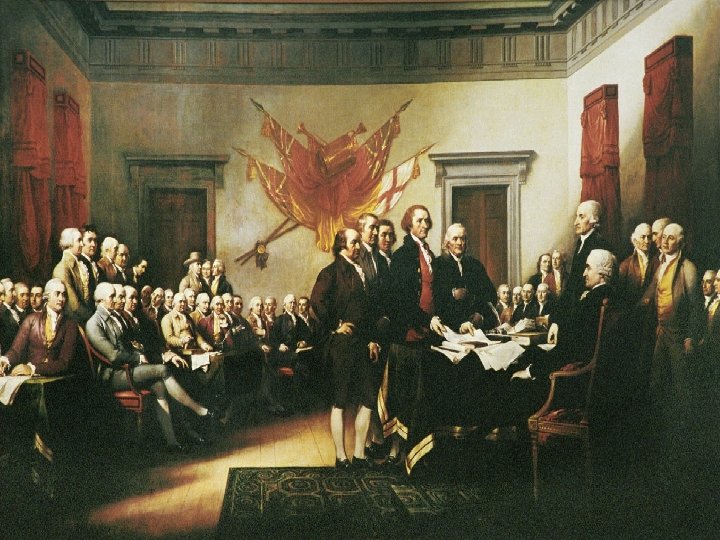
Declaring Independence 2 nd Continental Congress June 7 th Richard Henry Lee proposes independence July 2 nd United States of America created July 4 th Adopted by Congress What it included Followed England’s Bill of Rights 27 grievances with KGIII Authors Thomas Jefferson * John Adams Ben Franklin
- Slides: 30