
RNASeq data analysis Qi Liu Department of Biomedical
RNA-Seq data analysis Qi Liu Department of Biomedical Informatics Vanderbilt University School of Medicine qi. liu@vanderbilt. edu Office hours: Thursday 2: 00 -4: 00 pm, 497 A PRB
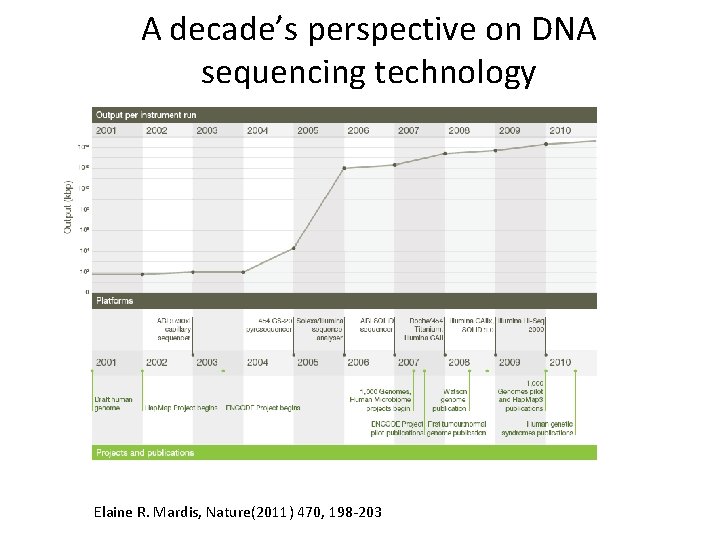
A decade’s perspective on DNA sequencing technology Elaine R. Mardis, Nature(2011) 470, 198 -203
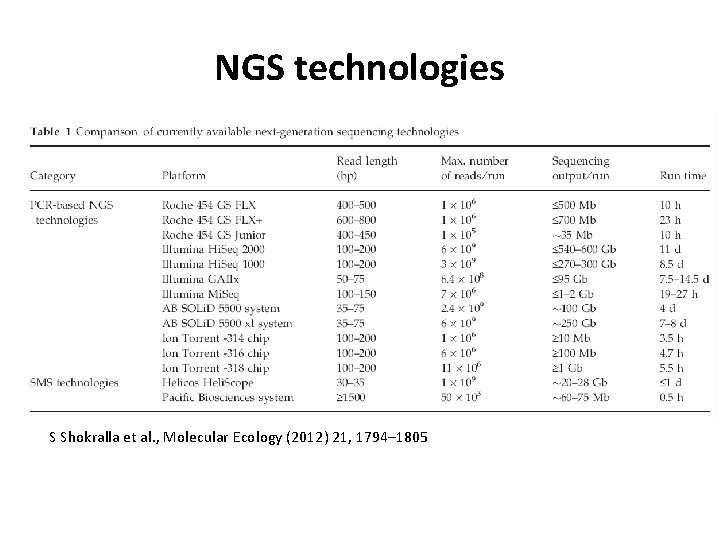
NGS technologies S Shokralla et al. , Molecular Ecology (2012) 21, 1794– 1805
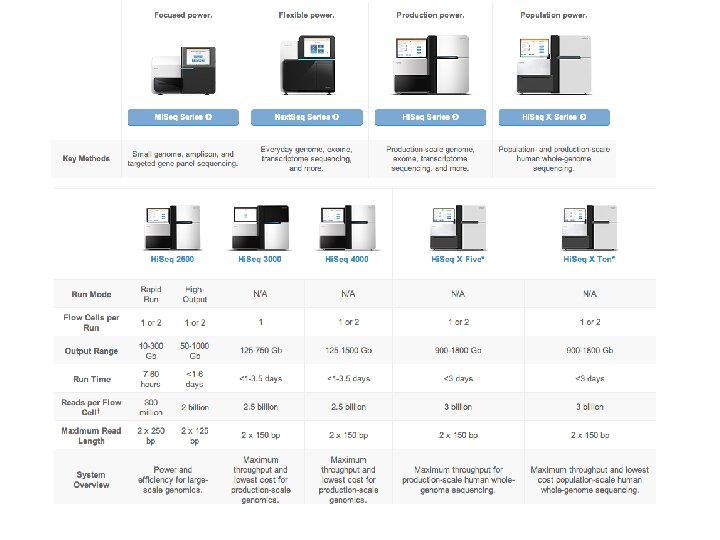
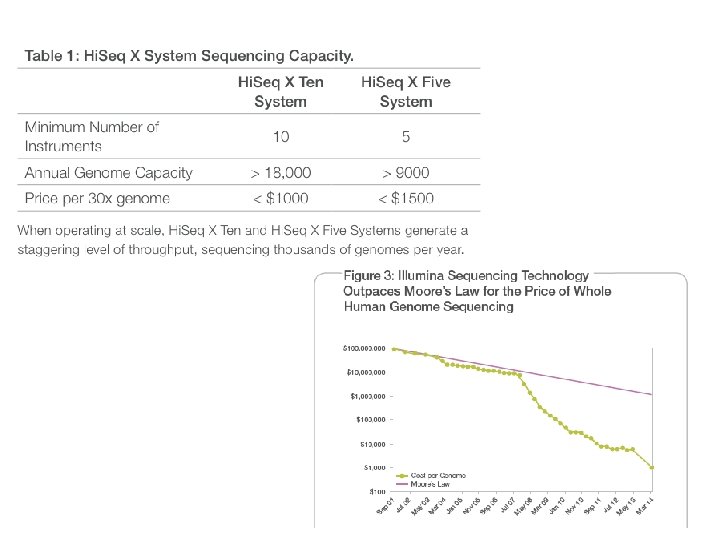

NGS sequencing pipeline http: //www. slideshare. net/mkim 8/a-comparison-of-ngs-platforms
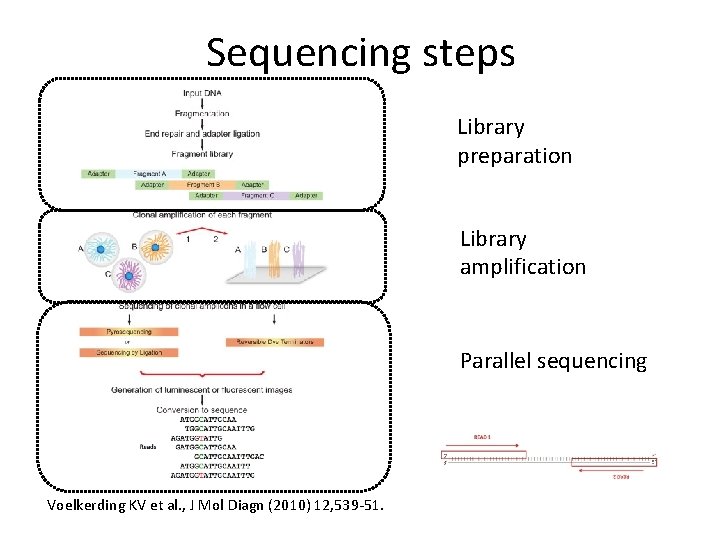
Sequencing steps Library preparation Library amplification Parallel sequencing Voelkerding KV et al. , J Mol Diagn (2010) 12, 539 -51.
NGS Application • • Whole genome sequencing Whole exome sequencing RNA sequencing Ch. IP-seq/Ch. IP-exo CLIP-seq GRO-seq/PRO-seq Bisulfite-Seq
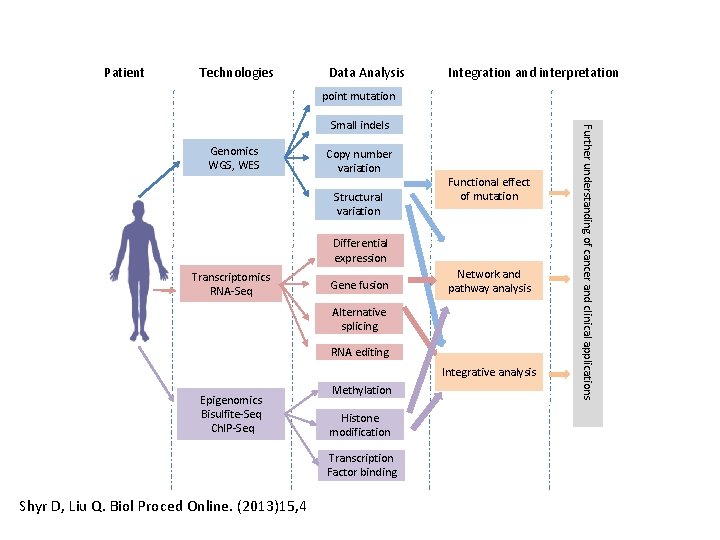
Patient Technologies Data Analysis Integration and interpretation point mutation Genomics WGS, WES Copy number variation Structural variation Functional effect of mutation Differential expression Transcriptomics RNA-Seq Gene fusion Network and pathway analysis Alternative splicing RNA editing Integrative analysis Epigenomics Bisulfite-Seq Ch. IP-Seq Methylation Histone modification Transcription Factor binding Shyr D, Liu Q. Biol Proced Online. (2013)15, 4 Further understanding of cancer and clinical applications Small indels
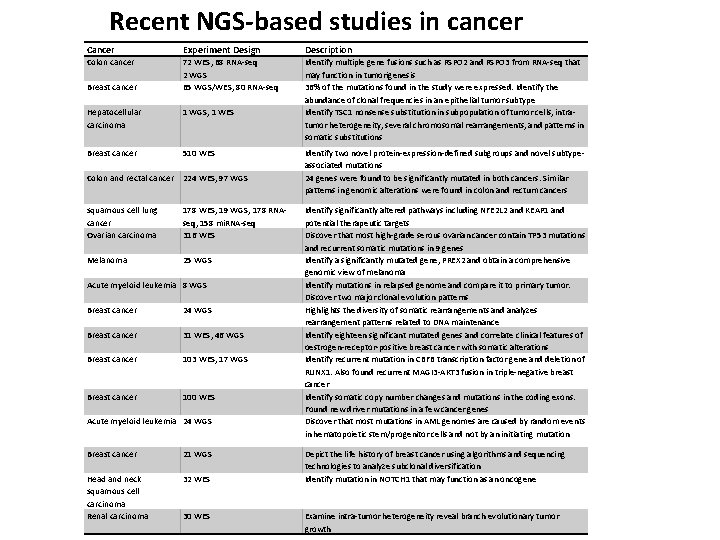
Recent NGS-based studies in cancer Cancer Experiment Design Description Colon cancer 72 WES, 68 RNA-seq 2 WGS 65 WGS/WES, 80 RNA-seq Identify multiple gene fusions such as RSPO 2 and RSPO 3 from RNA-seq that may function in tumorigenesis 36% of the mutations found in the study were expressed. Identify the abundance of clonal frequencies in an epithelial tumor subtype Identify TSC 1 nonsense substitution in subpopulation of tumor cells, intratumor heterogeneity, several chromosomal rearrangements, and patterns in somatic substitutions Breast cancer Hepatocellular carcinoma 1 WGS, 1 WES Breast cancer 510 WES Colon and rectal cancer 224 WES, 97 WGS squamous cell lung cancer Ovarian carcinoma 178 WES, 19 WGS, 178 RNAseq, 158 mi. RNA-seq 316 WES Melanoma 25 WGS Acute myeloid leukemia 8 WGS Breast cancer 24 WGS Breast cancer 31 WES, 46 WGS Breast cancer 103 WES, 17 WGS Breast cancer 100 WES Acute myeloid leukemia 24 WGS Breast cancer 21 WGS Head and neck squamous cell carcinoma Renal carcinoma 32 WES 30 WES Identify two novel protein-expression-defined subgroups and novel subtypeassociated mutations 24 genes were found to be significantly mutated in both cancers. Similar patterns in genomic alterations were found in colon and rectum cancers Identify significantly altered pathways including NFE 2 L 2 and KEAP 1 and potential therapeutic targets Discover that most high-grade serous ovarian cancer contain TP 53 mutations and recurrent somatic mutations in 9 genes Identify a significantly mutated gene, PREX 2 and obtain a comprehensive genomic view of melanoma Identify mutations in relapsed genome and compare it to primary tumor. Discover two major clonal evolution patterns Highlights the diversity of somatic rearrangements and analyzes rearrangement patterns related to DNA maintenance Identify eighteen significant mutated genes and correlate clinical features of oestrogen-receptor-positive breast cancer with somatic alterations Identify recurrent mutation in CBFB transcription factor gene and deletion of RUNX 1. Also found recurrent MAGI 3 -AKT 3 fusion in triple-negative breast cancer Identify somatic copy number changes and mutations in the coding exons. Found new driver mutations in a few cancer genes Discover that most mutations in AML genomes are caused by random events in hematopoietic stem/progenitor cells and not by an initiating mutation Depict the life history of breast cancer using algorithms and sequencing technologies to analyze subclonal diversification Identify mutation in NOTCH 1 that may function as an oncogene Examine intra-tumor heterogeneity reveal branch evolutionary tumor growth
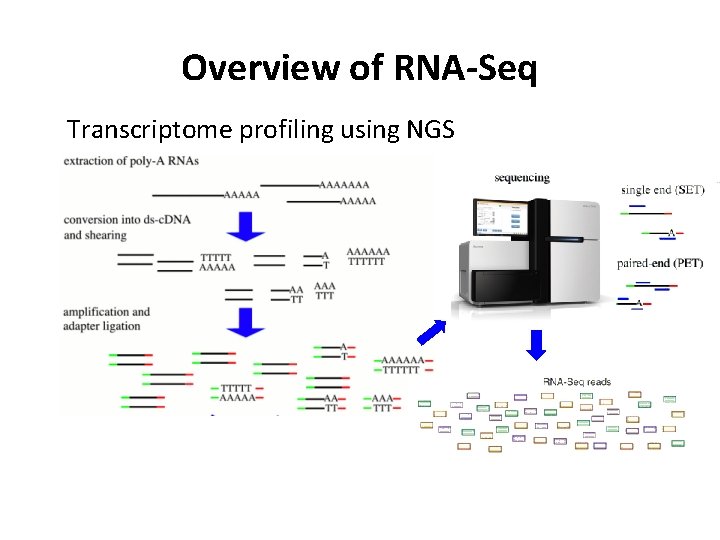
Overview of RNA-Seq Transcriptome profiling using NGS
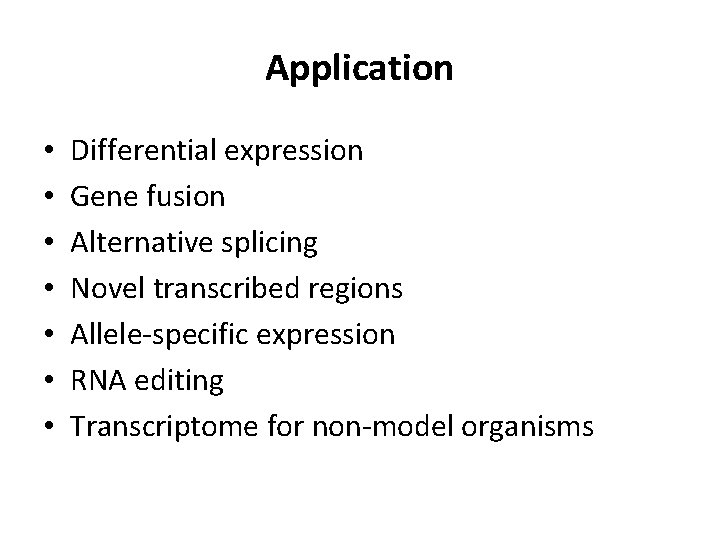
Application • • Differential expression Gene fusion Alternative splicing Novel transcribed regions Allele-specific expression RNA editing Transcriptome for non-model organisms
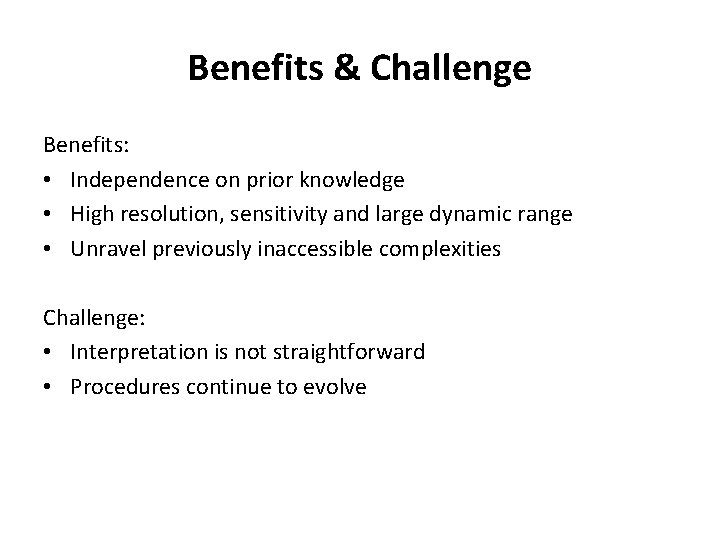
Benefits & Challenge Benefits: • Independence on prior knowledge • High resolution, sensitivity and large dynamic range • Unravel previously inaccessible complexities Challenge: • Interpretation is not straightforward • Procedures continue to evolve
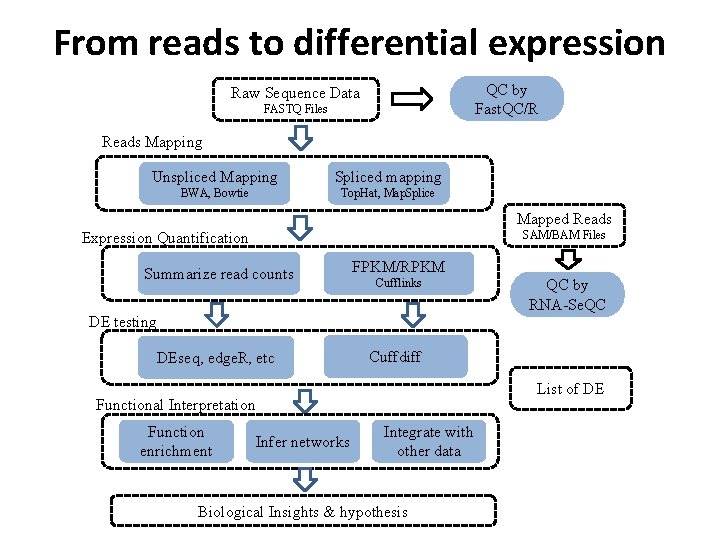
From reads to differential expression QC by Fast. QC/R Raw Sequence Data FASTQ Files Reads Mapping Unspliced Mapping Spliced mapping BWA, Bowtie Top. Hat, Map. Splice Mapped Reads SAM/BAM Files Expression Quantification Summarize read counts FPKM/RPKM Cufflinks DE testing DEseq, edge. R, etc Cuffdiff List of DE Functional Interpretation Function enrichment QC by RNA-Se. QC Infer networks Integrate with other data Biological Insights & hypothesis
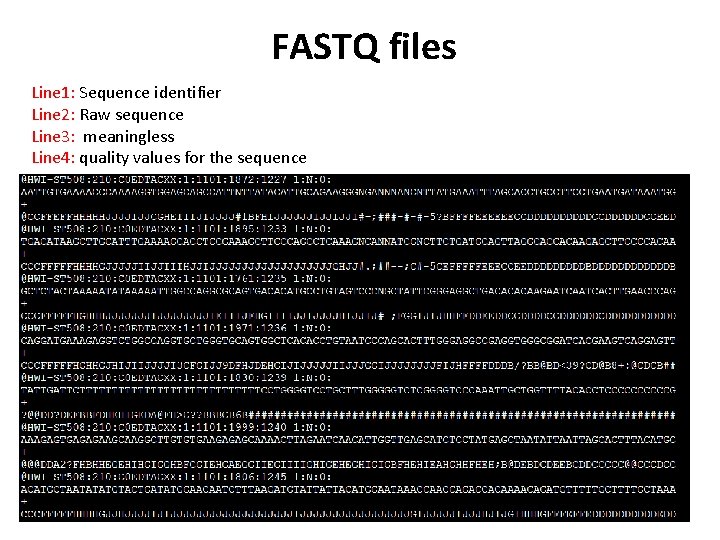
FASTQ files Line 1: Sequence identifier Line 2: Raw sequence Line 3: meaningless Line 4: quality values for the sequence
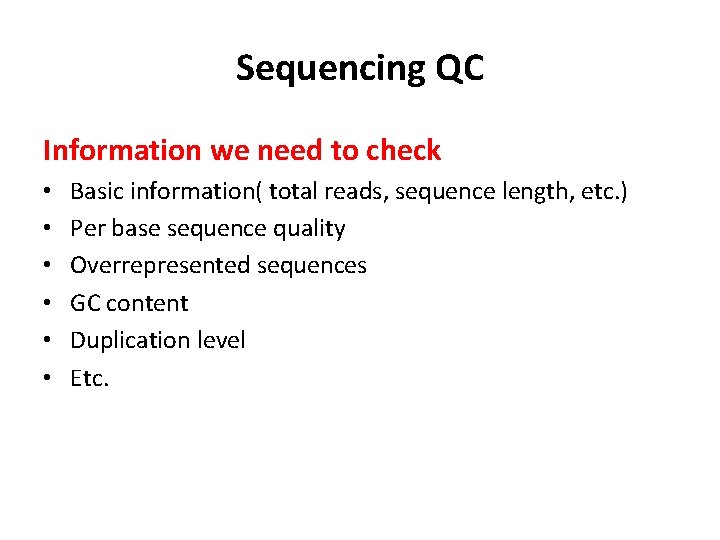
Sequencing QC Information we need to check • • • Basic information( total reads, sequence length, etc. ) Per base sequence quality Overrepresented sequences GC content Duplication level Etc.
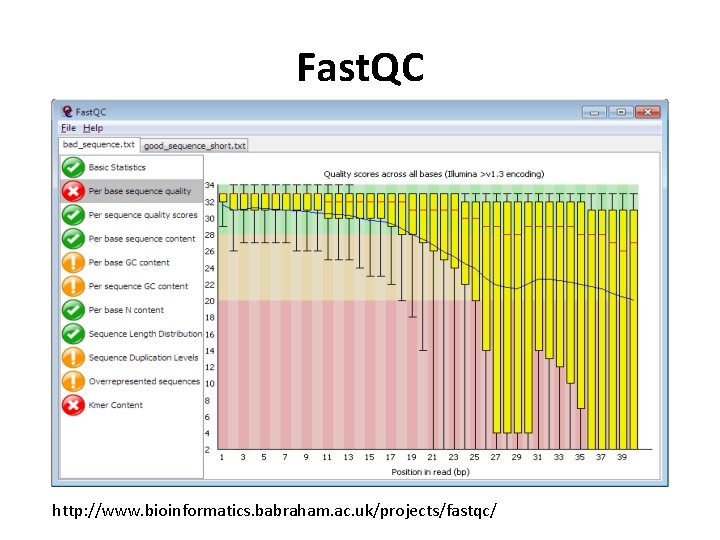
Fast. QC http: //www. bioinformatics. babraham. ac. uk/projects/fastqc/
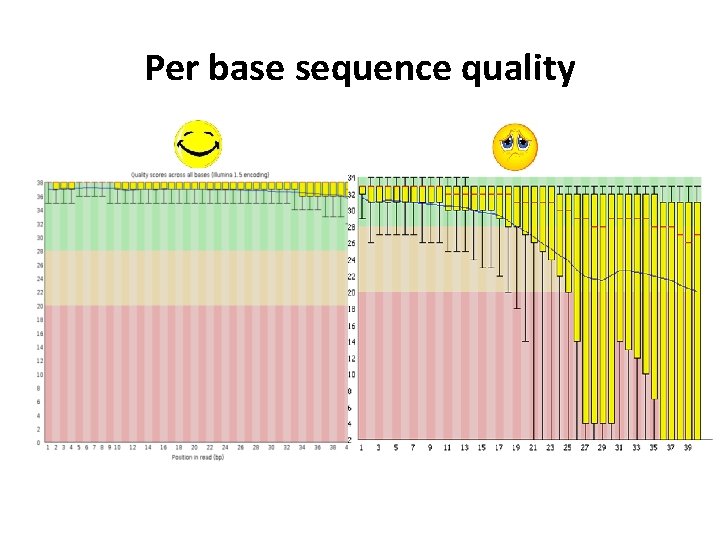
Per base sequence quality
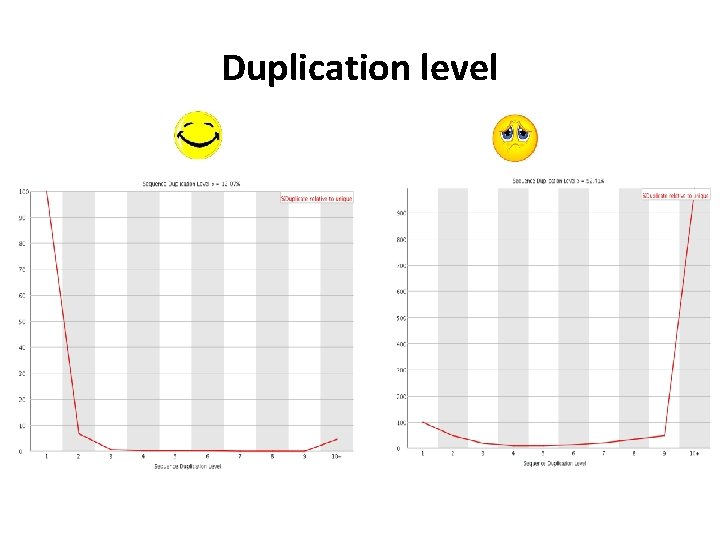
Duplication level
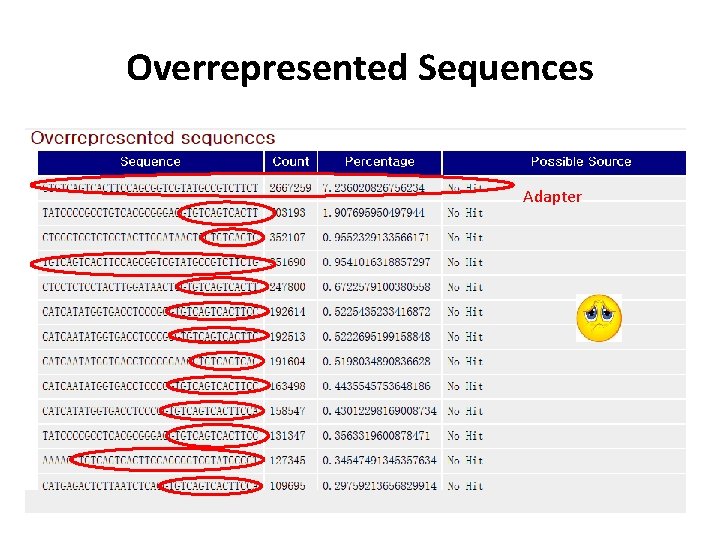
Overrepresented Sequences Adapter
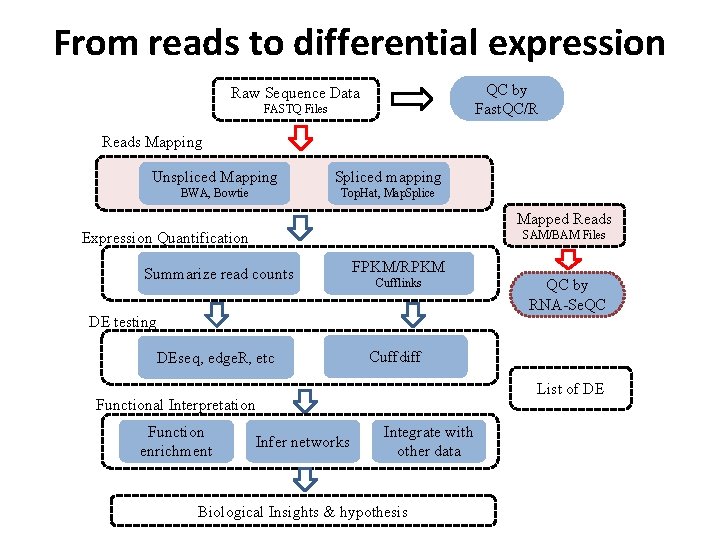
From reads to differential expression QC by Fast. QC/R Raw Sequence Data FASTQ Files Reads Mapping Unspliced Mapping Spliced mapping BWA, Bowtie Top. Hat, Map. Splice Mapped Reads SAM/BAM Files Expression Quantification Summarize read counts FPKM/RPKM Cufflinks DE testing DEseq, edge. R, etc Cuffdiff List of DE Functional Interpretation Function enrichment QC by RNA-Se. QC Infer networks Integrate with other data Biological Insights & hypothesis
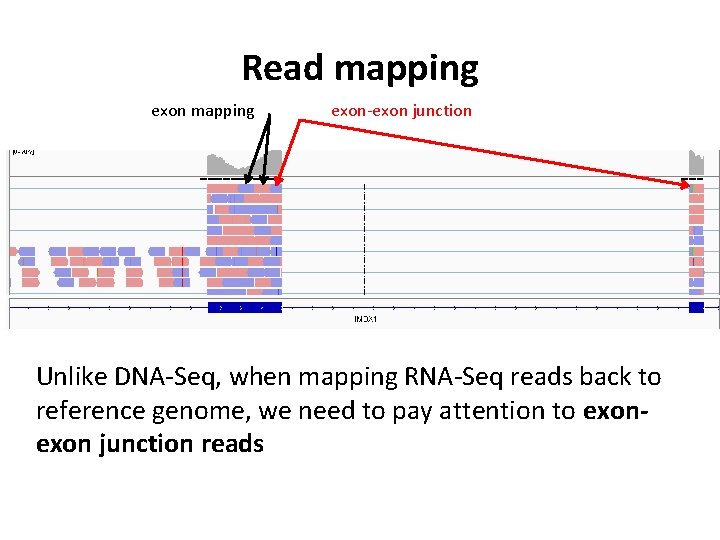
Read mapping exon-exon junction Unlike DNA-Seq, when mapping RNA-Seq reads back to reference genome, we need to pay attention to exon junction reads
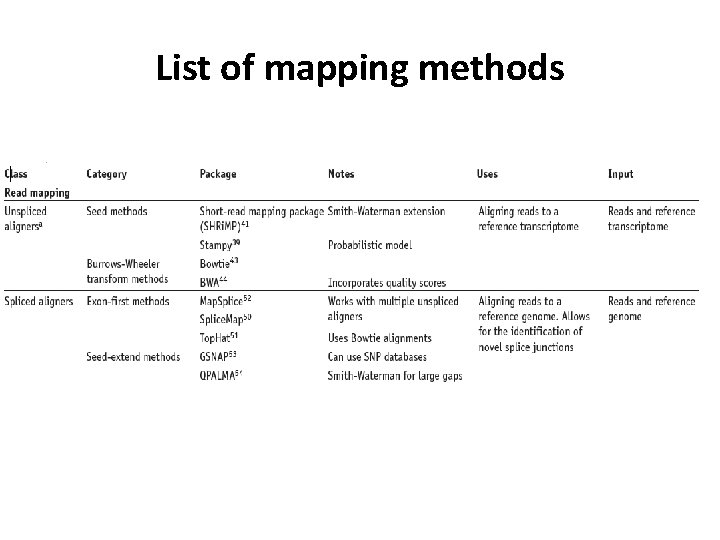
List of mapping methods
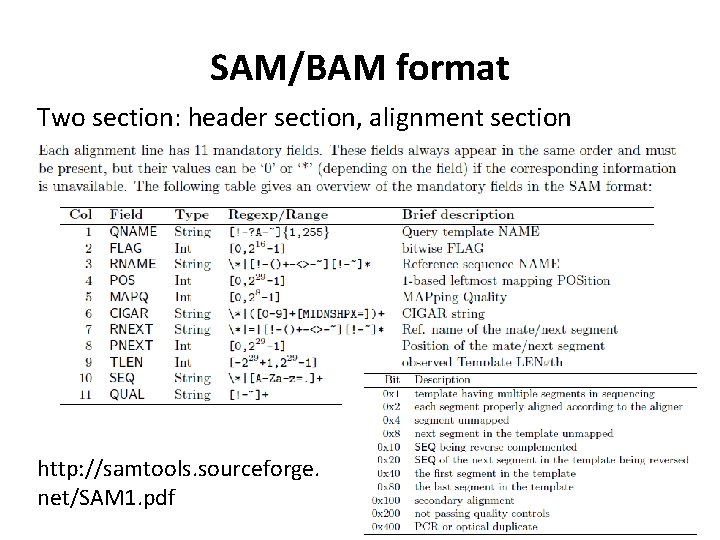
SAM/BAM format Two section: header section, alignment section http: //samtools. sourceforge. net/SAM 1. pdf
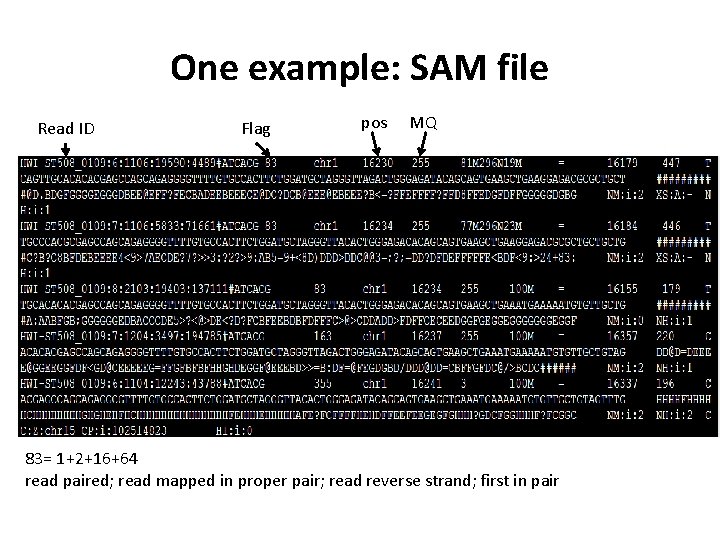
One example: SAM file Read ID Flag pos MQ 83= 1+2+16+64 read paired; read mapped in proper pair; read reverse strand; first in pair
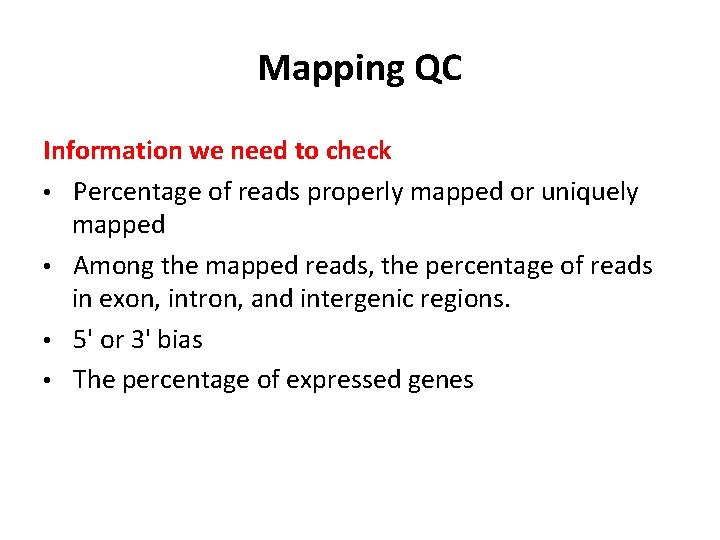
Mapping QC Information we need to check • Percentage of reads properly mapped or uniquely mapped • Among the mapped reads, the percentage of reads in exon, intron, and intergenic regions. • 5' or 3' bias • The percentage of expressed genes
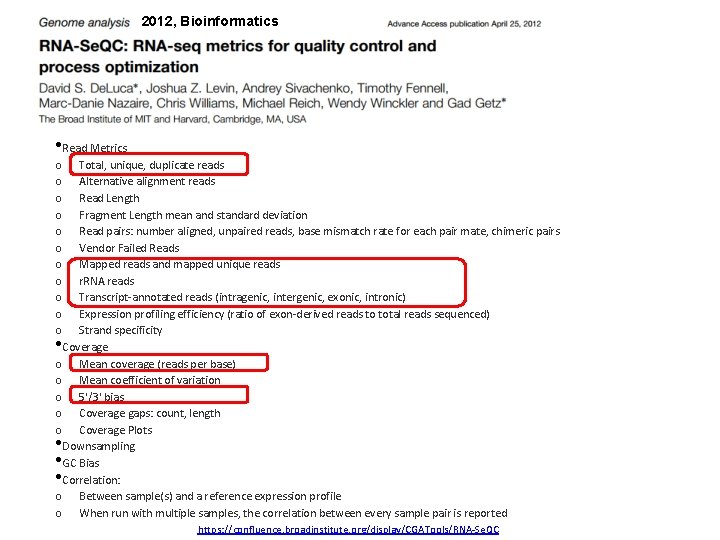
2012, Bioinformatics • Read Metrics o Total, unique, duplicate reads o Alternative alignment reads o Read Length o Fragment Length mean and standard deviation o Read pairs: number aligned, unpaired reads, base mismatch rate for each pair mate, chimeric pairs o Vendor Failed Reads o Mapped reads and mapped unique reads o r. RNA reads o Transcript-annotated reads (intragenic, intergenic, exonic, intronic) o Expression profiling efficiency (ratio of exon-derived reads to total reads sequenced) o Strand specificity Coverage o Mean coverage (reads per base) o Mean coefficient of variation o 5'/3' bias o Coverage gaps: count, length o Coverage Plots Downsampling GC Bias Correlation: o Between sample(s) and a reference expression profile o When run with multiple samples, the correlation between every sample pair is reported • • https: //confluence. broadinstitute. org/display/CGATools/RNA-Se. QC
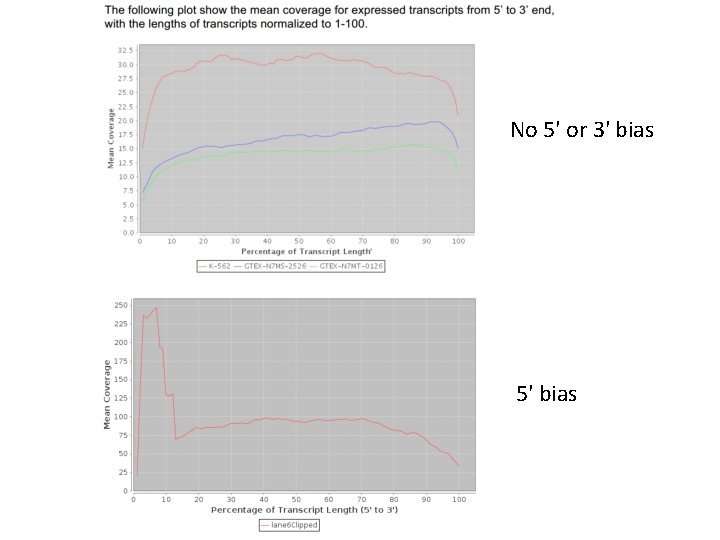
No 5' or 3' bias 5' bias
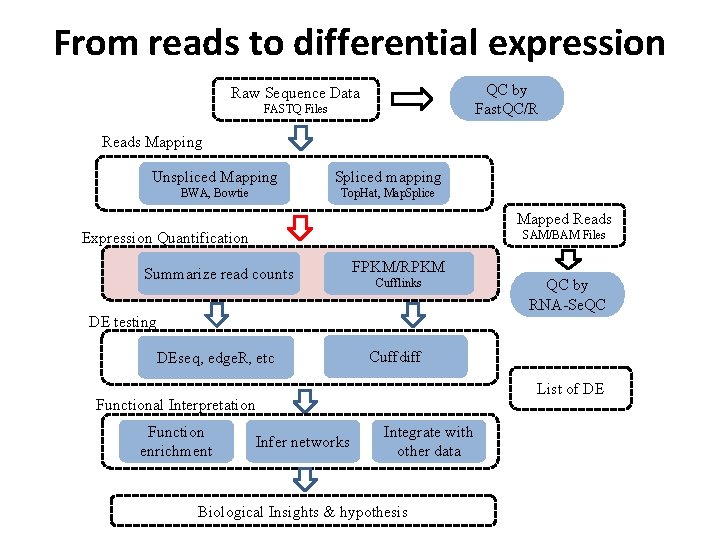
From reads to differential expression QC by Fast. QC/R Raw Sequence Data FASTQ Files Reads Mapping Unspliced Mapping Spliced mapping BWA, Bowtie Top. Hat, Map. Splice Mapped Reads SAM/BAM Files Expression Quantification Summarize read counts FPKM/RPKM Cufflinks DE testing DEseq, edge. R, etc Cuffdiff List of DE Functional Interpretation Function enrichment QC by RNA-Se. QC Infer networks Integrate with other data Biological Insights & hypothesis
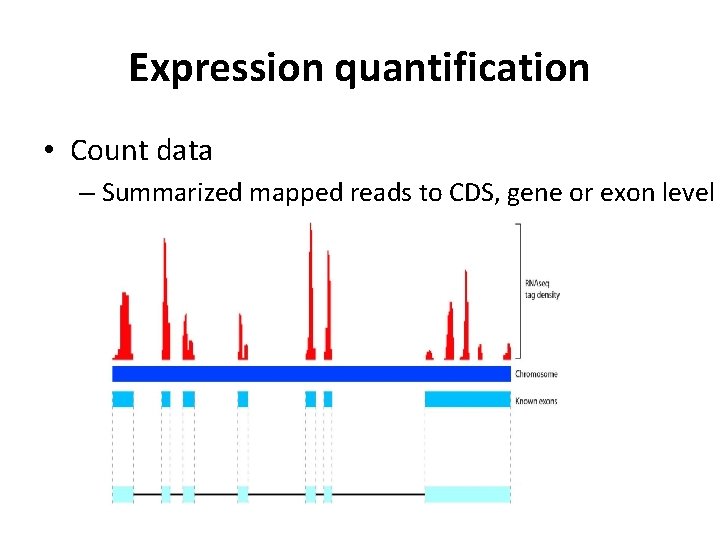
Expression quantification • Count data – Summarized mapped reads to CDS, gene or exon level
Expression quantification The number of reads is roughly proportional to – the length of the gene – the total number of reads in the library Question: Gene A: 200 Gene B: 300 Expression of Gene A < Expression of Gene B?
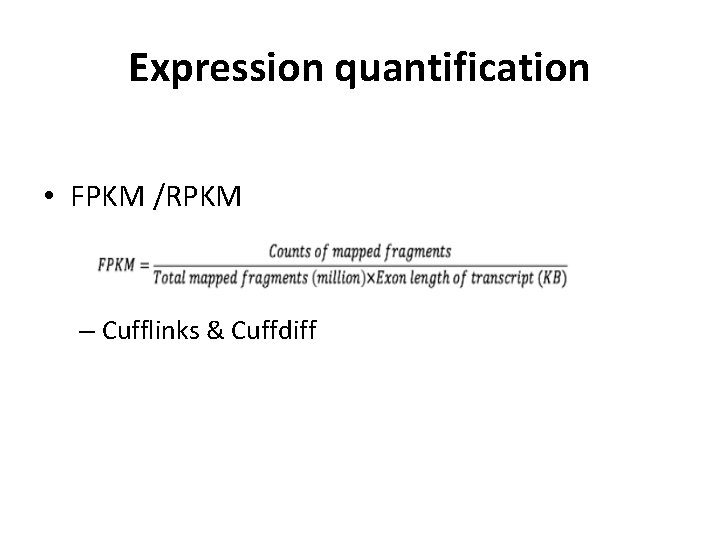
Expression quantification • FPKM /RPKM – Cufflinks & Cuffdiff
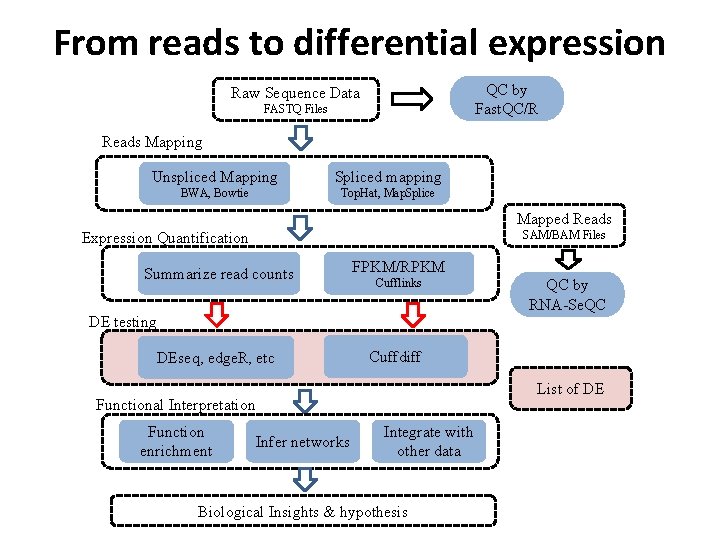
From reads to differential expression QC by Fast. QC/R Raw Sequence Data FASTQ Files Reads Mapping Unspliced Mapping Spliced mapping BWA, Bowtie Top. Hat, Map. Splice Mapped Reads SAM/BAM Files Expression Quantification Summarize read counts FPKM/RPKM Cufflinks DE testing DEseq, edge. R, etc Cuffdiff List of DE Functional Interpretation Function enrichment QC by RNA-Se. QC Infer networks Integrate with other data Biological Insights & hypothesis
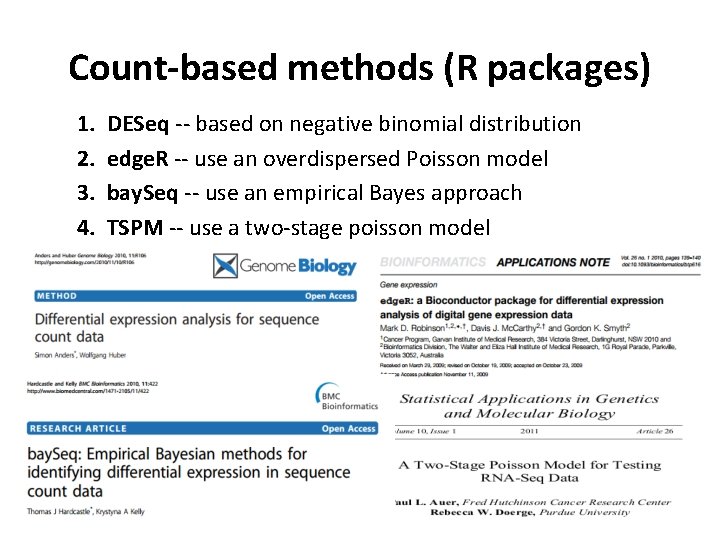
Count-based methods (R packages) 1. 2. 3. 4. DESeq -- based on negative binomial distribution edge. R -- use an overdispersed Poisson model bay. Seq -- use an empirical Bayes approach TSPM -- use a two-stage poisson model
RPKM/FPKM-based methods • Cufflinks & Cuffdiff • Other differential analysis methods for microarray data – t-test, limma etc.
Count-based
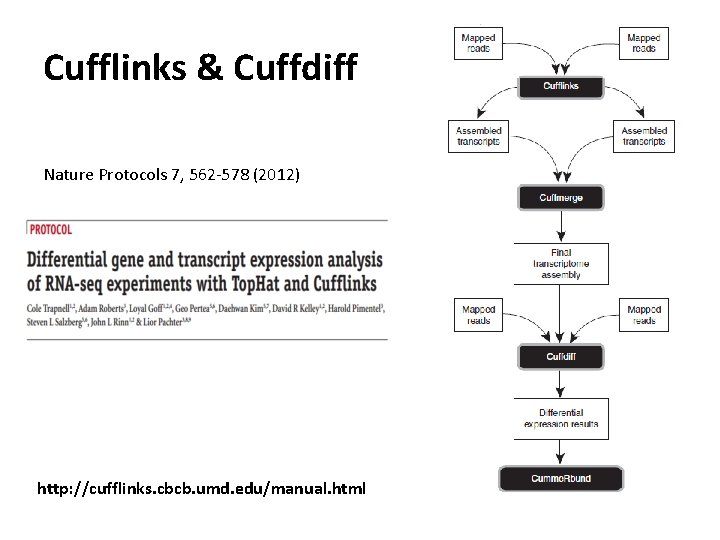
Cufflinks & Cuffdiff Nature Protocols 7, 562 -578 (2012) http: //cufflinks. cbcb. umd. edu/manual. html
References • Garber M, Grabherr MG, Guttman M, Trapnell C. Computational methods for transcriptome annotation and quantification using RNA-seq. Nat Methods. 2011; 8(6): 469 -77. • Oshlack A, Robinson MD, Young MD. From RNA-seq reads to differential expression results. Genome Biol. 2010; 11(12): 220. • Ozsolak F, Milos PM. RNA sequencing: advances, challenges and opportunities. Nat Rev Genet. 2011; 12(2): 87 -98. • Pepke S, Wold B, Mortazavi A. Computation for Ch. IP-seq and RNA-seq studies. Nat Methods. 2009 ; 6(11 Suppl): S 22 -32. • Wang Z, Gerstein M, Snyder M. RNA-Seq: a revolutionary tool for transcriptomics. Nat Rev Genet. 2009; 10(1): 57 -63.
RESOURCES • • • http: //seqanswers. com/forums/showthread. php? t=43 List software packages for next generation sequence analysis http: //manuals. bioinformatics. ucr. edu/home/ht-seq Give examples of R codes to deal with next generation sequence data http: //www. rna-seqblog. com/ A blog publishes news related to RNA-Seq analysis. http: //www. bioconductor. org/help/workflows/high-throughputsequencing Give examples using bioconductor for sequence data analysis http: //www. bioconductor. org/help/workflows/high-throughputsequencing walk you through an end-to-end RNA-Seq differential expression workflow, using DESeq 2 along with other Bioconductor packages.
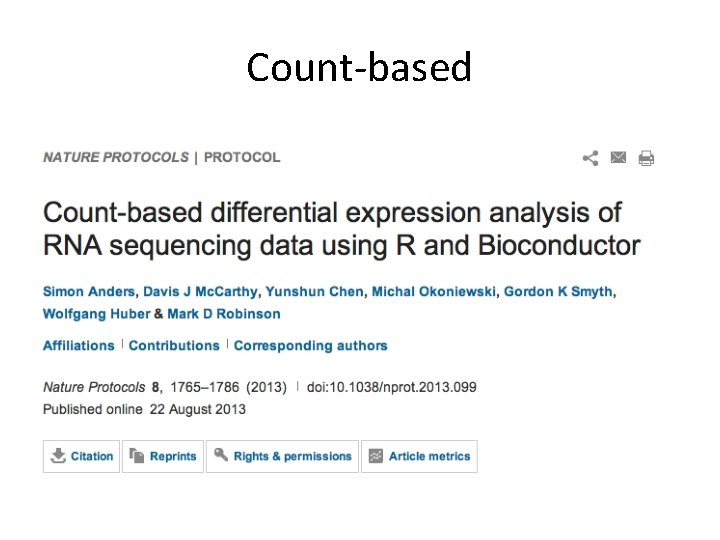
HOMEWORK • • • https: //www. youtube. com/watch? v=PMIF 6 z. Ue. Kko Next-Generation Sequencing Technologies - Elaine Mardis http: //en. wikipedia. org/wiki/FASTQ_format FASTQ format http: //samtools. github. io/hts-specs/SAMv 1. pdf SAM format http: //www. nature. com/nprot/journal/v 8/n 9/full/nprot. 2013. 099. html Count-based differential expression analysis http: //www. nature. com/nprot/journal/v 7/n 3/full/nprot. 2012. 016. html Differential expression analysis with Top. Hat and Cufflinks http: //www. bioconductor. org/help/workflows/high-throughputsequencing walk you through an end-to-end RNA-Seq differential expression workflow, using DESeq 2 along with other Bioconductor packages.
- Slides: 40