
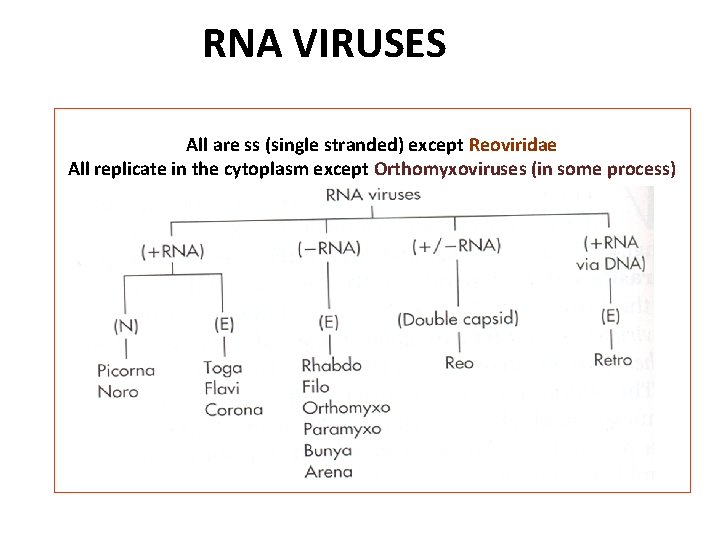
RNA VIRUSES All are ss single stranded except
- Slides: 25
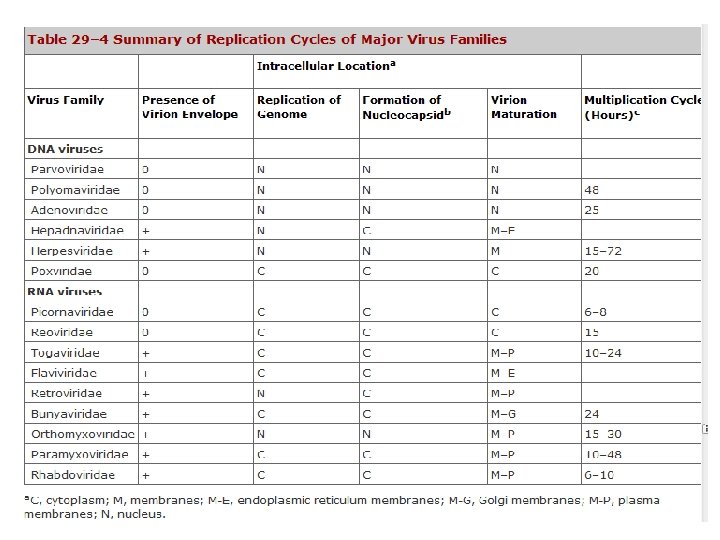
RNA VIRUSES All are ss (single stranded) except Reoviridae All replicate in the cytoplasm except Orthomyxoviruses (in some process)
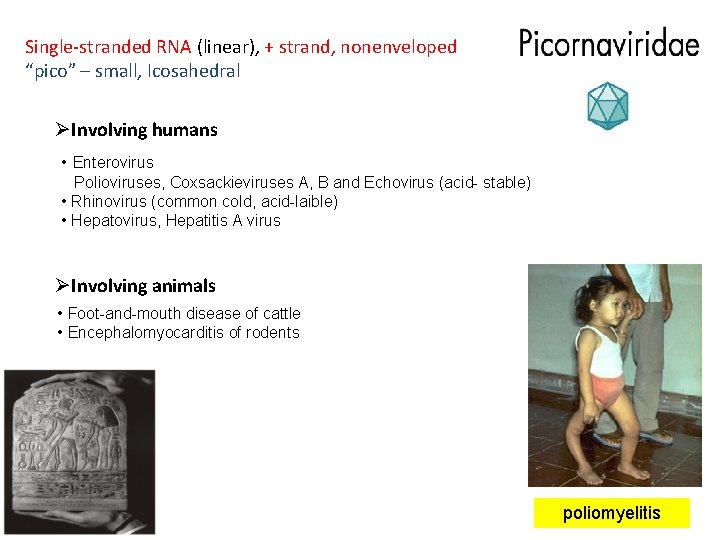
Single-stranded RNA (linear), + strand, nonenveloped “pico” – small, Icosahedral ØInvolving humans • Enterovirus Polioviruses, Coxsackieviruses A, B and Echovirus (acid- stable) • Rhinovirus (common cold, acid-laible) • Hepatovirus, Hepatitis A virus ØInvolving animals • Foot-and-mouth disease of cattle • Encephalomyocarditis of rodents poliomyelitis
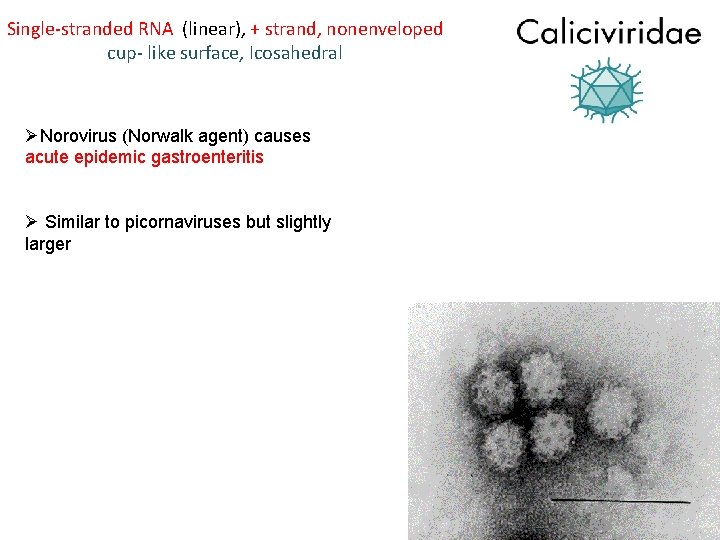
Single-stranded RNA (linear), + strand, nonenveloped cup- like surface, Icosahedral ØNorovirus (Norwalk agent) causes acute epidemic gastroenteritis Ø Similar to picornaviruses but slightly larger
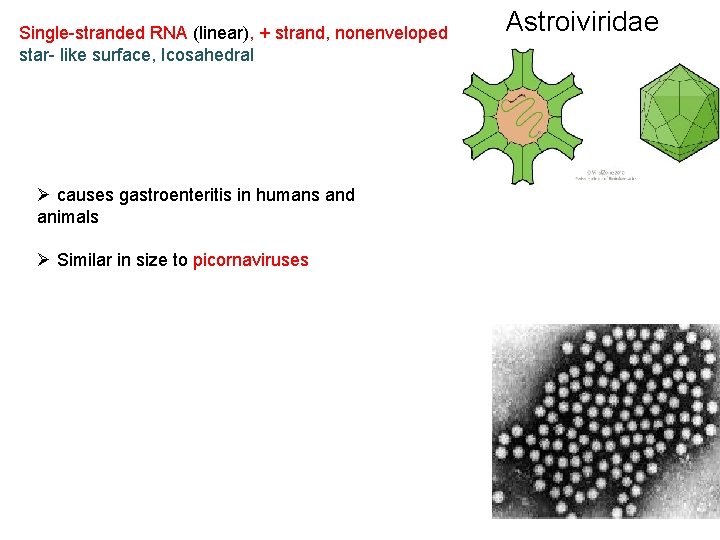
Single-stranded RNA (linear), + strand, nonenveloped star- like surface, Icosahedral Ø causes gastroenteritis in humans and animals Ø Similar in size to picornaviruses Astroiviridae
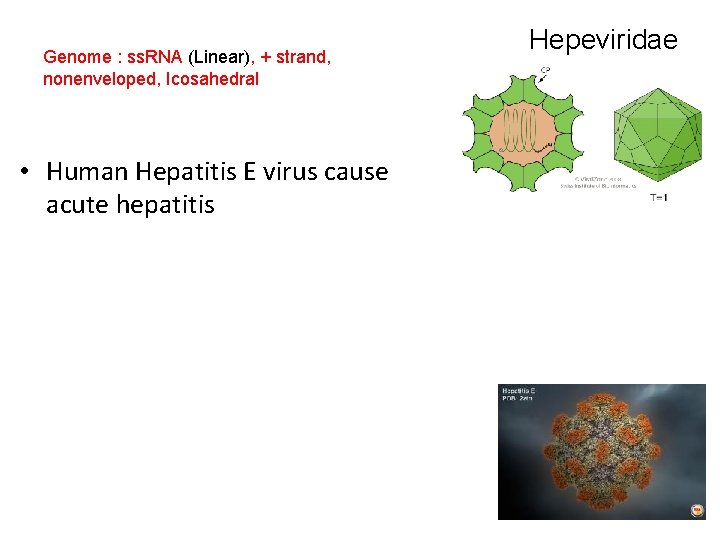
Genome : ss. RNA (Linear), + strand, nonenveloped, Icosahedral • Human Hepatitis E virus cause acute hepatitis Hepeviridae
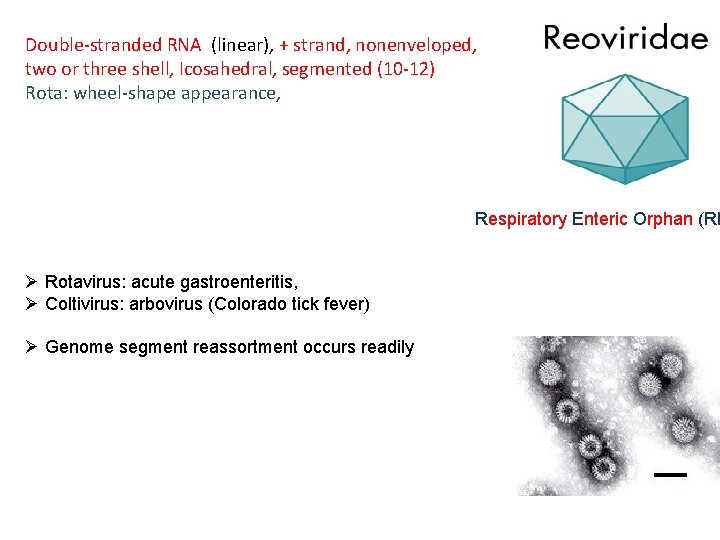
Double-stranded RNA (linear), + strand, nonenveloped, two or three shell, Icosahedral, segmented (10 -12) Rota: wheel-shape appearance, Respiratory Enteric Orphan (RE Ø Rotavirus: acute gastroenteritis, Ø Coltivirus: arbovirus (Colorado tick fever) Ø Genome segment reassortment occurs readily
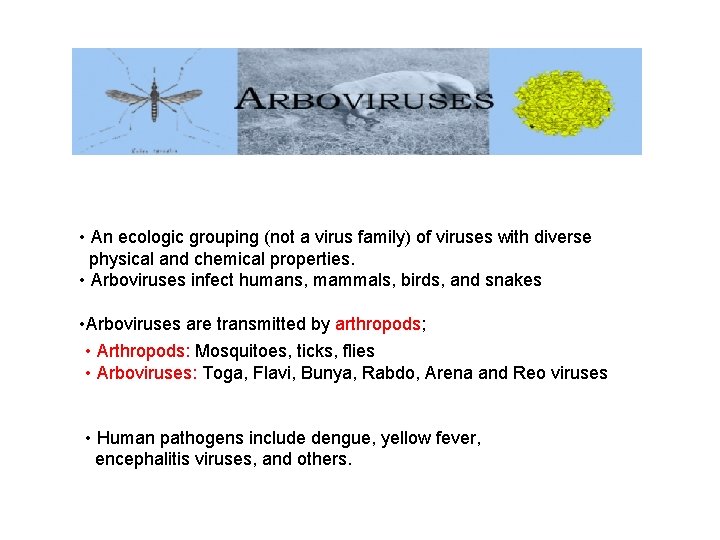
• An ecologic grouping (not a virus family) of viruses with diverse physical and chemical properties. • Arboviruses infect humans, mammals, birds, and snakes • Arboviruses are transmitted by arthropods; • Arthropods: Mosquitoes, ticks, flies • Arboviruses: Toga, Flavi, Bunya, Rabdo, Arena and Reo viruses • Human pathogens include dengue, yellow fever, encephalitis viruses, and others.
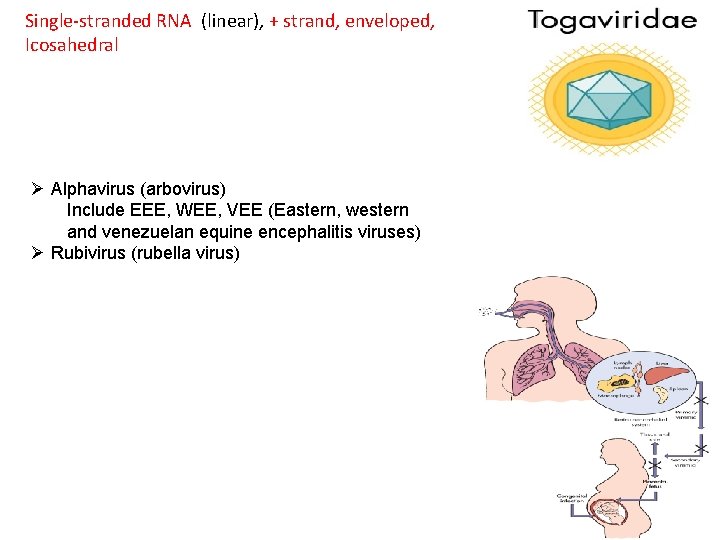
Single-stranded RNA (linear), + strand, enveloped, Icosahedral Ø Alphavirus (arbovirus) Include EEE, WEE, VEE (Eastern, western and venezuelan equine encephalitis viruses) Ø Rubivirus (rubella virus)
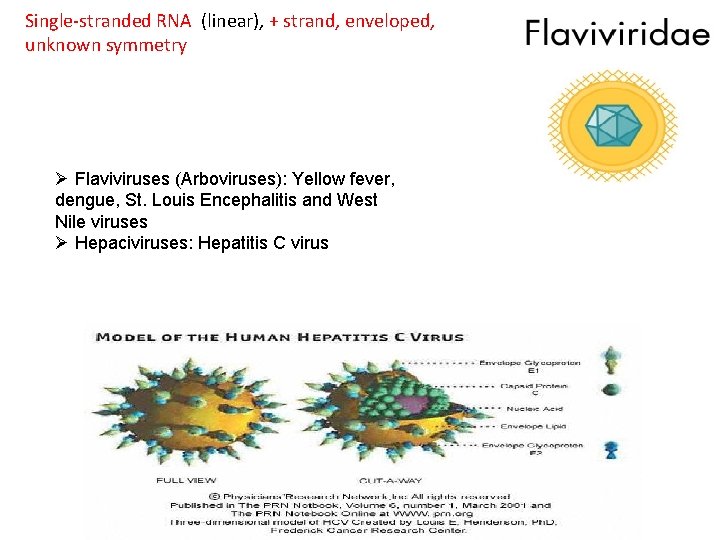
Single-stranded RNA (linear), + strand, enveloped, unknown symmetry Ø Flaviviruses (Arboviruses): Yellow fever, dengue, St. Louis Encephalitis and West Nile viruses Ø Hepaciviruses: Hepatitis C virus
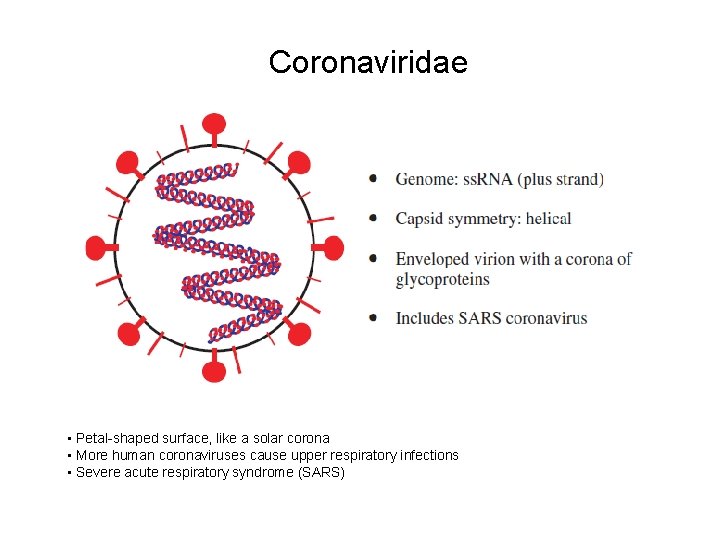
Coronaviridae • Petal-shaped surface, like a solar corona • More human coronaviruses cause upper respiratory infections • Severe acute respiratory syndrome (SARS)
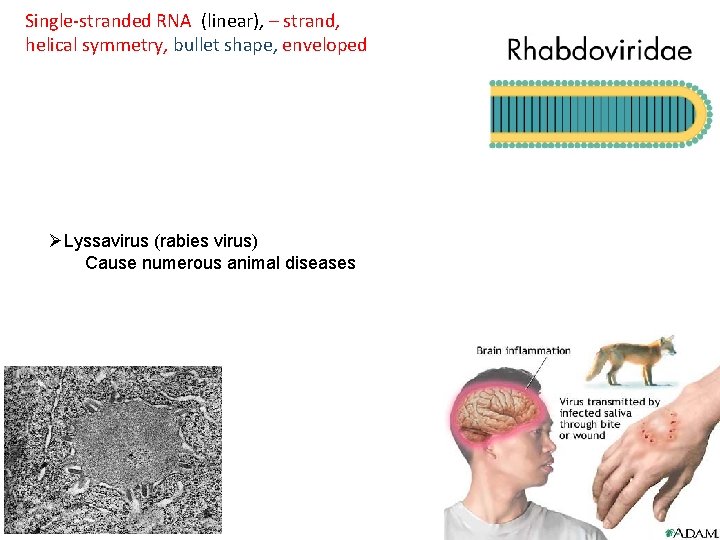
Single-stranded RNA (linear), – strand, helical symmetry, bullet shape, enveloped ØLyssavirus (rabies virus) Cause numerous animal diseases
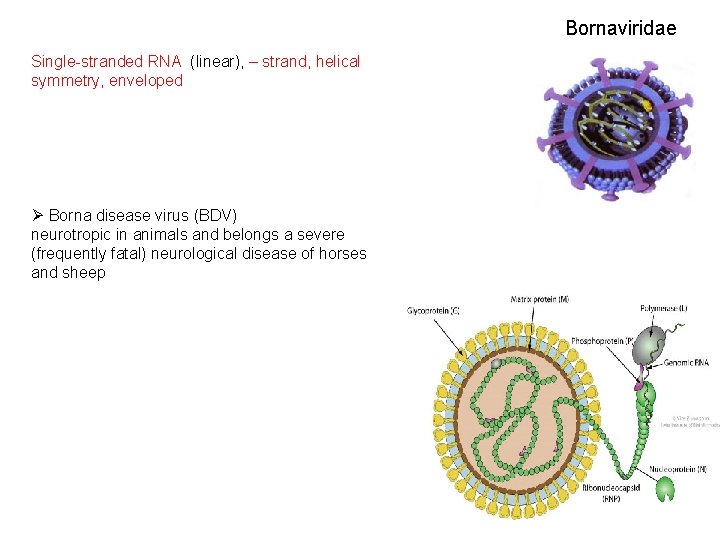
Bornaviridae Single-stranded RNA (linear), – strand, helical symmetry, enveloped Ø Borna disease virus (BDV) neurotropic in animals and belongs a severe (frequently fatal) neurological disease of horses and sheep
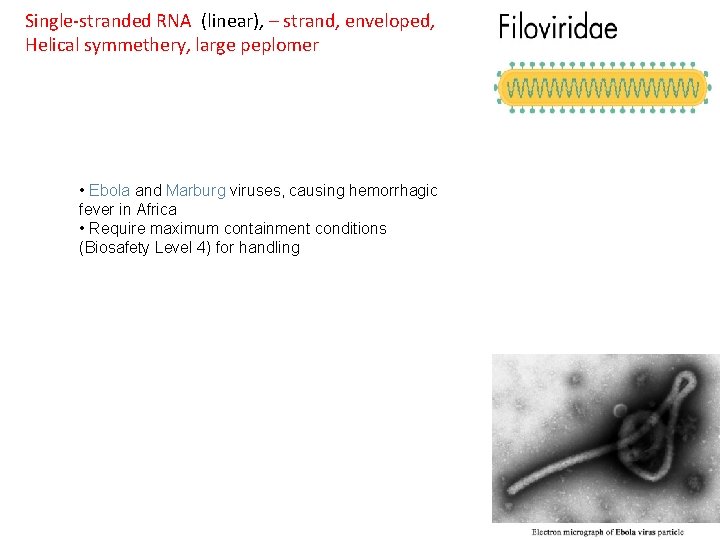
Single-stranded RNA (linear), – strand, enveloped, Helical symmethery, large peplomer • Ebola and Marburg viruses, causing hemorrhagic fever in Africa • Require maximum containment conditions (Biosafety Level 4) for handling
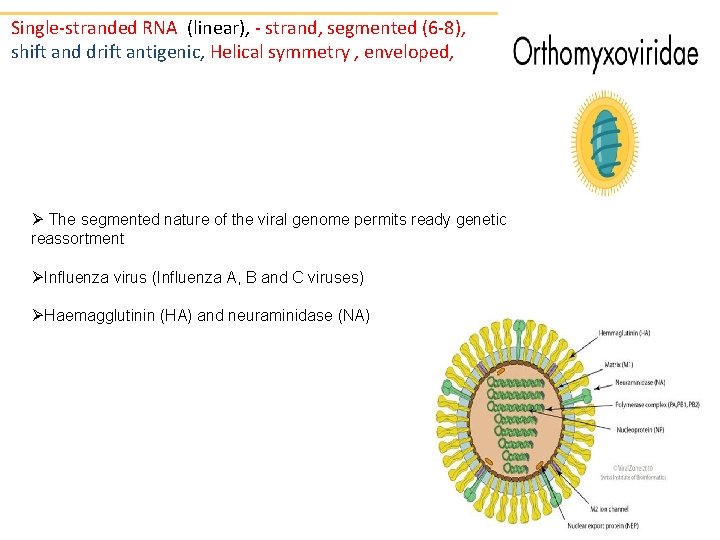
Single-stranded RNA (linear), - strand, segmented (6 -8), shift and drift antigenic, Helical symmetry , enveloped, Ø The segmented nature of the viral genome permits ready genetic reassortment ØInfluenza virus (Influenza A, B and C viruses) ØHaemagglutinin (HA) and neuraminidase (NA)
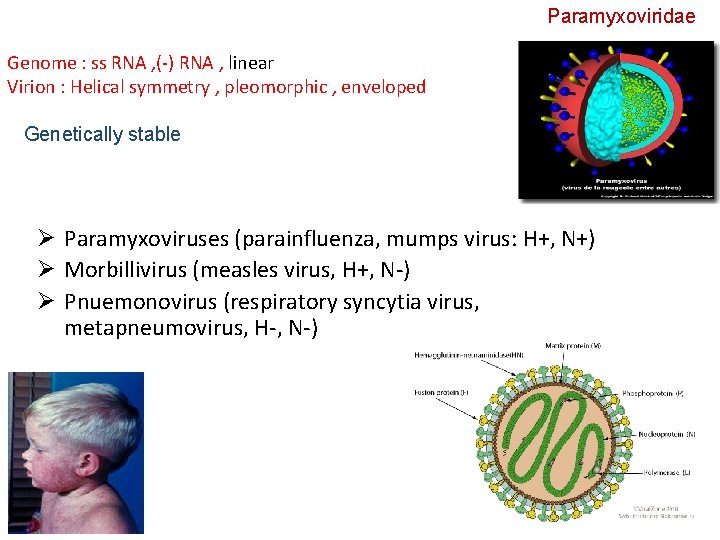
Paramyxoviridae Genome : ss RNA , (-) RNA , linear Virion : Helical symmetry , pleomorphic , enveloped Genetically stable Ø Paramyxoviruses (parainfluenza, mumps virus: H+, N+) Ø Morbillivirus (measles virus, H+, N-) Ø Pnuemonovirus (respiratory syncytia virus, metapneumovirus, H-, N-)
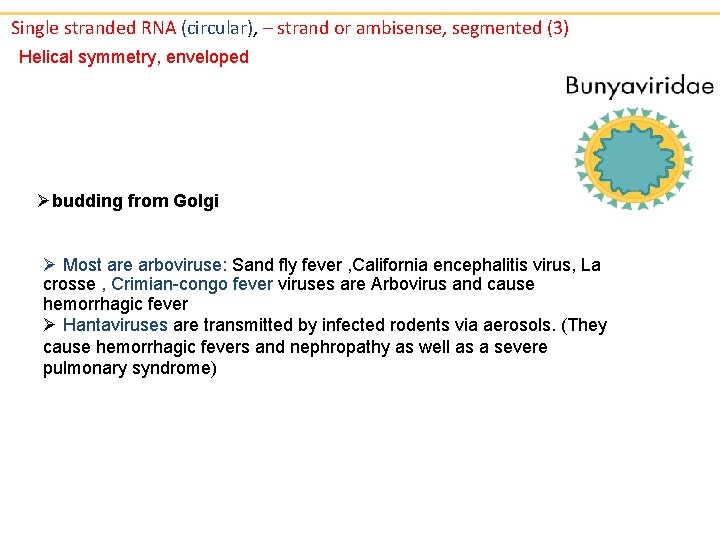
Single stranded RNA (circular), – strand or ambisense, segmented (3) Helical symmetry, enveloped Øbudding from Golgi Ø Most are arboviruse: Sand fly fever , California encephalitis virus, La crosse , Crimian-congo fever viruses are Arbovirus and cause hemorrhagic fever Ø Hantaviruses are transmitted by infected rodents via aerosols. (They cause hemorrhagic fevers and nephropathy as well as a severe pulmonary syndrome)
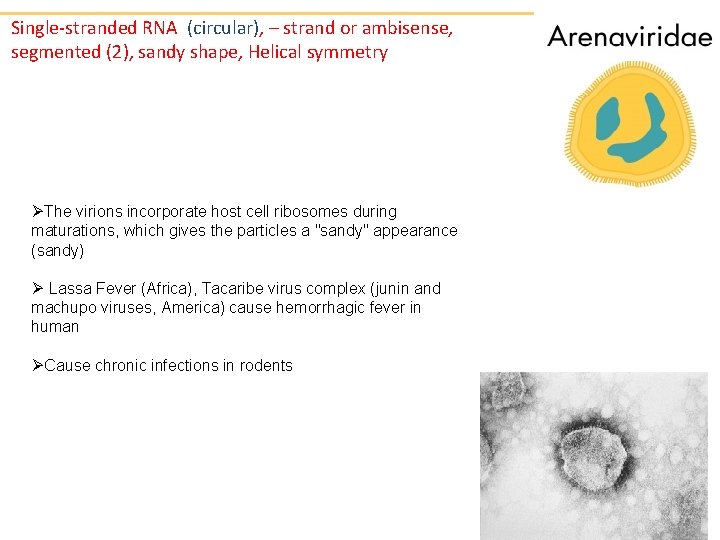
Single-stranded RNA (circular), – strand or ambisense, segmented (2), sandy shape, Helical symmetry ØThe virions incorporate host cell ribosomes during maturations, which gives the particles a "sandy" appearance (sandy) Ø Lassa Fever (Africa), Tacaribe virus complex (junin and machupo viruses, America) cause hemorrhagic fever in human ØCause chronic infections in rodents
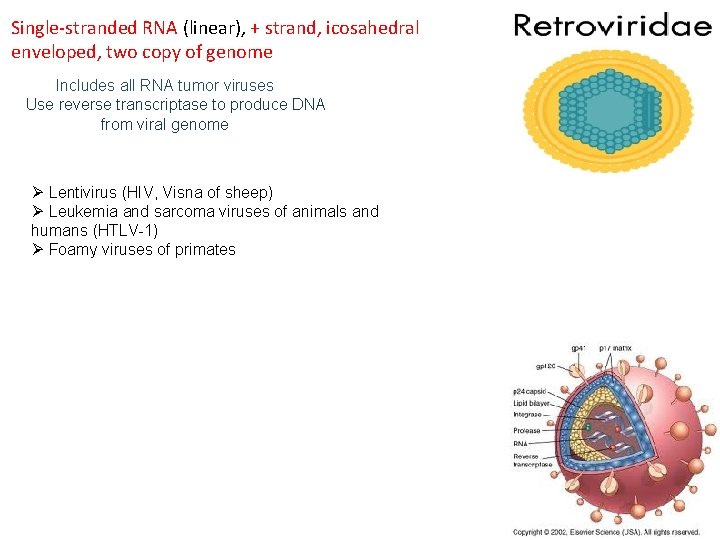
Single-stranded RNA (linear), + strand, icosahedral enveloped, two copy of genome Includes all RNA tumor viruses Use reverse transcriptase to produce DNA from viral genome Ø Lentivirus (HIV, Visna of sheep) Ø Leukemia and sarcoma viruses of animals and humans (HTLV-1) Ø Foamy viruses of primates
General steps in viral replication cycles 1 - Attachment, penetration and uncoating 2 - Expression of viral genome and synthesis of viral components 3 - Morphogenesis and release
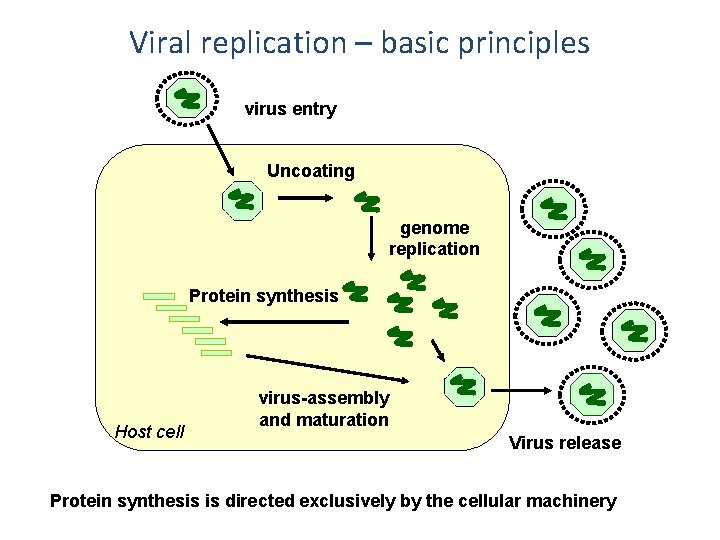
Viral replication – basic principles virus entry Uncoating genome replication Protein synthesis Host cell virus-assembly and maturation Virus release Protein synthesis is directed exclusively by the cellular machinery
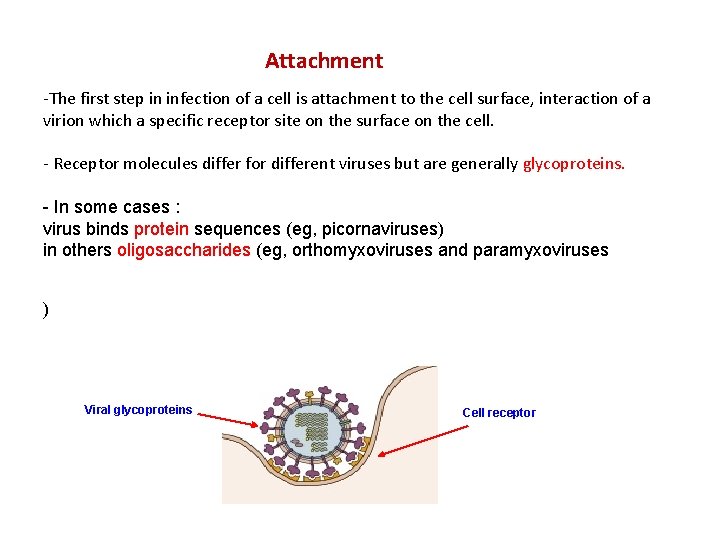
Attachment -The first step in infection of a cell is attachment to the cell surface, interaction of a virion which a specific receptor site on the surface on the cell. - Receptor molecules differ for different viruses but are generally glycoproteins. - In some cases : virus binds protein sequences (eg, picornaviruses) in others oligosaccharides (eg, orthomyxoviruses and paramyxoviruses ) Viral glycoproteins Cell receptor
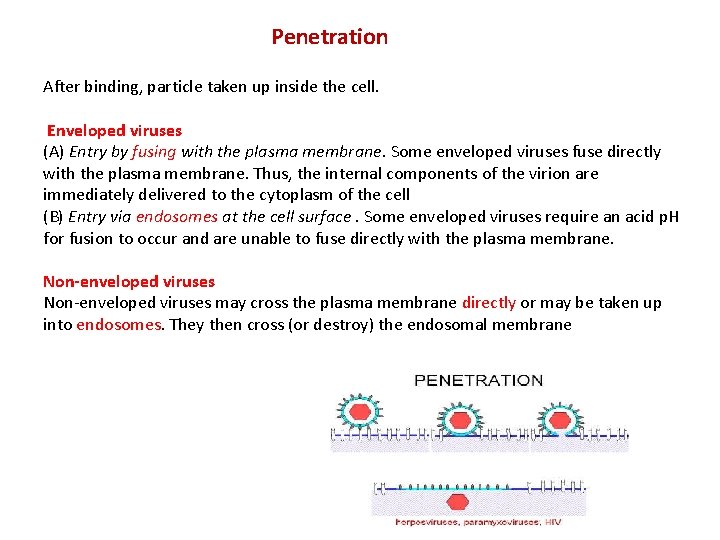
Penetration After binding, particle taken up inside the cell. Enveloped viruses (A) Entry by fusing with the plasma membrane. Some enveloped viruses fuse directly with the plasma membrane. Thus, the internal components of the virion are immediately delivered to the cytoplasm of the cell (B) Entry via endosomes at the cell surface. Some enveloped viruses require an acid p. H for fusion to occur and are unable to fuse directly with the plasma membrane. Non-enveloped viruses may cross the plasma membrane directly or may be taken up into endosomes. They then cross (or destroy) the endosomal membrane
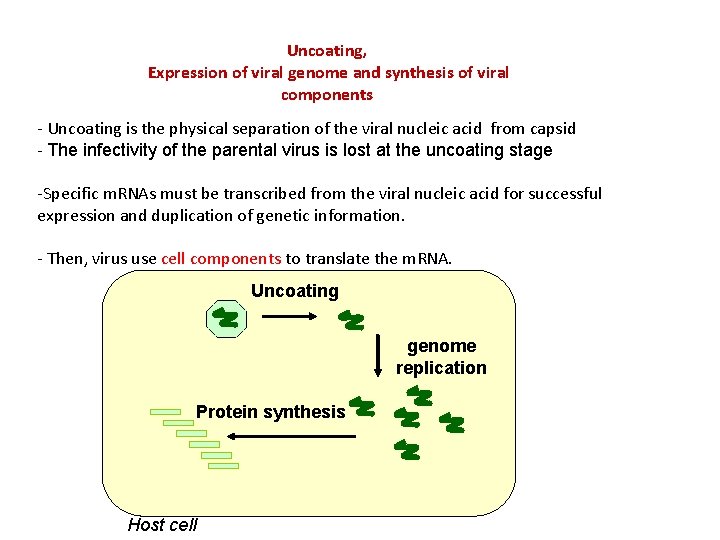
Uncoating, Expression of viral genome and synthesis of viral components - Uncoating is the physical separation of the viral nucleic acid from capsid - The infectivity of the parental virus is lost at the uncoating stage -Specific m. RNAs must be transcribed from the viral nucleic acid for successful expression and duplication of genetic information. - Then, virus use cell components to translate the m. RNA. Uncoating genome replication Protein synthesis Host cell
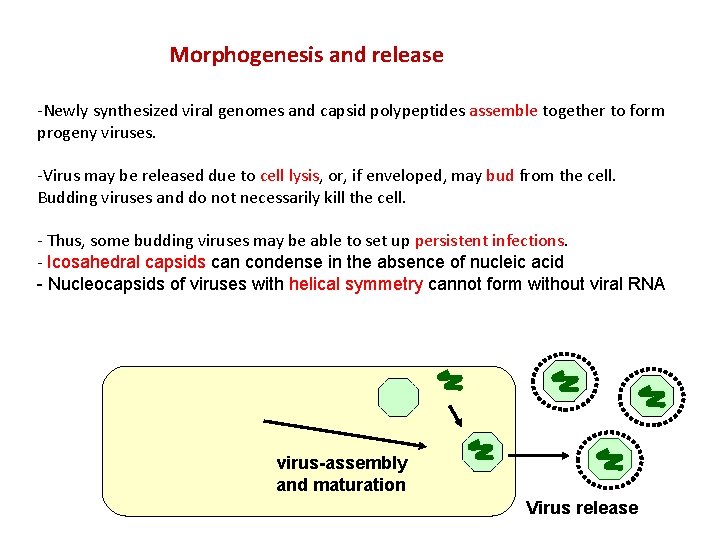
Morphogenesis and release -Newly synthesized viral genomes and capsid polypeptides assemble together to form progeny viruses. -Virus may be released due to cell lysis, or, if enveloped, may bud from the cell. Budding viruses and do not necessarily kill the cell. - Thus, some budding viruses may be able to set up persistent infections. - Icosahedral capsids can condense in the absence of nucleic acid - Nucleocapsids of viruses with helical symmetry cannot form without viral RNA virus-assembly and maturation Virus release