
RNA PROCESSING Summary of the steps leading from
- Slides: 41
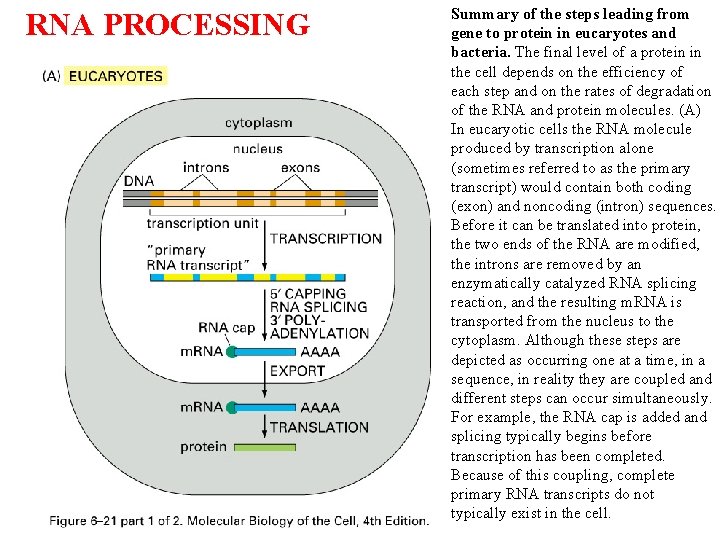
RNA PROCESSING Summary of the steps leading from gene to protein in eucaryotes and bacteria. The final level of a protein in the cell depends on the efficiency of each step and on the rates of degradation of the RNA and protein molecules. (A) In eucaryotic cells the RNA molecule produced by transcription alone (sometimes referred to as the primary transcript) would contain both coding (exon) and noncoding (intron) sequences. Before it can be translated into protein, the two ends of the RNA are modified, the introns are removed by an enzymatically catalyzed RNA splicing reaction, and the resulting m. RNA is transported from the nucleus to the cytoplasm. Although these steps are depicted as occurring one at a time, in a sequence, in reality they are coupled and different steps can occur simultaneously. For example, the RNA cap is added and splicing typically begins before transcription has been completed. Because of this coupling, complete primary RNA transcripts do not typically exist in the cell.
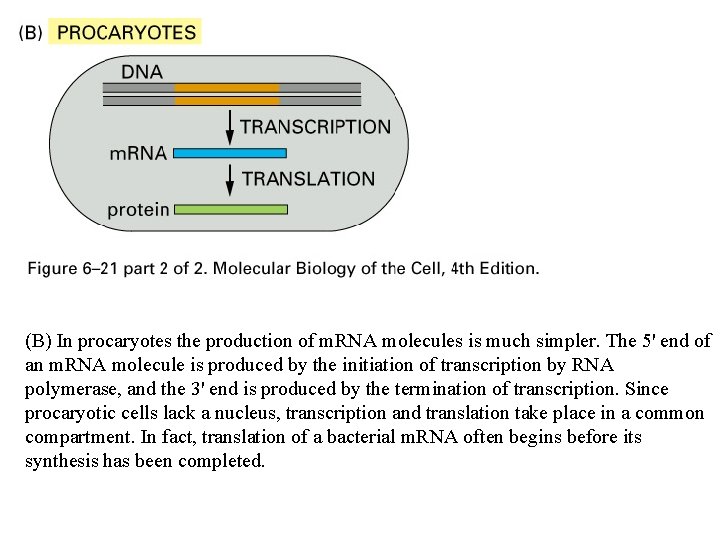
(B) In procaryotes the production of m. RNA molecules is much simpler. The 5' end of an m. RNA molecule is produced by the initiation of transcription by RNA polymerase, and the 3' end is produced by the termination of transcription. Since procaryotic cells lack a nucleus, transcription and translation take place in a common compartment. In fact, translation of a bacterial m. RNA often begins before its synthesis has been completed.
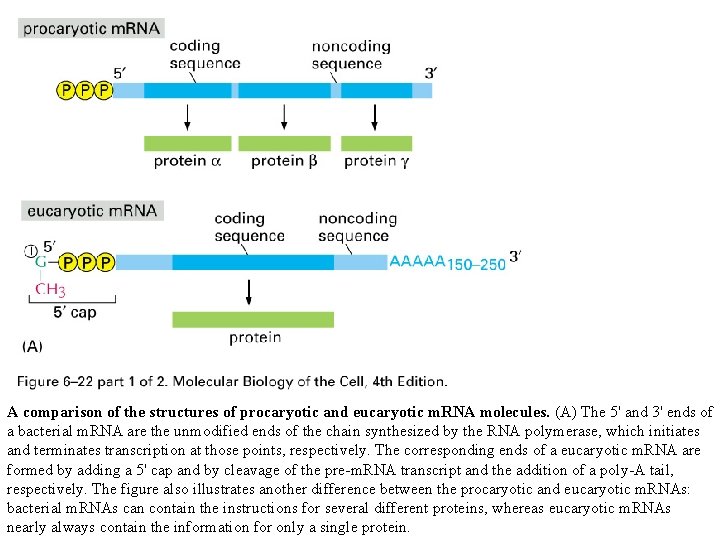
A comparison of the structures of procaryotic and eucaryotic m. RNA molecules. (A) The 5' and 3' ends of a bacterial m. RNA are the unmodified ends of the chain synthesized by the RNA polymerase, which initiates and terminates transcription at those points, respectively. The corresponding ends of a eucaryotic m. RNA are formed by adding a 5' cap and by cleavage of the pre-m. RNA transcript and the addition of a poly-A tail, respectively. The figure also illustrates another difference between the procaryotic and eucaryotic m. RNAs: bacterial m. RNAs can contain the instructions for several different proteins, whereas eucaryotic m. RNAs nearly always contain the information for only a single protein.
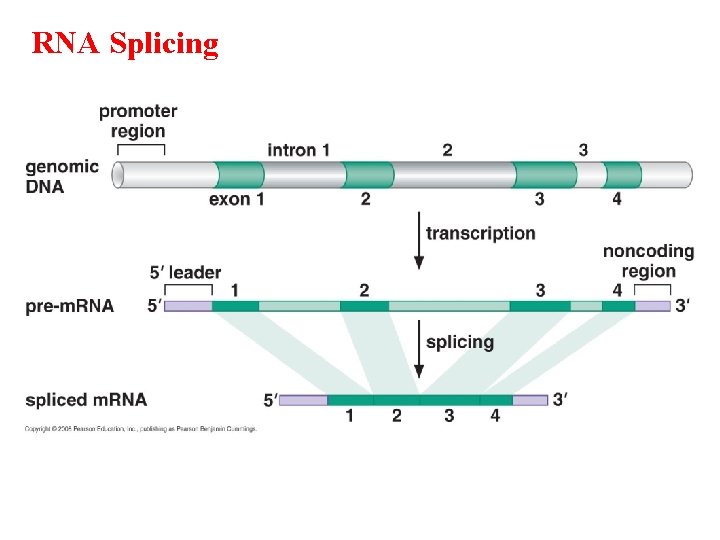
RNA Splicing
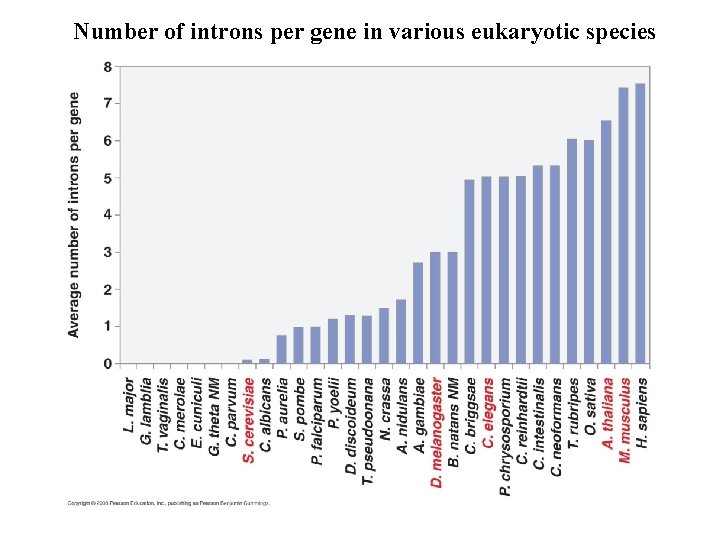
Number of introns per gene in various eukaryotic species
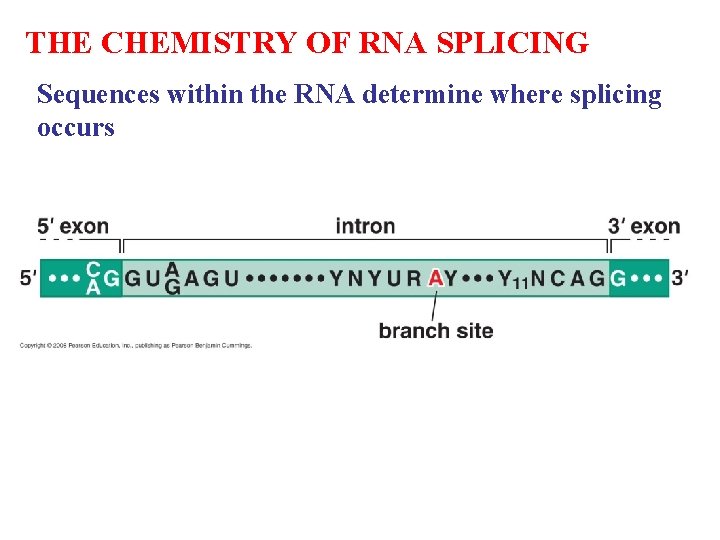
THE CHEMISTRY OF RNA SPLICING Sequences within the RNA determine where splicing occurs
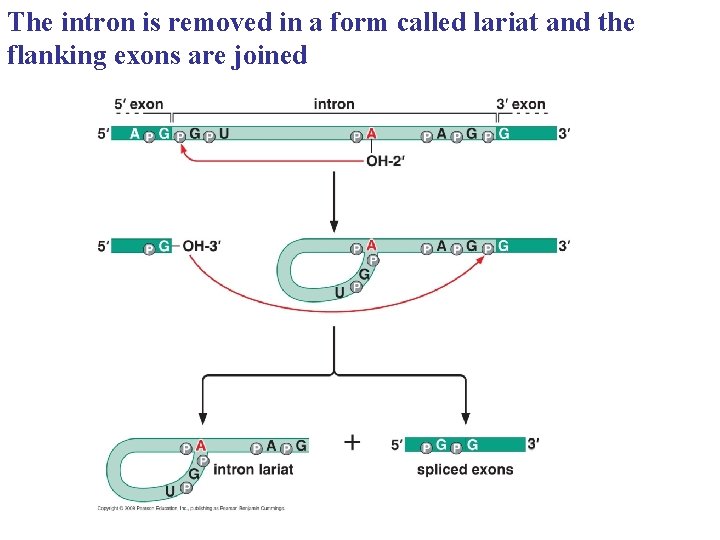
The intron is removed in a form called lariat and the flanking exons are joined
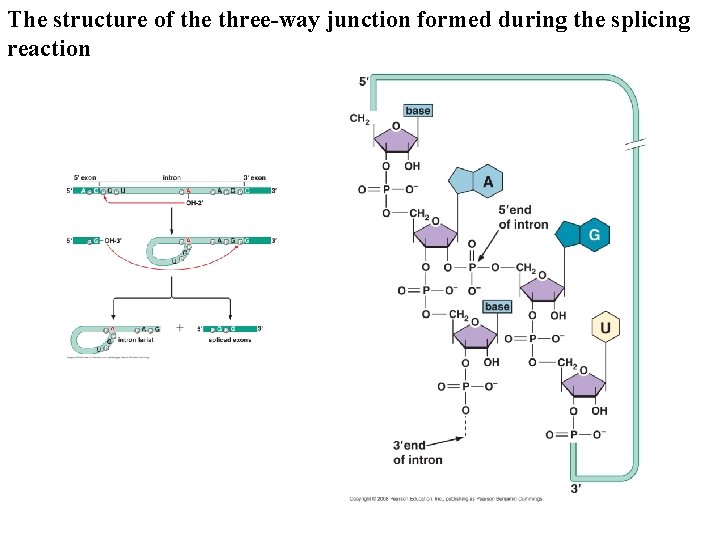
The structure of the three-way junction formed during the splicing reaction
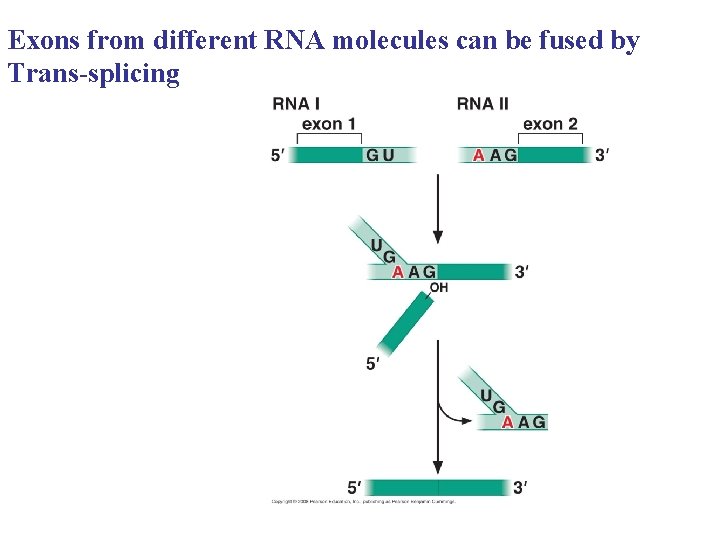
Exons from different RNA molecules can be fused by Trans-splicing
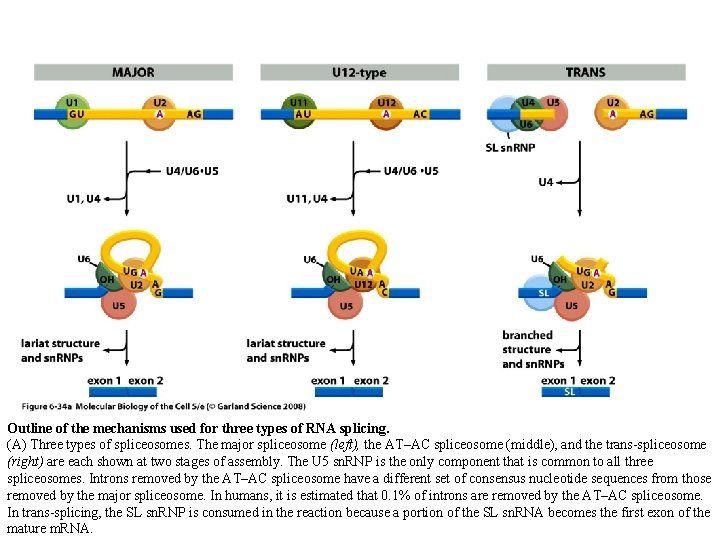
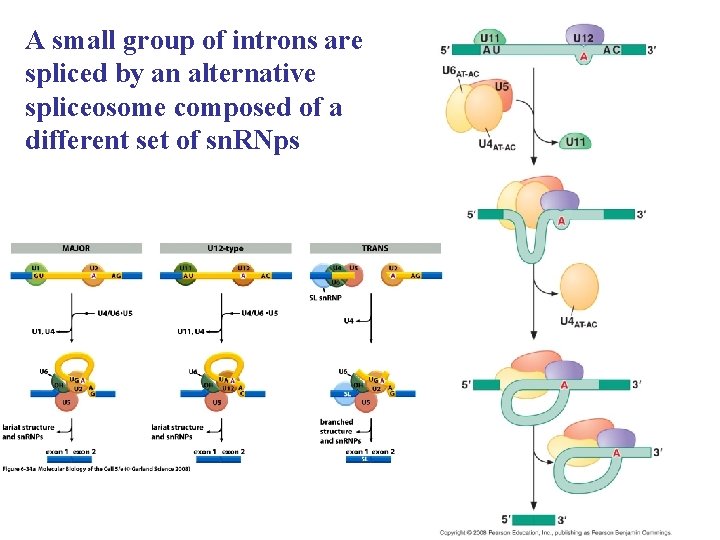
Outline of the mechanisms used for three types of RNA splicing. (A) Three types of spliceosomes. The major spliceosome (left), the AT–AC spliceosome (middle), and the trans-spliceosome (right) are each shown at two stages of assembly. The U 5 sn. RNP is the only component that is common to all three spliceosomes. Introns removed by the AT–AC spliceosome have a different set of consensus nucleotide sequences from those removed by the major spliceosome. In humans, it is estimated that 0. 1% of introns are removed by the AT–AC spliceosome. In trans-splicing, the SL sn. RNP is consumed in the reaction because a portion of the SL sn. RNA becomes the first exon of the mature m. RNA.
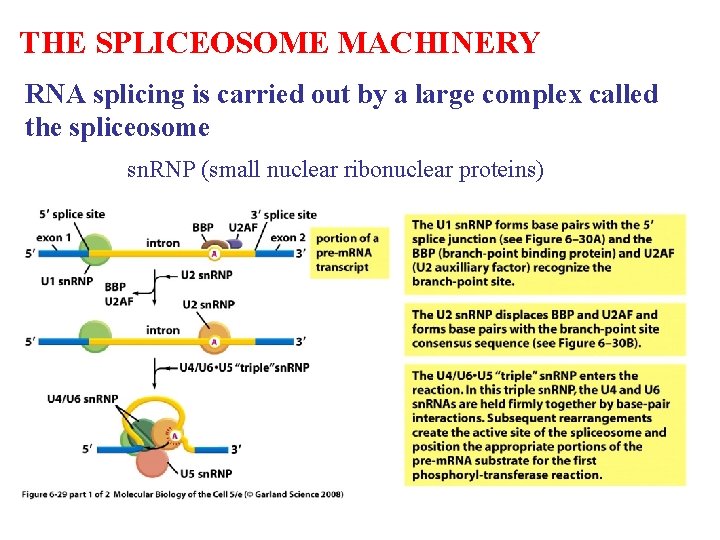
THE SPLICEOSOME MACHINERY RNA splicing is carried out by a large complex called the spliceosome sn. RNP (small nuclear ribonuclear proteins)
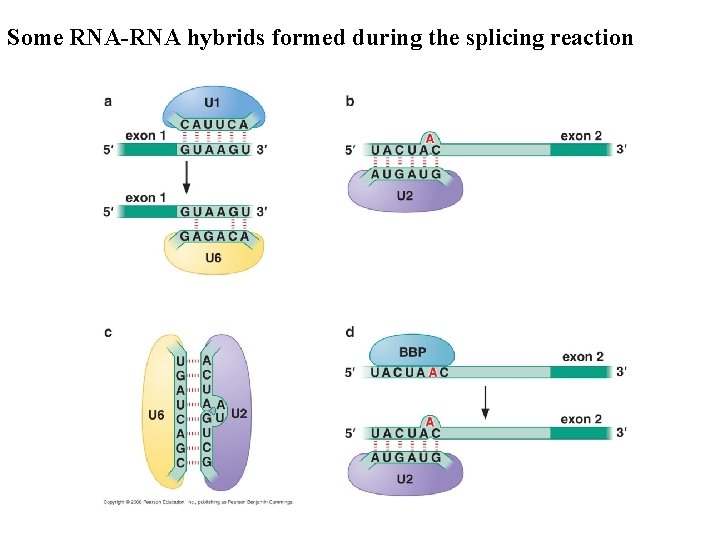
Some RNA-RNA hybrids formed during the splicing reaction
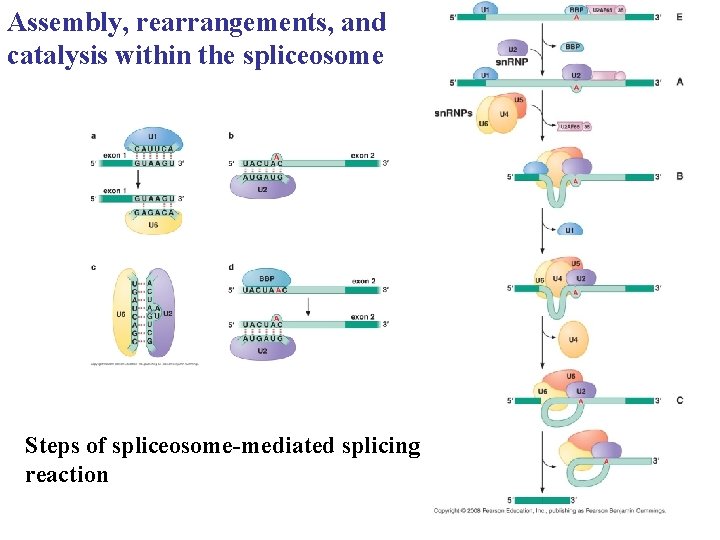
Assembly, rearrangements, and catalysis within the spliceosome Steps of spliceosome-mediated splicing reaction
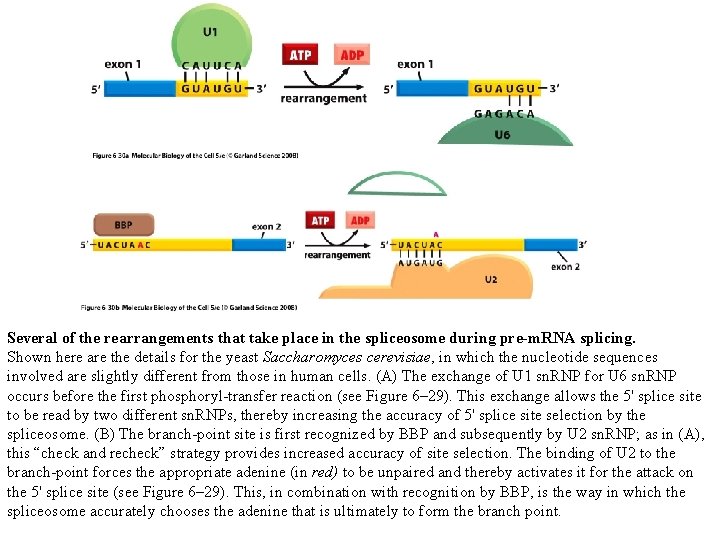
Several of the rearrangements that take place in the spliceosome during pre-m. RNA splicing. Shown here are the details for the yeast Saccharomyces cerevisiae, in which the nucleotide sequences involved are slightly different from those in human cells. (A) The exchange of U 1 sn. RNP for U 6 sn. RNP occurs before the first phosphoryl-transfer reaction (see Figure 6– 29). This exchange allows the 5' splice site to be read by two different sn. RNPs, thereby increasing the accuracy of 5' splice site selection by the spliceosome. (B) The branch-point site is first recognized by BBP and subsequently by U 2 sn. RNP; as in (A), this “check and recheck” strategy provides increased accuracy of site selection. The binding of U 2 to the branch-point forces the appropriate adenine (in red) to be unpaired and thereby activates it for the attack on the 5' splice site (see Figure 6– 29). This, in combination with recognition by BBP, is the way in which the spliceosome accurately chooses the adenine that is ultimately to form the branch point.
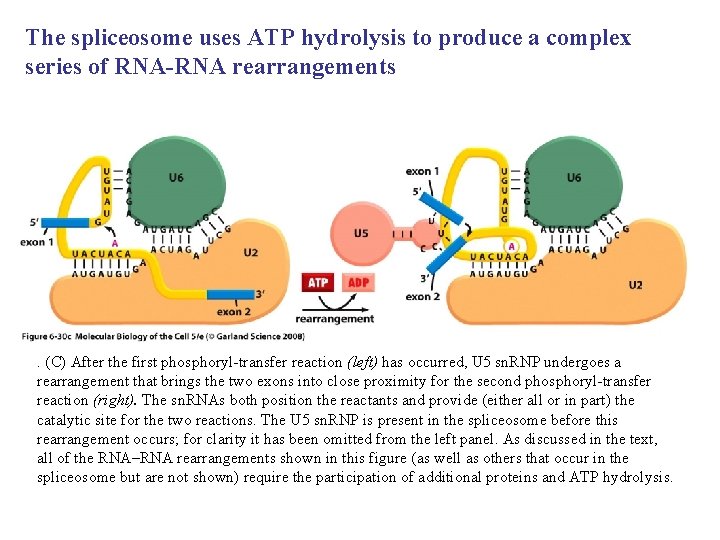
The spliceosome uses ATP hydrolysis to produce a complex series of RNA-RNA rearrangements . (C) After the first phosphoryl-transfer reaction (left) has occurred, U 5 sn. RNP undergoes a rearrangement that brings the two exons into close proximity for the second phosphoryl-transfer reaction (right). The sn. RNAs both position the reactants and provide (either all or in part) the catalytic site for the two reactions. The U 5 sn. RNP is present in the spliceosome before this rearrangement occurs; for clarity it has been omitted from the left panel. As discussed in the text, all of the RNA–RNA rearrangements shown in this figure (as well as others that occur in the spliceosome but are not shown) require the participation of additional proteins and ATP hydrolysis.
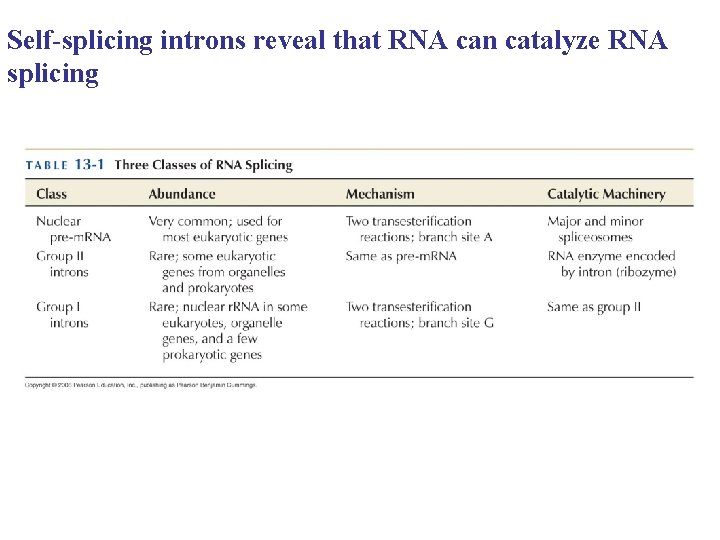
Self-splicing introns reveal that RNA can catalyze RNA splicing
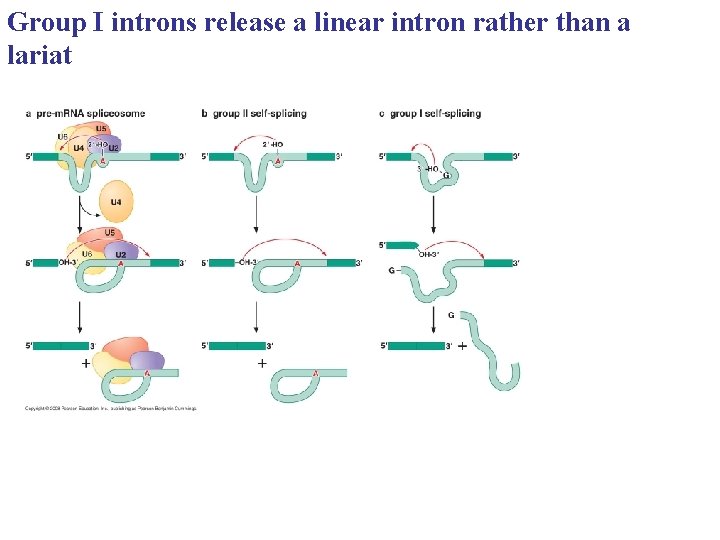
Group I introns release a linear intron rather than a lariat
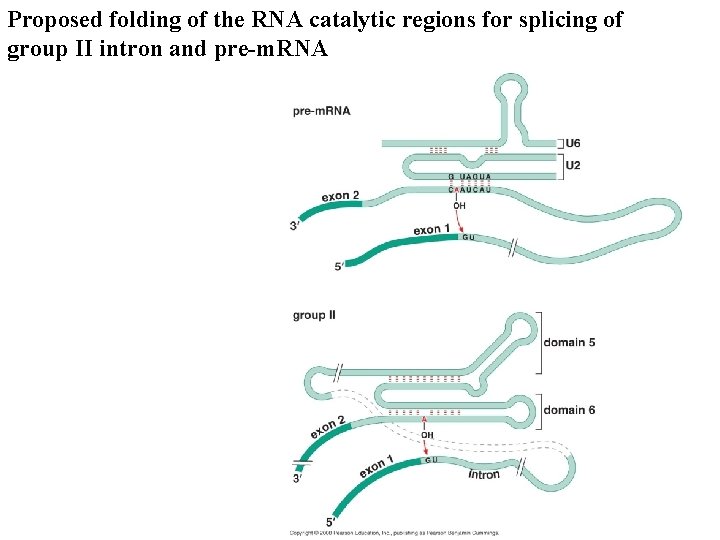
Proposed folding of the RNA catalytic regions for splicing of group II intron and pre-m. RNA
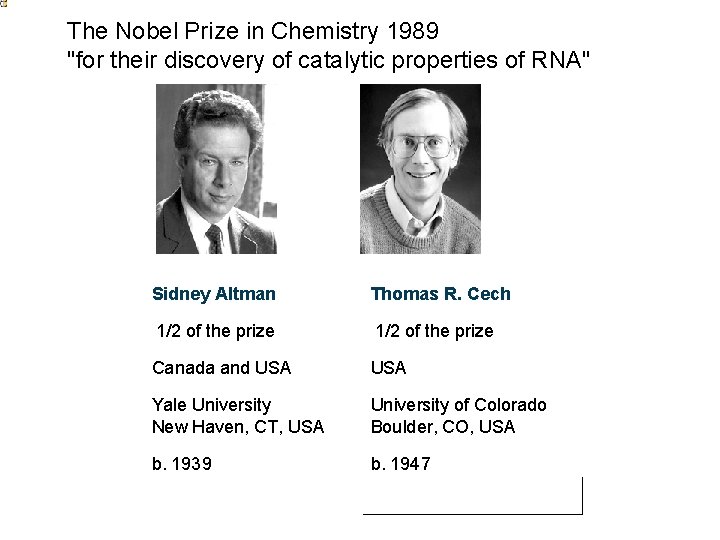
The Nobel Prize in Chemistry 1989 "for their discovery of catalytic properties of RNA" Sidney Altman Thomas R. Cech 1/2 of the prize Canada and USA Yale University New Haven, CT, USA University of Colorado Boulder, CO, USA b. 1939 b. 1947
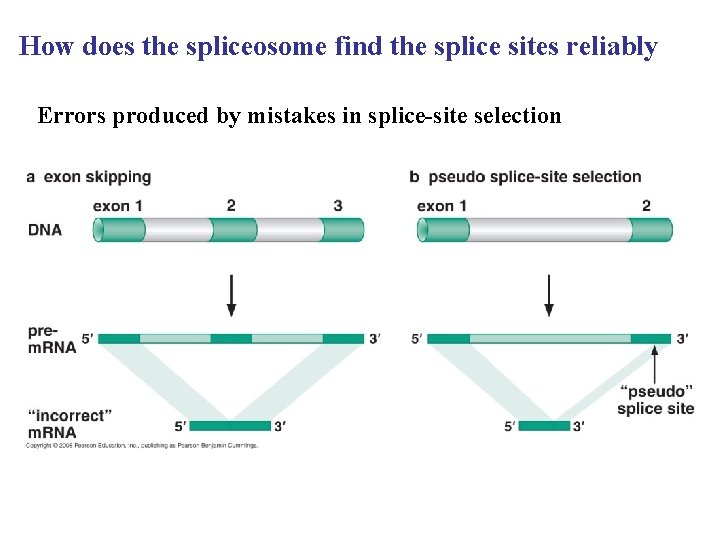
How does the spliceosome find the splice sites reliably Errors produced by mistakes in splice-site selection
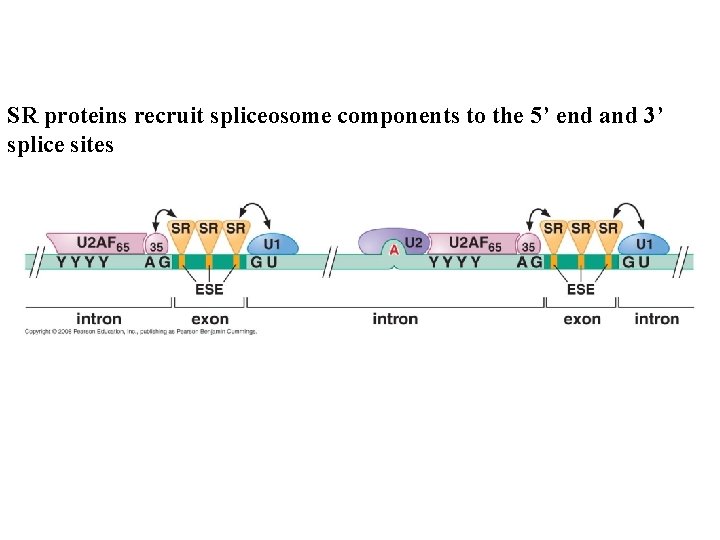
SR proteins recruit spliceosome components to the 5’ end and 3’ splice sites
A small group of introns are spliced by an alternative spliceosome composed of a different set of sn. RNps
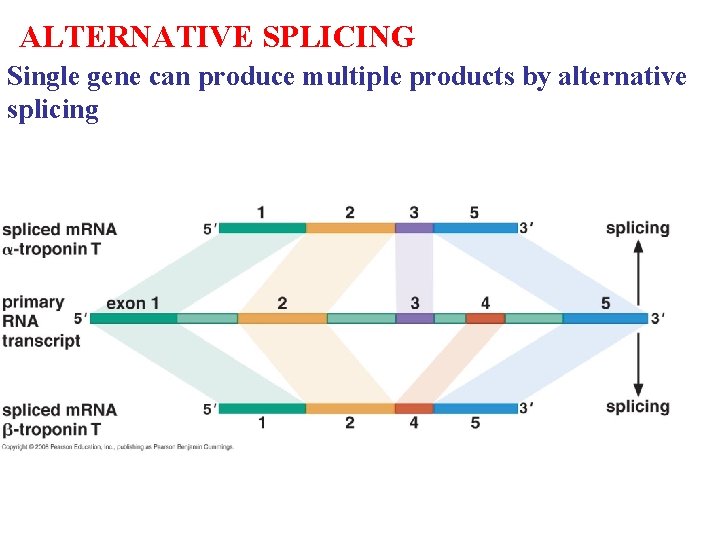
ALTERNATIVE SPLICING Single gene can produce multiple products by alternative splicing
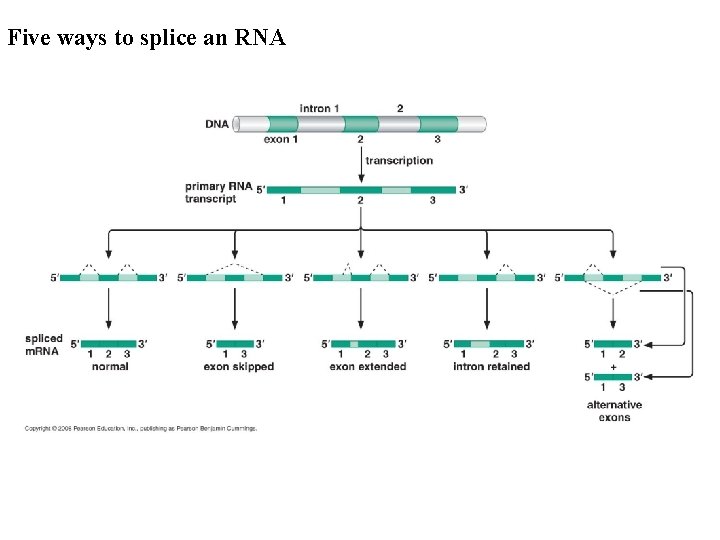
Five ways to splice an RNA
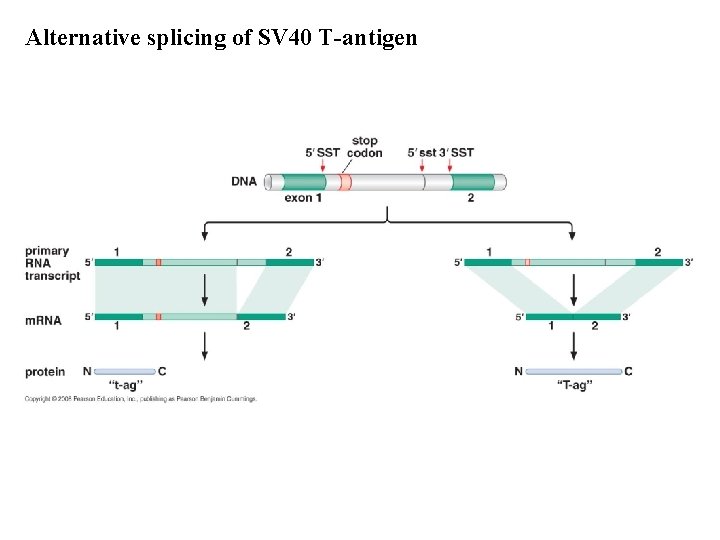
Alternative splicing of SV 40 T-antigen
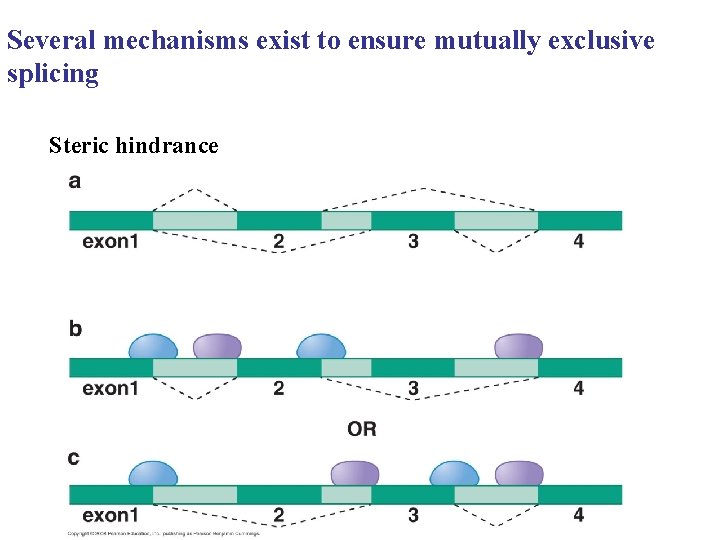
Several mechanisms exist to ensure mutually exclusive splicing Steric hindrance
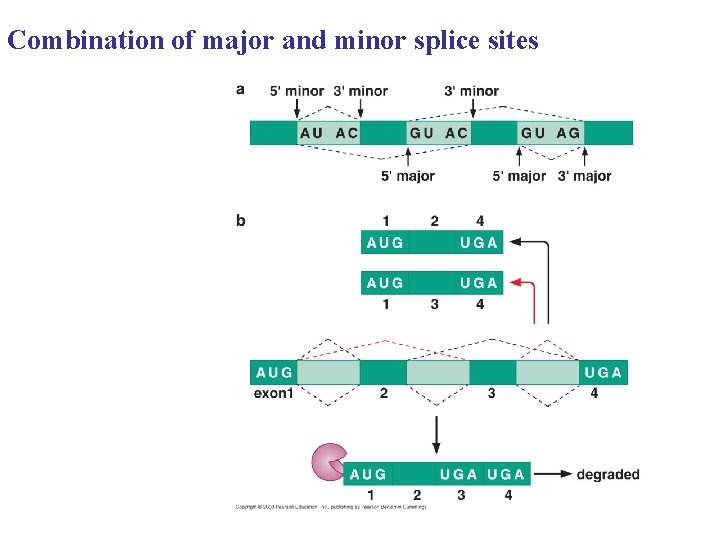
Combination of major and minor splice sites
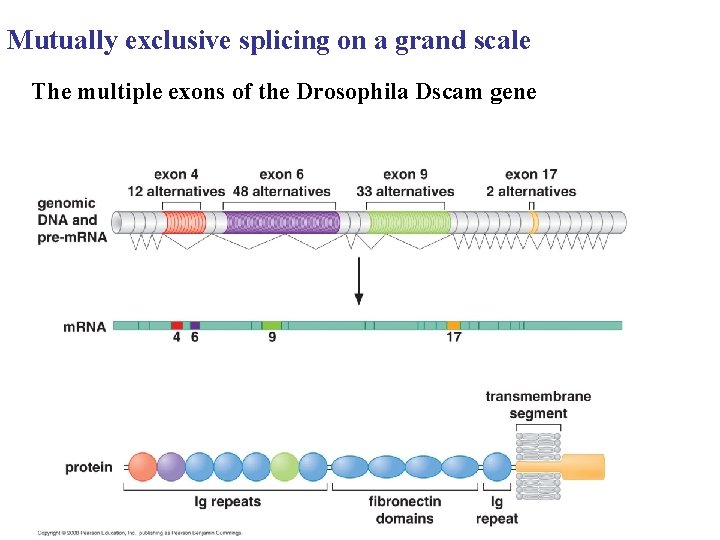
Mutually exclusive splicing on a grand scale The multiple exons of the Drosophila Dscam gene
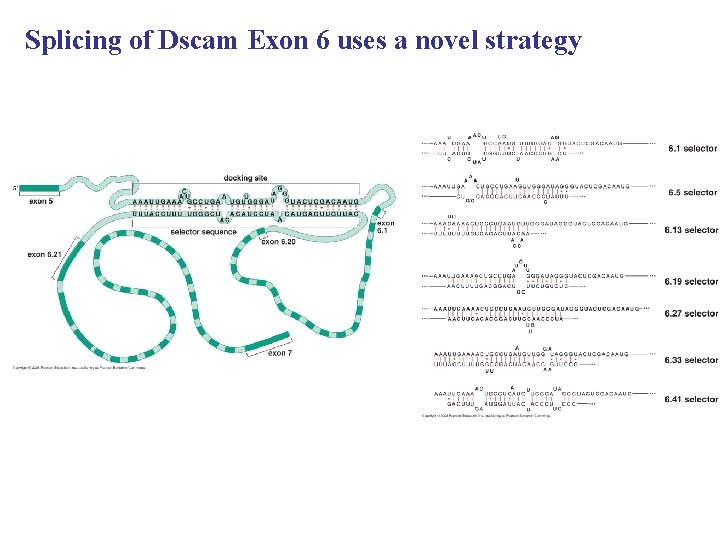
Splicing of Dscam Exon 6 uses a novel strategy
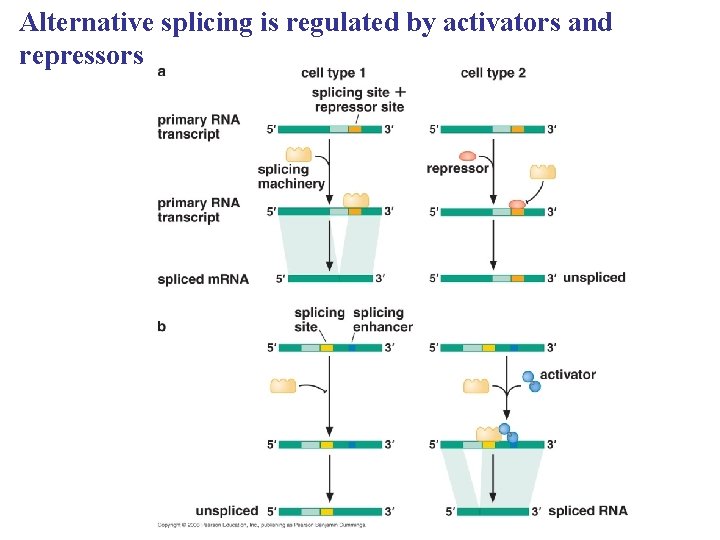
Alternative splicing is regulated by activators and repressors
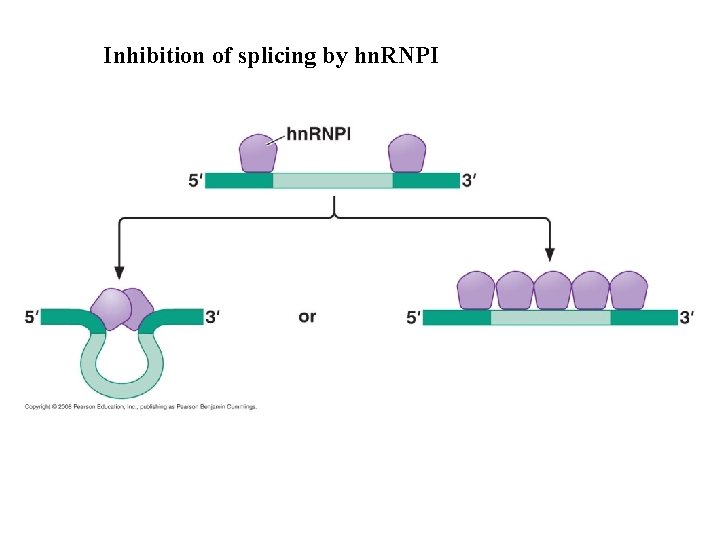
Inhibition of splicing by hn. RNPI
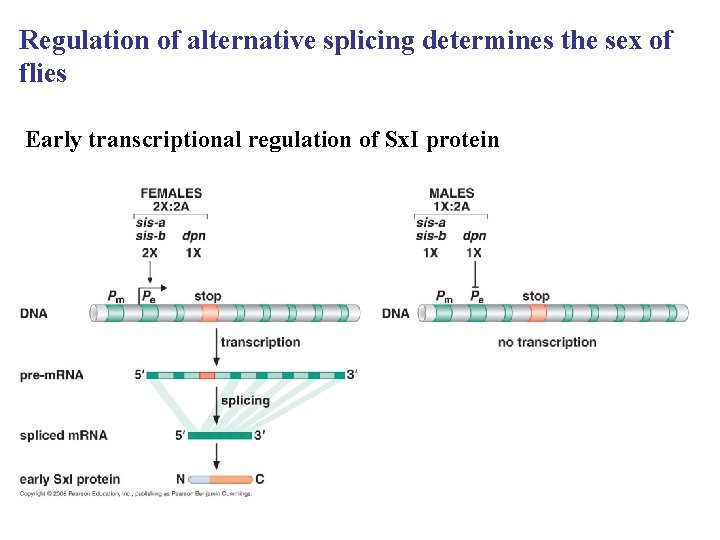
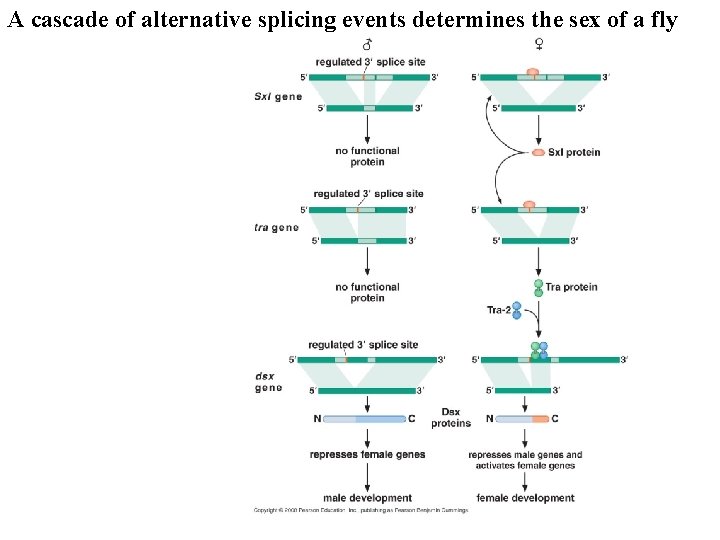
Regulation of alternative splicing determines the sex of flies Early transcriptional regulation of Sx. I protein
A cascade of alternative splicing events determines the sex of a fly
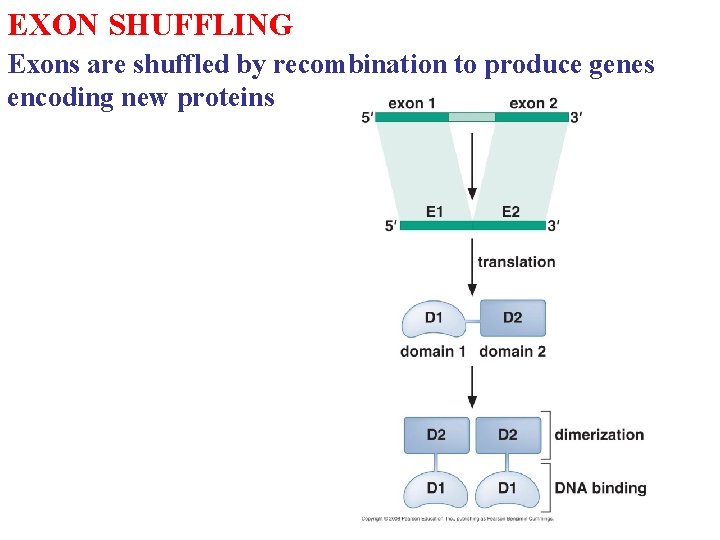
EXON SHUFFLING Exons are shuffled by recombination to produce genes encoding new proteins
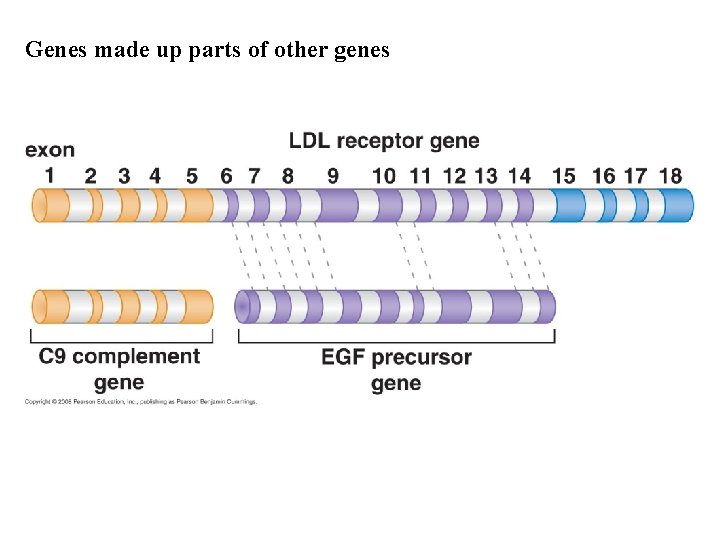
Genes made up parts of other genes
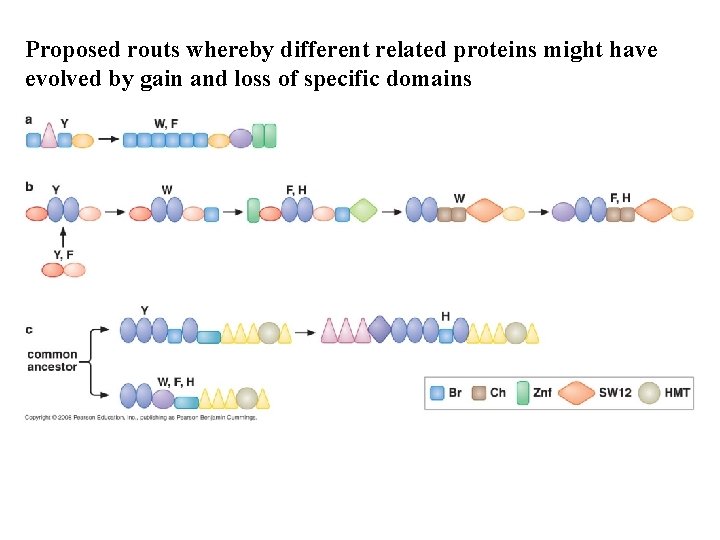
Proposed routs whereby different related proteins might have evolved by gain and loss of specific domains
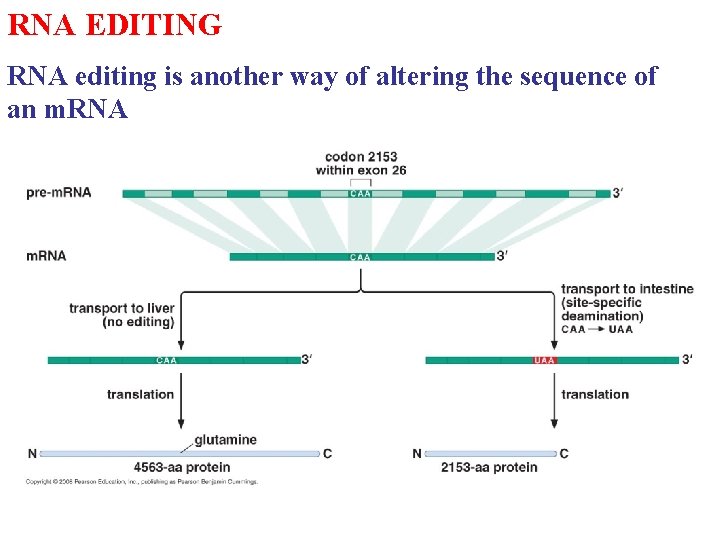
RNA EDITING RNA editing is another way of altering the sequence of an m. RNA
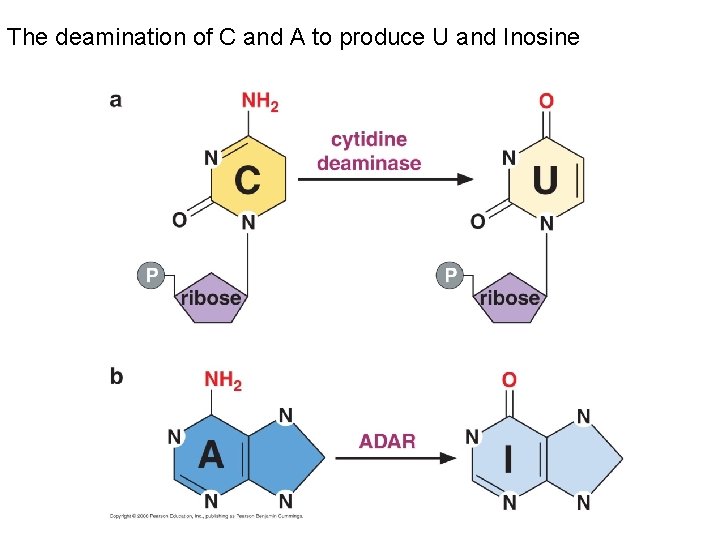
The deamination of C and A to produce U and Inosine
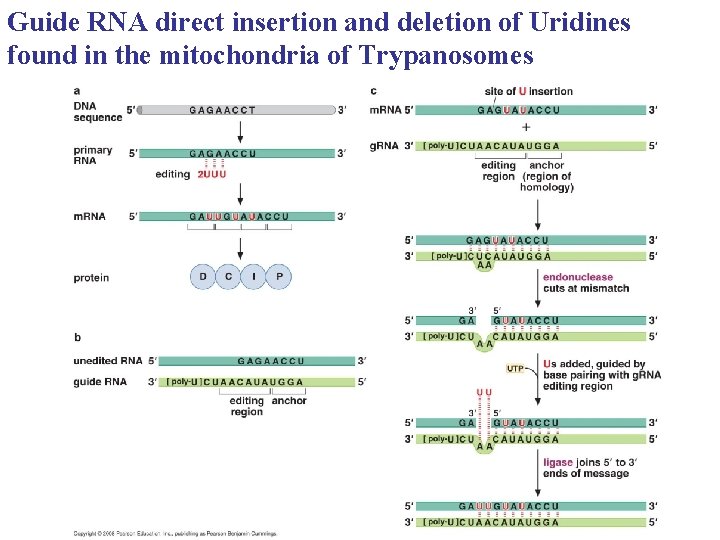
Guide RNA direct insertion and deletion of Uridines found in the mitochondria of Trypanosomes
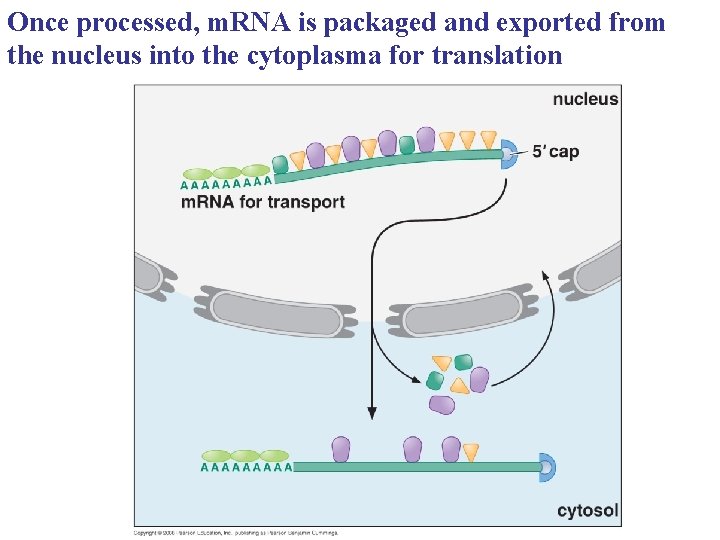
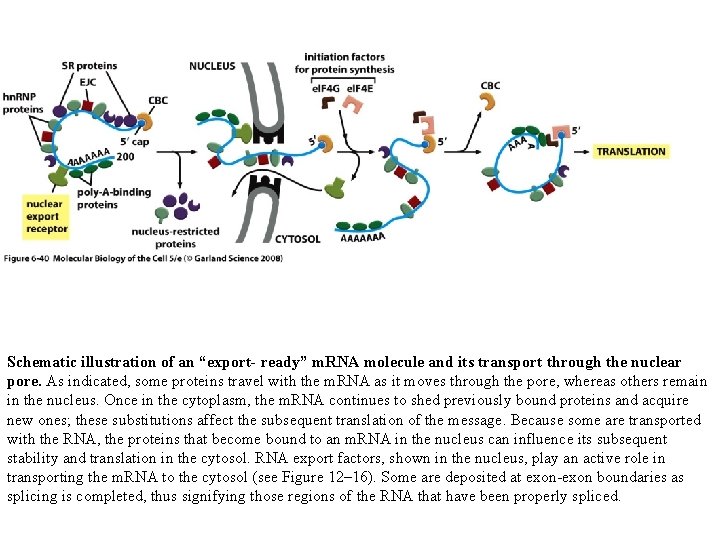
Once processed, m. RNA is packaged and exported from the nucleus into the cytoplasma for translation
Schematic illustration of an “export- ready” m. RNA molecule and its transport through the nuclear pore. As indicated, some proteins travel with the m. RNA as it moves through the pore, whereas others remain in the nucleus. Once in the cytoplasm, the m. RNA continues to shed previously bound proteins and acquire new ones; these substitutions affect the subsequent translation of the message. Because some are transported with the RNA, the proteins that become bound to an m. RNA in the nucleus can influence its subsequent stability and translation in the cytosol. RNA export factors, shown in the nucleus, play an active role in transporting the m. RNA to the cytosol (see Figure 12– 16). Some are deposited at exon-exon boundaries as splicing is completed, thus signifying those regions of the RNA that have been properly spliced.