
RNA Polymerase Binding and Initiation of Transcription Promoters
RNA Polymerase Binding and Initiation of Transcription • Promoters signal the initiation of RNA synthesis • Transcription factors mediate the binding of RNA polymerase and the initiation of transcription • The completed assembly of transcription factors and RNA polymerase II bound to a promoter is called a transcription initiation complex • A promoter called a TATA box is crucial in forming the initiation complex in eukaryotes Copyright © 2008 Pearson Education Inc. , publishing as Pearson Benjamin Cummings
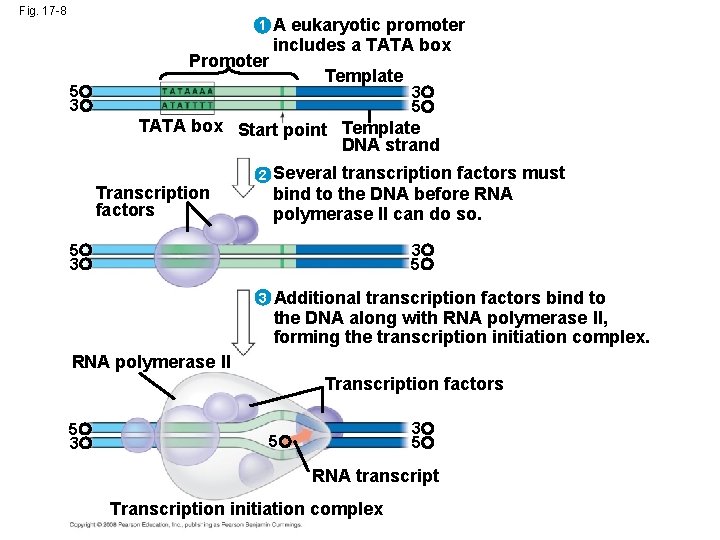
Fig. 17 -8 1 Promoter A eukaryotic promoter includes a TATA box Template 5 3 3 5 TATA box Start point Template DNA strand 2 Transcription factors Several transcription factors must bind to the DNA before RNA polymerase II can do so. 5 3 3 5 3 Additional transcription factors bind to the DNA along with RNA polymerase II, forming the transcription initiation complex. RNA polymerase II Transcription factors 5 3 3 5 5 RNA transcript Transcription initiation complex
Elongation of the RNA Strand • As RNA polymerase moves along the DNA, it untwists the double helix, 10 to 20 bases at a time • Transcription progresses at a rate of 40 nucleotides per second in eukaryotes • A gene can be transcribed simultaneously by several RNA polymerases Copyright © 2008 Pearson Education Inc. , publishing as Pearson Benjamin Cummings
Termination of Transcription • The mechanisms of termination are different in bacteria and eukaryotes • In bacteria, the polymerase stops transcription at the end of the terminator • In eukaryotes, the polymerase continues transcription after the pre-m. RNA is cleaved from the growing RNA chain; the polymerase eventually falls off the DNA Copyright © 2008 Pearson Education Inc. , publishing as Pearson Benjamin Cummings
Concept 17. 3: Eukaryotic cells modify RNA after transcription • Enzymes in the eukaryotic nucleus modify prem. RNA before the genetic messages are dispatched to the cytoplasm • During RNA processing, both ends of the primary transcript are usually altered • Also, usually some interior parts of the molecule are cut out, and the other parts spliced together Copyright © 2008 Pearson Education Inc. , publishing as Pearson Benjamin Cummings
Alteration of m. RNA Ends • Each end of a pre-m. RNA molecule is modified in a particular way: – The 5 end receives a modified nucleotide 5 cap – The 3 end gets a poly-A tail • These modifications share several functions: – They seem to facilitate the export of m. RNA – They protect m. RNA from hydrolytic enzymes – They help ribosomes attach to the 5 end Copyright © 2008 Pearson Education Inc. , publishing as Pearson Benjamin Cummings
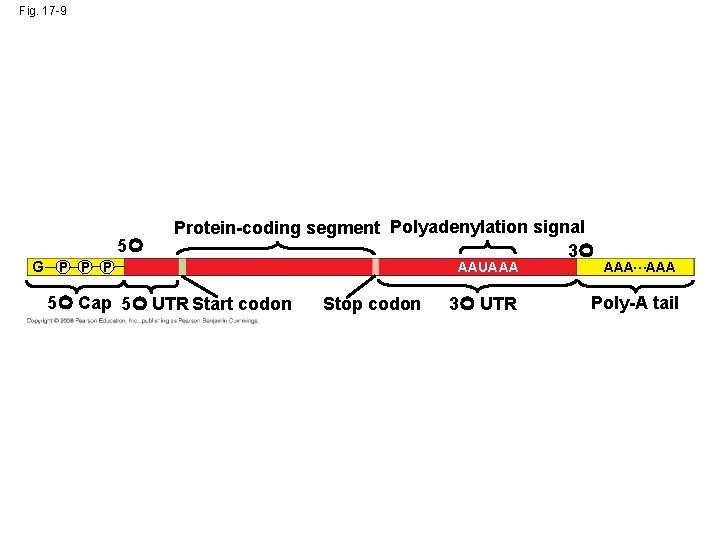
Fig. 17 -9 5 G P Protein-coding segment Polyadenylation signal 3 5 Cap 5 UTR Start codon Stop codon AAUAAA AAA…AAA 3 UTR Poly-A tail
Split Genes and RNA Splicing • Most eukaryotic genes and their RNA transcripts have long noncoding stretches of nucleotides that lie between coding regions • These noncoding regions are called intervening sequences, or introns • The other regions are called exons because they are eventually expressed, usually translated into amino acid sequences • RNA splicing removes introns and joins exons, creating an m. RNA molecule with a continuous coding sequence Copyright © 2008 Pearson Education Inc. , publishing as Pearson Benjamin Cummings
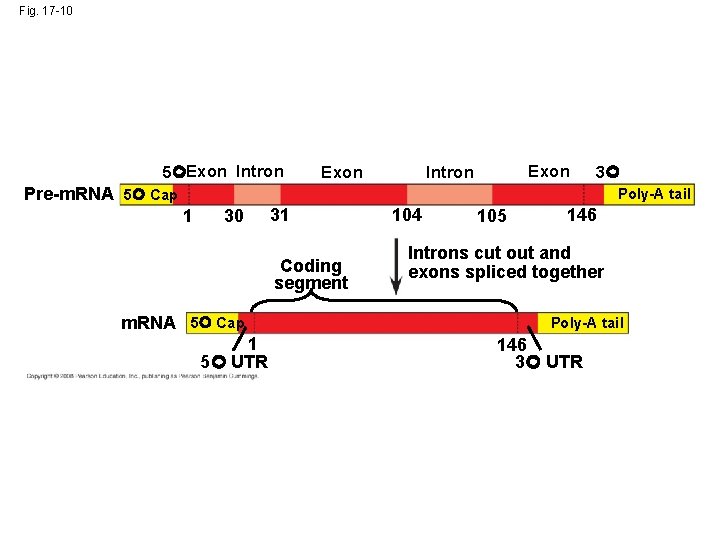
Fig. 17 -10 5 Exon Intron 3 Pre-m. RNA 5 Cap Poly-A tail 1 30 31 Coding segment m. RNA 5 Cap 1 5 UTR 104 105 146 Introns cut out and exons spliced together Poly-A tail 146 3 UTR
• In some cases, RNA splicing is carried out by spliceosomes • Spliceosomes consist of a variety of proteins and several small nuclear ribonucleoproteins (sn. RNPs) that recognize the splice sites Copyright © 2008 Pearson Education Inc. , publishing as Pearson Benjamin Cummings
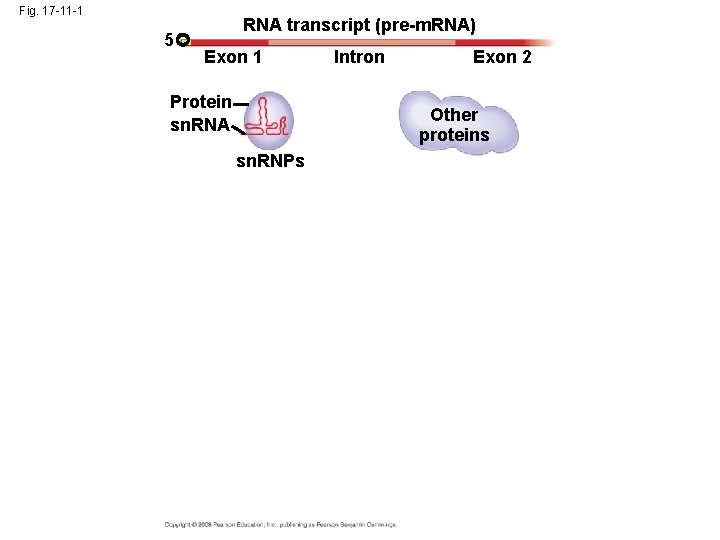
Fig. 17 -11 -1 5 RNA transcript (pre-m. RNA) Exon 1 Protein sn. RNA Intron Exon 2 Other proteins sn. RNPs
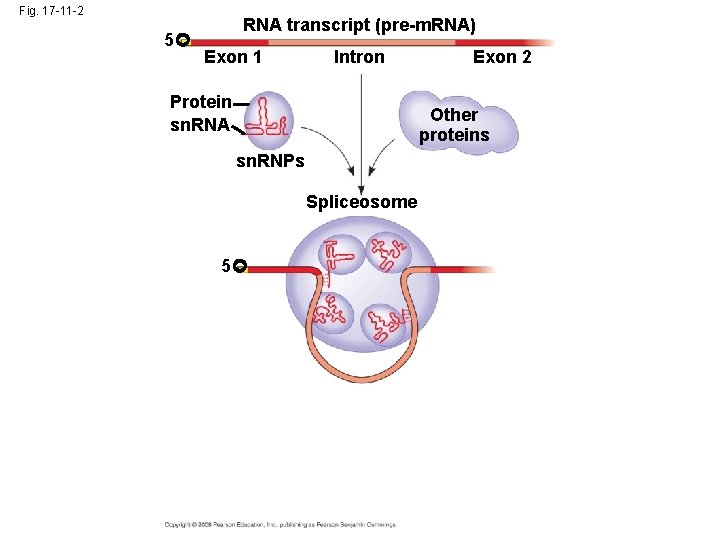
Fig. 17 -11 -2 5 RNA transcript (pre-m. RNA) Exon 1 Intron Protein sn. RNA Exon 2 Other proteins sn. RNPs Spliceosome 5
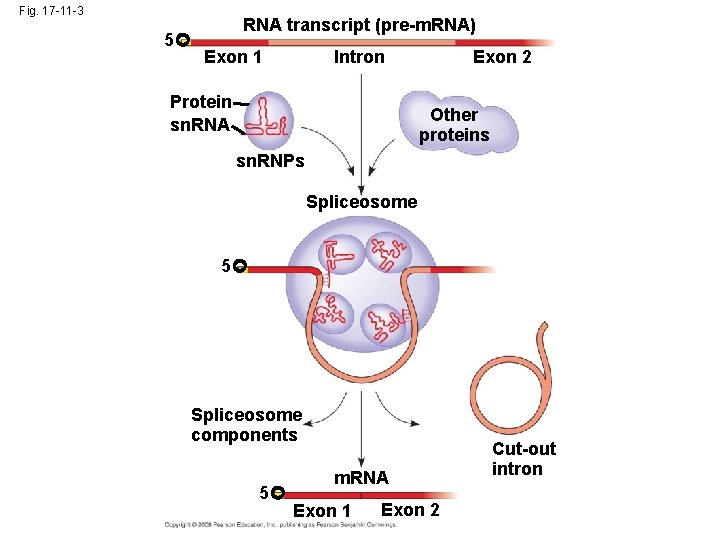
Fig. 17 -11 -3 5 RNA transcript (pre-m. RNA) Exon 1 Intron Protein sn. RNA Exon 2 Other proteins sn. RNPs Spliceosome 5 Spliceosome components 5 m. RNA Exon 1 Exon 2 Cut-out intron
Ribozymes • Ribozymes are catalytic RNA molecules that function as enzymes and can splice RNA • The discovery of ribozymes rendered obsolete the belief that all biological catalysts were proteins Copyright © 2008 Pearson Education Inc. , publishing as Pearson Benjamin Cummings
• Three properties of RNA enable it to function as an enzyme – It can form a three-dimensional structure because of its ability to base pair with itself – Some bases in RNA contain functional groups – RNA may hydrogen-bond with other nucleic acid molecules Copyright © 2008 Pearson Education Inc. , publishing as Pearson Benjamin Cummings
The Functional and Evolutionary Importance of Introns • Some genes can encode more than one kind of polypeptide, depending on which segments are treated as exons during RNA splicing • Such variations are called alternative RNA splicing • Because of alternative splicing, the number of different proteins an organism can produce is much greater than its number of genes Copyright © 2008 Pearson Education Inc. , publishing as Pearson Benjamin Cummings

• Proteins often have a modular architecture consisting of discrete regions called domains • In many cases, different exons code for the different domains in a protein • Exon shuffling may result in the evolution of new proteins Copyright © 2008 Pearson Education Inc. , publishing as Pearson Benjamin Cummings
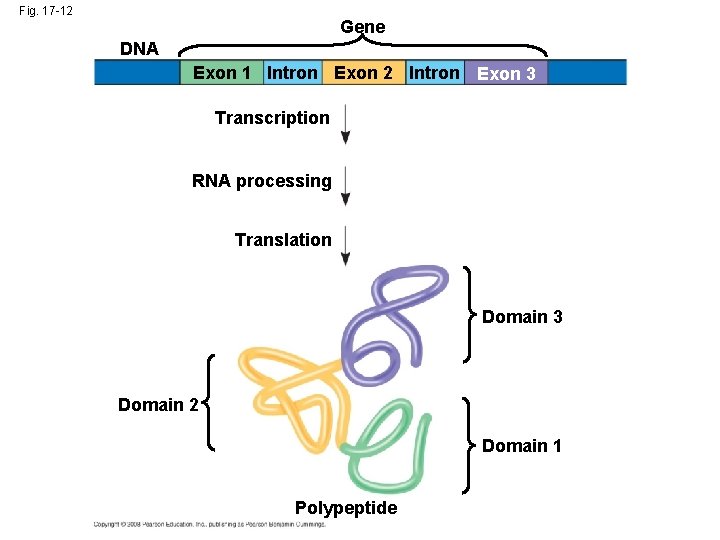
Fig. 17 -12 Gene DNA Exon 1 Intron Exon 2 Intron Exon 3 Transcription RNA processing Translation Domain 3 Domain 2 Domain 1 Polypeptide
Concept 17. 4: Translation is the RNA-directed synthesis of a polypeptide: a closer look • The translation of m. RNA to protein can be examined in more detail Copyright © 2008 Pearson Education Inc. , publishing as Pearson Benjamin Cummings
Molecular Components of Translation • A cell translates an m. RNA message into protein with the help of transfer RNA (t. RNA) • Molecules of t. RNA are not identical: – Each carries a specific amino acid on one end – Each has an anticodon on the other end; the anticodon base-pairs with a complementary codon on m. RNA Bio. Flix: Protein Synthesis Copyright © 2008 Pearson Education Inc. , publishing as Pearson Benjamin Cummings
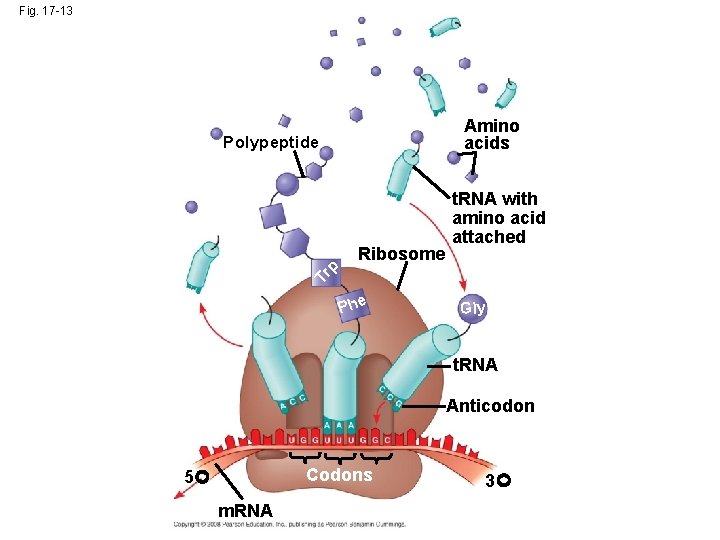
Fig. 17 -13 Amino acids Polypeptide Tr p Ribosome t. RNA with amino acid attached Phe Gly t. RNA Anticodon Codons 5 m. RNA 3
The Structure and Function of Transfer RNA • A t. RNA molecule consists of a single RNA A C strand that is only about 80 nucleotides long C • Flattened into one plane to reveal its base pairing, a t. RNA molecule looks like a cloverleaf Copyright © 2008 Pearson Education Inc. , publishing as Pearson Benjamin Cummings
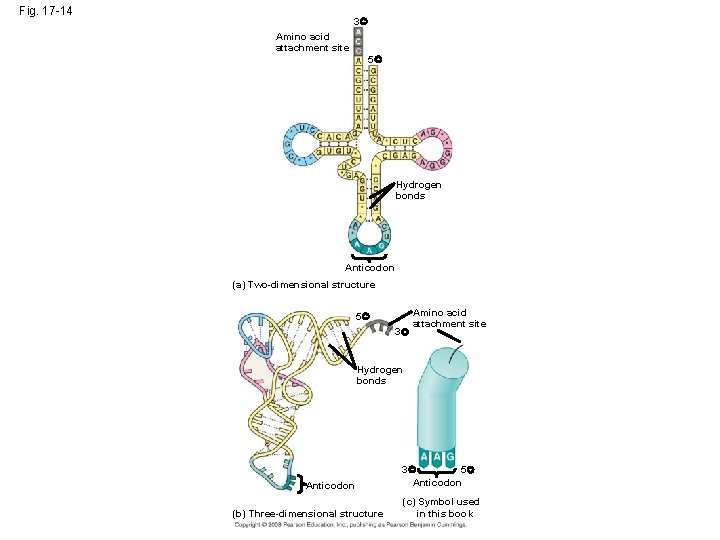
Fig. 17 -14 3 Amino acid attachment site 5 Hydrogen bonds Anticodon (a) Two-dimensional structure 5 3 Amino acid attachment site Hydrogen bonds Anticodon (b) Three-dimensional structure 3 5 Anticodon (c) Symbol used in this book
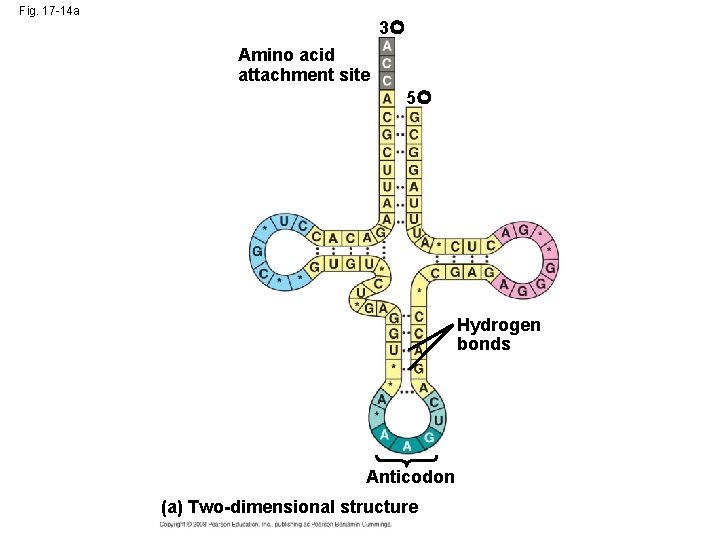
Fig. 17 -14 a 3 Amino acid attachment site 5 Hydrogen bonds Anticodon (a) Two-dimensional structure
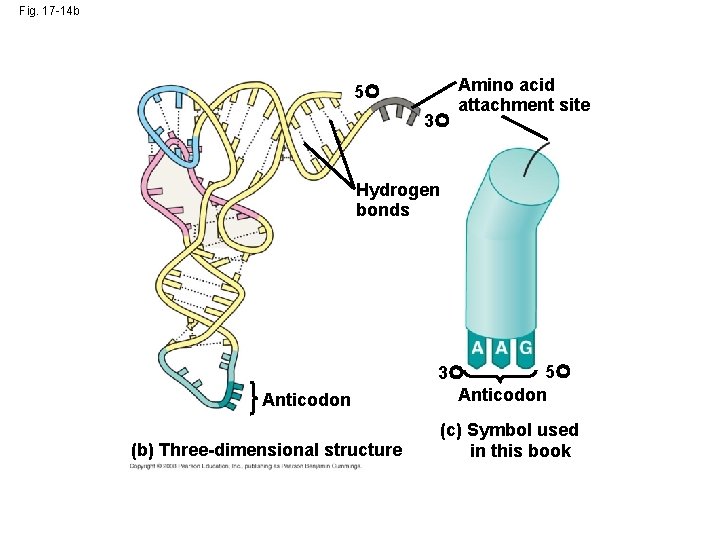
Fig. 17 -14 b 5 3 Amino acid attachment site Hydrogen bonds Anticodon (b) Three-dimensional structure 5 3 Anticodon (c) Symbol used in this book
• Because of hydrogen bonds, t. RNA actually twists and folds into a three-dimensional molecule • t. RNA is roughly L-shaped Copyright © 2008 Pearson Education Inc. , publishing as Pearson Benjamin Cummings
• Accurate translation requires two steps: – First: a correct match between a t. RNA and an amino acid, done by the enzyme aminoacylt. RNA synthetase – Second: a correct match between the t. RNA anticodon and an m. RNA codon • Flexible pairing at the third base of a codon is called wobble and allows some t. RNAs to bind to more than one codon Copyright © 2008 Pearson Education Inc. , publishing as Pearson Benjamin Cummings
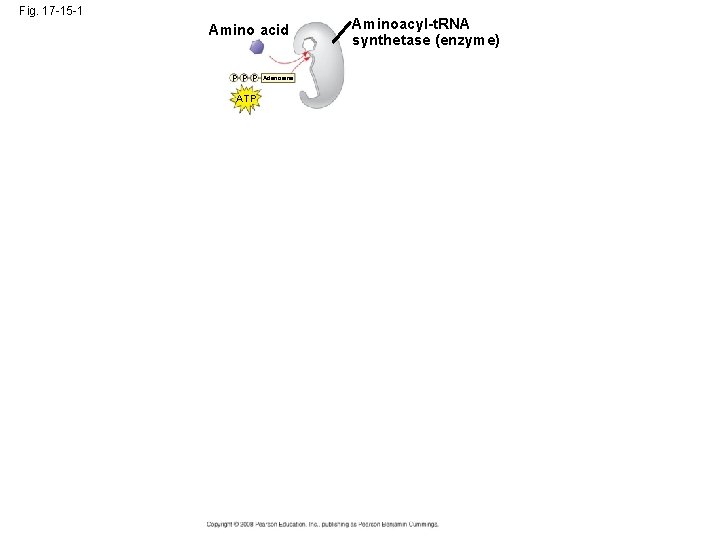
Fig. 17 -15 -1 Amino acid P P P ATP Adenosine Aminoacyl-t. RNA synthetase (enzyme)
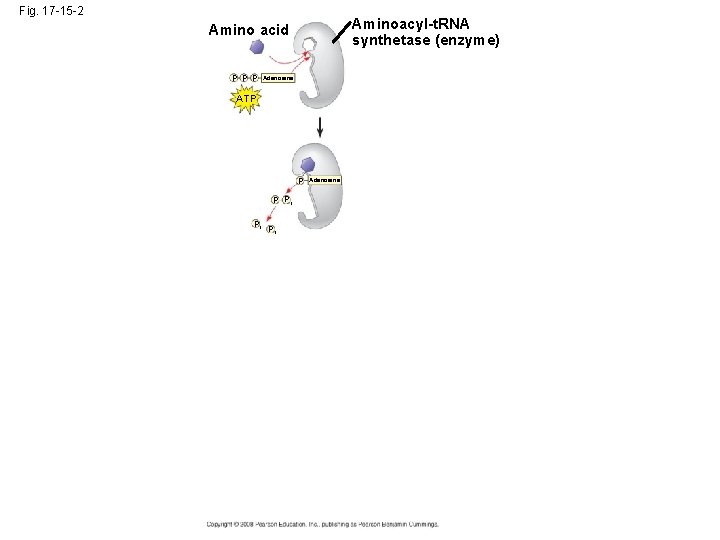
Fig. 17 -15 -2 Aminoacyl-t. RNA synthetase (enzyme) Amino acid P P P Adenosine ATP P P Pi Pi Pi Adenosine
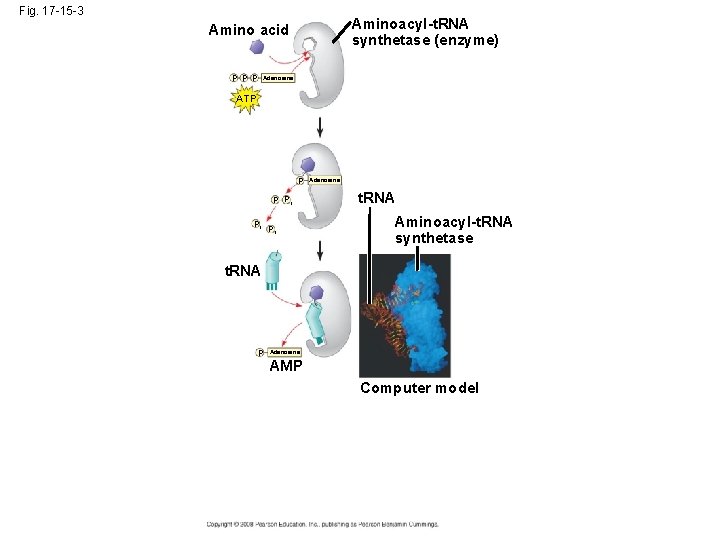
Fig. 17 -15 -3 Aminoacyl-t. RNA synthetase (enzyme) Amino acid P P P Adenosine ATP P P Pi Pi Pi Adenosine t. RNA Aminoacyl-t. RNA synthetase t. RNA P Adenosine AMP Computer model
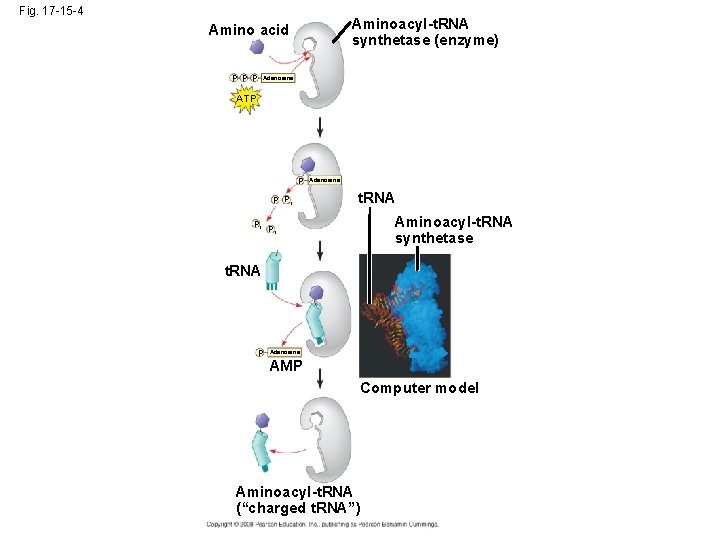
Fig. 17 -15 -4 Aminoacyl-t. RNA synthetase (enzyme) Amino acid P P P Adenosine ATP P P Pi Pi Adenosine t. RNA Aminoacyl-t. RNA synthetase Pi t. RNA P Adenosine AMP Computer model Aminoacyl-t. RNA (“charged t. RNA”)
Ribosomes • Ribosomes facilitate specific coupling of t. RNA anticodons with m. RNA codons in protein synthesis • The two ribosomal subunits (large and small) are made of proteins and ribosomal RNA (r. RNA) Copyright © 2008 Pearson Education Inc. , publishing as Pearson Benjamin Cummings
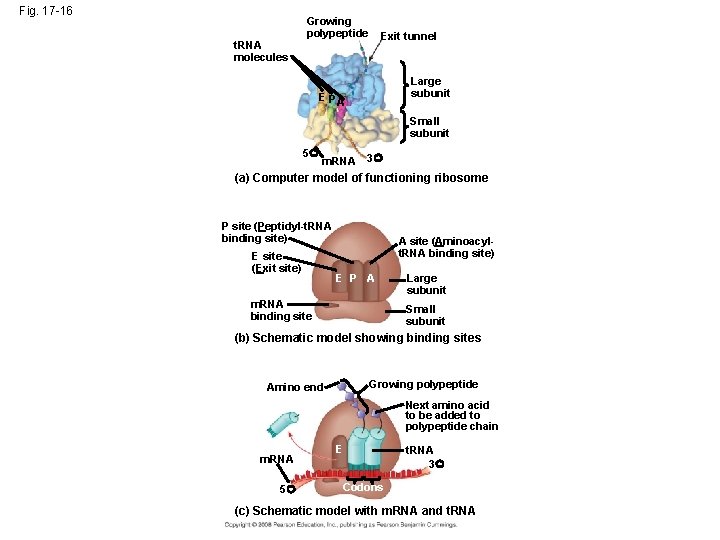
Fig. 17 -16 Growing polypeptide Exit tunnel t. RNA molecules EP Large subunit A Small subunit 5 m. RNA 3 (a) Computer model of functioning ribosome P site (Peptidyl-t. RNA binding site) E site (Exit site) A site (Aminoacylt. RNA binding site) E P A m. RNA binding site Large subunit Small subunit (b) Schematic model showing binding sites Growing polypeptide Amino end Next amino acid to be added to polypeptide chain m. RNA 5 E t. RNA 3 Codons (c) Schematic model with m. RNA and t. RNA
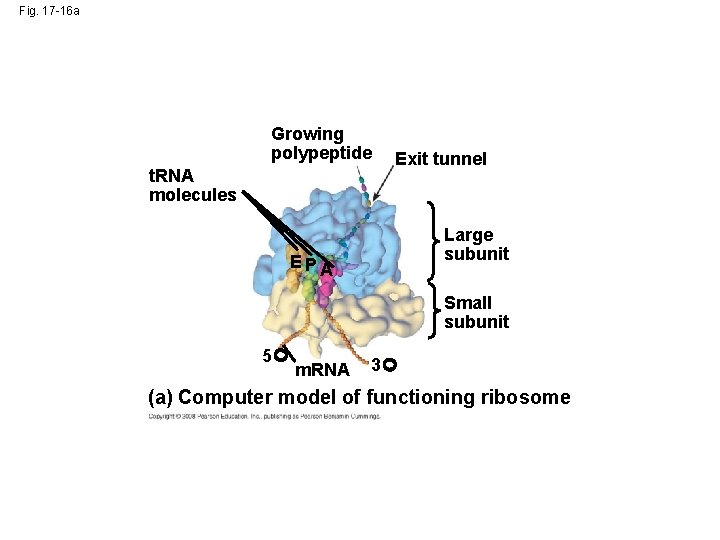
Fig. 17 -16 a Growing polypeptide t. RNA molecules Exit tunnel Large subunit E PA Small subunit 5 m. RNA 3 (a) Computer model of functioning ribosome
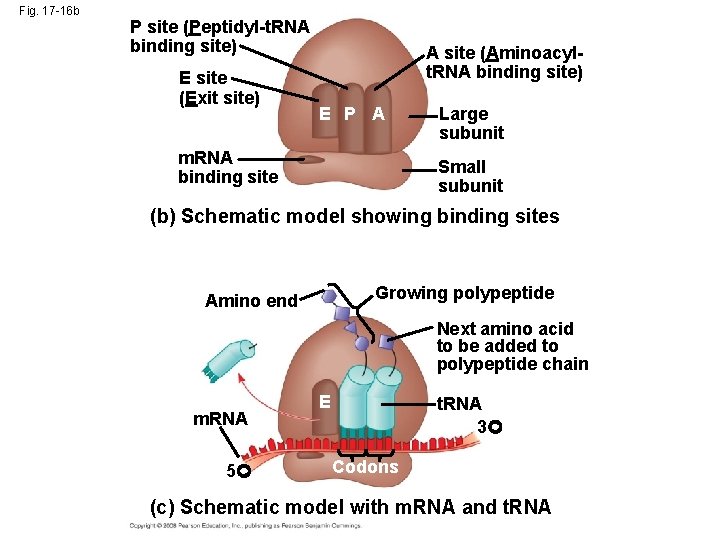
Fig. 17 -16 b P site (Peptidyl-t. RNA binding site) E site (Exit site) A site (Aminoacylt. RNA binding site) E P A m. RNA binding site Large subunit Small subunit (b) Schematic model showing binding sites Growing polypeptide Amino end Next amino acid to be added to polypeptide chain m. RNA 5 E t. RNA 3 Codons (c) Schematic model with m. RNA and t. RNA
• A ribosome has three binding sites for t. RNA: – The P site holds the t. RNA that carries the growing polypeptide chain – The A site holds the t. RNA that carries the next amino acid to be added to the chain – The E site is the exit site, where discharged t. RNAs leave the ribosome Copyright © 2008 Pearson Education Inc. , publishing as Pearson Benjamin Cummings
Building a Polypeptide • The three stages of translation: – Initiation – Elongation – Termination • All three stages require protein “factors” that aid in the translation process Copyright © 2008 Pearson Education Inc. , publishing as Pearson Benjamin Cummings
What Is a Gene? Revisiting the Question • The idea of the gene itself is a unifying concept of life • We have considered a gene as: – A discrete unit of inheritance – A region of specific nucleotide sequence in a chromosome – A DNA sequence that codes for a specific polypeptide chain Copyright © 2008 Pearson Education Inc. , publishing as Pearson Benjamin Cummings
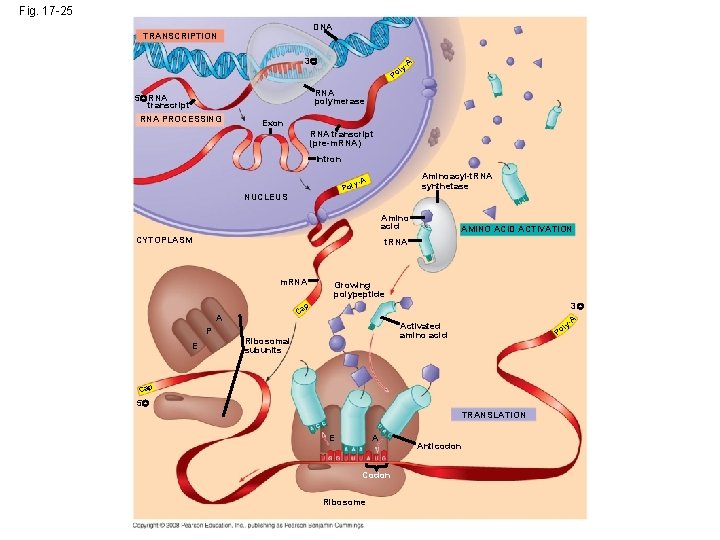
Fig. 17 -25 DNA TRANSCRIPTION 3 l Po A y- RNA polymerase 5 RNA transcript RNA PROCESSING Exon RNA transcript (pre-m. RNA) Intron Aminoacyl-t. RNA synthetase y-A Pol NUCLEUS Amino acid CYTOPLASM AMINO ACID ACTIVATION t. RNA m. RNA Growing polypeptide 3 p Ca A P E A y- Activated amino acid Ribosomal subunits l Po Cap 5 TRANSLATION E A Codon Ribosome Anticodon
- Slides: 39