
RNA and RNA world WHICH CAME FIRST THE

- Slides: 41
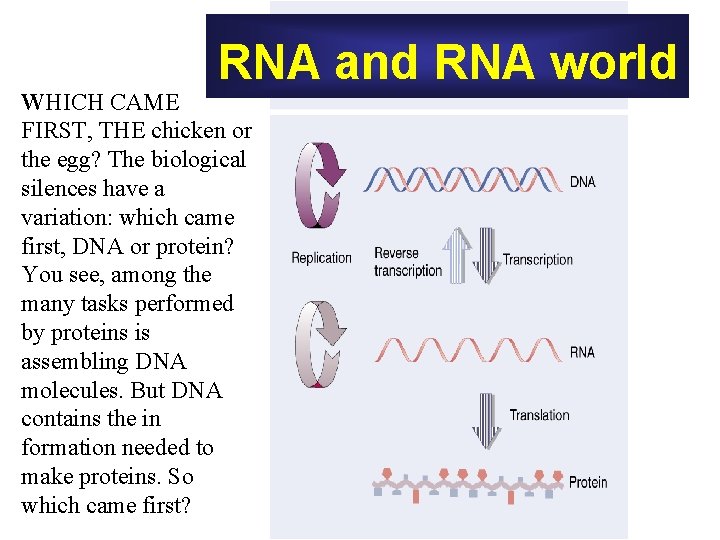
RNA and RNA world WHICH CAME FIRST, THE chicken or the egg? The biological silences have a variation: which came first, DNA or protein? You see, among the many tasks performed by proteins is assembling DNA molecules. But DNA contains the in formation needed to make proteins. So which came first?
Transcription
• Transcription-the synthesis of RNA using DNA as a template. • Four stages: Initiation, Elongation, Termination, Post-transcriptional modification
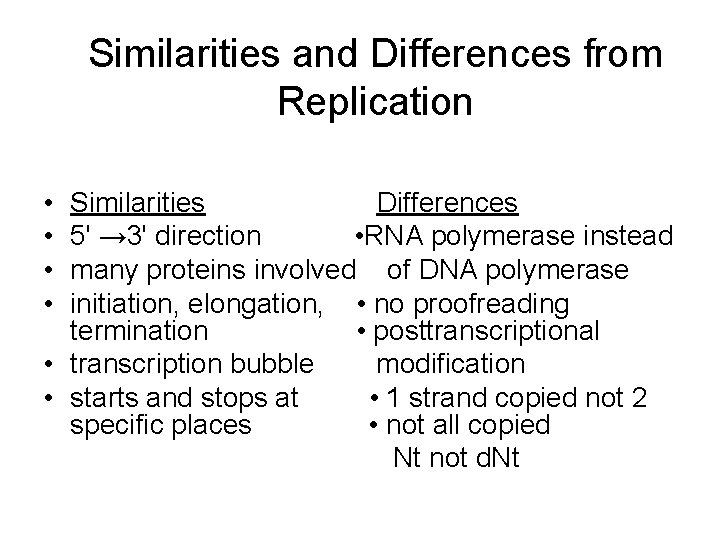
Similarities and Differences from Replication • • Similarities Differences 5' → 3' direction • RNA polymerase instead many proteins involved of DNA polymerase initiation, elongation, • no proofreading termination • posttranscriptional • transcription bubble modification • starts and stops at • 1 strand copied not 2 specific places • not all copied Nt not d. Nt
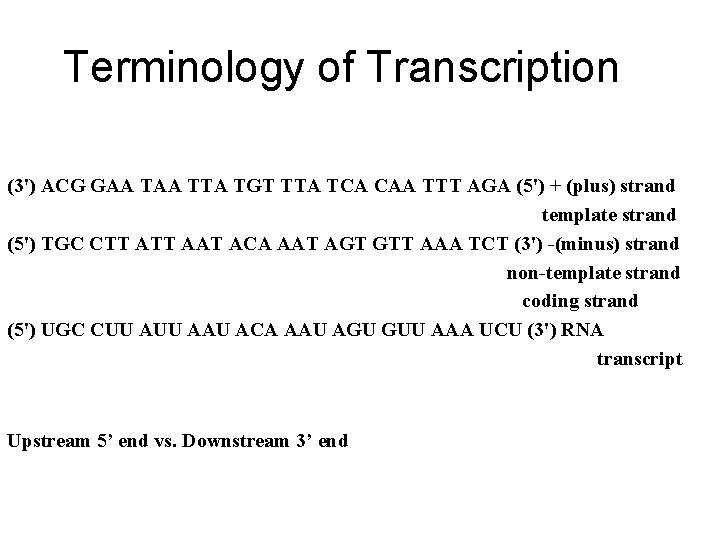
Terminology of Transcription (3') ACG GAA TTA TGT TTA TCA CAA TTT AGA (5') + (plus) strand template strand (5') TGC CTT AAT ACA AAT AGT GTT AAA TCT (3') -(minus) strand non-template strand coding strand (5') UGC CUU AAU ACA AAU AGU GUU AAA UCU (3') RNA transcript Upstream 5’ end vs. Downstream 3’ end
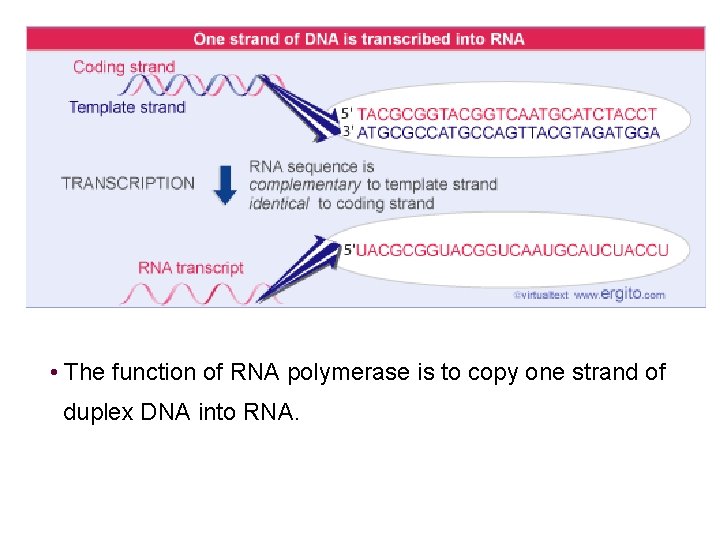
• The function of RNA polymerase is to copy one strand of duplex DNA into RNA.
Transcription in prokaryotes
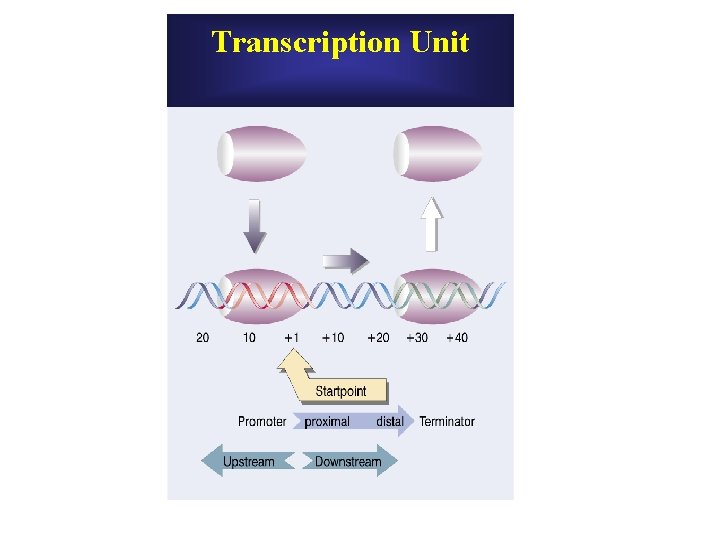
Transcription Unit
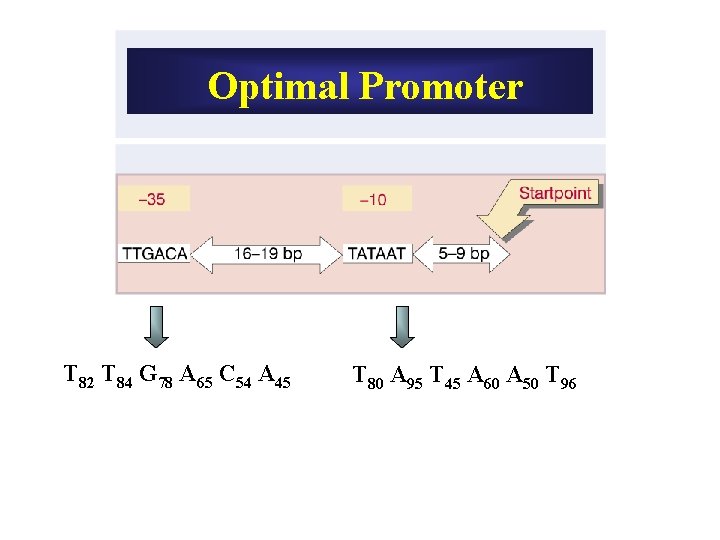
Optimal Promoter T 82 T 84 G 78 A 65 C 54 A 45 T 80 A 95 T 45 A 60 A 50 T 96
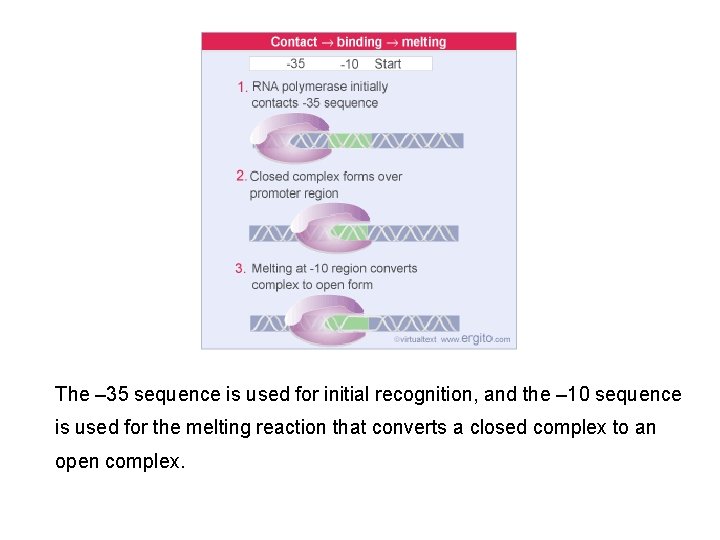
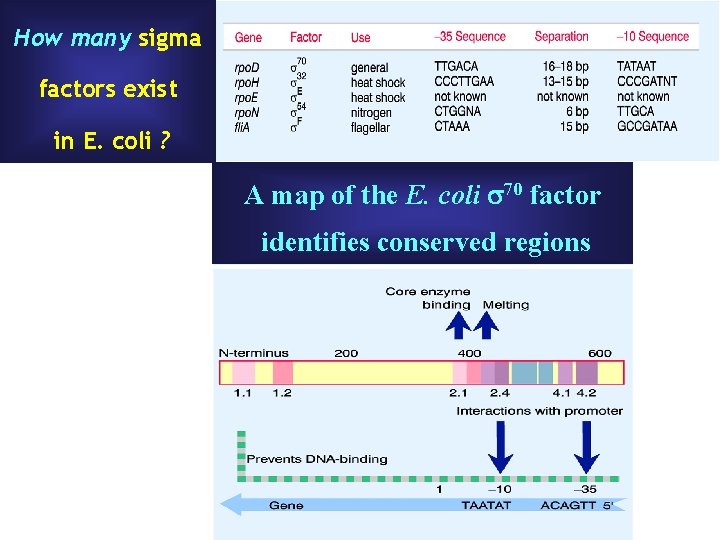
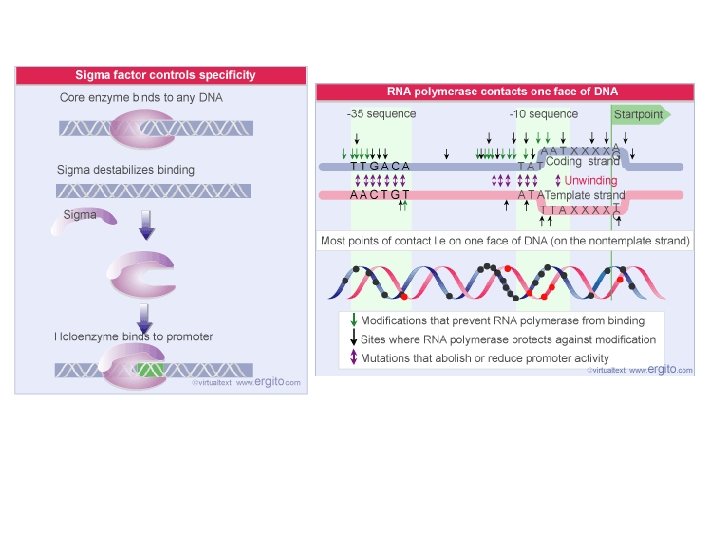
The – 35 sequence is used for initial recognition, and the – 10 sequence is used for the melting reaction that converts a closed complex to an open complex.
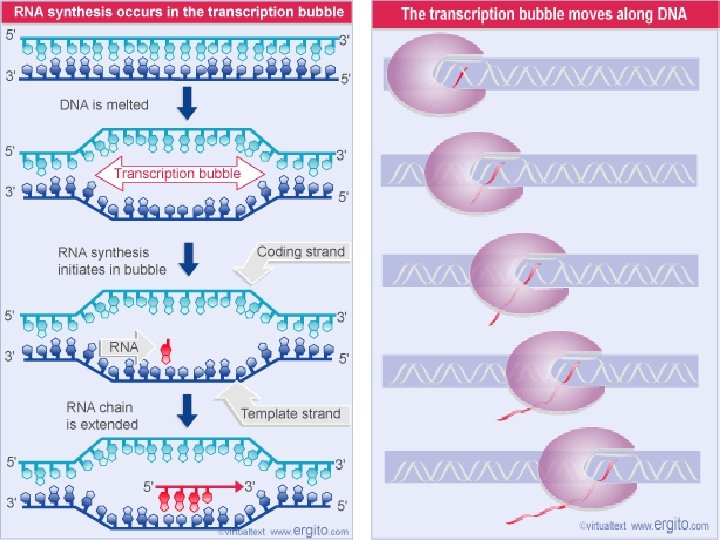
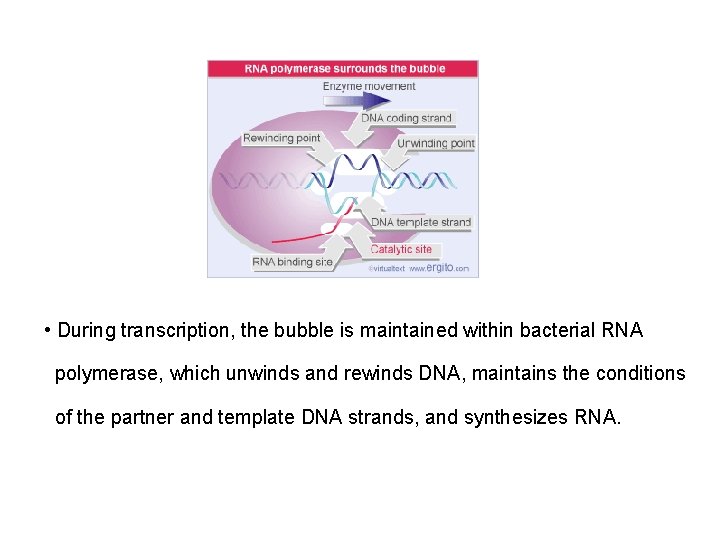
• During transcription, the bubble is maintained within bacterial RNA polymerase, which unwinds and rewinds DNA, maintains the conditions of the partner and template DNA strands, and synthesizes RNA.
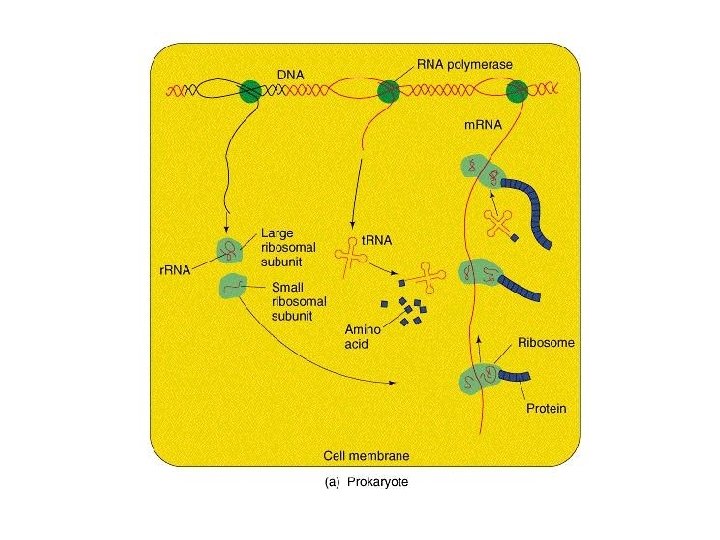
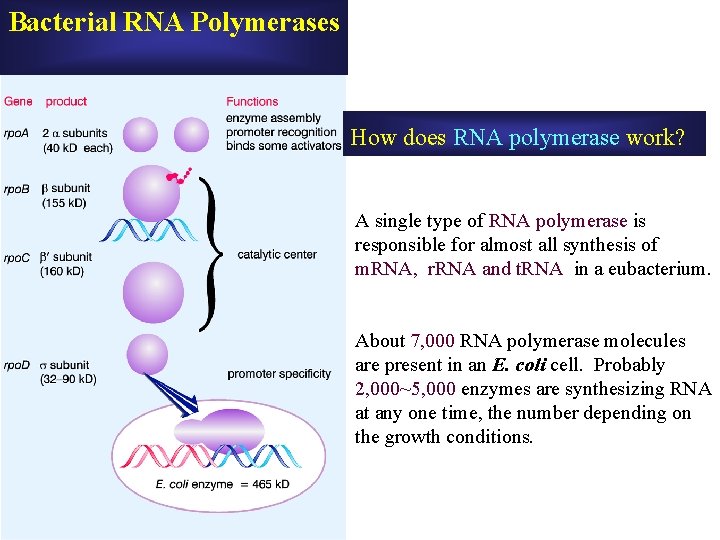
Bacterial RNA Polymerases How does RNA polymerase work? A single type of RNA polymerase is responsible for almost all synthesis of m. RNA, r. RNA and t. RNA in a eubacterium. About 7, 000 RNA polymerase molecules are present in an E. coli cell. Probably 2, 000~5, 000 enzymes are synthesizing RNA at any one time, the number depending on the growth conditions.
How many sigma factors exist in E. coli ? A map of the E. coli s 70 factor identifies conserved regions
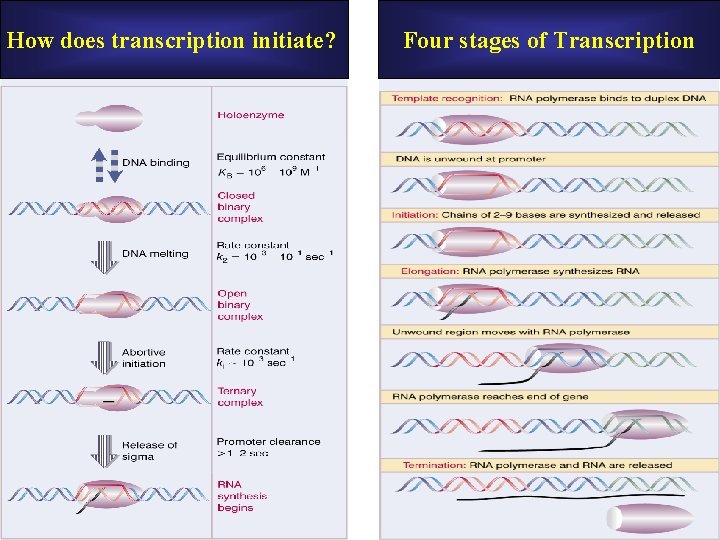
How does transcription initiate? Four stages of Transcription
Termination • Rho (ρ)-dependent vs. ρ-independent
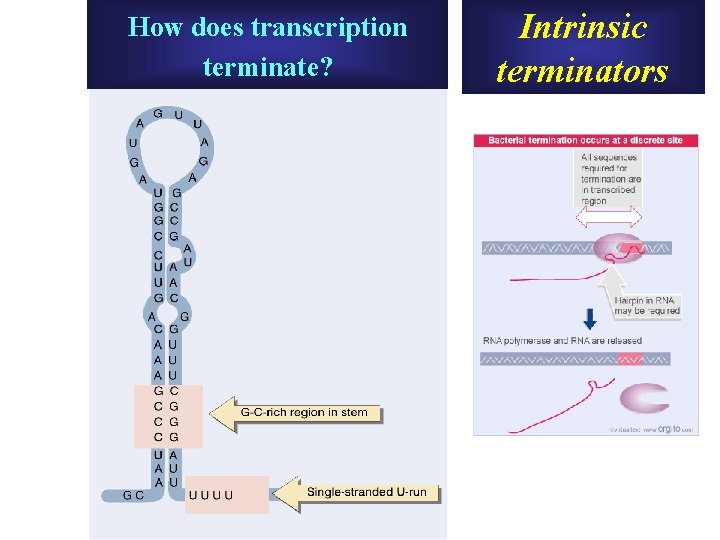
How does transcription terminate? Intrinsic terminators
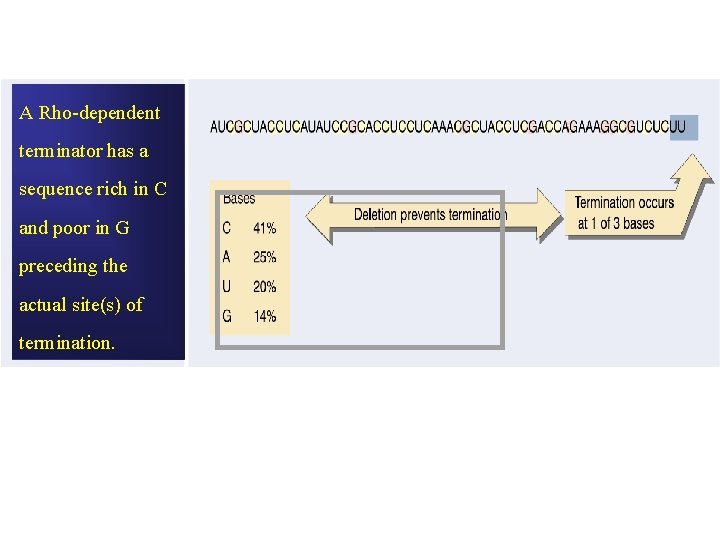
A Rho-dependent terminator has a sequence rich in C and poor in G preceding the actual site(s) of termination.
• ρ-Dependent Termination • A hairpin forms • if protein called ρis present, polymerase detaches • Dissociation is somehow coupled to ATP hydrolysis
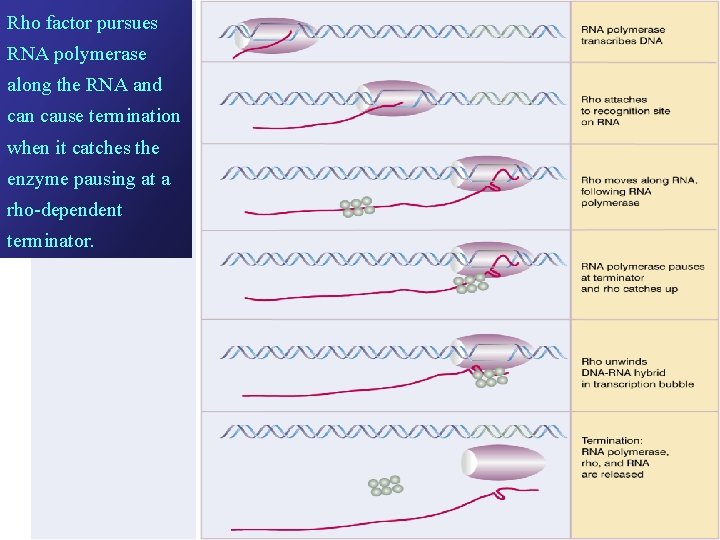
Rho factor pursues RNA polymerase along the RNA and can cause termination when it catches the enzyme pausing at a rho-dependent terminator.
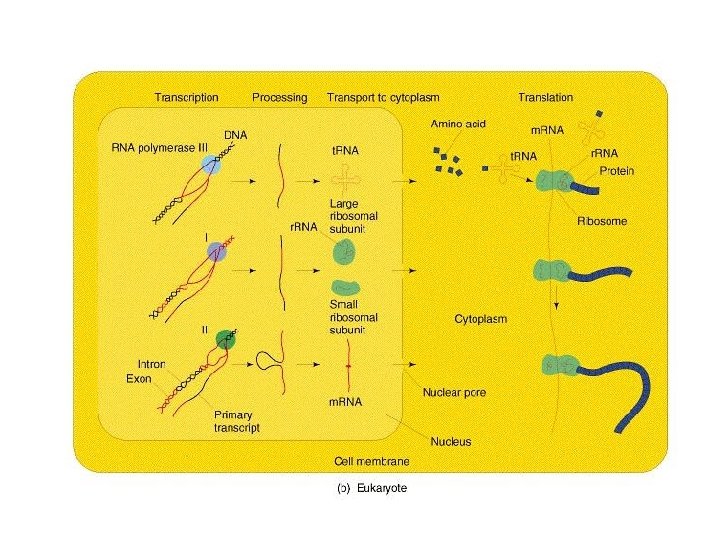
Transcription in Eukaryotes • RNA polymerase I transcribes r. RNA • RNA polymerase II transcribes m. RNA • RNA polymerase III transcribes t. RNA and other small RNAs.
Animal RNA Polymerases • Animal DNA-dependent RNA Polymerases • Class α-amantin sensitivity Major Products • I Insensitive r. RNA • II Low Conc. (1 -10 n. M) hn. RNA • III High conc. t. RNA, 5 S RNA and small RNAs • All have in common 2 large subunits and a number of smaller subunits, as well as being zinc metalloenzymes.
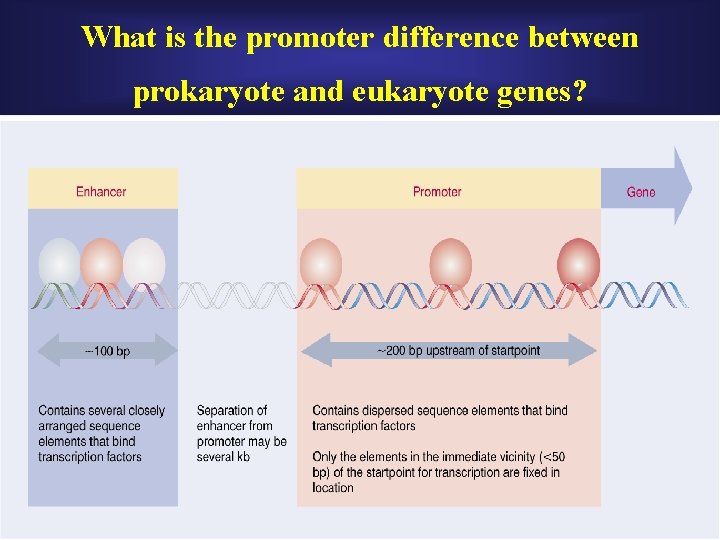
What is the promoter difference between prokaryote and eukaryote genes?
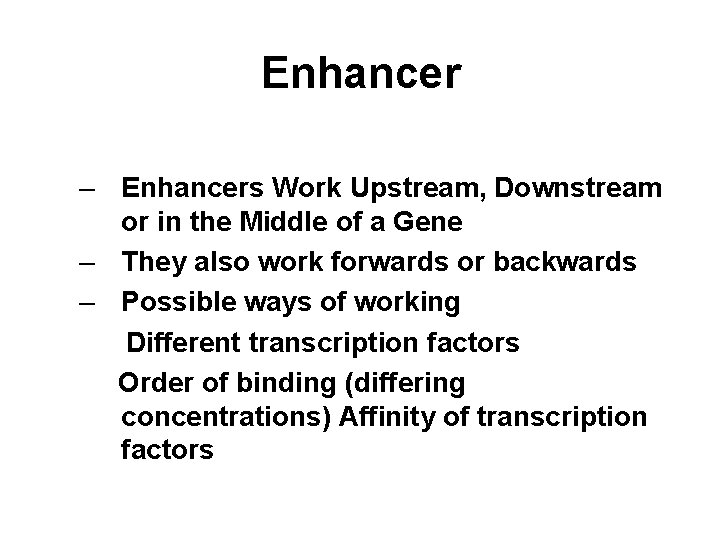
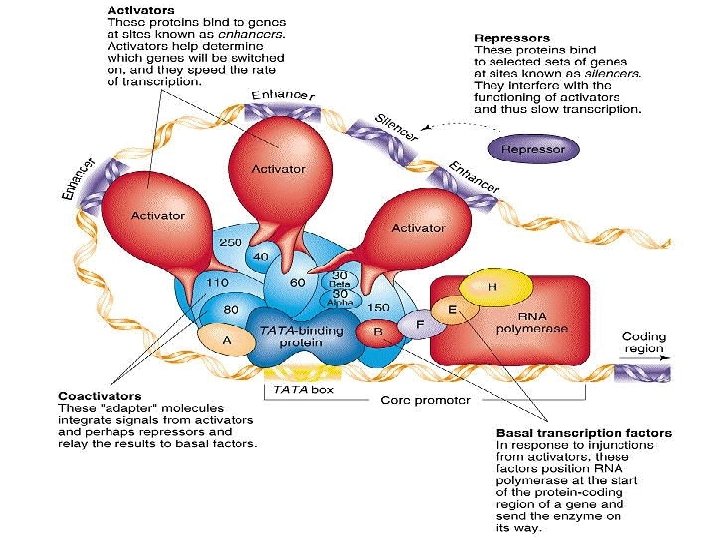
Enhancer – Enhancers Work Upstream, Downstream or in the Middle of a Gene – They also work forwards or backwards – Possible ways of working Different transcription factors Order of binding (differing concentrations) Affinity of transcription factors
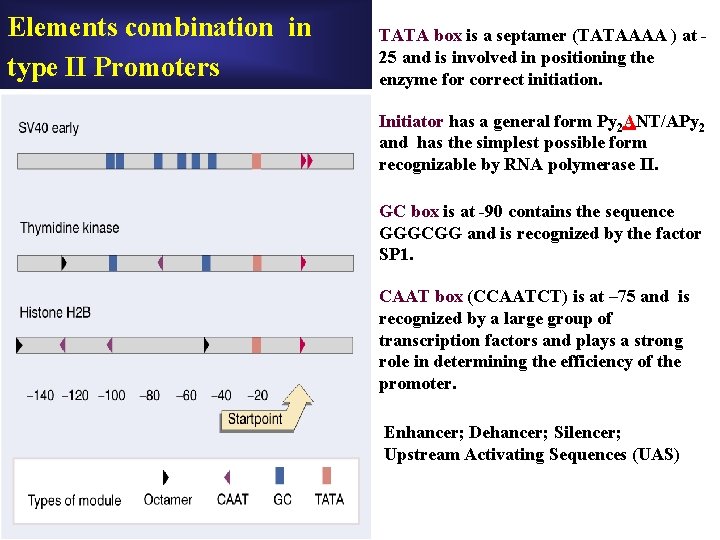
Elements combination in type II Promoters TATA box is a septamer (TATAAAA ) at 25 and is involved in positioning the enzyme for correct initiation. Initiator has a general form Py 2 ANT/APy 2 and has the simplest possible form recognizable by RNA polymerase II. GC box is at -90 contains the sequence GGGCGG and is recognized by the factor SP 1. CAAT box (CCAATCT) is at – 75 and is recognized by a large group of transcription factors and plays a strong role in determining the efficiency of the promoter. Enhancer; Dehancer; Silencer; Upstream Activating Sequences (UAS)
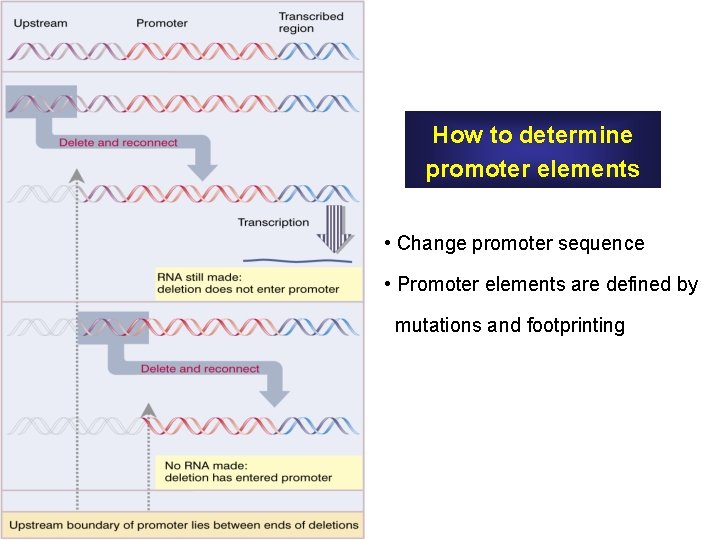
How to determine promoter elements • Change promoter sequence • Promoter elements are defined by mutations and footprinting
Have you ever wondered how your genome works? Well, thanks to scientists like Roger Kornberg, awarded the 2006 Nobel prize for Chemistry, who has painstakingly studied the micromechanics of transcription, we’re getting a much clearer picture of what happens inside the nucleus, and how the billions of metres of DNA in your body are converted into RNA by an enzyme called RNA polymerase II. - from the announcement of 2006 Nobel prize for chemistry
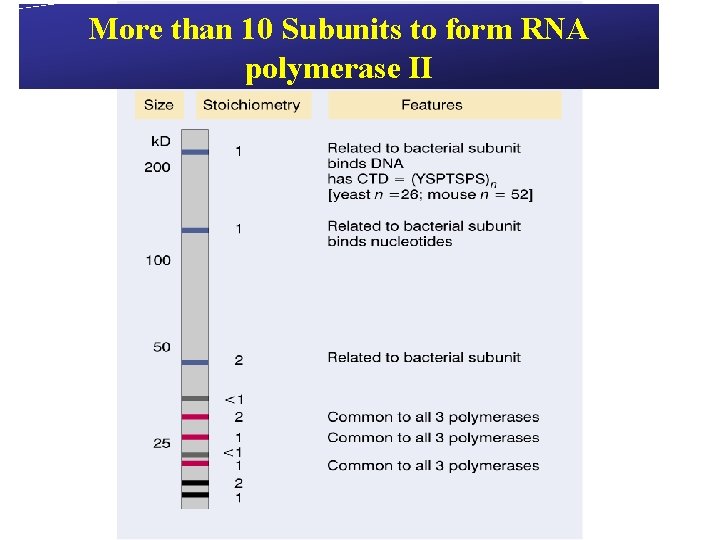
More than 10 Subunits to form RNA polymerase II
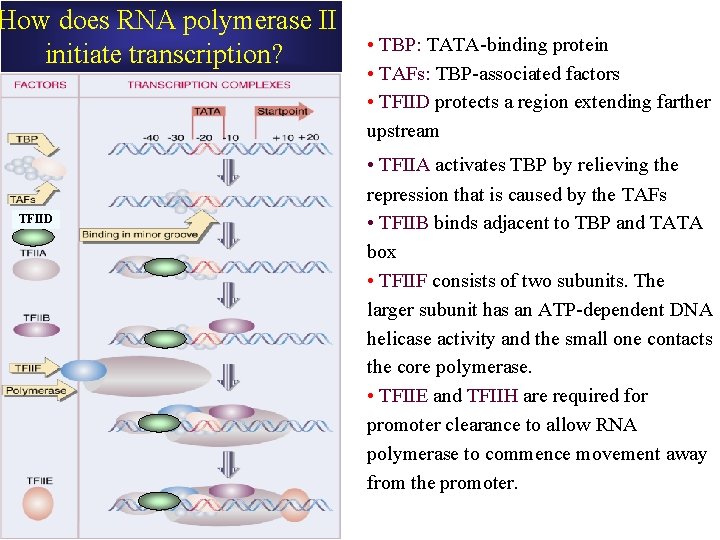
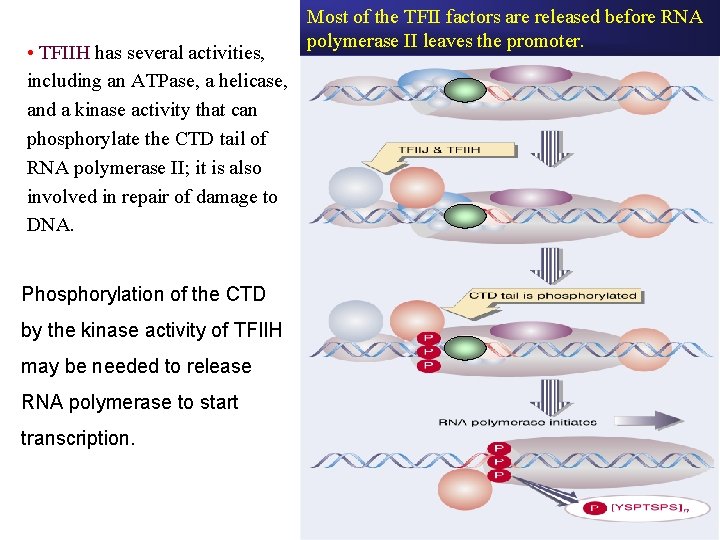
How does RNA polymerase II initiate transcription? TFIID • TBP: TATA-binding protein • TAFs: TBP-associated factors • TFIID protects a region extending farther upstream • TFIIA activates TBP by relieving the repression that is caused by the TAFs • TFIIB binds adjacent to TBP and TATA box • TFIIF consists of two subunits. The larger subunit has an ATP-dependent DNA helicase activity and the small one contacts the core polymerase. • TFIIE and TFIIH are required for promoter clearance to allow RNA polymerase to commence movement away from the promoter.
• TFIIH has several activities, including an ATPase, a helicase, and a kinase activity that can phosphorylate the CTD tail of RNA polymerase II; it is also involved in repair of damage to DNA. Phosphorylation of the CTD by the kinase activity of TFIIH may be needed to release RNA polymerase to start transcription. Most of the TFII factors are released before RNA polymerase II leaves the promoter.
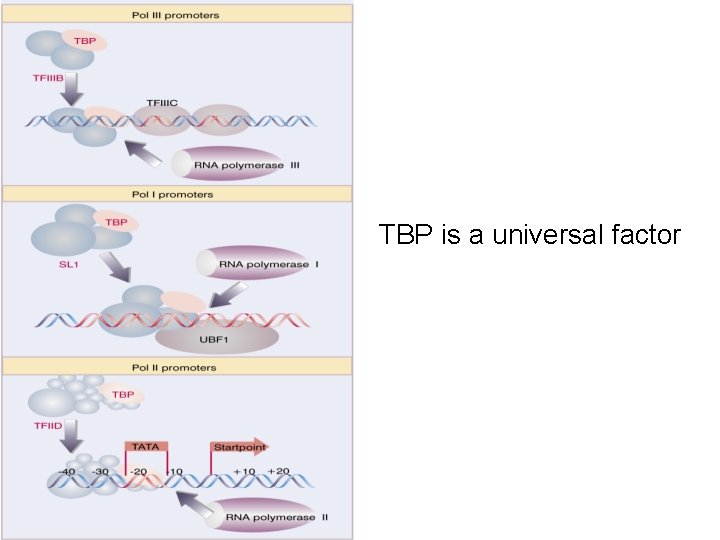
TBP is a universal factor
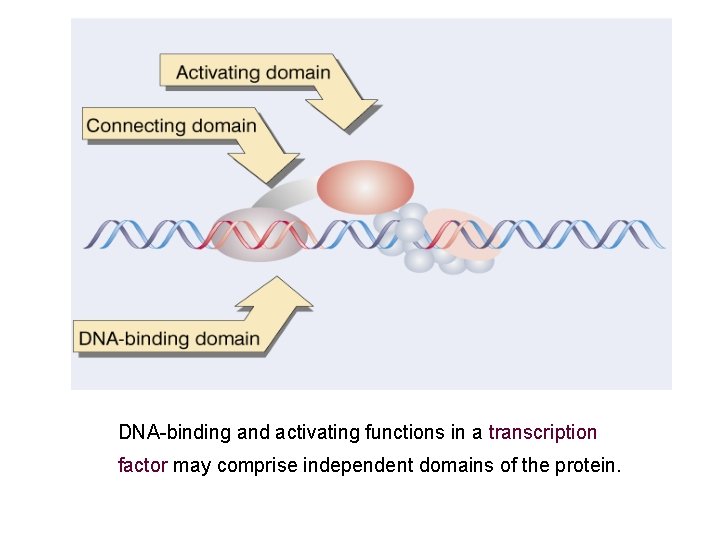
DNA-binding and activating functions in a transcription factor may comprise independent domains of the protein.
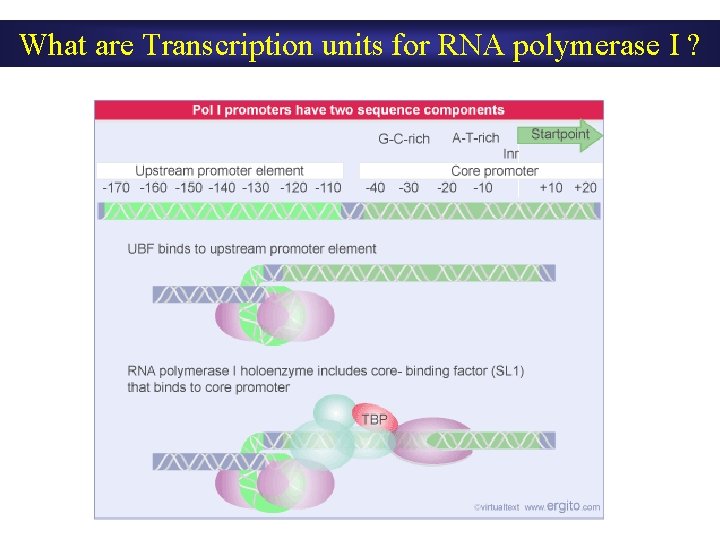
What are Transcription units for RNA polymerase I ?
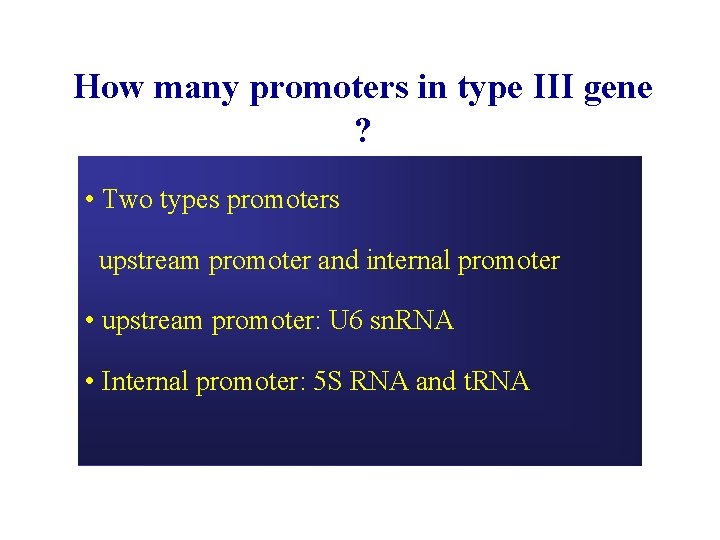
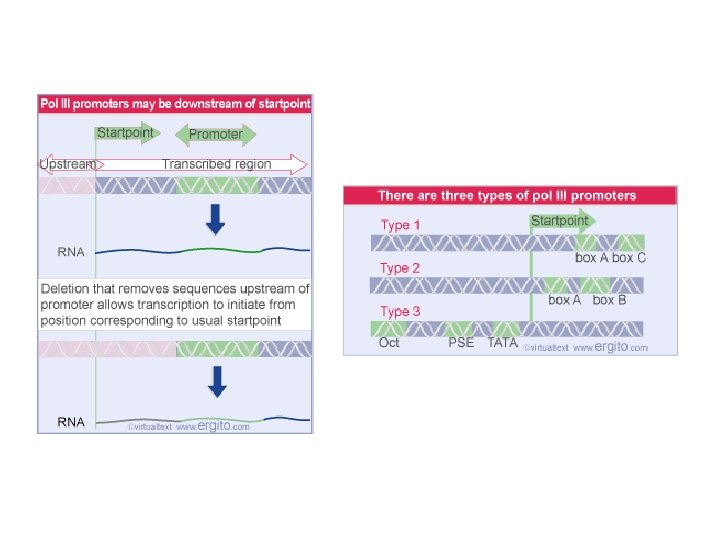
How many promoters in type III gene ? • Two types promoters upstream promoter and internal promoter • upstream promoter: U 6 sn. RNA • Internal promoter: 5 S RNA and t. RNA
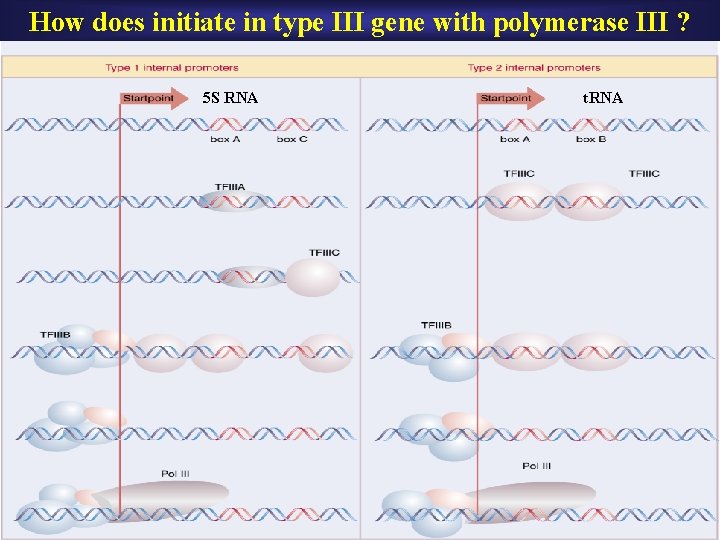
How does initiate in type III gene with polymerase III ? 5 S RNA t. RNA
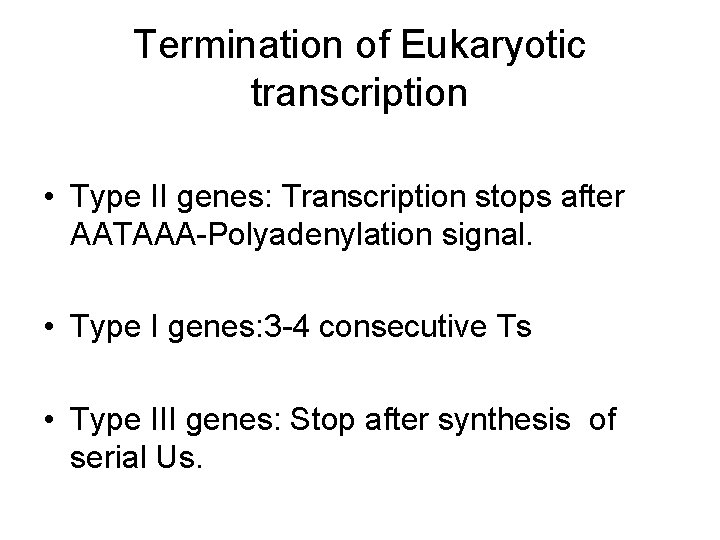
Termination of Eukaryotic transcription • Type II genes: Transcription stops after AATAAA-Polyadenylation signal. • Type I genes: 3 -4 consecutive Ts • Type III genes: Stop after synthesis of serial Us.