
RNA and Protein Synthesis 1 RNA ribonucleic acid
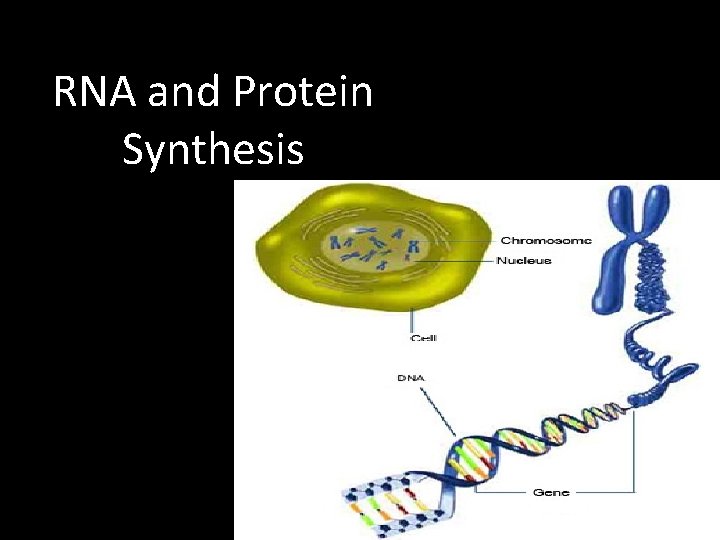
RNA and Protein Synthesis

1. RNA (ribonucleic acid) A. RNA single-stranded nucleic structure acid that directs protein production.
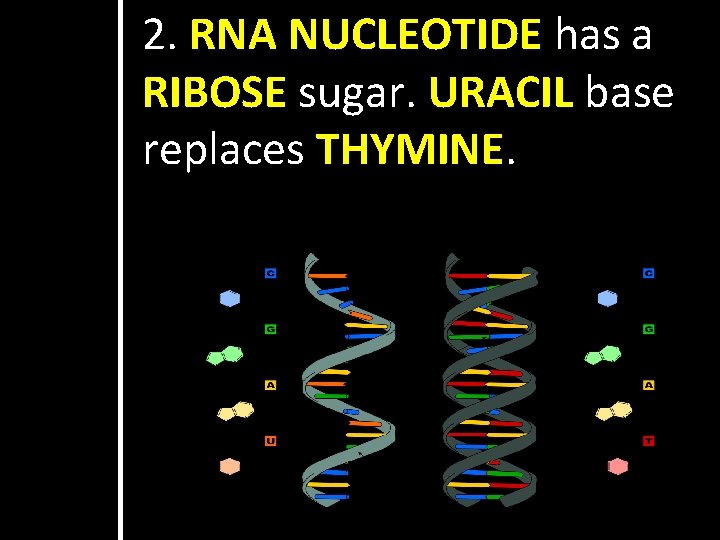
2. RNA NUCLEOTIDE has a RIBOSE sugar. URACIL base replaces THYMINE.
Thinking question: What are the BASE PAIRS in RNA? A-U C-G

DNA RNA Structure Double strand Single strand Sugar Ribose Deoxyribose Nitrogen Adenine, Guanine, bases Cytosine, Thymine A, G, C, Uracil (replaces T)
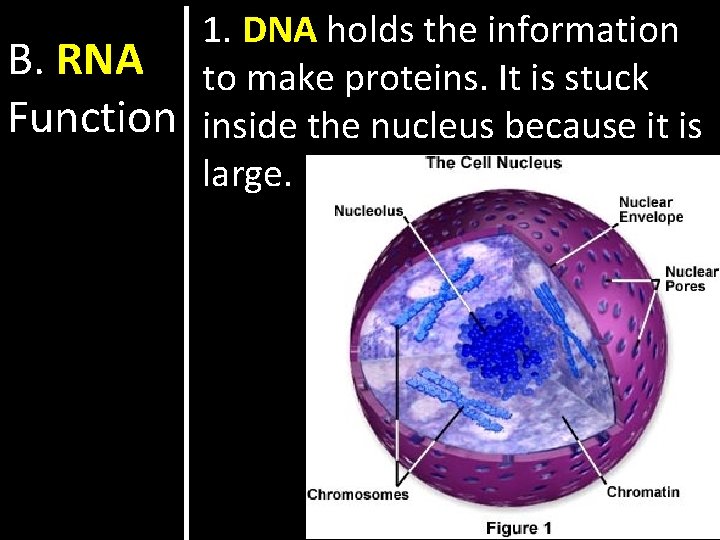
B. RNA Function 1. DNA holds the information to make proteins. It is stuck inside the nucleus because it is large.
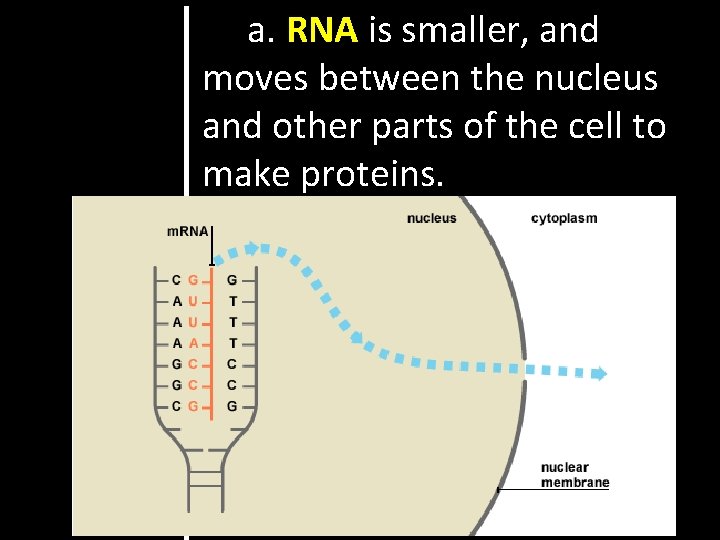
a. RNA is smaller, and moves between the nucleus and other parts of the cell to make proteins.
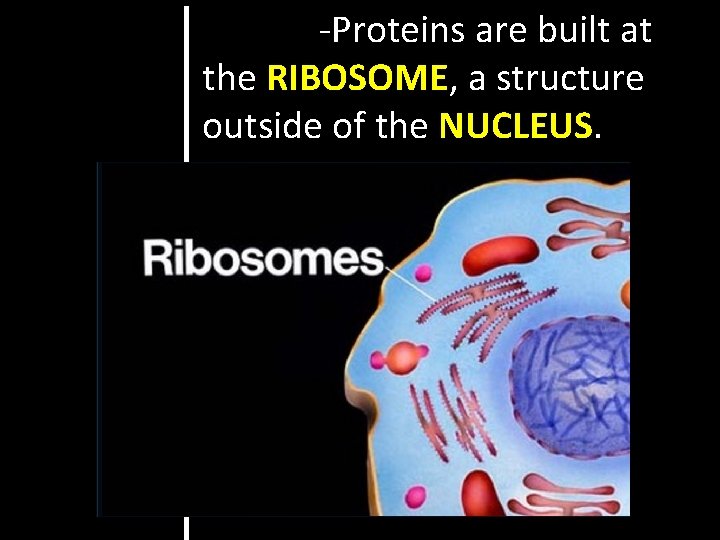
-Proteins are built at the RIBOSOME, a structure outside of the NUCLEUS.
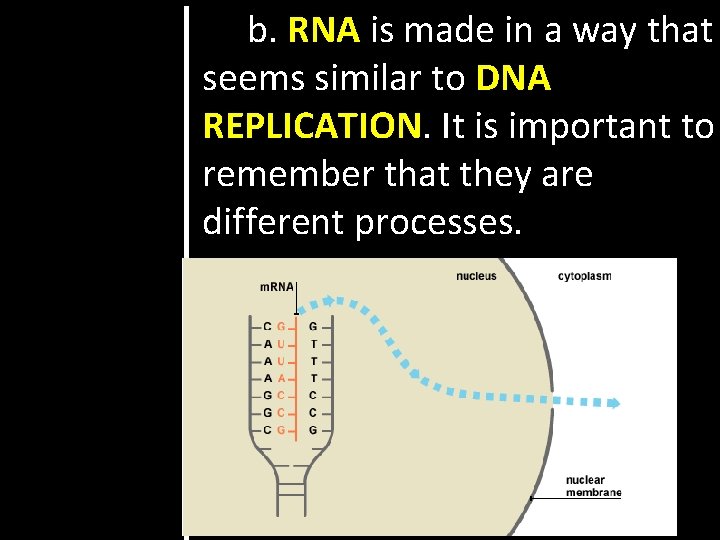
b. RNA is made in a way that seems similar to DNA REPLICATION. It is important to remember that they are different processes.
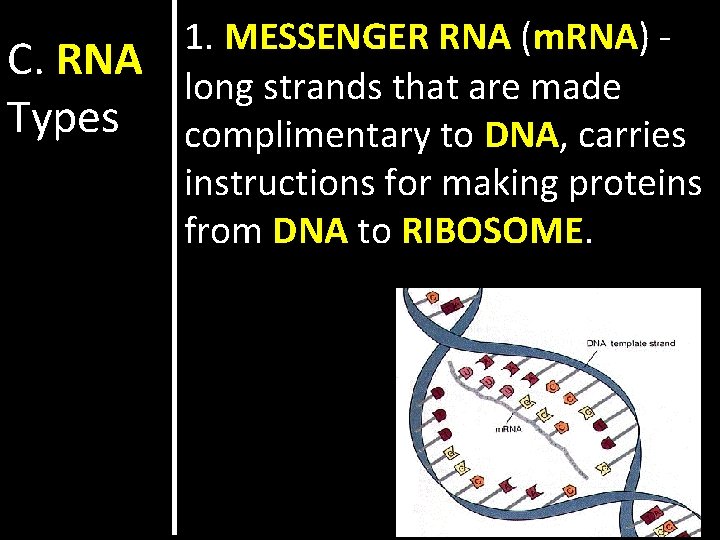
C. RNA Types 1. MESSENGER RNA (m. RNA) long strands that are made complimentary to DNA, carries instructions for making proteins from DNA to RIBOSOME.
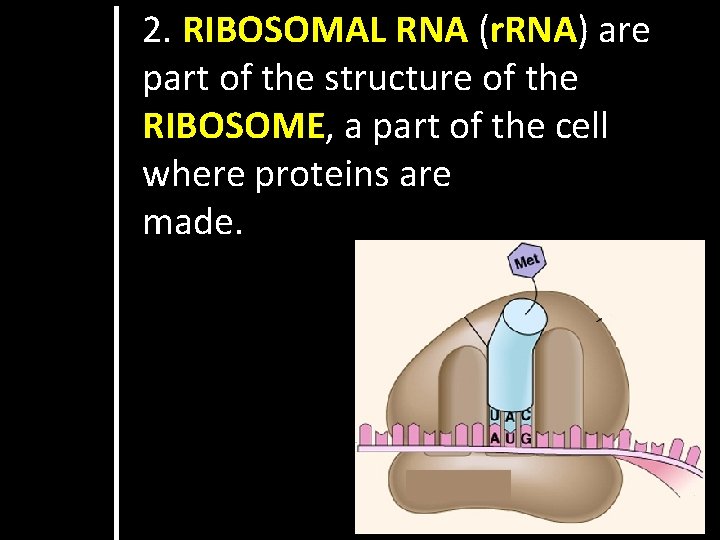
2. RIBOSOMAL RNA (r. RNA) are part of the structure of the RIBOSOME, a part of the cell where proteins are made.
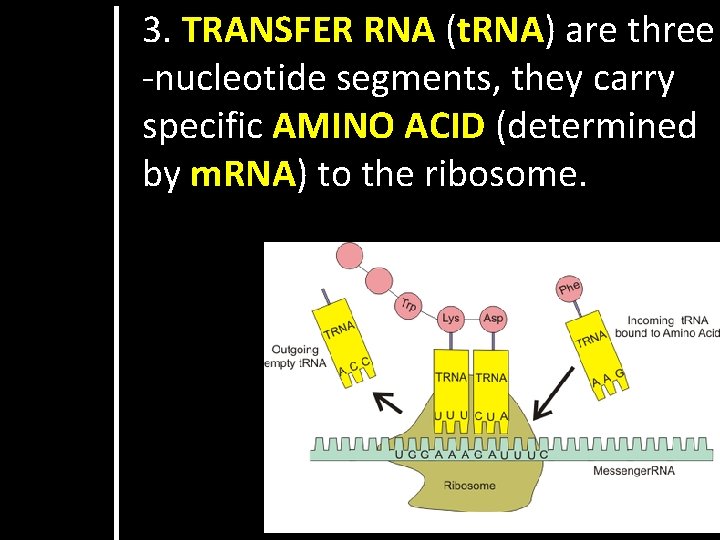
3. TRANSFER RNA (t. RNA) are three -nucleotide segments, they carry specific AMINO ACID (determined by m. RNA) to the ribosome.
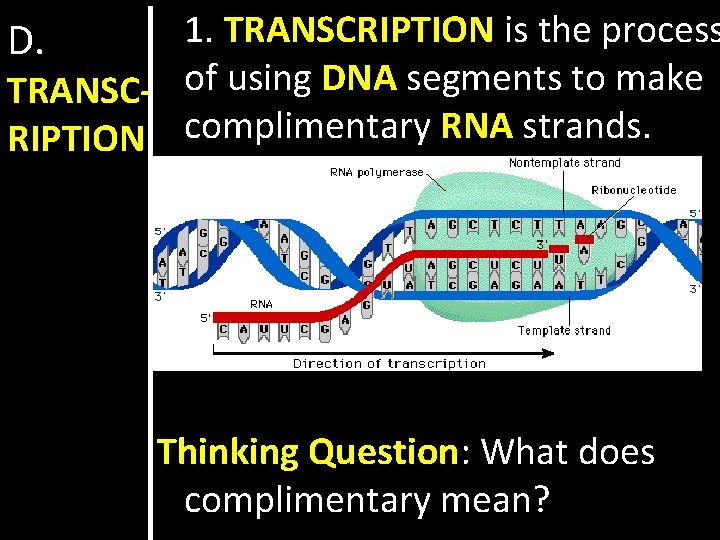
1. TRANSCRIPTION is the process TRANSC- of using DNA segments to make RIPTION complimentary RNA strands. D. Thinking Question: What does complimentary mean?
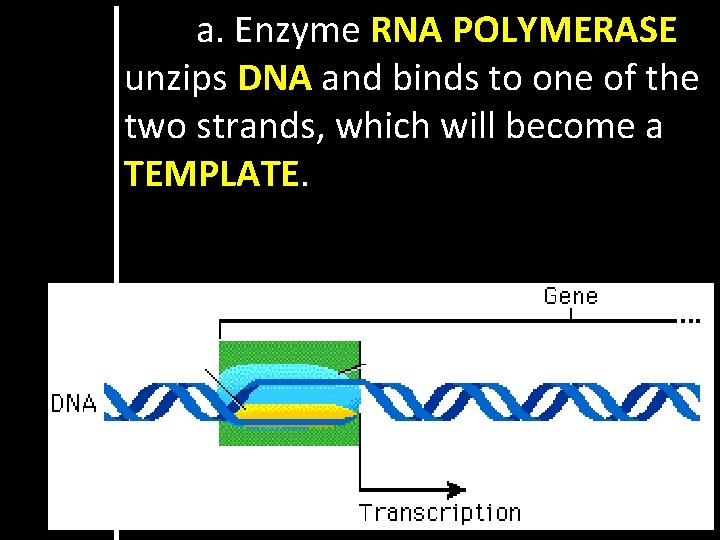
a. Enzyme RNA POLYMERASE unzips DNA and binds to one of the two strands, which will become a TEMPLATE.
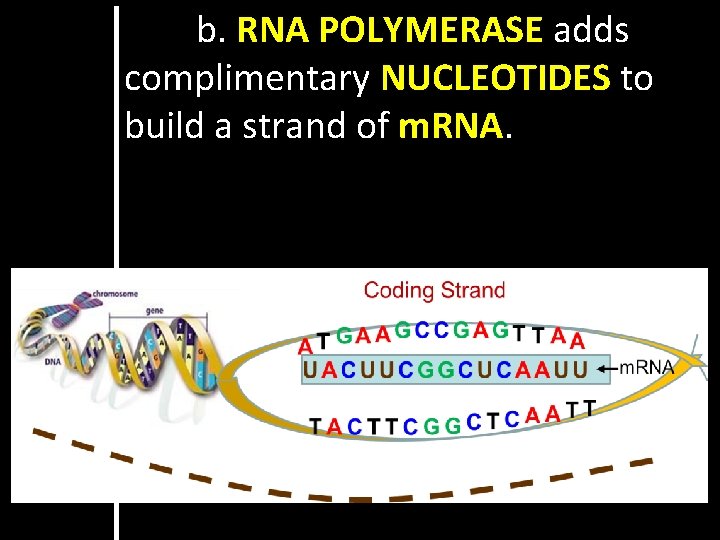
b. RNA POLYMERASE adds complimentary NUCLEOTIDES to build a strand of m. RNA.
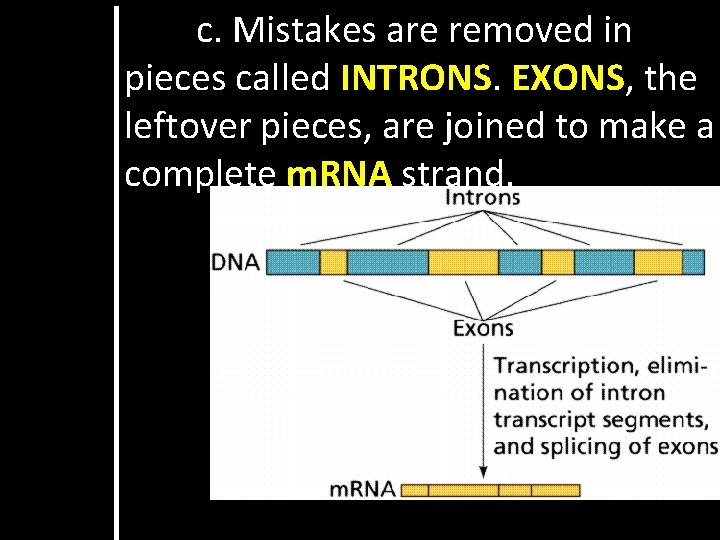
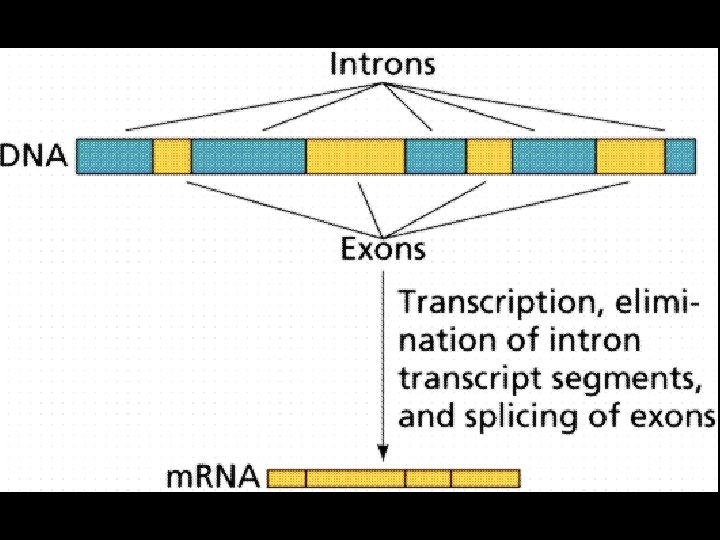
c. Mistakes are removed in pieces called INTRONS. EXONS, the leftover pieces, are joined to make a complete m. RNA strand.
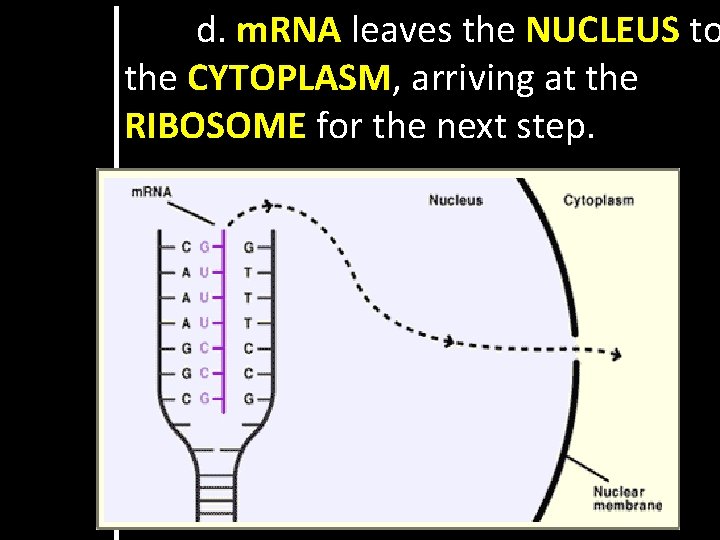
d. m. RNA leaves the NUCLEUS to the CYTOPLASM, arriving at the RIBOSOME for the next step.
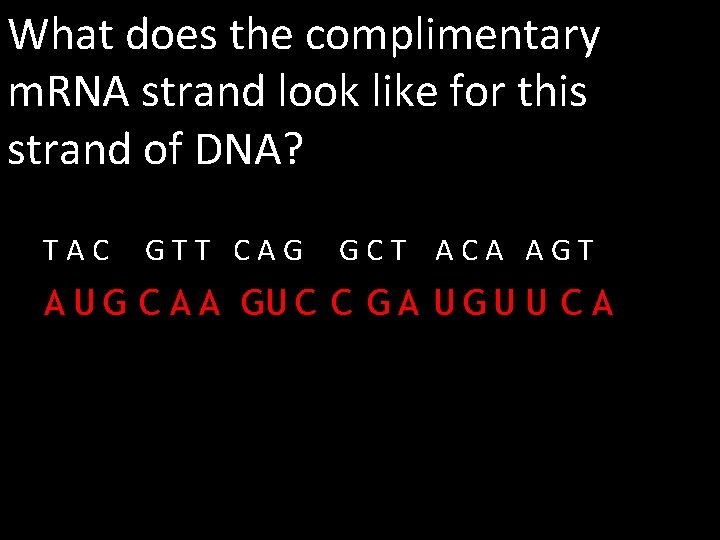
What does the complimentary m. RNA strand look like for this strand of DNA? TAC GTT CAG GCT ACA AGT A U G C A A GU C C G A U G U U C A

Venn Diagram: DNA vs RNA structure DNA RNA Double stand Single strand Sugar ACGU ACGT Phosphate Ribose Base Deoxyribose Can travel Stays in around cell nucleus
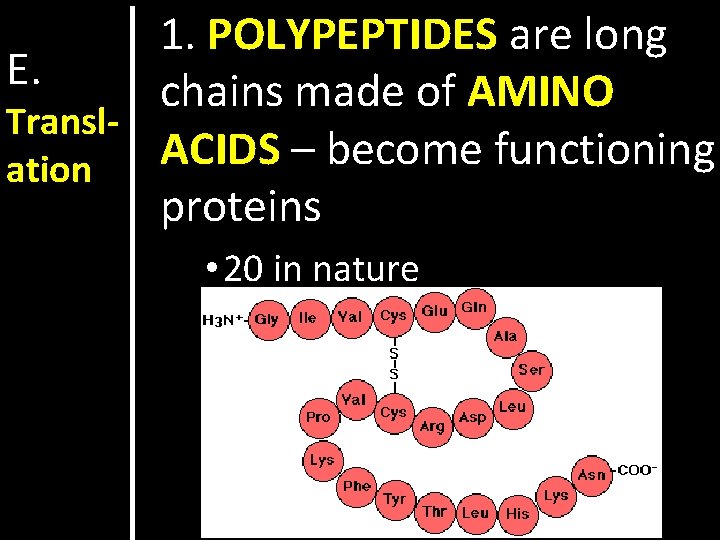
1. POLYPEPTIDES are long E. chains made of AMINO Transl. ACIDS – become functioning ation proteins • 20 in nature
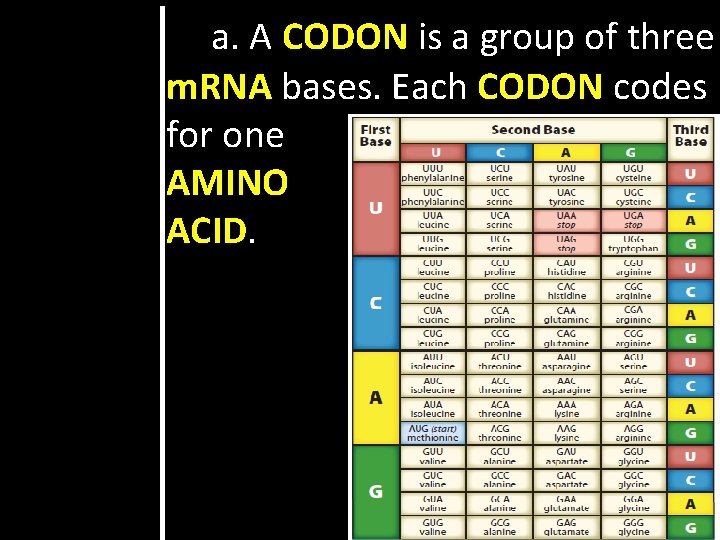
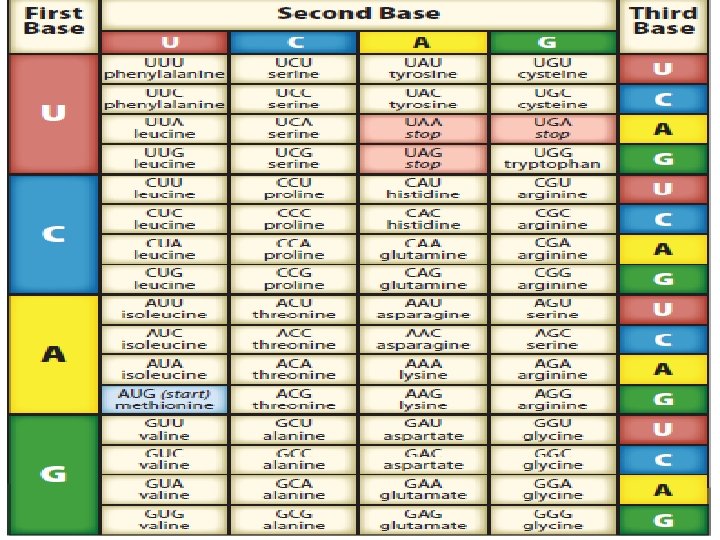
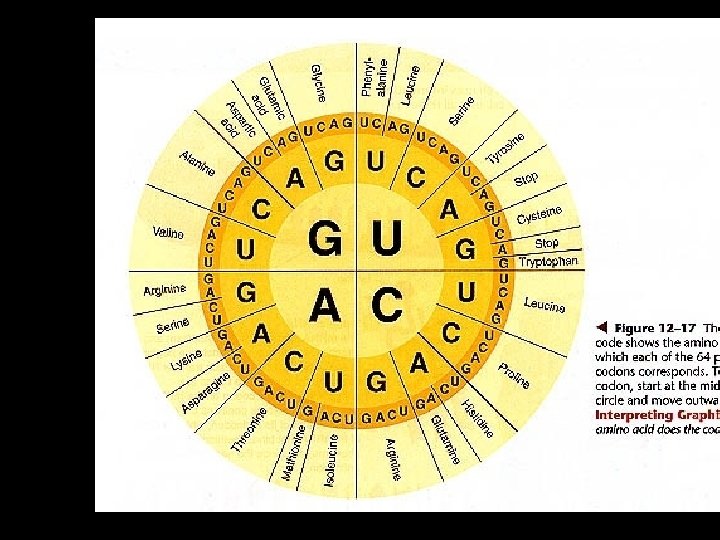
a. A CODON is a group of three m. RNA bases. Each CODON codes for one AMINO ACID.
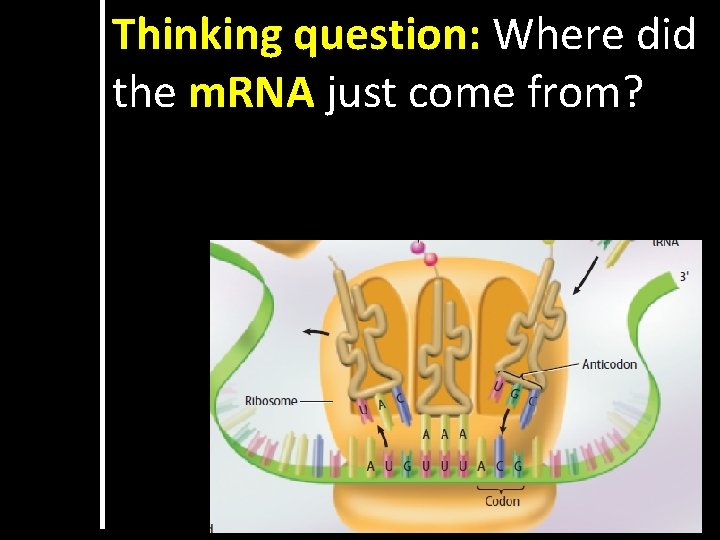
Thinking question: Where did the m. RNA just come from?
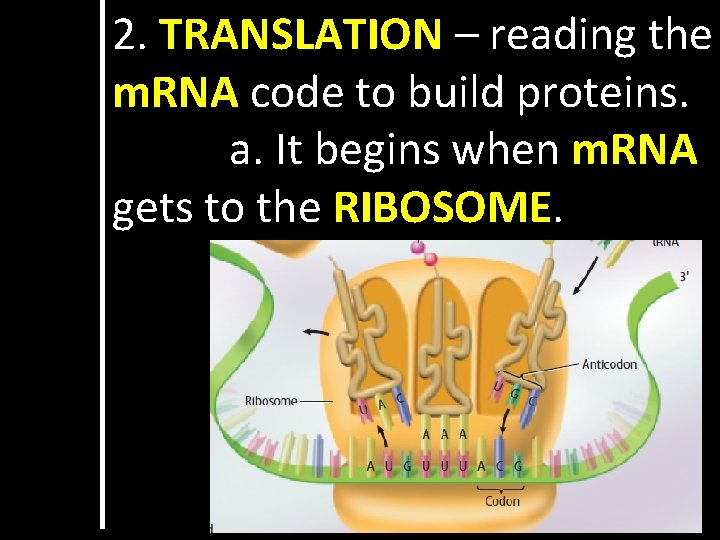
2. TRANSLATION – reading the m. RNA code to build proteins. a. It begins when m. RNA gets to the RIBOSOME.
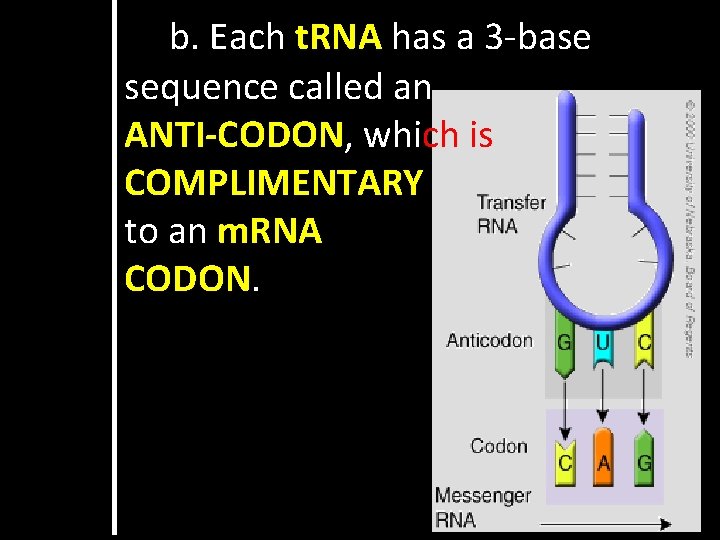
b. Each t. RNA has a 3 -base sequence called an ANTI-CODON, which is COMPLIMENTARY to an m. RNA CODON.
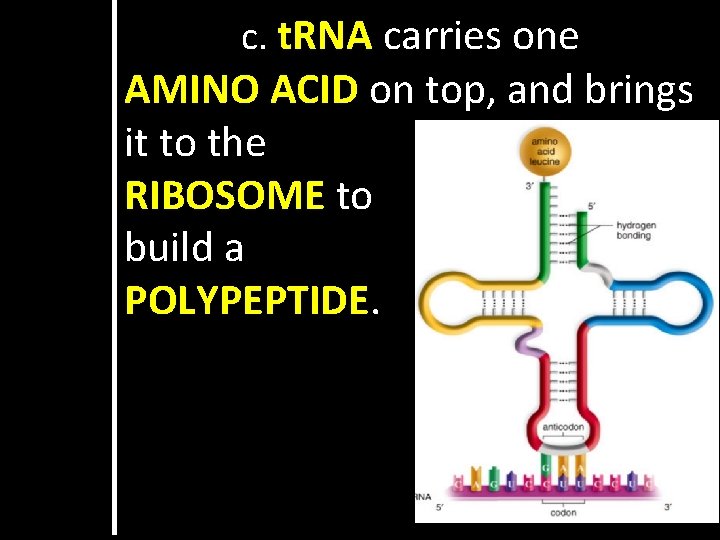
c. t. RNA carries one AMINO ACID on top, and brings it to the RIBOSOME to build a POLYPEPTIDE.
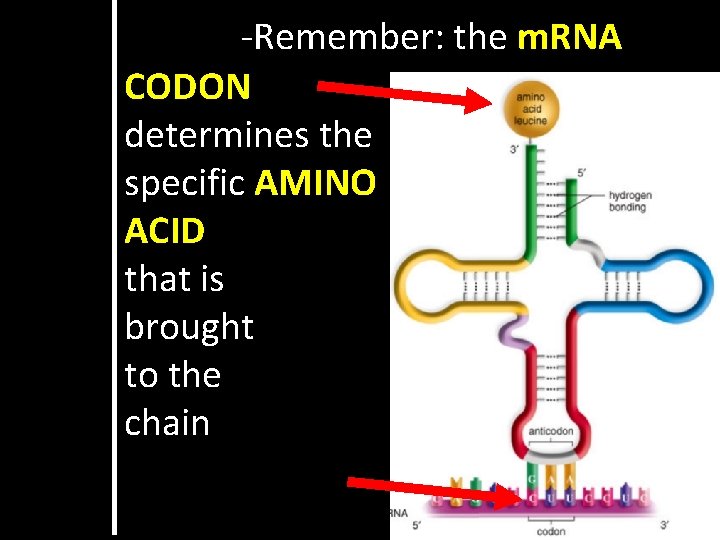
-Remember: the m. RNA CODON determines the specific AMINO ACID that is brought to the chain
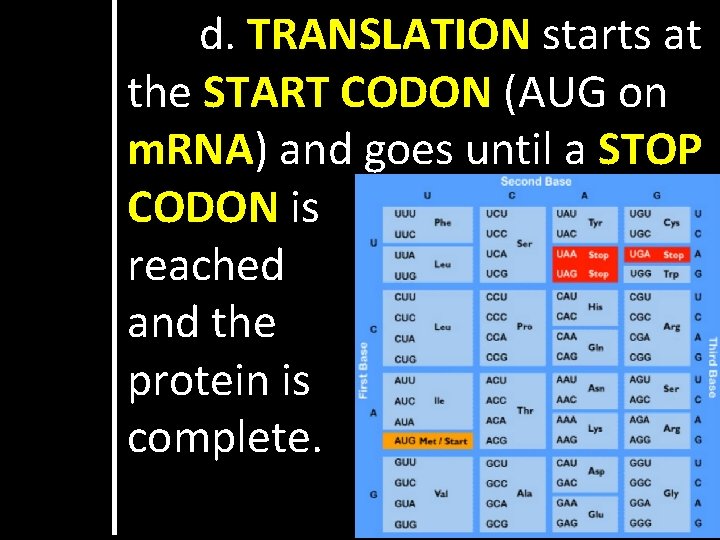
d. TRANSLATION starts at the START CODON (AUG on m. RNA) and goes until a STOP CODON is reached and the protein is complete.
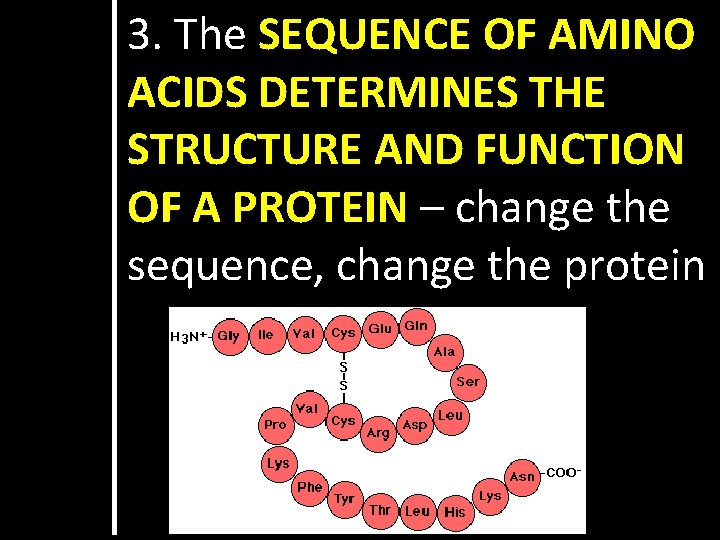
3. The SEQUENCE OF AMINO ACIDS DETERMINES THE STRUCTURE AND FUNCTION OF A PROTEIN – change the sequence, change the protein
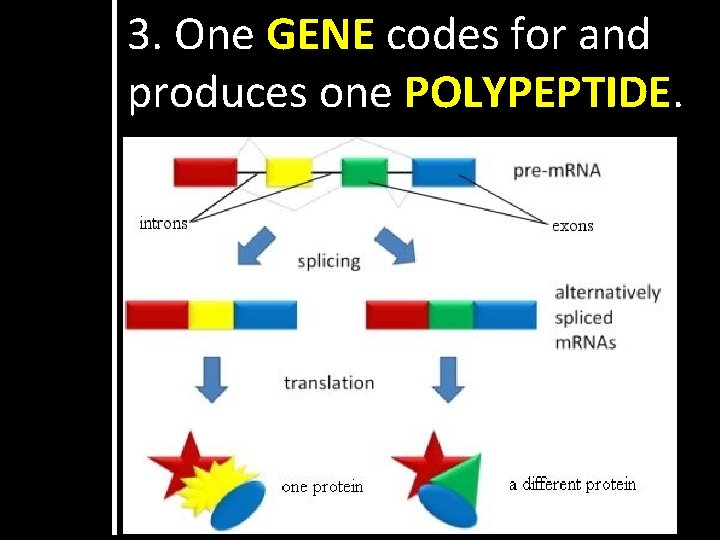
3. One GENE codes for and produces one POLYPEPTIDE.
GUESS WHO'S BAAAACCCCCCKKKK. . . ? !? !?
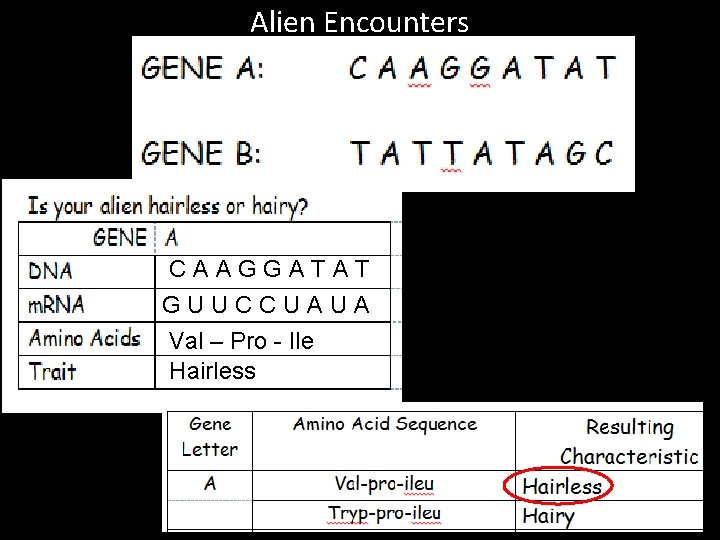
Alien Encounters CAAGGATAT GUUCCUAUA Val – Pro - Ile Hairless
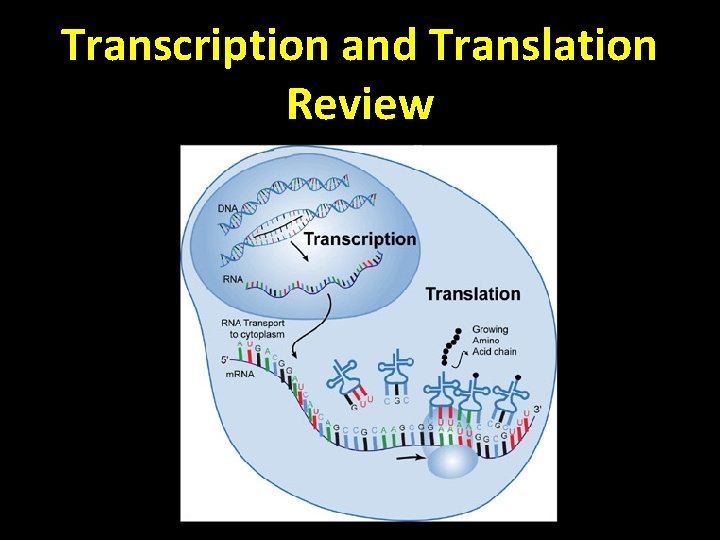
Transcription and Translation Review
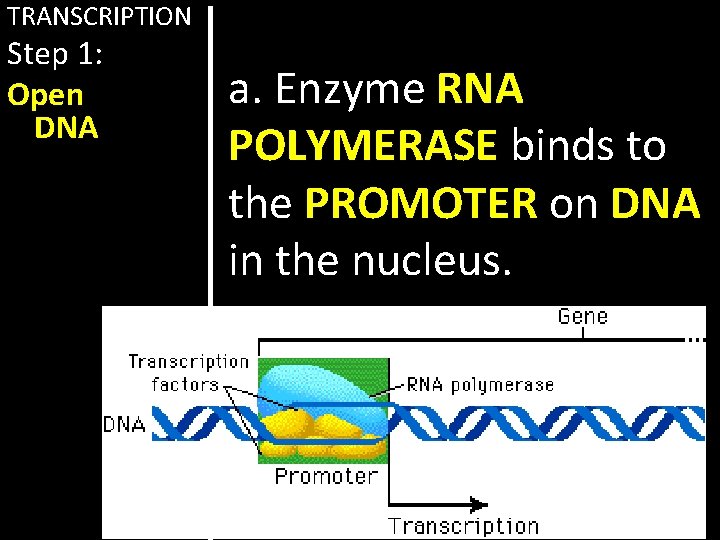
TRANSCRIPTION Step 1: Open DNA a. Enzyme RNA POLYMERASE binds to the PROMOTER on DNA in the nucleus.
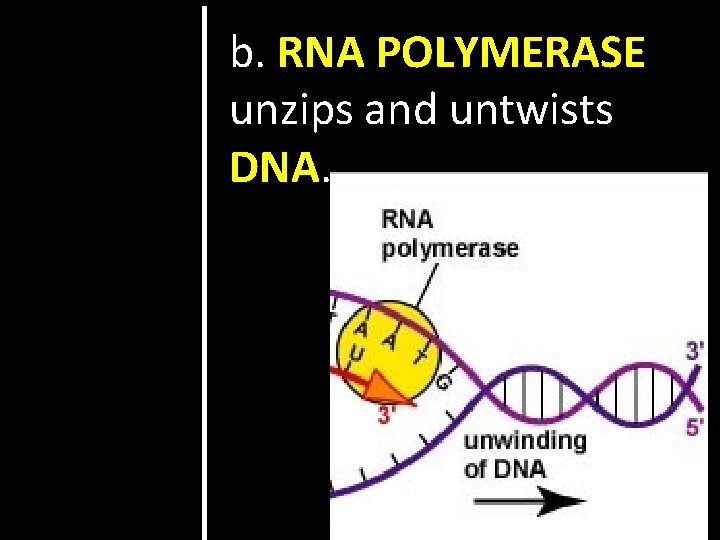
b. RNA POLYMERASE unzips and untwists DNA.
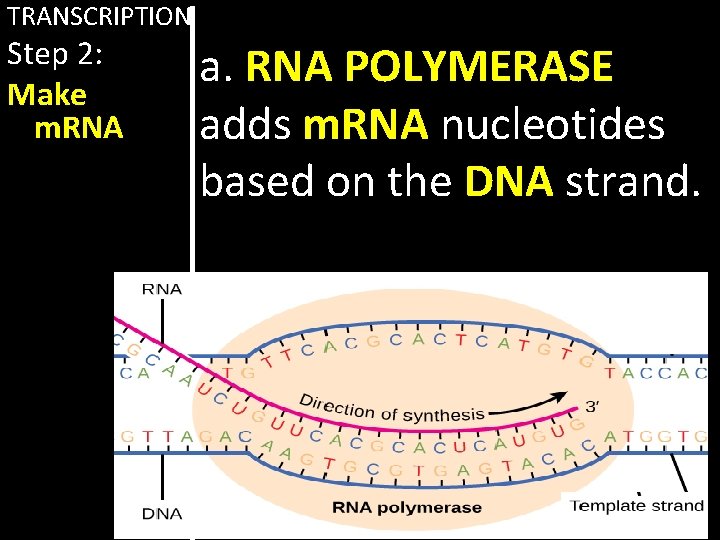
TRANSCRIPTION Step 2: Make m. RNA a. RNA POLYMERASE adds m. RNA nucleotides based on the DNA strand.
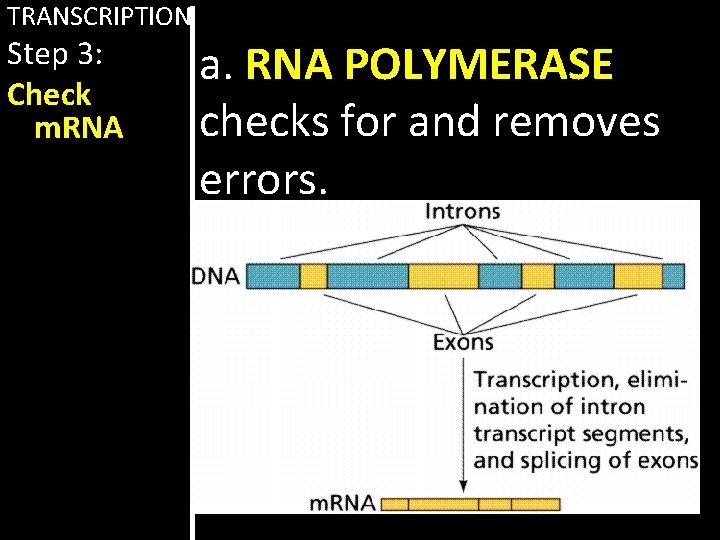
TRANSCRIPTION Step 3: Check m. RNA a. RNA POLYMERASE checks for and removes errors.
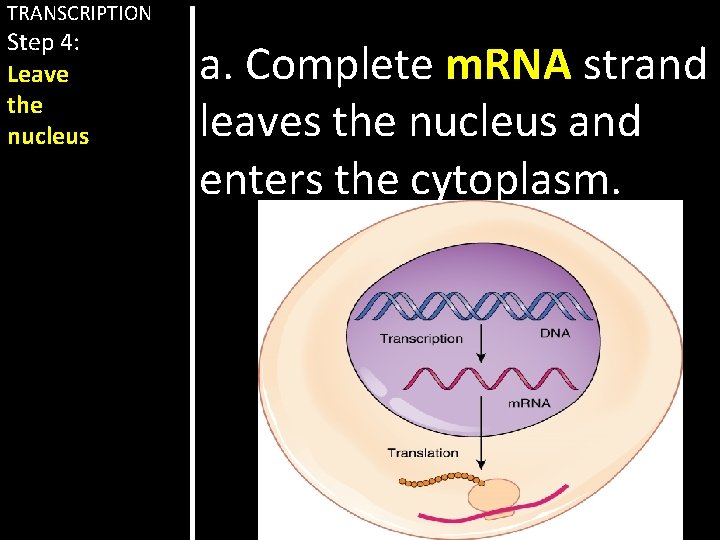
TRANSCRIPTION Step 4: Leave the nucleus a. Complete m. RNA strand leaves the nucleus and enters the cytoplasm.
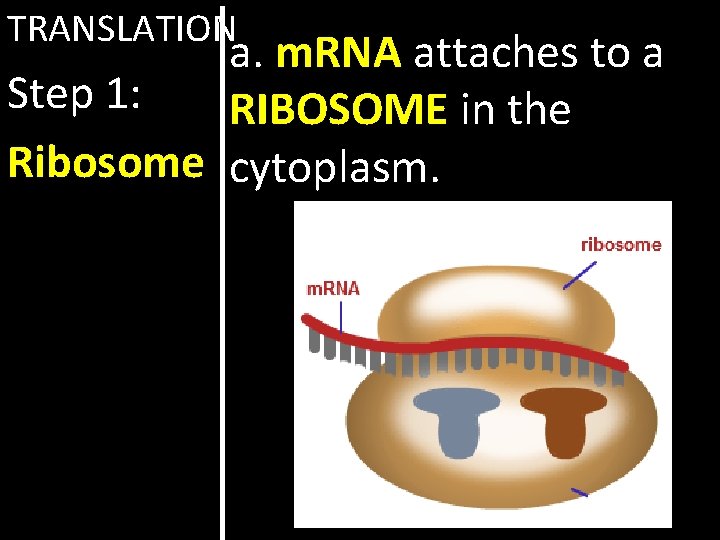
TRANSLATION a. m. RNA attaches to a Step 1: RIBOSOME in the Ribosome cytoplasm.
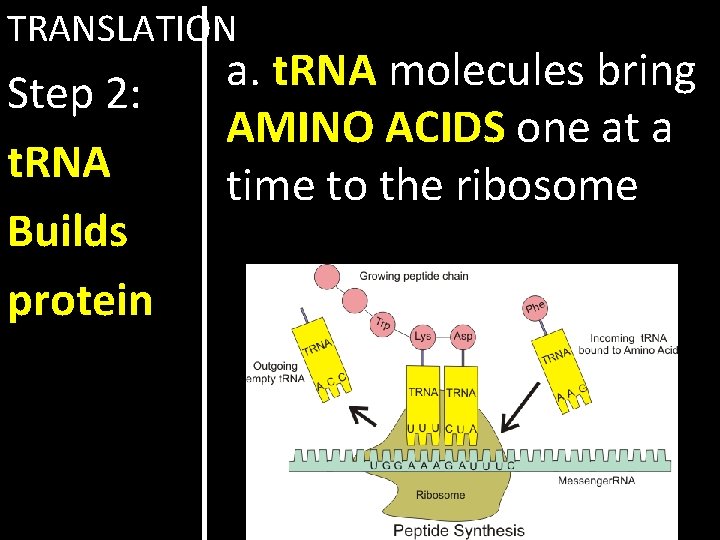
TRANSLATION Step 2: t. RNA Builds protein a. t. RNA molecules bring AMINO ACIDS one at a time to the ribosome
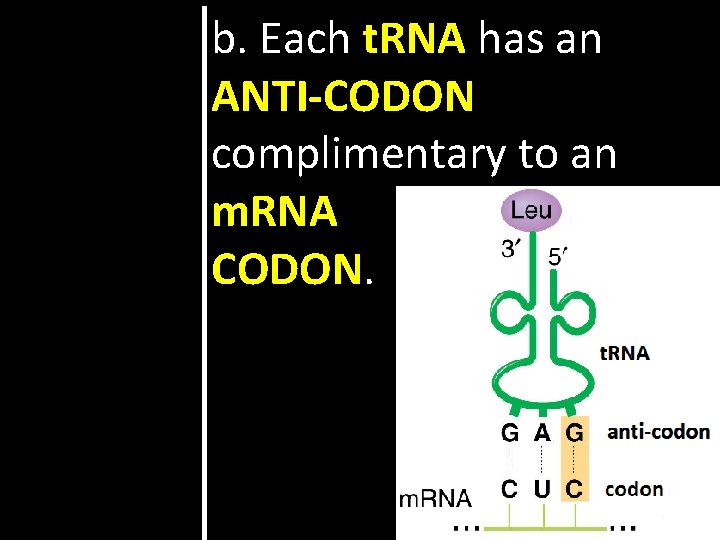
b. Each t. RNA has an ANTI-CODON complimentary to an m. RNA CODON.
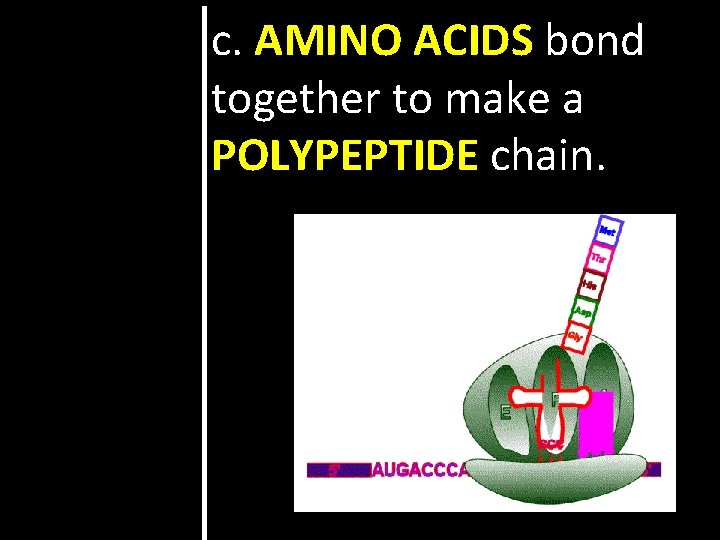
c. AMINO ACIDS bond together to make a POLYPEPTIDE chain.
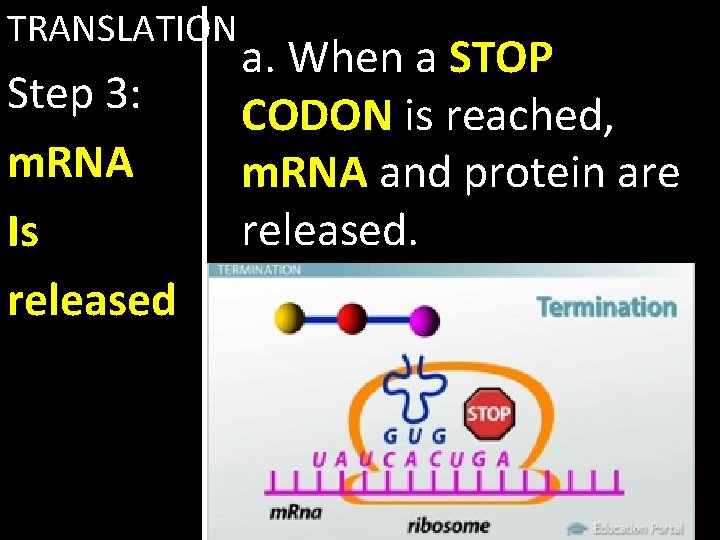
TRANSLATION Step 3: m. RNA Is released a. When a STOP CODON is reached, m. RNA and protein are released.
https: //www. youtube. com/watch? v=g G 7 u. Csk. UOr. A&t=2 s
In your notebook: In your own words, write a paragraph describing the process of protein synthesis. Include both transcription and translation.
1. Define all vocabulary words from p. 372 -376 2. Describe MUTATIONS and explain how they occur. 3. Describe what a POINT MUTATION is. 4. Explain how a SUBSTITUTION mutation occurs 5. Describe a FRAME SHIFT MUTATION. 6. Explain INSERTIONS and DELETIONS. 7. What is a CHROMOSOMAL MUTATION? . 8. Describe MUTAGENS and give two examples. 9. Explain the harmful effects of MUTATIONS. 10. Explain the benefits of MUTATIONS.
Mutations (Ch 13. 3)
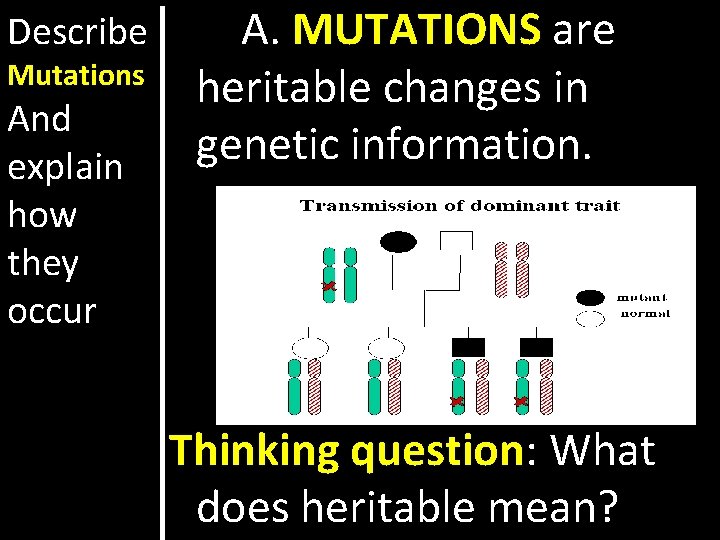
Describe Mutations And explain how they occur A. MUTATIONS are heritable changes in genetic information. Thinking question: What does heritable mean?
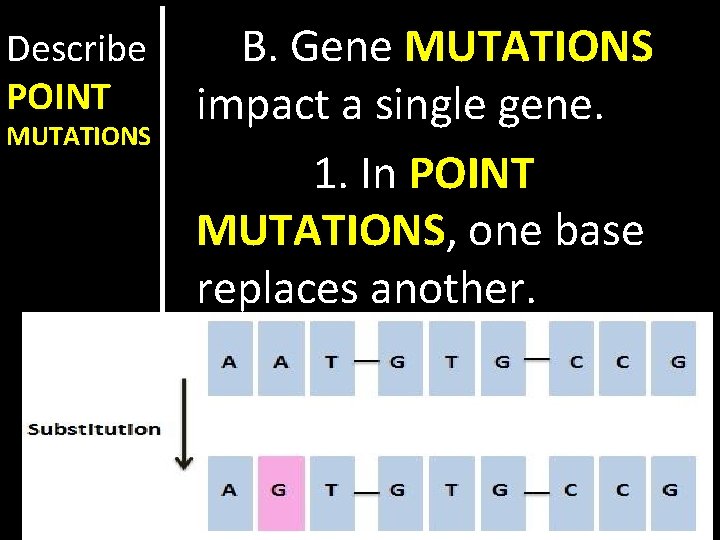
Describe POINT MUTATIONS B. Gene MUTATIONS impact a single gene. 1. In POINT MUTATIONS, one base replaces another.
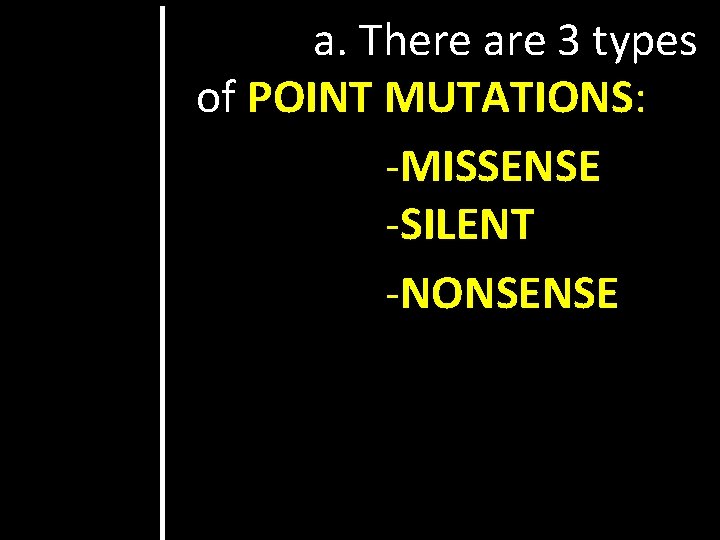
a. There are 3 types of POINT MUTATIONS: -MISSENSE -SILENT -NONSENSE
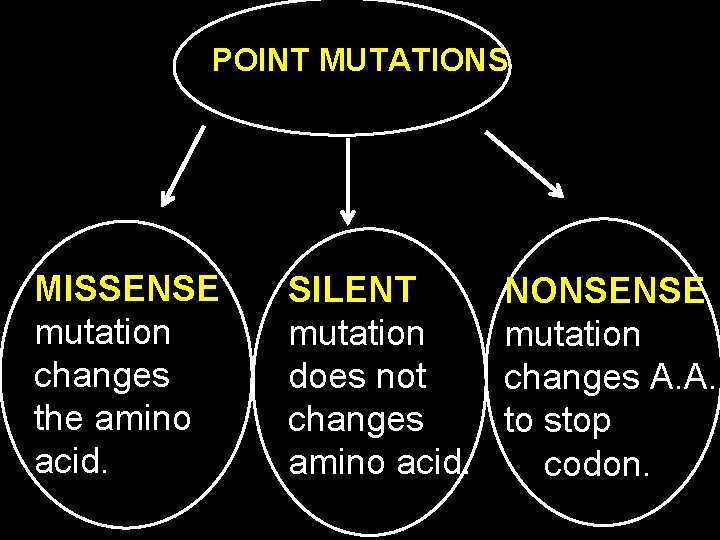
POINT MUTATIONS MISSENSE mutation changes the amino acid. SILENT mutation does not changes amino acid. NONSENSE mutation changes A. A. to stop codon.
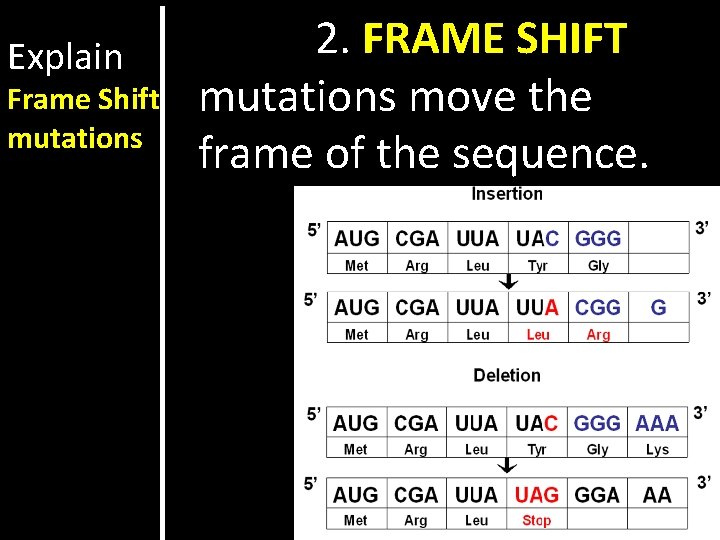
Explain Frame Shift mutations 2. FRAME SHIFT mutations move the frame of the sequence.
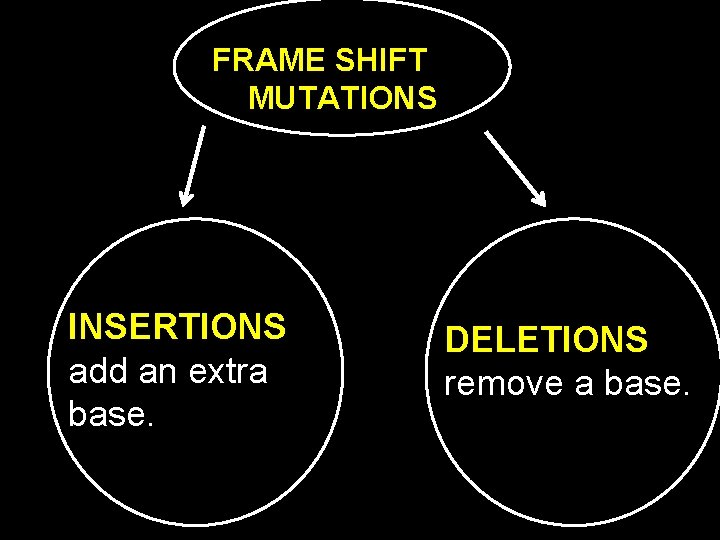
FRAME SHIFT MUTATIONS INSERTIONS add an extra base. DELETIONS remove a base.
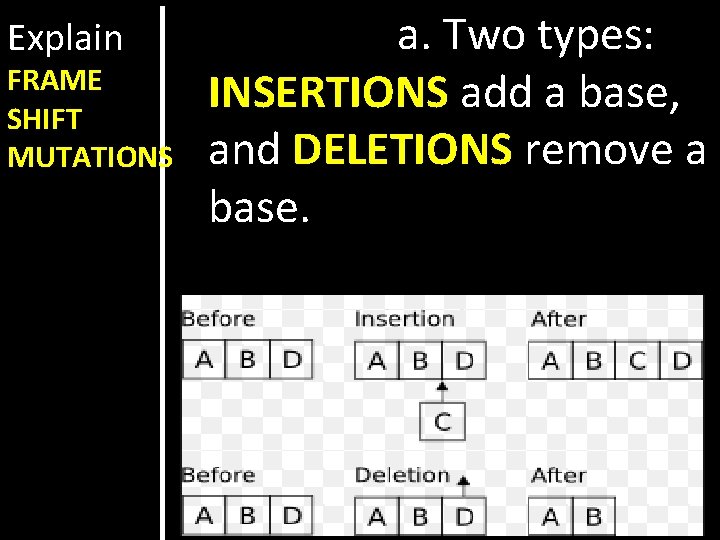
Explain FRAME SHIFT MUTATIONS a. Two types: INSERTIONS add a base, and DELETIONS remove a base.
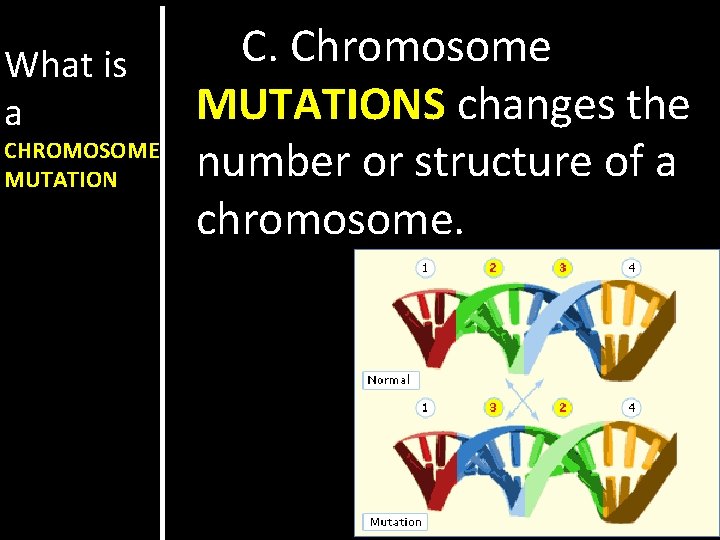
What is a CHROMOSOME MUTATION C. Chromosome MUTATIONS changes the number or structure of a chromosome.
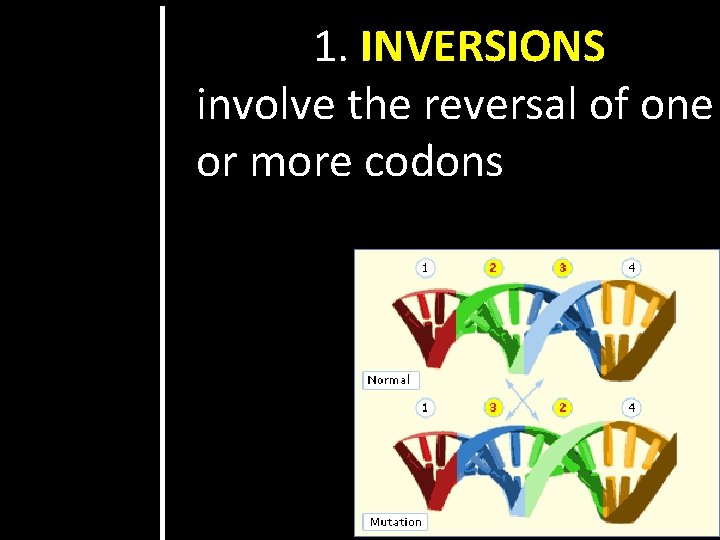
1. INVERSIONS involve the reversal of one or more codons
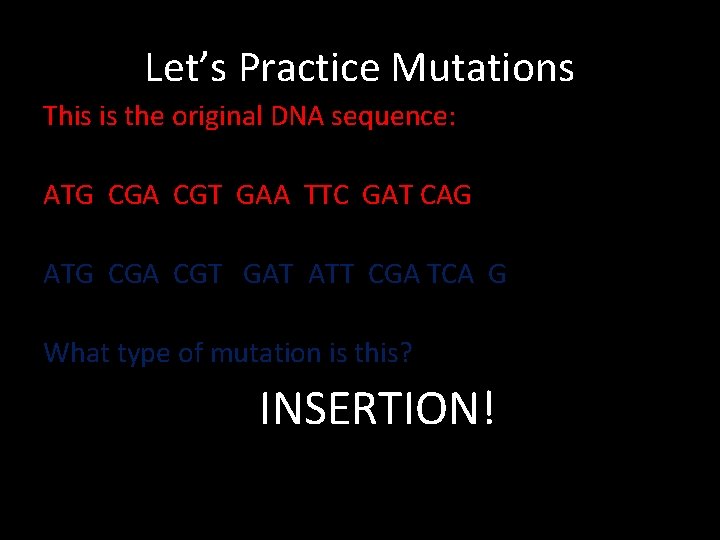
Let’s Practice Mutations This is the original DNA sequence: ATG CGA CGT GAA TTC GAT CAG ATG CGA CGT GAT ATT CGA TCA G What type of mutation is this? INSERTION!
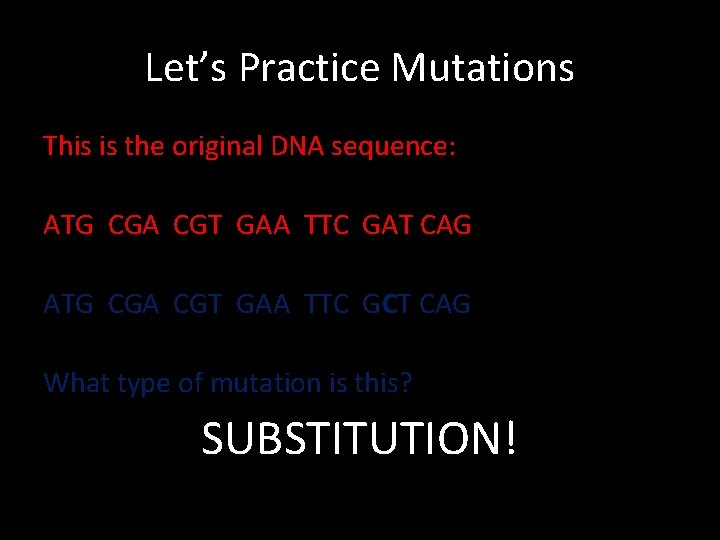
Let’s Practice Mutations This is the original DNA sequence: ATG CGA CGT GAA TTC GAT CAG ATG CGA CGT GAA TTC GCT CAG What type of mutation is this? SUBSTITUTION!
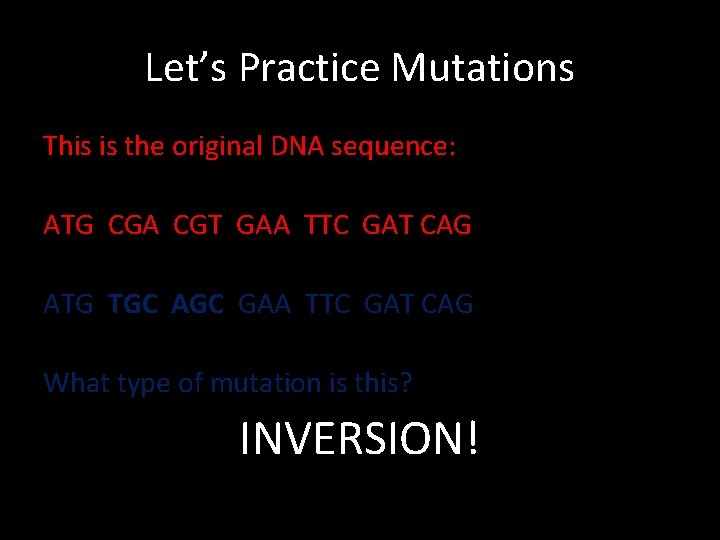
Let’s Practice Mutations This is the original DNA sequence: ATG CGA CGT GAA TTC GAT CAG ATG TGC AGC GAA TTC GAT CAG What type of mutation is this? INVERSION!
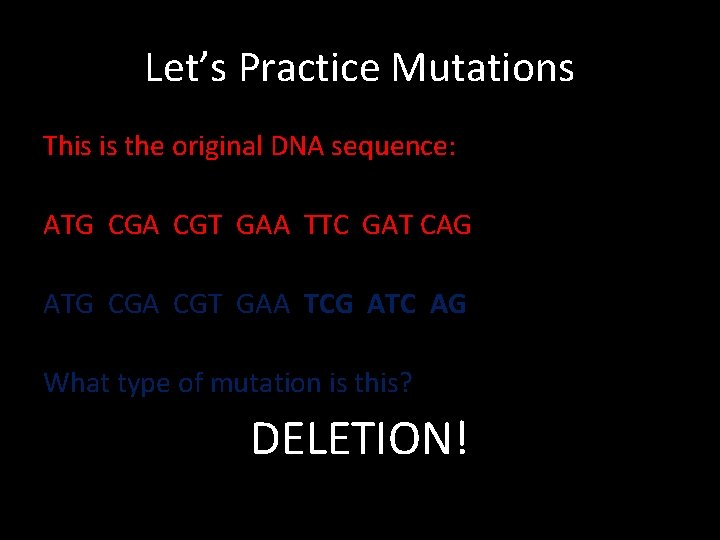
Let’s Practice Mutations This is the original DNA sequence: ATG CGA CGT GAA TTC GAT CAG ATG CGA CGT GAA TCG ATC AG What type of mutation is this? DELETION!
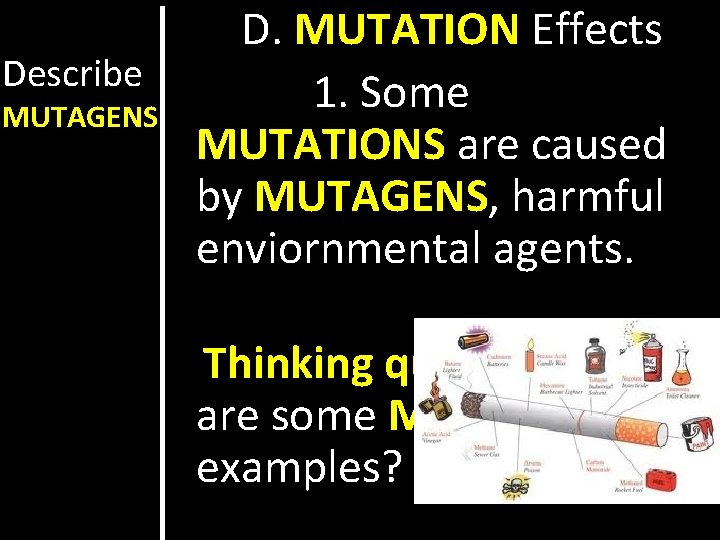
Describe MUTAGENS D. MUTATION Effects 1. Some MUTATIONS are caused by MUTAGENS, harmful enviornmental agents. Thinking question: What are some MUTAGEN examples?
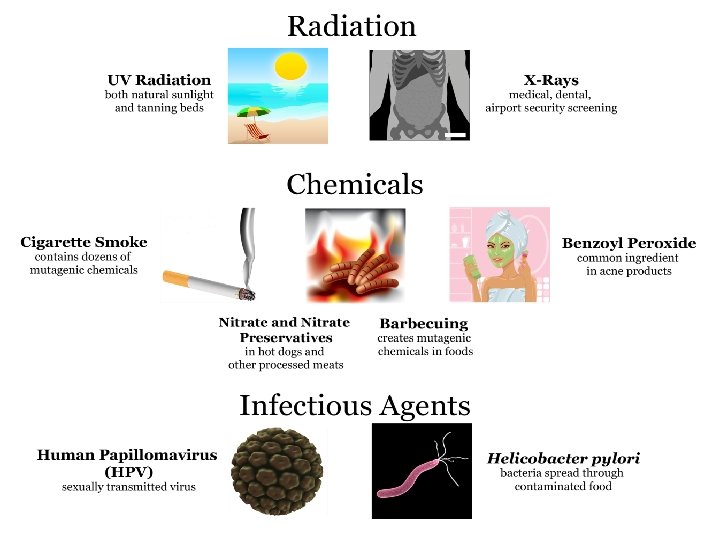
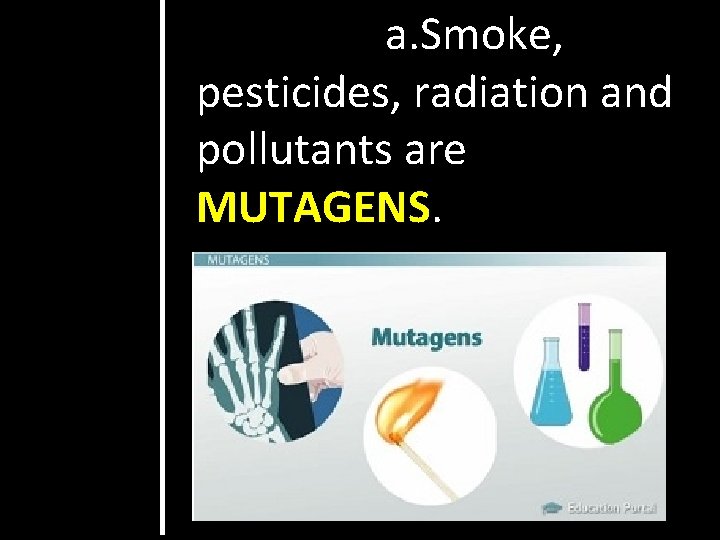
a. Smoke, pesticides, radiation and pollutants are MUTAGENS.
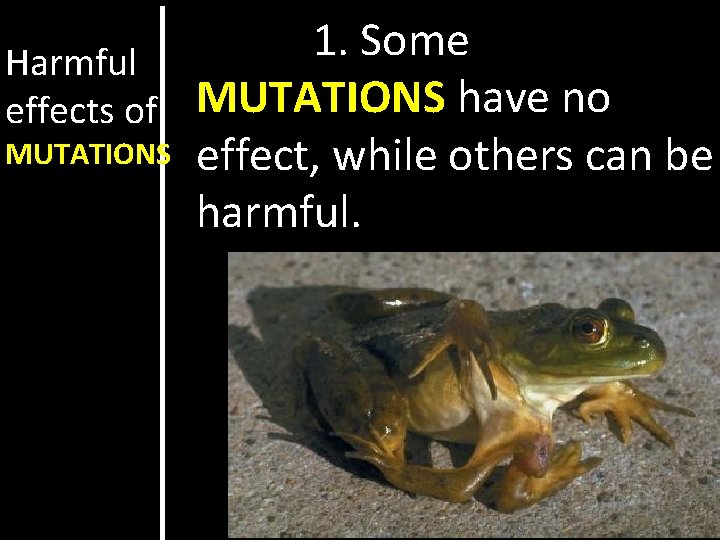
1. Some Harmful effects of MUTATIONS have no MUTATIONS effect, while others can be harmful.
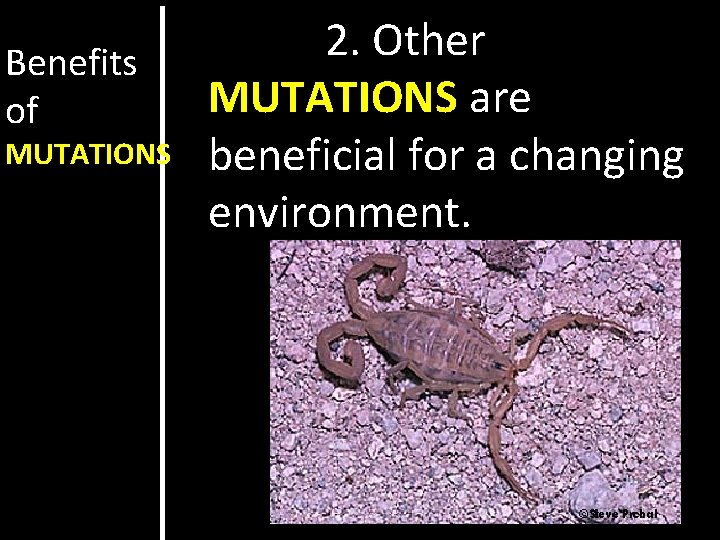
Benefits of MUTATIONS 2. Other MUTATIONS are beneficial for a changing environment.
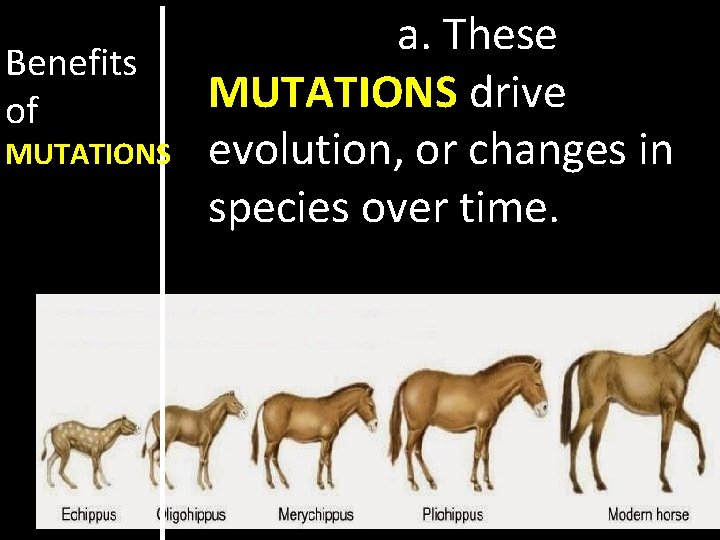
Benefits of MUTATIONS a. These MUTATIONS drive evolution, or changes in species over time.
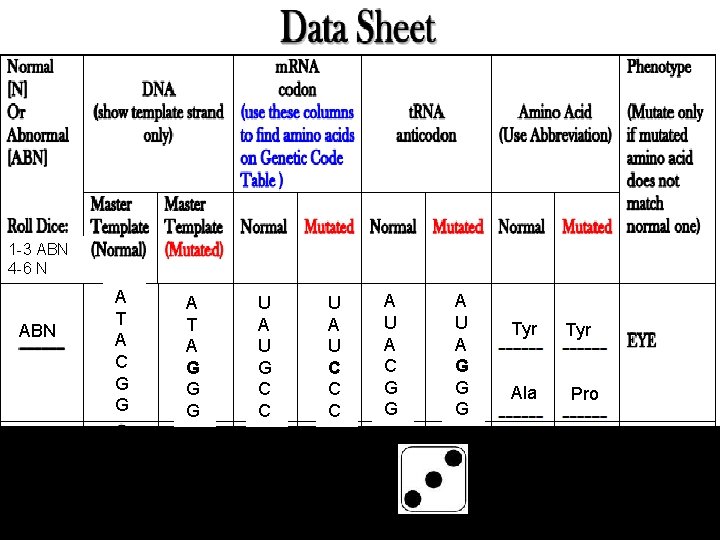
1 -3 ABN 4 -6 N ABN A T A C G G A T A G G G U A U G C C U A U C C C A U A C G G A U A G G G Tyr Ala Tyr Pro
- Slides: 69