
RNA and its Role in Protein Synthesis Eukaryotic
- Slides: 49
RNA and its Role in Protein Synthesis
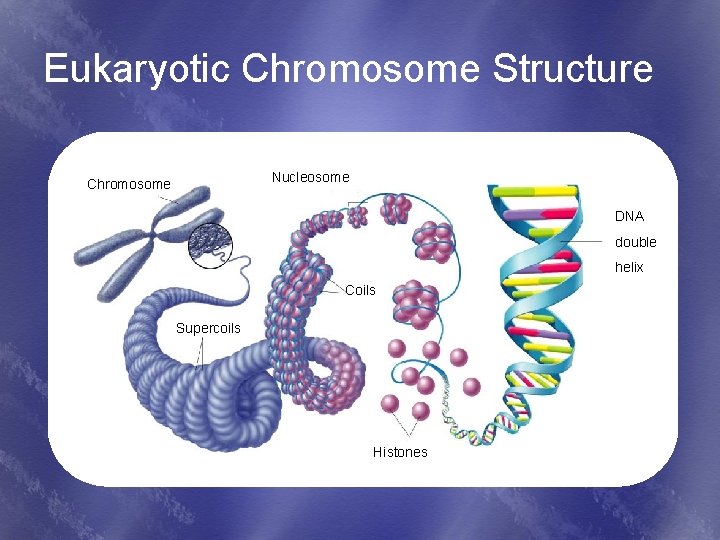
Eukaryotic Chromosome Structure Nucleosome Chromosome DNA double helix Coils Supercoils Histones
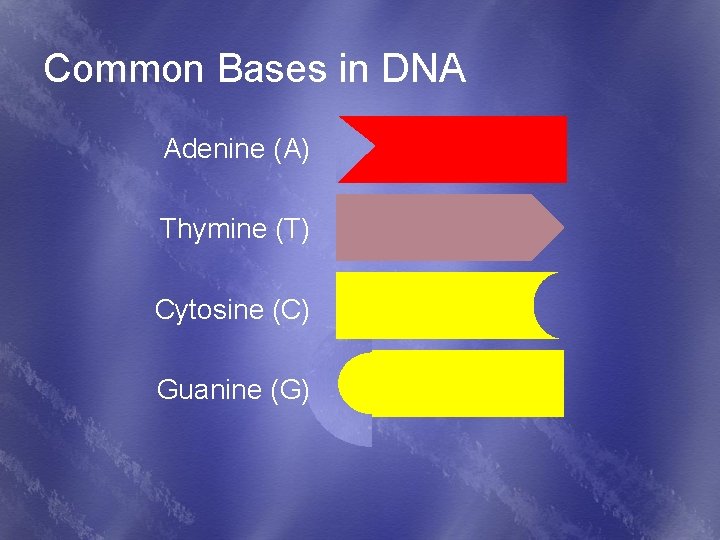
Common Bases in DNA Adenine (A) Thymine (T) Cytosine (C) Guanine (G)
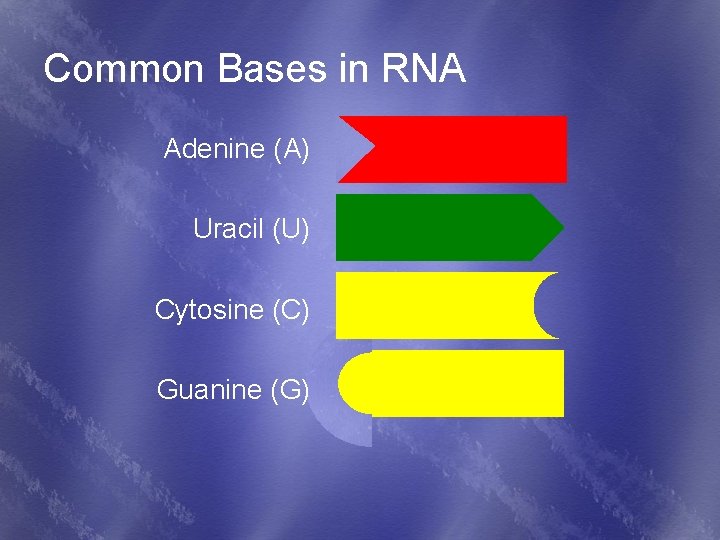
Common Bases in RNA Adenine (A) Uracil (U) Cytosine (C) Guanine (G)
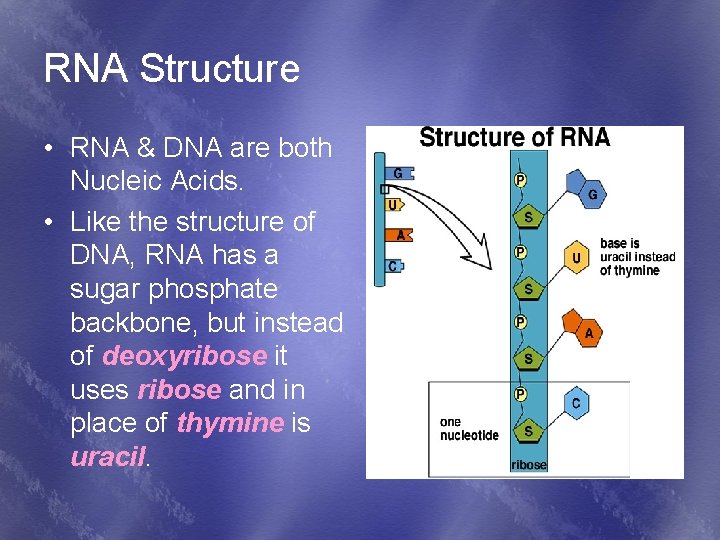
RNA Structure • RNA & DNA are both Nucleic Acids. • Like the structure of DNA, RNA has a sugar phosphate backbone, but instead of deoxyribose it uses ribose and in place of thymine is uracil.
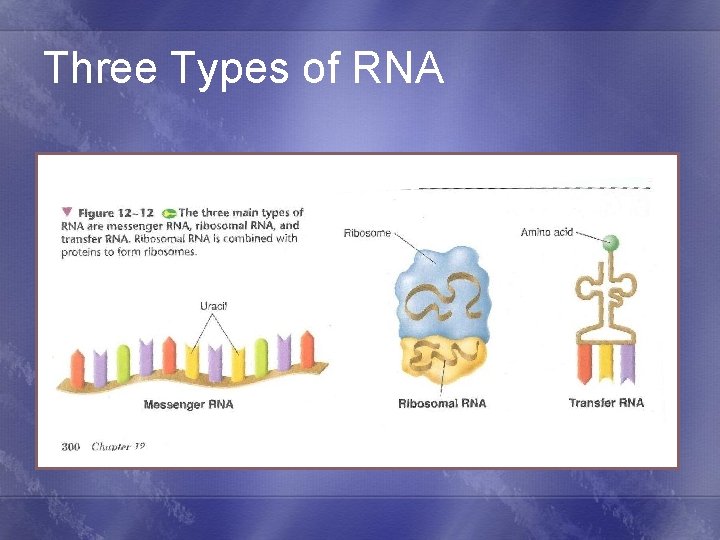
Three Types of RNA
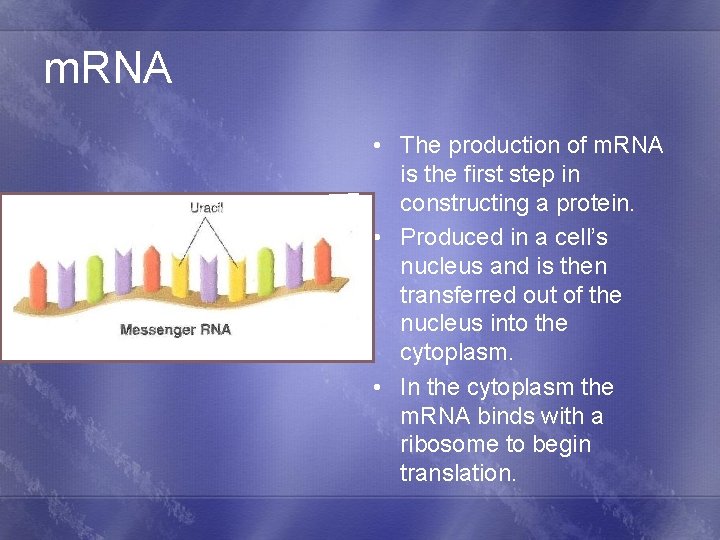
m. RNA • The production of m. RNA is the first step in constructing a protein. • Produced in a cell’s nucleus and is then transferred out of the nucleus into the cytoplasm. • In the cytoplasm the m. RNA binds with a ribosome to begin translation.
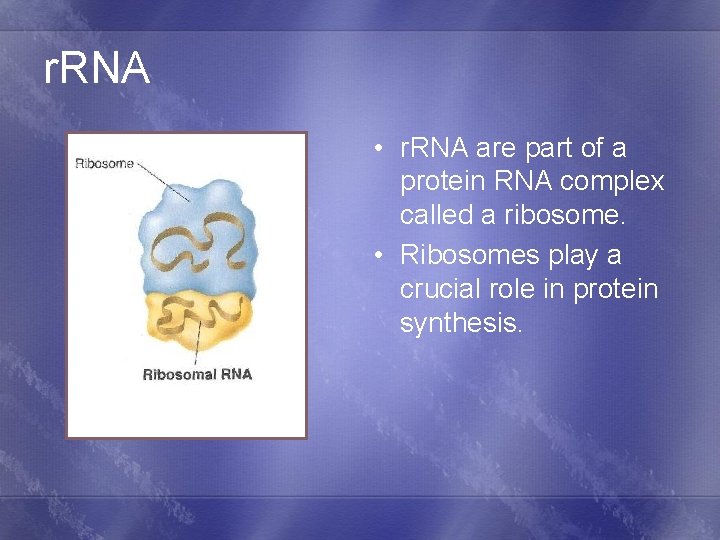
r. RNA • r. RNA are part of a protein RNA complex called a ribosome. • Ribosomes play a crucial role in protein synthesis.
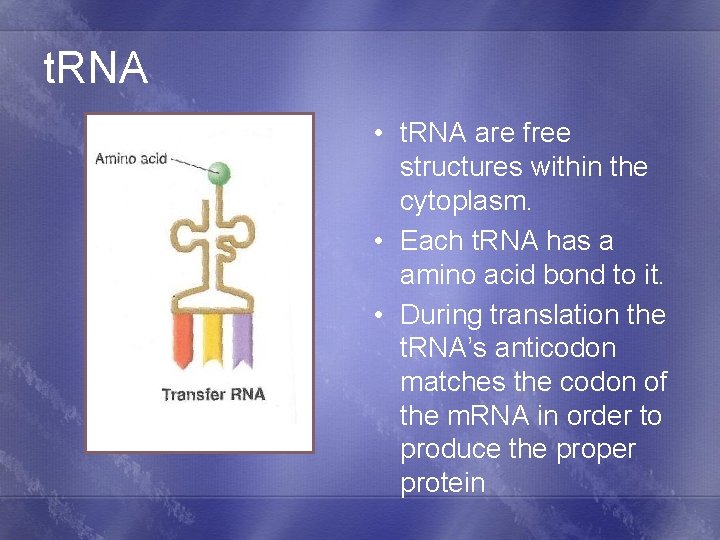
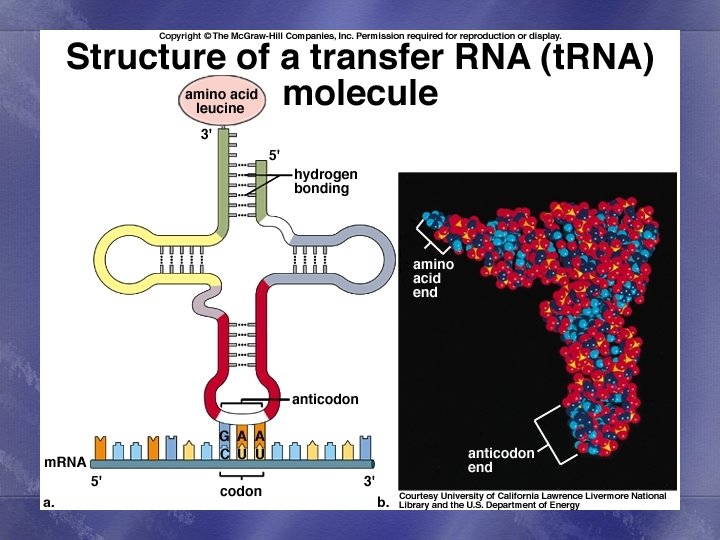
t. RNA • t. RNA are free structures within the cytoplasm. • Each t. RNA has a amino acid bond to it. • During translation the t. RNA’s anticodon matches the codon of the m. RNA in order to produce the proper protein
Assessment When I ask a question please hold up the number of fingers corresponding to the correct answer 1) m. RNA 2) r. RNA 3) t. RNA 4) multiple RNA types 5) What?
Transcription As a part of Protein Synthesis
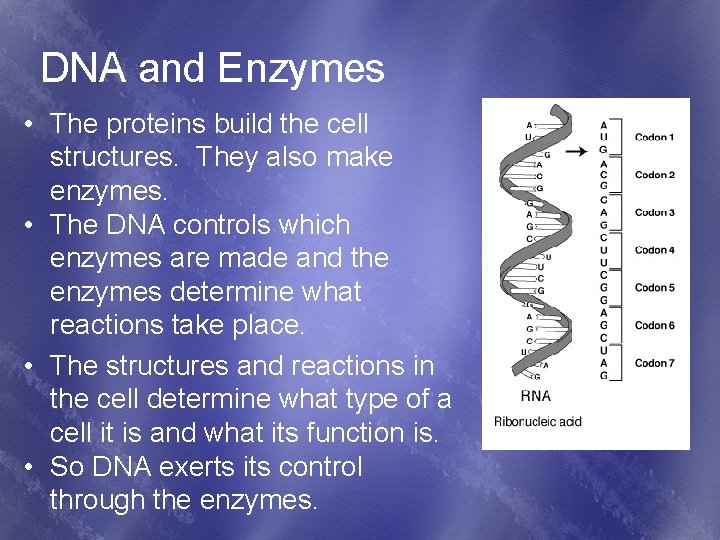
DNA and Enzymes • The proteins build the cell structures. They also make enzymes. • The DNA controls which enzymes are made and the enzymes determine what reactions take place. • The structures and reactions in the cell determine what type of a cell it is and what its function is. • So DNA exerts its control through the enzymes.
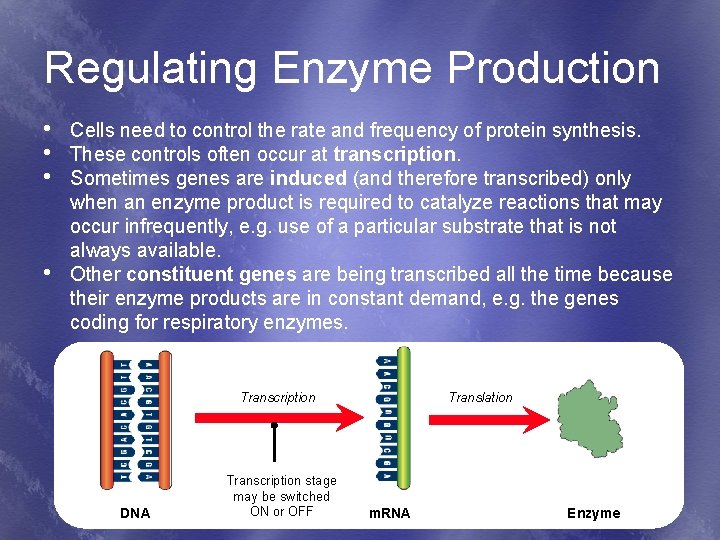
Regulating Enzyme Production • • Cells need to control the rate and frequency of protein synthesis. These controls often occur at transcription. Sometimes genes are induced (and therefore transcribed) only when an enzyme product is required to catalyze reactions that may occur infrequently, e. g. use of a particular substrate that is not always available. Other constituent genes are being transcribed all the time because their enzyme products are in constant demand, e. g. the genes coding for respiratory enzymes. Translation Transcription DNA Transcription stage may be switched ON or OFF m. RNA Enzyme
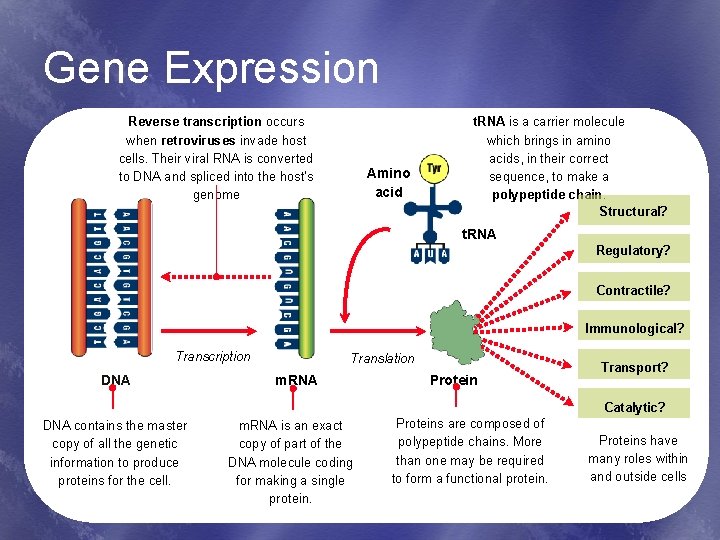
Gene Expression Reverse transcription occurs when retroviruses invade host cells. Their viral RNA is converted to DNA and spliced into the host's genome Amino acid t. RNA is a carrier molecule which brings in amino acids, in their correct sequence, to make a polypeptide chain. Structural? t. RNA Regulatory? Contractile? Immunological? Transcription DNA Translation m. RNA Protein Transport? Catalytic? DNA contains the master copy of all the genetic information to produce proteins for the cell. m. RNA is an exact copy of part of the DNA molecule coding for making a single protein. Proteins are composed of polypeptide chains. More than one may be required to form a functional protein. Proteins have many roles within and outside cells
Eukaryotic Gene Control • Eukaryotic genes have a relatively large number of control elements. – Control elements, such as the enhancer sequence, are nonprotein-coding sections of DNA that help regulate transcription by binding proteins called transcription factors.
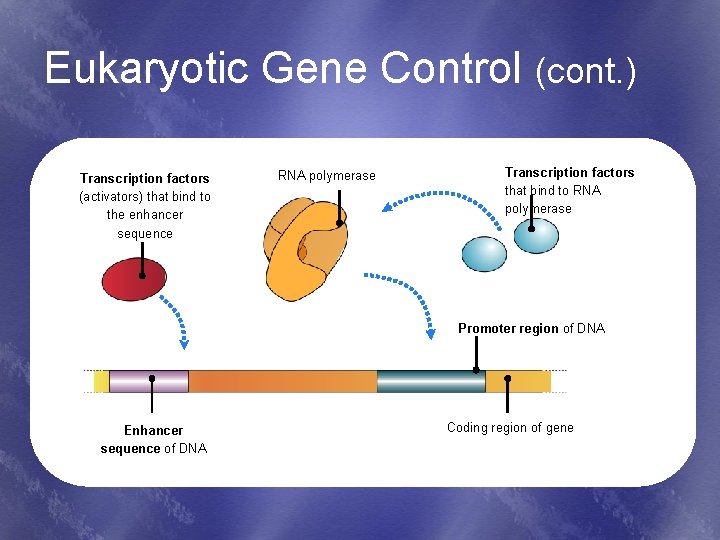
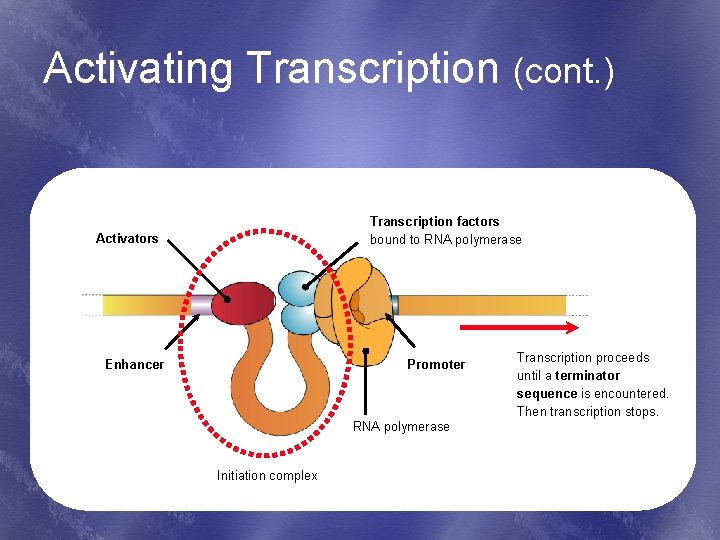
Eukaryotic Gene Control (cont. ) Transcription factors (activators) that bind to the enhancer sequence RNA polymerase Transcription factors that bind to RNA polymerase Promoter region of DNA Enhancer sequence of DNA Coding region of gene
Role of Transcription Factors • • Each functional eukaryotic gene has a promoter region where the RNA polymerase binds and begins transcription. Eukaryotic RNA polymerase cannot, on its own, initiate transcription. – It depends on transcription factors to recognize and bind to – the promoter. Transcription factors also bind to the enhancer sequence of DNA
Activating Transcription (cont. ) Transcription factors bound to RNA polymerase Activators Enhancer Promoter RNA polymerase Initiation complex Transcription proceeds until a terminator sequence is encountered. Then transcription stops.
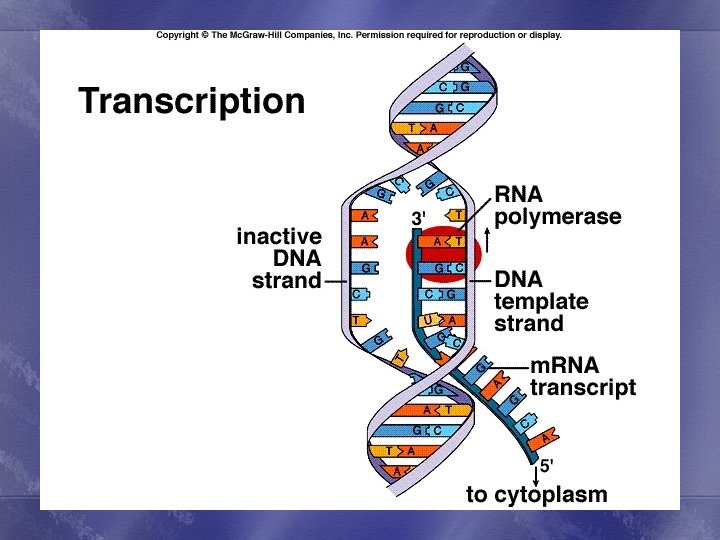
Transcription • • • RNA polymerase Messenger RNA (m. RNA) Unzipping of DNA helix. Sense strand or template strand Codons Genetic code
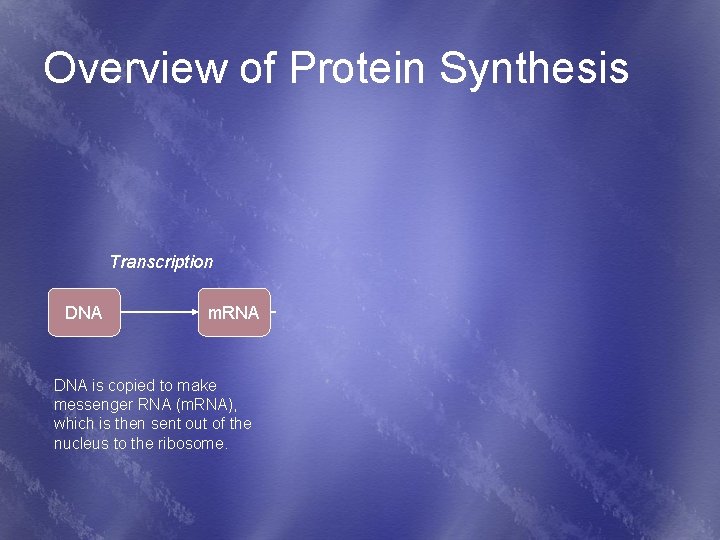
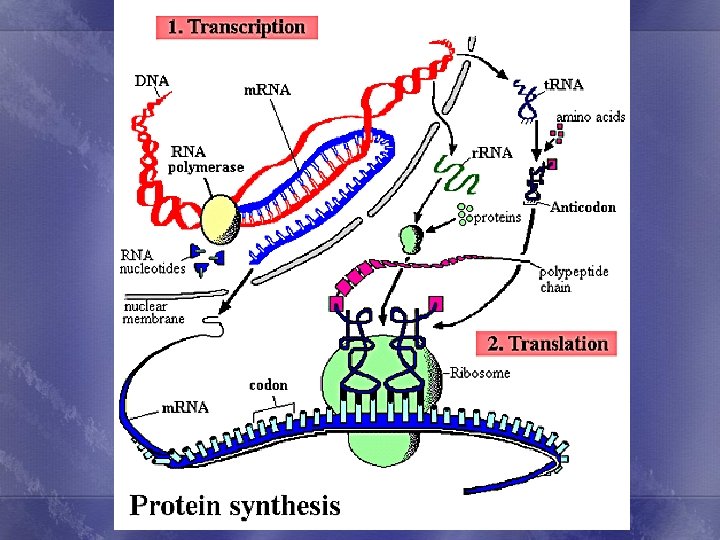
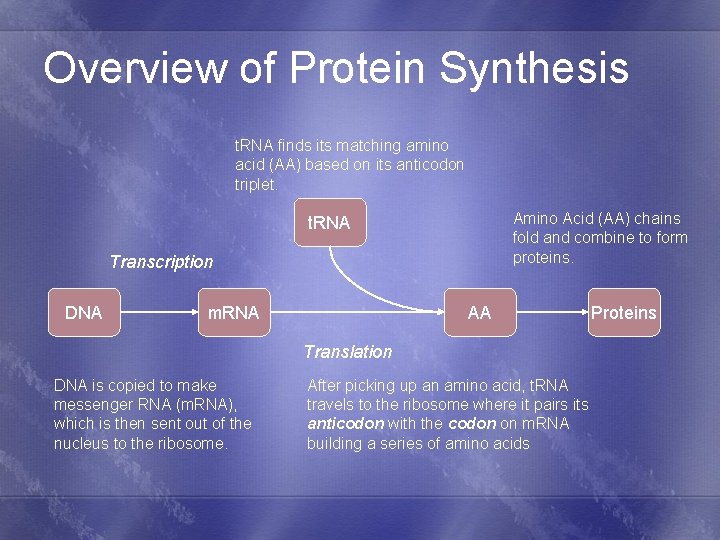
Overview of Protein Synthesis t. RNA finds its matching amino acid (AA) based on its anticodon triplet. Amino Acid (AA) chains fold and combine to form proteins. t. RNA Transcription DNA m. RNA AA Translation DNA is copied to make messenger RNA (m. RNA), which is then sent out of the nucleus to the ribosome. After picking up an amino acid, t. RNA travels to the ribosome where it pairs its anticodon with the codon on m. RNA building a series of amino acids Proteins
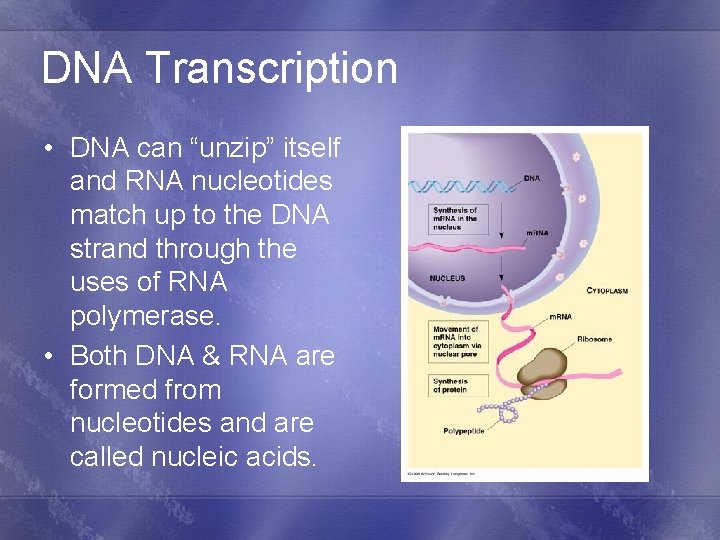
DNA Transcription • DNA can “unzip” itself and RNA nucleotides match up to the DNA strand through the uses of RNA polymerase. • Both DNA & RNA are formed from nucleotides and are called nucleic acids.
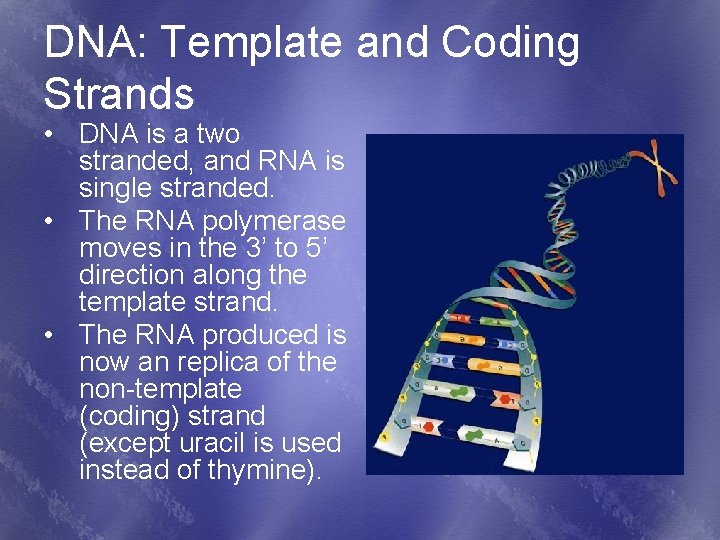
DNA: Template and Coding Strands • DNA is a two stranded, and RNA is single stranded. • The RNA polymerase moves in the 3’ to 5’ direction along the template strand. • The RNA produced is now an replica of the non-template (coding) strand (except uracil is used instead of thymine).
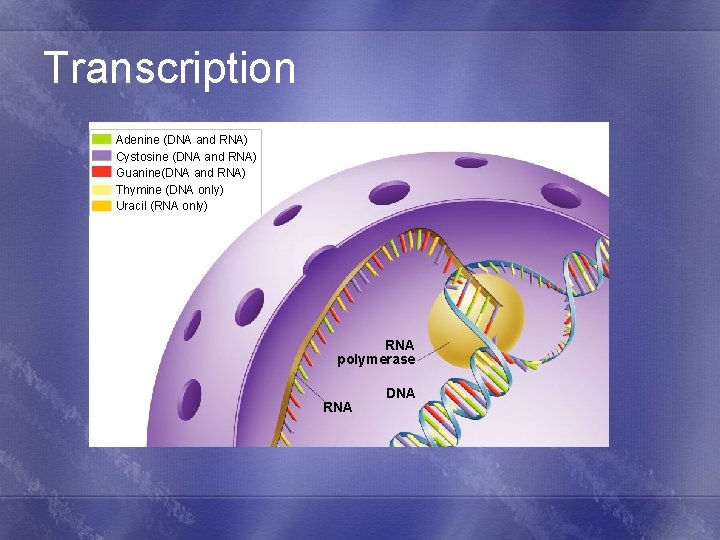
Transcription Adenine (DNA and RNA) Cystosine (DNA and RNA) Guanine(DNA and RNA) Thymine (DNA only) Uracil (RNA only) RNA polymerase RNA DNA
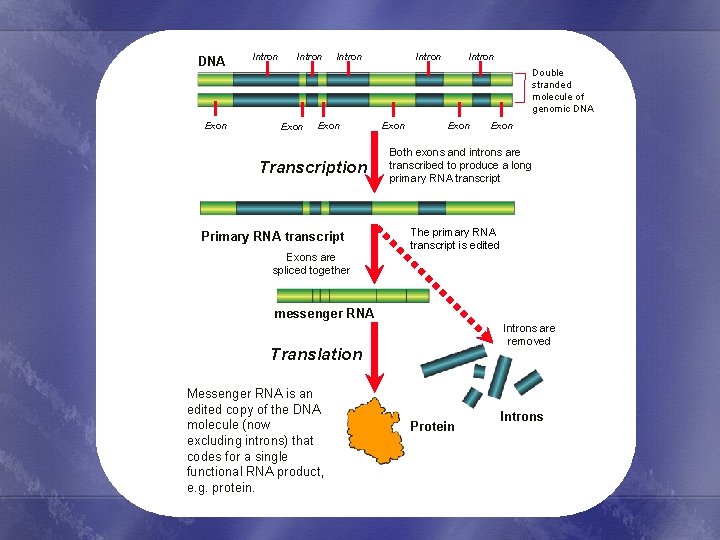
Introns and Exons • Most eukaryotic genes contain segments of proteincoding sequences (exons) interrupted by non-protein -coding sequences (introns). – Introns in the DNA are long sequences of codons that have no – – protein-coding function. Introns may be remnants of now unused ancient genes. Introns might also facilitate recombination between exons of different genes; a process that may accelerate evolution.
DNA Exon Intron Intron Double stranded molecule of genomic DNA Exon Transcription Primary RNA transcript Exons are spliced together Exon Both exons and introns are transcribed to produce a long primary RNA transcript The primary RNA transcript is edited messenger RNA Introns are removed Translation Messenger RNA is an edited copy of the DNA molecule (now excluding introns) that codes for a single functional RNA product, e. g. protein. Protein Introns
Translation As a part of Protein Synthesis
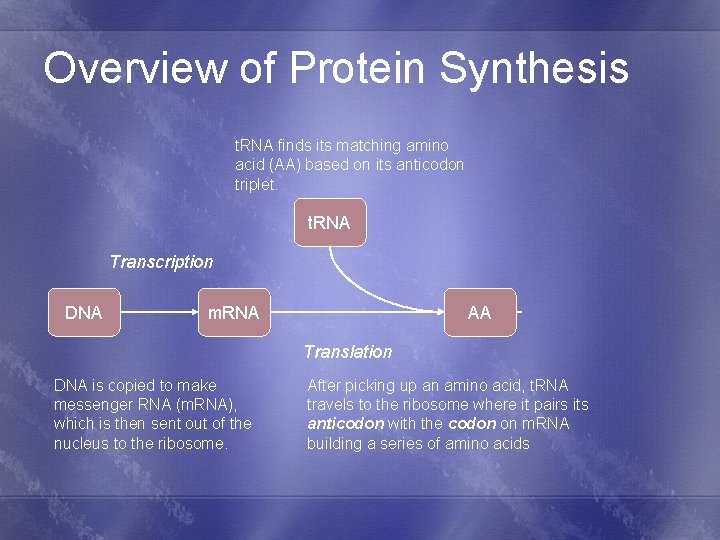
Overview of Protein Synthesis t. RNA finds its matching amino acid (AA) based on its anticodon triplet. Amino Acid (AA) chains fold and combine to form proteins. t. RNA Transcription DNA m. RNA AA Translation DNA is copied to make messenger RNA (m. RNA), which is then sent out of the nucleus to the ribosome. After picking up an amino acid, t. RNA travels to the ribosome where it pairs its anticodon with the codon on m. RNA building a series of amino acids Proteins
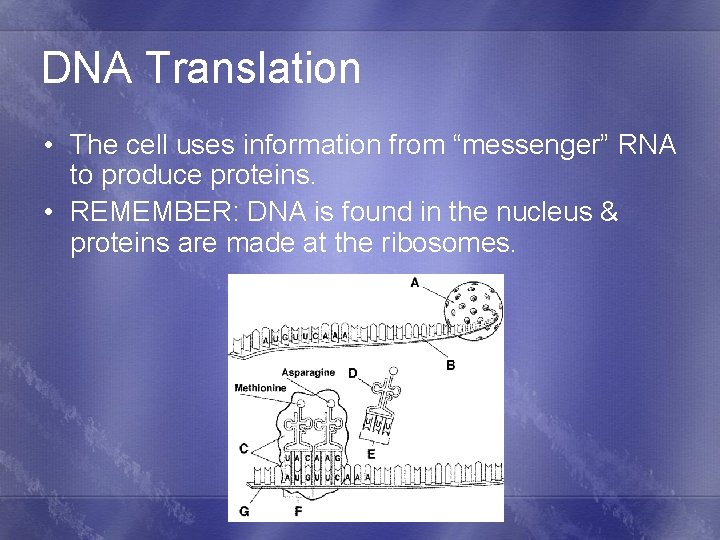
DNA Translation • The cell uses information from “messenger” RNA to produce proteins. • REMEMBER: DNA is found in the nucleus & proteins are made at the ribosomes.
Translation • • • In Ribosomes Large and small subunits Codons Initiator or start codon Stop codons t. RNA • • Initiation Chain Elongation Peptide bonds Chain termination
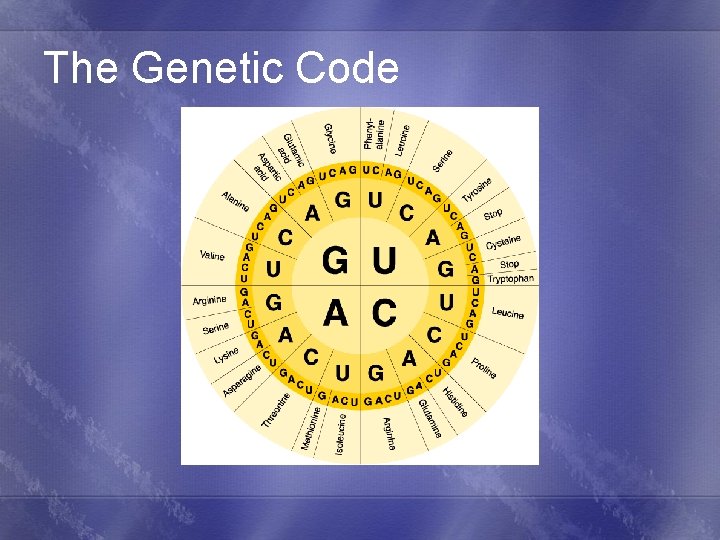
The Genetic Code • The sequence of bases in DNA forms the Genetic Code. • A group of three bases (a triplet) controls the production of a particular amino acid in the cytoplasm of the cell. • The different amino acids and the order in which they are joined up determines the sort of protein being produced.
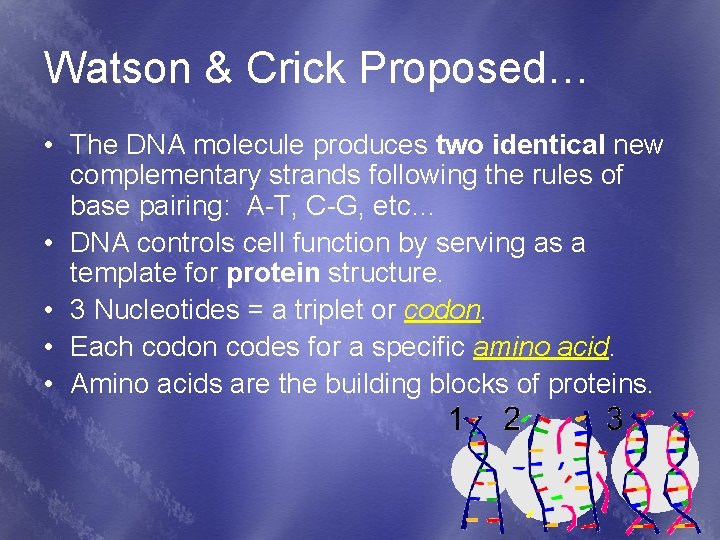
Watson & Crick Proposed… • The DNA molecule produces two identical new complementary strands following the rules of base pairing: A-T, C-G, etc… • DNA controls cell function by serving as a template for protein structure. • 3 Nucleotides = a triplet or codon. • Each codon codes for a specific amino acid. • Amino acids are the building blocks of proteins.
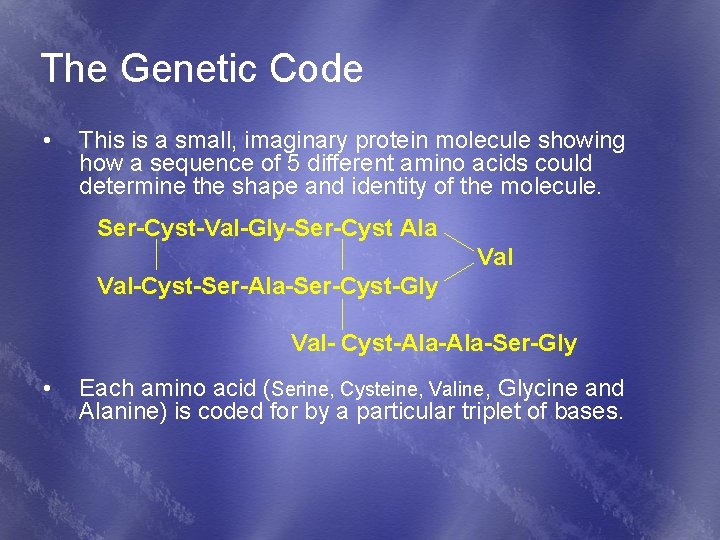
The Genetic Code • This is a small, imaginary protein molecule showing how a sequence of 5 different amino acids could determine the shape and identity of the molecule. Ser-Cyst-Val-Gly-Ser-Cyst Ala Val-Cyst-Ser-Ala-Ser-Cyst-Gly Val- Cyst-Ala-Ser-Gly • Each amino acid (Serine, Cysteine, Valine, Glycine and Alanine) is coded for by a particular triplet of bases.
The Genetic Code
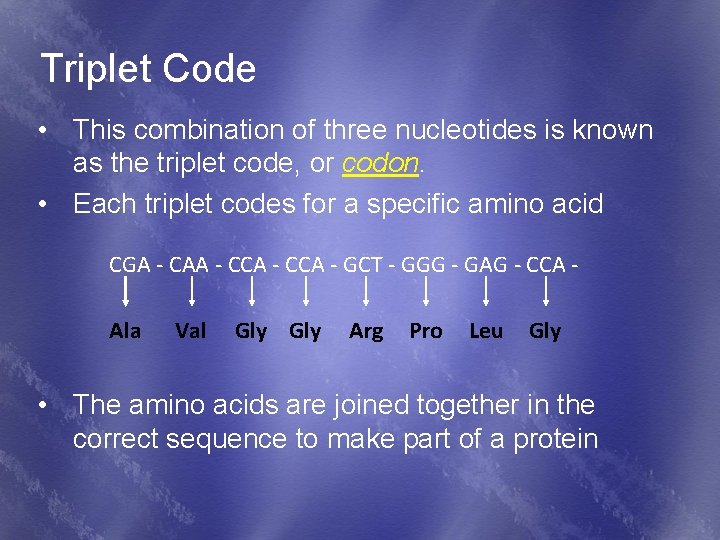
Triplet Code • This combination of three nucleotides is known as the triplet code, or codon. • Each triplet codes for a specific amino acid CGA - CAA - CCA - GCT - GGG - GAG - CCA Ala Val Gly Arg Pro Leu Gly • The amino acids are joined together in the correct sequence to make part of a protein
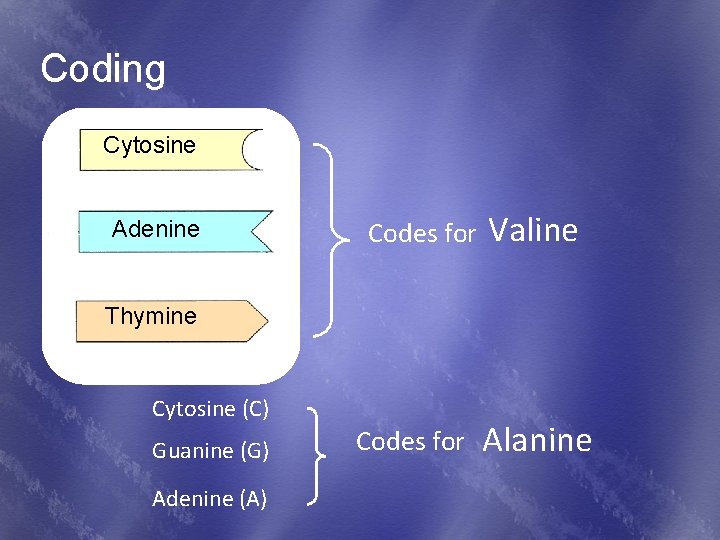
Coding Cytosine Adenine Codes for Valine Thymine Cytosine (C) Guanine (G) Adenine (A) Codes for Alanine
Genes • A sequence of triplets in the DNA molecule may code for a complete protein. • Such a sequence forms a gene. • There may be a thousand or more bases in one gene
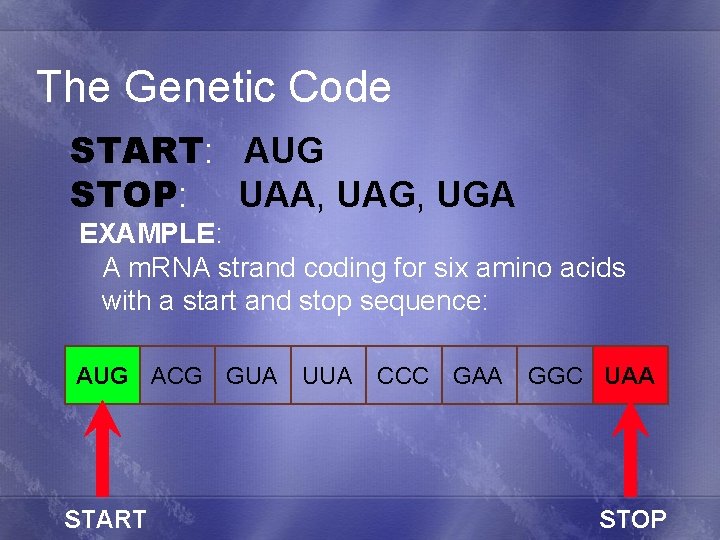
The Genetic Code START: AUG STOP: UAA, UAG, UGA EXAMPLE: A m. RNA strand coding for six amino acids with a start and stop sequence: AUG ACG GUA UUA START CCC GAA GGC UAA STOP
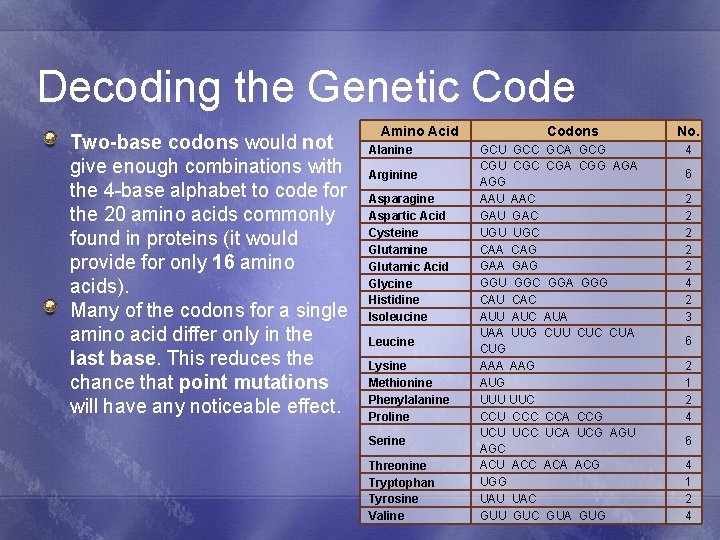
Decoding the Genetic Code Two-base codons would not give enough combinations with the 4 -base alphabet to code for the 20 amino acids commonly found in proteins (it would provide for only 16 amino acids). Many of the codons for a single amino acid differ only in the last base. This reduces the chance that point mutations will have any noticeable effect. Amino Acid Alanine Arginine Asparagine Aspartic Acid Cysteine Glutamic Acid Glycine Histidine Isoleucine Lysine Methionine Phenylalanine Proline Serine Threonine Tryptophan Tyrosine Valine Codons GCU GCC GCA GCG CGU CGC CGA CGG AGA AGG AAU AAC GAU GAC UGU UGC CAA CAG GAA GAG GGU GGC GGA GGG CAU CAC AUU AUC AUA UAA UUG CUU CUC CUA CUG AAA AAG AUG UUU UUC CCU CCC CCA CCG UCU UCC UCA UCG AGU AGC ACU ACC ACA ACG UGG UAU UAC GUU GUC GUA GUG No. 4 6 2 2 2 4 2 3 6 2 1 2 4 6 4 1 2 4
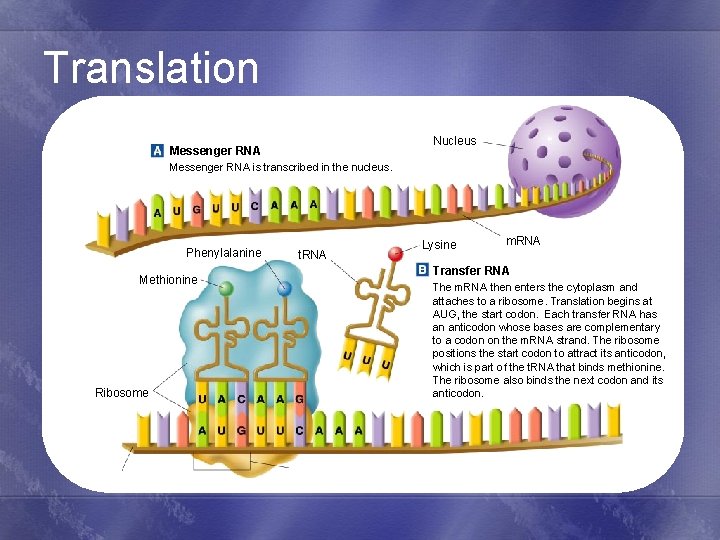
Translation Nucleus Messenger RNA is transcribed in the nucleus. Phenylalanine Methionine Ribosome t. RNA Lysine m. RNA Transfer RNA The m. RNA then enters the cytoplasm and attaches to a ribosome. Translation begins at AUG, the start codon. Each transfer RNA has an anticodon whose bases are complementary to a codon on the m. RNA strand. The ribosome positions the start codon to attract its anticodon, which is part of the t. RNA that binds methionine. The ribosome also binds the next codon and its anticodon.
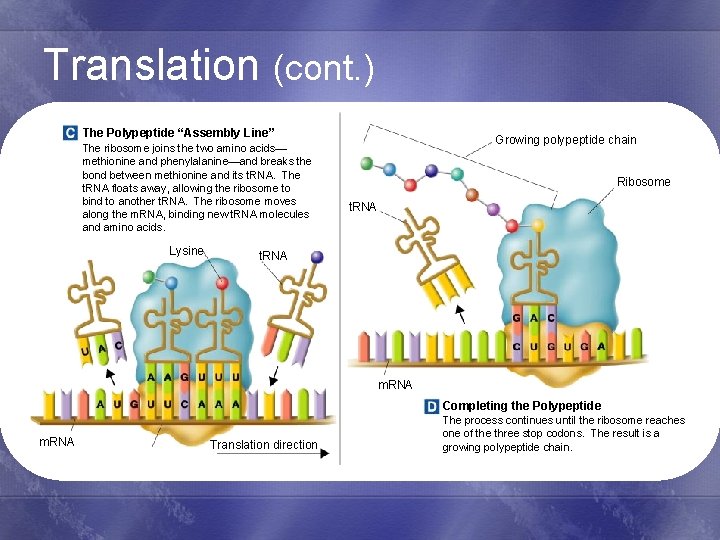
Translation (cont. ) The Polypeptide “Assembly Line” The ribosome joins the two amino acids— methionine and phenylalanine—and breaks the bond between methionine and its t. RNA. The t. RNA floats away, allowing the ribosome to bind to another t. RNA. The ribosome moves along the m. RNA, binding new t. RNA molecules and amino acids. Lysine Growing polypeptide chain Ribosome t. RNA m. RNA Completing the Polypeptide m. RNA Translation direction The process continues until the ribosome reaches one of the three stop codons. The result is a growing polypeptide chain.
Protein Synthesis
Overview of Protein Synthesis t. RNA finds its matching amino acid (AA) based on its anticodon triplet. Amino Acid (AA) chains fold and combine to form proteins. t. RNA Transcription DNA m. RNA AA Translation DNA is copied to make messenger RNA (m. RNA), which is then sent out of the nucleus to the ribosome. After picking up an amino acid, t. RNA travels to the ribosome where it pairs its anticodon with the codon on m. RNA building a series of amino acids Proteins
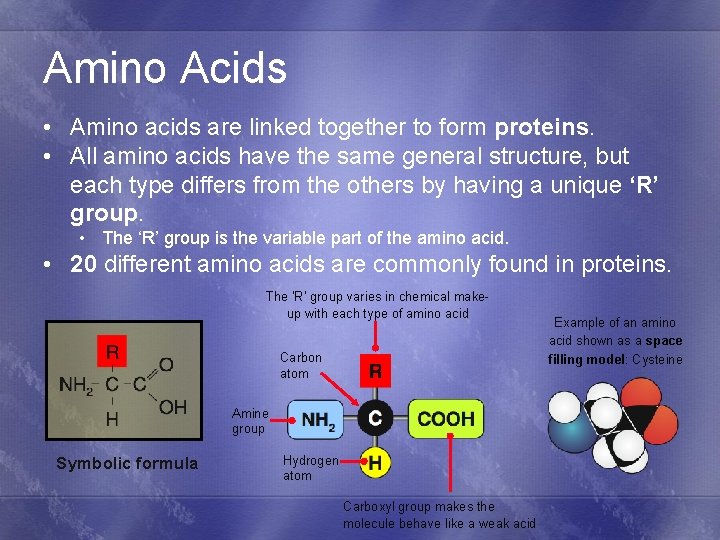
Amino Acids • Amino acids are linked together to form proteins. • All amino acids have the same general structure, but each type differs from the others by having a unique ‘R’ group. • The ‘R’ group is the variable part of the amino acid. • 20 different amino acids are commonly found in proteins. The 'R' group varies in chemical makeup with each type of amino acid Carbon atom Amine group Symbolic formula Hydrogen atom Carboxyl group makes the molecule behave like a weak acid Example of an amino acid shown as a space filling model: Cysteine
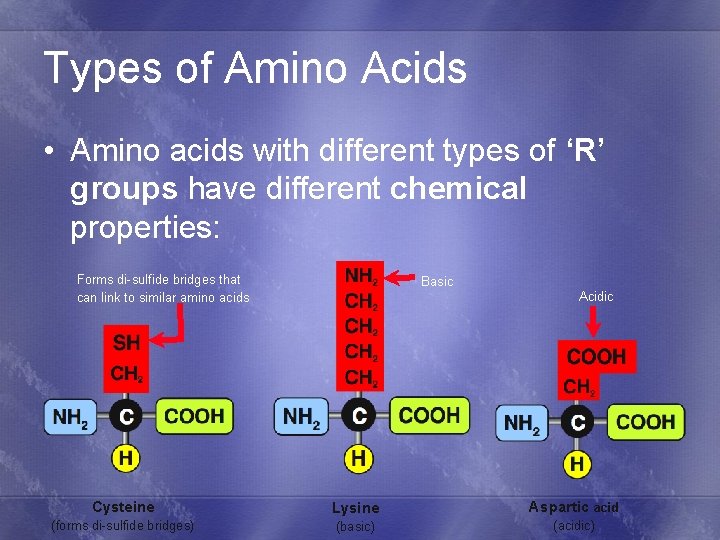
Types of Amino Acids • Amino acids with different types of ‘R’ groups have different chemical properties: Forms di-sulfide bridges that can link to similar amino acids Basic Acidic Cysteine Lysine Aspartic acid (forms di-sulfide bridges) (basic) (acidic)
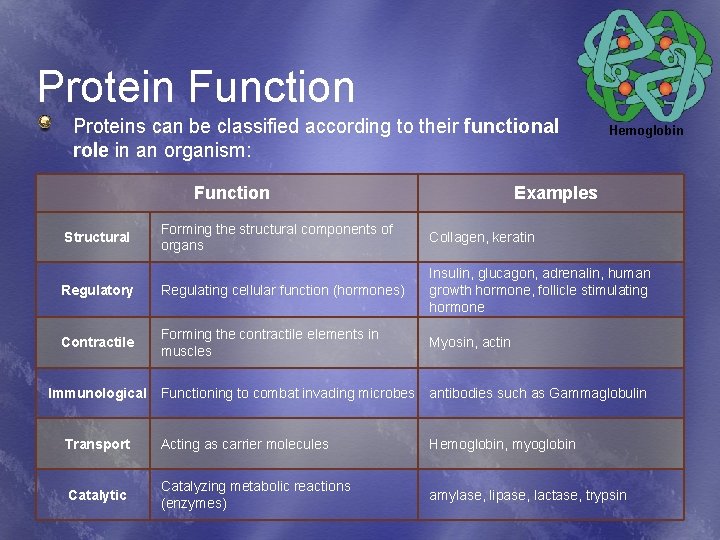
Protein Function Proteins can be classified according to their functional role in an organism: Function Hemoglobin Examples Forming the structural components of organs Collagen, keratin Regulatory Regulating cellular function (hormones) Insulin, glucagon, adrenalin, human growth hormone, follicle stimulating hormone Contractile Forming the contractile elements in muscles Myosin, actin Functioning to combat invading microbes antibodies such as Gammaglobulin Transport Acting as carrier molecules Hemoglobin, myoglobin Catalytic Catalyzing metabolic reactions (enzymes) amylase, lipase, lactase, trypsin Structural Immunological
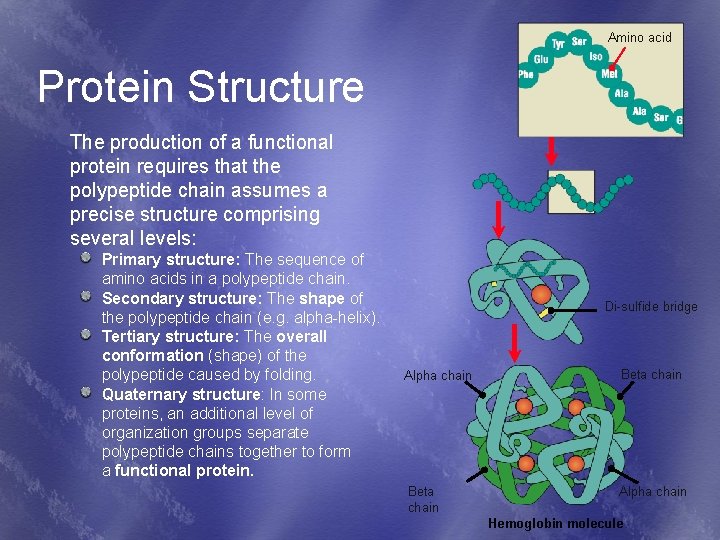
Amino acid Protein Structure The production of a functional protein requires that the polypeptide chain assumes a precise structure comprising several levels: Primary structure: The sequence of amino acids in a polypeptide chain. Secondary structure: The shape of the polypeptide chain (e. g. alpha-helix). Tertiary structure: The overall conformation (shape) of the polypeptide caused by folding. Quaternary structure: In some proteins, an additional level of organization groups separate polypeptide chains together to form a functional protein. Di-sulfide bridge Alpha chain Beta chain Alpha chain Hemoglobin molecule