
RL 5 Analyzing the structure of a text
- Slides: 8
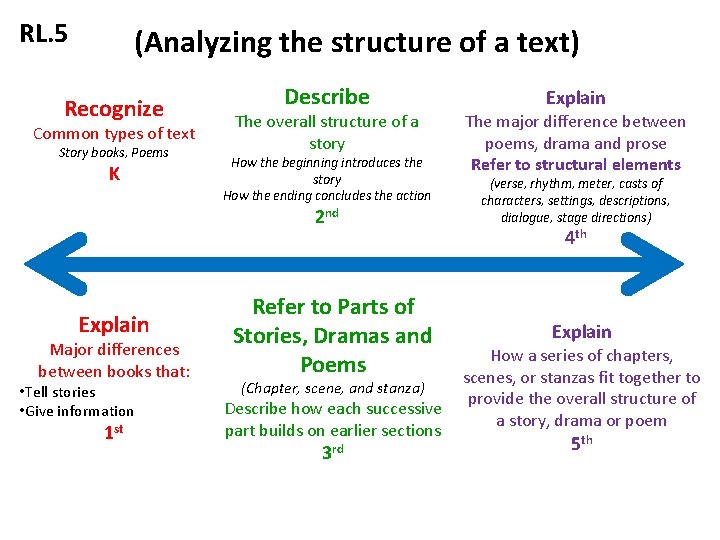
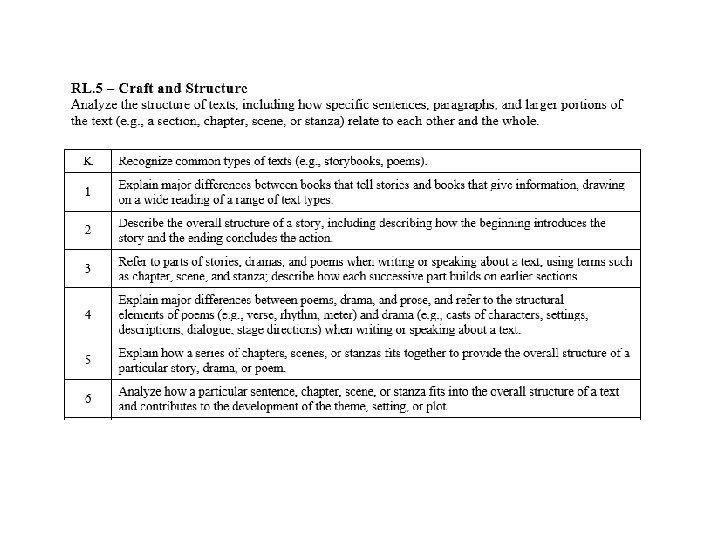
RL. 5 (Analyzing the structure of a text) Recognize Common types of text Story books, Poems K Describe The overall structure of a story How the beginning introduces the story How the ending concludes the action 2 nd Major differences between books that: Refer to Parts of Stories, Dramas and Poems 1 st Describe how each successive part builds on earlier sections Explain • Tell stories • Give information (Chapter, scene, and stanza) 3 rd Explain The major difference between poems, drama and prose Refer to structural elements (verse, rhythm, meter, casts of characters, settings, descriptions, dialogue, stage directions) 4 th Explain How a series of chapters, scenes, or stanzas fit together to provide the overall structure of a story, drama or poem 5 th
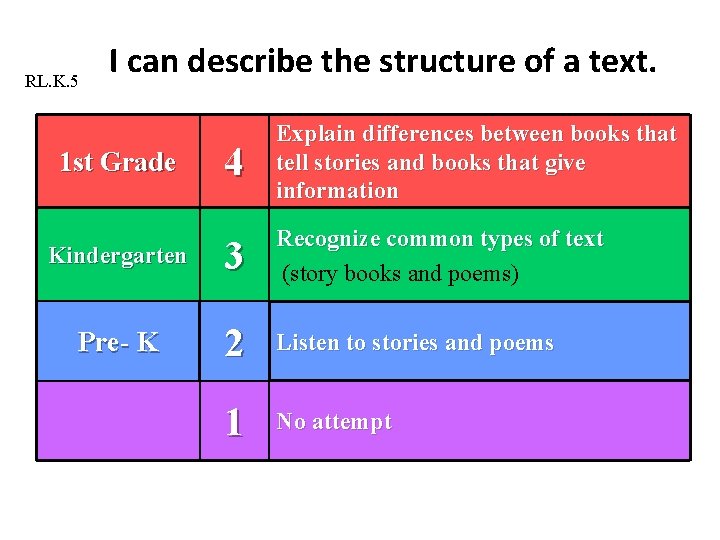
RL. K. 5 I can describe the structure of a text. 4 Explain differences between books that tell stories and books that give information Kindergarten 3 Recognize common types of text (story books and poems) Pre- K 2 Listen to stories and poems 1 No attempt 1 st Grade
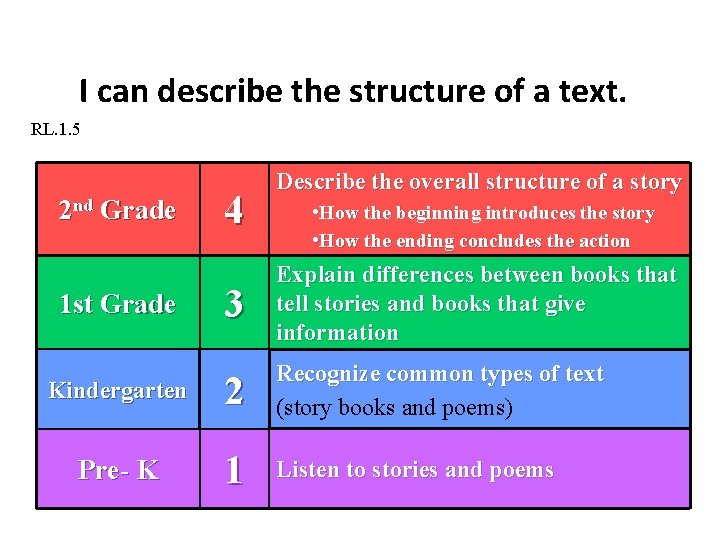
I can describe the structure of a text. RL. 1. 5 2 nd Grade 4 Describe the overall structure of a story • How the beginning introduces the story • How the ending concludes the action 3 Explain differences between books that tell stories and books that give information Kindergarten 2 Recognize common types of text (story books and poems) Pre- K 1 Listen to stories and poems 1 st Grade
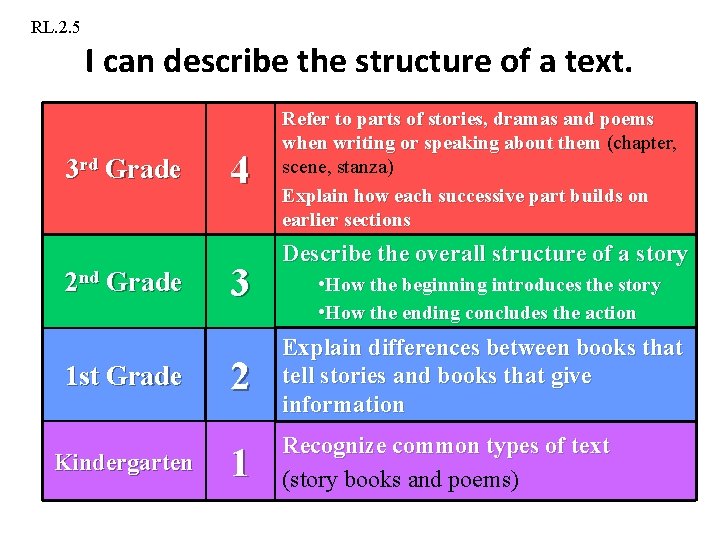
RL. 2. 5 I can describe the structure of a text. 3 rd Grade 2 nd Grade 1 st Grade Kindergarten 4 3 Refer to parts of stories, dramas and poems when writing or speaking about them (chapter, scene, stanza) Explain how each successive part builds on earlier sections Describe the overall structure of a story • How the beginning introduces the story • How the ending concludes the action 2 Explain differences between books that tell stories and books that give information 1 Recognize common types of text (story books and poems)
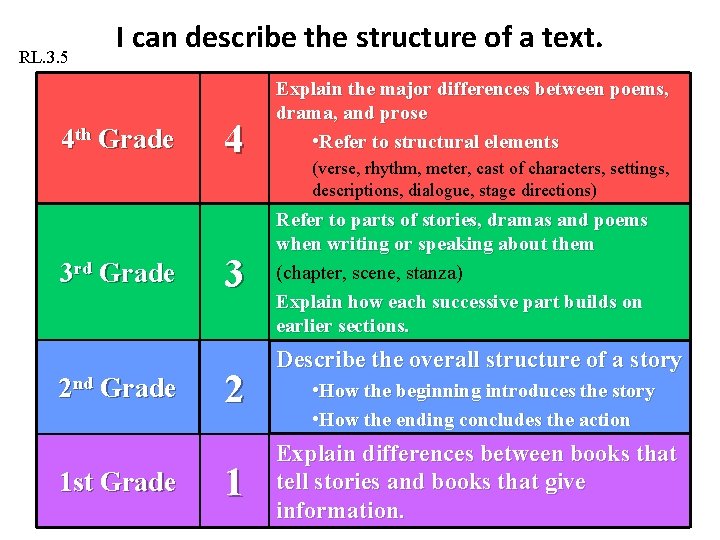
RL. 3. 5 I can describe the structure of a text. 4 th Grade 3 rd Grade 2 nd Grade 1 st Grade 4 3 2 1 Explain the major differences between poems, drama, and prose • Refer to structural elements (verse, rhythm, meter, cast of characters, settings, descriptions, dialogue, stage directions) Refer to parts of stories, dramas and poems when writing or speaking about them (chapter, scene, stanza) Explain how each successive part builds on earlier sections. Describe the overall structure of a story • How the beginning introduces the story • How the ending concludes the action Explain differences between books that tell stories and books that give information.
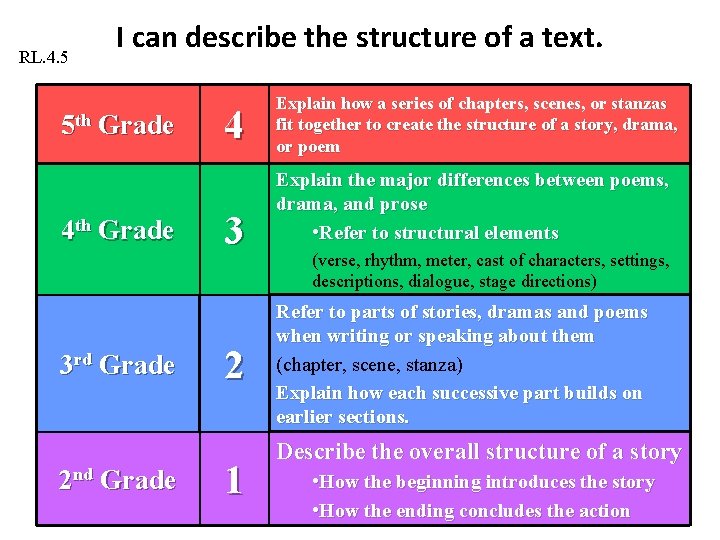
RL. 4. 5 I can describe the structure of a text. 5 th Grade 4 th Grade 3 rd Grade 2 nd Grade 4 3 2 1 Explain how a series of chapters, scenes, or stanzas fit together to create the structure of a story, drama, or poem Explain the major differences between poems, drama, and prose • Refer to structural elements (verse, rhythm, meter, cast of characters, settings, descriptions, dialogue, stage directions) Refer to parts of stories, dramas and poems when writing or speaking about them (chapter, scene, stanza) Explain how each successive part builds on earlier sections. Describe the overall structure of a story • How the beginning introduces the story • How the ending concludes the action
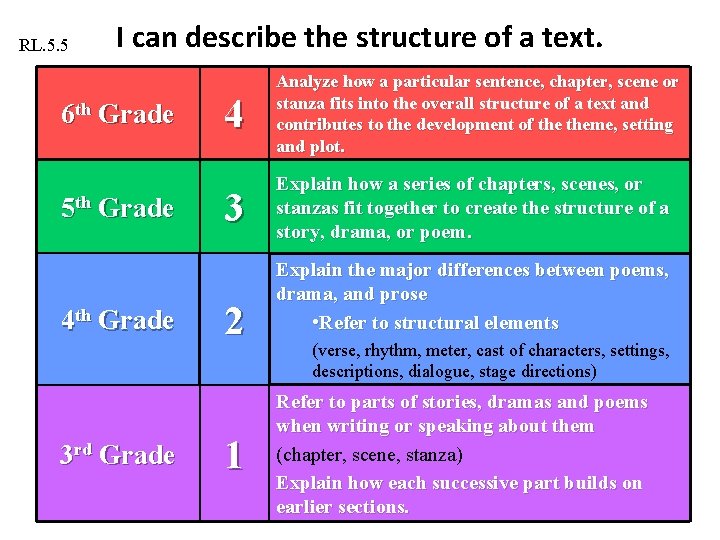
RL. 5. 5 I can describe the structure of a text. 6 th Grade 5 th Grade 4 th Grade 3 rd Grade 4 Analyze how a particular sentence, chapter, scene or stanza fits into the overall structure of a text and contributes to the development of theme, setting and plot. 3 Explain how a series of chapters, scenes, or stanzas fit together to create the structure of a story, drama, or poem. 2 1 Explain the major differences between poems, drama, and prose • Refer to structural elements (verse, rhythm, meter, cast of characters, settings, descriptions, dialogue, stage directions) Refer to parts of stories, dramas and poems when writing or speaking about them (chapter, scene, stanza) Explain how each successive part builds on earlier sections.