
Rivers Learning Outcomes You Will Learn to describe
Rivers!
Learning Outcomes You Will Learn: • to describe the features along a river course • to identify river features on topographical maps • about the positive and negative impact of rivers on people • to examine the interrelationship between River Nile and human activities
Lesson 1 Introducing Rivers! Did You Know. . ? • A person can live about a month without food, but only about 1 week without water. • 97% of the water on earth is in the oceans. • Only 3% of the water on earth is freshwater. • About 2. 4% of the water on earth is permanently frozen in glaciers and at the polar ice caps.
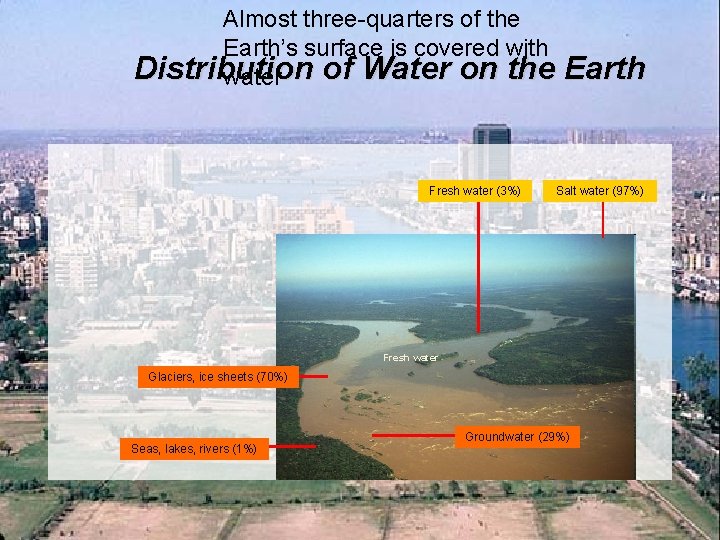
Almost three-quarters of the Earth’s surface is covered with Distribution of Water on the water Fresh water (3%) Earth Salt water (97%) Fresh water Glaciers, ice sheets (70%) Seas, lakes, rivers (1%) Groundwater (29%)
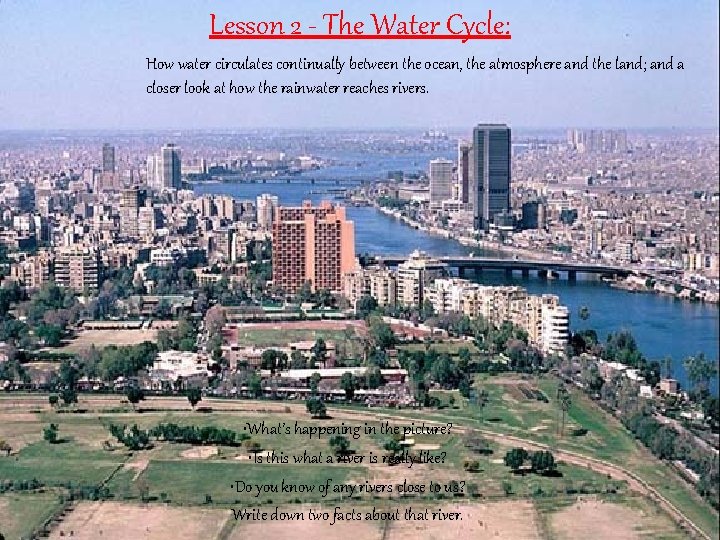
Lesson 2 - The Water Cycle: How water circulates continually between the ocean, the atmosphere and the land; and a closer look at how the rainwater reaches rivers. • What’s happening in the picture? • Is this what a river is really like? • Do you know of any rivers close to us? Write down two facts about that river.
The Hydrologic Cycle • Continuous movement of water from the Earth’s surface into the air, and back onto the Earth • Water changes state at each stage of the cycle • Processes occur at the same time http: //data. piercecollege. edu/weather/flash/hydrocycle. swf
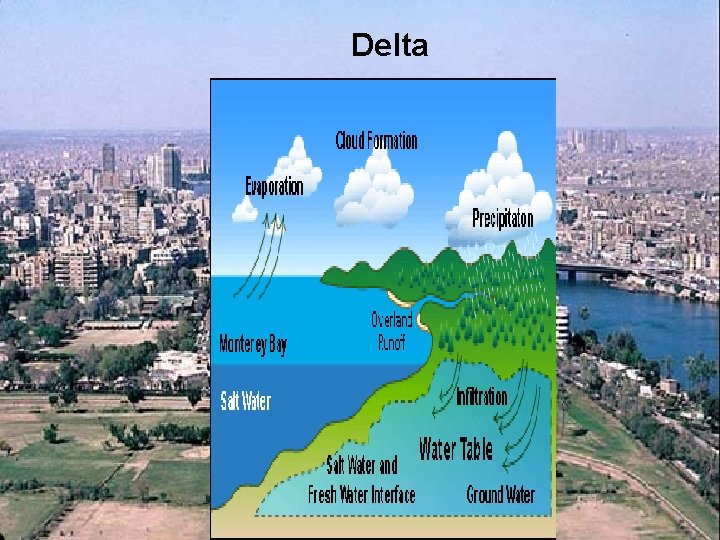
Let’s have a look at some of the processes so that we can understand it a little bit better: Evaporation • When the water on the earth, e. g. the ocean, is warmed by the sun, evaporation takes place. • This water is transferred to the air as water vapour (gas). • The liquid water changes to water vapour (gas). • Air containing water vapour rises from the earth's surface. • More evaporation takes place when there are greater amounts of sunshine, temperature and wind speed. Transpiration • Transpiration is liquid water that is given off by plants through their leaves (transpiration) and from their leaves (evaporation). • This water is transferred to the air as water vapour (gas). Condensation • Air containing water vapour (from evaporation or transpiration) rises and cools. • The water vapour (gas) changes into water droplets (liquid). • Clouds are formed. Precipitation • Precipitation is water falling from the sky or atmosphere as rain, hail, snow, sleet, frost or dew.
But what happens to the precipitation when it reaches the earth? Well, it could: • be taken up by plant roots. • soak into the soil and rocks. This is called infiltration. This water forms part of the groundwater. Groundwater is stored in rocks as part of the water table. Or it could: • remain frozen and be stored as ice as part of an ice sheet or glacier. • stay on the earth's surface in a river or a lake. Water that reaches rivers will flow towards the sea. This is called surface run-off.
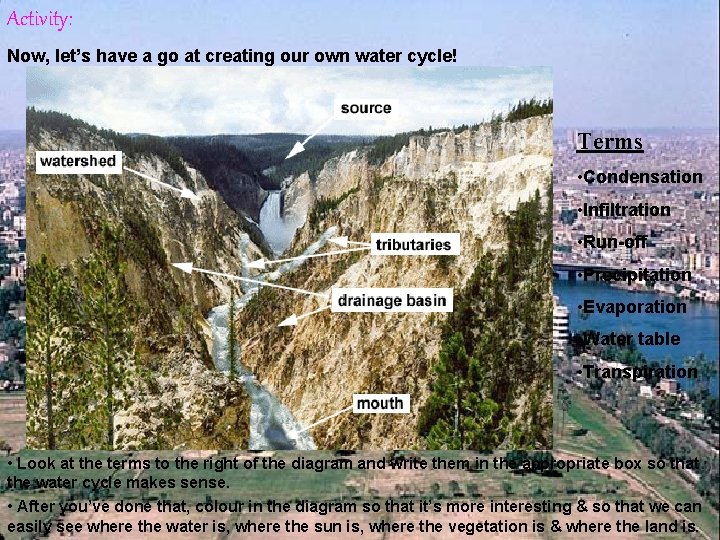
Activity: Now, let’s have a go at creating our own water cycle! Terms • Condensation • Infiltration • Run-off • Precipitation • Evaporation • Water table • Transpiration • Look at the terms to the right of the diagram and write them in the appropriate box so that the water cycle makes sense. • After you’ve done that, colour in the diagram so that it’s more interesting & so that we can easily see where the water is, where the sun is, where the vegetation is & where the land is.

A River’s Profile:

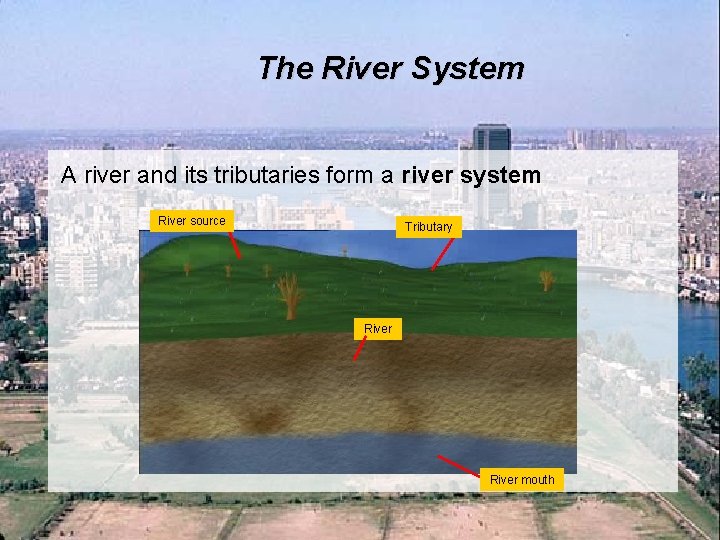
The River System A river and its tributaries form a river system River source Tributary River mouth
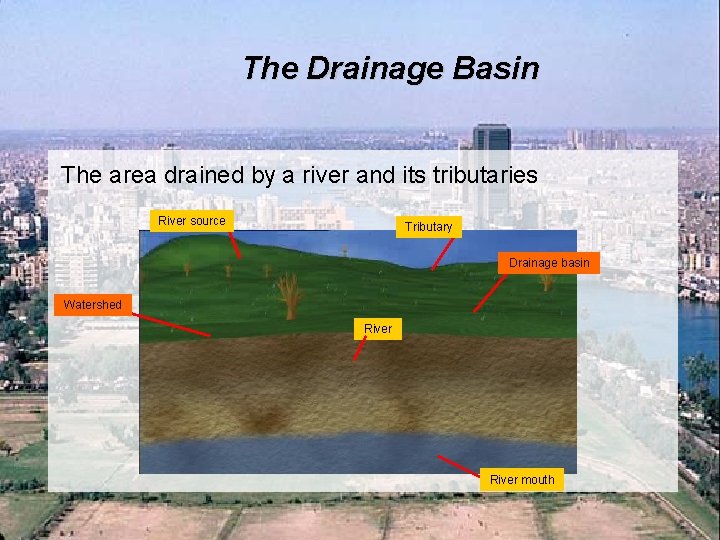
The Drainage Basin The area drained by a river and its tributaries River source Tributary Drainage basin Watershed River mouth
The point where two rivers join is called the confluence. The entire area of land into which a river and its tributaries drain is called a drainage basin or catchment area. The high-lying area, like a mountain, that separates one drainage basin from another is called a watershed. The river will continue to flow downstream until it flows into the sea. We say that the river ends at the mouth, in a lowland area. Are you managing to remember all of these terms? Let's look at a diagram of a drainage basin to make sure that you understand:
Activity: A River's Course 1) Explain what the source of a river is. _________________________ 2) Where is this source usually found? _________________________ 3) Explain what the mouth of a river is. _________________________ 4) Where is the mouth of a river usually found? _________________________ 5) What is a tributary of a river? _________________________
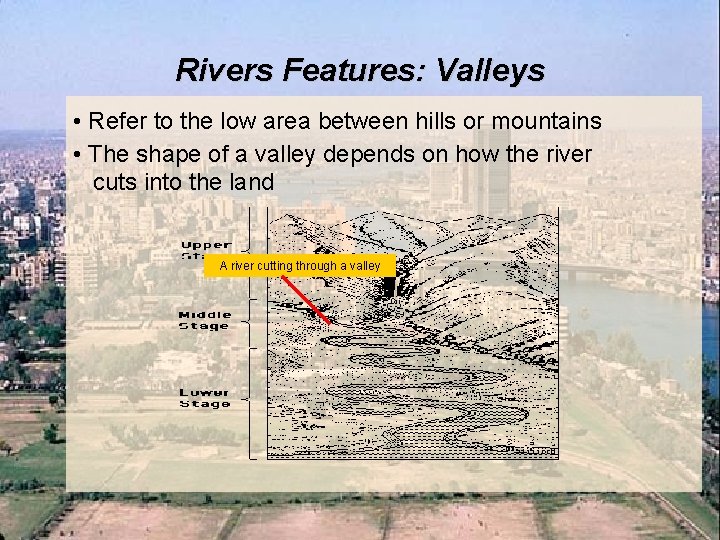
Rivers Features: Valleys • Refer to the low area between hills or mountains • The shape of a valley depends on how the river cuts into the land A river cutting through a valley
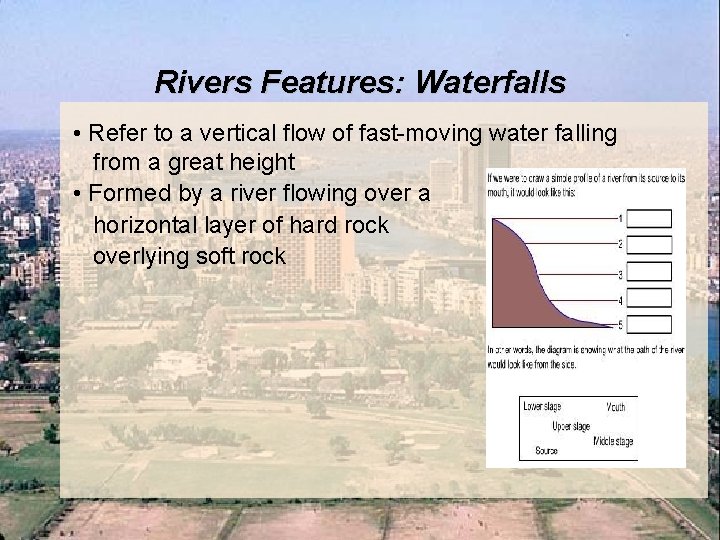
Rivers Features: Waterfalls • Refer to a vertical flow of fast-moving water falling from a great height • Formed by a river flowing over a horizontal layer of hard rock overlying soft rock
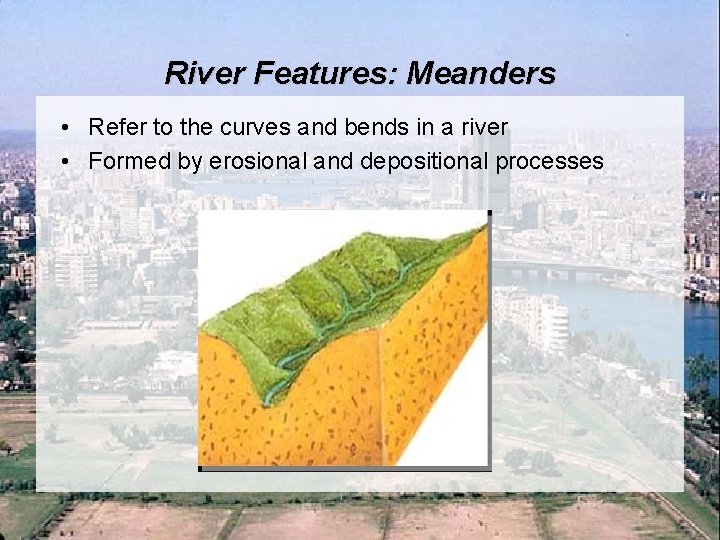
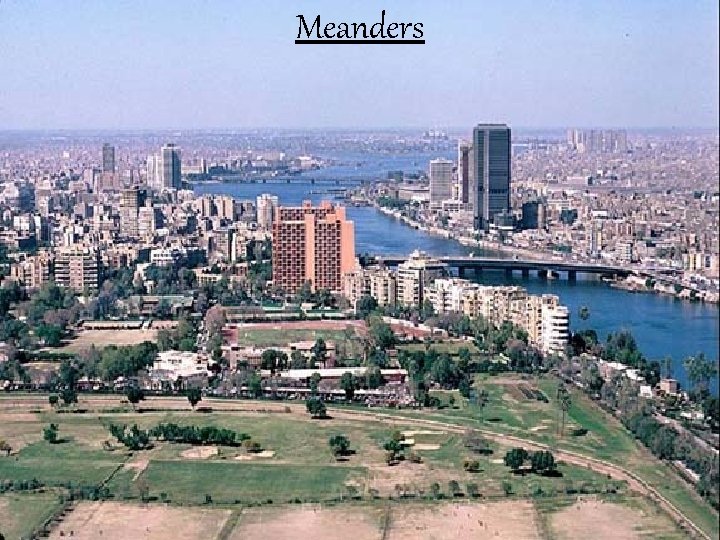
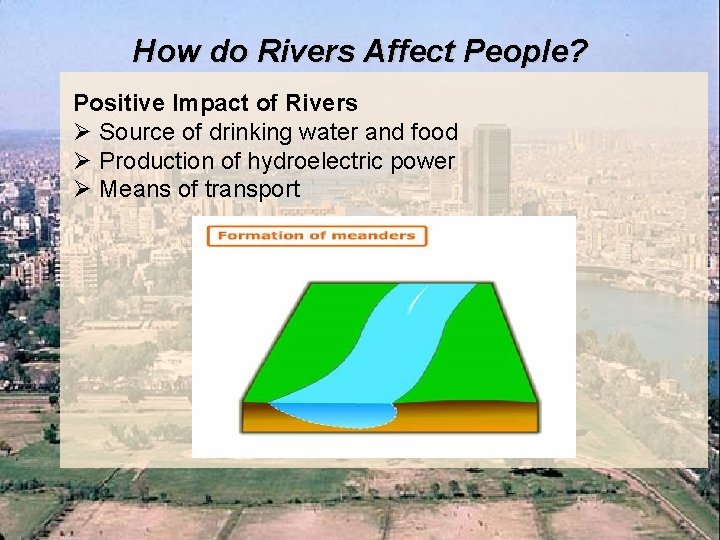
River Features: Meanders • Refer to the curves and bends in a river • Formed by erosional and depositional processes
Meanders
Floodplain
Deltas
Delta
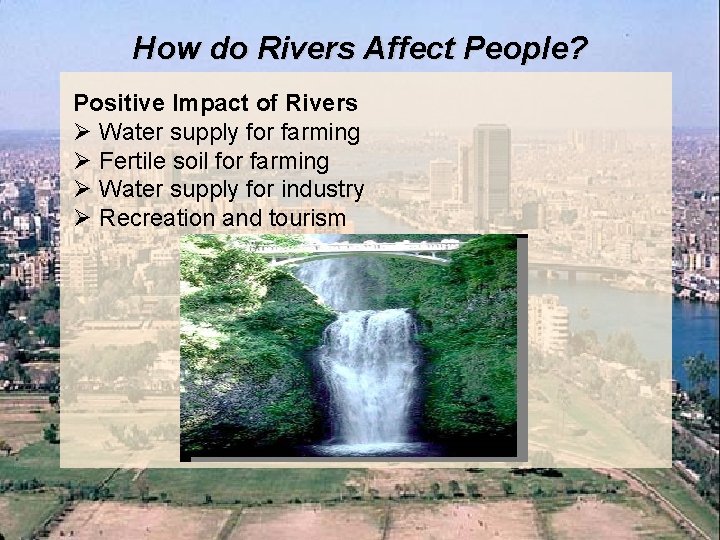
How do Rivers Affect People? Positive Impact of Rivers Ø Water supply for farming Ø Fertile soil for farming Ø Water supply for industry Ø Recreation and tourism
How do Rivers Affect People? Positive Impact of Rivers Ø Source of drinking water and food Ø Production of hydroelectric power Ø Means of transport
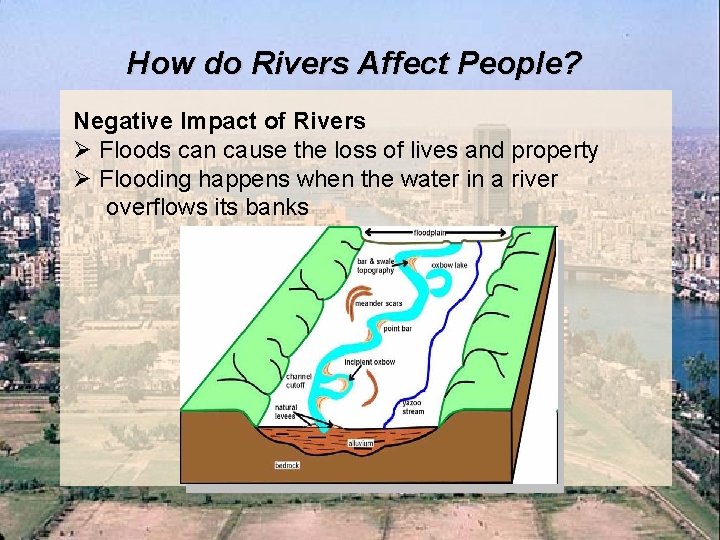
How do Rivers Affect People? Negative Impact of Rivers Ø Floods can cause the loss of lives and property Ø Flooding happens when the water in a river overflows its banks
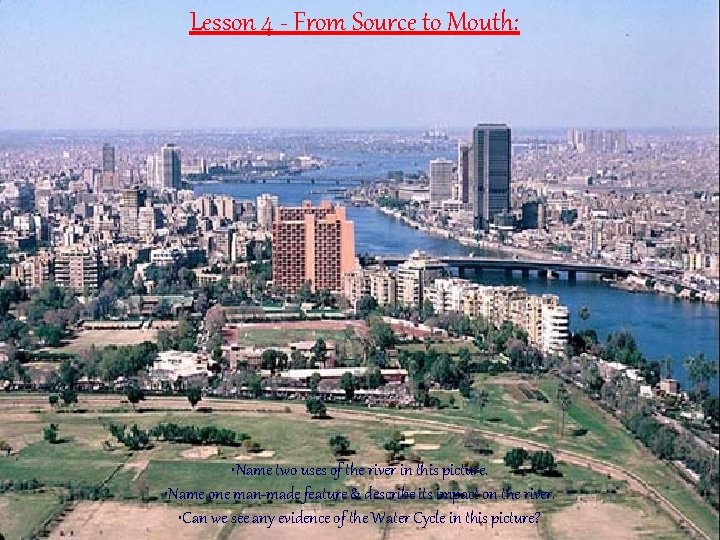
Lesson 4 - From Source to Mouth: • Name two uses of the river in this picture. • Name one man-made feature & describe its impact on the river. • Can we see any evidence of the Water Cycle in this picture?
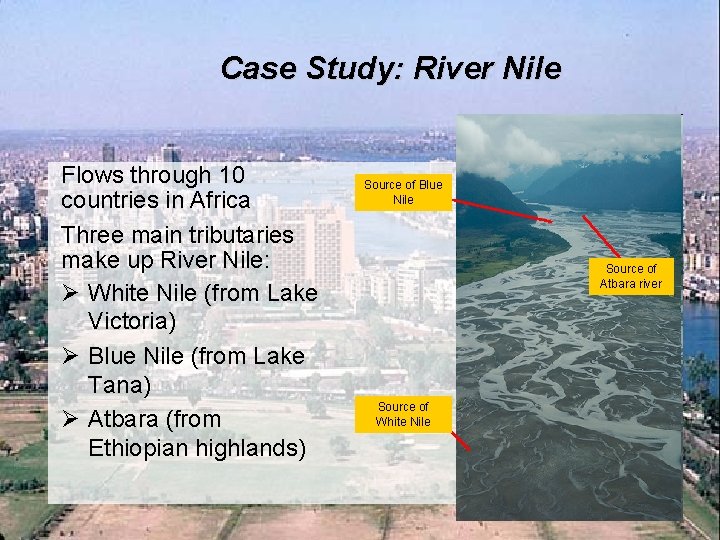
Case Study: River Nile Flows through 10 countries in Africa Three main tributaries make up River Nile: Ø White Nile (from Lake Victoria) Ø Blue Nile (from Lake Tana) Ø Atbara (from Ethiopian highlands) Source of Blue Nile Source of Atbara river Source of White Nile
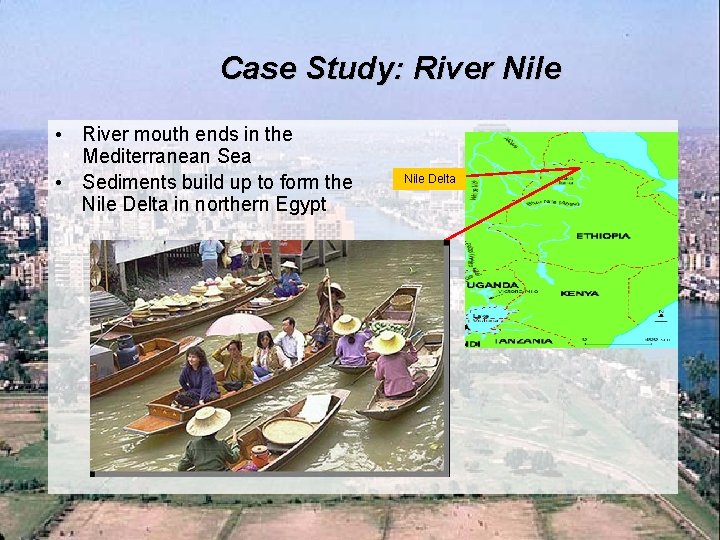
Case Study: River Nile • River mouth ends in the Mediterranean Sea • Sediments build up to form the Nile Delta in northern Egypt Nile Delta
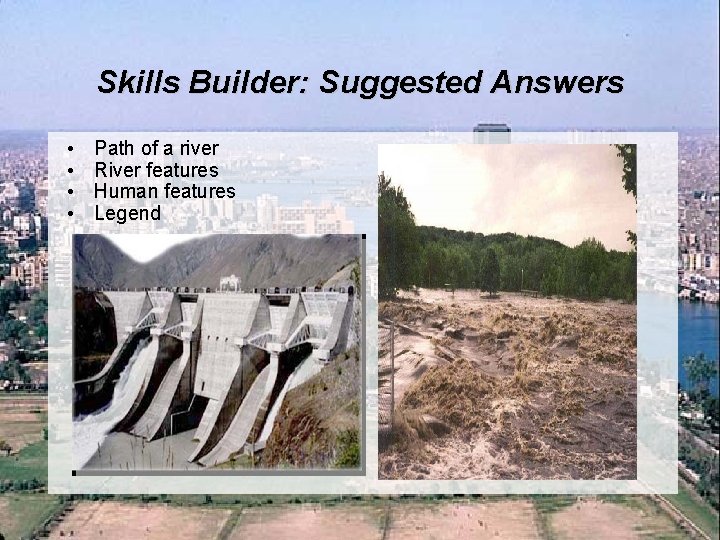
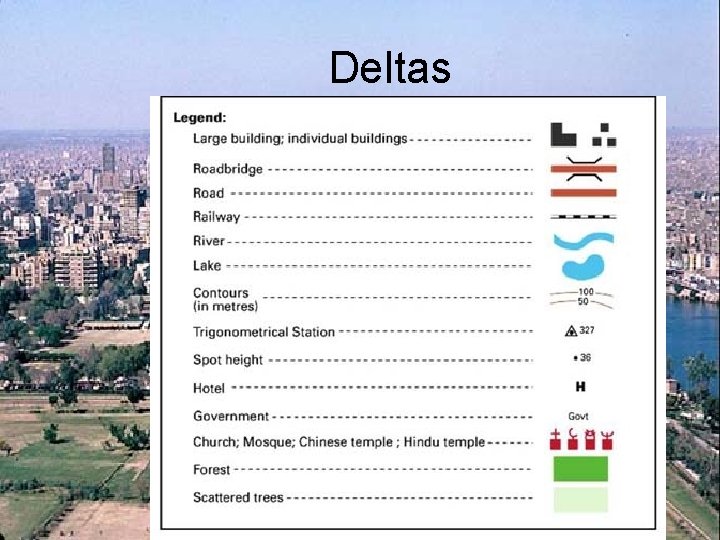
Skills Builder: Suggested Answers • • Path of a river River features Human features Legend
- Slides: 31