
Rivers and Streams The Hydrologic Cycle Rivers and












- Slides: 72
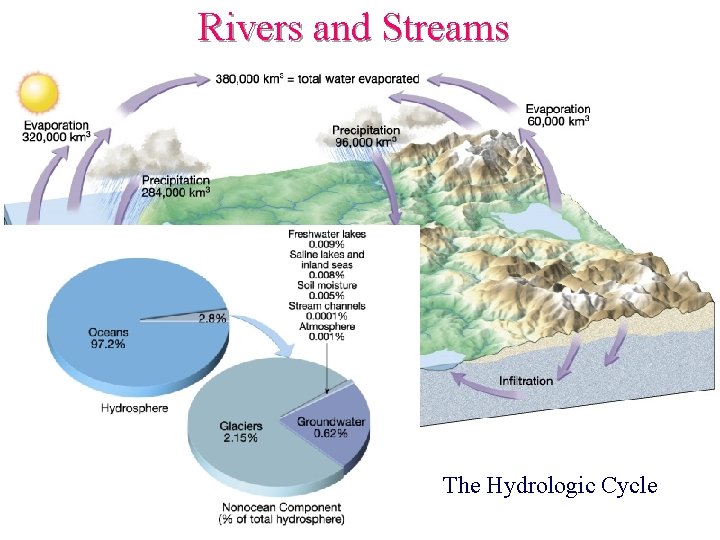
Rivers and Streams The Hydrologic Cycle
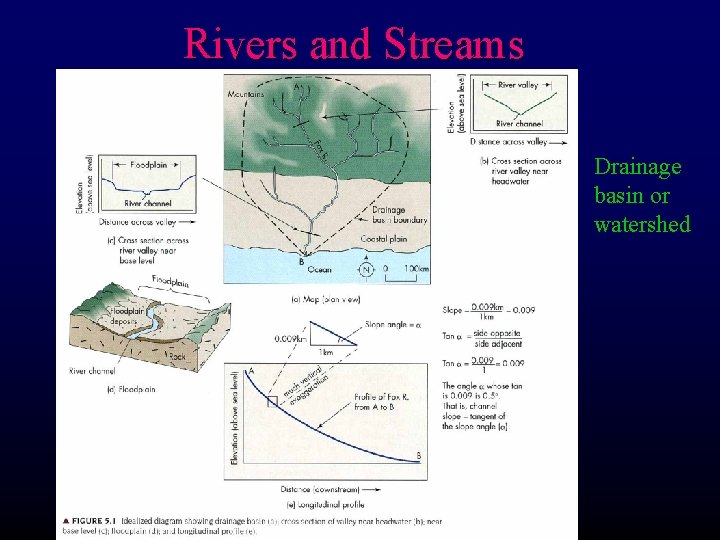
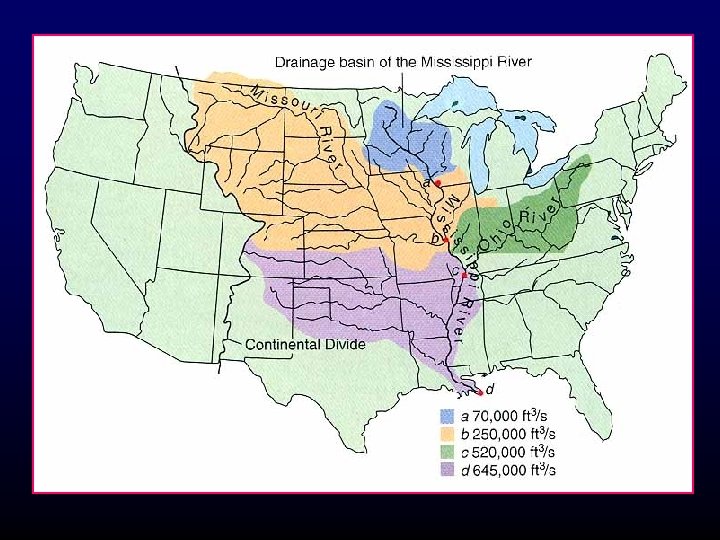
Rivers and Streams Drainage basin or watershed
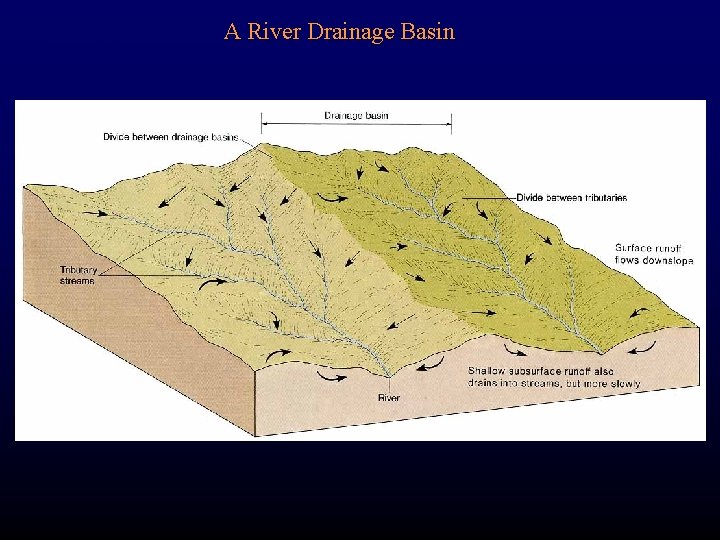
A River Mill Creek Drainage Basin
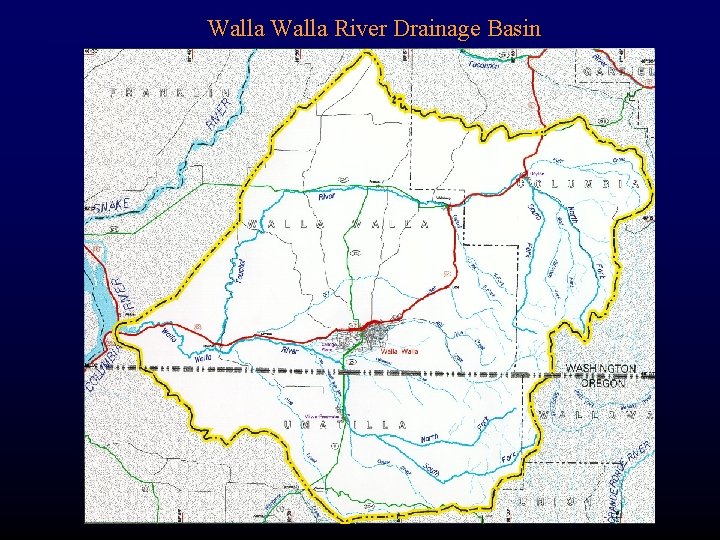
Walla. Basin Walla River Drainage Basin Mill Creek Drainage
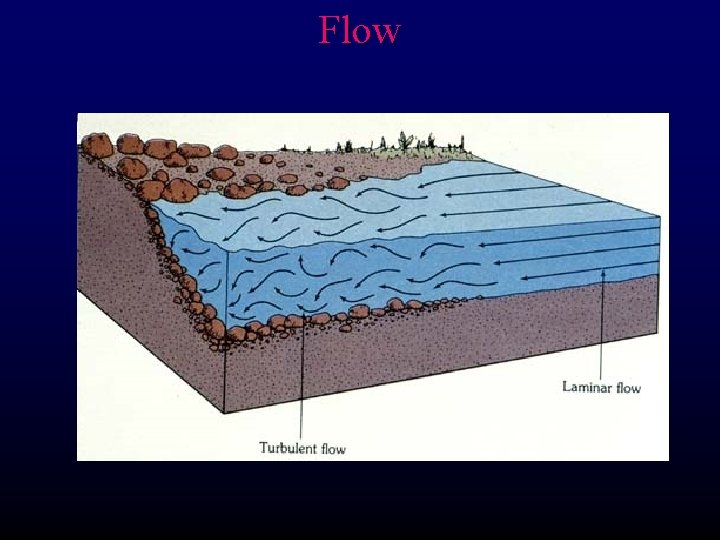
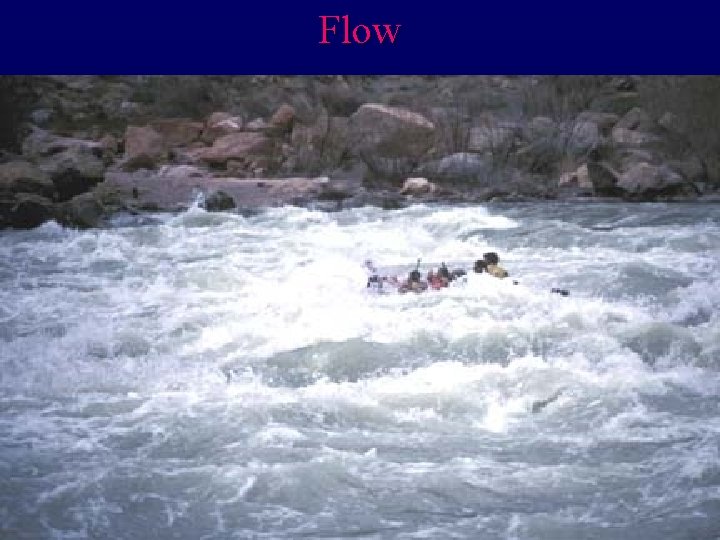
Flow
Flow
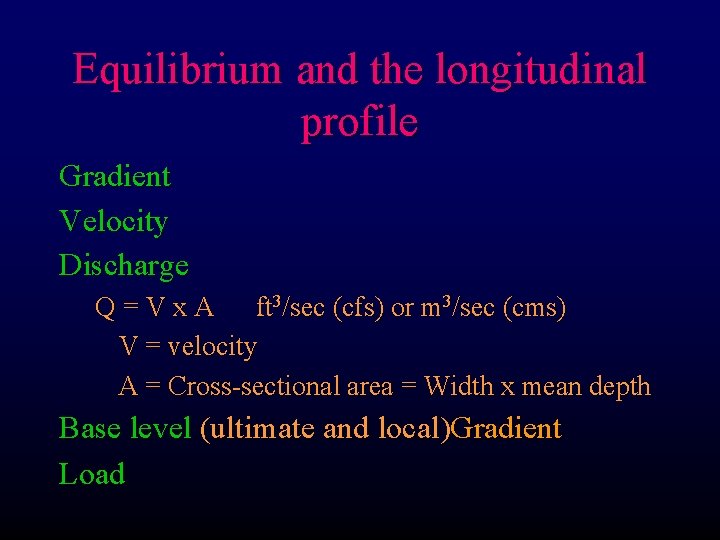
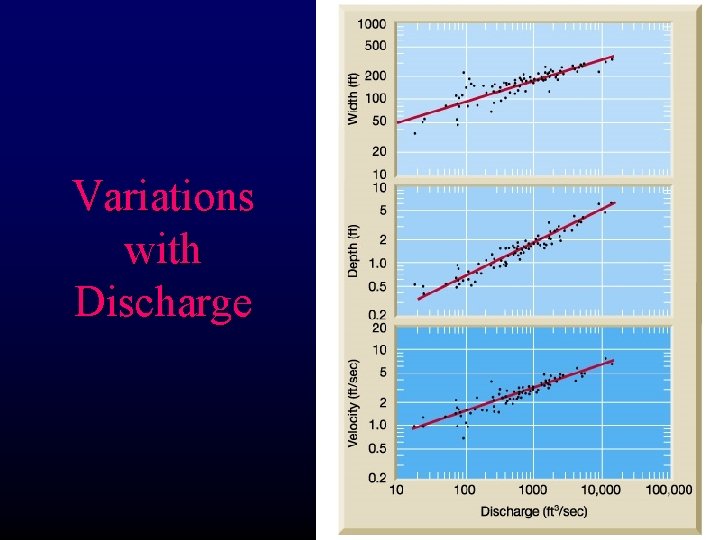
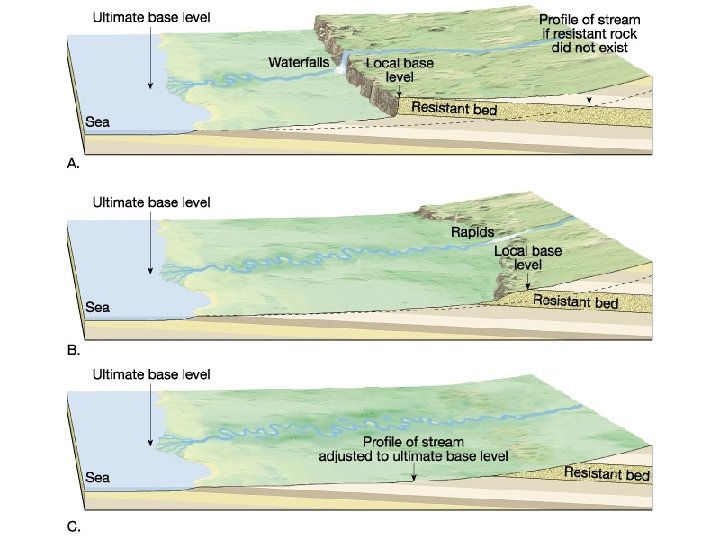
Equilibrium and the longitudinal profile Gradient Velocity Discharge Q=Vx. A ft 3/sec (cfs) or m 3/sec (cms) V = velocity A = Cross-sectional area = Width x mean depth Base level (ultimate and local)Gradient Load
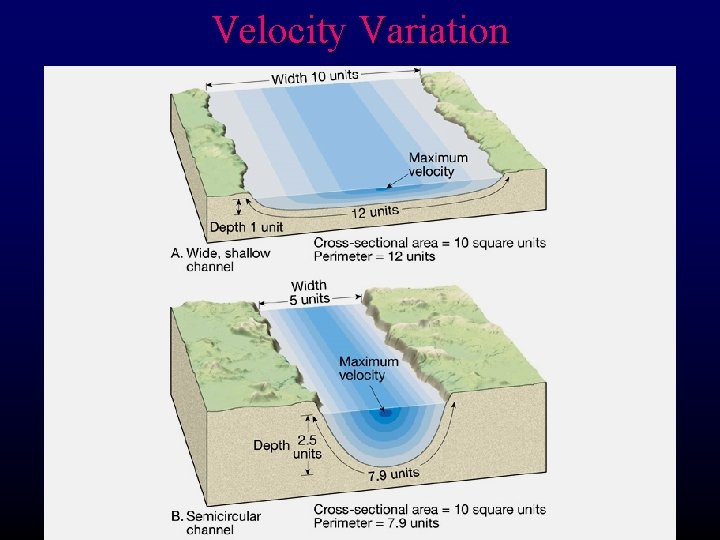
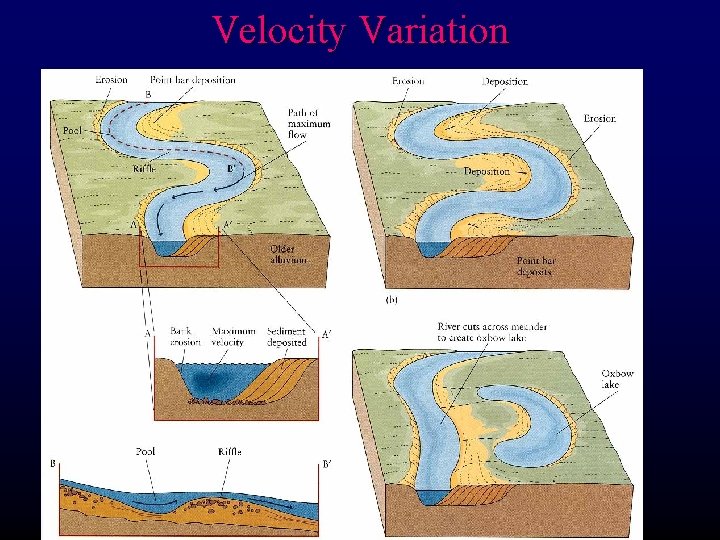
Velocity Variation
Variations with Discharge
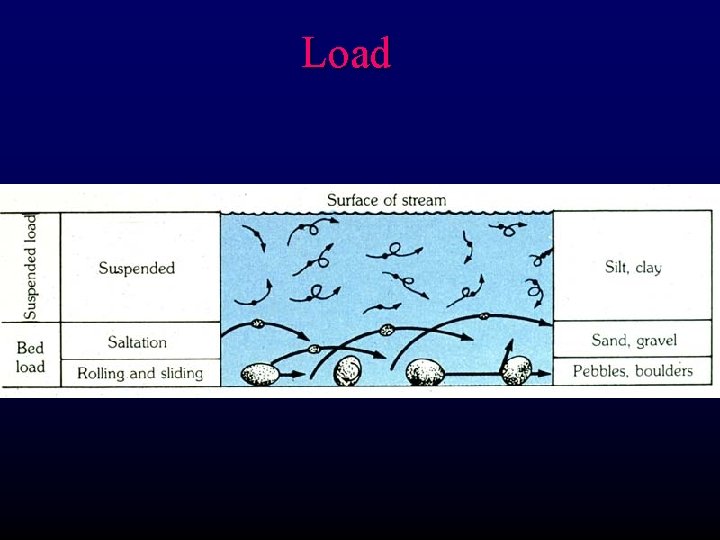
Load
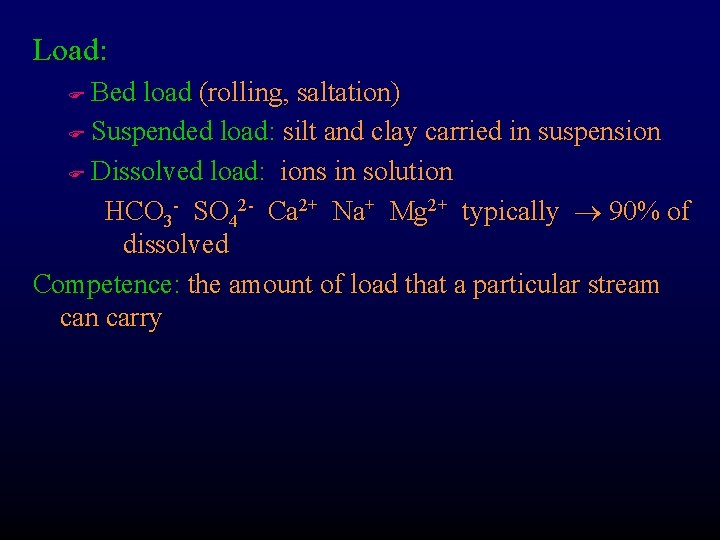
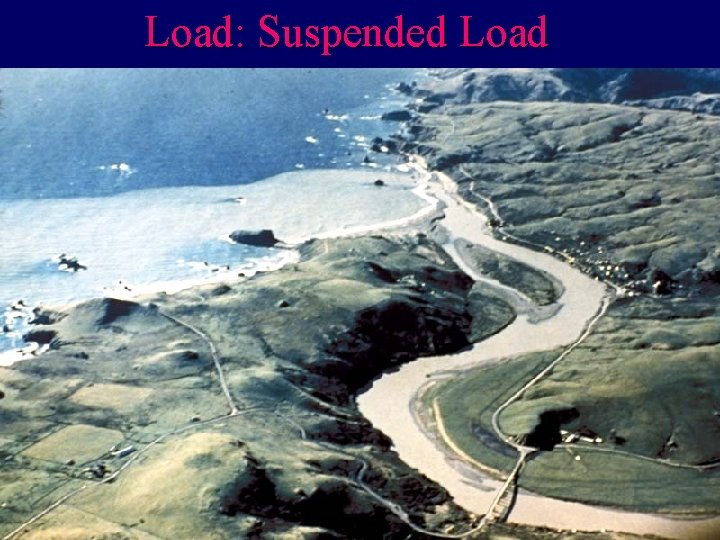
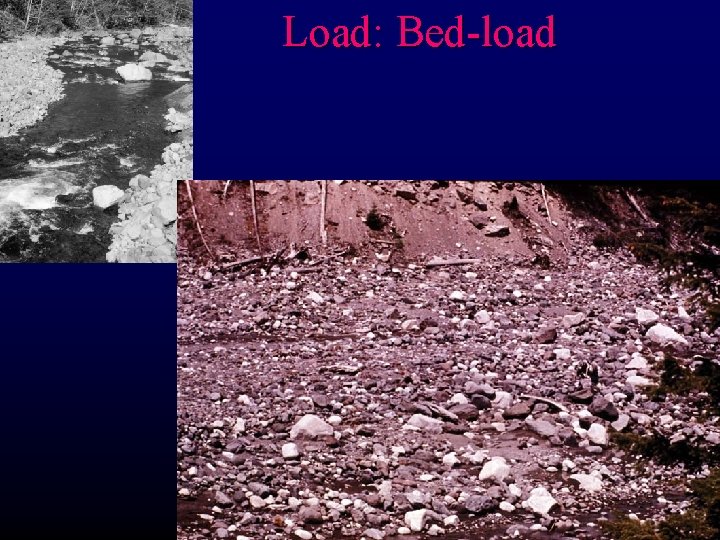
Load: Bed load (rolling, saltation) F Suspended load: silt and clay carried in suspension F Dissolved load: ions in solution HCO 3 - SO 42 - Ca 2+ Na+ Mg 2+ typically 90% of dissolved Competence: the amount of load that a particular stream can carry F
Load: Suspended Load
Load: Bed-load
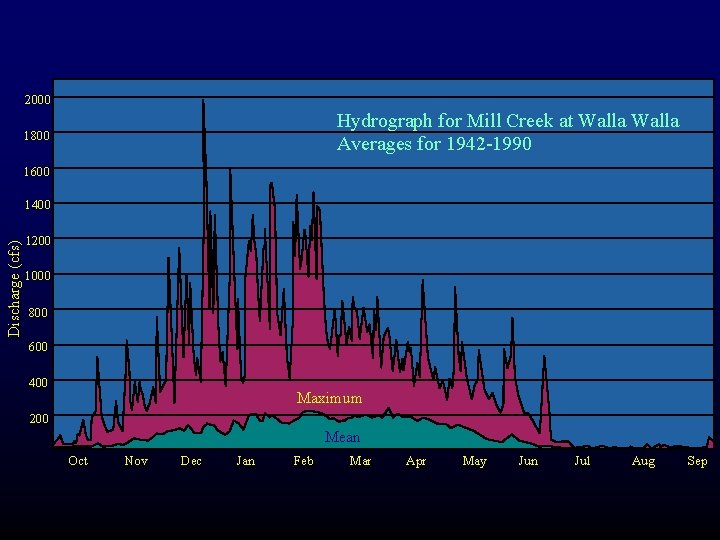
2000 Hydrograph for Mill Creek at Walla Averages for 1942 -1990 1800 1600 Discharge (cfs) 1400 1200 1000 800 600 400 Maximum 200 Mean Oct Nov Dec Jan Feb Mar Apr May Jun Jul Aug Sep
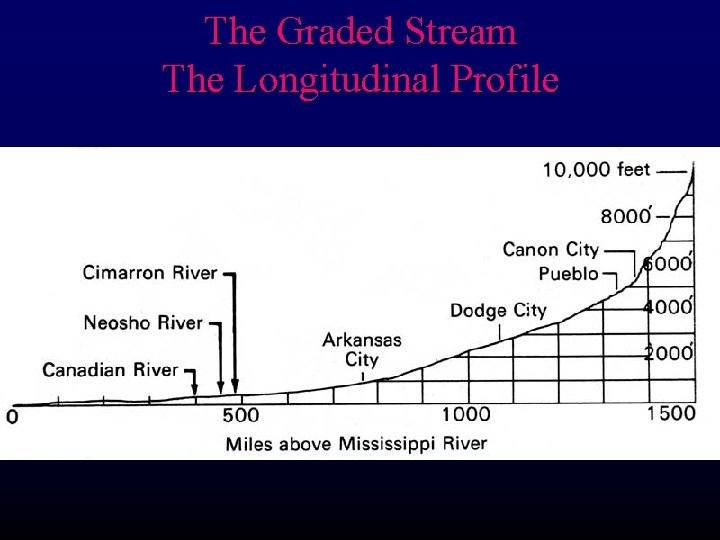
The Graded Stream The Longitudinal Profile
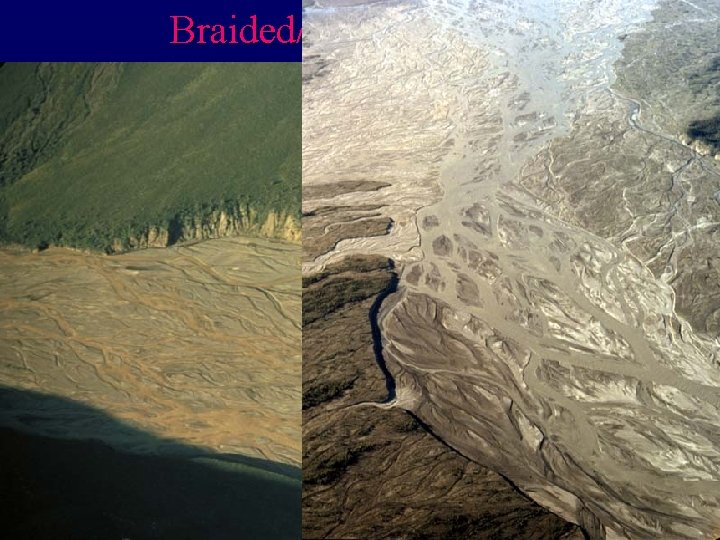
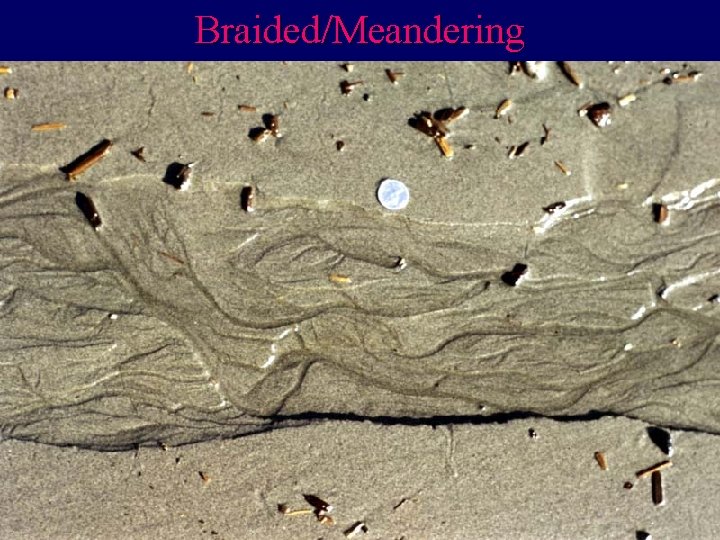
Braided/Meandering
Braided/Meandering
Velocity Variation
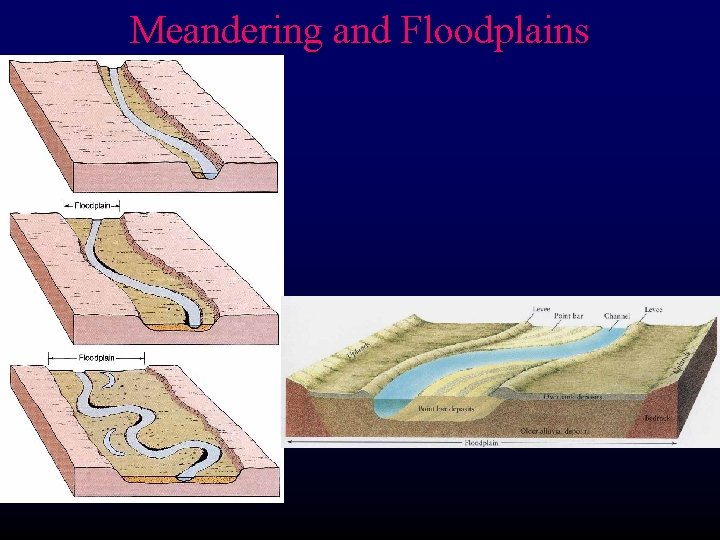
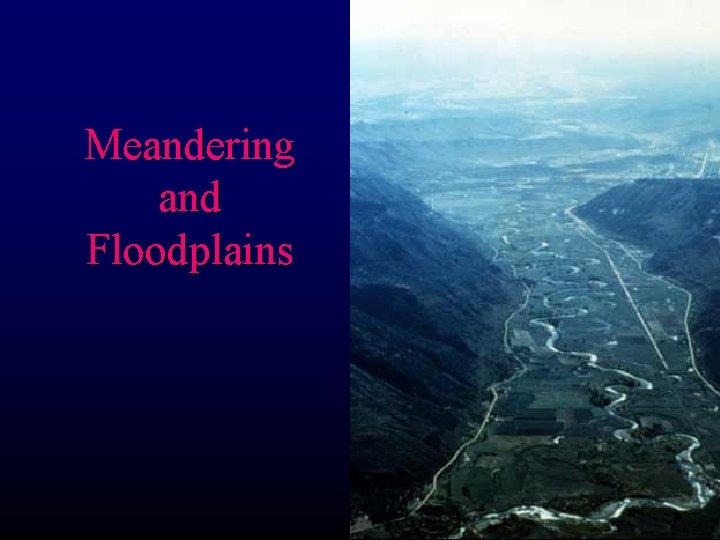
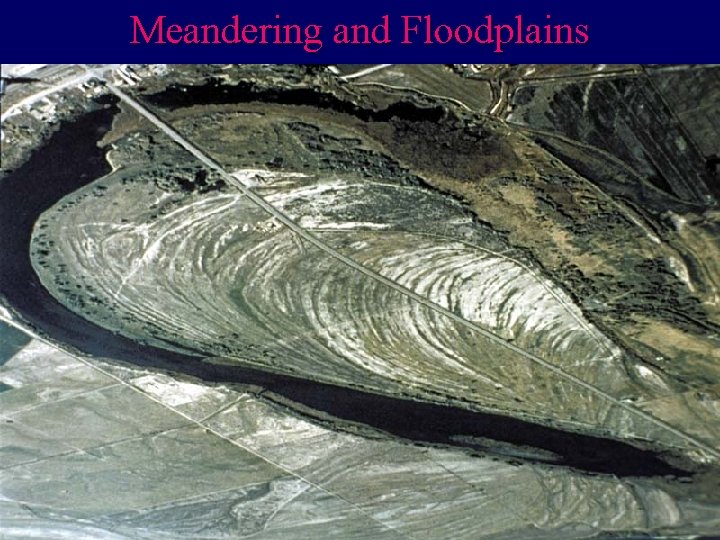
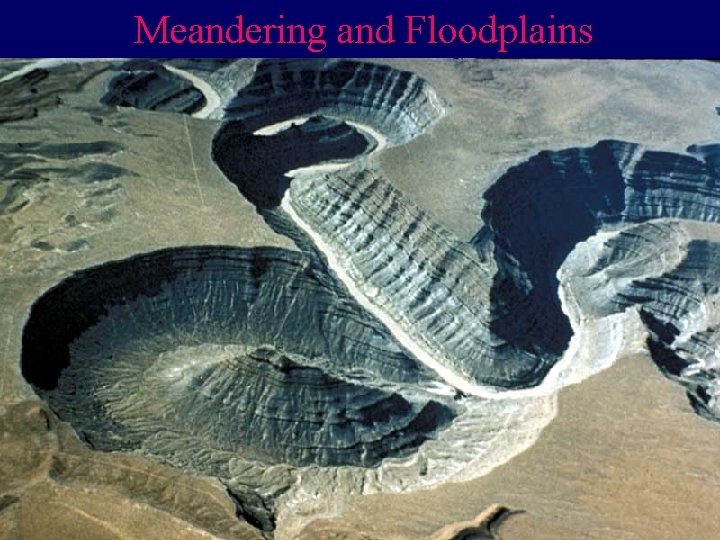
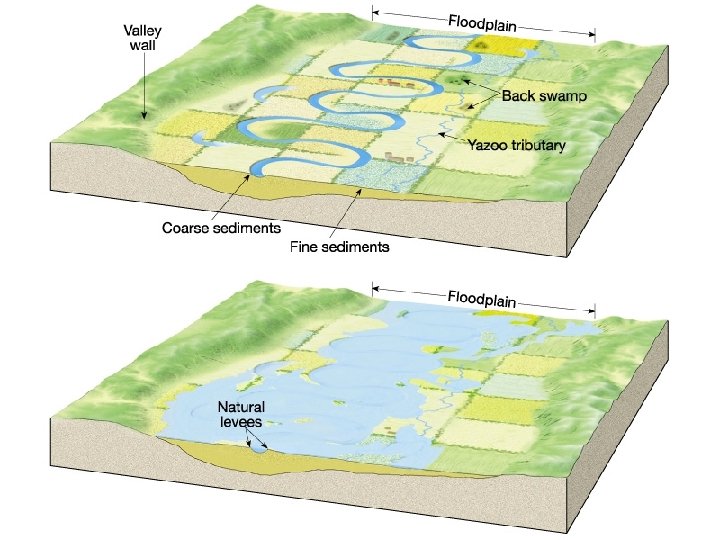
Meandering and Floodplains
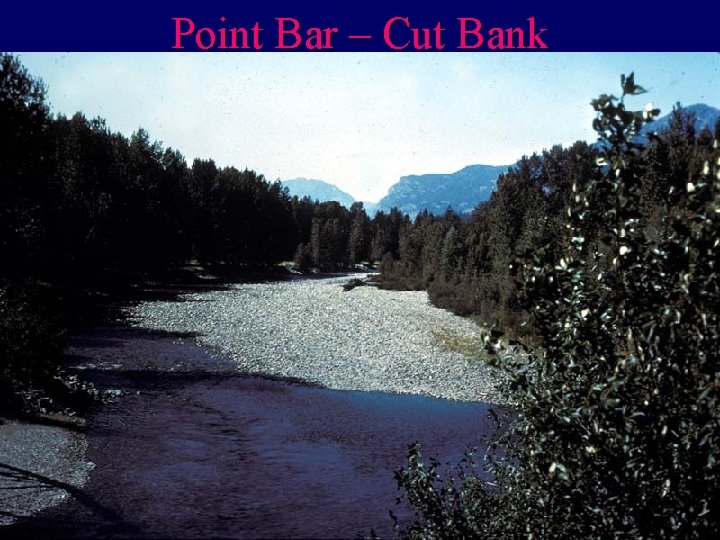
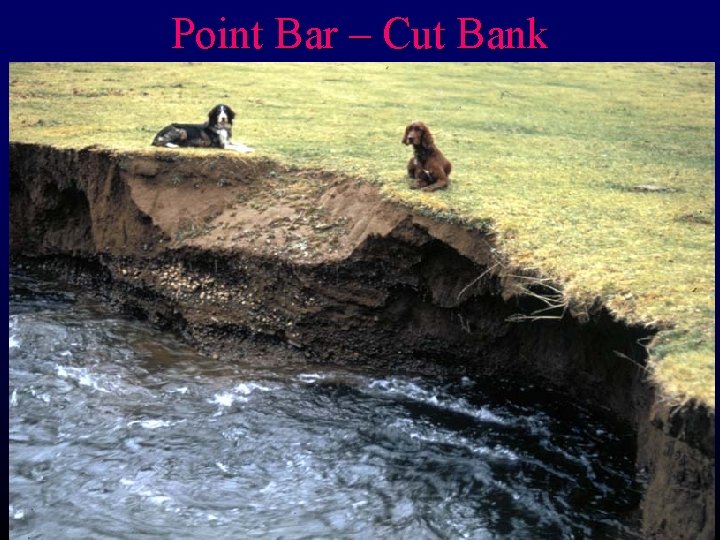
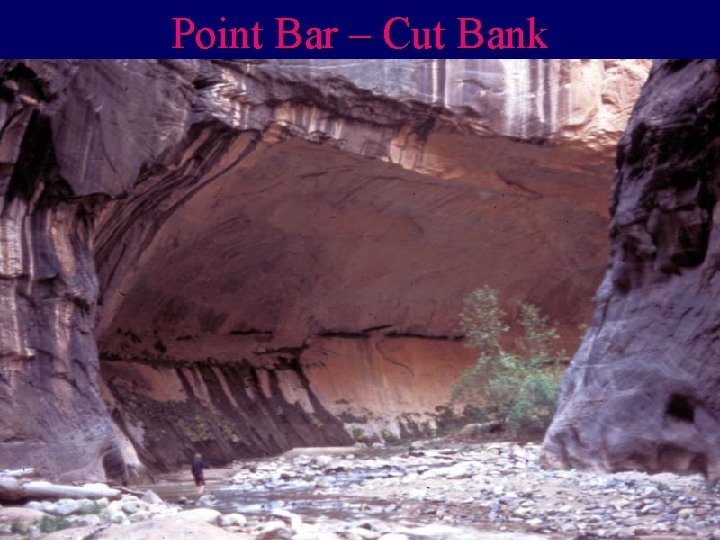
Point Bar – Cut Bank
Point Bar – Cut Bank
Point Bar – Cut Bank
Point Bar – Cut Bank
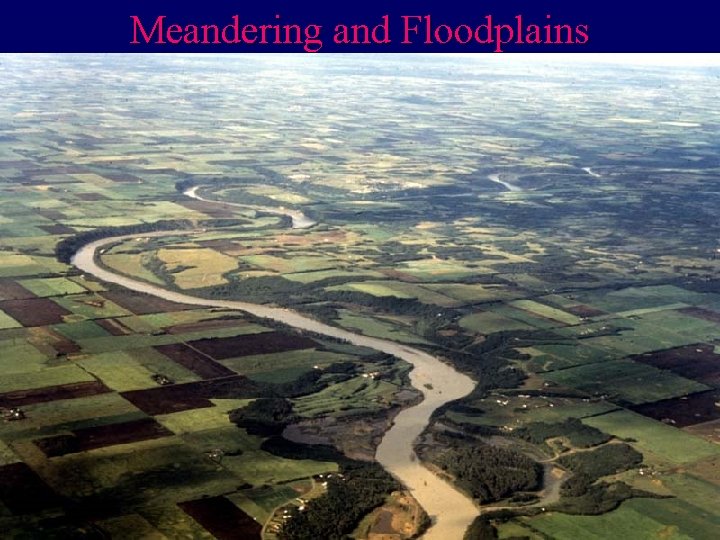
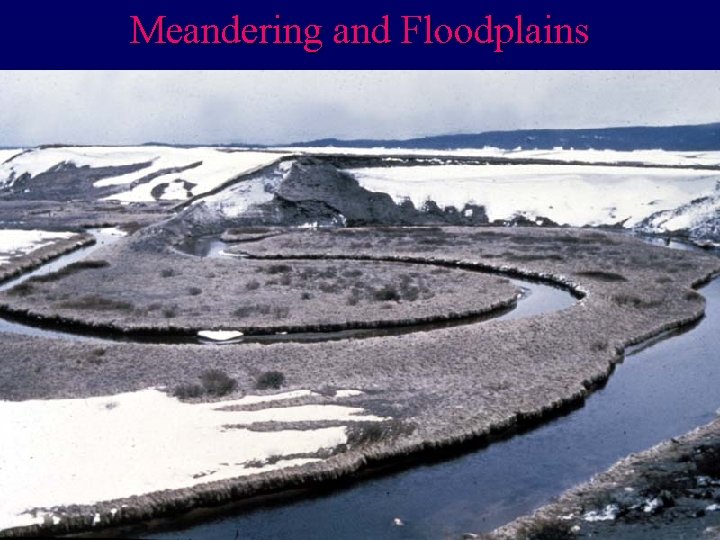
Meandering and Floodplains
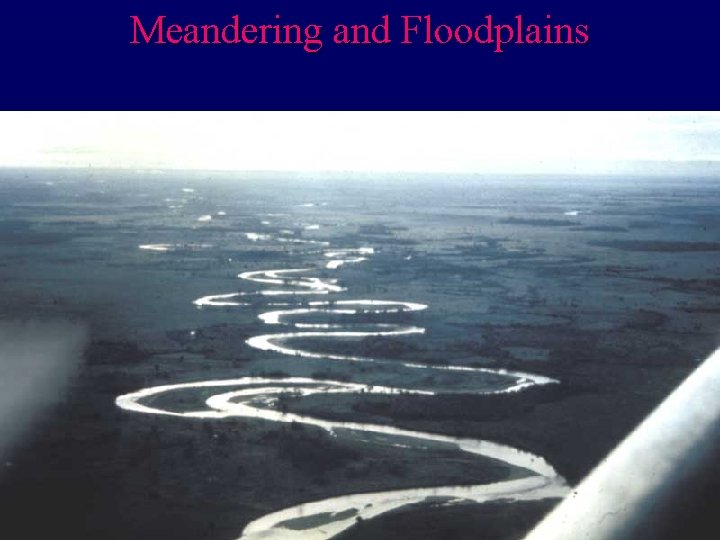
Meandering and Floodplains
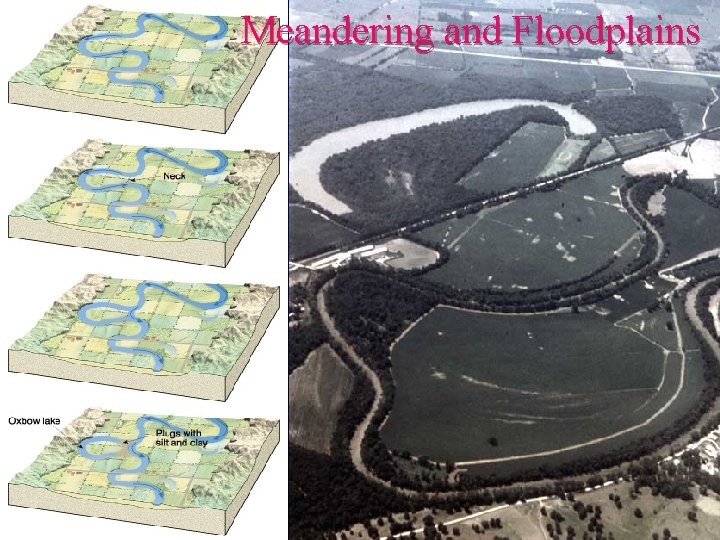
Meandering and Floodplains
Meandering and Floodplains
Meandering and Floodplains
Meandering and Floodplains
Meandering and Floodplains
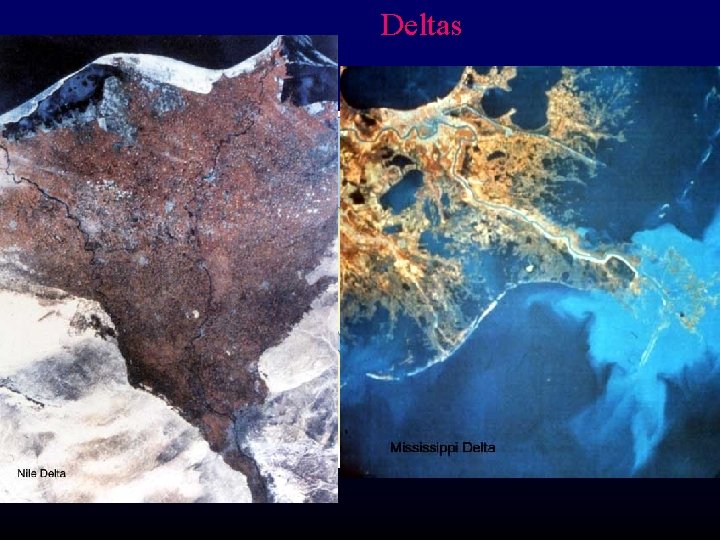
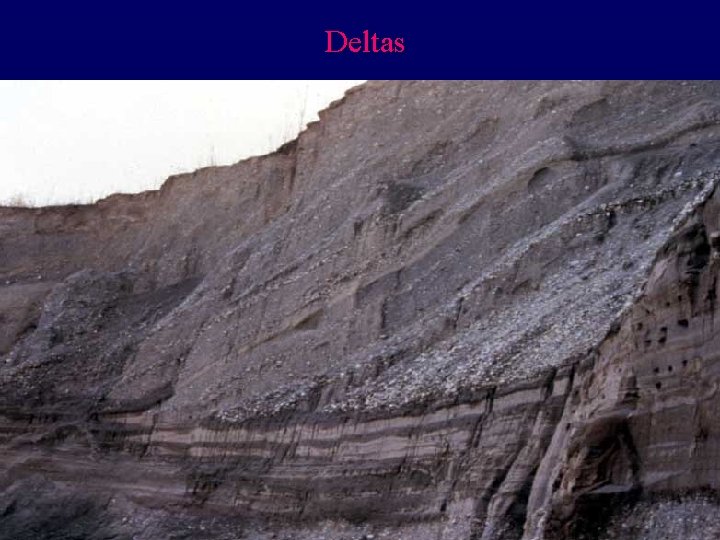
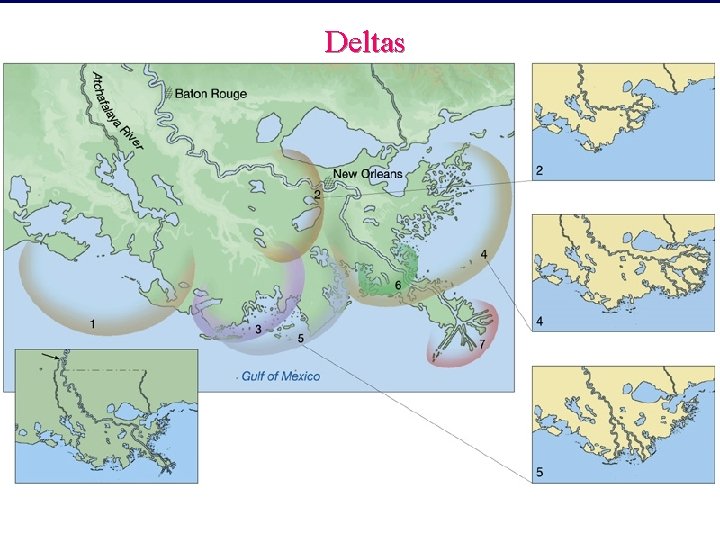
Deltas
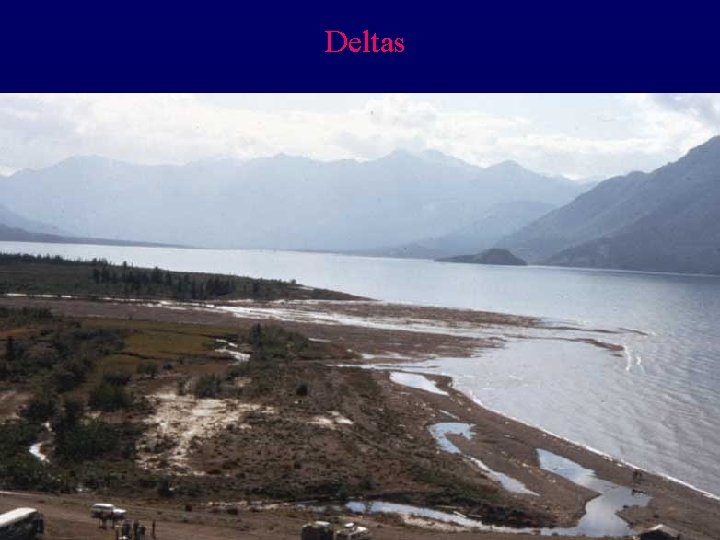
Deltas
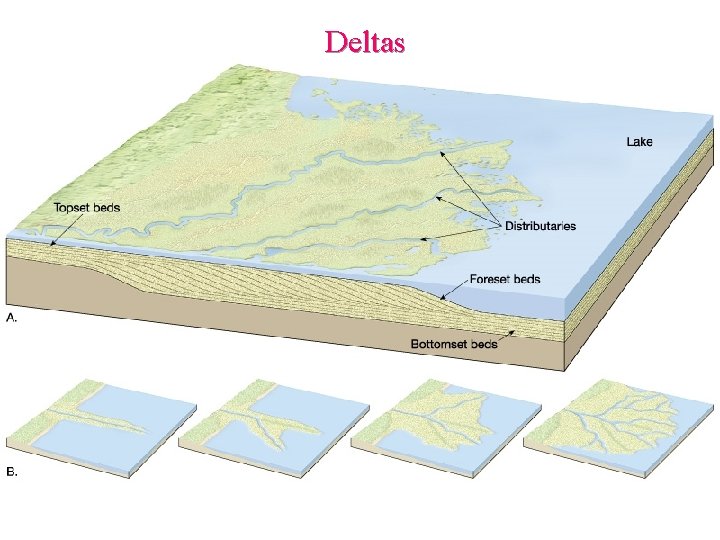
Deltas
Deltas
Deltas
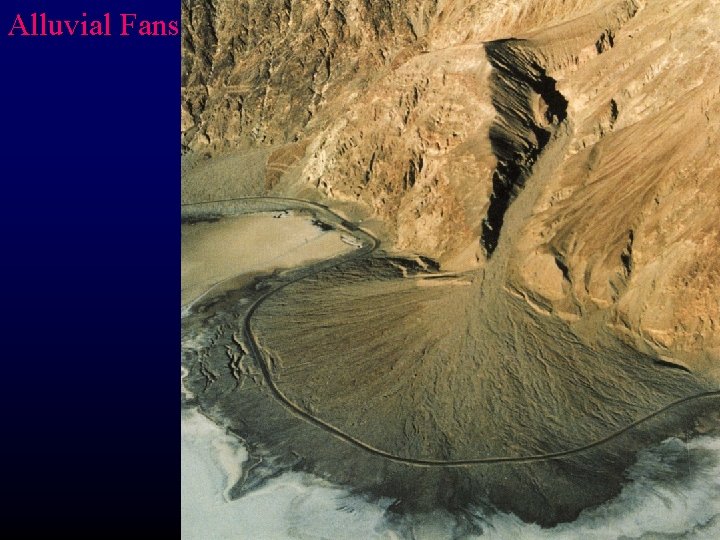
Alluvial Fans
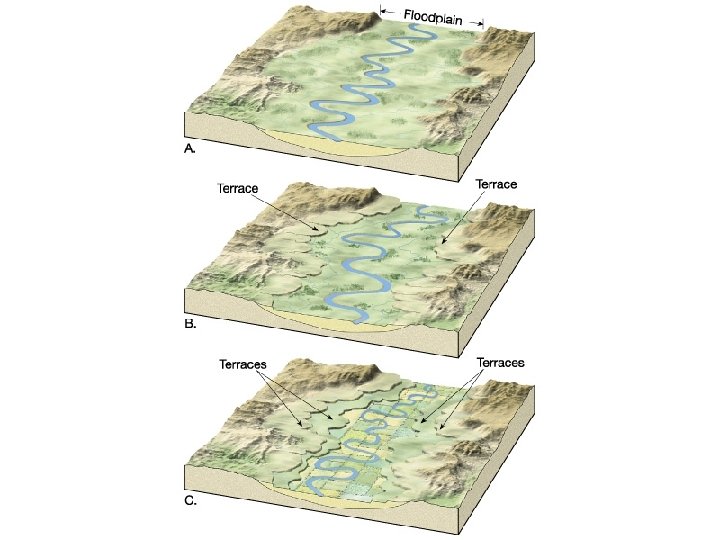
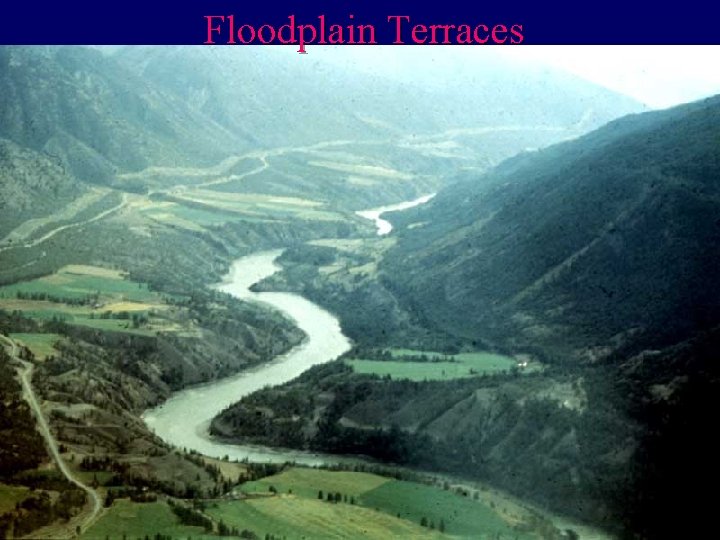
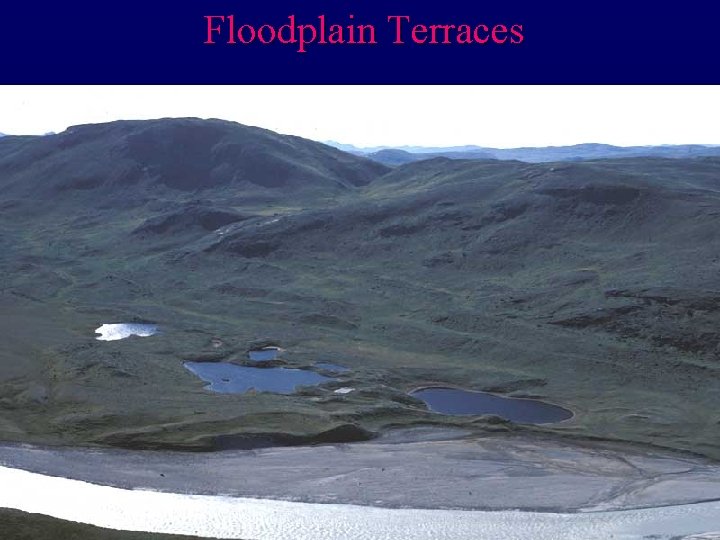
Floodplain Terraces
Floodplain Terraces
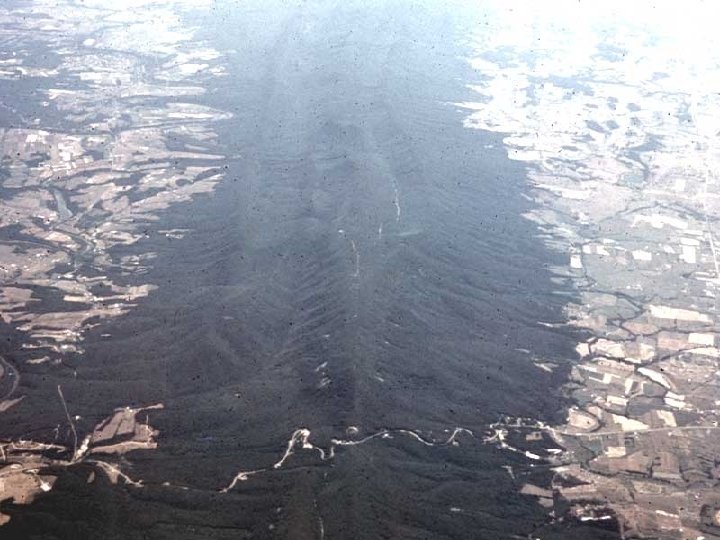
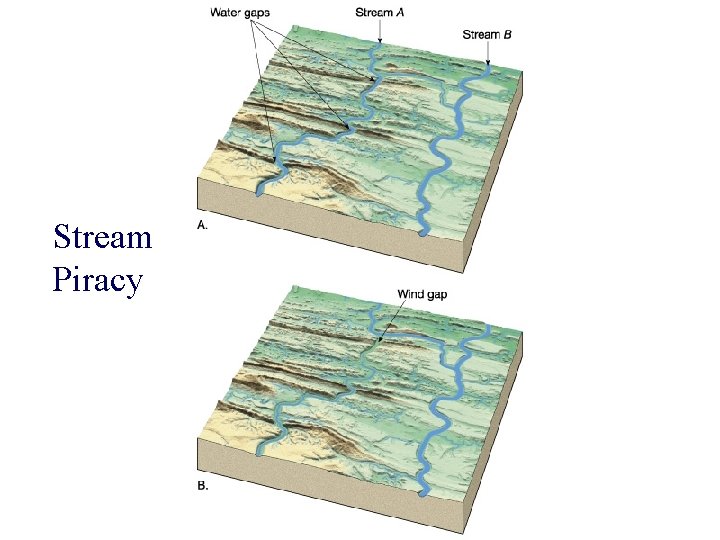
Stream Piracy
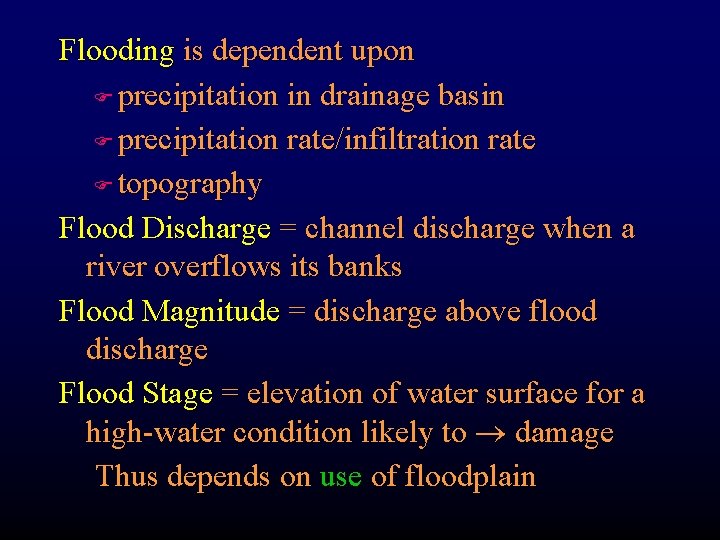
Flooding is dependent upon F precipitation in drainage basin F precipitation rate/infiltration rate F topography Flood Discharge = channel discharge when a river overflows its banks Flood Magnitude = discharge above flood discharge Flood Stage = elevation of water surface for a high-water condition likely to damage Thus depends on use of floodplain
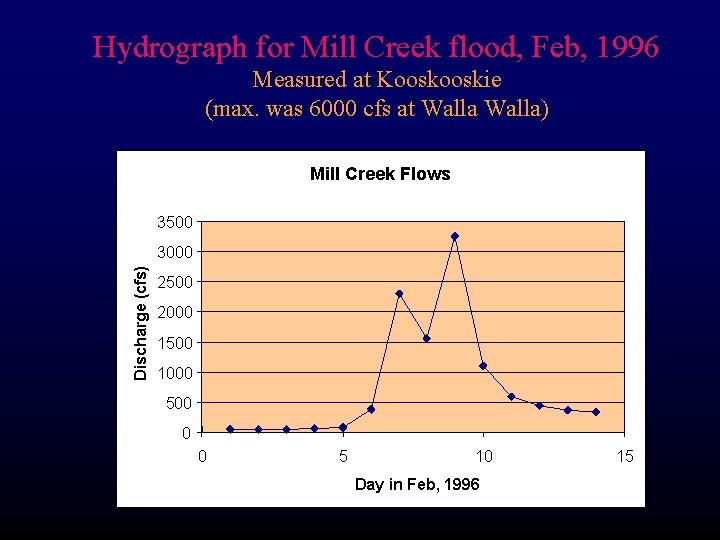
Hydrograph for Mill Creek flood, Feb, 1996 Measured at Kooskie (max. was 6000 cfs at Walla) Mill Creek Flows 3500 Discharge (cfs) 3000 2500 2000 1500 1000 500 0 0 5 10 Day in Feb, 1996 15
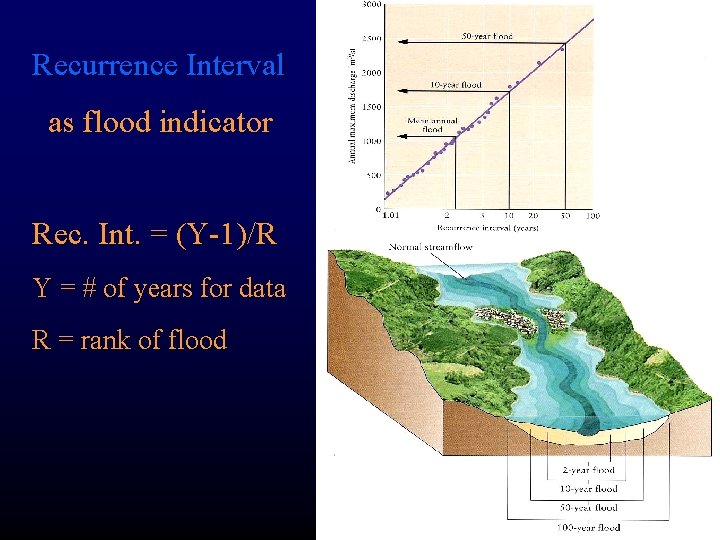
Recurrence Interval as flood indicator Rec. Int. = (Y-1)/R Y = # of years for data R = rank of flood
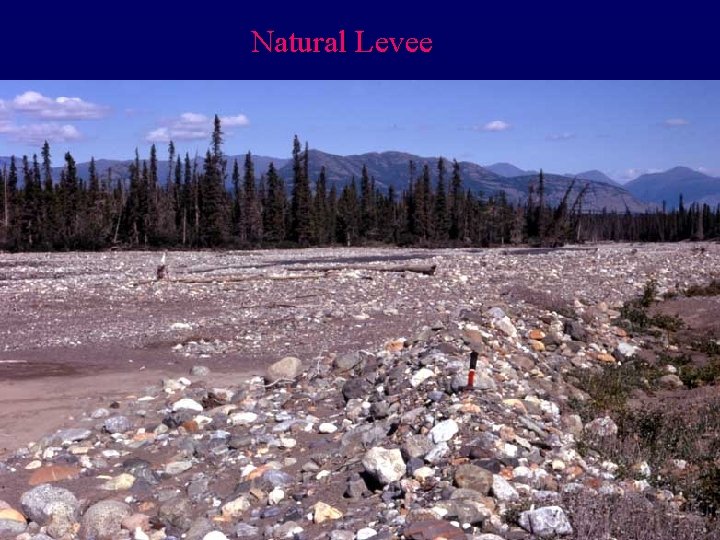
Natural Levee
Response to Flood Hazards F Physical barriers · Levees · Flood walls with huge steel gates around towns · Retention reservoirs · Channelization to handle increase discharge · Storm channel system (LA)
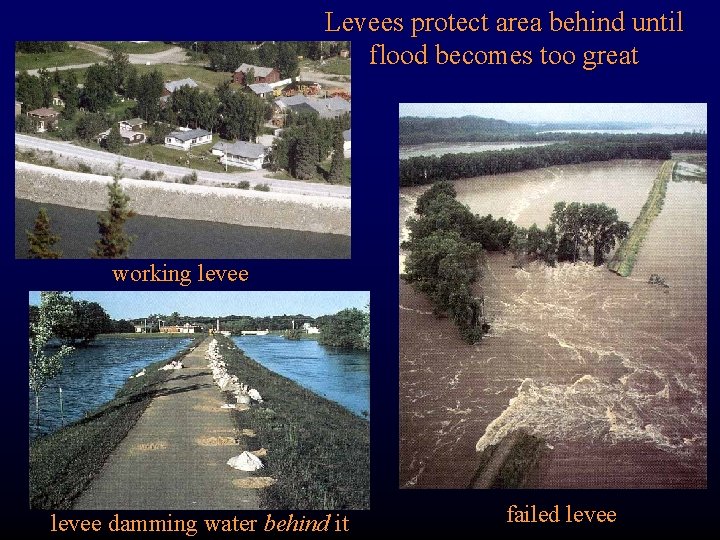
Levees protect area behind until flood becomes too great working levee damming water behind it failed levee
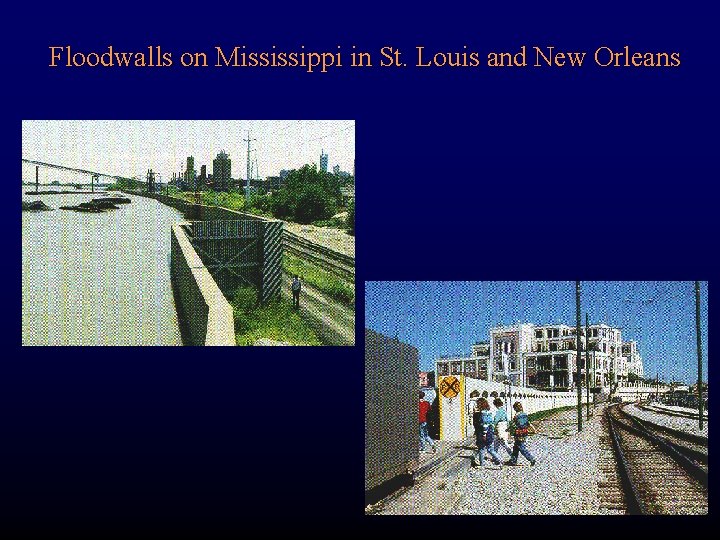
Floodwalls on Mississippi in St. Louis and New Orleans
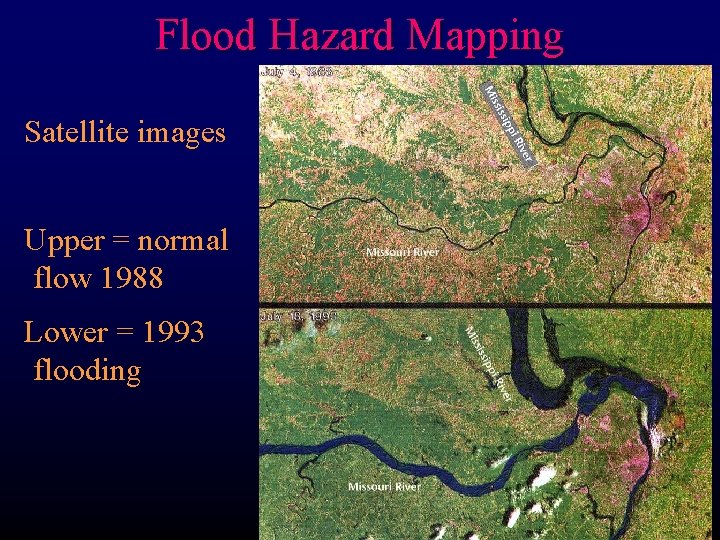
Flood Hazard Mapping Satellite images Upper = normal flow 1988 Lower = 1993 flooding
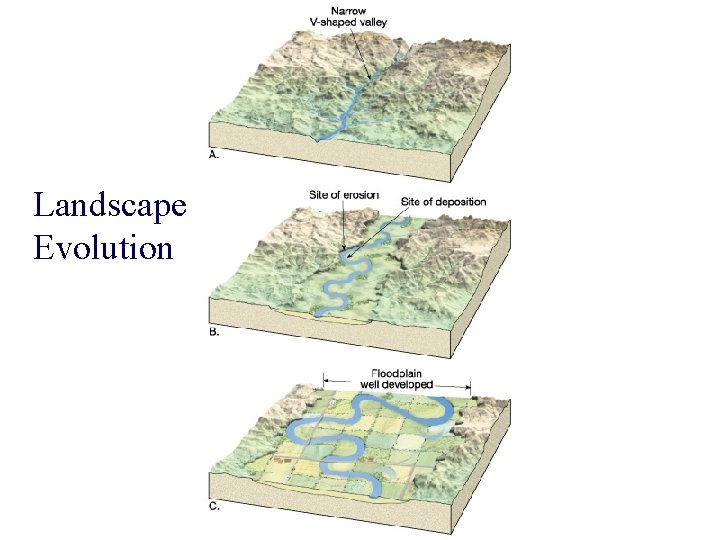
Landscape Evolution