
River Valley Civilizations TIGRISEUPHRATES Mesopotamia land between rivers
River Valley Civilizations
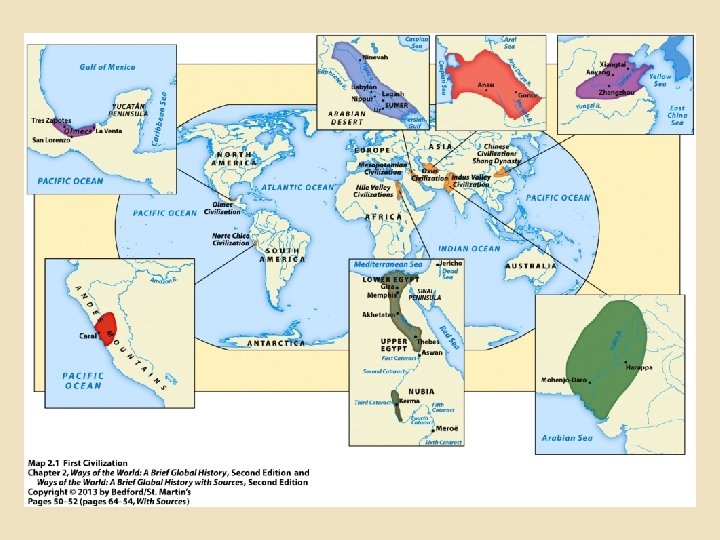
TIGRIS-EUPHRATES • Mesopotamia (land between rivers) • Harsh heat, drought; unpredictable floods • Few natural resources; no wood • No natural defensive areas such as hills • Area open to invasion by nomads • People in area must • Provide permanent food supply • Regulate, provide permanent water supply • Provide defense against invaders • Acquire materials such as timber, minerals
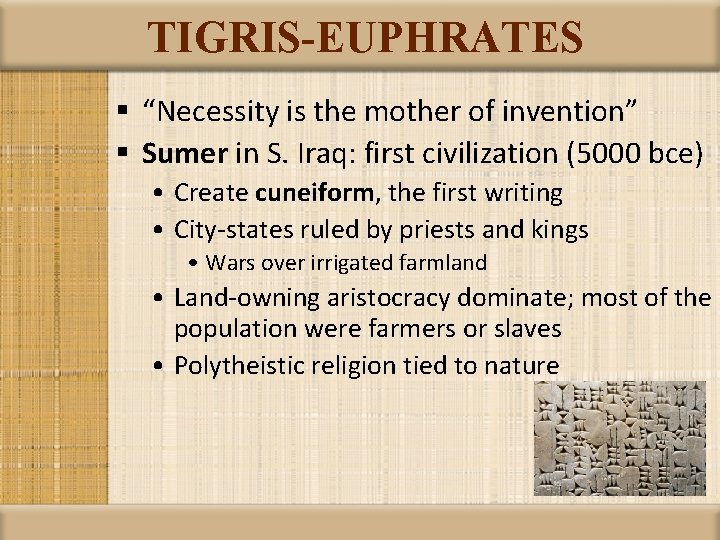
TIGRIS-EUPHRATES § “Necessity is the mother of invention” § Sumer in S. Iraq: first civilization (5000 bce) • Create cuneiform, the first writing • City-states ruled by priests and kings • Wars over irrigated farmland • Land-owning aristocracy dominate; most of the population were farmers or slaves • Polytheistic religion tied to nature
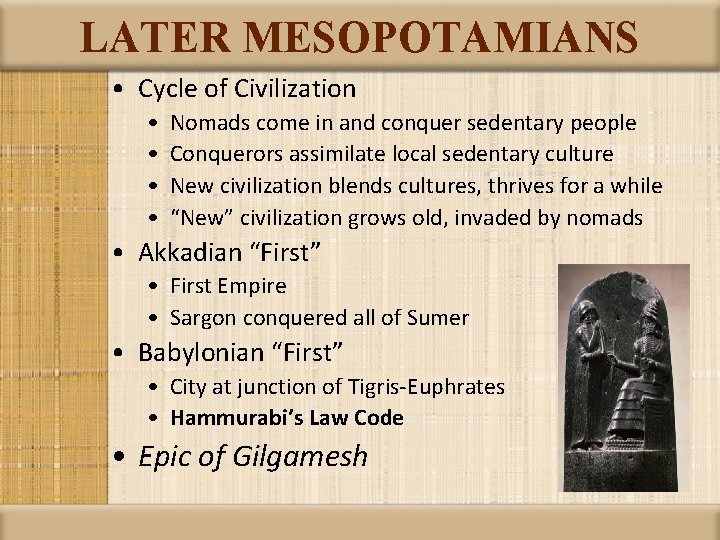
LATER MESOPOTAMIANS • Cycle of Civilization • • Nomads come in and conquer sedentary people Conquerors assimilate local sedentary culture New civilization blends cultures, thrives for a while “New” civilization grows old, invaded by nomads • Akkadian “First” • First Empire • Sargon conquered all of Sumer • Babylonian “First” • City at junction of Tigris-Euphrates • Hammurabi’s Law Code • Epic of Gilgamesh
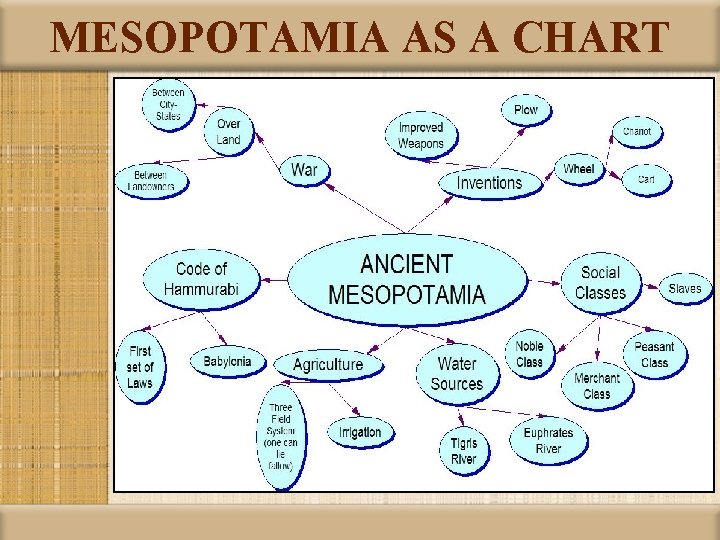
MESOPOTAMIA AS A CHART
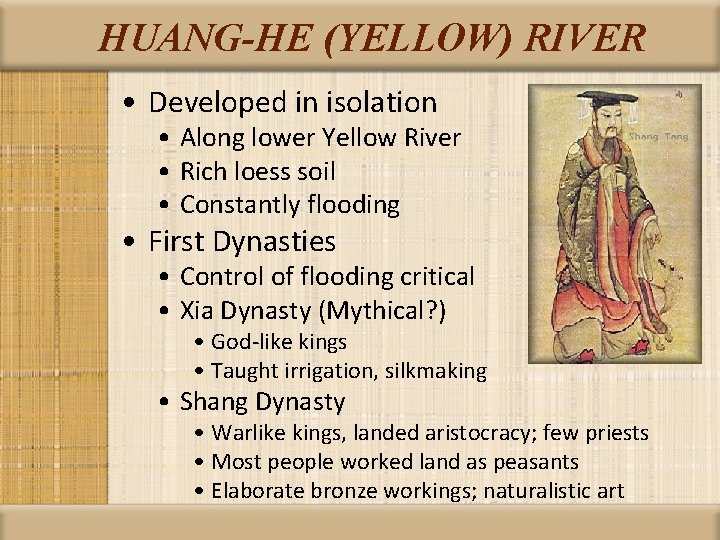
HUANG-HE (YELLOW) RIVER • Developed in isolation • Along lower Yellow River • Rich loess soil • Constantly flooding • First Dynasties • Control of flooding critical • Xia Dynasty (Mythical? ) • God-like kings • Taught irrigation, silkmaking • Shang Dynasty • Warlike kings, landed aristocracy; few priests • Most people worked land as peasants • Elaborate bronze workings; naturalistic art
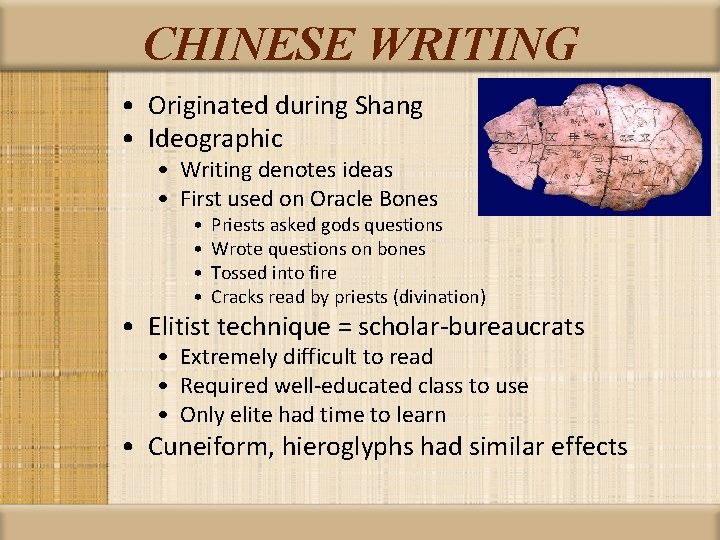
CHINESE WRITING • Originated during Shang • Ideographic • Writing denotes ideas • First used on Oracle Bones • • Priests asked gods questions Wrote questions on bones Tossed into fire Cracks read by priests (divination) • Elitist technique = scholar-bureaucrats • Extremely difficult to read • Required well-educated class to use • Only elite had time to learn • Cuneiform, hieroglyphs had similar effects
MANDATE OF HEAVEN • Chinese political idea • • Rulers exercise power given by heaven Rulers continue to rule if heaven pleased Heaven will take back mandate to rule Heaven will replace ruling dynasty • Indicators of a Lost Mandate • • Wars, invasions, military disasters Over-taxation, disgruntled peasants Social, moral decline of elite classes Increased crime, banditry
DYNASTIC CYCLE • One ruling family replaces another • The Dynasty Changes • Due to the loss of the Mandate of Heaven • Stages in Cycle • • New dynasty arises, takes control of China Strengthens rule, reestablishes prosperity, peace Weakens, becomes lazy, problems arise Invasions, revolts toss out reigning dynasty • Shang replaces Xia, Zhou replaces Shang
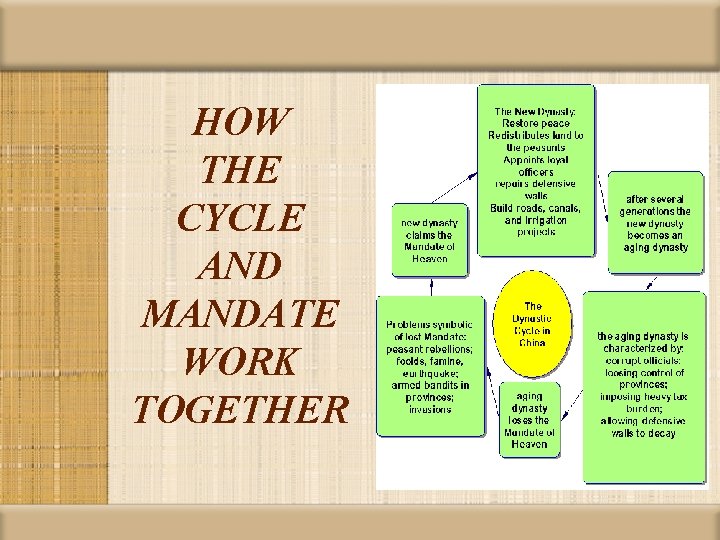
HOW THE CYCLE AND MANDATE WORK TOGETHER
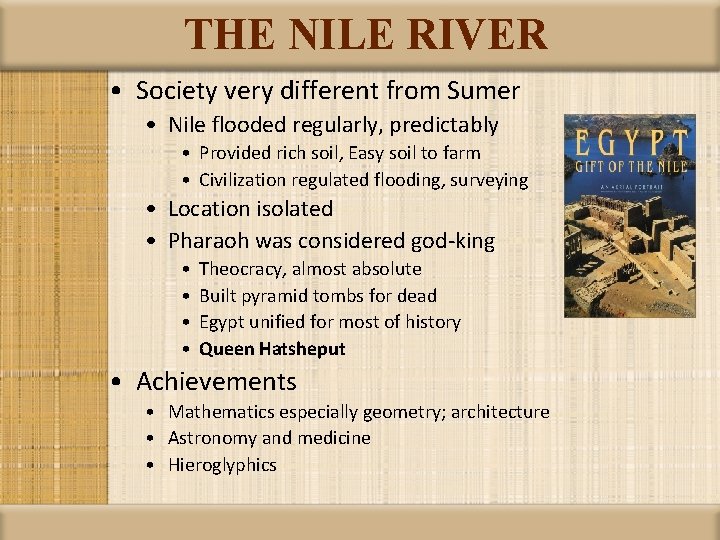
THE NILE RIVER • Society very different from Sumer • Nile flooded regularly, predictably • Provided rich soil, Easy soil to farm • Civilization regulated flooding, surveying • Location isolated • Pharaoh was considered god-king • • Theocracy, almost absolute Built pyramid tombs for dead Egypt unified for most of history Queen Hatsheput • Achievements • Mathematics especially geometry; architecture • Astronomy and medicine • Hieroglyphics
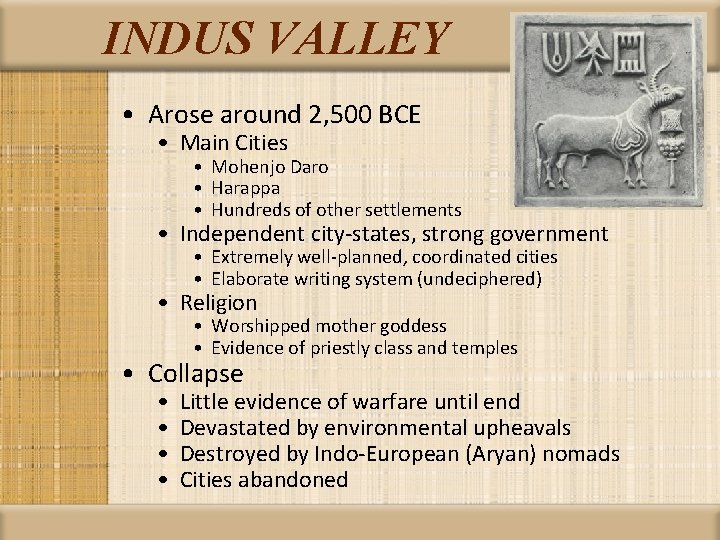
INDUS VALLEY • Arose around 2, 500 BCE • Main Cities • Mohenjo Daro • Harappa • Hundreds of other settlements • Independent city-states, strong government • Extremely well-planned, coordinated cities • Elaborate writing system (undeciphered) • Religion • Worshipped mother goddess • Evidence of priestly class and temples • Collapse • • Little evidence of warfare until end Devastated by environmental upheavals Destroyed by Indo-European (Aryan) nomads Cities abandoned
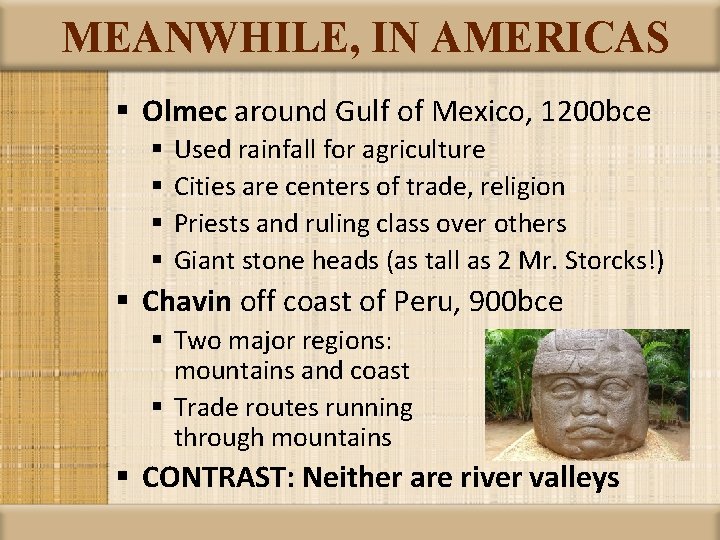
MEANWHILE, IN AMERICAS § Olmec around Gulf of Mexico, 1200 bce § § Used rainfall for agriculture Cities are centers of trade, religion Priests and ruling class over others Giant stone heads (as tall as 2 Mr. Storcks!) § Chavin off coast of Peru, 900 bce § Two major regions: mountains and coast § Trade routes running through mountains § CONTRAST: Neither are river valleys
HERITAGES • First heritages • • • Passed thru children Writing systems inherited Intellectual systems, art copied Religious, philosophical systems copied Useful inventions rarely forgotten, easily spread • River valley civilizations decline by 1000 BCE • All subject to nomadic invasions • Indo-Europeans and Semites were strongest • Geographical centers shifted (all except China) • Political Structures often not continued
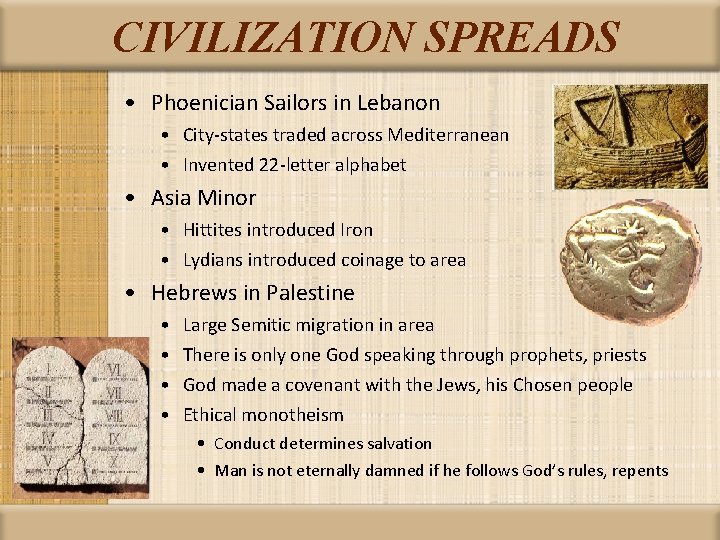
CIVILIZATION SPREADS • Phoenician Sailors in Lebanon • City-states traded across Mediterranean • Invented 22 -letter alphabet • Asia Minor • Hittites introduced Iron • Lydians introduced coinage to area • Hebrews in Palestine • • Large Semitic migration in area There is only one God speaking through prophets, priests God made a covenant with the Jews, his Chosen people Ethical monotheism • Conduct determines salvation • Man is not eternally damned if he follows God’s rules, repents
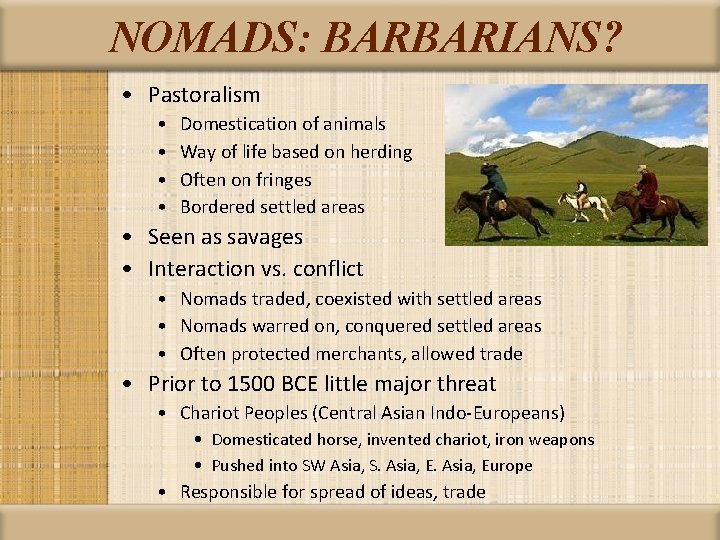
NOMADS: BARBARIANS? • Pastoralism • • Domestication of animals Way of life based on herding Often on fringes Bordered settled areas • Seen as savages • Interaction vs. conflict • Nomads traded, coexisted with settled areas • Nomads warred on, conquered settled areas • Often protected merchants, allowed trade • Prior to 1500 BCE little major threat • Chariot Peoples (Central Asian Indo-Europeans) • Domesticated horse, invented chariot, iron weapons • Pushed into SW Asia, S. Asia, Europe • Responsible for spread of ideas, trade
- Slides: 18