
River Incision due to Gravel Mining a case


- Slides: 25
River Incision due to Gravel Mining: a case study Martín-Vide, J. P. Ferrer-Boix, C. Technical University of Catalunya Barcelona, Spain
Outline • • • Background Study site and problem Data about mining and incision Gravel transport modelling Conclusions
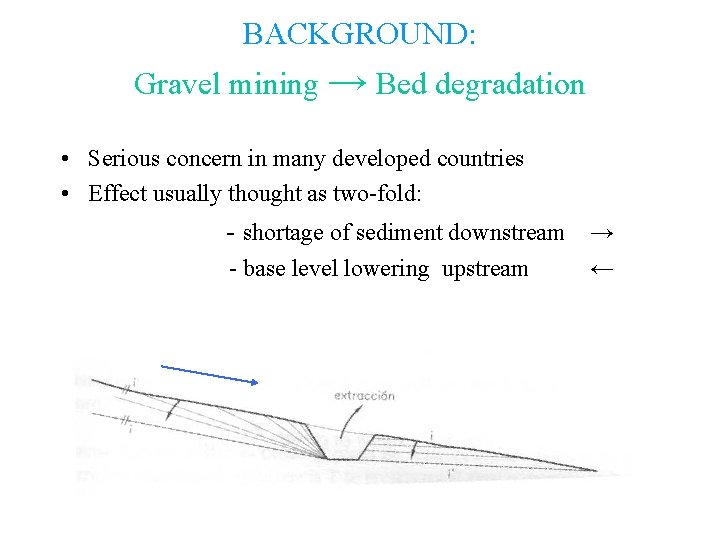
BACKGROUND: Gravel mining → Bed degradation • Serious concern in many developed countries • Effect usually thought as two-fold: - shortage of sediment downstream → - base level lowering upstream ←
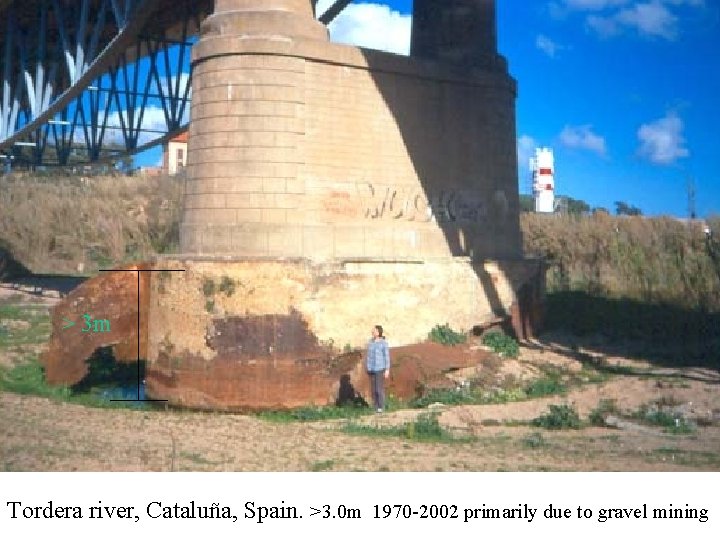
> 3 m Tordera river, Cataluña, Spain. >3. 0 m 1970 -2002 primarily due to gravel mining
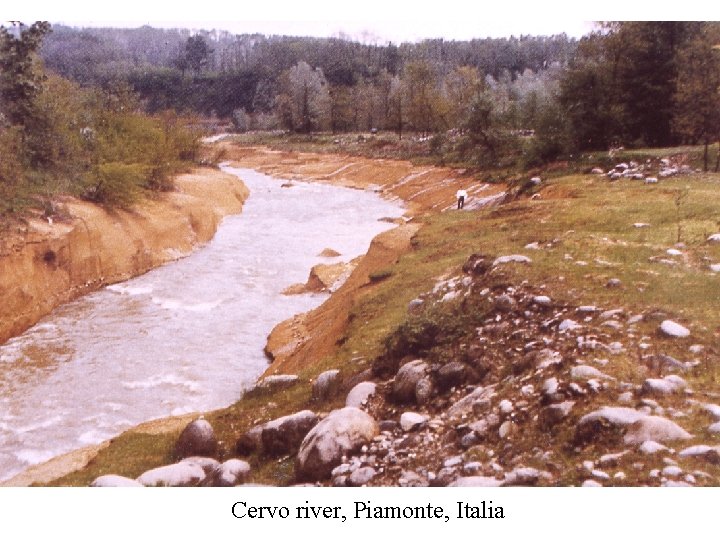
Cervo river, Piamonte, Italia
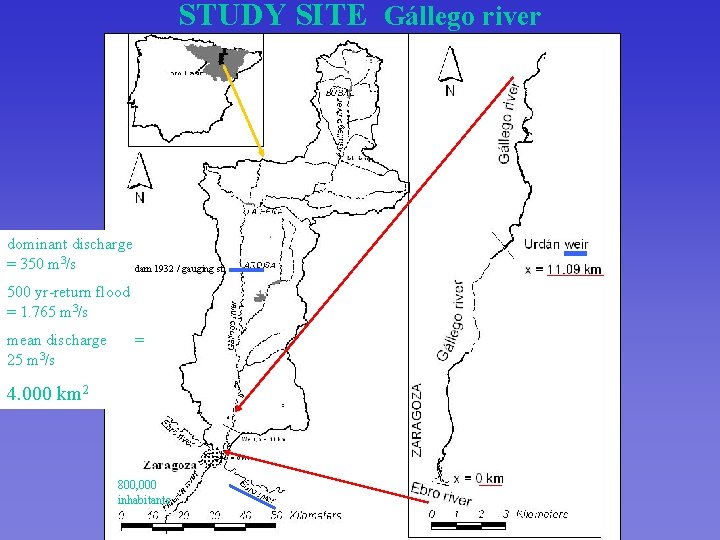
STUDY SITE Gállego river dominant discharge = 350 m 3/s dam 1932 / gauging st. 500 yr-return flood = 1. 765 m 3/s mean discharge 25 m 3/s = 4. 000 km 2 800, 000 inhabitants
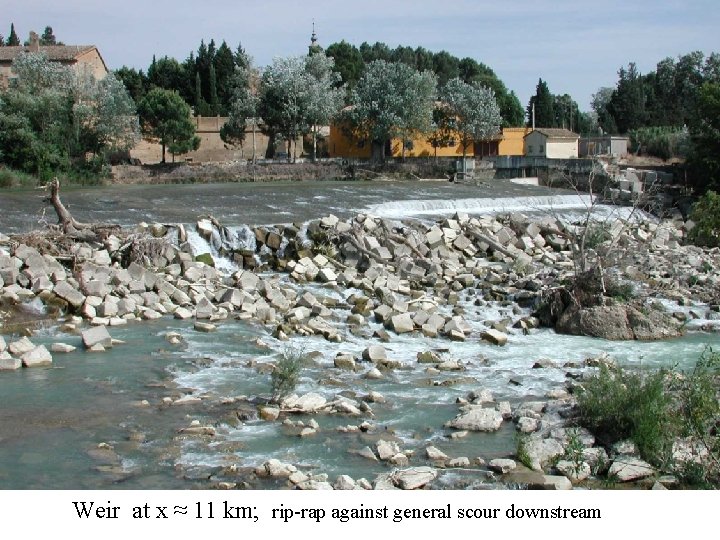
Weir at x ≈ 11 km; rip-rap against general scour downstream
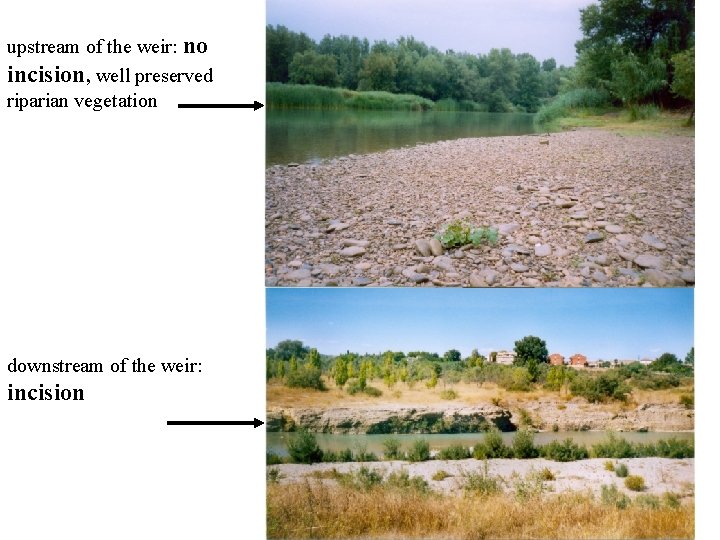
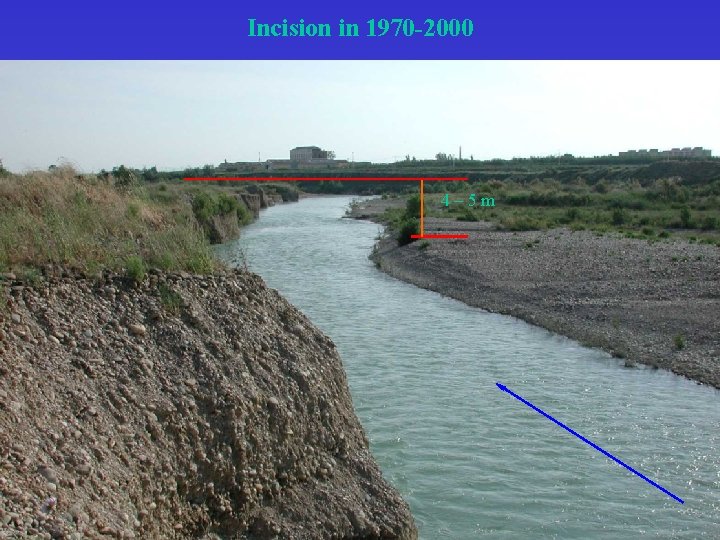
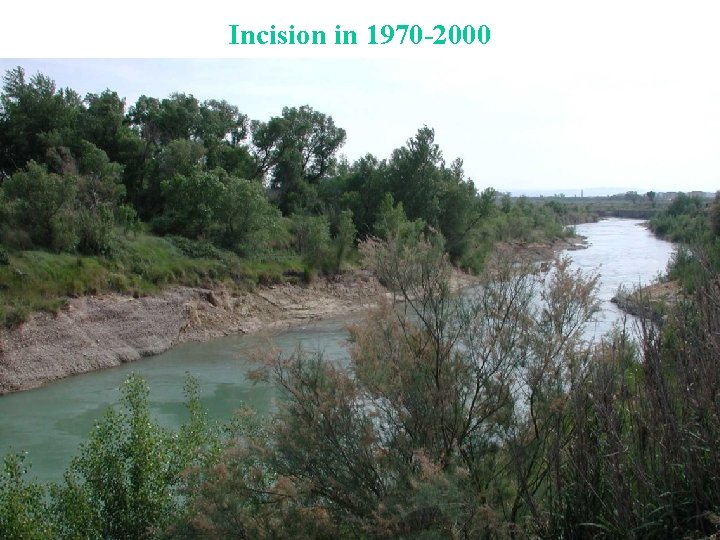
upstream of the weir: no incision, well preserved riparian vegetation downstream of the weir: incision
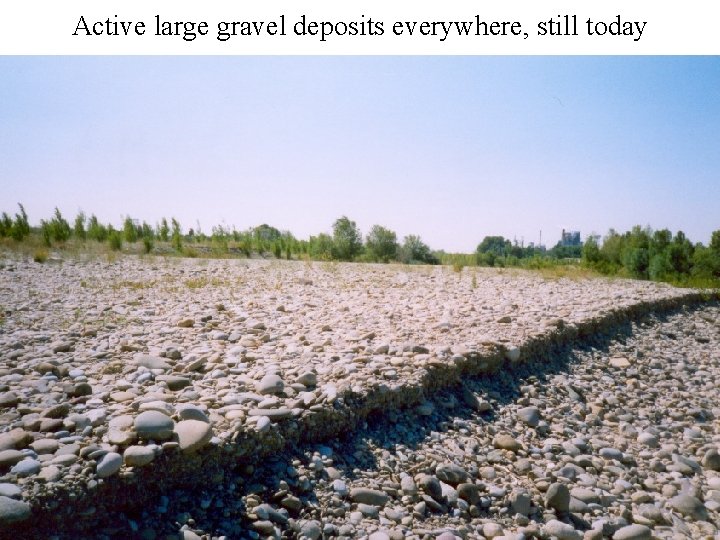
Active large gravel deposits everywhere, still today
Incision in 1970 -2000 4– 5 m
Incision in 1970 -2000
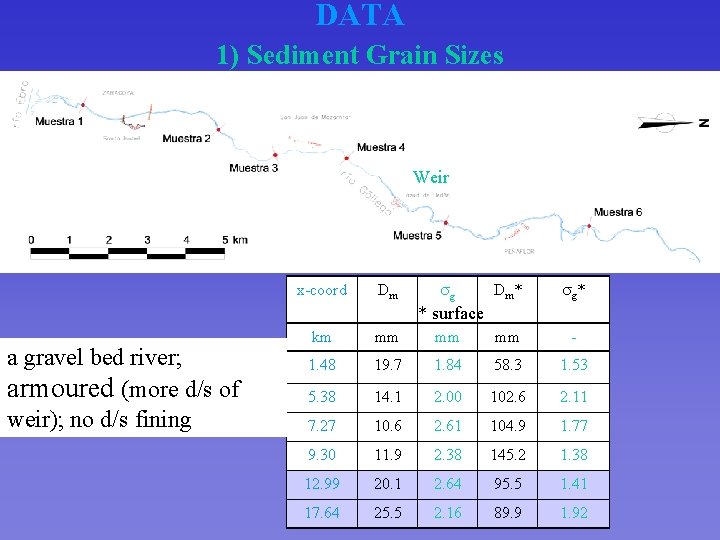
DATA 1) Sediment Grain Sizes Weir x-coord Dm sg Dm * sg* * surface a gravel bed river; armoured (more d/s of weir); no d/s fining km mm mm mm - 1. 48 19. 7 1. 84 58. 3 1. 53 5. 38 14. 1 2. 00 102. 6 2. 11 7. 27 10. 6 2. 61 104. 9 1. 77 9. 30 11. 9 2. 38 145. 2 1. 38 12. 99 20. 1 2. 64 95. 5 1. 41 17. 64 25. 5 2. 16 89. 9 1. 92
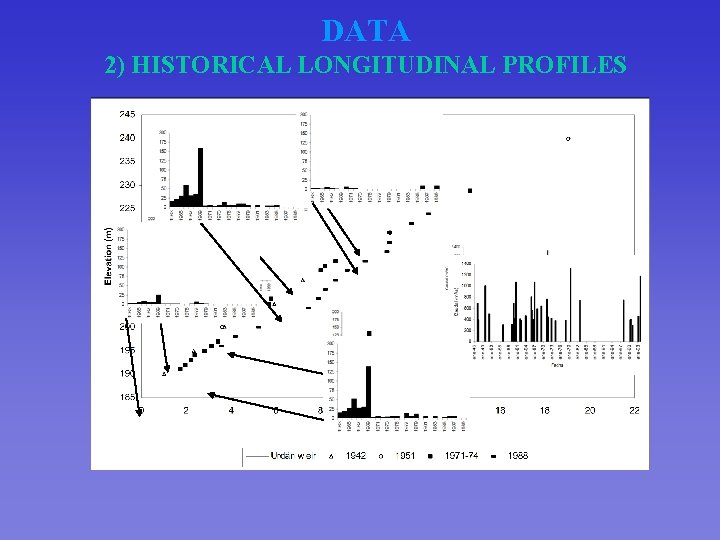
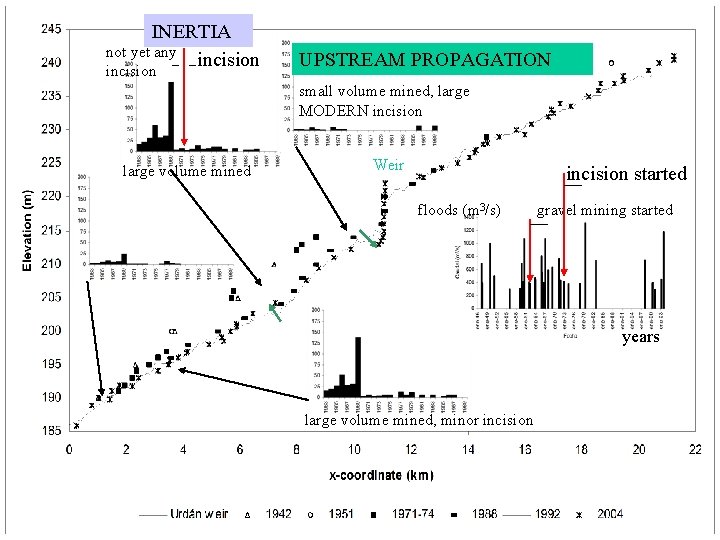
DATA 2) HISTORICAL LONGITUDINAL PROFILES
INERTIA not yet any incision UPSTREAM PROPAGATION small volume mined, large MODERN incision large volume mined Weir incision started floods (m 3/s) gravel mining started years large volume mined, minor incision
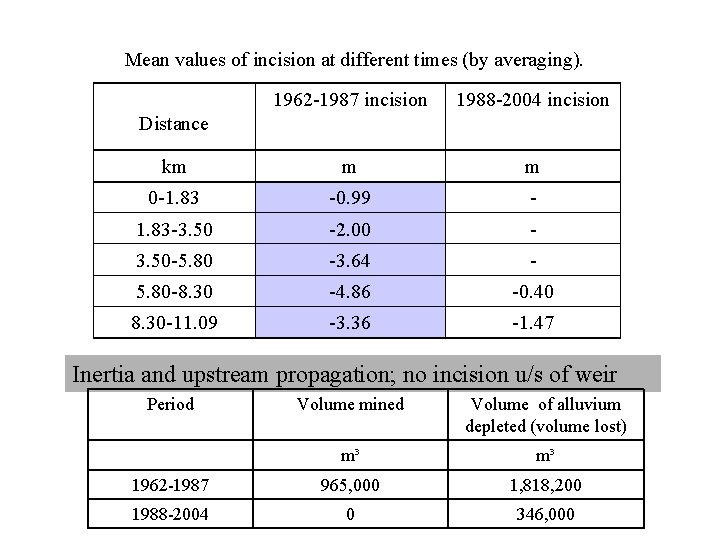
Mean values of incision at different times (by averaging). 1962 -1987 incision 1988 -2004 incision km m m 0 -1. 83 -0. 99 - 1. 83 -3. 50 -2. 00 - 3. 50 -5. 80 -3. 64 - 5. 80 -8. 30 -4. 86 -0. 40 8. 30 -11. 09 -3. 36 -1. 47 Distance Inertia and upstream propagation; no incision u/s of weir Period Volume mined Volume of alluvium depleted (volume lost) m³ m³ 1962 -1987 965, 000 1, 818, 200 1988 -2004 0 346, 000
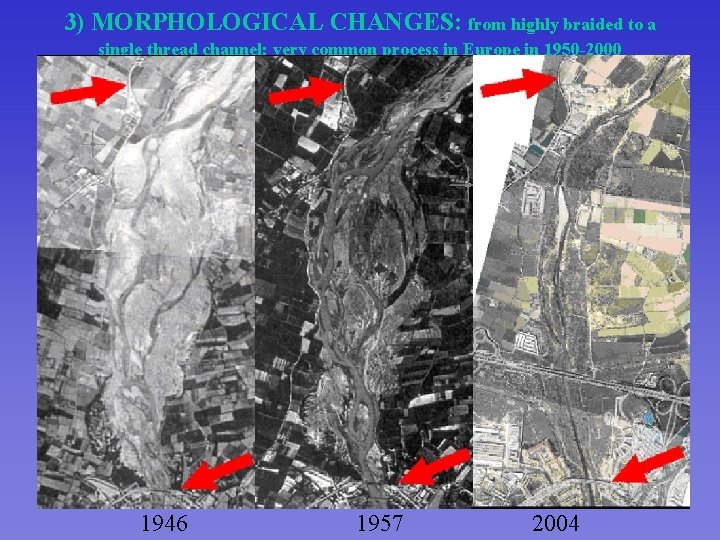
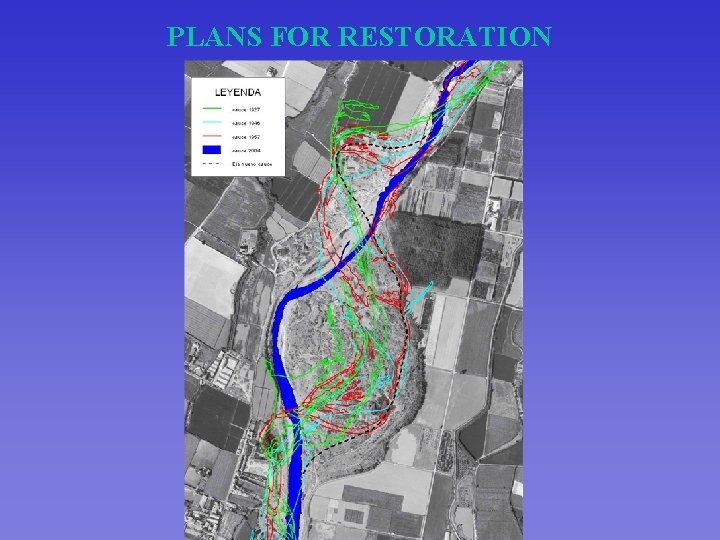
3) MORPHOLOGICAL CHANGES: from highly braided to a single thread channel; very common process in Europe in 1950 -2000 1946 1957 2004
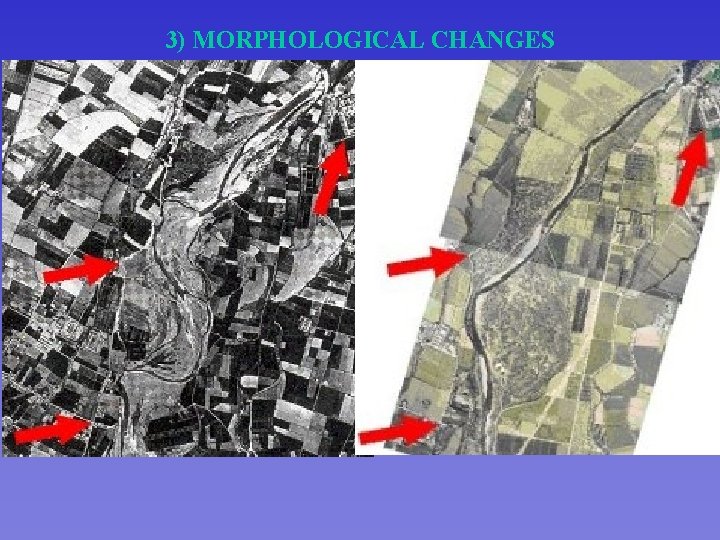
3) MORPHOLOGICAL CHANGES 1957 2004
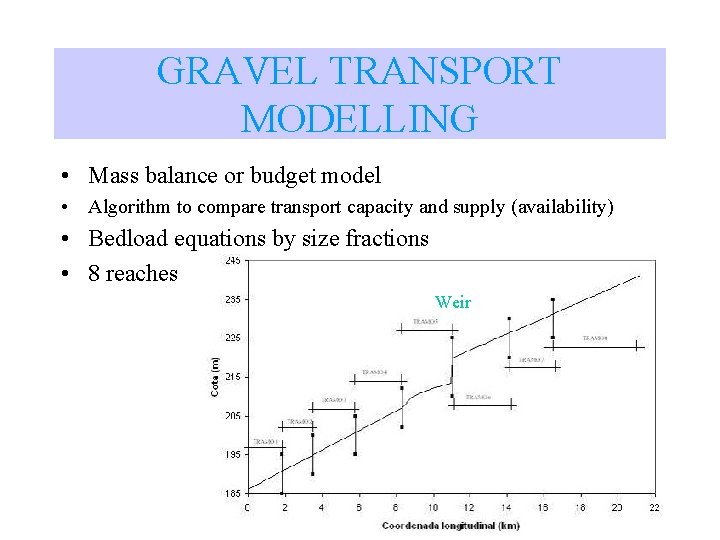
GRAVEL TRANSPORT MODELLING • Mass balance or budget model • Algorithm to compare transport capacity and supply (availability) • Bedload equations by size fractions • 8 reaches Weir
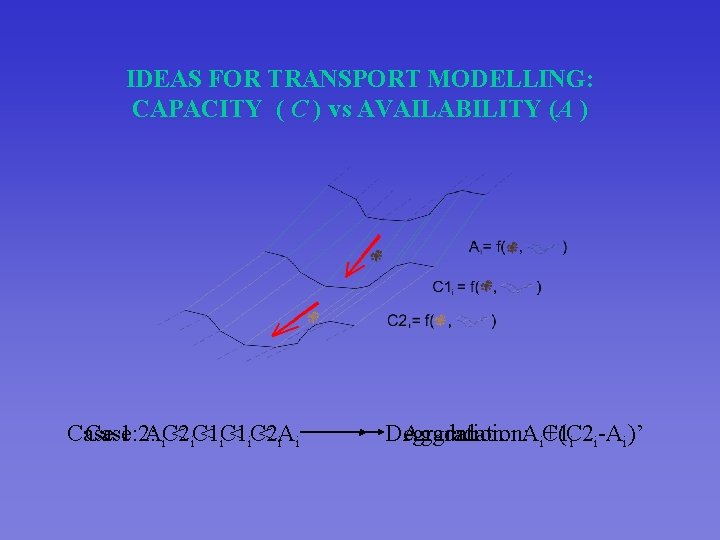
IDEAS FOR TRANSPORT MODELLING: CAPACITY ( C ) vs AVAILABILITY (A ) Case 1: 2: Ai. C 2 < i. C 1 < i. Ai Case < i. C 1 < i. C 2 Aggradation: Ai. C 1 Degradation: +(C 2 i i-Ai)’
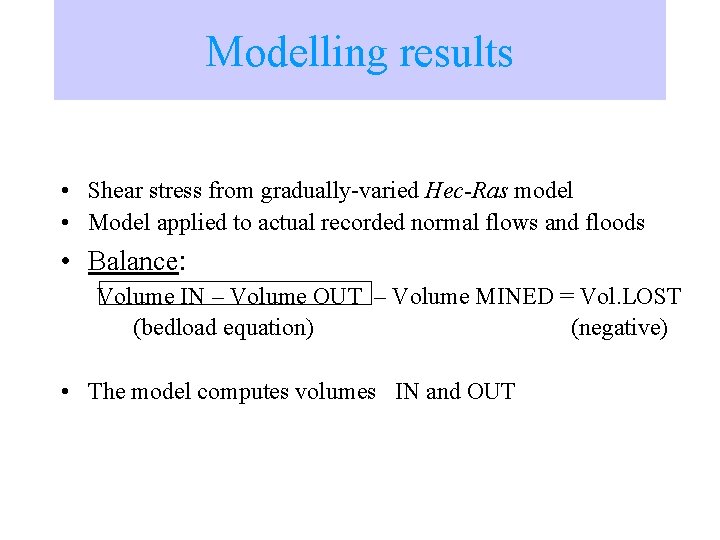
Modelling results • Shear stress from gradually-varied Hec-Ras model • Model applied to actual recorded normal flows and floods • Balance: Volume IN – Volume OUT – Volume MINED = Vol. LOST (bedload equation) (negative) • The model computes volumes IN and OUT
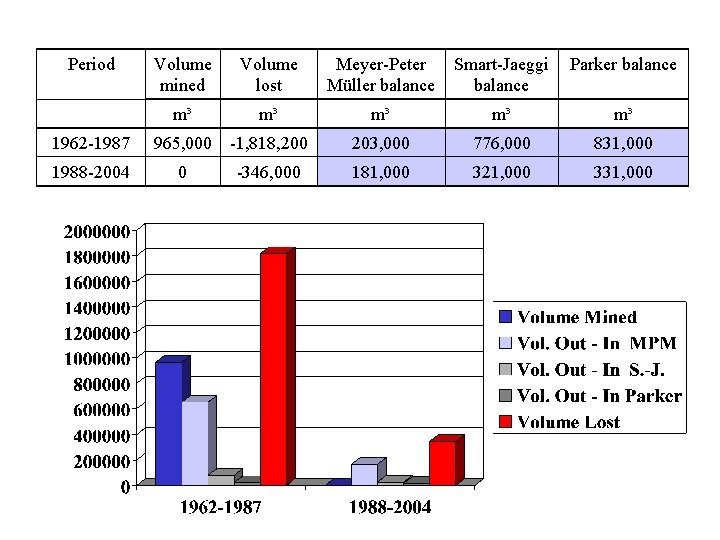
Period 1962 -1987 1988 -2004 Volume mined Volume lost Meyer-Peter Müller balance Smart-Jaeggi balance Parker balance m³ m³ m³ 203, 000 776, 000 831, 000 181, 000 321, 000 331, 000 965, 000 -1, 818, 200 0 -346, 000
GRAVEL MINING EFFECTS
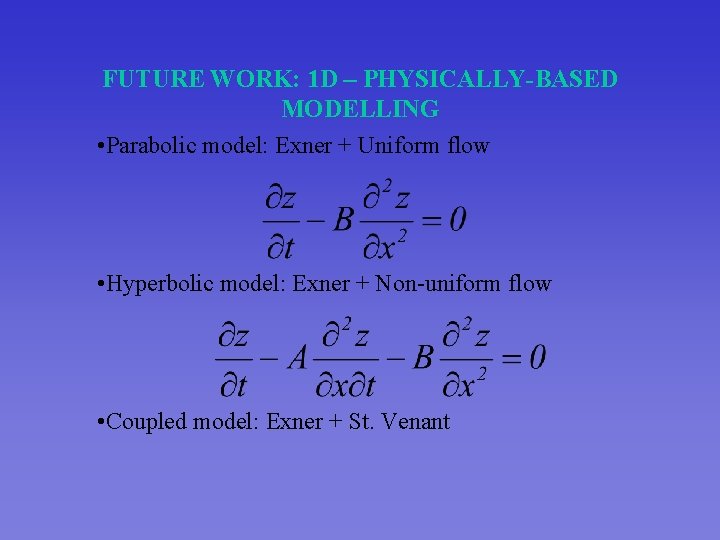
FUTURE WORK: 1 D – PHYSICALLY-BASED MODELLING • Parabolic model: Exner + Uniform flow • Hyperbolic model: Exner + Non-uniform flow • Coupled model: Exner + St. Venant
PLANS FOR RESTORATION
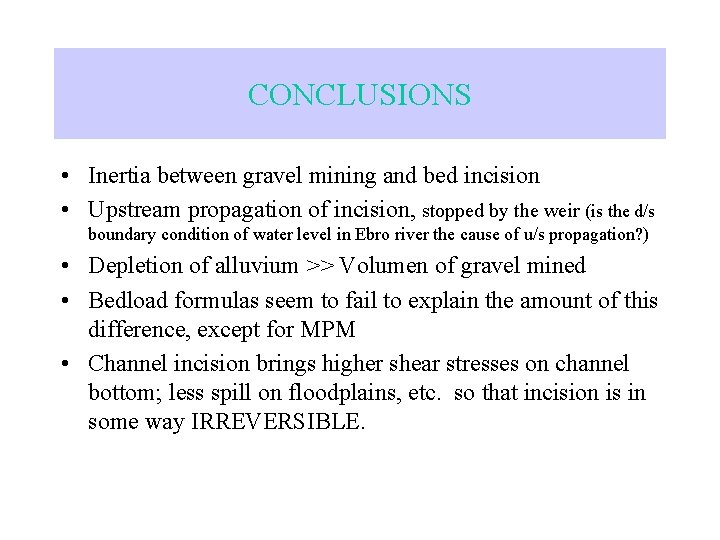
CONCLUSIONS • Inertia between gravel mining and bed incision • Upstream propagation of incision, stopped by the weir (is the d/s boundary condition of water level in Ebro river the cause of u/s propagation? ) • Depletion of alluvium >> Volumen of gravel mined • Bedload formulas seem to fail to explain the amount of this difference, except for MPM • Channel incision brings higher shear stresses on channel bottom; less spill on floodplains, etc. so that incision is in some way IRREVERSIBLE.