
River Diversions Geological Boundary Conditions and Other Considerations
River Diversions: Geological Boundary Conditions and Other Considerations Harry Roberts Coastal Studies Institute School of the Coast and Environment Louisiana State University
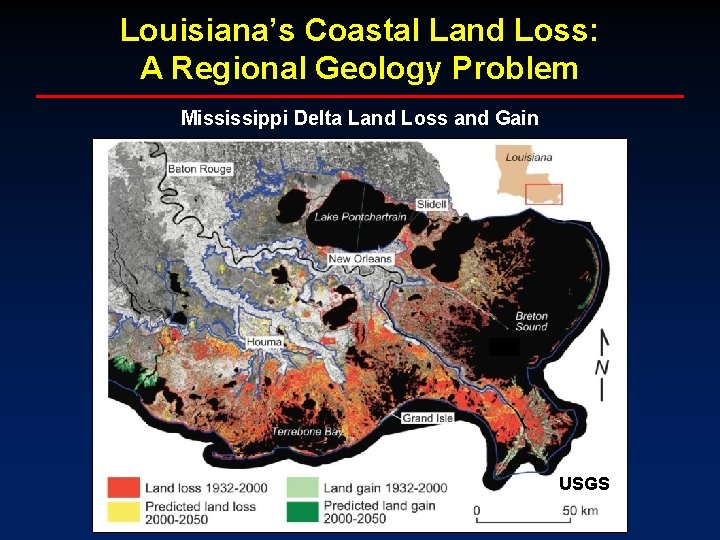
Louisiana’s Coastal Land Loss: A Regional Geology Problem Mississippi Delta Land Loss and Gain USGS

Key Geologic Factors in Land Loss • Crustal Downwarping • Compaction-Dewatering of Young Deposits • Faulting • Decreasing Sediment Supply-Increasing Accommodation
River Diversions: Best Hope for Off-Setting Coastal Land Loss
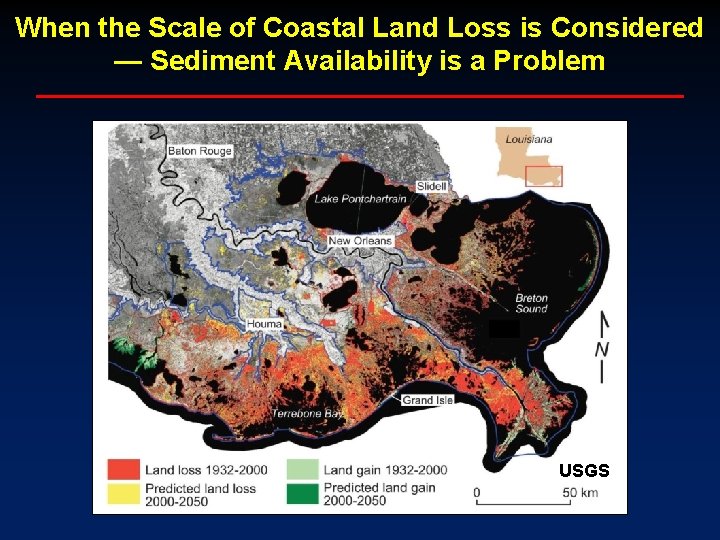
When the Scale of Coastal Land Loss is Considered — Sediment Availability is a Problem USGS
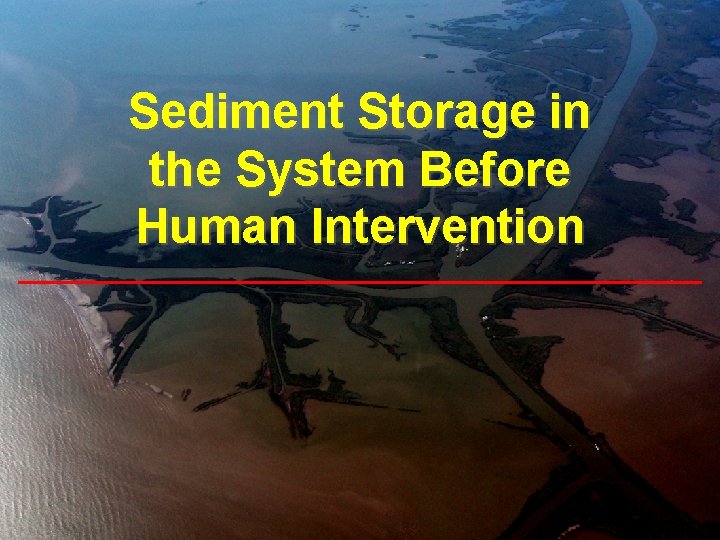
Sediment Storage in the System Before Human Intervention
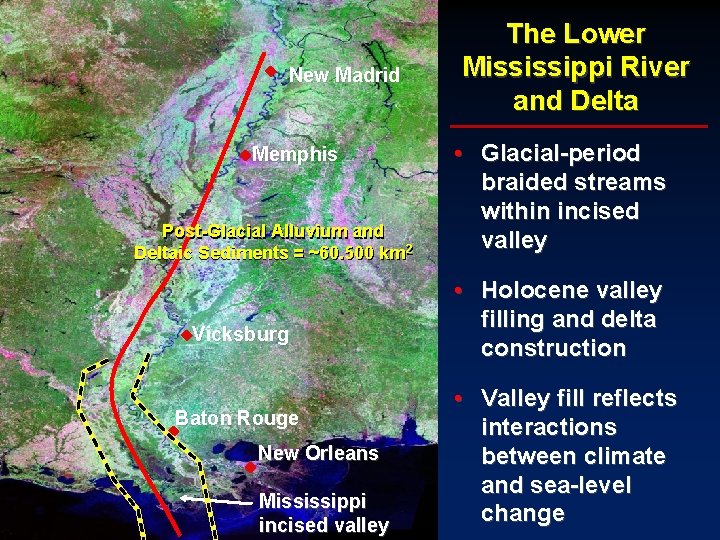
New Madrid Memphis Post-Glacial Alluvium and Deltaic Sediments = ~60. 500 km 2 Vicksburg Baton Rouge New Orleans Mississippi incised valley The Lower Mississippi River and Delta • Glacial-period braided streams within incised valley • Holocene valley filling and delta construction • Valley fill reflects interactions between climate and sea-level change
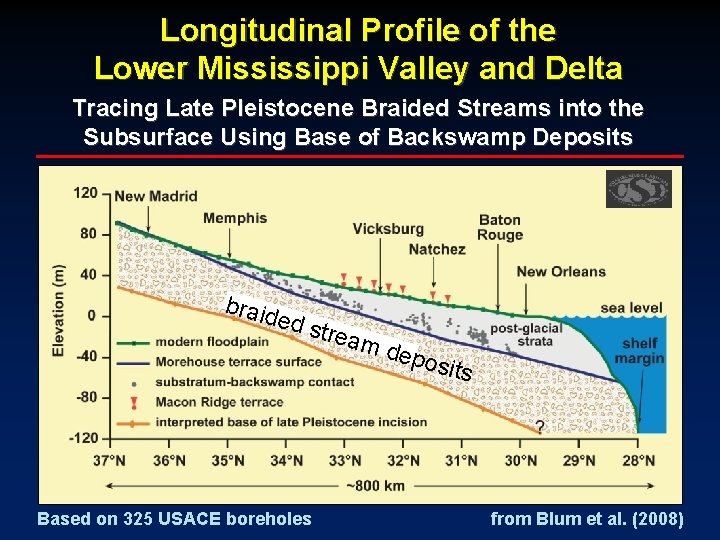
Longitudinal Profile of the Lower Mississippi Valley and Delta Tracing Late Pleistocene Braided Streams into the Subsurface Using Base of Backswamp Deposits braid ed s Based on 325 USACE boreholes tream depo s its from Blum et al. (2008)

Lower Mississippi Valley and Delta Magnitude of Post-Glacial Deposition Balize Delta > 100 m Thick Total storage = 1860 -2300 km 3 or 2790 -3450 BT of sediment Storage rate = ~230 -290 MT/yr over 12, 000 yr post-glacial period sediment isopachs adapted from Kulp (2000)
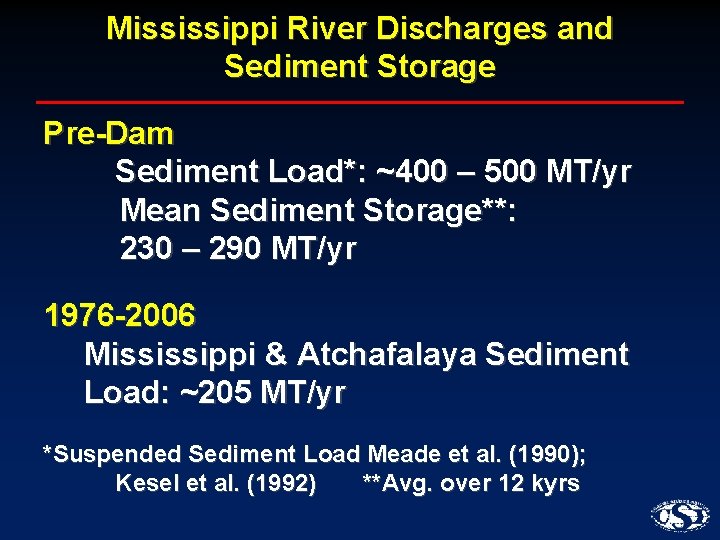
Mississippi River Discharges and Sediment Storage Pre-Dam Sediment Load*: ~400 – 500 MT/yr Mean Sediment Storage**: 230 – 290 MT/yr 1976 -2006 Mississippi & Atchafalaya Sediment Load: ~205 MT/yr *Suspended Sediment Load Meade et al. (1990); Kesel et al. (1992) **Avg. over 12 kyrs
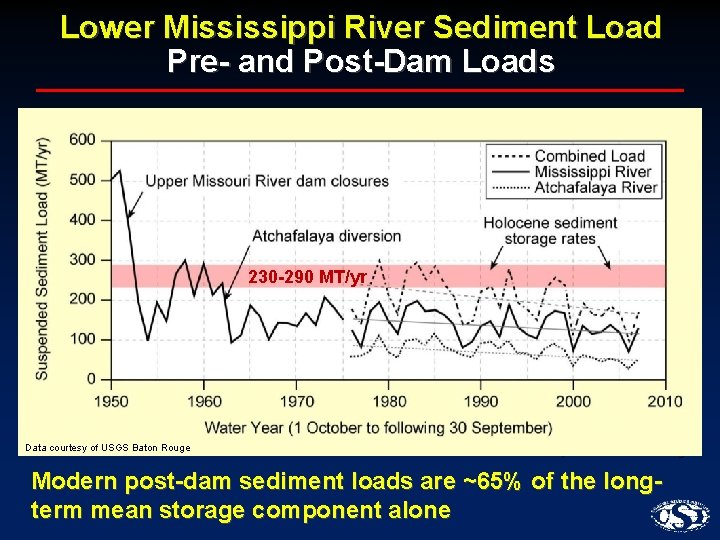
Lower Mississippi River Sediment Load Pre- and Post-Dam Loads 230 -290 MT/yr Data courtesy of USGS Baton Rouge Modern post-dam sediment loads are ~65% of the longterm mean storage component alone
Projections of Sea-Level Rise and Subsidence Increasing Accommodation
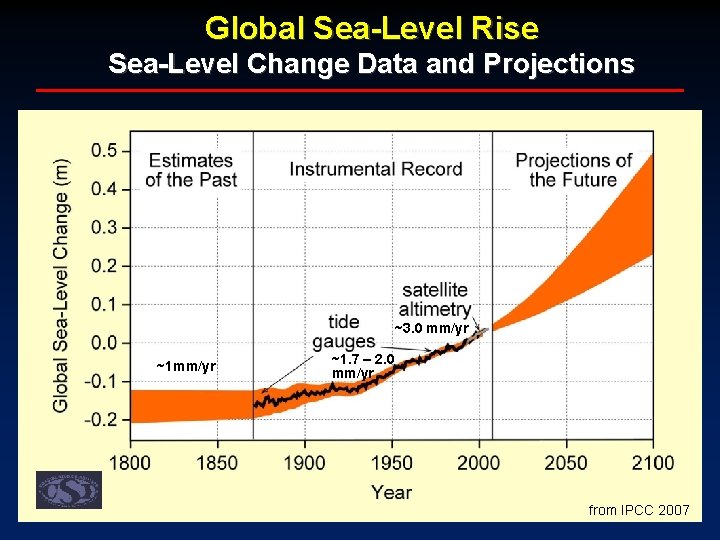
Global Sea-Level Rise Sea-Level Change Data and Projections Satellite observations Tide-gauge observations ~1 mm/yr ~3. 0 mm/yr ~1. 7 – 2. 0 mm/yr from IPCC 2007
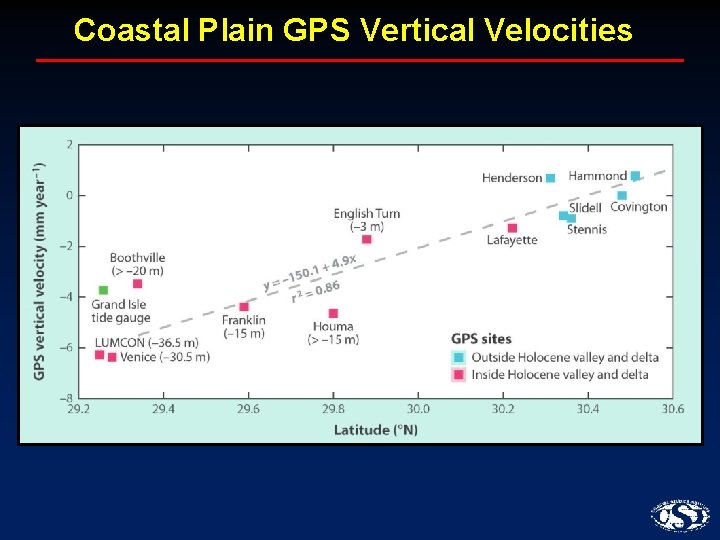
Coastal Plain GPS Vertical Velocities
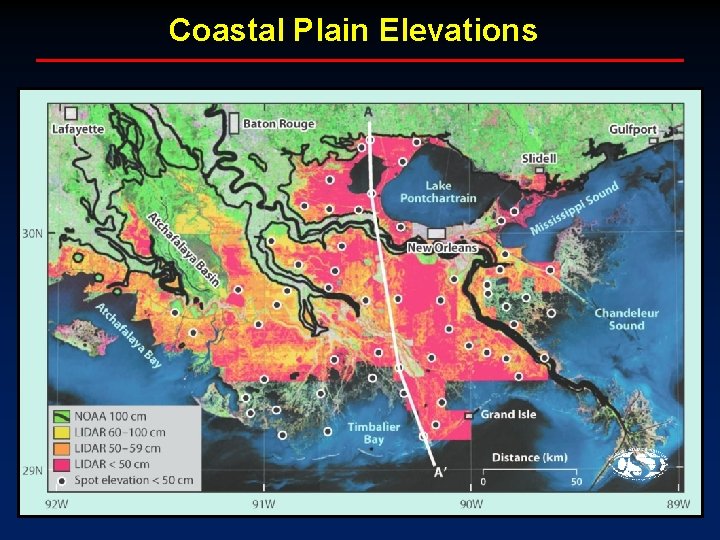
Coastal Plain Elevations
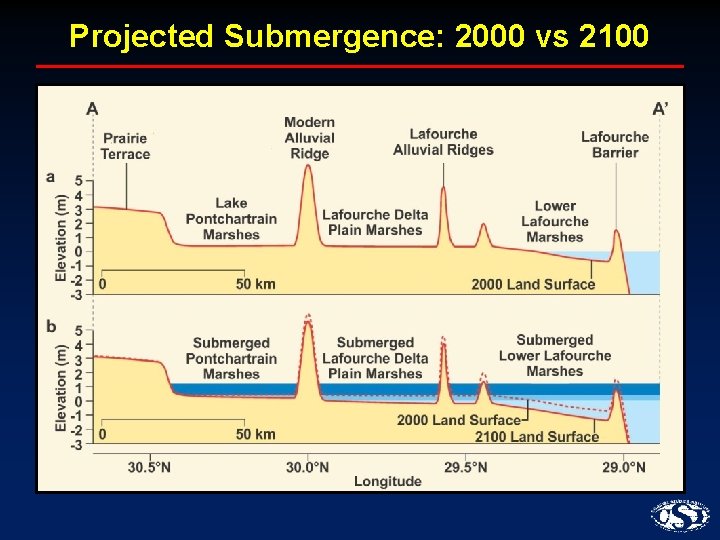
Projected Submergence: 2000 vs 2100
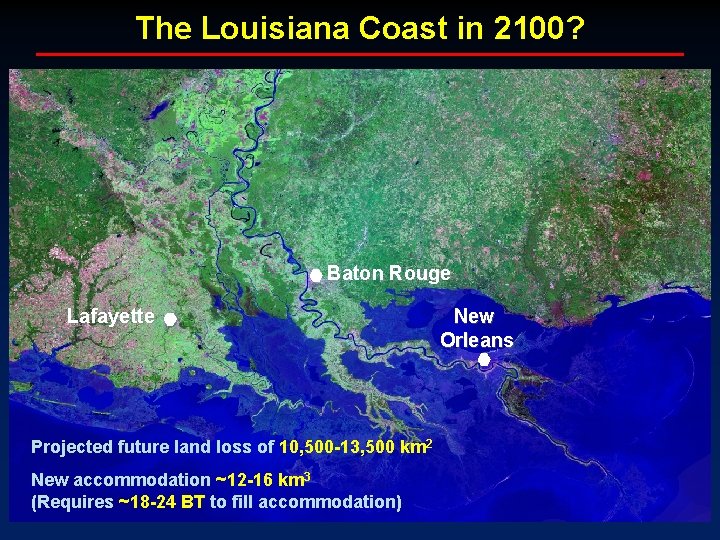
The Louisiana Coast in 2100? Baton Rouge Lafayette Projected future land loss of 10, 500 -13, 500 km 2 New accommodation ~12 -16 km 3 (Requires ~18 -24 BT to fill accommodation) New Orleans
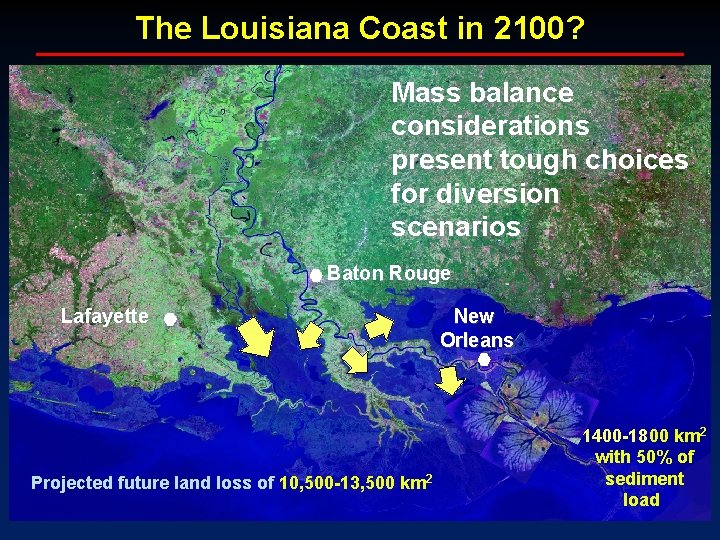
The Louisiana Coast in 2100? Mass balance considerations present tough choices for diversion scenarios Baton Rouge Lafayette Projected future land loss of 10, 500 -13, 500 km 2 New Orleans 1400 -1800 km 2 with 50% of sediment load
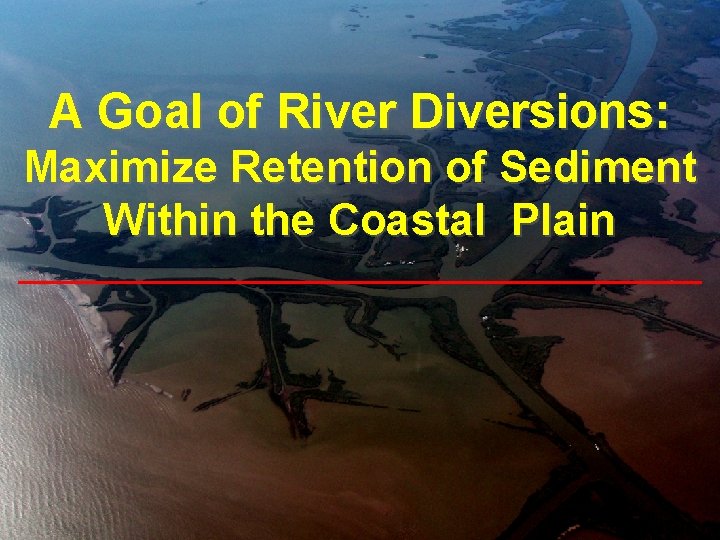
A Goal of River Diversions: Maximize Retention of Sediment Within the Coastal Plain
Fundamental Questions: River Diversions • How are the sediments partitioned within the coastal-shelf system? • What is the sediment retention capability in the delta and adjacent marshland? • What are the important processes linked to sediment transport to the delta-marsh -offshore?
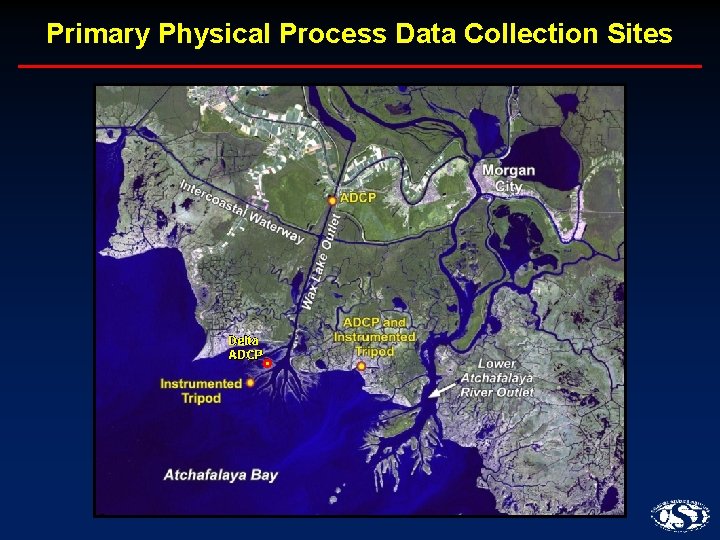
Primary Physical Process Data Collection Sites Delta ADCP
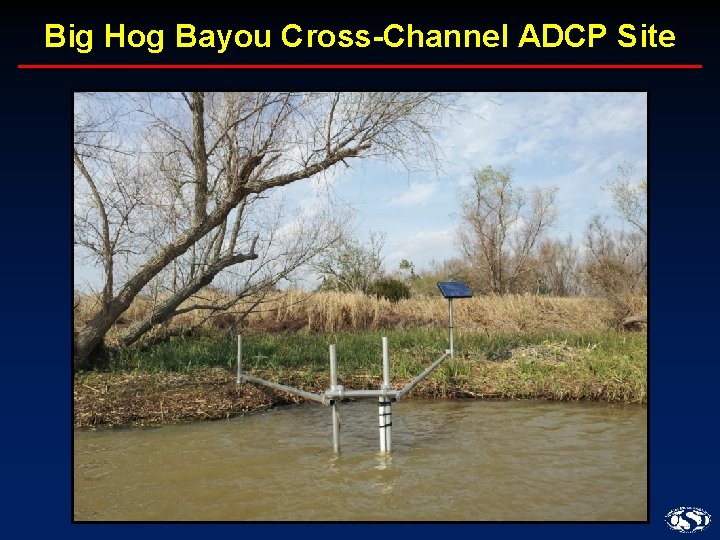
Big Hog Bayou Cross-Channel ADCP Site
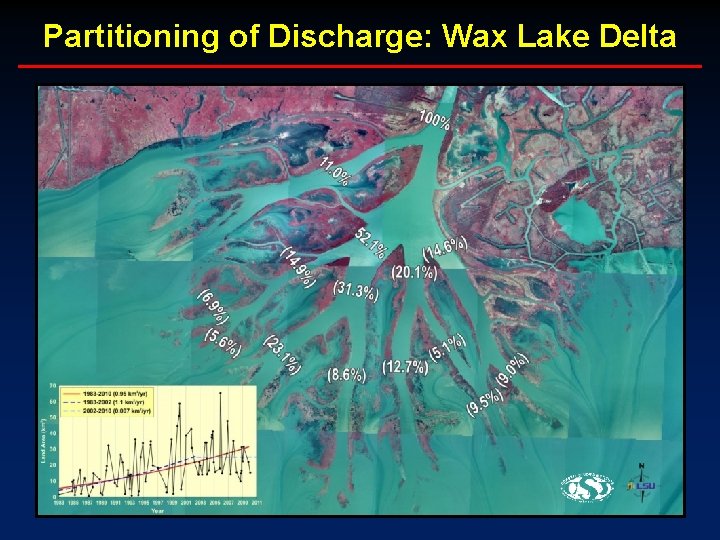
Partitioning of Discharge: Wax Lake Delta

Important Positive Impacts of Hurricanes, Tropical Storms and Cold Fronts
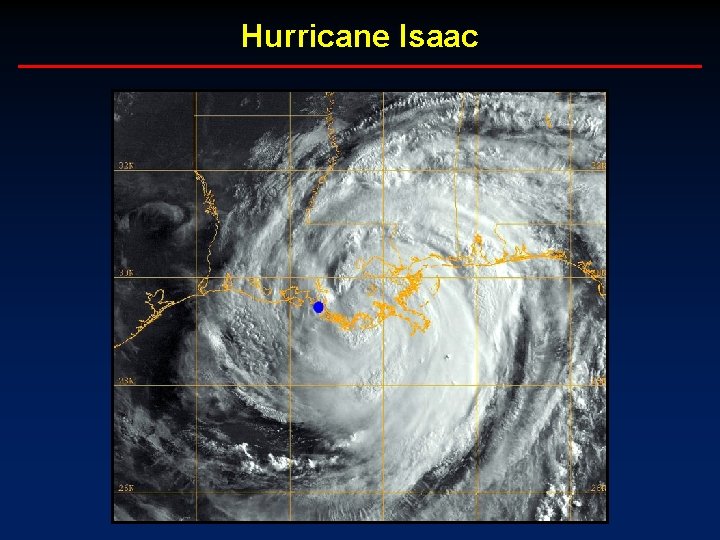
Hurricane Isaac
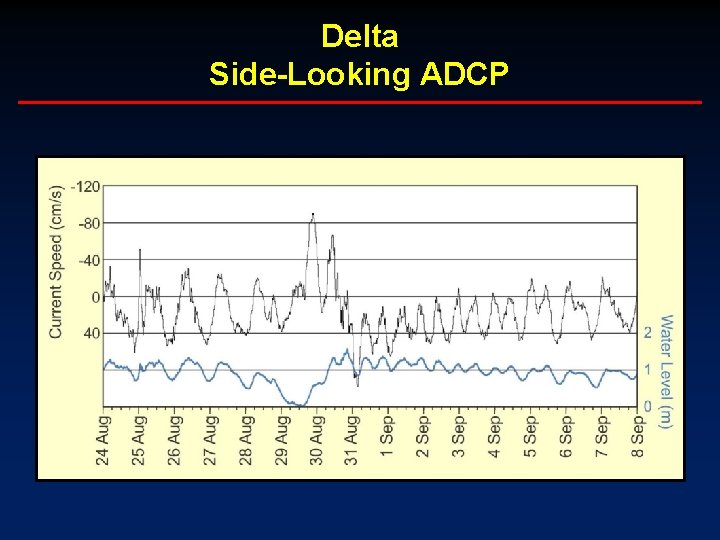
Delta Side-Looking ADCP
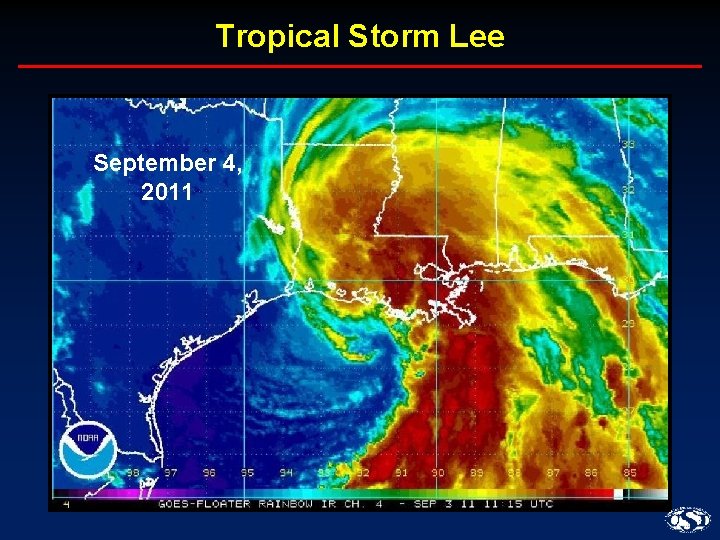
Tropical Storm Lee September 4, 2011
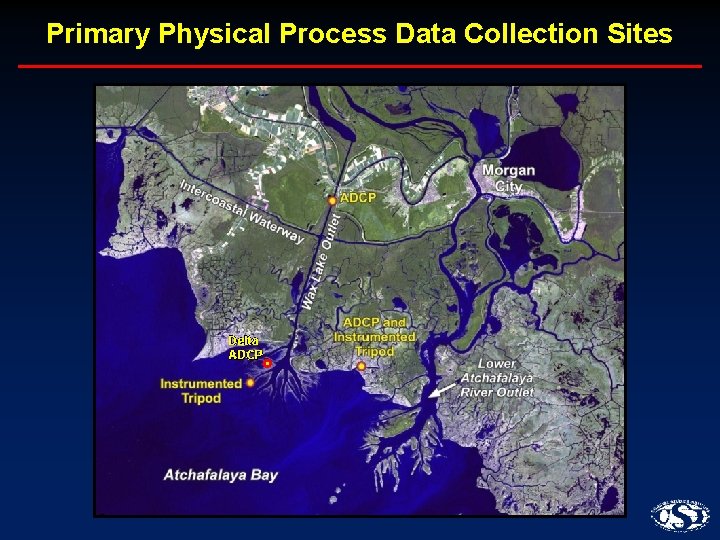
Primary Physical Process Data Collection Sites Delta ADCP
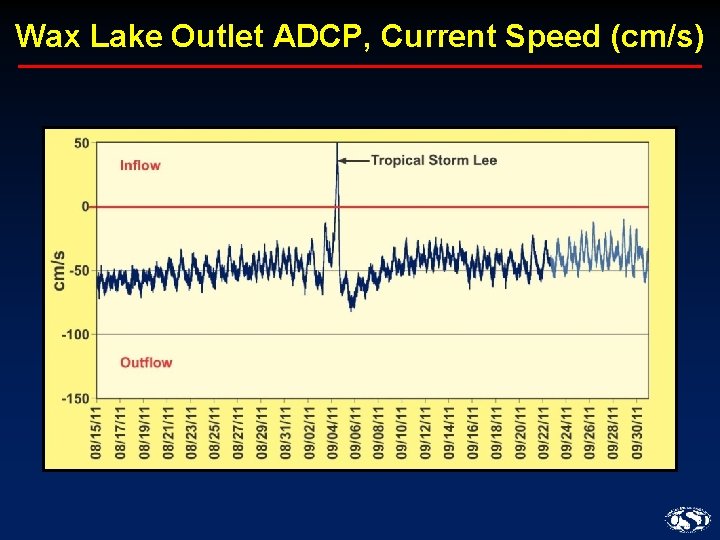
Wax Lake Outlet ADCP, Current Speed (cm/s)
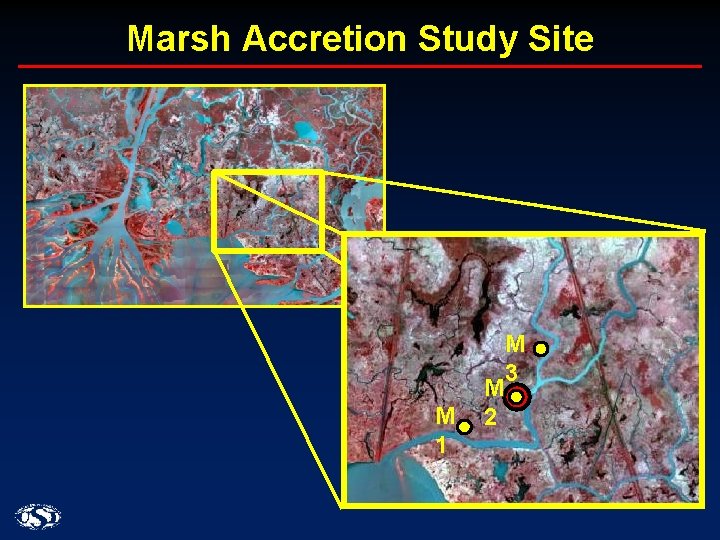
Marsh Accretion Study Site M 1 M 2 M 3
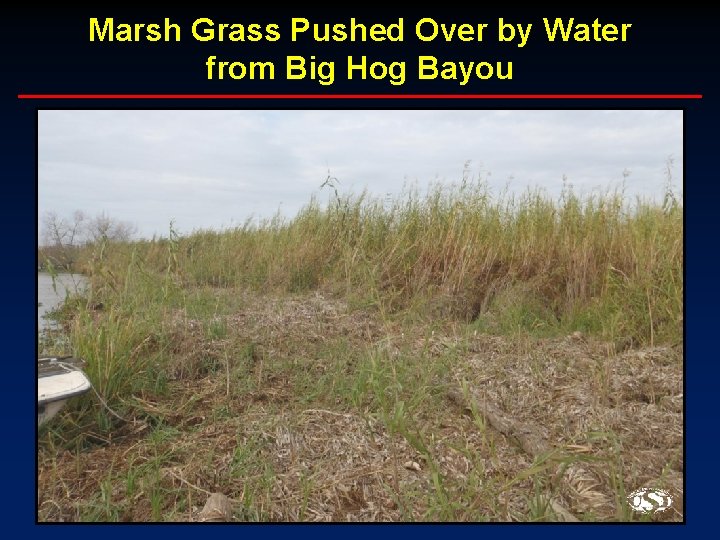
Marsh Grass Pushed Over by Water from Big Hog Bayou
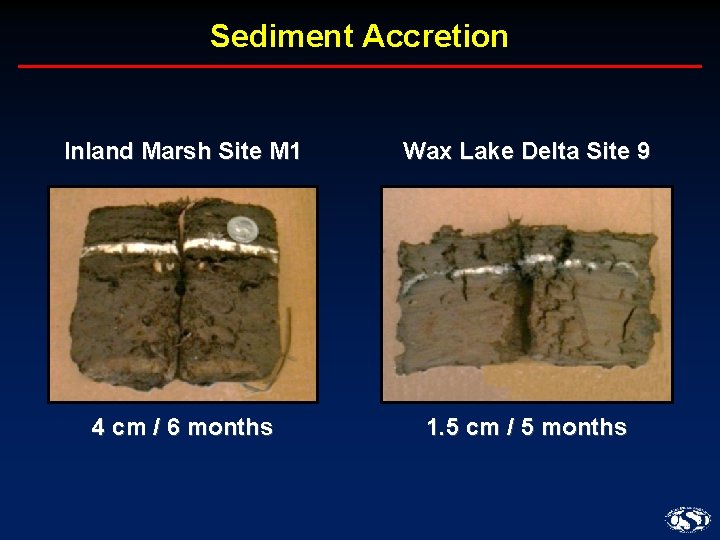
Sediment Accretion Inland Marsh Site M 1 Wax Lake Delta Site 9 4 cm / 6 months 1. 5 cm / 5 months
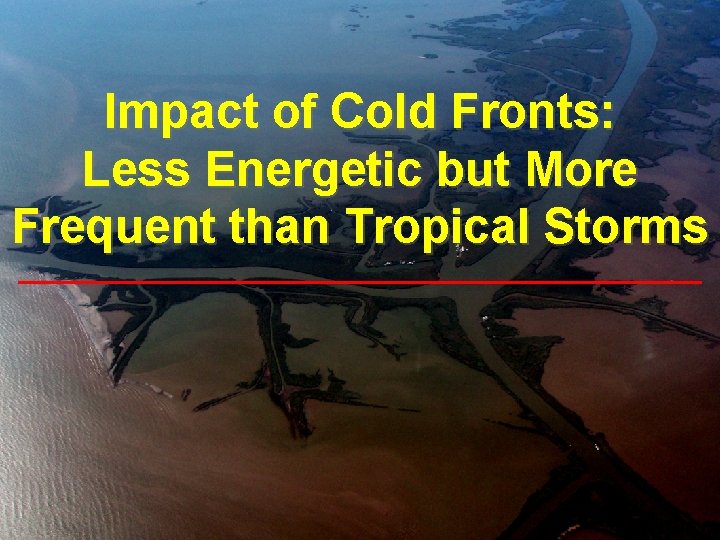
Impact of Cold Fronts: Less Energetic but More Frequent than Tropical Storms
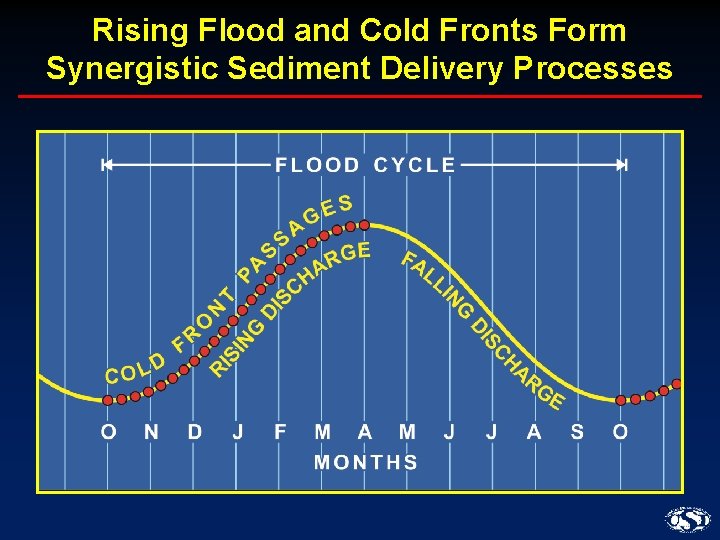
Rising Flood and Cold Fronts Form Synergistic Sediment Delivery Processes
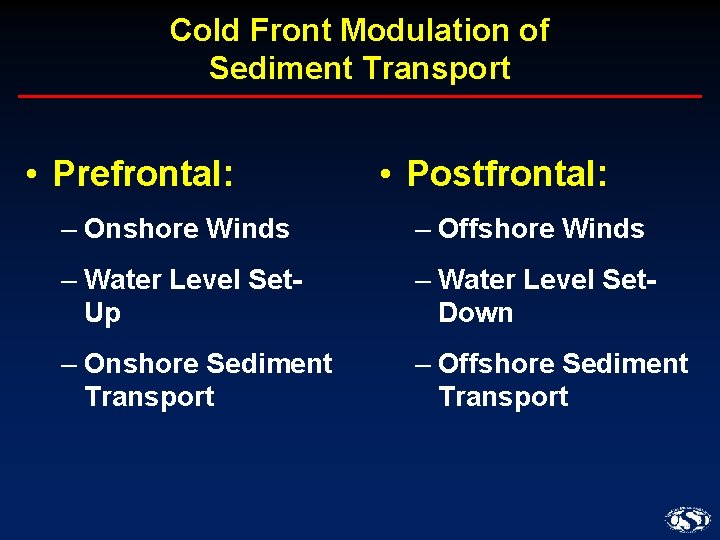
Cold Front Modulation of Sediment Transport • Prefrontal: • Postfrontal: – Onshore Winds – Offshore Winds – Water Level Set. Up – Water Level Set. Down – Onshore Sediment Transport – Offshore Sediment Transport
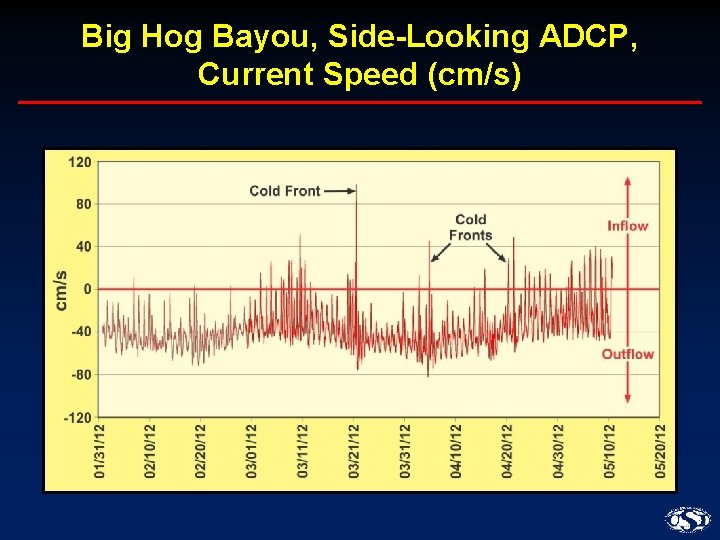
Big Hog Bayou, Side-Looking ADCP, Current Speed (cm/s)
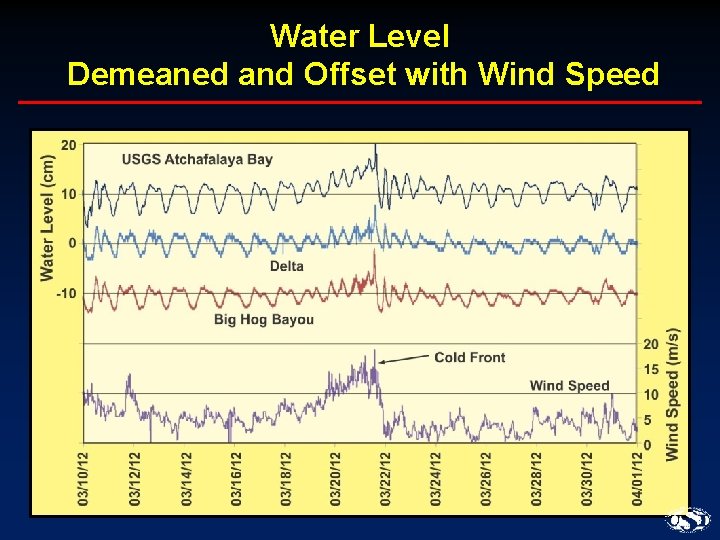
Water Level Demeaned and Offset with Wind Speed
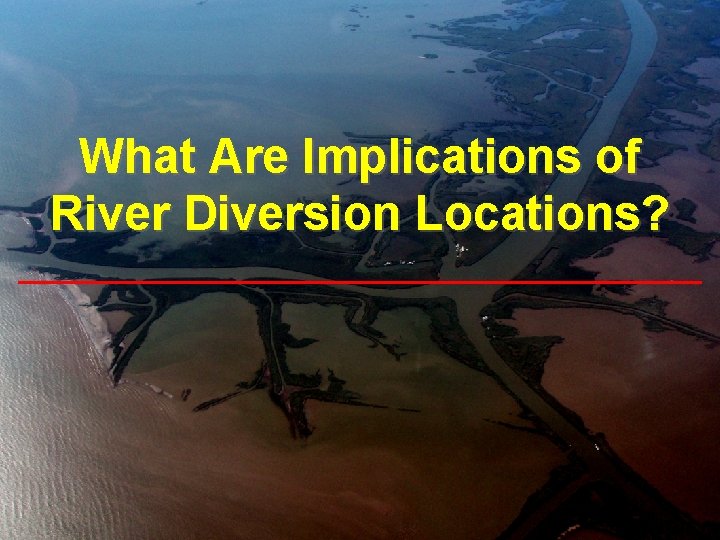
What Are Implications of River Diversion Locations?
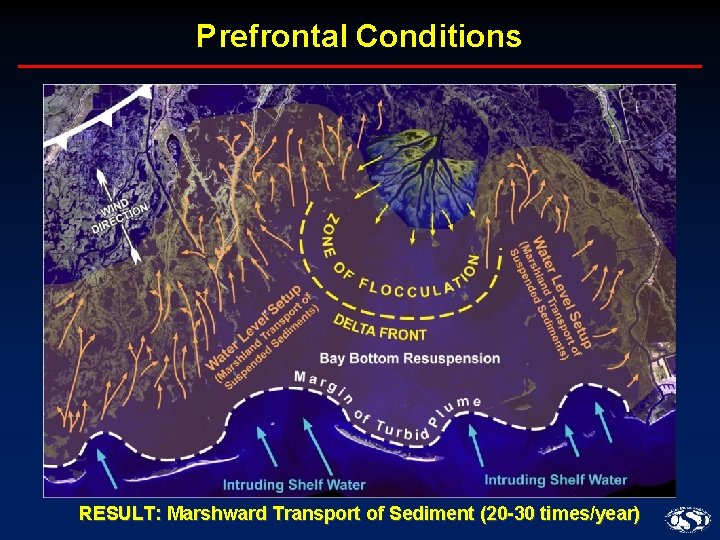
Prefrontal Conditions RESULT: Marshward Transport of Sediment (20 -30 times/year)
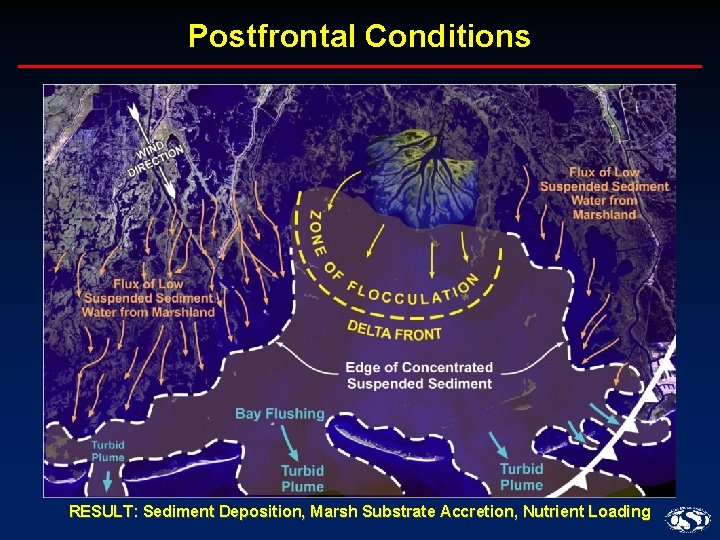
Postfrontal Conditions RESULT: Sediment Deposition, Marsh Substrate Accretion, Nutrient Loading
Project Results Suggest: Placement of River Diversions in Landward Parts of Interdistributary Basins Will Maximize Sediment Retention Through Landward Suspended Sediment Transport by Cold-Front-Related Processes.
- Slides: 41