
River Basin Modeling Water Resources Planning and Management

River Basin Modeling Water Resources Planning and Management Daene C. Mc. Kinney
Water Resources • Water at: – Wrong place, wrong quantity, wrong time • What to do? • Manipulate the hydrologic cycle – Build facilities? Remove facilities? Reoperate facilities? • • Reservoirs Canals Levees Other infrastructure
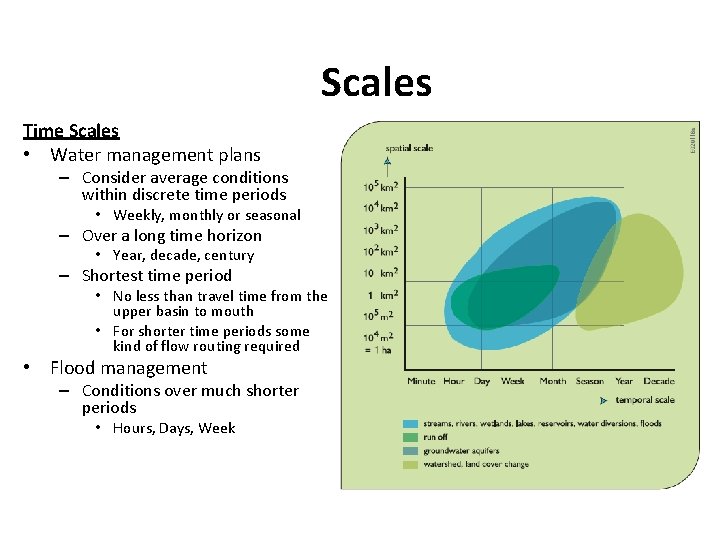
Scales Time Scales • Water management plans – Consider average conditions within discrete time periods • Weekly, monthly or seasonal – Over a long time horizon • Year, decade, century – Shortest time period • No less than travel time from the upper basin to mouth • For shorter time periods some kind of flow routing required • Flood management – Conditions over much shorter periods • Hours, Days, Week
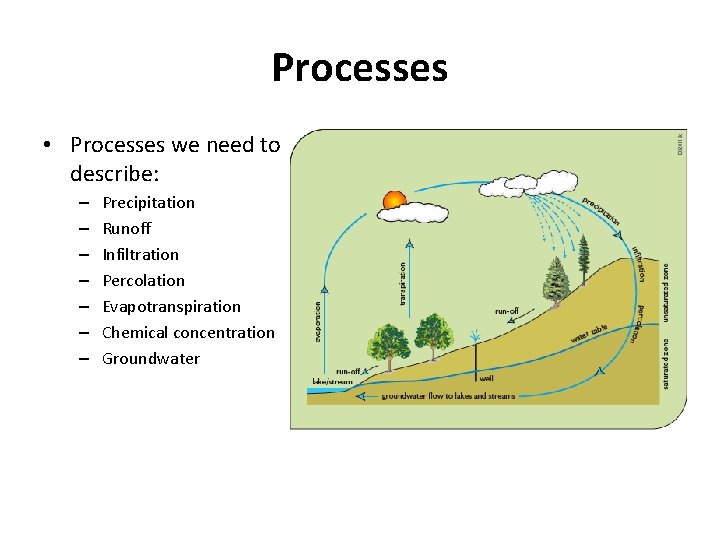
Processes • Processes we need to describe: – – – – Precipitation Runoff Infiltration Percolation Evapotranspiration Chemical concentration Groundwater
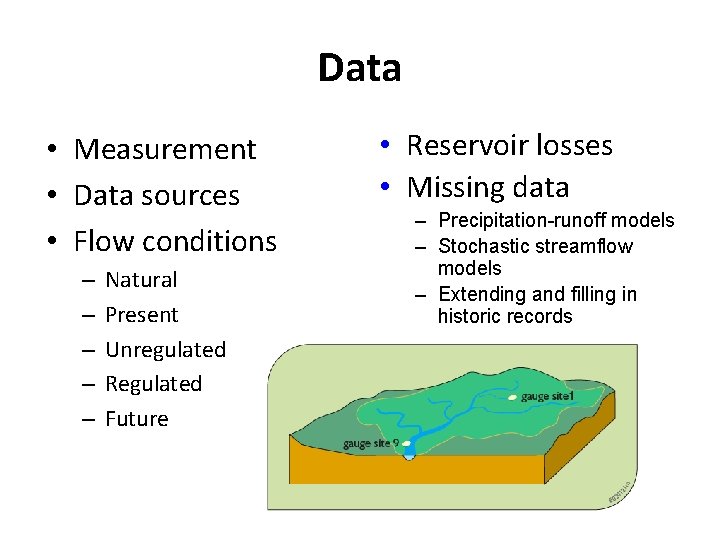
Data • Measurement • Data sources • Flow conditions – – – Natural Present Unregulated Regulated Future • Reservoir losses • Missing data – Precipitation-runoff models – Stochastic streamflow models – Extending and filling in historic records

Hydrologic Frequency Analysis • Flow duration curves – Percent of time during which specified flow rates are equaled or exceeded at a given location Pr{ X > x }
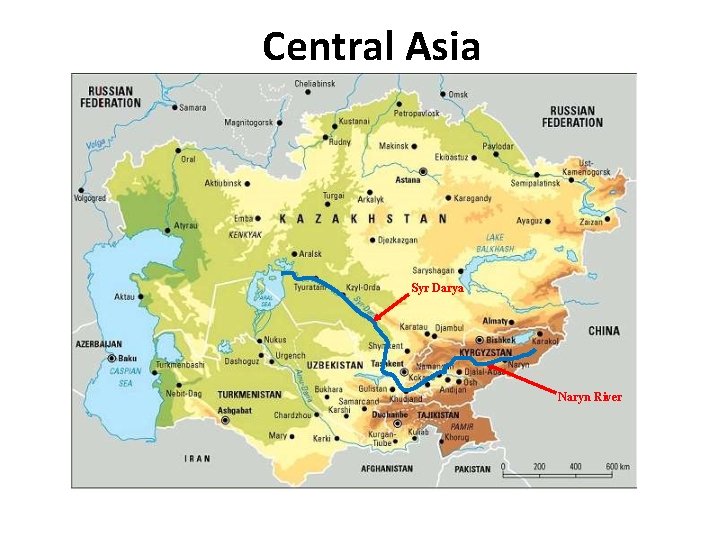
Central Asia Syr Darya Naryn River
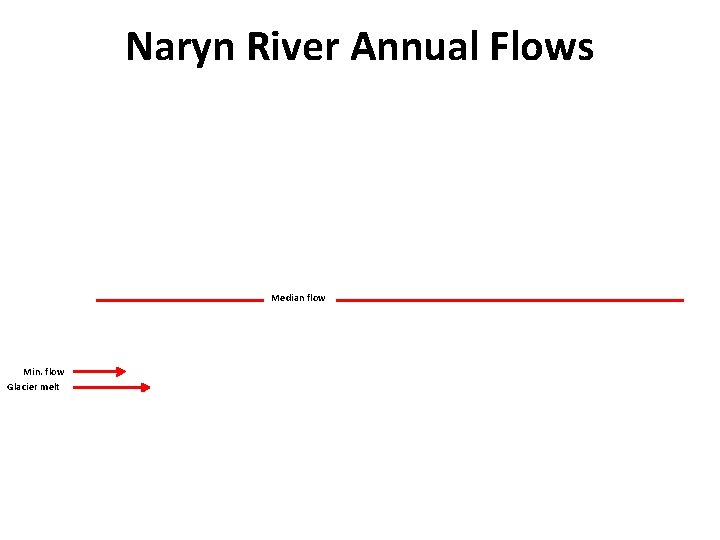
Naryn River Annual Flows Median flow Min. flow Glacier melt
Naryn River Annual Flows
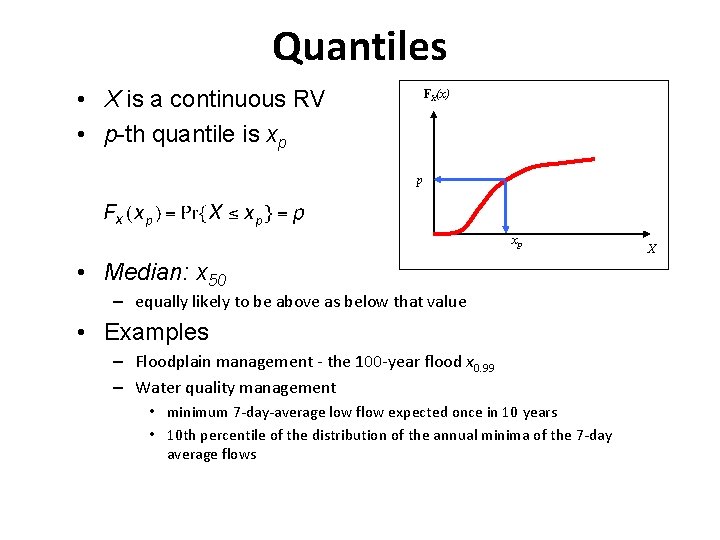
Quantiles • X is a continuous RV • p-th quantile is xp FX(x) p xp • Median: x 50 – equally likely to be above as below that value • Examples – Floodplain management - the 100 -year flood x 0. 99 – Water quality management • minimum 7 -day-average low flow expected once in 10 years • 10 th percentile of the distribution of the annual minima of the 7 -day average flows X
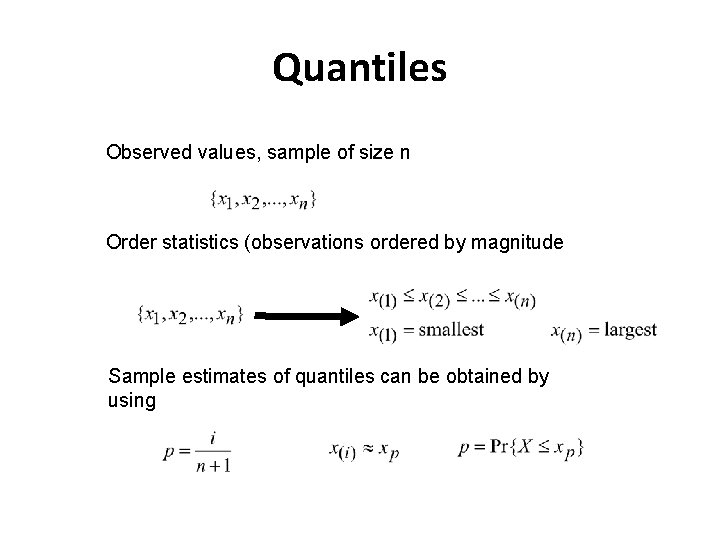
Quantiles • Observed values, sample of size n • Order statistics (observations ordered by magnitude • Sample estimates of quantiles can be obtained by using
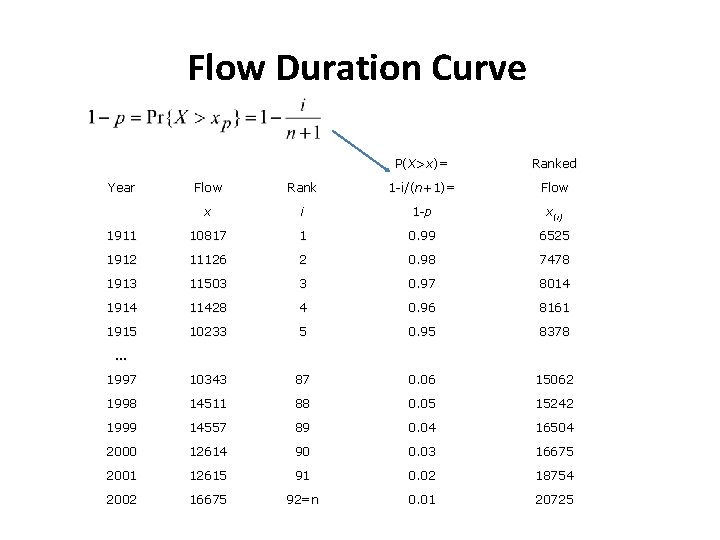
Flow Duration Curve Year P(X>x)= Ranked Flow Rank 1 -i/(n+1)= Flow x i 1 -p x(i) 1911 10817 1 0. 99 6525 1912 11126 2 0. 98 7478 1913 11503 3 0. 97 8014 1914 11428 4 0. 96 8161 1915 10233 5 0. 95 8378 1997 10343 87 0. 06 15062 1998 14511 88 0. 05 15242 1999 14557 89 0. 04 16504 2000 12614 90 0. 03 16675 2001 12615 91 0. 02 18754 2002 16675 92=n 0. 01 20725 …
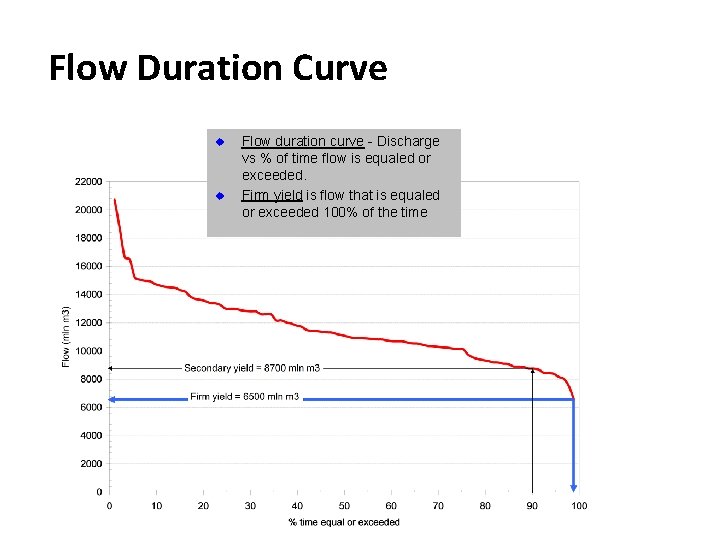
Flow Duration Curve u u Flow duration curve - Discharge vs % of time flow is equaled or exceeded. Firm yield is flow that is equaled or exceeded 100% of the time
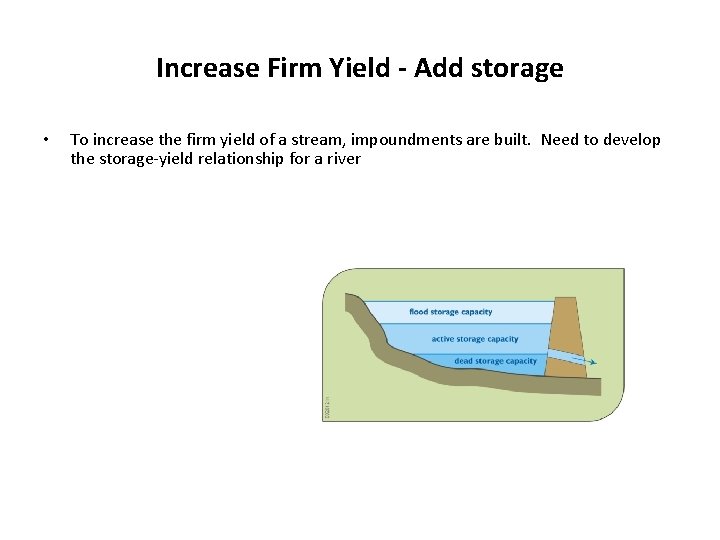
Increase Firm Yield - Add storage • To increase the firm yield of a stream, impoundments are built. Need to develop the storage-yield relationship for a river
Simplified Methods • Mass curve (Rippl) method – Graphical estimate of storage required to supply given yield – Constructed by summing inflows over period of record and plotting these versus time and comparing to demands • Time interval includes “critical period” – Time over which flows reached a minimum – Causes the greatest drawdown of reservoir
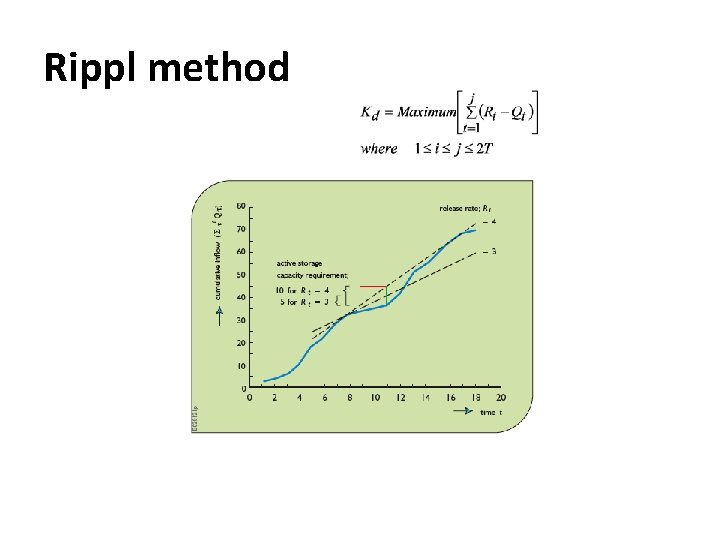
Rippl method
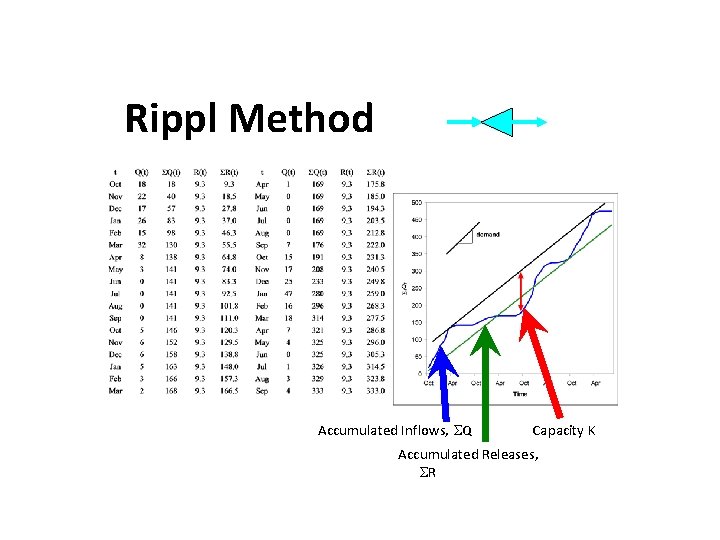
Rippl Method Qt Accumulated Inflows, Q Rt Capacity K Accumulated Releases, R
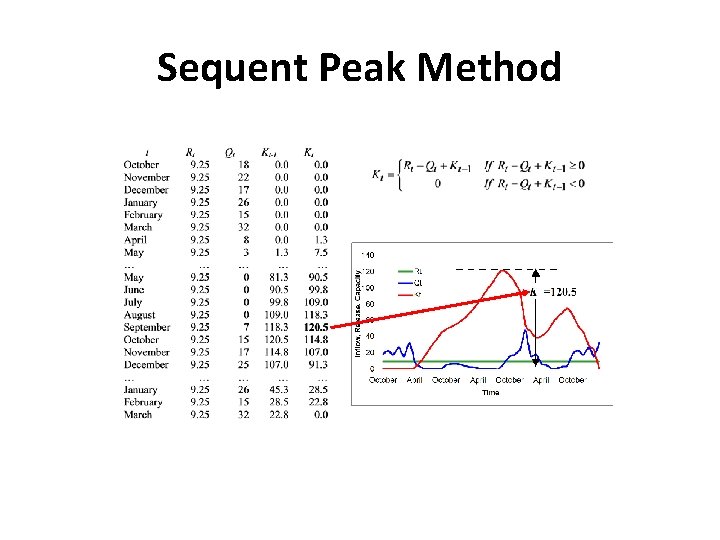
Sequent Peak Method
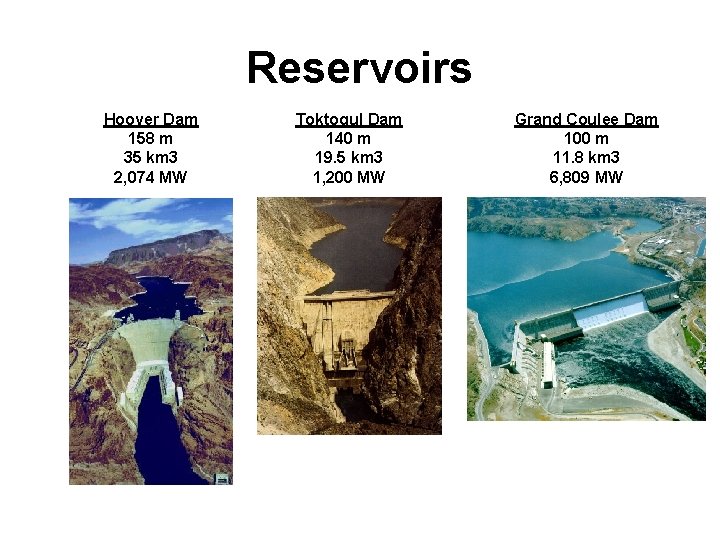
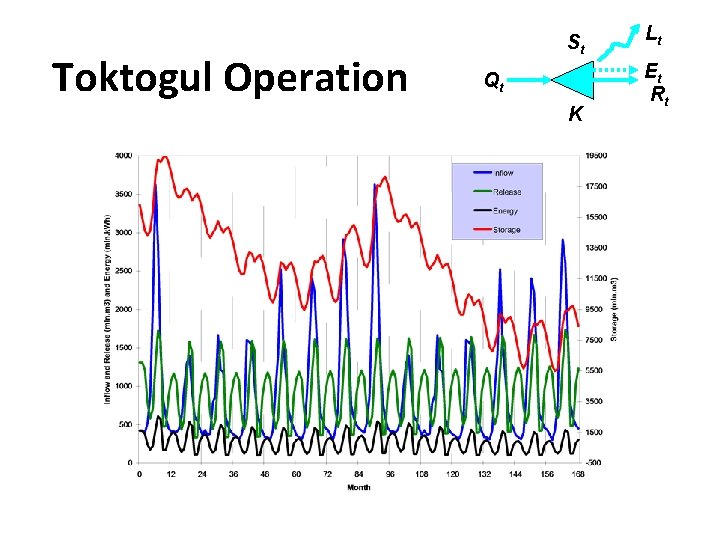
Reservoirs Hoover Dam 158 m 35 km 3 2, 074 MW Toktogul Dam 140 m 19. 5 km 3 1, 200 MW Grand Coulee Dam 100 m 11. 8 km 3 6, 809 MW
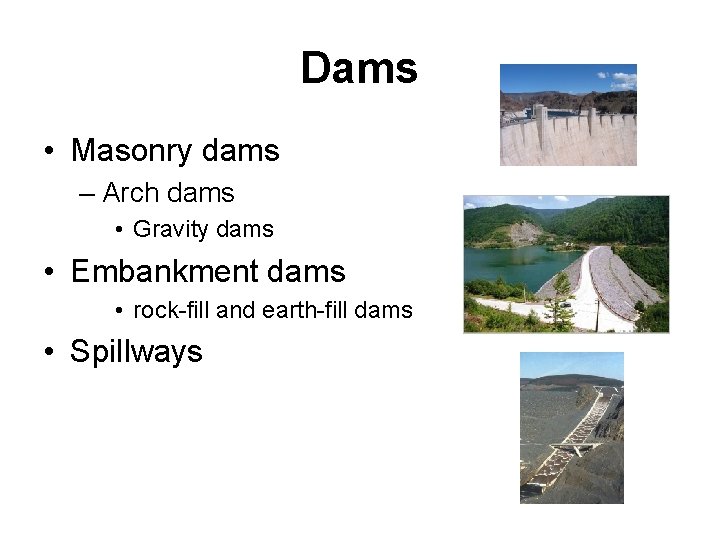
Dams • Masonry dams – Arch dams • Gravity dams • Embankment dams • rock-fill and earth-fill dams • Spillways
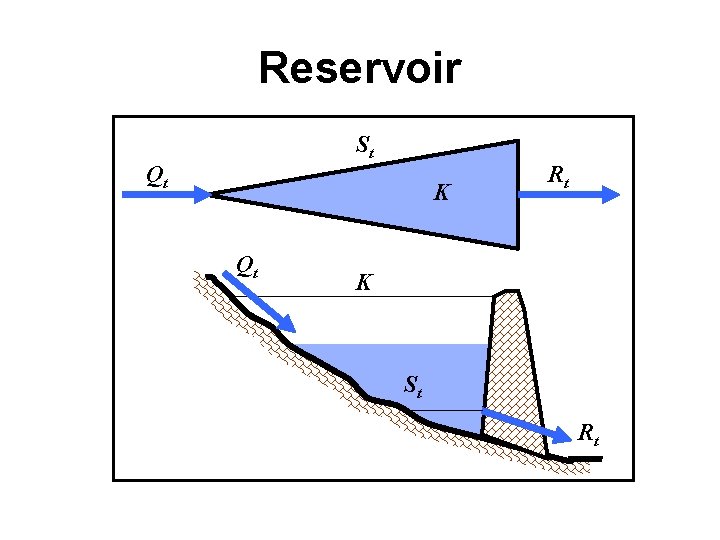
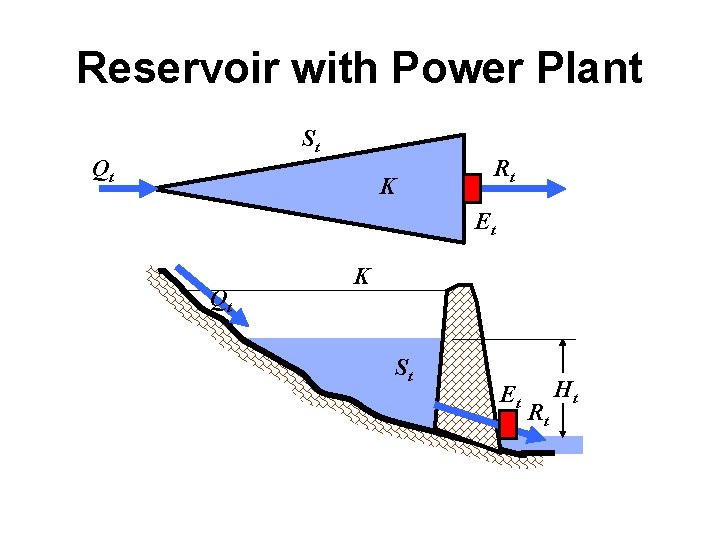
Reservoir St Qt K Qt Rt K St Rt
Management of a Single Reservoir • 2 common tasks of reservoir modeling: 1. Determine coefficients of functions that describe reservoir characteristics 2. Determine optimal mode of reservoir operation (storage volumes, elevations and releases) while satisfying downstream water demands
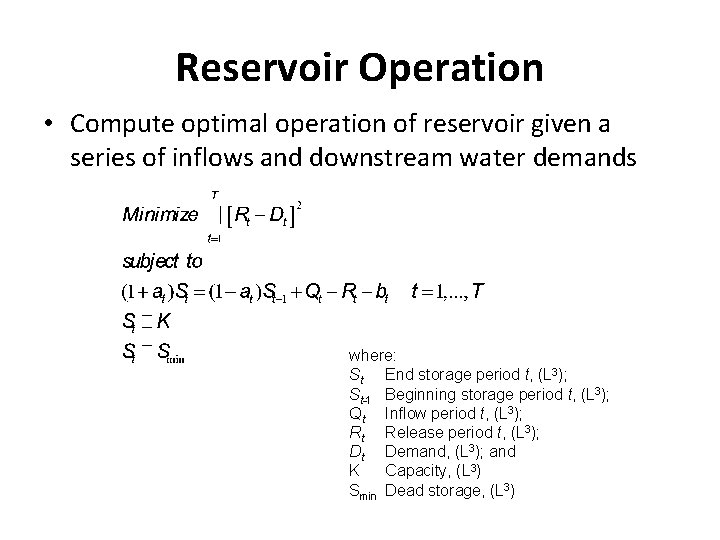
Reservoir Operation • Compute optimal operation of reservoir given a series of inflows and downstream water demands where: St End storage period t, (L 3); St-1 Beginning storage period t, (L 3); Qt Inflow period t, (L 3); Rt Release period t, (L 3); Dt Demand, (L 3); and K Capacity, (L 3) Smin Dead storage, (L 3)
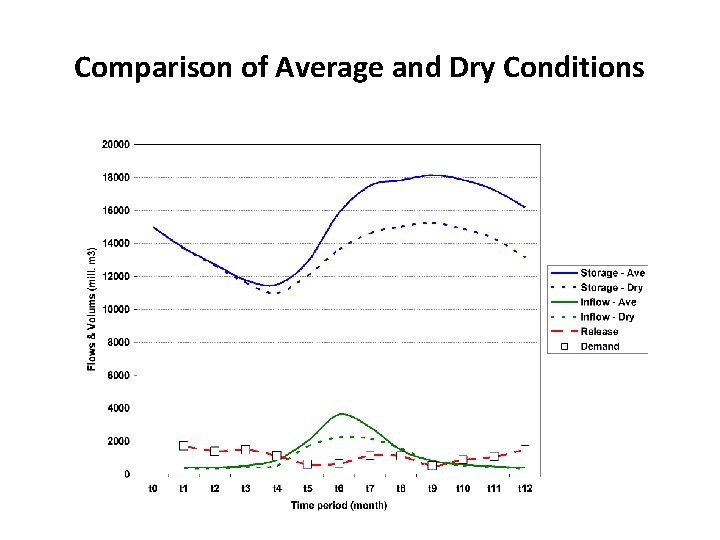
Comparison of Average and Dry Conditions
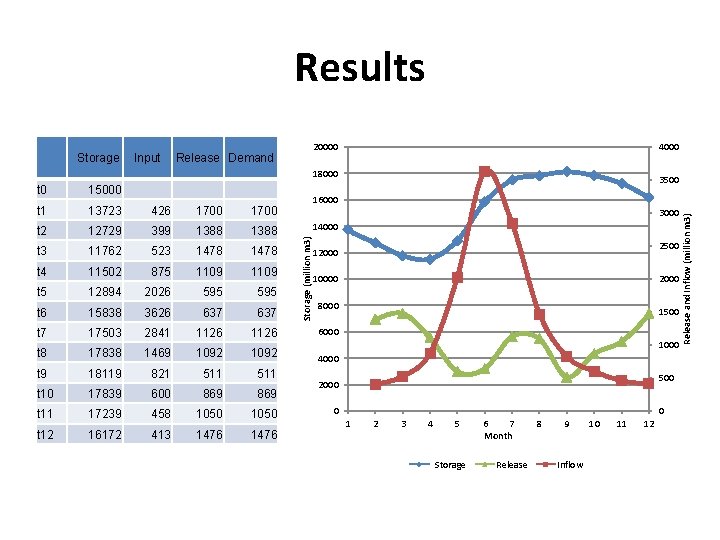
Results Input 20000 Release Demand 4000 18000 t 0 15000 t 1 13723 426 1700 3500 16000 1700 3000 14000 12729 399 1388 t 3 11762 523 1478 t 4 11502 875 1109 t 5 12894 2026 595 t 6 15838 3626 637 t 7 17503 2841 1126 6000 t 8 17838 1469 1092 4000 t 9 18119 821 511 t 10 17839 600 869 t 11 17239 458 1050 t 12 16172 413 1476 Storage (million m 3) t 2 2500 12000 10000 2000 8000 1500 1000 500 2000 0 0 1 2 3 4 5 Storage 6 7 Month Release 8 9 Inflow 10 11 12 Release and Inflow (million m 3) Storage
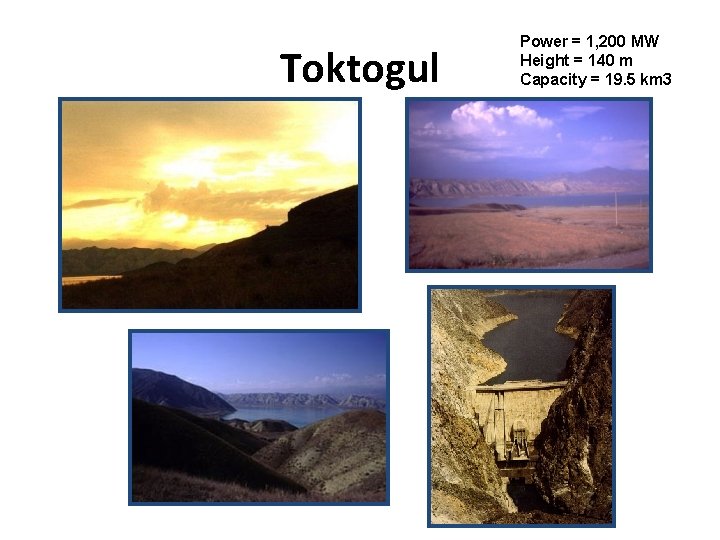
Toktogul Power = 1, 200 MW Height = 140 m Capacity = 19. 5 km 3
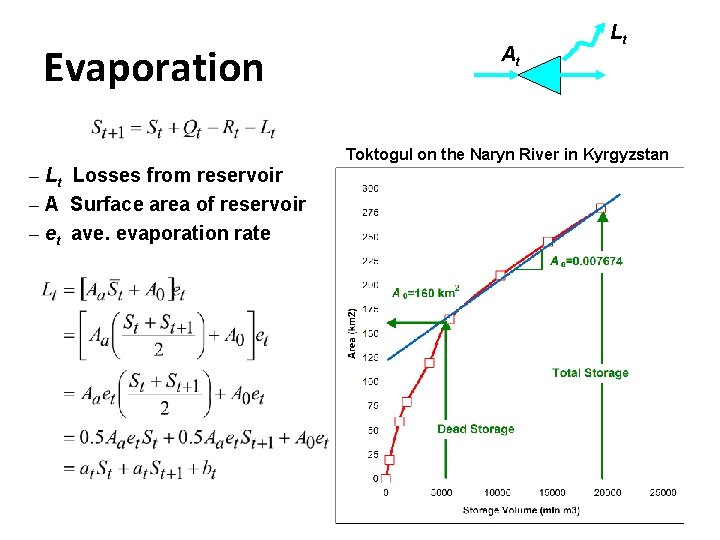
Evaporation At Lt Toktogul on the Naryn River in Kyrgyzstan – Lt Losses from reservoir – A Surface area of reservoir – et ave. evaporation rate
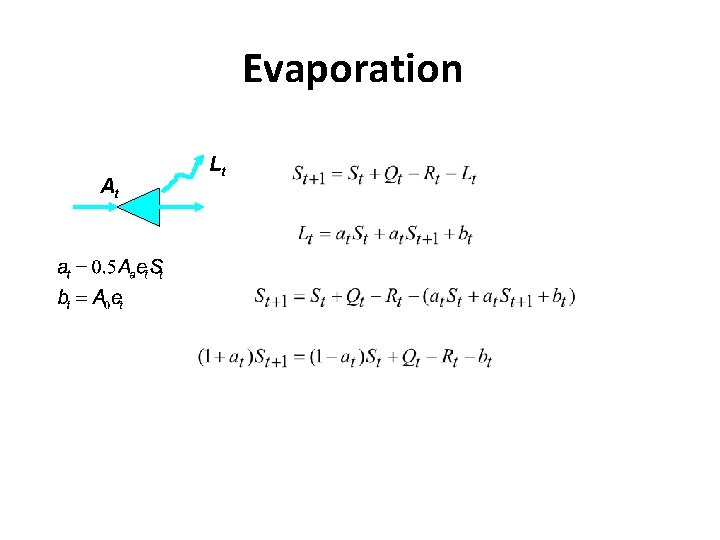
Evaporation At Lt
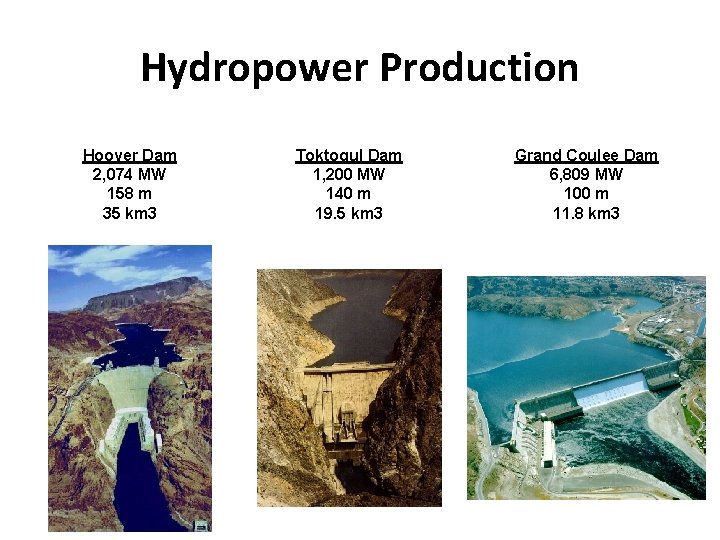
Hydropower Production Hoover Dam 2, 074 MW 158 m 35 km 3 Toktogul Dam 1, 200 MW 140 m 19. 5 km 3 Grand Coulee Dam 6, 809 MW 100 m 11. 8 km 3
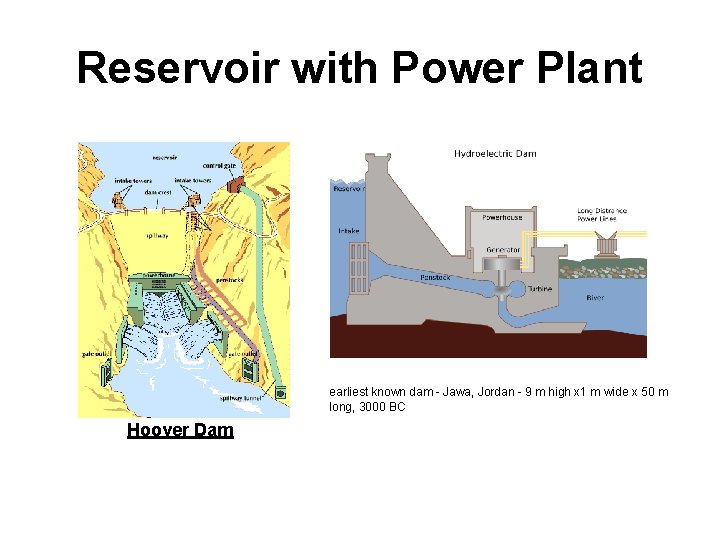
Reservoir with Power Plant earliest known dam - Jawa, Jordan - 9 m high x 1 m wide x 50 m long, 3000 BC Hoover Dam
Reservoir with Power Plant St Qt K Rt Et Qt K St Et Rt Ht
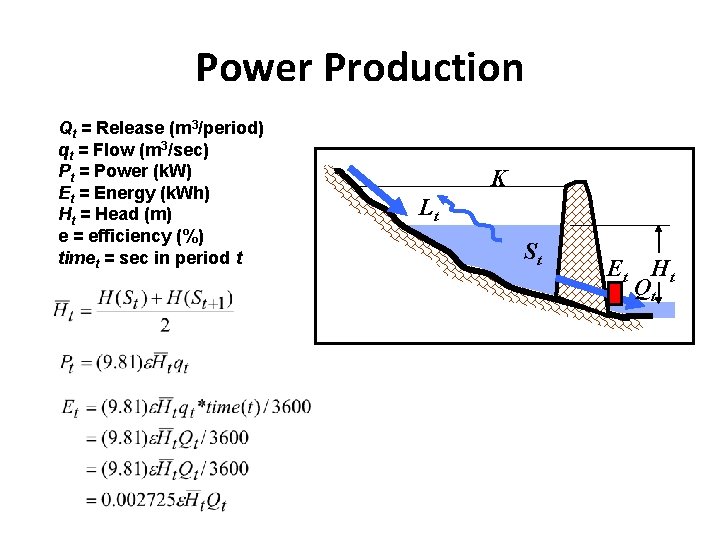
Power Production Qt = Release (m 3/period) qt = Flow (m 3/sec) Pt = Power (k. W) Et = Energy (k. Wh) Ht = Head (m) e = efficiency (%) timet = sec in period t K Lt St Et Ht Qt
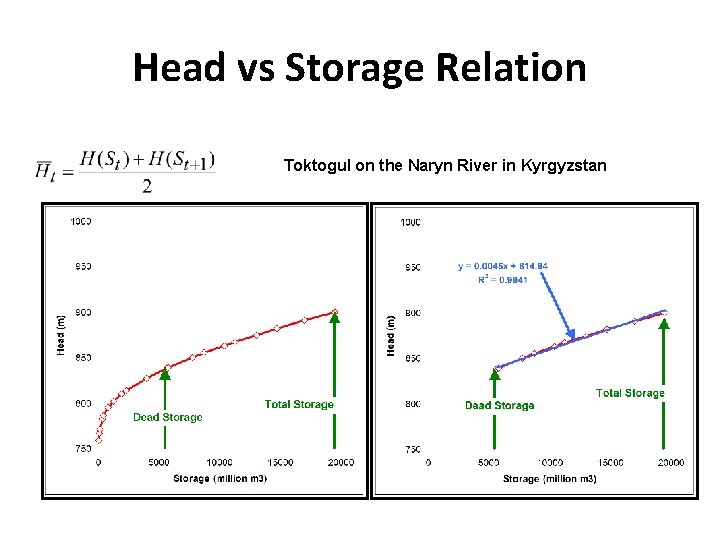
Head vs Storage Relation Toktogul on the Naryn River in Kyrgyzstan
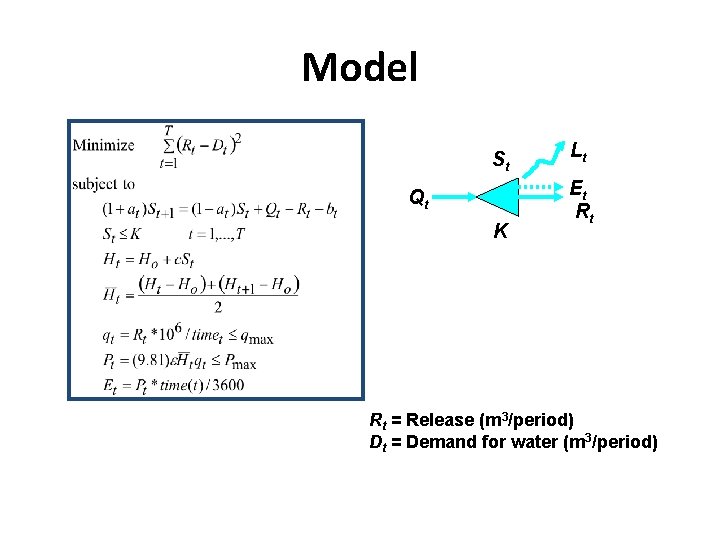
Model St Qt K Lt Et Rt Rt = Release (m 3/period) Dt = Demand for water (m 3/period)
Toktogul Operation St Qt K Lt Et Rt
- Slides: 35